Report on the results of a monitoring visit to the Dnipro Correctional Colony No. 89
On 27 December 2024, in accordance with the Optional Protocol to the Convention against Torture and Other Cruel, Inhuman or Degrading Treatment or Punishment, taking into account the provisions of the Standard Minimum Rules for the Treatment of Prisoners and the decisions of the European Court of Human Rights, on the basis of Article 24 of the Penal Code of Ukraine — Visiting correctional institutions, a group of monitors from the Kharkiv Human Rights Protection Group and the NGO “Defence of Prisoners of Ukraine” conducted a visit to the state institution “Dnipro Correctional Colony No. 89” (hereinafter referred to as DCK-89, the institution, the facility).
A follow-up general unannounced visit to DCK-89 was conducted; the previous visit took place on 8 December 2023.
During the preparation for the visit, the monitors used materials from appeals by convicted persons and their relatives, materials collected during the previous visit, as well as the report of the National Preventive Mechanism (NPM) under the Commissioner for Human Rights of the Verkhovna Rada of Ukraine.
The visit was conducted within the framework of the project “Reducing the suffering of prisoners in the context of the war in Ukraine”, funded by the government of Denmark in partnership with DIGNITY — Danish Institute Against Torture.
The visit was carried out by monitors:
- Andrii Didenko — assistant to the People's Deputy of Ukraine Yaroslav Yurchyshyn, programme coordinator of the Kharkiv Human Rights Protection Group, experience in monitoring visits since 2014;
- Serhii Zuikov — assistant to the People's Deputy of Ukraine Kostiantyn Kasai, member of the public council under the Ministry of Justice of Ukraine, member of the NGO “Defence of Prisoners of Ukraine”, has many years of experience in monitoring visits.
General Information
Dnipro Correctional Colony No. 89 is a medium-security penal institution for holding men who have previously served sentences in places of deprivation of liberty.
The institution is located at the address: 1 Danyla Halytskoho Street, Dnipro, Dnipropetrovsk region, 49102.
The head of the institution is Colonel of the internal service Yurii Melnyk.
The institution consists of a duty unit, a residential and industrial zone, DIS/PKT/DPK units, a pre-trial detention unit, a medical unit, utility and administrative premises, and a maximum-security sector for holding persons sentenced to life imprisonment.
According to the institution’s administration, the authorised staffing level consists of 365.5 positions. The actual number is 254 positions. The total staff shortage in the institution is 112 employees. There are 2 psychologists working at the institution according to the staff list.
At the time of the visit, 531 convicted persons were held in the institution, living in 5 SPS units. The institution is designed for 993 persons.
During 2024, 516 convicted persons arrived at DCK-89. In 2023, 21 people died in the institution; in 2024, 21 people.
According to the data provided by the management, 68 convicted persons are involved in labour, 27 of whom work under a labour contract and 41 persons under a civil-law contract.
The operational register includes: 34 persons prone to suicide (there was 1 suicide attempt in 2023), 10 prone to self-harm, and 2 prone to escape.
Due to serious illness, 4 people were released in 2023, and 2 in 2024. During 2023–2024, no one submitted complaints regarding inadequate conditions of detention or improper provision of medical care.
Within the framework of research regarding correspondence during the first half of 2023, 4 appeals were sent to the Commissioner for Human Rights of the Verkhovna Rada of Ukraine, and 10 responses were received. During the first half of 2024, there were 0 such appeals and 4 responses received.
During the first half of 2023, 6 appeals were sent to the prosecutor's office, and 26 responses were received; during the first half of 2024, 0 appeals were sent, and 18 responses were received.
During the first half of 2023, 3 appeals were sent to human rights organisations; during the first half of 2024, 0 appeals were sent.
Electronic complaints are not sent; accordingly, no responses were received.
During 2023, 5 cases of bodily injuries were recorded while in the institution. During 2024, 20 cases of bodily injuries were recorded while in the institution.
In the institution, convicted persons have 192 tablets for their own use; 93 persons have registered email addresses.
During the visit, 204 people were interviewed.
Facts discovered during the visit
During the monitoring visit, violations of national legislation requirements and non-compliance with international recommendations in the sphere of treatment of prisoners were identified, which lead to violations of the rights of convicted persons.
1. In violation of Part 1 of Article 115 of the Penal Code of Ukraine and Rule 10 of the Standard Minimum Rules for the Treatment of Prisoners, it was established that in certain residential premises of the SPS (Socio-Psychological Service) units of the institution, the living space standard per one convicted person is less than 4 m².
Thus, in sleeping room No. 3 of SPS unit No. 1, where 12 people were held, the area of the room is 47.0 m². Thus, the actual area per one convicted person was 3.91 m².
Furthermore, it was established that in sleeping room No. 3 of SPS unit No. 1 and sleeping room No. 5 of SPS unit No. 2, the actual number of beds exceeds the permissible amount to ensure the living space standard per person provided by legislation. Thus, in sleeping room No. 5 of SPS unit No. 2, where 48 beds are located, the area of the room is 179.5 m². Thus, the actual area per one convicted person was 3.73 m².
The aforementioned violation creates conditions for possible abuse by the administration and personnel of the institution in the context of compliance with the living space standard per one convicted person and does not ensure proper personal space for detained persons in sleeping rooms.
At the same time, in paragraph 13 of the 7th General Report of the European Committee for the Prevention of Torture and Inhuman or Degrading Treatment or Punishment (hereinafter — the Committee), it is noted that the problem of overcrowded cell premises leads to unhygienic conditions, a constant lack of privacy, and the overloading of medical services and the institution's infrastructure. The Committee concludes that quite often the negative impact of overcrowding resulted in inhuman or degrading conditions of detention for prisoners (CPT/Inf (97) 10).
2. The equipment of the DIS/PKT premises does not comply with the standards for the treatment of prisoners and the conditions of their detention in accordance with their needs. In paragraph 59 of the 21st General Report of the Committee, it is noted that any cell smaller than 6 m² should no longer be used for holding prisoners (CPT/Inf (2011) 28).
In the Report to the Government of Ukraine following the 2012 visit to Ukraine, the Committee notes that any single cells must have a living space of at least 6 m² (excluding the built-in toilet); the distance between the walls of the cell is to be at least 2 m (paragraph 45 (CPT/Inf (2013) 23)).
At the same time, the monitoring group established the use of premises for holding convicted persons that do not meet these requirements. In particular, in DIS premises Nos. 23, 24, 25, 26 and cell No. 20 of the maximum-security sector, the distance between the walls is less than 2 metres, and the area of cell No. 16 of the maximum-security sector for men sentenced to life imprisonment in chamber-type premises, according to the living area measurement certificate, is only 5.4 m².
Due to the lack of free space, there are no benches or tables in these DIS premises, which deprives convicted persons serving disciplinary penalties in the specified cells of the possibility to eat in proper conditions.
In violation of the requirements of the Standards for the provision of furniture, inventory, and household items for a medium-security correctional colony, approved by order of the Ministry of Justice of Ukraine dated 27.07.2012 No. 1118/5 (hereinafter — Provision Standards), a number of premises are missing in the DIS/PKT, namely: a room for receiving convicted persons by the administration and medical staff, a room for storing personal belongings of convicted persons, a room for undressing and dressing, and a barbershop.
The absence of these premises or their improper arrangement leads to a violation of sanitary and hygienic standards. Thus, improper organisation of the storage of personal belongings complicates the maintenance of cleanliness and order in the premises where convicted persons are held, which worsens the general sanitary situation in the institution; and the absence of a room in the DIS/PKT for the reception of convicted persons by medical staff, as a result of which medical examinations of convicted persons are conducted in the duty shift room or in the cell, indicates that the institution’s staff and other persons among the convicted persons obtain confidential information about the state of health of convicted persons during medical examinations, manipulations, or procedures.
The aforementioned violates the requirements of Article 39-1 of the Law of Ukraine “Fundamentals of Ukrainian Legislation on Health Care” regarding the right of individuals to confidentiality regarding their health status and paragraph 9 of Section I of the “Procedure for organising the provision of medical care to persons sentenced to deprivation of liberty”, approved by the joint order of the Ministry of Justice of Ukraine and the Ministry of Health of Ukraine dated 15.08.2014 No. 1348/5/572 (hereinafter — the Procedure).
In cell premises Nos. 21, 22, 23, 24, 25, 26, a sufficient level of natural lighting and ventilation is not ensured. Restrooms in certain cell premises do not have doors and sufficient partitions that ensure the possibility of privacy, which is a violation of Rule 19.3 of the European Prison Rules.
In violation of the requirements of Rule 22.5 of the European Prison Rules and the Provision Standards, the cell premises are not provided with drinking water containers. Thus, the premises do not comply with Part 1 of Article 115 of the Penal Code of Ukraine and Rules 14, 15 of the UN Standard Minimum Rules for the Treatment of Prisoners (the Mandela Rules).
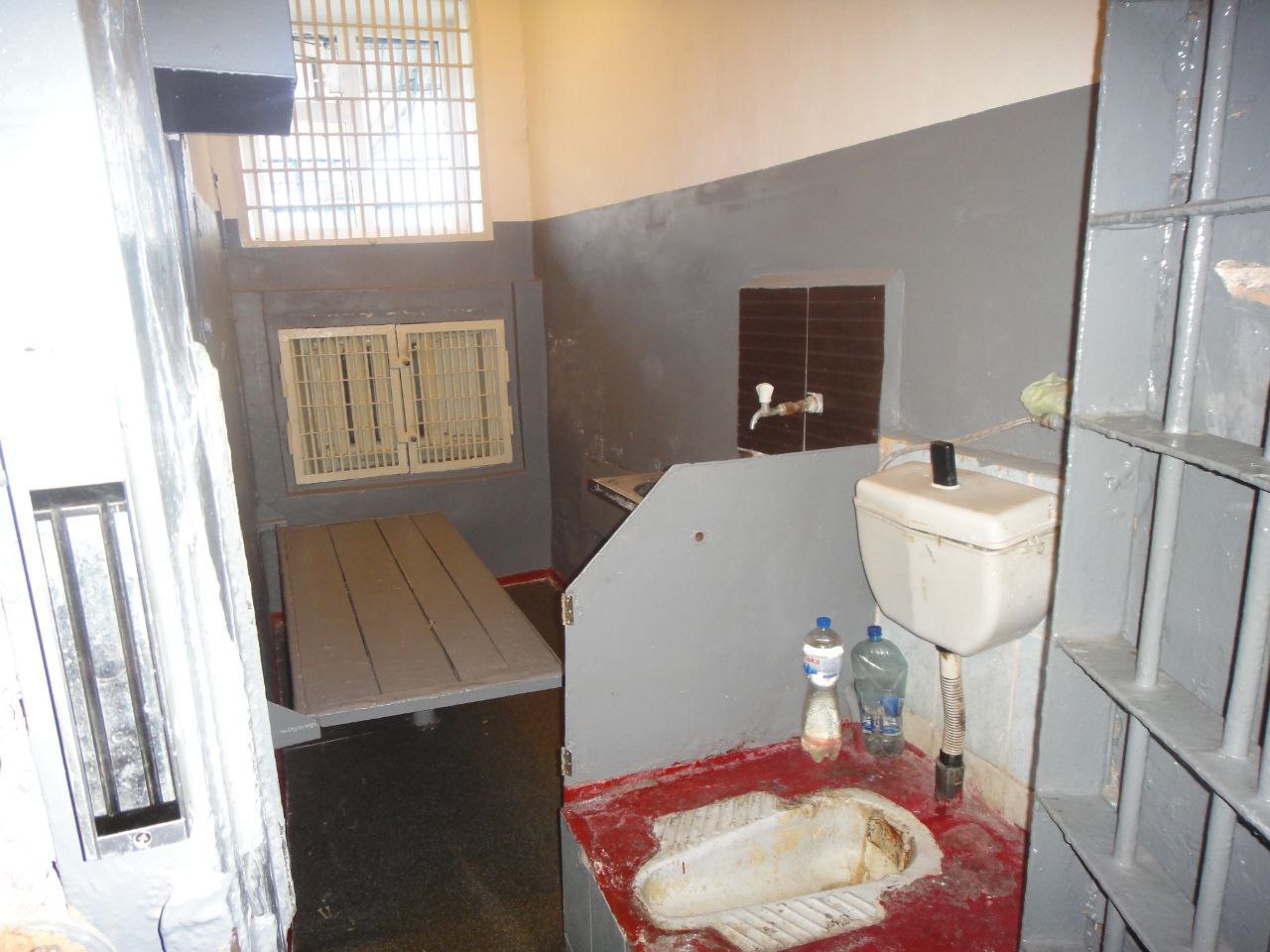
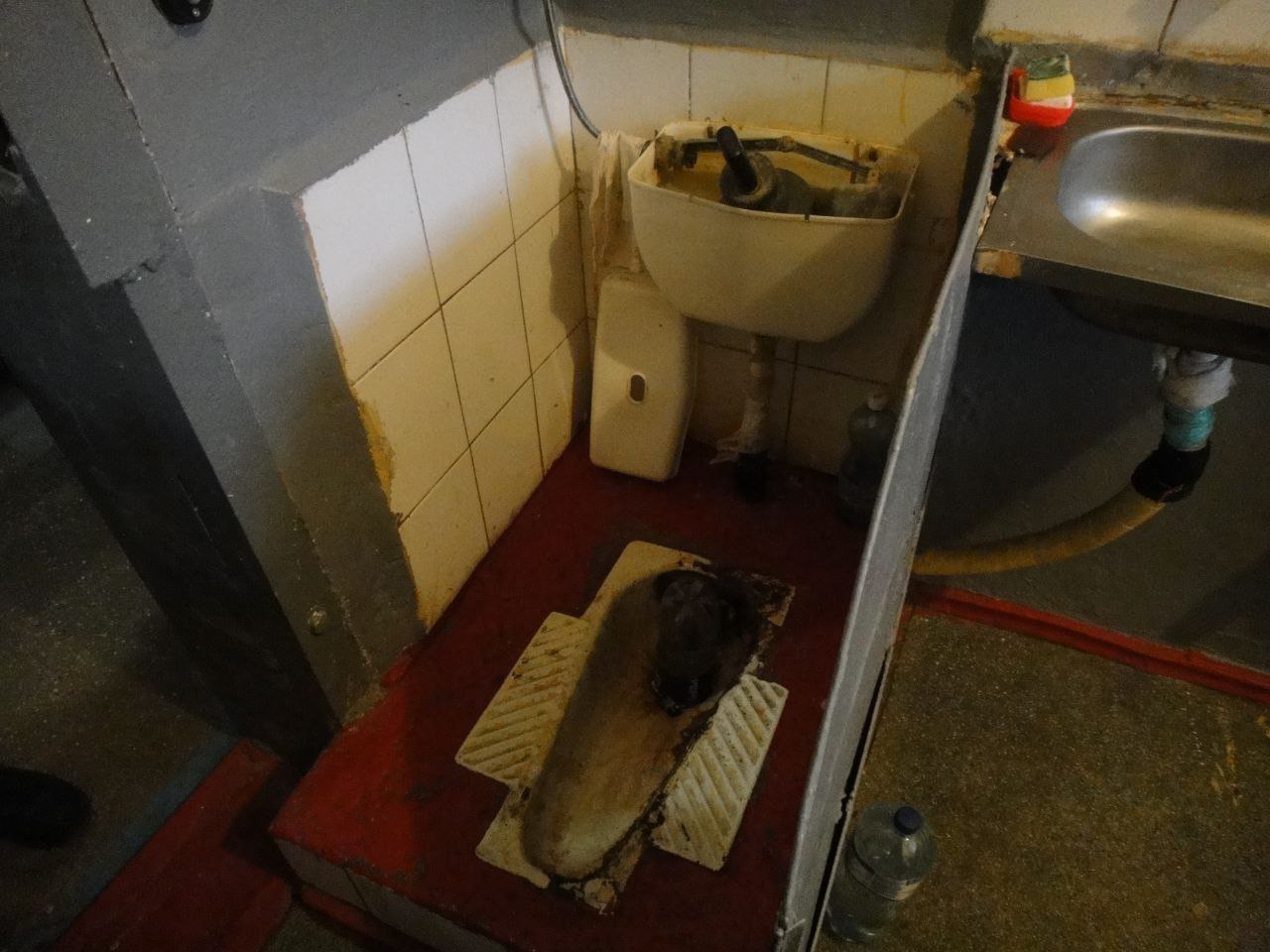
3. In violation of paragraph 3 of Section XX of the Internal Regulations of penal institutions, approved by order of the Ministry of Justice of Ukraine dated 28.08.2018 No. 2823/5 (hereinafter — Internal Regulations), there is no radio connection in the DIS cell premises.
4. In violation of paragraph 4 of Section IV of the Procedure for the use of technical supervision and control equipment in correctional and educational colonies of the State Penitentiary Service of Ukraine, approved by order of the Ministry of Justice of Ukraine dated 26.06.2018 No. 2025/5 (hereinafter — Procedure for the use of technical equipment), it was established that the DIS/PKT cells are not equipped with staff call buttons, which complicates operational contact between convicted persons and the institution's staff.
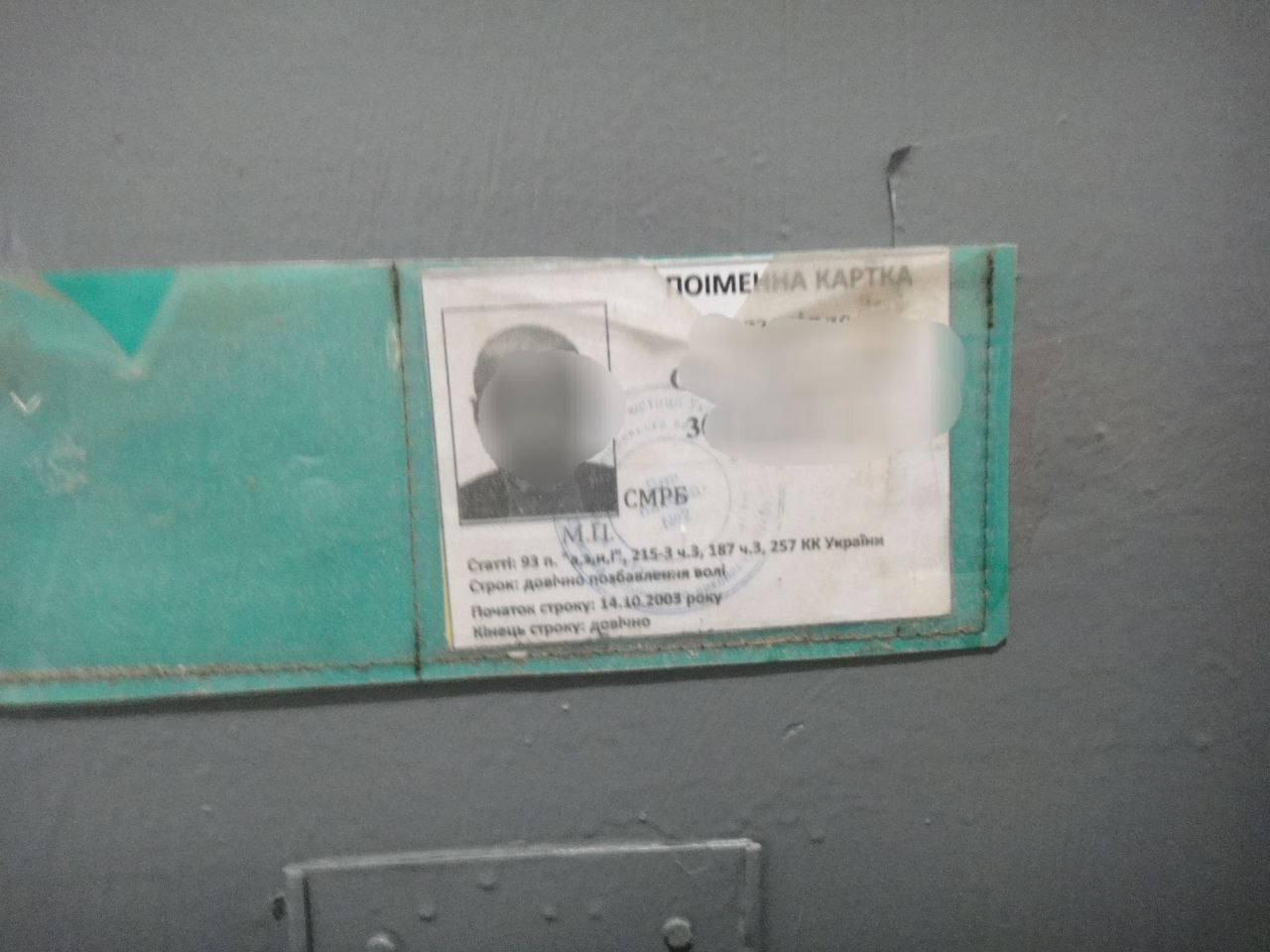
5. During the visit to the maximum-security sector, it was established that on the external doors of the cells for holding persons sentenced to life imprisonment, personal cards were placed providing information with a brief description of the crimes committed by the individuals located in the cells.
In its report following the 2020 visit to Ukraine, the Committee noted that this practice should be stopped, as it serves no reasonable purpose and, besides stigmatisation, has the effect of damaging the relationship between prisoners and prison staff (CPT/Inf (2020) 40, paragraph 52).
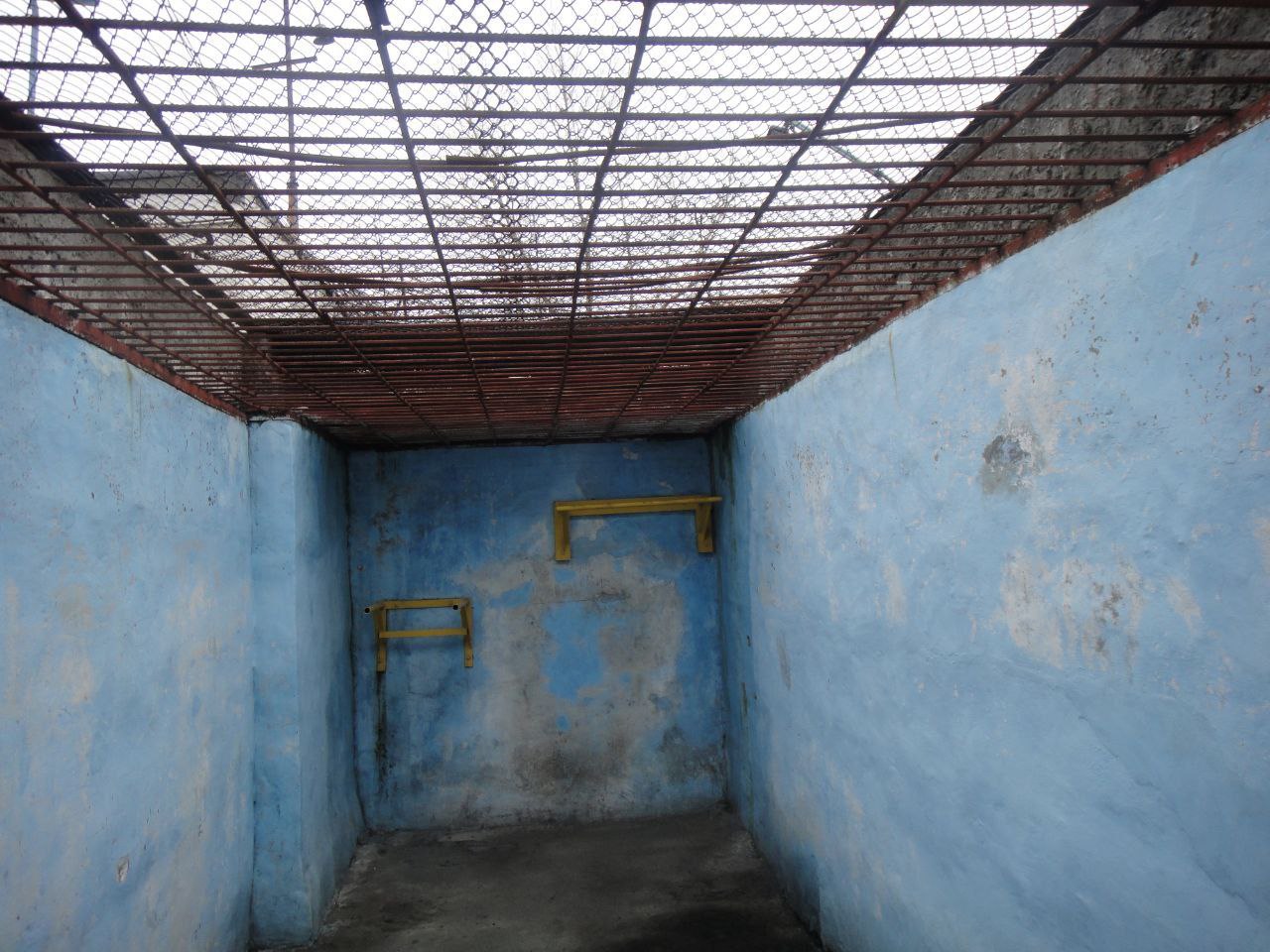
6. Exercise yards Nos. 2, 4, 7 are not equipped with sufficient shelter from atmospheric precipitation. At the same time, the Committee, in its second General Report, notes that daily outdoor exercise should take place in an area of sufficient size. The area for outdoor exercise should, as far as possible, be equipped with shelter against bad weather (CPT/Inf (92) 3, paragraph 48).
7. In violation of the requirements of the Provision Standards, in the maximum-security sector, there are no premises for educational work and no rooms for performing religious rites.
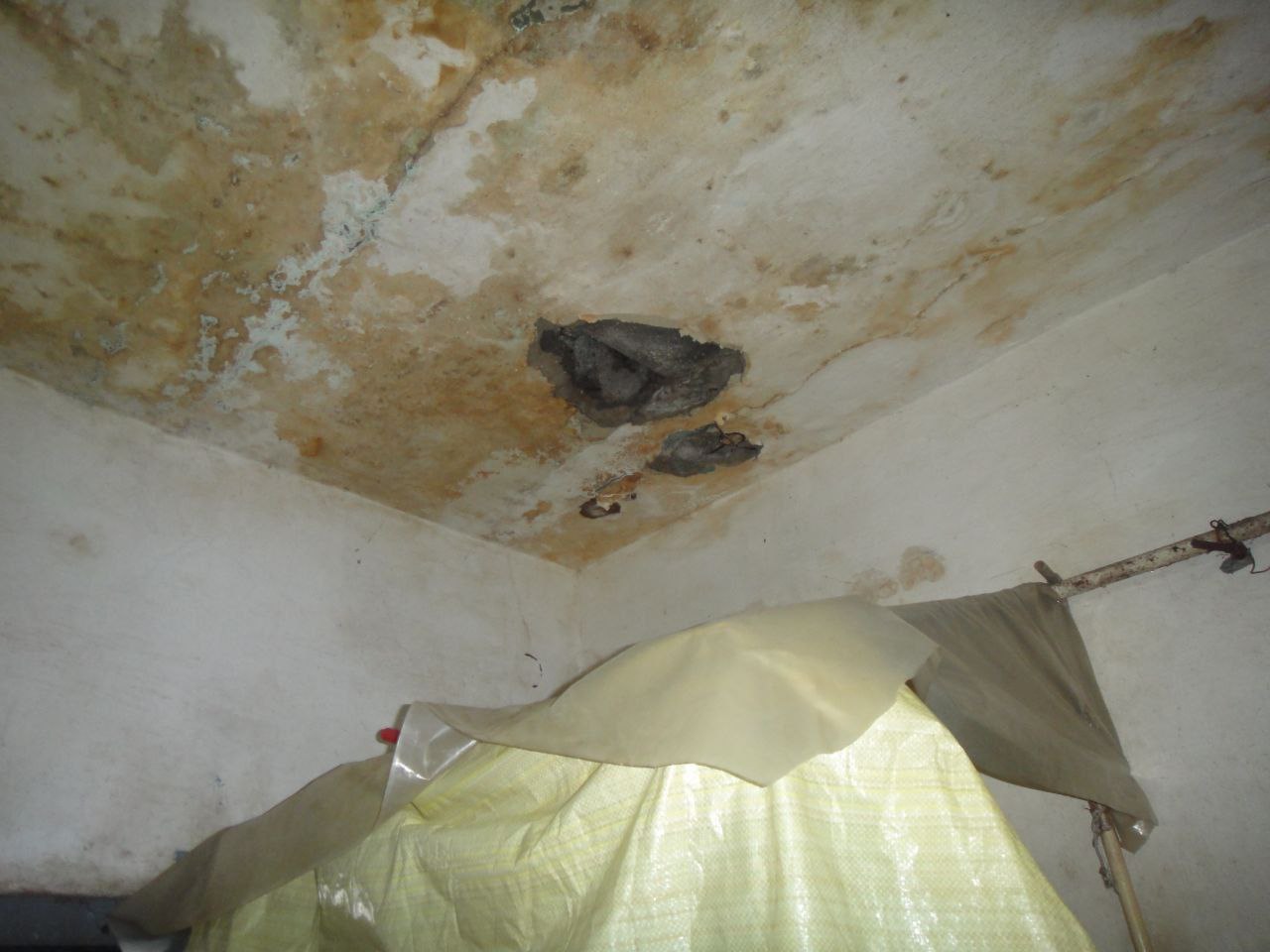
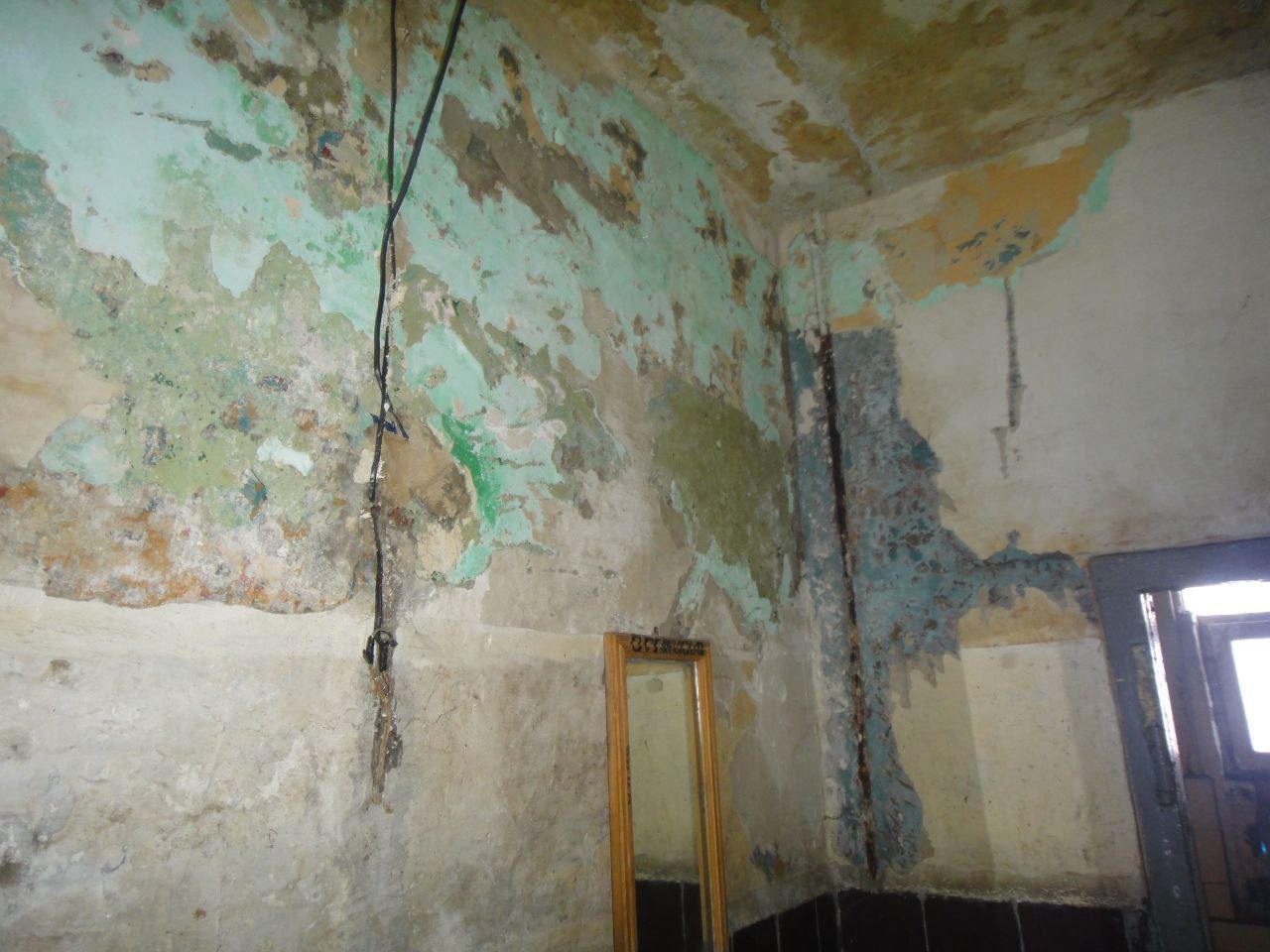
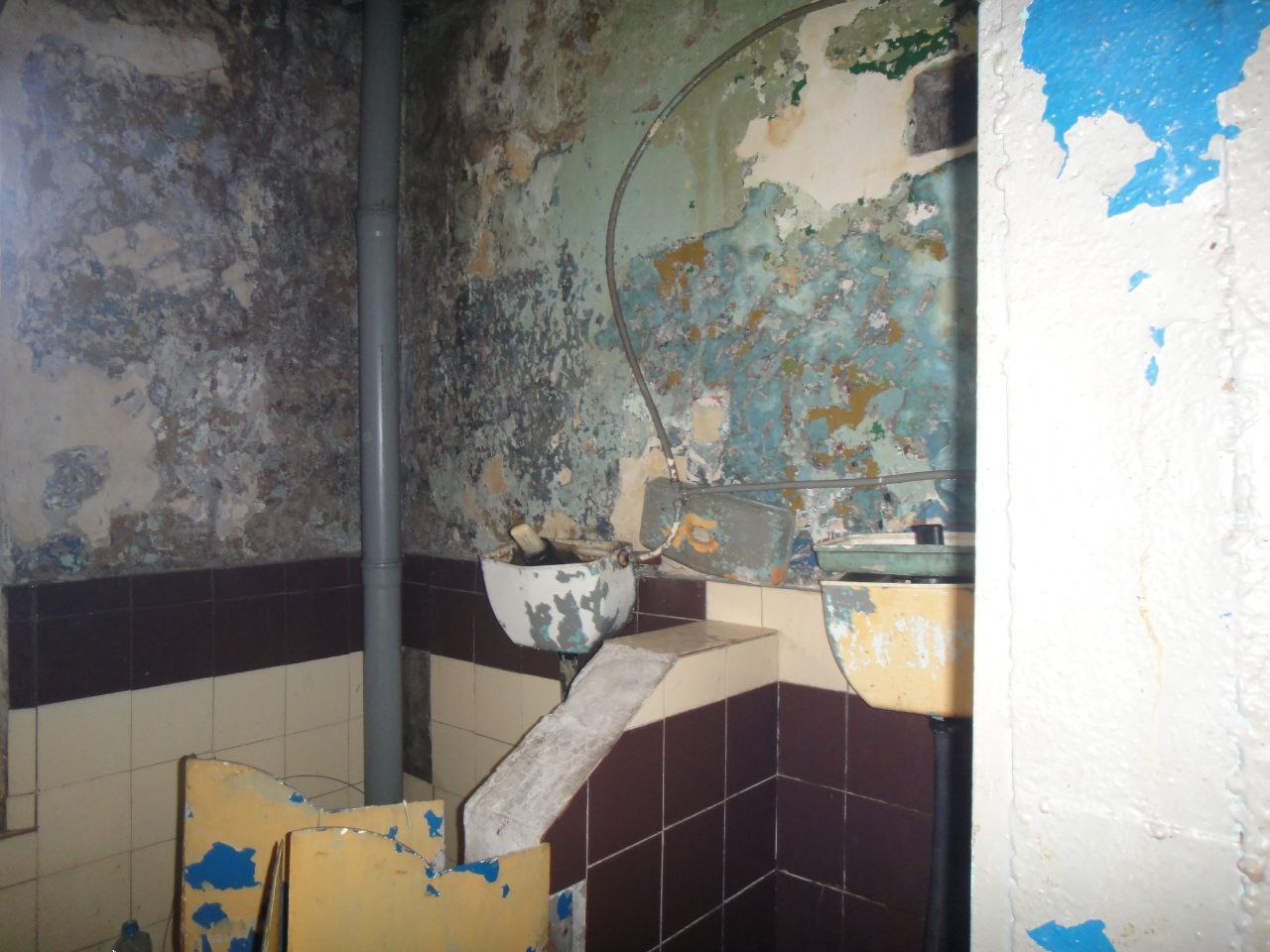
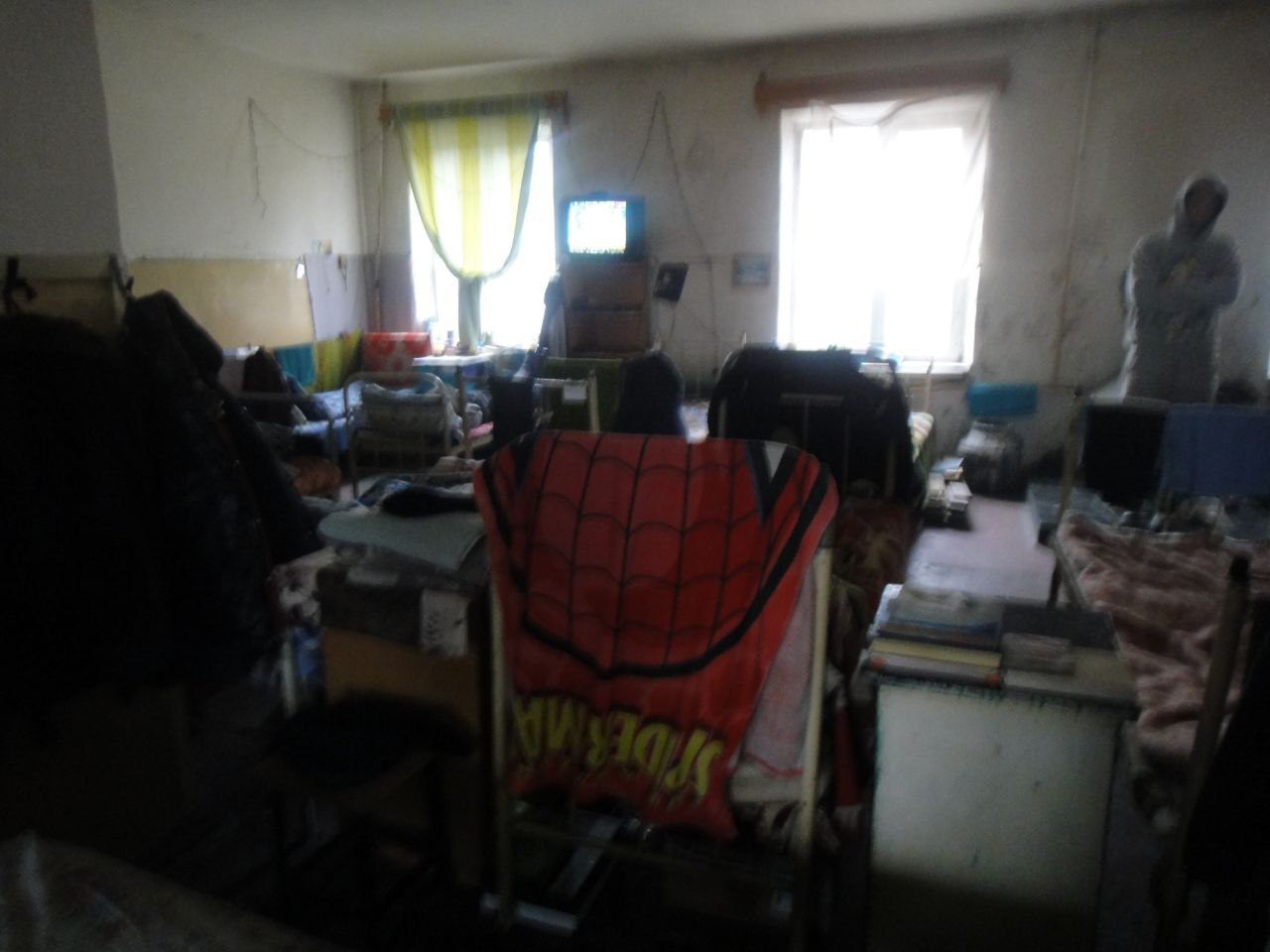
8. During the visit to the dormitories of the SPS units, it was established that the living conditions of convicted persons in some of them are unsatisfactory, violate their right to decent conditions of detention, and do not comply with Part 1 of Article 115 of the Penal Code of Ukraine and Rules 14, 15 of the UN Standard Minimum Rules for the Treatment of Prisoners (the Mandela Rules).
Thus, in SPS unit No. 3, the washroom and restroom are in an unsatisfactory condition, do not comply with sanitation and hygiene rules, and require capital repairs with the replacement of sanitary-technical equipment.
A persistent unpleasant odour is felt in the premises, and lack of sanitation is observed; the ceiling and walls are covered with mould due to significant water leaks. Restrooms are not equipped with toilet bowls and a proper water flushing system, and they also lack sufficient doors and partitions that ensure the possibility of privacy, which is a violation of Rule 19.3 of the European Prison Rules.
The sleeping premises of the unit are not provided with a sufficient number of stools, at a rate of one stool per person. Contrary to Rule 18.1 of the European Prison Rules, the beds in the sleeping rooms are placed close to each other, which deprives convicted persons of personal space. There is an insufficient level of natural and artificial lighting. There is significant cluttering with bags and personal belongings.
In violation of the requirements of the Provision Standards, a number of premises are missing in the unit, namely: a room for storing the exchange fund of bedding, clothing, and special workwear; a pantry for temporary storage of dirty bedding, clothing, and special workwear; a utility room, a wardrobe, and a drying room.
9. In violation of Article 119 of the Penal Code of Ukraine, Article 52 of the Labour Code of Ukraine, and the Instruction on working conditions and wages of persons sentenced to restriction of liberty or deprivation of liberty, approved by order of the Ministry of Justice of Ukraine dated 07.03.2013 No. 396/5, the monitoring group established that the duration of the working day of convicted persons involved in the economic maintenance of the canteen and bakery, with whom a labour contract has been concluded, is longer than 8 hours and reaches 10–11 hours a day, i.e., more than 40 hours per week, and the working week consists of six, and in some cases seven, days.
During confidential communication with convicted persons and analysis of documentation, it was established that the administration and personnel of the institution involve convicted persons in work in the canteen and bakery without remuneration.
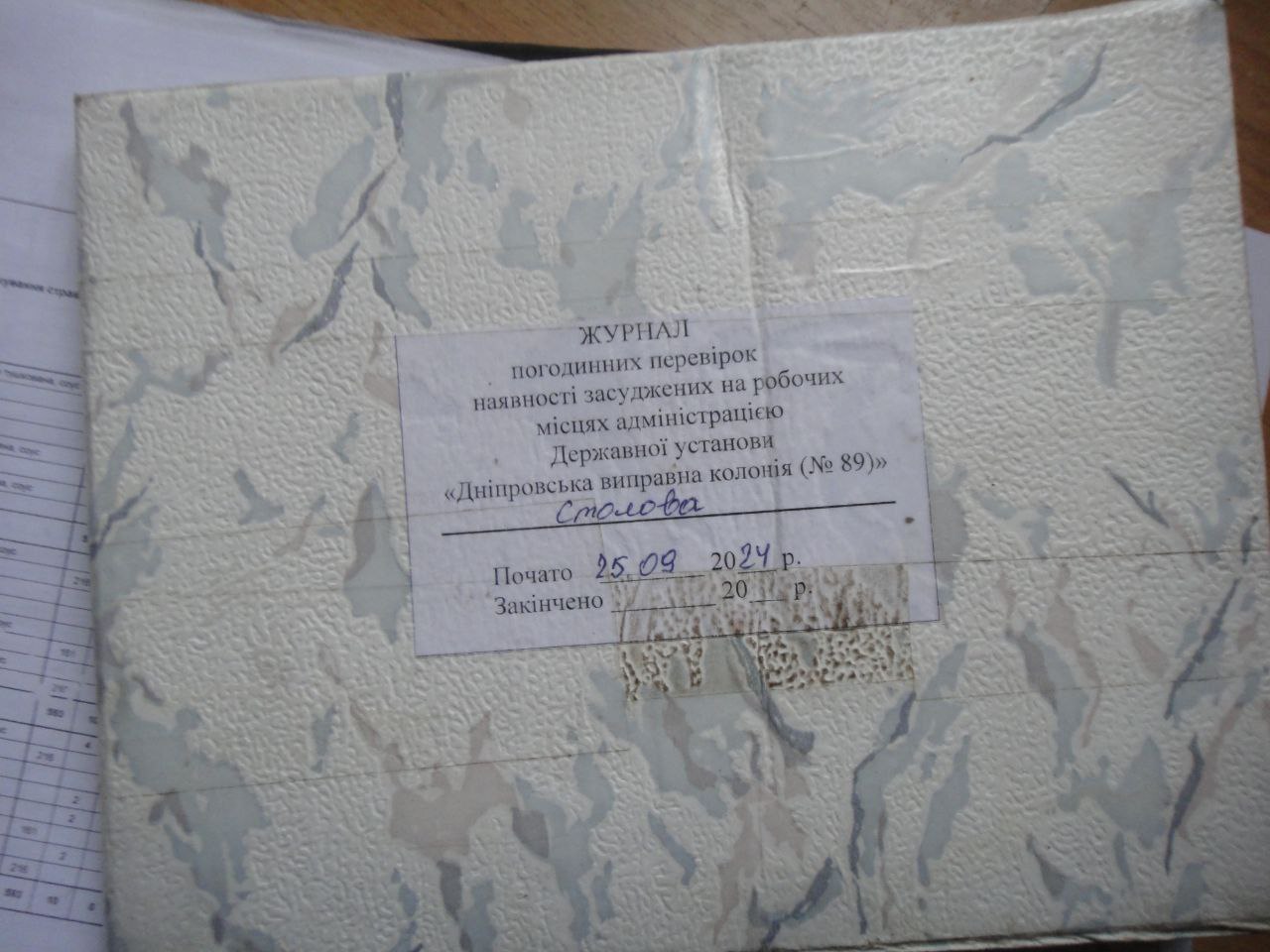
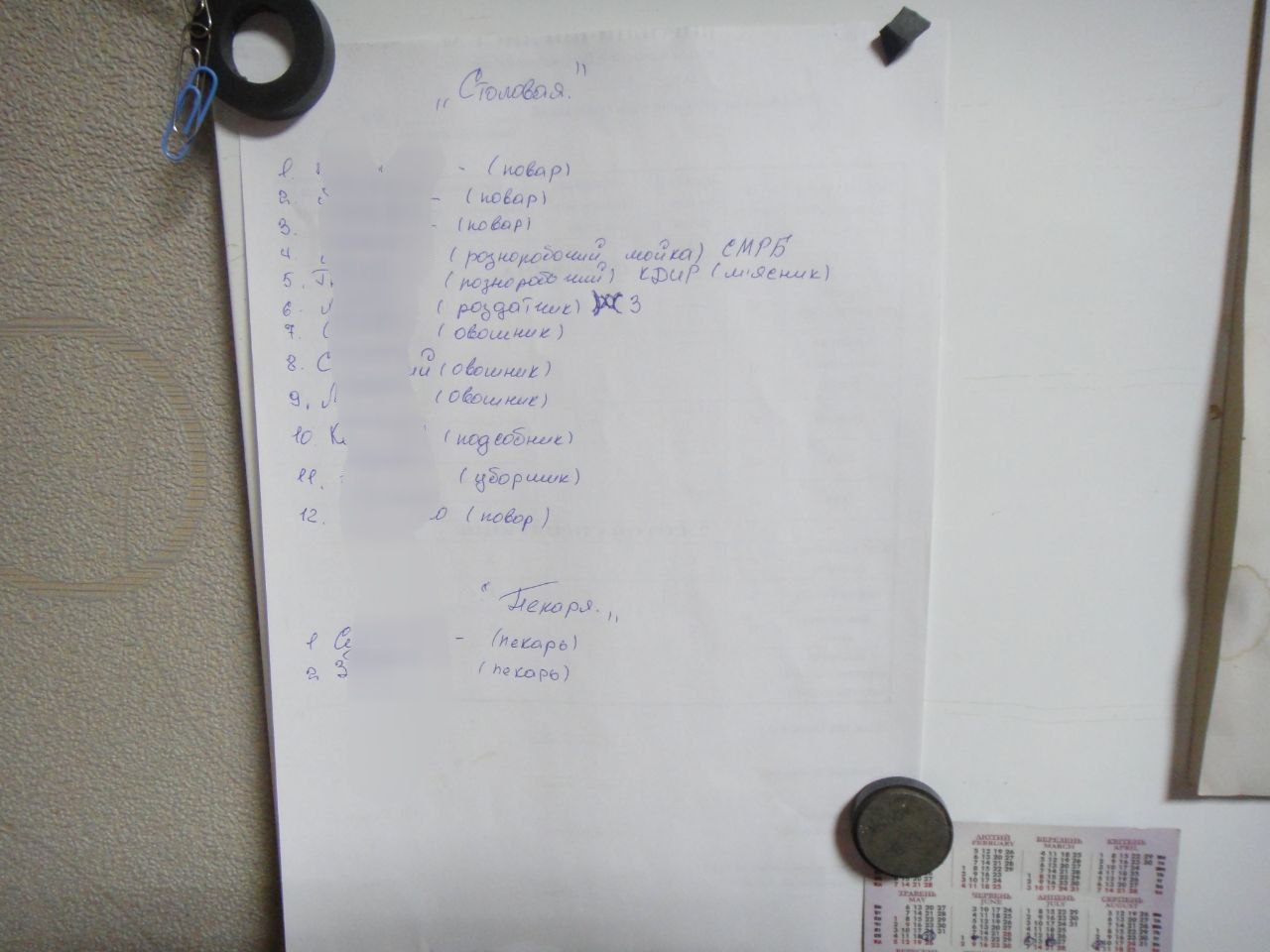
In particular, during communication with the staff of the canteen and bakery, and analysis of payrolls, the logbook of hourly checks of convicted persons at their workplaces, and other documentation, the monitoring group established that only 9 convicted persons receive a salary, while the other 5 convicted persons perform work in accordance with paragraph 5 of Article 118 of the Penal Code of Ukraine without proper remuneration. At the same time, the convicted persons noted that their working day, in terms of duration and volume of work performed, does not differ from the working day of convicted persons who receive a salary for similar work.
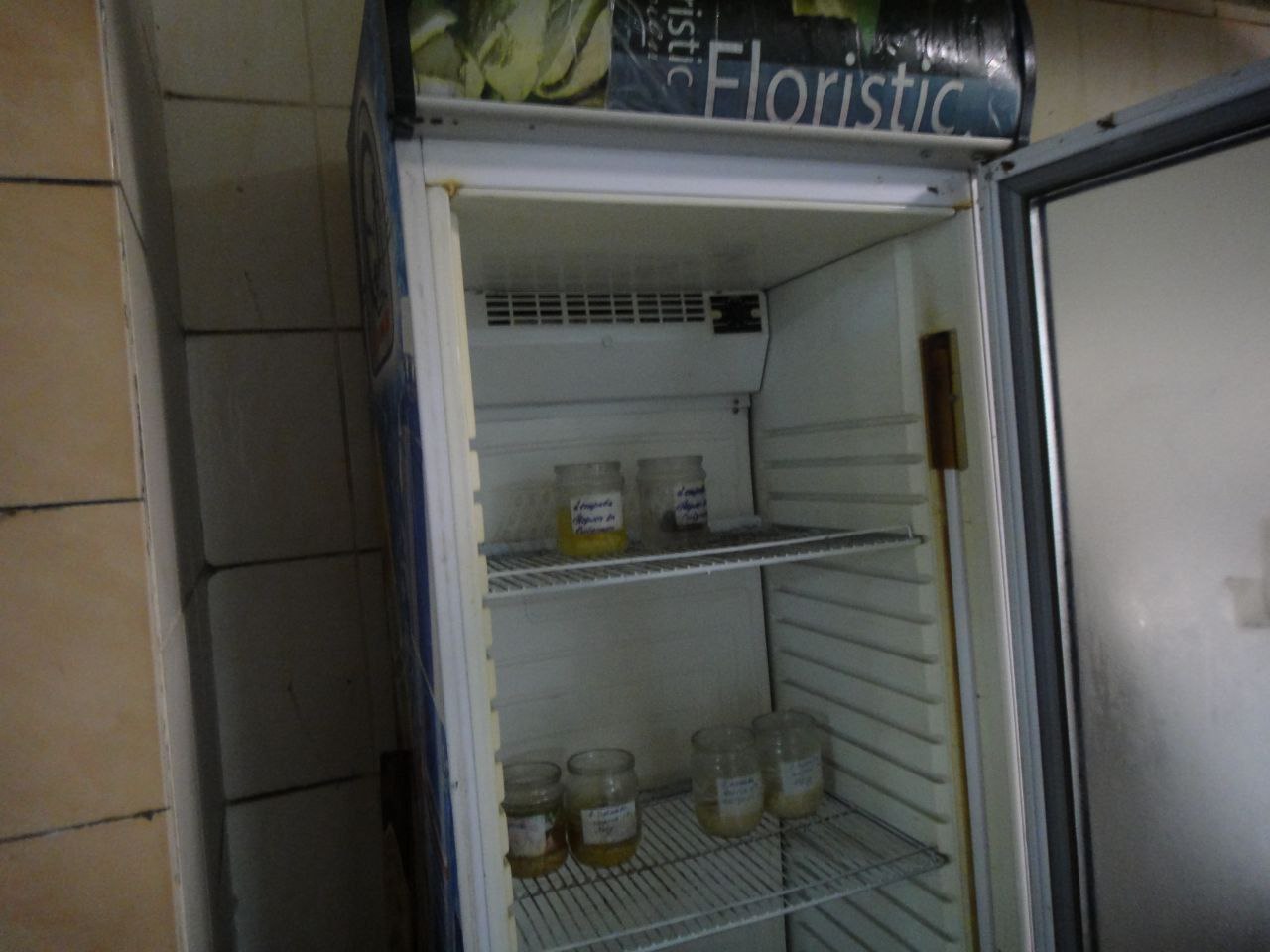
10. According to paragraph 17 of Section V of the Regulations on the organisation of food supply in the State Penitentiary Service of Ukraine in peacetime, approved by order of the Ministry of Justice of Ukraine dated 15.06.2021 No. 2160/5 (hereinafter — Regulations on the organisation of food supply), daily samples of each dish of the ration remain in the canteen of the institution. The collection of samples is carried out by the cook from the cauldron in the presence of a medical worker of the healthcare facility in a clean dish with a lid (previously washed and boiled) before the food is served. Daily samples are stored in the canteen refrigerator at a temperature from +4 to +8 °C. Samples of dishes from each meal are stored for 24 hours until the end of the corresponding meal the following day.
At the same time, the monitoring group, during the inspection of the canteen premises, established that the daily samples were stored in a non-working refrigerator, which is a violation of the established temperature regime.
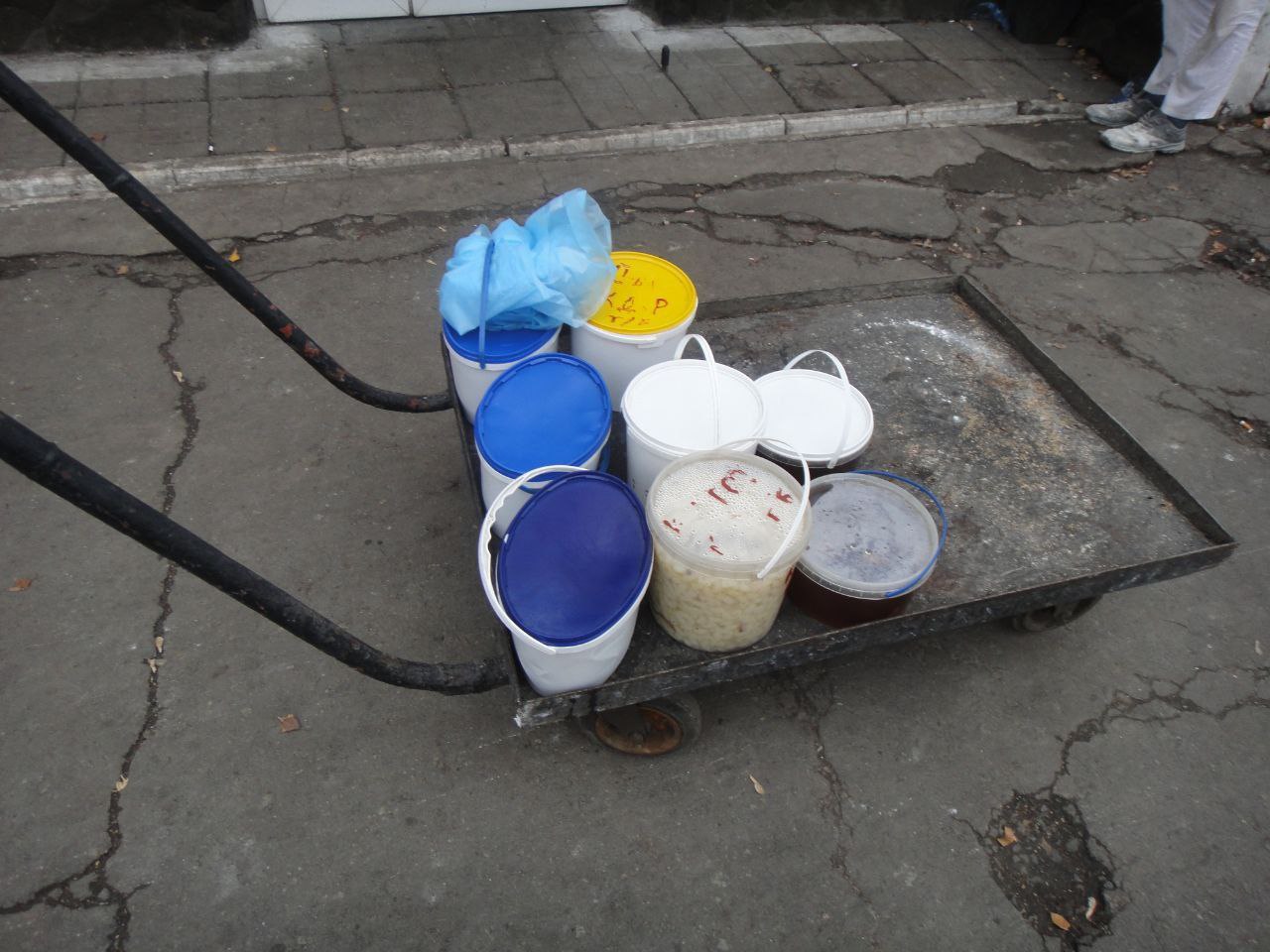
11. In violation of the requirements of paragraph 14 of Section V of the Regulations on the organisation of food supply, food is delivered to convicted persons from the institution's canteen to the detention, DIS/PKT units in plastic buckets, rather than in marked thermoses.
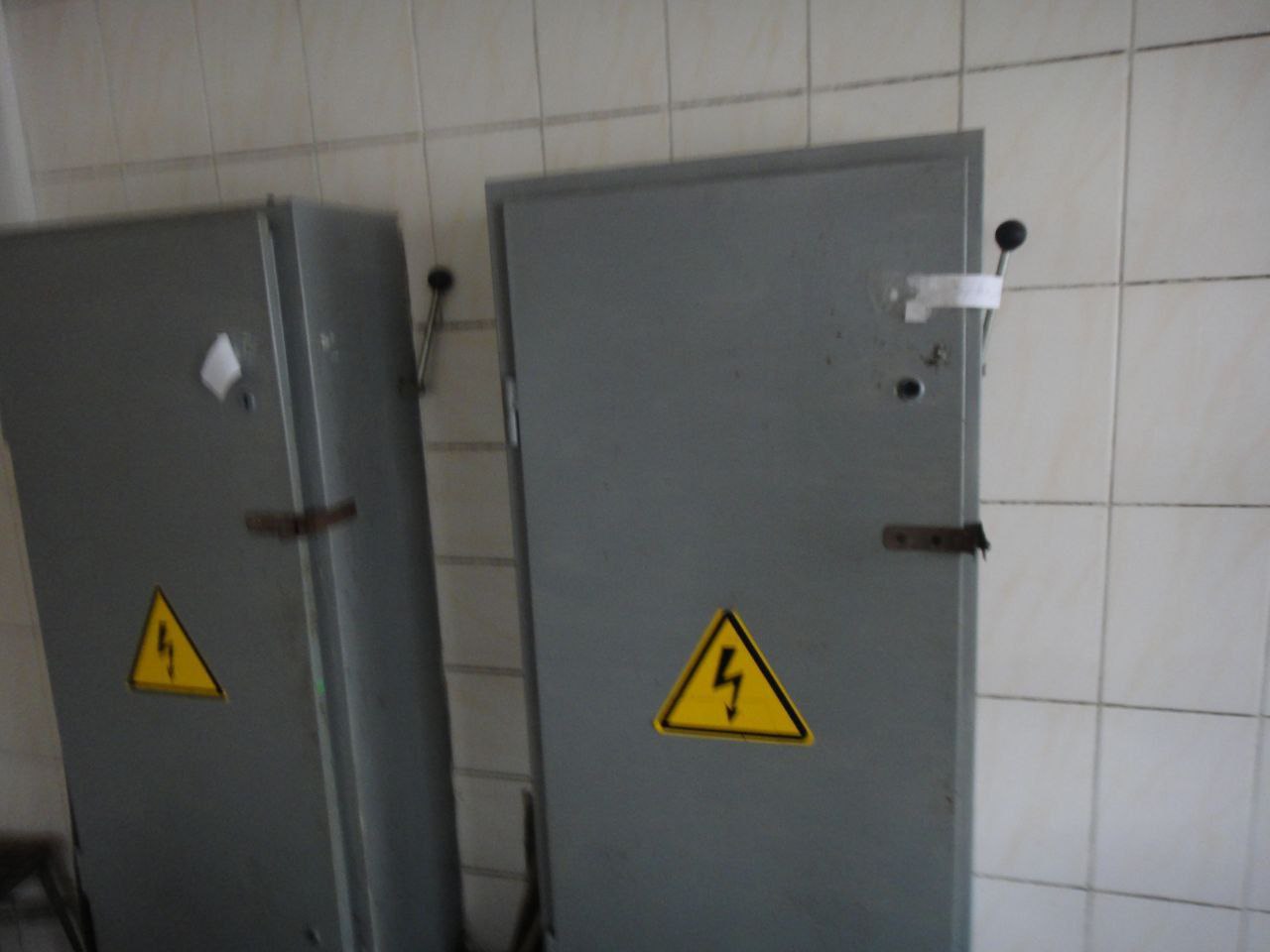
12. In the canteen premises, the requirements of the Fire Safety Rules in Ukraine, approved by order of the Ministry of Internal Affairs of Ukraine dated 30.12.2014 No. 1417, registered with the Ministry of Justice of Ukraine on 05.03.2015 under No. 252/26697 (hereinafter — Fire Safety Rules), are violated, in particular, the electrical panel doors are open, which may lead to electric shock of convicted persons or the institution's staff and other negative consequences.
13. In violation of the requirements of Article 118 of the Penal Code of Ukraine and Article 153 of the Labour Code of Ukraine, convicted persons working in the canteen and bakery do not undergo timely briefings on occupational health and safety. This is confirmed by the absence of relevant entries in the Logbook for registration of briefings on occupational health and safety at the workplace for the IV quarter.
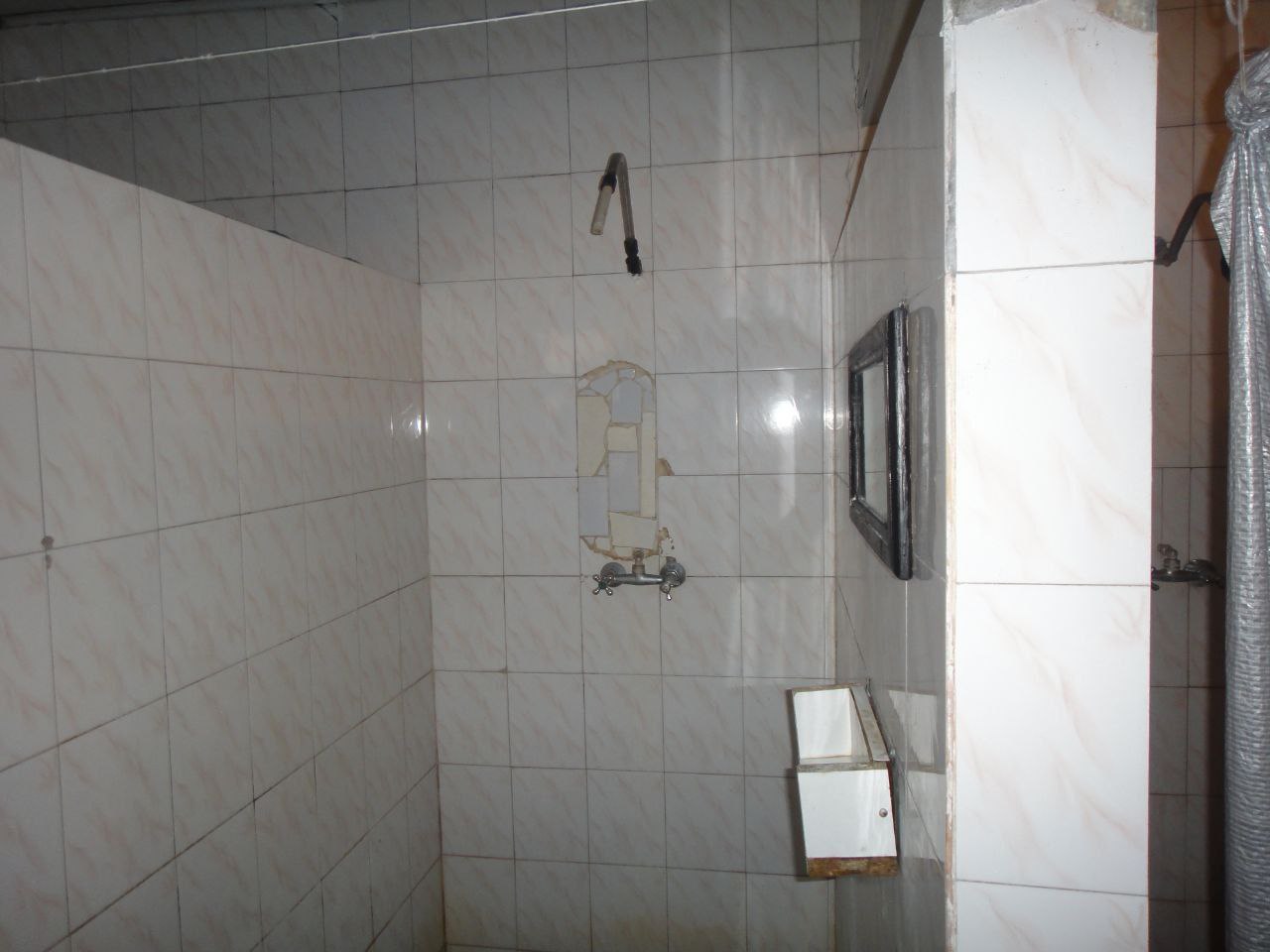
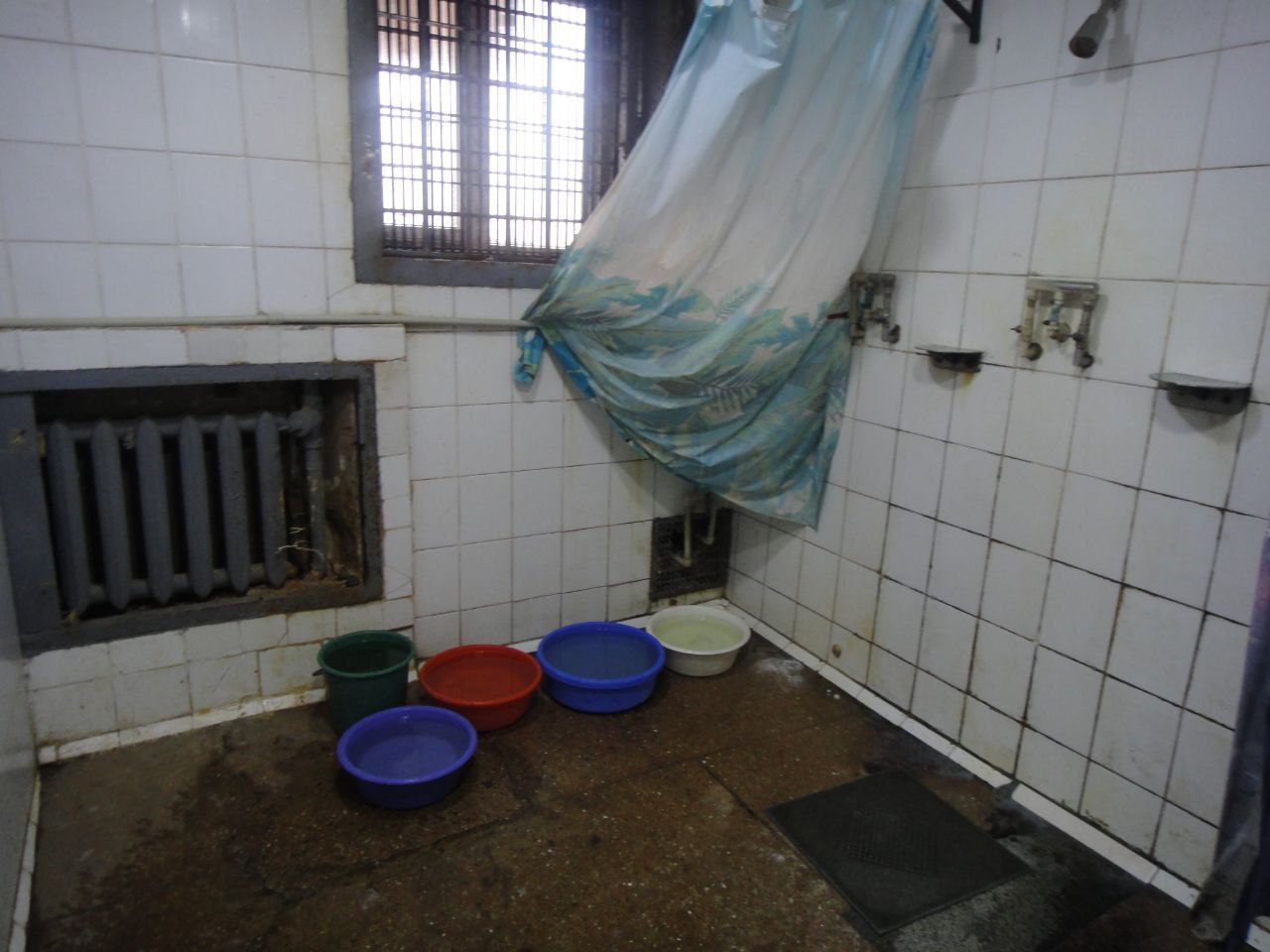
14. The monitoring group established a number of violations in the organisation of bath and laundry services for convicted persons and detainees. Thus, in violation of the requirements of paragraph 2.11 of Section II of the Regulations on the organisation of bath and laundry services for persons held in penal institutions and pre-trial detention centres, approved by order of the Ministry of Justice of Ukraine No. 849/5 dated 08.06.2021 (hereinafter — the Regulations), the forced supply and exhaust ventilation system does not work in the laundry, bathhouse, and shower room of the DIS/PKT and the facility.
During the inspection of the Logbook for disinfection (disinsection) of clothing and bedding in the institution's disinfection chambers, it was established that, in violation of the requirements of paragraph 4 of Section XXII of the Internal Regulations and paragraph 3.19 of Section III of the Regulations, compliance with sanitary-hygienic and anti-epidemic rules is not properly ensured. Sanitary treatment of convicted persons arriving at the institution is not carried out in a timely manner.
In violation of the requirements of Rule 19.3 of the European Prison Rules, the right to privacy is not respected in the bathhouse and shower room of the DIS/PKT due to the lack of curtains on shower partitions.
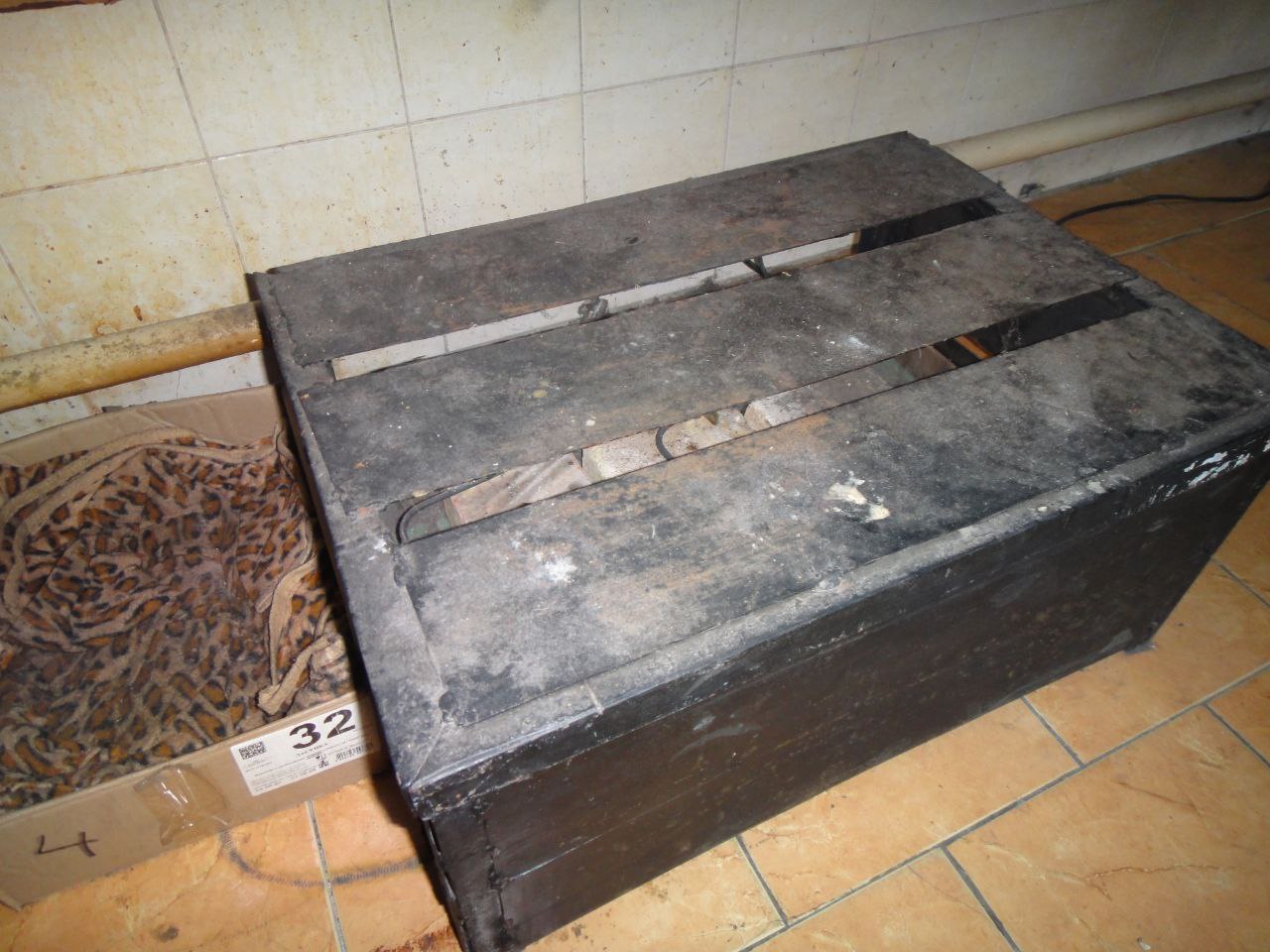
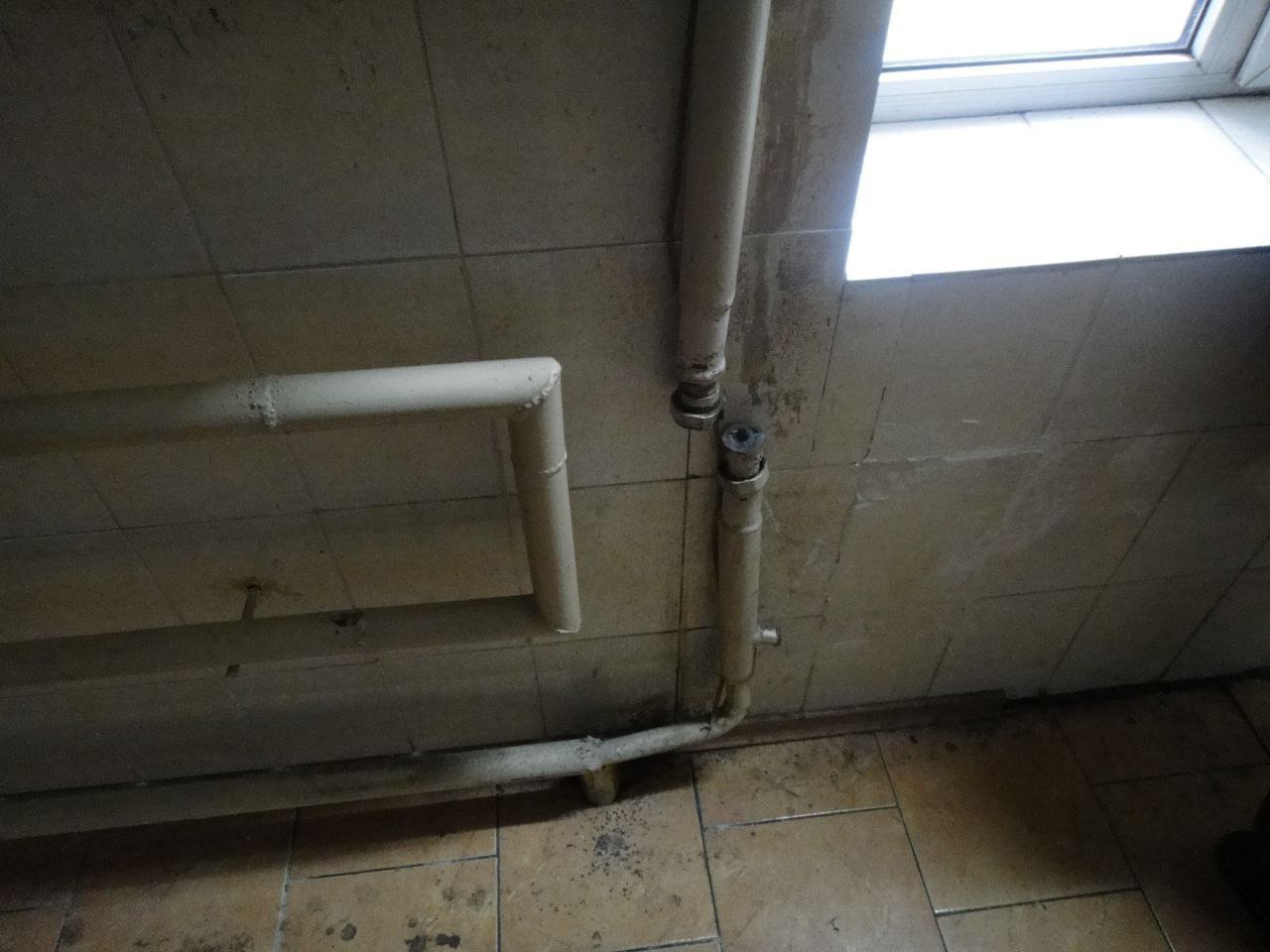
15. In the laundry drying room, the requirements of the Fire Safety Rules are grossly violated. In particular, the room is disconnected from the general heating system, and the temperature in it is maintained by using a homemade heating device located directly under the laundry being dried. This method of heating creates a significant risk of fire, which may lead to dangerous consequences, including a threat to the life and health of persons in the institution.
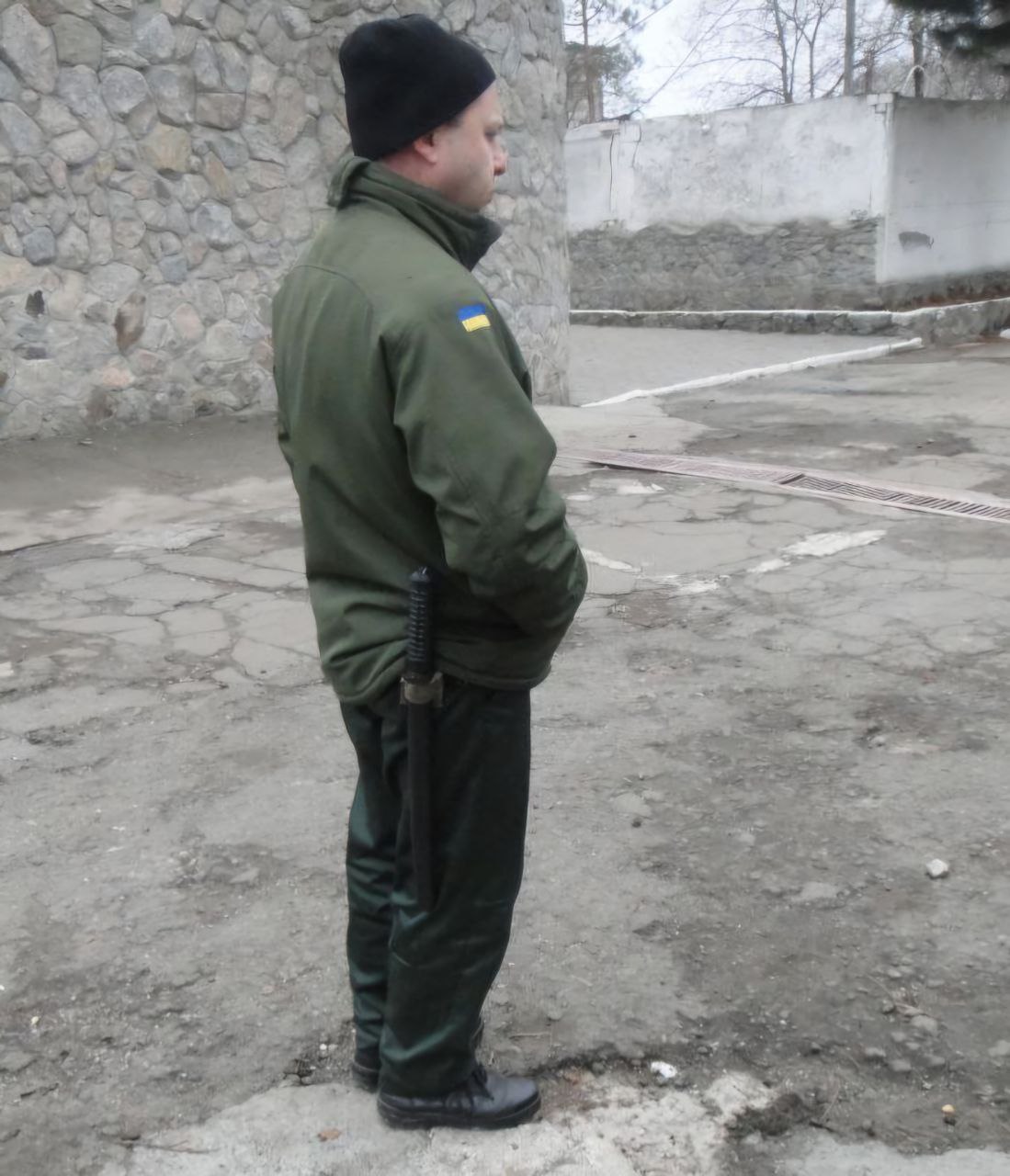
16. During the visit, the monitoring group recorded that the institution's personnel who have direct contact with convicted persons openly carry special equipment, in particular, rubber batons. At the same time, according to the eighth paragraph of paragraph 1 of Section XXVI of the Internal Regulations, the carrying of special equipment by personnel of penal institutions within the guarded territory of the penal institution must, if possible, be maximally concealed from the surroundings.
At the same time, the Committee recommends that penitentiary staff working in direct contact with prisoners should not carry special equipment (such as rubber batons, handcuffs, and canisters equipped with tear gas) openly in front of prisoners. Such carrying prevents the establishment of normal relations between staff and prisoners (CPT/Inf (2011) 29, paragraph 85; CPT/Inf (2013) 23, paragraph 23; CPT/Inf (2014) 15, paragraph 166).
17. According to official documentation, the staff shortage at the institution is 112 positions. At the same time, in the Report to the Government of Ukraine following the 2023 visit, the Committee emphasises that ensuring a positive climate in a penal institution requires a professional team of personnel, who must be present in sufficient numbers at any given time in places of detention. An insufficient number of personnel can only increase the risk of violence and intimidation between convicted persons.
The shortage of front-line personnel also undermines the quality and level of measures offered to convicted persons and jeopardises the prospect of preparation for release and social rehabilitation.
In this regard, the Committee calls on the Ukrainian authorities to take decisive measures to significantly increase the number of personnel in penal institutions of Ukraine where a low level of staffing is observed, with the aim of strengthening the presence of security and supervision service personnel inside the institutions. It is also necessary to take measures to put an end to 24-hour shifts for the personnel on duty (CPT/Inf (2024) 20, paragraph 93).
18. According to paragraph 7 of Chapter III of Section II of the “Procedure for organising the provision of medical care to persons sentenced to deprivation of liberty”, approved by joint order of the Ministry of Justice of Ukraine and the Ministry of Health of Ukraine dated 15.08.2014 No. 1348/5/572, convicted persons working at food facilities (except for work related to the positions of sellers, managers of food and clothing warehouses, storekeepers) and processing industry, in children's homes, institutions of general secondary education, professional training units in special educational colonies, medical units (feldsher posts), and hospital facilities of the State Penitentiary Service (except for work related to the provision of medical care), laundries, bathhouses, rooms for long-term visits, dormitories, clubs, at water supply and sewage facilities, and sites for animal breeding and raising, undergo mandatory preliminary and preventive medical examinations in accordance with the Resolution of the Cabinet of Ministers of Ukraine dated 23 May 2001 No. 559 “On approval of the list of professions, productions, and organisations whose employees are subject to mandatory preventive medical examinations, the procedure for conducting these examinations and issuing personal medical books”, and for each convicted person of the specified category, a primary accounting documentation form No. 1-OMK “Personal Medical Book”, approved by order of the Ministry of Health of Ukraine dated 21 February 2013 No. 150, registered with the Ministry of Justice of Ukraine on 23 April 2013 under No. 662/23194, is opened.
At the same time, the monitoring group recorded the absence of a personal medical book for some canteen workers and the absence of examination results in medical documentation, which are conducted by medical specialists (including laboratory, clinical, and other studies), which are necessary for admission to work at food facilities.
Recommendations:
1. Ensure compliance with minimum living space standards per one convicted person;
2. Stop the practice of using rooms in DIS cells with a wall width of less than 2 m²;
3. Ensure the availability of appropriate premises in the DIS unit, in accordance with the provision standards;
4. Ensure proper conditions of detention in SPS units, as well as ensure compliance with sanitary-hygienic standards and lighting standards for premises;
5. Ensure compliance with the right to labour and social protection;
6. Ensure compliance with fire safety rules;
7. Ensure proper maintenance of the bath and laundry complex;
8. Stop the practice of open carrying of safety equipment by personnel.