Report on the results of the monitoring visit to State Institution "Poltava Correctional Colony (No. 64)"
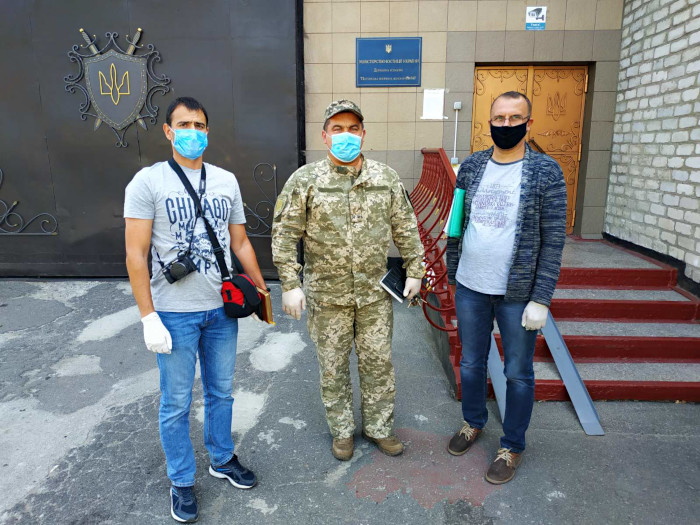
On 24 September 2020, a monitoring group from the KHPG, consisting of Volodymyr Hlushchenko and Ihor Sosonskyi, visited the State Institution "Poltava Correctional Colony (No. 64)" with a repeat visit.
General Information
The Poltava Correctional Colony No. 64 is located on the outskirts of the city of Poltava at the address: 6 Starokotelivska Street. According to current legislation, individuals who have been convicted for the first time for committing grave and especially grave crimes serve their criminal sentences in the institution. The general capacity limit, to which the colony's operations are most optimally adjusted, is 875 people. It is classified as a medium-security institution for men convicted for the first time to imprisonment. It is located in a picturesque area at the edge of a forest. At the time of the visit, 455 convicts were serving sentences in the institution.
The total area on which the institution is located is 88,300 sq. m, the total length of the perimeter of the institution is 956 m, and the main fence is 860 m. The total area of the enterprise is 0.45 hectares.
Water supply to the PKK (No. 64) is centralised. Drinking water is provided to convicts after thermal treatment (boiling).
The territory of the institution is tidy and clean. There were no problems with admission to the institution; the monitoring group was accompanied around the territory by the first deputy head of the institution, who was performing the duties of the head. There were no obstacles to inspecting the territory, residential premises, or the production zone.
Residential Zone
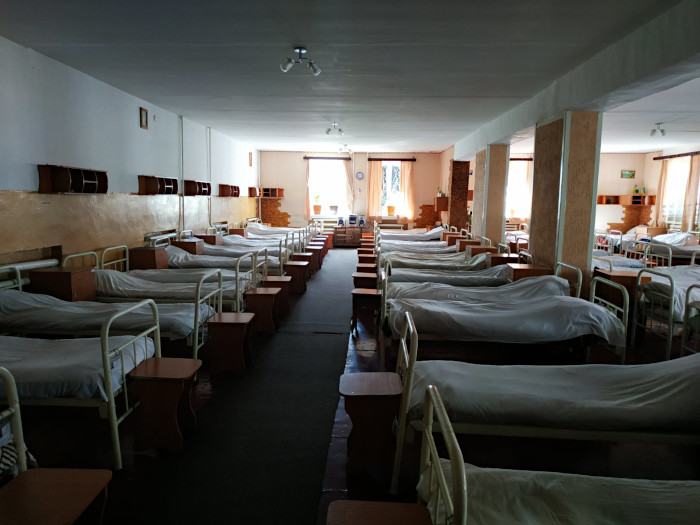
The PKK (No. 64) is divided into a residential, production, and service zone. The residential zone is divided into four isolated local resocialisation sectors, where four barracks-type dormitories are located for the accommodation of convicts. In July 2020, renovation was completed in unit number 10. This unit was converted into rooms for convicts. The renovation looks very good; the washbasins and toilet are tiled with modern tiles, and the toilet has high doors made of semi-transparent material; the right to privacy is not violated.
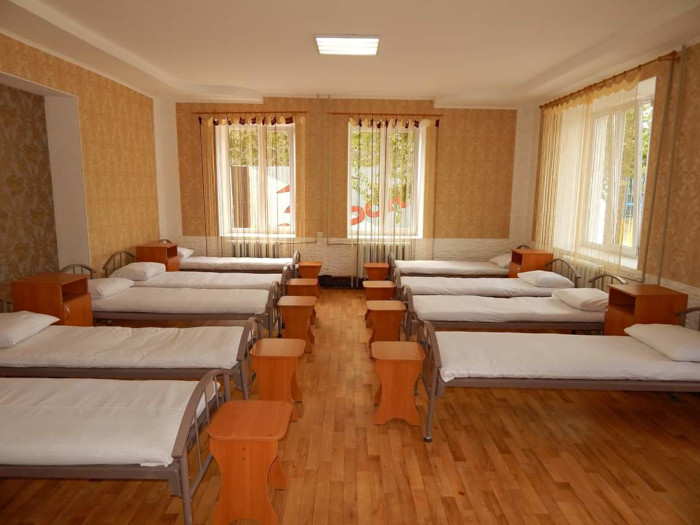
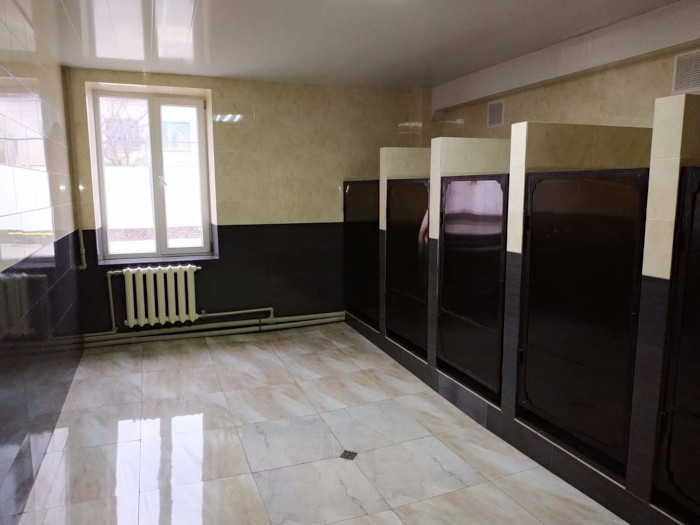
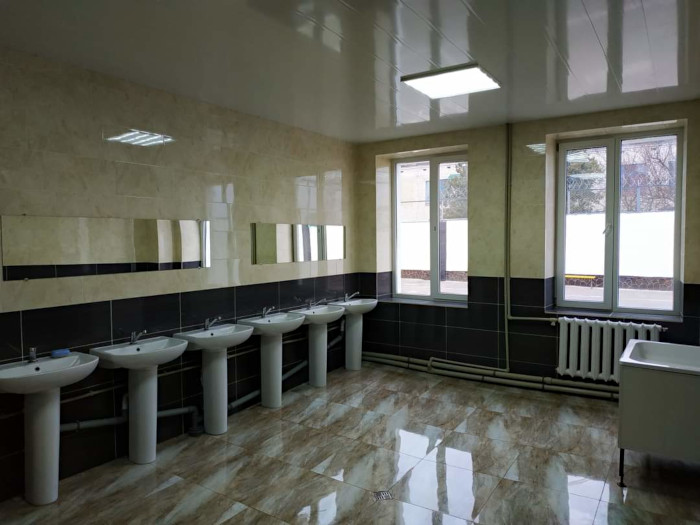
The three other barracks-type dormitories also look clean and tidy, although they do not have the same renovation as unit No. 10. The previously completed renovations are maintained in the dormitories. There are tanks with drinking (boiled) water. Sanitary equipment in the toilets is in good condition. The washbasins are new and clean. There is cold and hot water. There is no stench in the toilet room. The cubicles are separated from each other by sufficiently high partitions. There are also two compact showers in the toilet. The unit kitchens in the sectors are equipped with refrigerators, microwave ovens, and electric kettles. The convicts did not look intimidated; they spoke with the monitoring group and answered the questions asked.
Dining Hall
Next, the monitoring group headed to the dining hall. The renovated cooking workshop, the renovation of which was completed in 2019, made a pleasant impression. The workshop was cleanly washed, and the kitchen staff had medical books that were drawn up in accordance with current legislation.
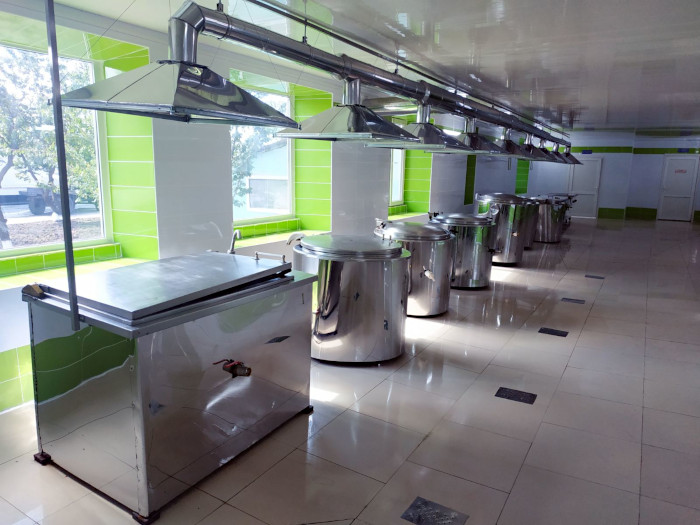
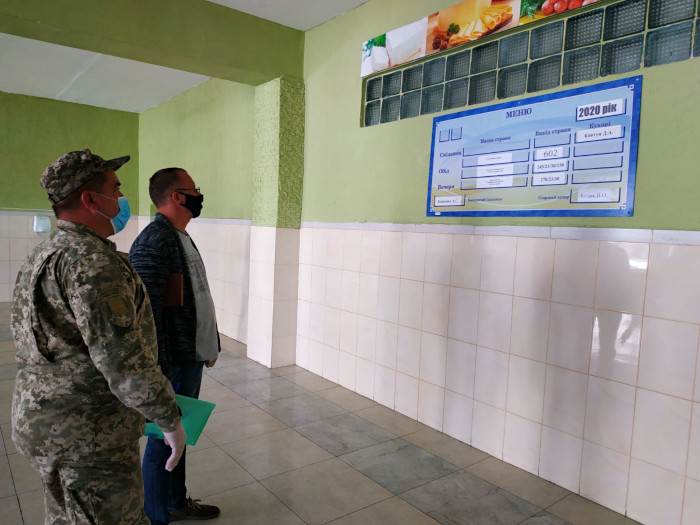
The dining hall premises are clean, there are no foreign odours, and the smell of freshly prepared food was perceptible. There are taps with water for washing hands, liquid soap, and electric hand dryers. A menu in the dining hall is available; however, at the time of the visit, the date was missing from the menu.
Medical Unit
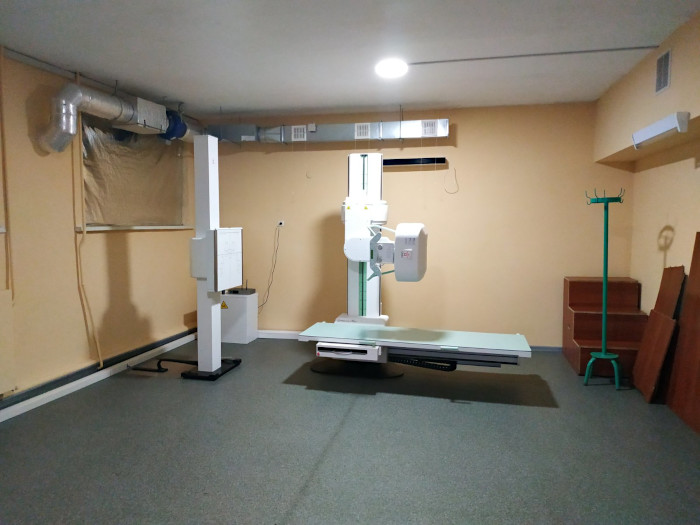
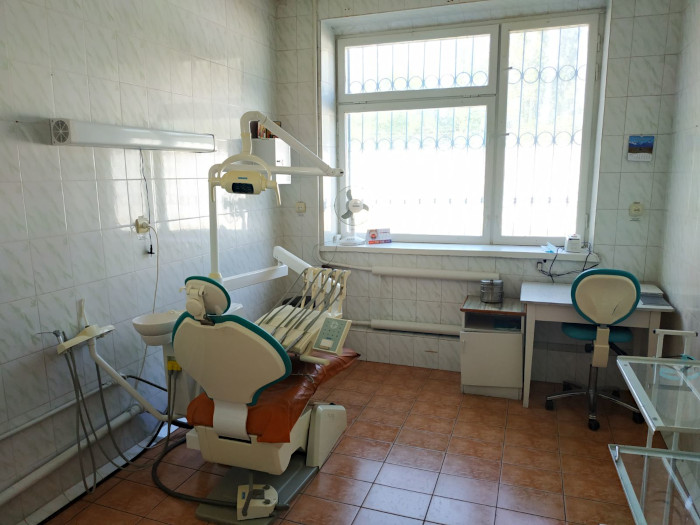
The colony's medical unit is fully equipped with necessary equipment. There is a modern X-ray machine, an equipped dental office, and a laboratory where general and clinical analyses are done on-site. The staff of the medical unit is fully staffed, and the medical unit is also provided with medicines.
On the day of the visit, there was one patient in the medical unit after a surgical intervention. The wards in the medical unit were clean, and the beds were made. There is an infectious diseases ward, to which, if necessary, a patient with coronavirus could be placed; the ward is equipped with a ventilator and has a separate exit to the outside to avoid possible contact of the infected person with other people being treated. Masks and disinfectants are available.
DIZO/PKT Sector
On the day of the monitors' visit to the colony, there were 7 convicts in the DIZO (disciplinary cell) sector, and 3 convicts in the PKT sector. According to administration representatives, this is the average rate of placing convicts in the DIZO.
The monitors spoke with all the convicts without obstruction. None of them expressed complaints against the institution's administration.
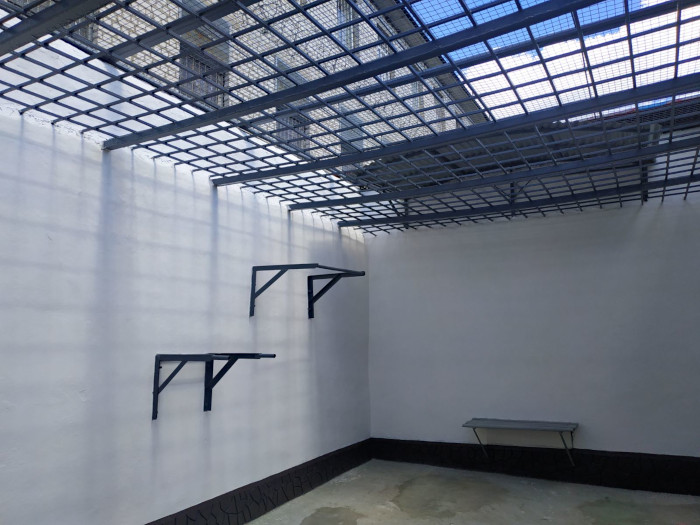
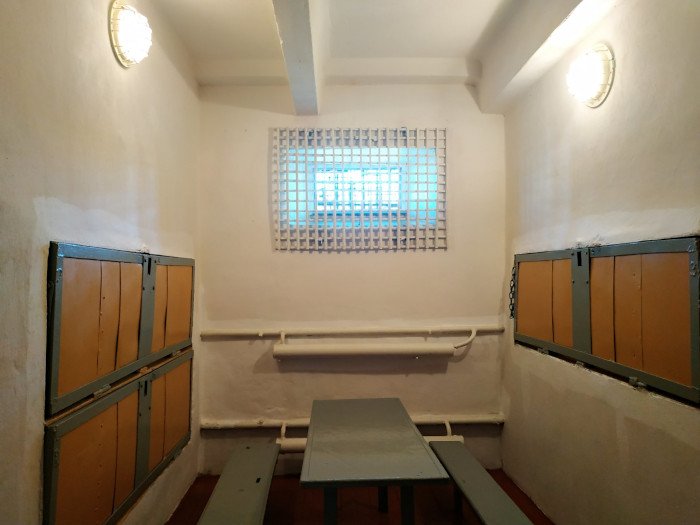
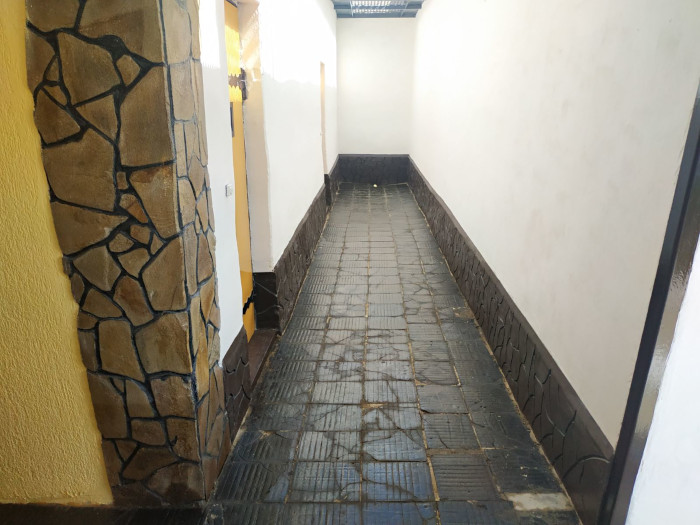
The DIZO/PKT cells are in a satisfactory condition. The convicts have the opportunity to walk in the internal courtyards, which are equipped with sports equipment and benches. The sector's territory is equipped with a separate place for convicts to eat, and there is a room for storing their personal belongings. The premises are dry and free of unpleasant odours. All cells are equipped with metal-plastic windows. The convicts have the opportunity to open a window in the cell to ventilate the room. The renovated DIZO/PKT cells were also inspected. The monitors noted that the cells are designed for 4 people, the toilet is separated by a high partition, has a door, and the toilet bowl is new. The cell has a centralised water supply. The sector is equipped with forced exhaust ventilation, which, according to administration representatives, is turned on for two hours in the morning and evening. There is no smell of dampness in the sector.
Industrial Zone
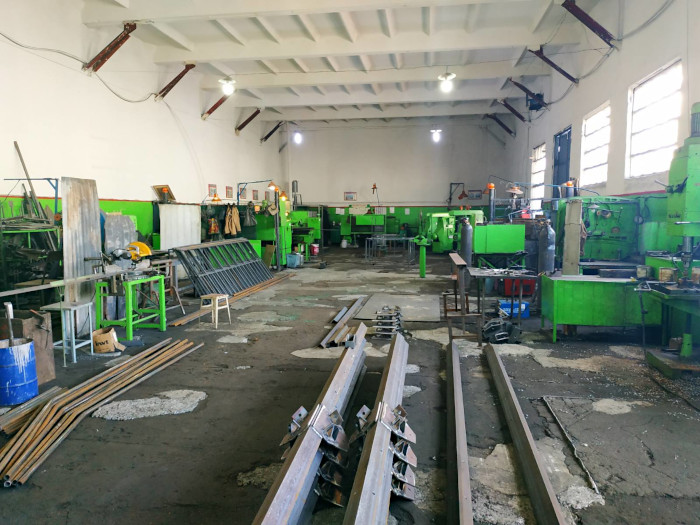
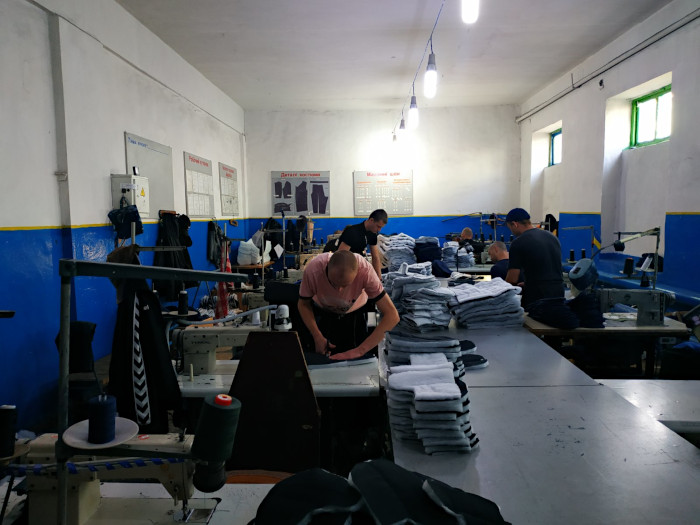
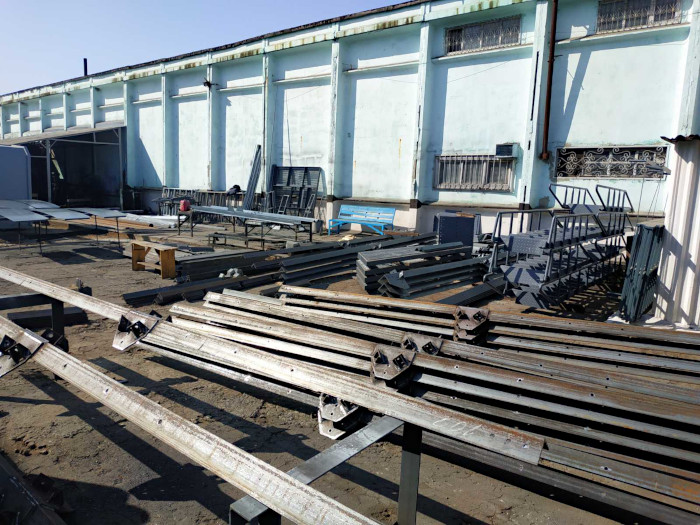
The industrial zone in the PKK (No. 64) consists of 4 departments: a metalworking workshop, a welding workshop, a garage, and a sewing workshop. The monitoring group first visited the metalworking and welding workshops. In the workshop premises, there was a loud clatter and a stench from metal processing. The convicts were working in special clothing, but noise-cancelling ear protectors and respirators were absent. The monitors last visited the sewing workshop. In the workshop room, there were no sharp odours or loud noises. The monitoring group did not receive any complaints from the convicts. According to the colony administration, official employment contracts have been concluded with all working convicts, and wages are paid.
The colony has a small subsidiary farm – vegetable gardens and a greenhouse. At the time of the monitoring group's visit, the garden and greenhouse were ploughed.
Leisure
On the territory of the PKK (No. 64) is an Orthodox church, and also, according to the administration, four other confessions operate. But, due to the introduced quarantine, visits to the colony by clergy are temporarily prohibited. Also on the colony's territory, there is a fairly large club, where, before the introduction of quarantine, representatives of a local charitable organisation held various kinds of events. Convicts have the opportunity to visit the library.
According to the established programme, convicts have the opportunity to speak with a psychologist. Recently, a modern renovation was completed in the psychological relief room in the colony.
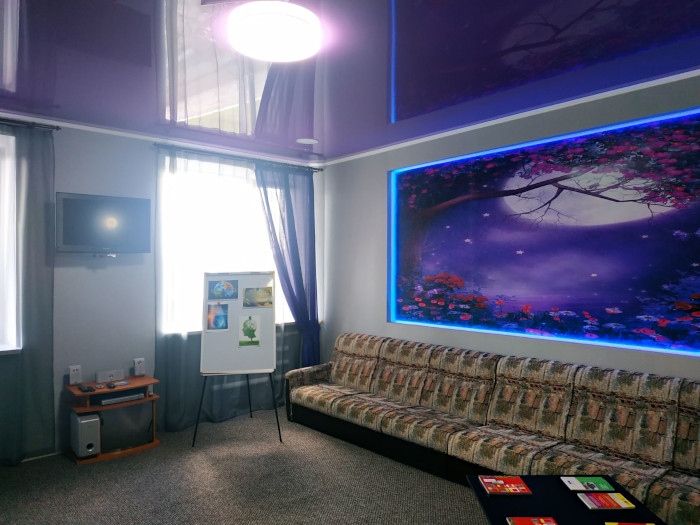
The specified room has a cosy interior, soft armchairs, and a large soft sofa; on one of the walls, an indoor waterfall is installed. According to the convicts, this room reminds them of home.
Visitations
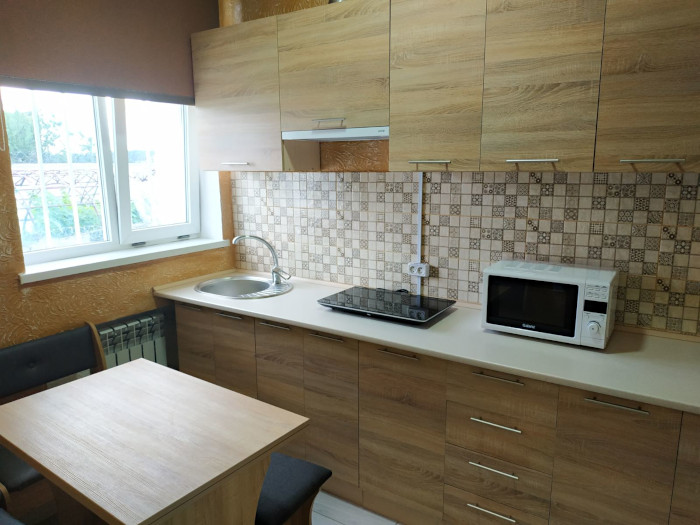
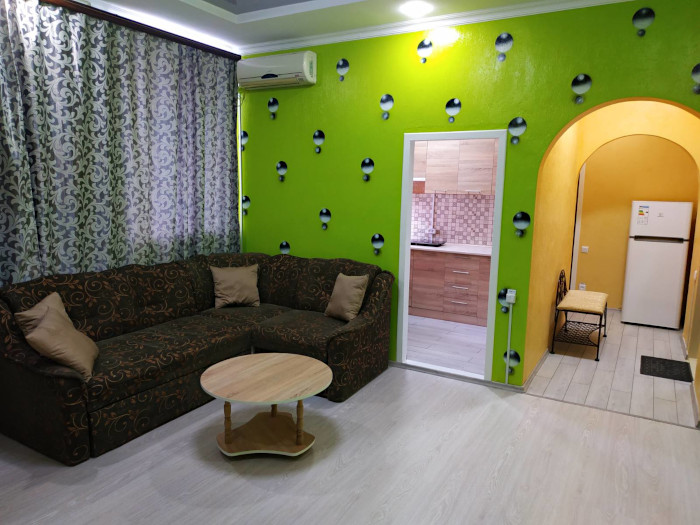
Due to the quarantine introduced in the country, long-term visitations are temporarily prohibited; short-term visitations through glass are allowed. But the monitoring group visited the rooms for long-term visitations, where close relatives of convicts will be able to stay in the future. The PKK (No. 64) has rooms for long-term visitations of various comfort levels – from a single-room unit (studio apartment type) to a full-fledged two-room apartment. The most comfortable rooms cost from 135 hryvnias per person per day. The rooms have modern renovations; new modern furniture and household appliances, air conditioning, and a separate bathroom are installed.
EU Project "Resisting Torture, Cruel Treatment and Impunity in Ukraine"