The “Donetsk Memorial” Non-Governmental Organisation and the History of the Creation of the “Prison Website”
The non-governmental organisation “Donetsk Memorial” was founded in 1989. From 1998 onwards, Donetsk Memorial began to work actively and thoroughly on the problems of the modern penal system. In the same year, a major conference was held in Donetsk with the support of the international organisation Penal Reform International (PRI), attended by representatives of seventeen countries. Both prison staff and representatives of non-governmental organisations took part in it.
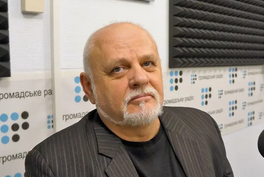 Oleksandr Bukalov
By that time it had become obvious that information in the country’s public sphere about the many details of how the prison system functioned was extremely limited. Although there were no longer the obstacles to obtaining information about prisons and prisoners that had existed until quite recently, it was difficult to find out many details: for example, how many people in the country were in custody, how many of them were women or adolescents, how many prisons there were and where exactly they were located, and what the conditions of detention were. There was very little such information, it was fragmentary, and it was often hard to find.
At the same time, there were many different stereotypes about the prison system and about life in prison. The media focused mainly on extreme cases connected with the system. There was therefore an obvious and pressing need to gather in one place, on a single website, a wide range of reliable information about prisons and those who live in them.
With this aim in view, Donetsk Memorial initiated the creation of the “Prison Website”. The idea had been taking shape for several years, and its implementation became possible thanks to financial support from the Renaissance Foundation.
The following subjects were chosen as priority areas for publication:
- the location of penitentiary institutions, their contact details and descriptions;
- the documents regulating the work of the prison system, including departmental documents;
- international documents with which prison staff are required to comply;
- court judgments, in particular those of the European Court of Human Rights, relating to the work of the system.
The “Expert Opinion” section was intended for professional assessments of various aspects of prison-related issues, including the department’s practice, the application of the legal documents governing prisons, and draft amendments to laws and regulations.
The website contains almost all twenty of the organisation’s annual reports, “The Observance of Prisoners’ Rights in Ukraine” – a unique example of the regular coverage, over two decades, of human rights compliance in a single specific field.
An important part of each report is reliable statistical information about the work of the penitentiary system.
To obtain statistical information, use was made of the mechanism of submitting information requests to the prison department and to other state bodies. The law in force obliged state bodies to provide information in response to such requests, and Donetsk Memorial, as a rule, received the necessary information from them. Moreover, information obtained on request from the department itself can hardly be called unreliable.
In those cases where officials refused to provide the organisation with information in response to its requests, and sometimes failed to reply at all, it was necessary to go to court. And in court the officials lost, while Donetsk Memorial eventually obtained the information it needed. High office did not save those who concealed information from liability. There are court judgments recognising such officials as lawbreakers, as happened even in the case of the head of the department, Vasyl Koshchynets.
Donetsk Memorial’s partners from other non-governmental organisations also published information about their work on the website.
The website also published materials from the various conferences and seminars on prison-related subjects held by Donetsk Memorial and its partners.
A number of the brochures posted on the site contain information about the procedures for appealing against court decisions or against the actions of officials, including prison staff. This is often of interest to people serving sentences.
The “Prison Website”, then, arose from a simple need: the public sphere lacked verified information about prisons, while the media covered mainly extreme cases. With the support of the Renaissance Foundation, Donetsk Memorial gathered on the website statistics, documents, court judgments and conference materials — as a counterweight to the stereotypes about the prison system. Donetsk Memorial obtained the statistics for its reports through information requests to the prison department, and, when officials stayed silent or refused, through the courts, which it won even against the head of the department. These twenty years of work are gathered on the “Prison Website”, which has been updated with the assistance of the KHPG.