Report on the findings of a monitoring visit to Polytska Correctional Colony No. 76
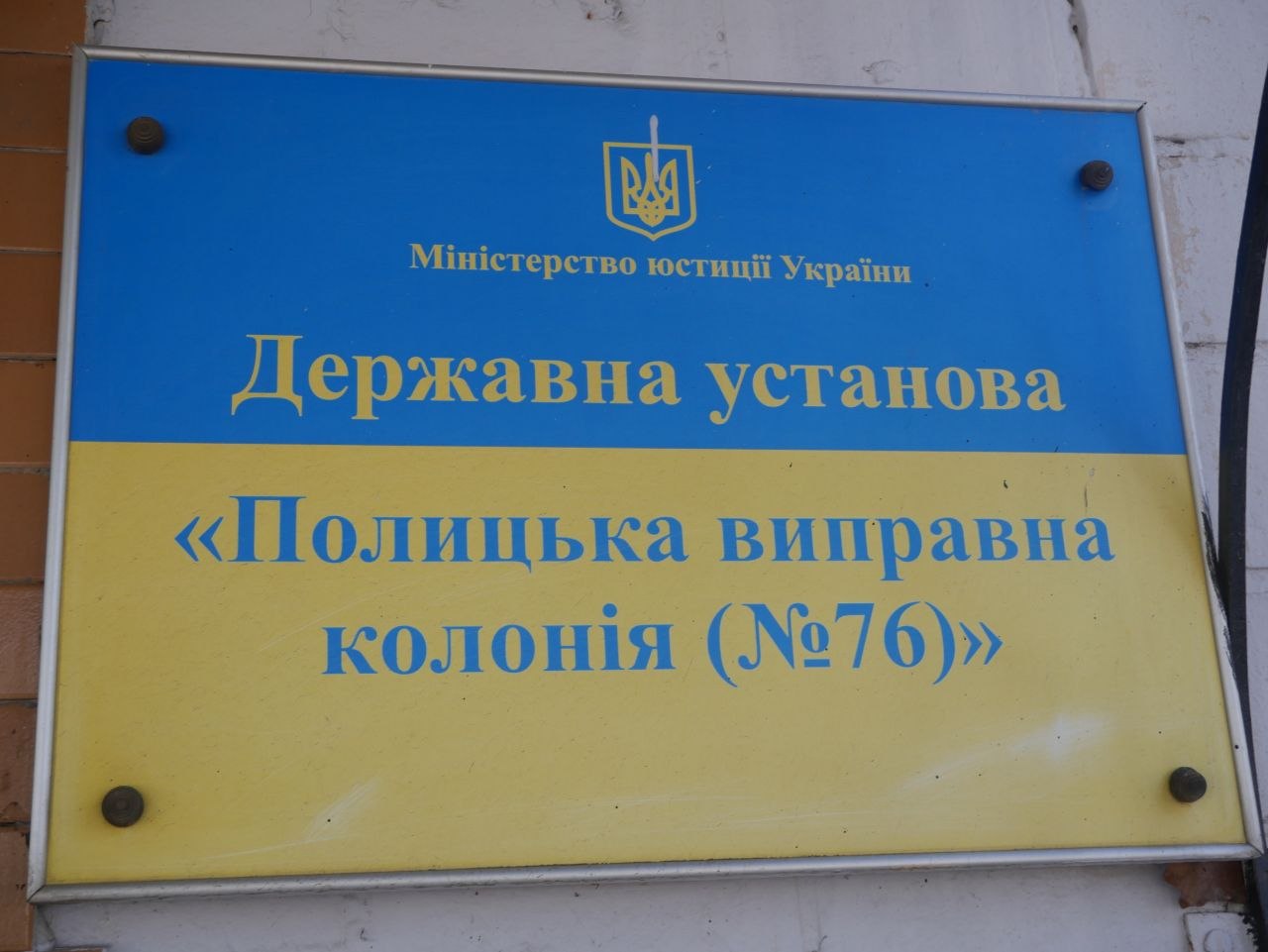
On 12 August 2026, in accordance with the Optional Protocol to the Convention against Torture and Other Cruel, Inhuman or Degrading Treatment or Punishment, having regard to the provisions of the United Nations Standard Minimum Rules for the Treatment of Prisoners (the Nelson Mandela Rules) and to the case-law of the European Court of Human Rights, and on the basis of Article 24 of the Criminal Executive Code of Ukraine (‘Visits to penal institutions’), a group of monitors from the Kharkiv Human Rights Protection Group and the NGO ‘Protection for Prisoners of Ukraine’ carried out a visit to the State Institution ‘Polytska Correctional Colony (No. 76)’ (hereinafter — PCC-76, the institution, the establishment, the colony). The visit was conducted as a scheduled visit without prior notice, and all facilities of the institution were inspected.
The previous visit took place on 20 December 2024.
In preparing for the visit, the monitors drew on the contents of complaints from convicted persons and their relatives, the material of earlier reports, and the reports of monitors of the National Preventive Mechanism under the Ukrainian Parliament Commissioner for Human Rights (NPM).
The visit is being conducted as part of the project ‘Seeking Justice for Survivors’, which is funded by the Ministry of Foreign Affairs of Denmark with the support of the Danish Institute against Torture — DIGNITY.
The visit was carried out by the following monitors:
- Andrii Didenko — assistant to Yaroslav Yurchyshyn, Member of Parliament of Ukraine, programme coordinator at the Kharkiv Human Rights Protection Group, with experience of monitoring visits since 2014, NPM (National Preventive Mechanism) monitor and member of the NPM advisory board;
- Serhii Zuikov — assistant to Kostiantyn Kasai, Member of Parliament of Ukraine, member of the public council at the Ministry of Justice of Ukraine, member of the non-governmental organisation ‘Protection for Prisoners of Ukraine’, NPM monitor, with many years’ experience of monitoring visits;
- Artemii Shumnyi — journalist with the news agency ‘Zakhyst Viazniv Ukrainy / PROTECTION FOR PRISONERS OF UKRAINE’, lawyer at the Kharkiv Human Rights Protection Group, NPM monitor.
During the monitoring visit to PCC-76, positive developments were noted in connection with the repair and refurbishment works carried out in the residential, domestic, sports and service premises of the institution, the provision of individual space for convicted persons and the renewal of certain infrastructure facilities.
At the same time, the monitoring group identified a range of violations and systemic shortcomings in securing the rights of convicted persons and persons held in custody. These concern the arrangements for admitting newly arrived convicted persons and the functioning of the quarantine, diagnosis and distribution unit; inadequate material, domestic and sanitary conditions in the disciplinary isolation cells and cell-type premises, in the sector for holding persons in custody, in the enhanced control unit and in the social and psychological service units; insufficient natural light and ventilation; the lack of privacy in sanitary facilities; the absence of drinking water; and inadequate bathing and laundry services. Shortcomings were identified in the conduct of social, educational and psychological work, in disciplinary procedures, in the arrangement of short-term visits and in the provision of access to the Internet and to video communication, as was the absence of a proper civil defence shelter.
Particular attention was paid to the organisation of the labour of convicted persons. Indications were found that actual long-term and systematic employment did not correspond to its formalisation through civil law contracts; there were considerable discrepancies in the documented amounts of remuneration, reports of unpaid labour, inconsistencies in the recording of working time, shortcomings in occupational safety and risks to the proper accrual of insurance record. Interviews with staff of the institution and with prisoners serving life sentences concerning the use of the ‘CASSANDRA’ subsystem of the Unified Register of Convicted Persons and Persons Held in Custody revealed that convicted persons were insufficiently informed about the risk assessment procedure and its outcomes, and that staff lacked a sufficiently clear and uniform understanding of certain elements of that procedure.
In the activities of Medical Unit No. 76, shortcomings were identified in the keeping of medical records and the documenting of bodily injuries, in safeguarding medical confidentiality, in the provision of care to persons with mental disorders and opioid dependence, in infection control, in the diagnosis of viral hepatitis C, in meeting the needs of persons with disabilities, in dental and telemedicine care, and in compliance with requirements on the storage of medical devices and on fire safety.
Taken together, the problems identified call for comprehensive organisational, material, technical and managerial measures to bring the conditions of detention and the institution’s practices into line with the requirements of national legislation and international standards for the treatment of persons deprived of their liberty.
General information
The State Institution ‘Polytska Correctional Colony (No. 76)’ (PCC-76) is a medium-security penal institution for holding men who have previously served sentences of imprisonment. Pursuant to Order No. 3789/5 of the Ministry of Justice of Ukraine of 30 October 2020, a maximum-security sector has been established at the institution for men sentenced to life imprisonment to serve their sentences in multi-occupancy cell-type premises.
The institution’s history dates back to 1962. Its establishment was connected, in particular, with the use of the local raw-material base and with the organisation of production drawing on the labour of convicted persons. In the first decades of its operation, the extraction and processing of basalt stone occupied a significant place in the institution’s production structure, and thereafter the production base was gradually expanded and modernised. Over the following decades, the establishment’s organisational structure, regime and production specialisation changed. In 1987 the regime of the institution was changed from general to strengthened, and in 1999 it was given the name ‘Polytska Correctional Colony’. The institution subsequently operated within Ukraine’s penal system, and in 2020 a maximum-security sector for men sentenced to life imprisonment was created within its structure.
The institution comprises a duty unit, residential and production zones, a quarantine, diagnosis and distribution unit, a disciplinary isolation block, cell-type premises, social and psychological service units, a medical unit and a maximum-security sector for prisoners serving life sentences, as well as administrative premises.
As at the day of the visit, the official capacity of PCC-76 was 1,421 persons. On the day of the monitoring visit, 339 convicted persons were being held at the institution. A further five persons were held separately in the remand unit. The convicted persons were distributed among six operating units of the social and psychological service (SPS). The authorised staff complement of the institution was 211.5 posts, while the actual number was 182.75 posts. The staff shortfall was therefore 28.75 posts, or about 13.6% of the authorised complement. The staffing schedule of the institution provides for two psychologist posts.
During 2026, 121 convicted persons (97 of them for the first time) and 15 remand prisoners arrived at the institution. Two persons died at the institution in 2026. Nine persons were on the preventive register as being at risk of suicide and seven as being at risk of self-harm. Twenty-two convicted persons were recorded as persistent violators of the established order of serving sentence. One case of suicide was recorded in 2026.
Among the persons held at the institution, 15 had an established disability: there were no persons with Group I disability, two with Group II and 13 with Group III. In the course of 2026, two convicted persons were released on account of serious illness. No complaints concerning inadequate conditions of detention or the inadequate provision of medical care were registered in 2026. At the same time, 11 cases of bodily injury sustained while persons were at the institution were recorded during 2026. Convicted persons had 228 tablet computers in their personal possession, and eight convicted persons had registered email addresses.
Positive experience
During the monitoring visit, it was noted that a range of repair and refurbishment works had been carried out at the institution with the aim of improving the material and domestic conditions in which convicted persons are held and of renewing certain infrastructure facilities.
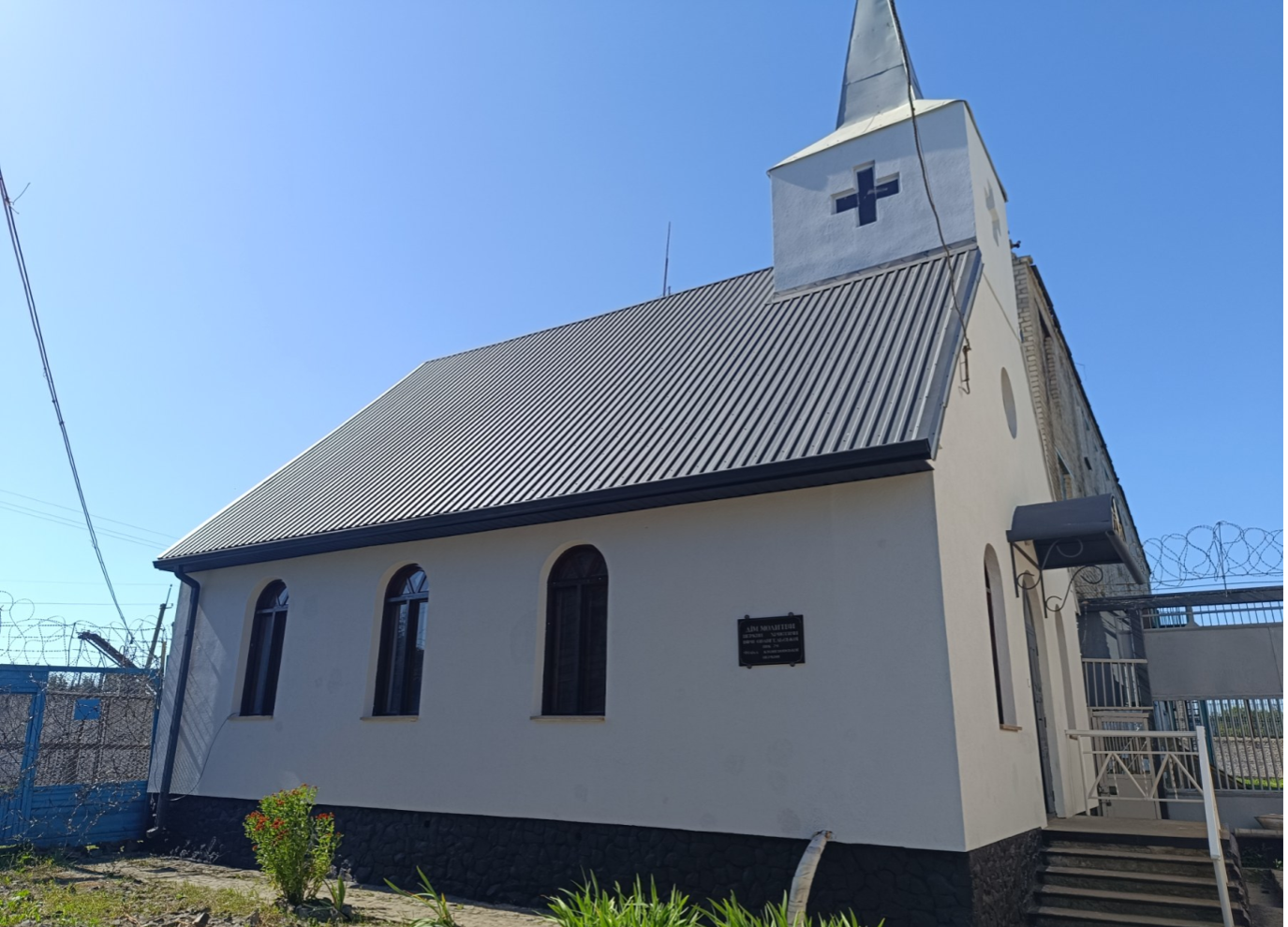
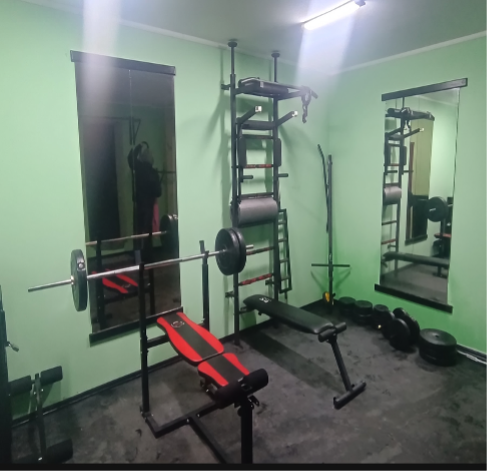
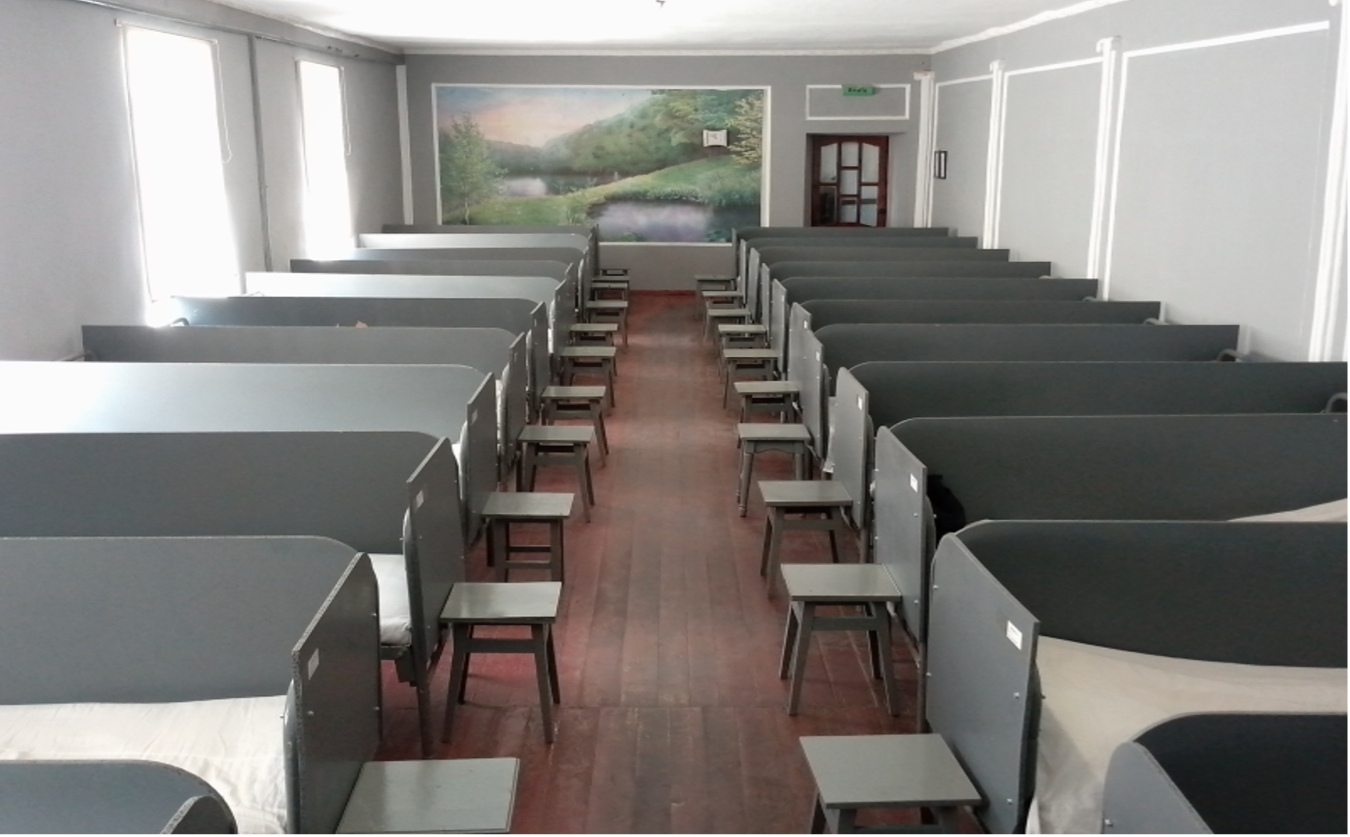
In the dormitory of the SPS unit, repairs have been carried out and individual space has been arranged for convicted persons. This approach helps to ensure more appropriate domestic conditions and greater privacy for persons during their time in the residential premises. Façade and refurbishment works have been carried out in the building of the quarantine, diagnosis and distribution (QDD) unit, including the restoration of the dormitory following a fire. The sports hall for convicted persons has also been repaired and equipped with sports apparatus, which creates more suitable conditions for physical activity and for the organisation of leisure. Particular mention should be made of the major overhaul of the roof of the prayer house. The dining hall for convicted persons, damaged by fire, has also been restored, with major repairs and façade works completed.
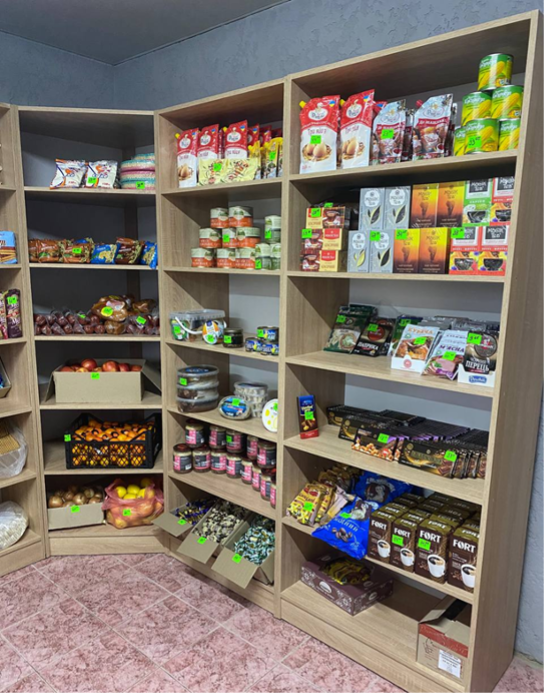
Positive changes have likewise been recorded in the operation of the shop for convicted persons, where major repairs have been carried out and new furniture and equipment purchased.
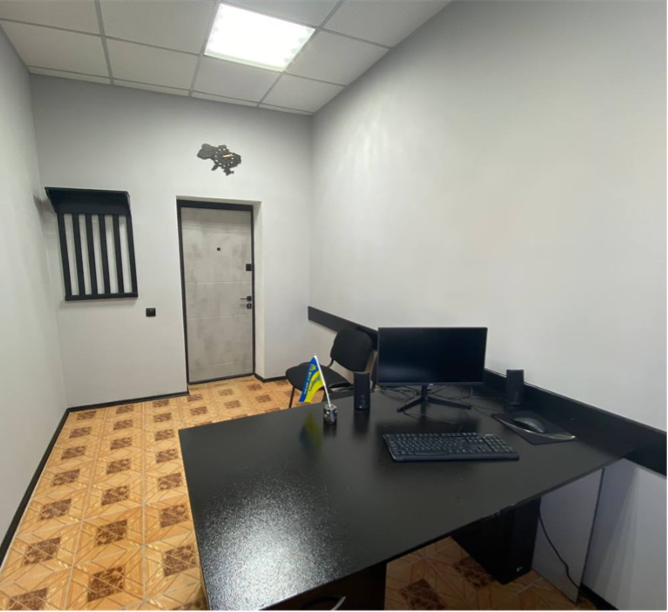
As part of the introduction of a pilot project on the supervision of convicted persons and the maintenance of order based on the principles of duty service applied in the Republic of Poland, the repair of service premises, including the psychologist’s office and the duty unit, has been completed. These measures point to the gradual renewal of the institution’s infrastructure and to the creation of more appropriate conditions both for convicted persons and for the performance of staff duties.
Violations of national and international law identified
During the monitoring visit, violations of the requirements of national legislation and failures to comply with international recommendations in the field of the treatment of prisoners were identified, resulting in breaches of the rights of convicted persons:
1. The procedure and conditions for admitting convicted persons to the institution do not fully comply with the requirements of the legislation of Ukraine in force or with international standards for the treatment of prisoners.
Under paragraphs 1 and 2 of Section II of the Regulations on the Quarantine, Diagnosis and Distribution Unit, approved by Order No. 2300/5 of the Ministry of Justice of Ukraine of 4 November 2013 (hereinafter — the Regulations on the QDD Unit), in order to organise work with newly arrived convicted persons, a working group is established by order of the head of the institution, comprising the deputy heads of the institution, the heads of structural subdivisions, a psychologist and a medical officer.
For the purposes of planning that work, a programme is drawn up each year to familiarise newly arrived convicted persons with the procedure and conditions for serving their sentences; the programme is approved by the head of the institution.
Under paragraph 8 of Section II of the Regulations on the QDD Unit, holding convicted persons in conditions of isolation (quarantine) entails, among other things, the implementation of the programme for familiarising convicted persons with the conditions and procedure for serving their sentences.
Under paragraph 5 of Section II of the Regulations on the QDD Unit, the measures of the familiarisation programme for newly arrived convicted persons are to be planned in such a way that each member of the working group visits the QDD unit at least once a week.
However, in the course of confidential conversations with convicted persons and the analysis of official records, the monitoring group established that the measures envisaged by the familiarisation programme for newly arrived convicted persons are systematically not carried out.
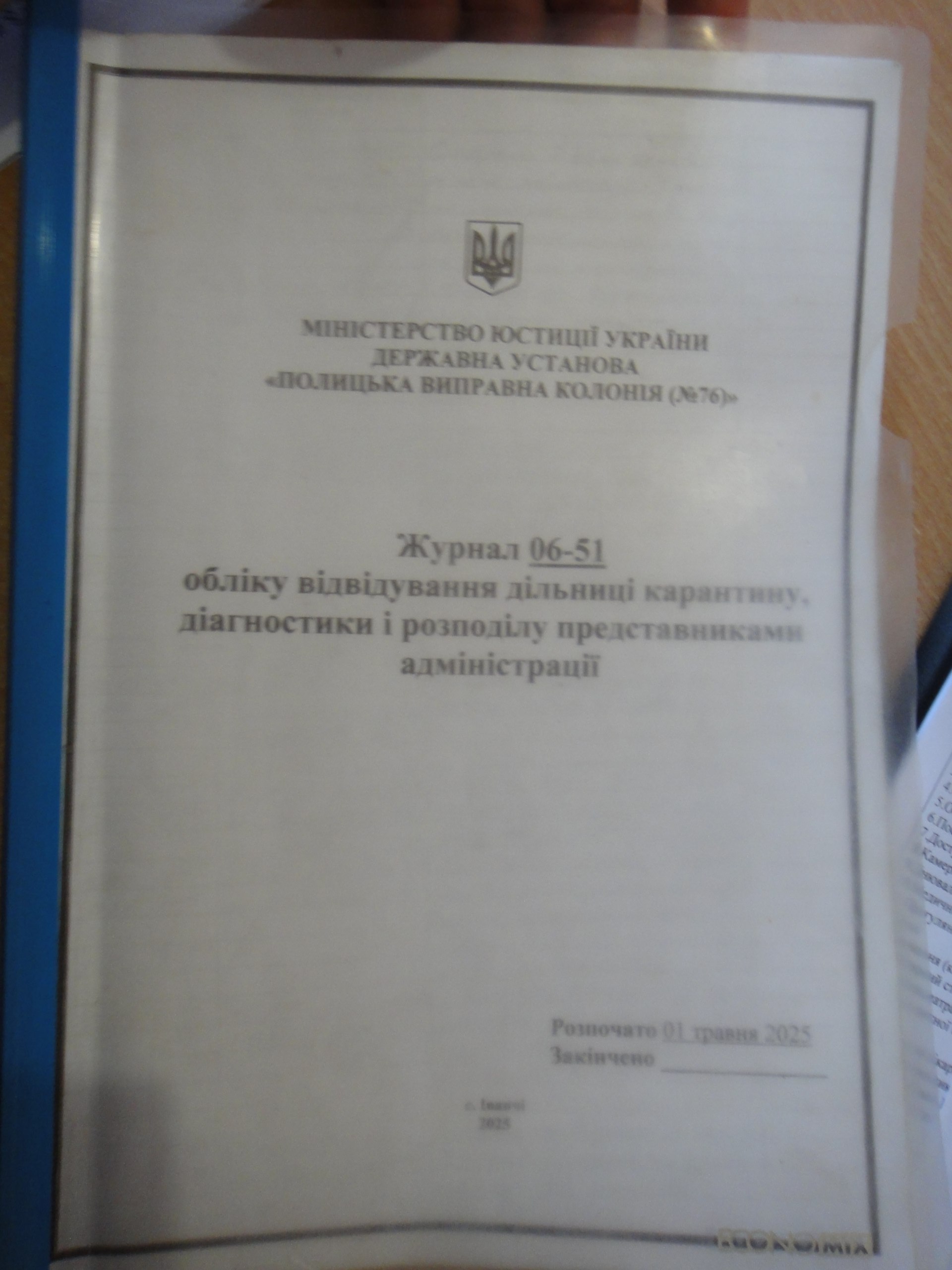
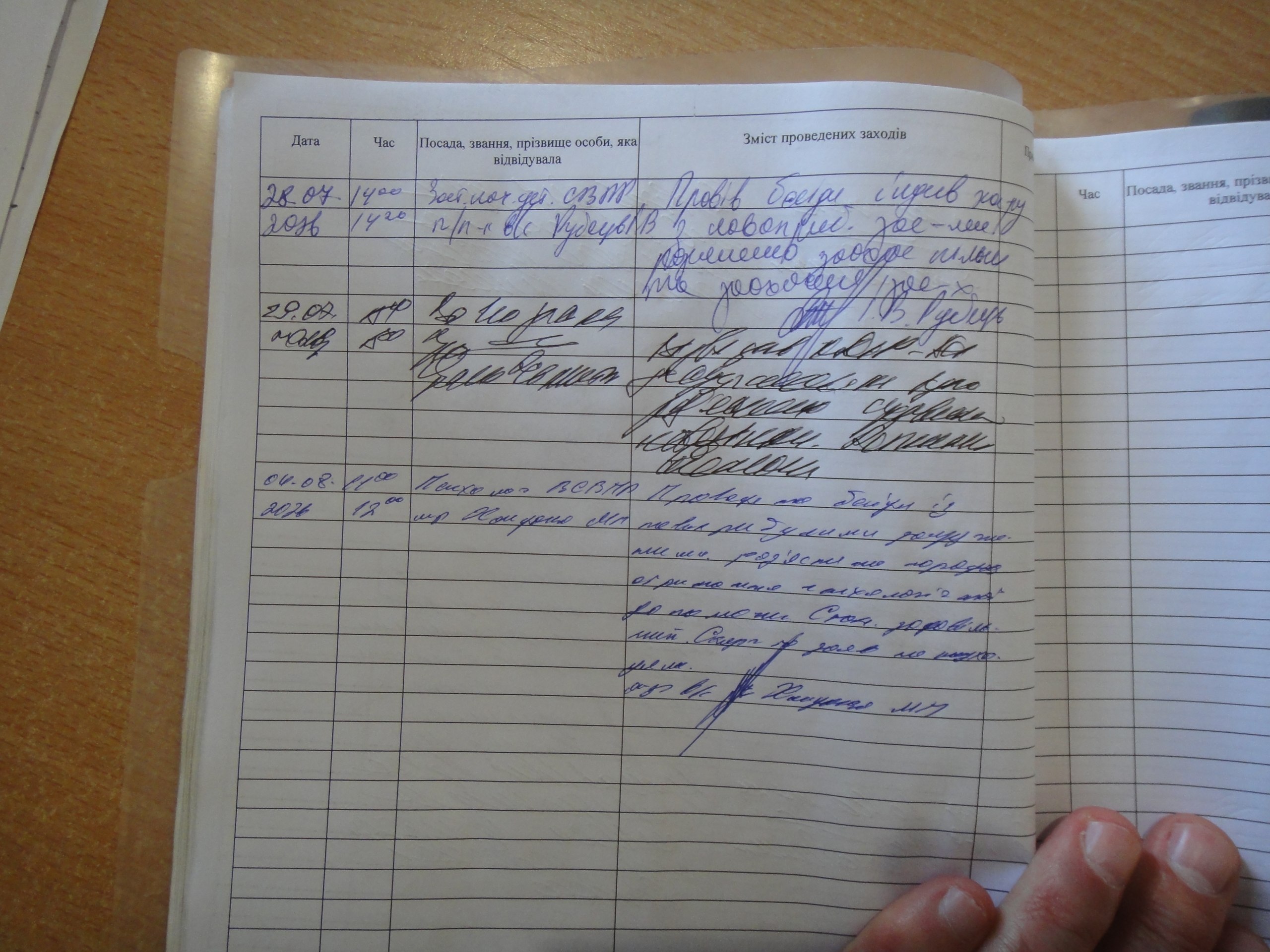
The absence of a proper organisation of this work is confirmed, in particular, by the entries in the register of visits to the QDD unit by representatives of the administration.
Thus, nine convicted persons arrived at the institution on 28 July 2026. According to the entries in the register of visits to the QDD unit, only three of the measures envisaged by the familiarisation programme were carried out during the 14 days they spent in the unit.
The circumstances established may therefore indicate a failure to comply properly with the requirements concerning the organisation and conduct of the familiarisation programme for newly arrived convicted persons, as well as a failure to observe the prescribed frequency of work by members of the working group with newly arrived convicted persons.
2. In breach of paragraph 1 of Section II of the Regulations on the QDD Unit, the working group for work with newly arrived convicted persons does not include the head of the financial support and accounting department — the chief accountant.
3. The monitoring group established that the conditions in which newly arrived convicted persons are held in isolation (quarantine) do not comply with the requirements of paragraph 1 of Section V of the Internal Regulations of Penal Institutions, approved by Order No. 2823/5 of the Ministry of Justice of Ukraine of 28 August 2018 (hereinafter — the IRPI).
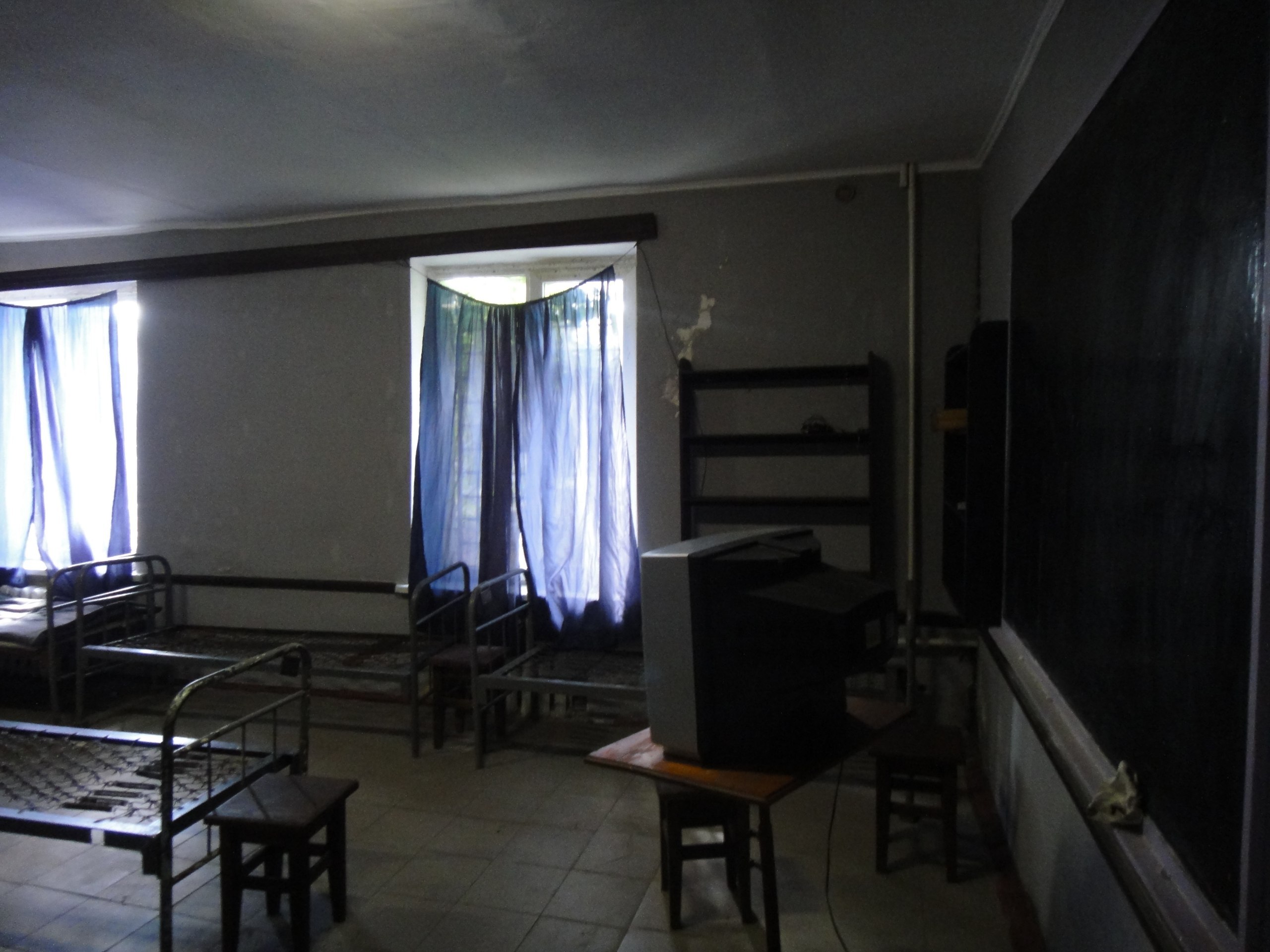
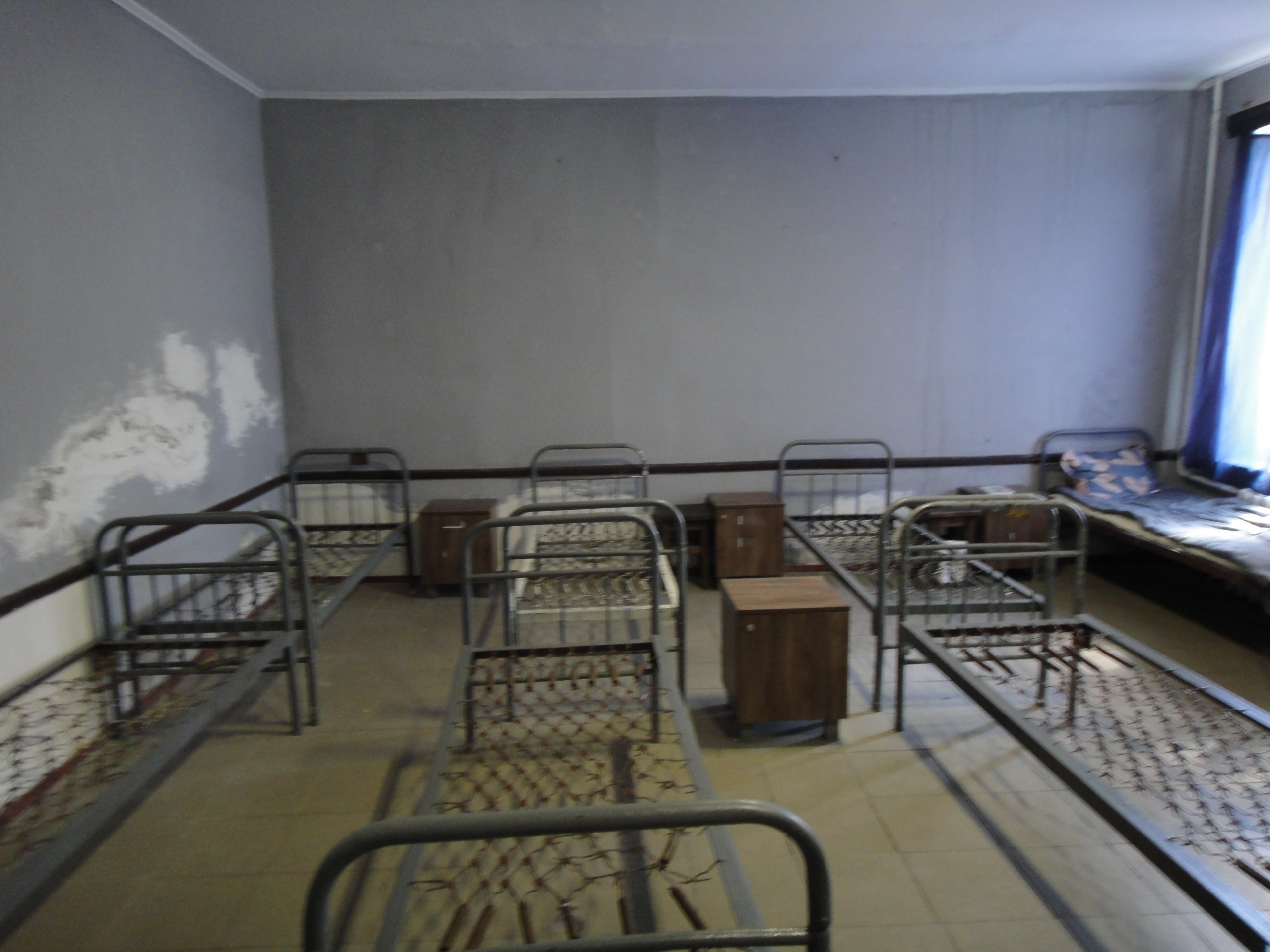
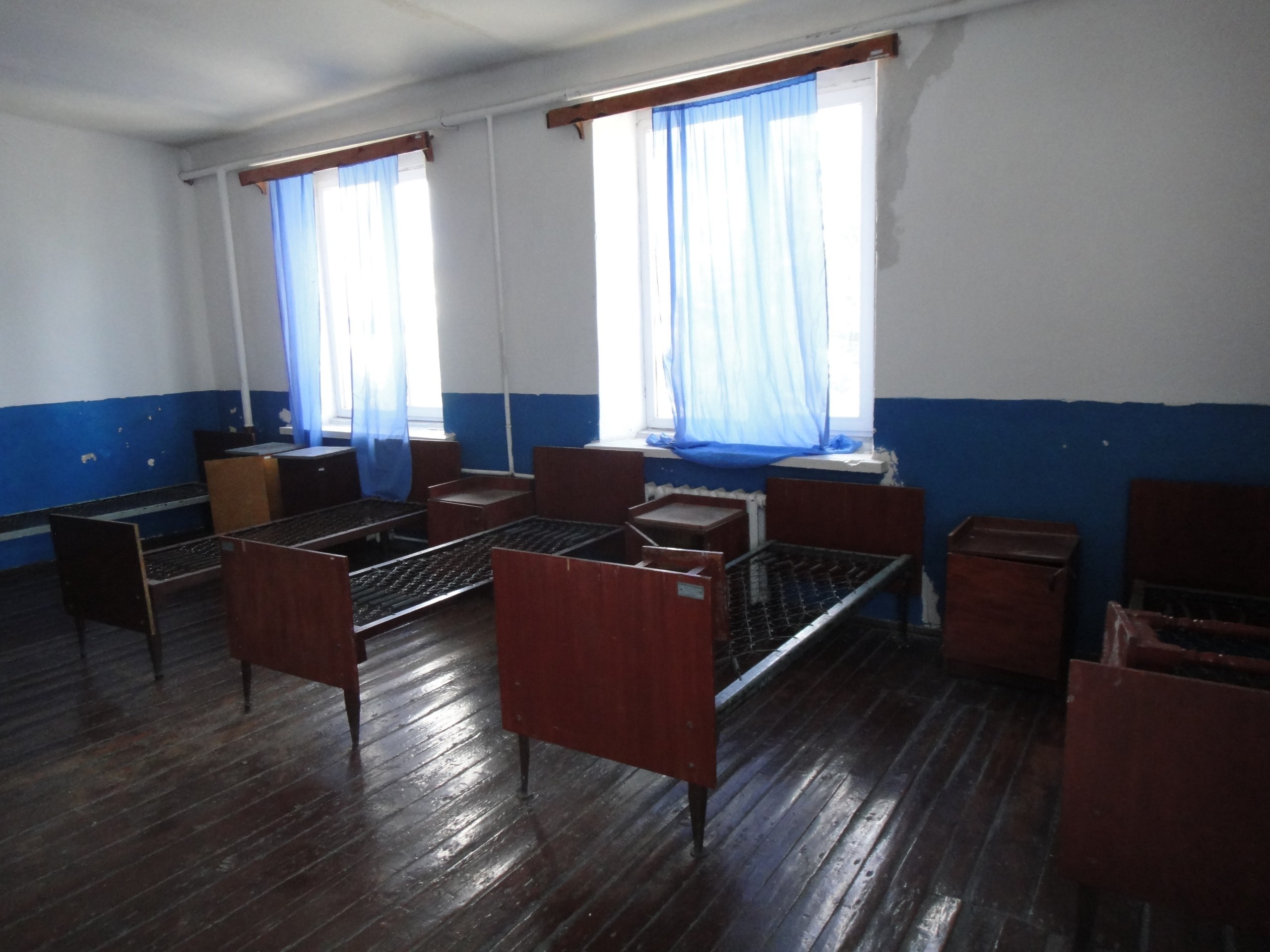
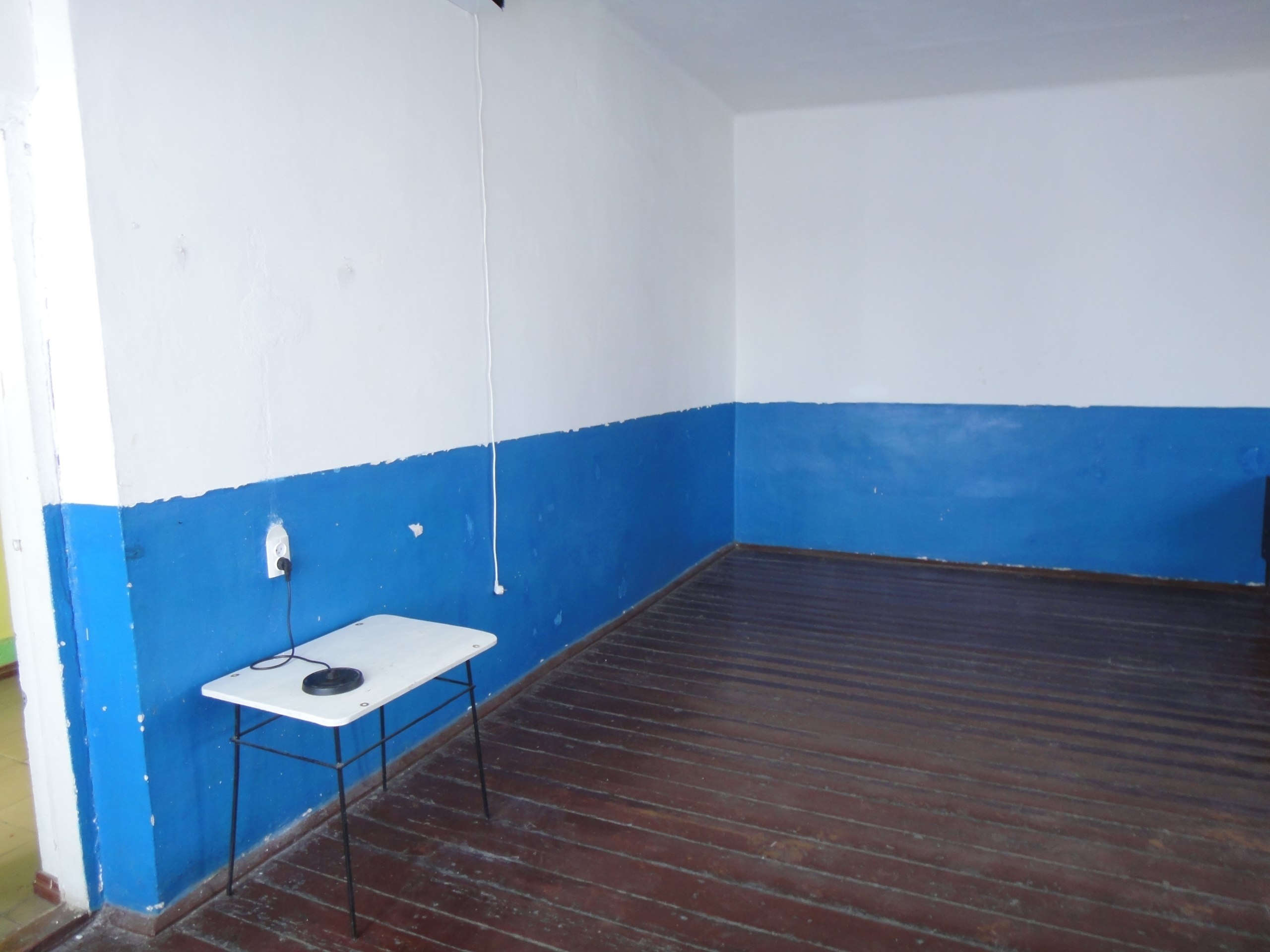
Owing to the repair works being carried out in the QDD unit, newly arrived convicted persons are, for the duration of the works, accommodated in premises in the institution’s evening school building, which are not intended for use as a QDD unit and do not meet the established requirements for its functional purpose.
Those premises do not provide adequate material, domestic or sanitary conditions for holding newly arrived convicted persons, which makes it difficult to maintain proper sanitary conditions and order during their time in isolation (quarantine).
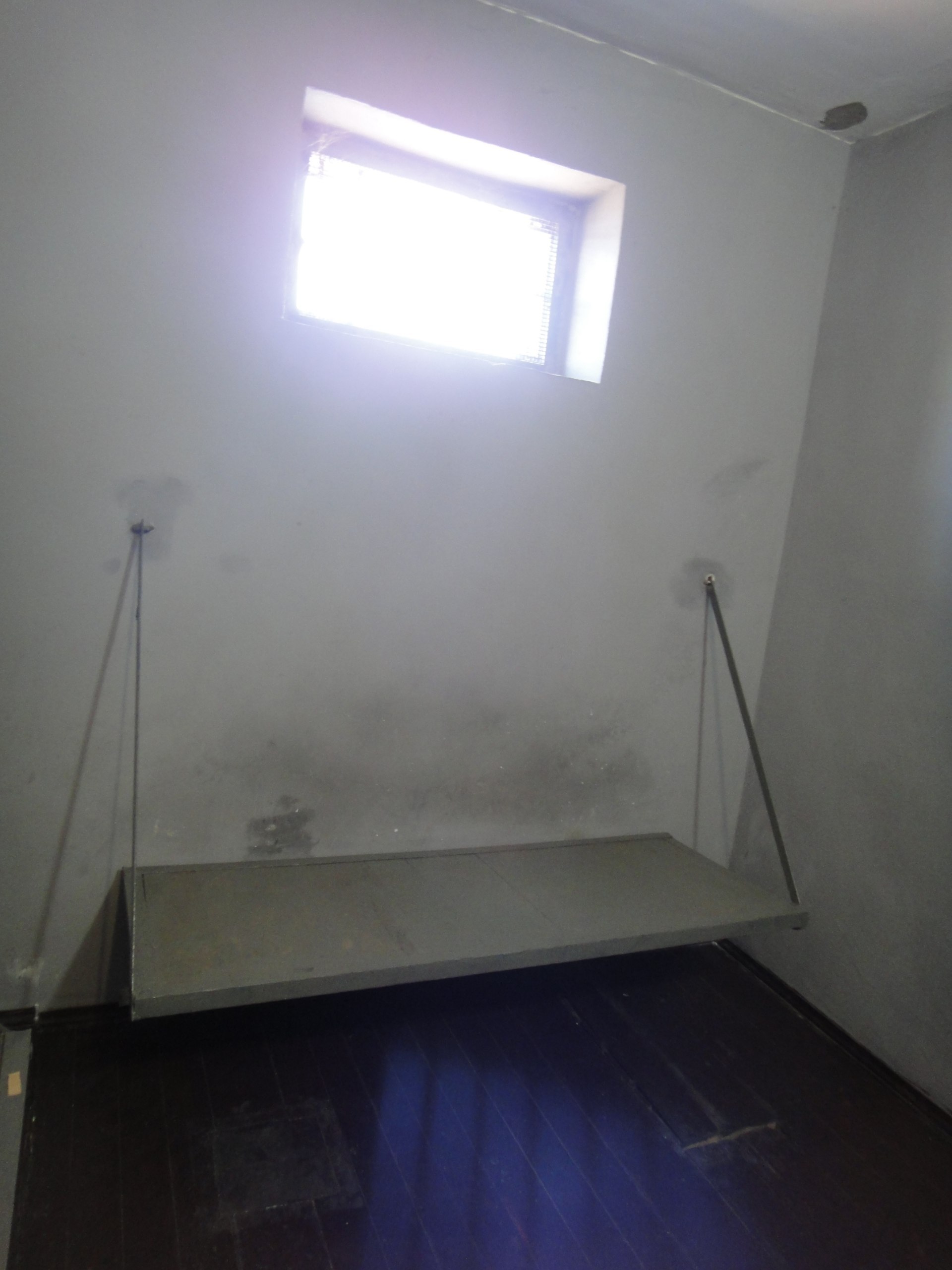
4. The arrangement of the institution’s disciplinary isolation cells and cell-type premises (hereinafter — DIC/CTP) does not fully comply with the established standards for the treatment of prisoners and does not provide adequate material, domestic or sanitary conditions, which results in breaches of the rights of convicted persons.
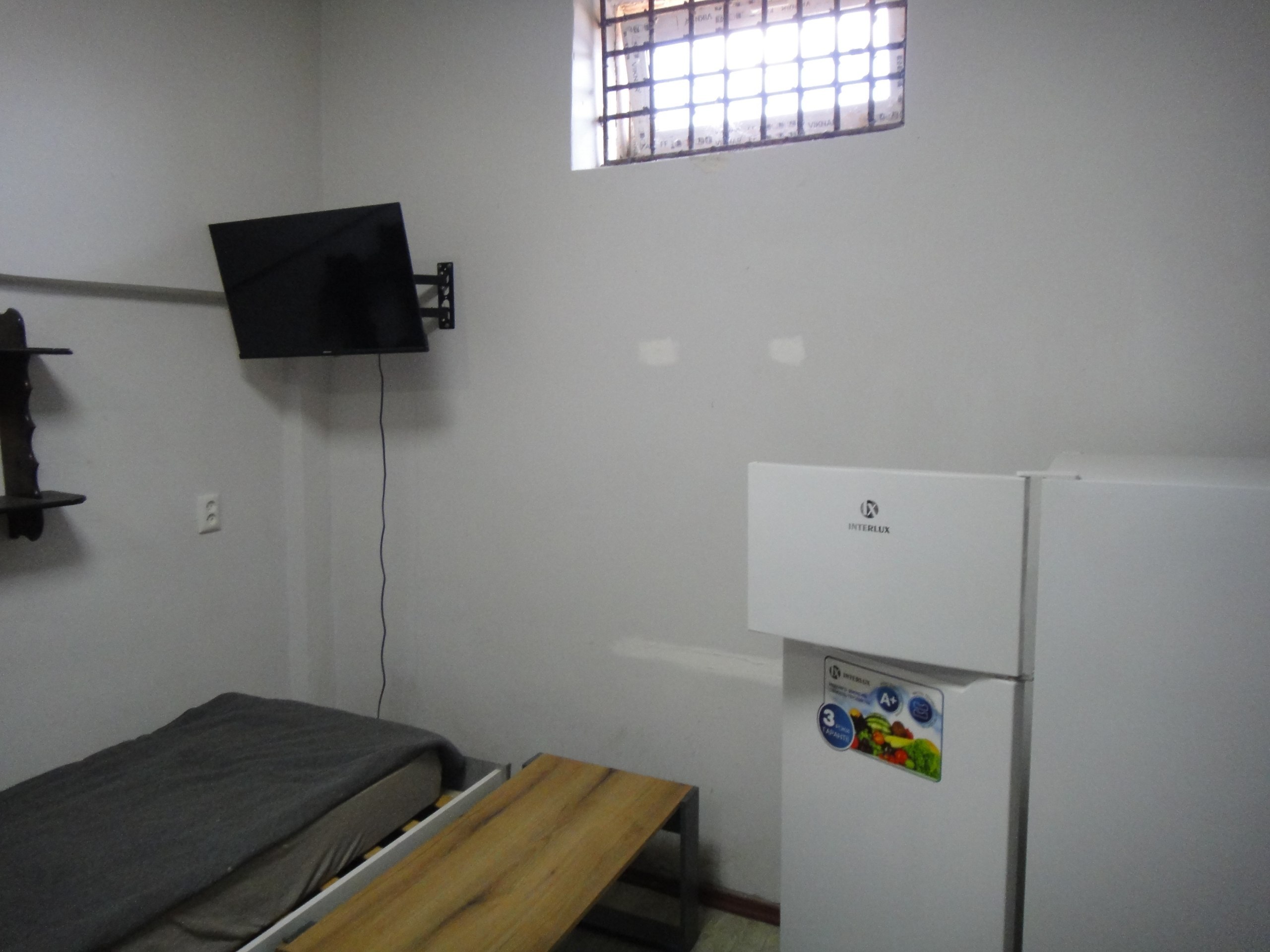
In the cells of the DIC/CTP, an adequate level of natural light is not provided, since the cell windows are small and set at a considerable height, as a result of which access to natural light is restricted and insufficient to ensure normal conditions. These conditions create additional psychological discomfort for convicted persons on account of their limited visual contact with the outside environment.
This does not comply with the requirements of Rule 18.2 (a) of the European Prison Rules or with Rule 14 of the United Nations Standard Minimum Rules for the Treatment of Prisoners (the Nelson Mandela Rules).
A similar violation was found in the cells of the sector for holding persons in custody.
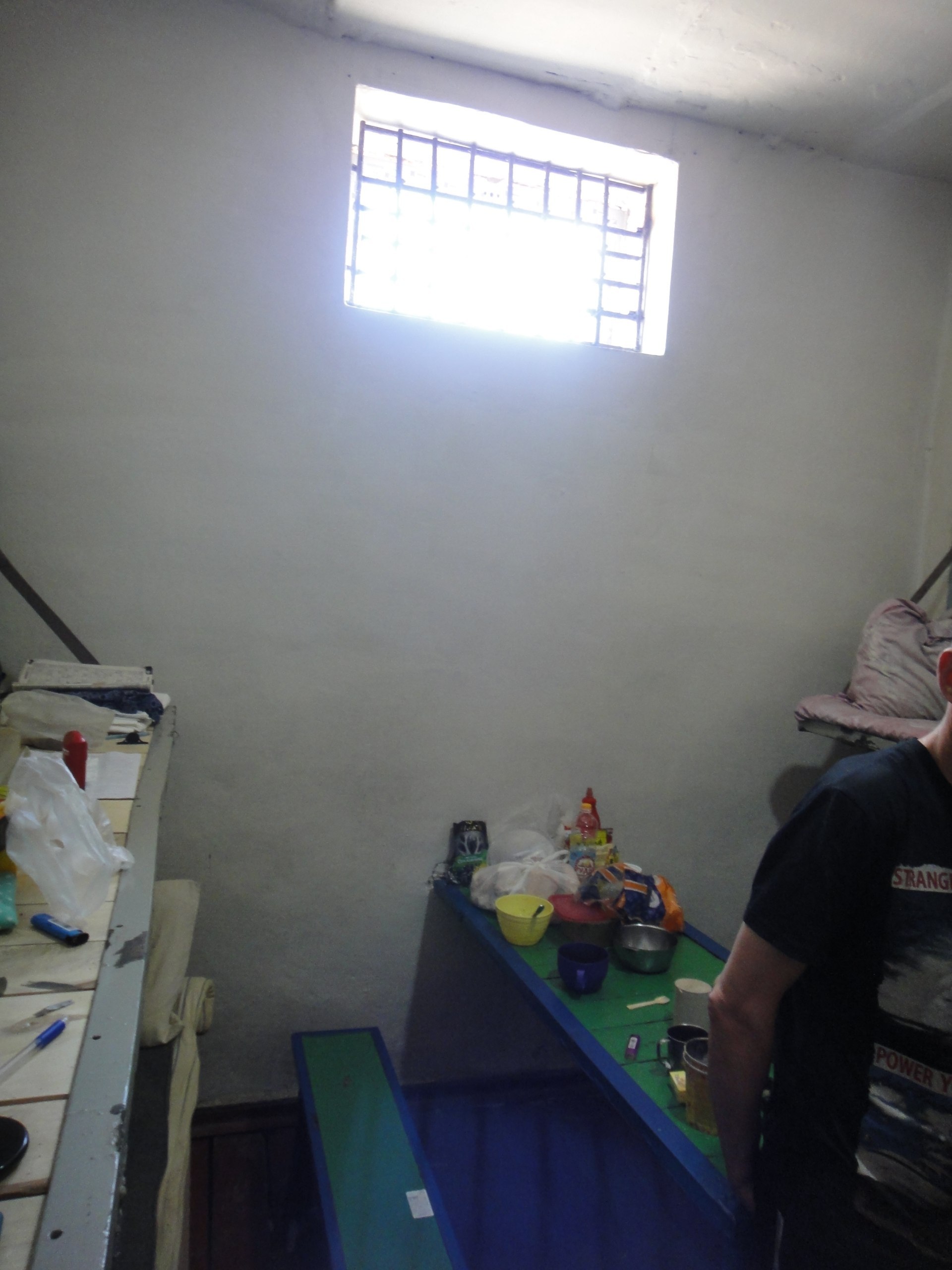
5. The sanitary facilities in certain cells of the disciplinary isolation block, in particular in cells Nos. 1 and 10, are not fitted with adequate partitions that would allow privacy when using them, which does not comply with the requirements of Rule 19.3 of the European Prison Rules or with Rule 15 of the United Nations Standard Minimum Rules for the Treatment of Prisoners (the Nelson Mandela Rules).
A similar violation was found in the cells of the sector for holding persons in custody.
Moreover, in its report following its 2023 visit to Ukraine, the European Committee for the Prevention of Torture and Inhuman or Degrading Treatment or Punishment (hereinafter — the Committee) called upon the Ukrainian authorities to take the necessary steps to improve the material conditions of detention, in particular to keep all accommodation for convicted persons and persons held in custody, including sanitary facilities, in a good state of repair and hygiene, to carry out regular and frequent disinfestation, to ensure adequate access to natural light and ventilation in cells, and to fully partition in-cell sanitary facilities, that is, from floor to ceiling (CPT/Inf (2024) 20), paragraph 58).
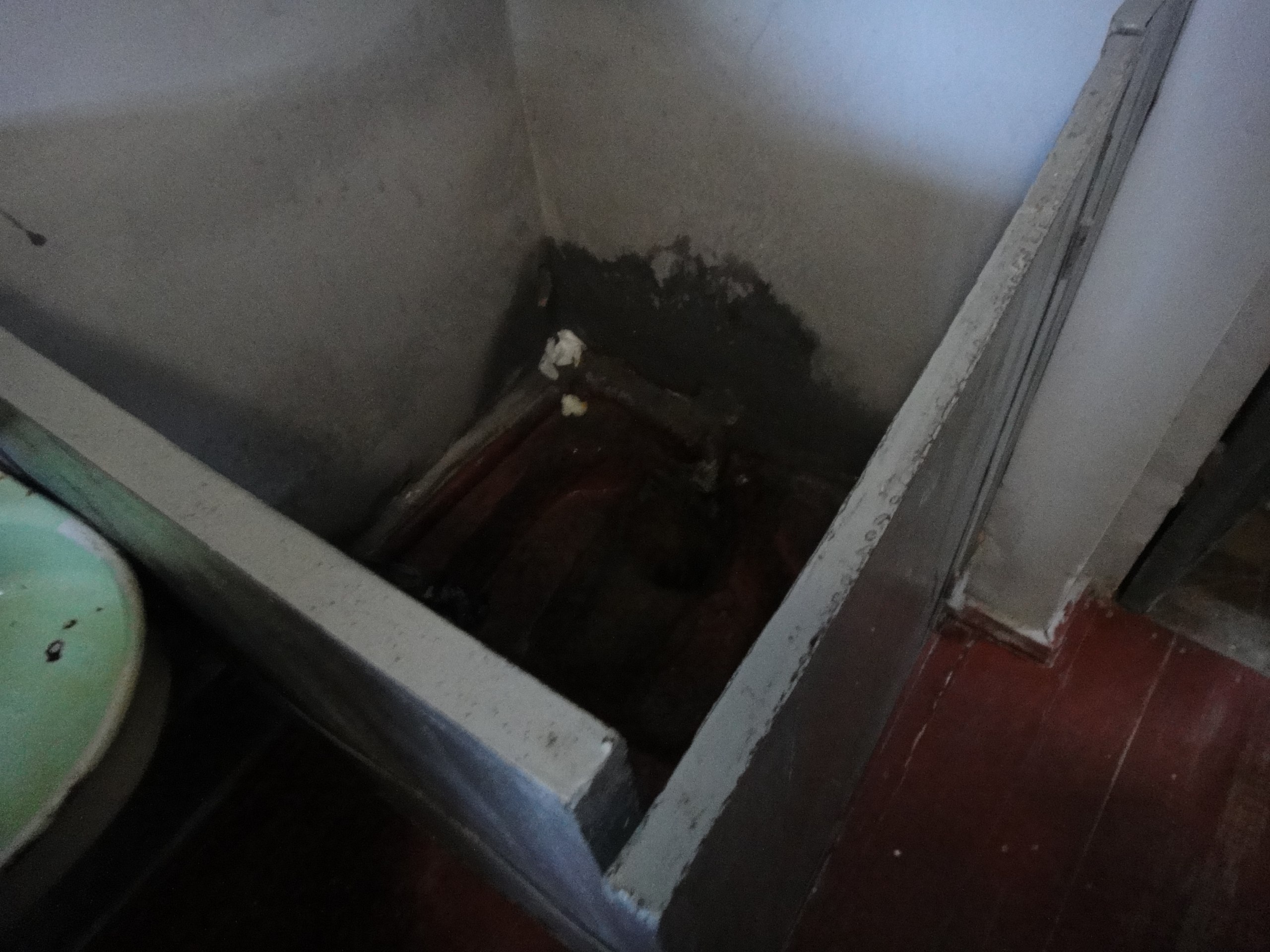
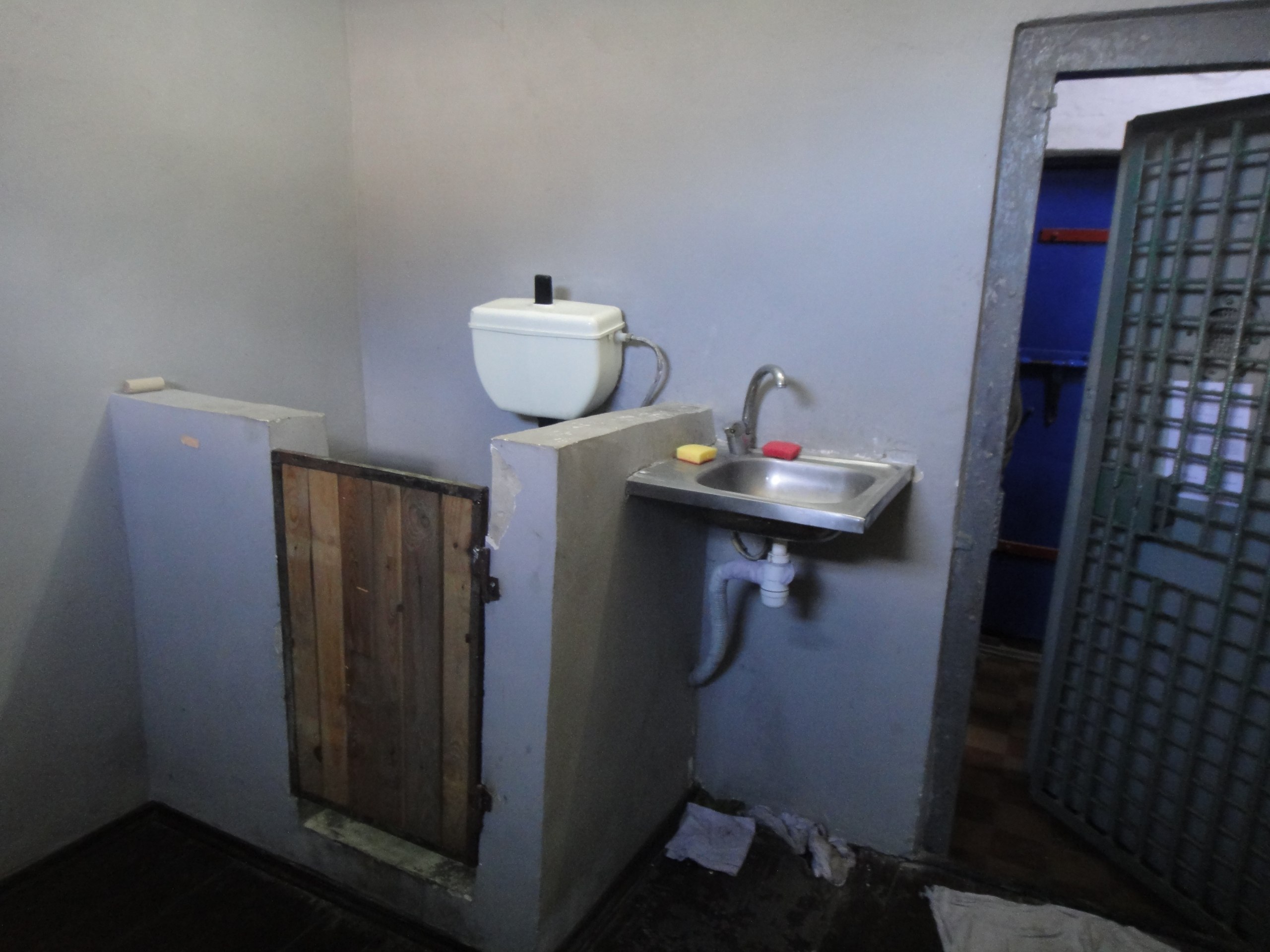
6. In breach of the requirements of Rule 22.5 of the European Prison Rules and Rule 22.2 of the United Nations Standard Minimum Rules for the Treatment of Prisoners (the Nelson Mandela Rules), the above-mentioned cells of the DIC/CTP have no containers for drinking water, as a result of which convicted persons are obliged to drink non-potable water from the mains supply.
7. Mechanical ventilation is not in operation in the cells of the DIC/CTP or in the cells of the sector for holding persons in custody, which does not comply with the requirements of Rule 13 of the United Nations Standard Minimum Rules for the Treatment of Prisoners (the Nelson Mandela Rules).
8. In the DIC/CTP, radio broadcasting is provided only in the common corridor, and convicted persons are unable to switch it on or off or adjust the volume themselves. In the cells of the DIC/CTP, by contrast, radio broadcasting does not work at all, contrary to the requirements of paragraph 3 of Section XX of the IRPI and Rule 63 of the United Nations Standard Minimum Rules for the Treatment of Prisoners (the Nelson Mandela Rules).
9. During the inspection of the cells of the DIC/CTP and of the sector for holding persons in custody, it was established that there was no displayed information giving the telephone numbers of hotlines or the postal and email addresses of the Ministry of Justice of Ukraine, the Ukrainian Parliament Commissioner for Human Rights, the European Court of Human Rights, the State Bureau of Investigation, the Office of the Prosecutor General, the regional and district prosecutor’s offices, the Department, the interregional directorate, or the regional free legal aid centre. This is contrary to paragraph 6 of Section II of the IRPI. A similar violation was found in SPS unit No. 1.
10. Under the twenty-third sub-paragraph of paragraph 6 of Section XXI of the IRPI, for the purposes of individual preventive work the head of the social and psychological service unit is to visit the disciplinary isolation cells, punishment cells and cell-type premises (single cells) when a convicted person is placed there or transferred, and at least once a week thereafter. Following each such visit, he is required to make the appropriate entries in the register of visits by the administration of the penal institution to the disciplinary isolation block, cell-type premises, single cells and punishment cells.
However, an examination of the register of visits to the DIC/CTP by representatives of the administration of the penal institution revealed that there were no entries concerning visits by the head of the social and psychological service unit to convicted person G., who had been placed in the disciplinary isolation block on 29 July 2026 for a term of 14 days, in the period from 3 to 9 August 2026.
This may indicate a failure by the head of the social and psychological service unit to discharge his duty to conduct individual preventive work with a convicted person placed in the disciplinary isolation block, as well as an inadequate organisation of social, educational and psychological work.
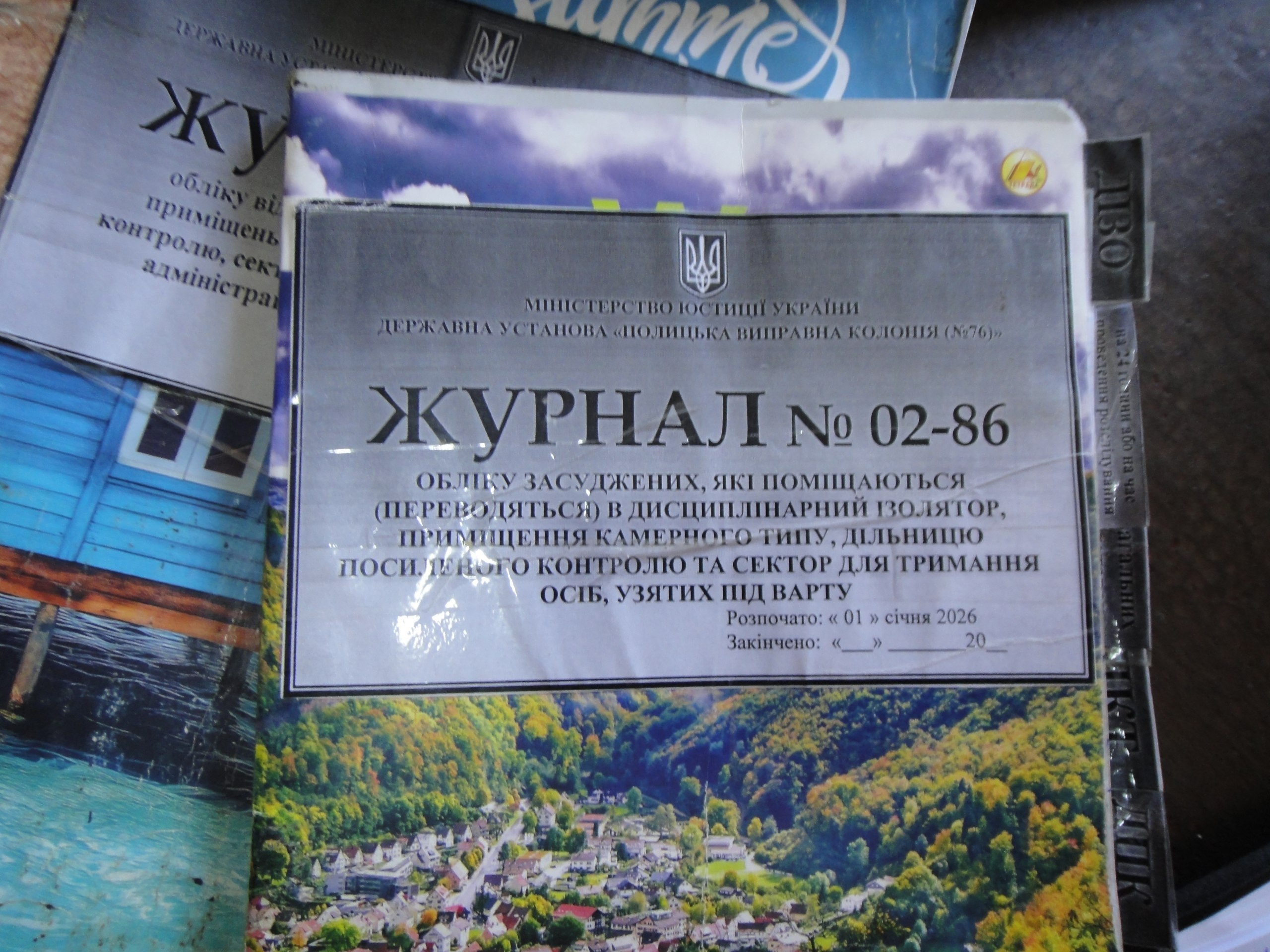

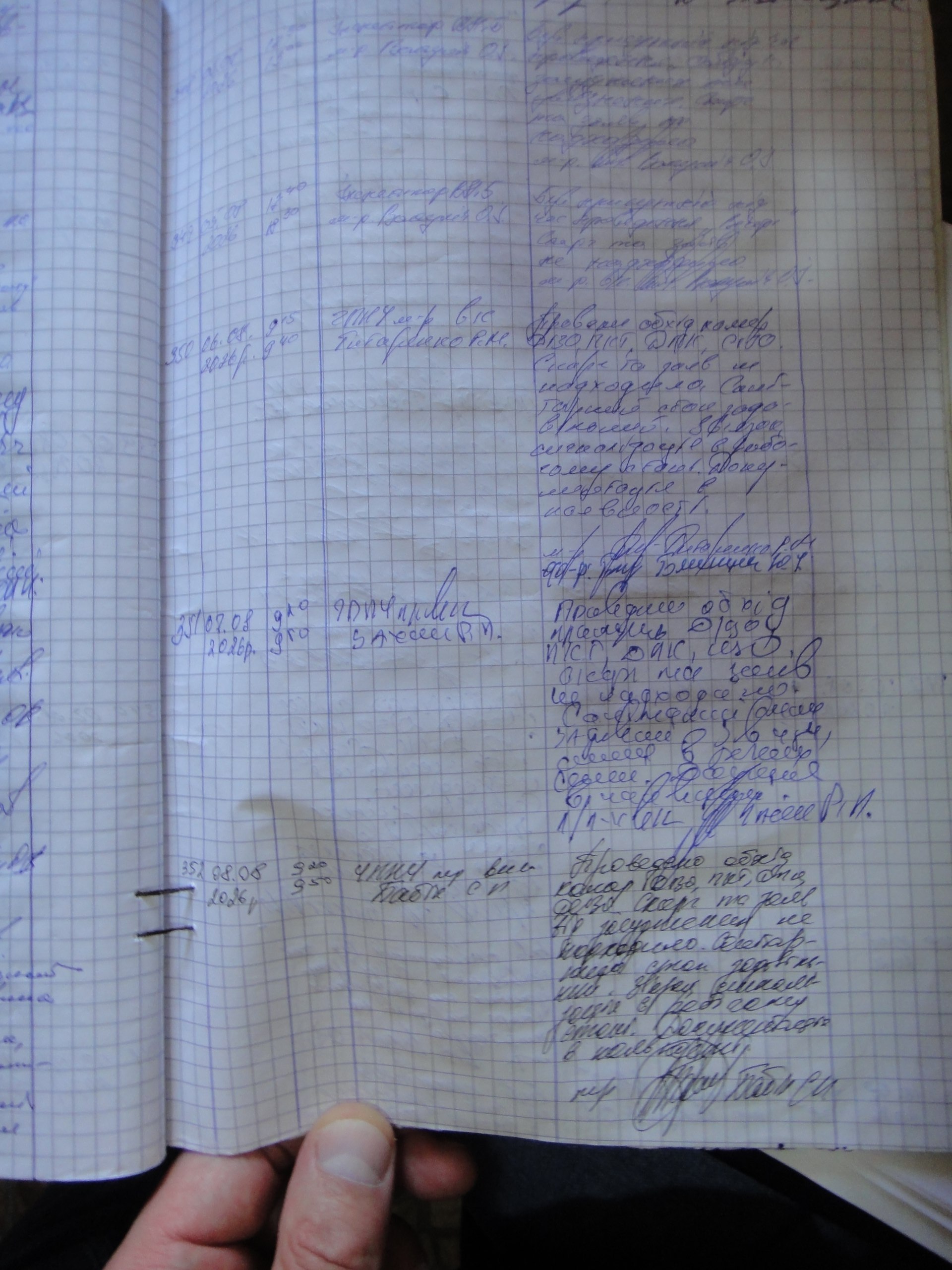
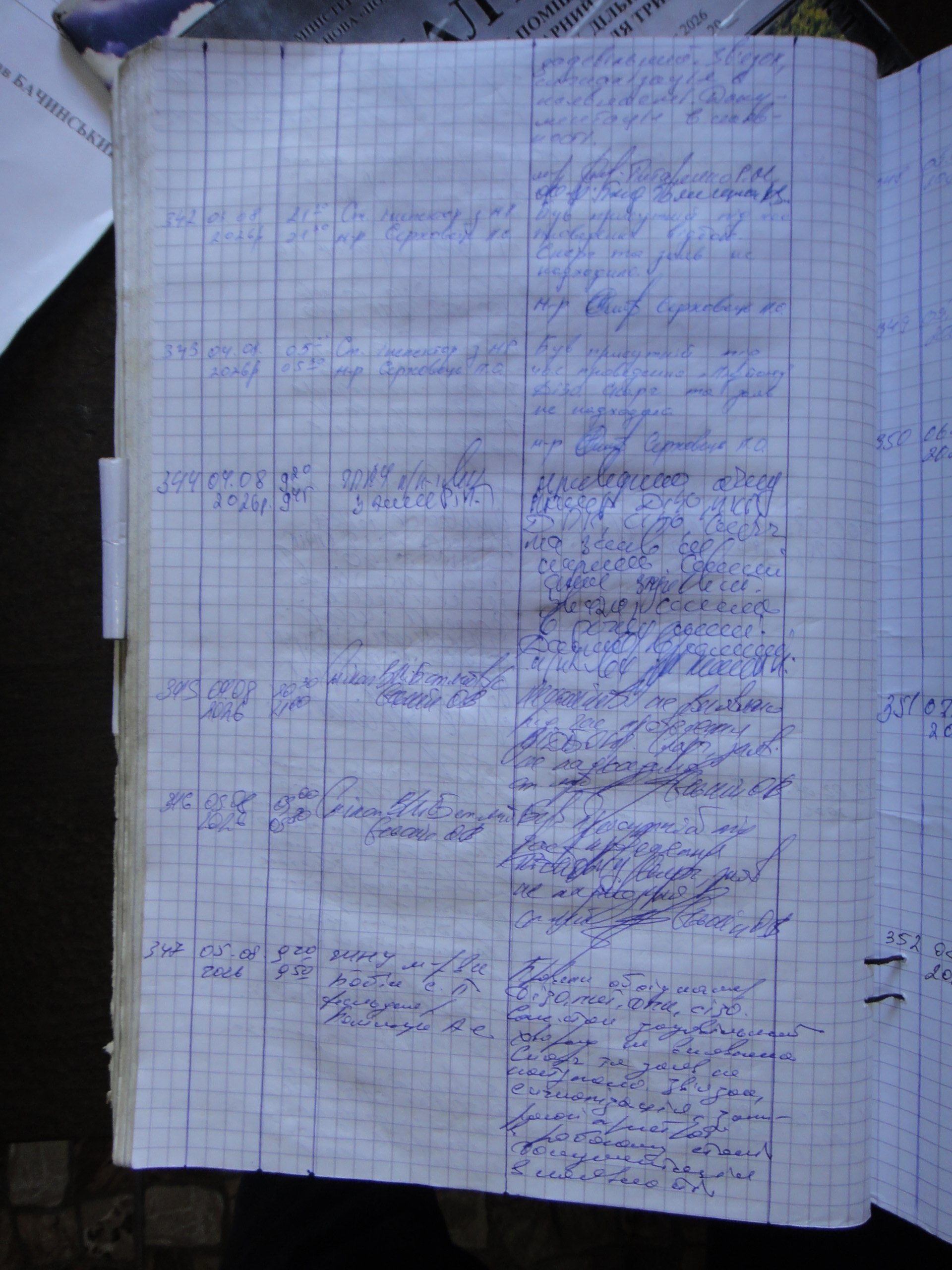
11. During the inspection of the DIC/CTP and the analysis of official records, the monitoring group established that the psychologist does not visit convicted persons serving disciplinary sanctions in the disciplinary isolation block — in particular, in the period from 3 to 9 August 2026 — at least once a week, as required by the twenty-sixth sub-paragraph of paragraph 6 of Section XXI of the IRPI.
This is confirmed by the absence of the corresponding entries in the register of visits to the DIC/CTP by representatives of the administration of the penal institution.
12. During the inspection of the DIC/CTP, it was established that the administration of the institution had not issued convicted persons serving disciplinary sanctions with copies of the decision imposing the sanction, setting out the possibility of appealing against it and the procedure for doing so, contrary to Article 135 of the Criminal Executive Code of Ukraine.
In its report following its 2023 visit to Ukraine, the Committee recommends that steps be taken in Ukrainian penal institutions to ensure that convicted persons on whom a disciplinary sanction has been imposed systematically receive a copy of the relevant decision. Convicted persons should also be informed of their right of access to a lawyer in the context of disciplinary proceedings (CPT/Inf (2024) 20), paragraph 103).
13. During the inspection of the enhanced control unit (hereinafter — the ECU), it was established that the material and domestic provision of the unit does not fully comply with the established regulatory requirements. Thus, in breach of the requirements of the Standards for the Provision of Furniture, Equipment and Household Items to a Medium-Security Correctional Colony, approved by Order No. 1118/5 of the Ministry of Justice of Ukraine of 27 July 2012 (hereinafter — the Provision Standards), a number of rooms are lacking, namely: an educational work room; a room for taking meals; a room for storing the exchange stock of bedding, clothing and workwear; a storeroom for the temporary keeping of soiled bedding, clothing and workwear; a cloakroom; a domestic room; and a drying room.
The absence of the above-mentioned rooms, or their inadequate fitting-out, results in breaches of sanitary and hygiene standards and makes it more difficult to maintain cleanliness and order in the premises where convicted persons are held, which in turn has an adverse effect on the overall sanitary condition of the institution.
14. Paragraph 1 of Section XXIII of the IRPI provides that the supervision of convicted persons is a system of measures aimed at ensuring the serving and execution of criminal sentences of restriction and deprivation of liberty, life imprisonment and detention by means of round-the-clock and continuous control over the conduct of convicted persons in their places of residence and work, the prevention and termination of unlawful acts on their part, and the securing of the requirements of the isolation of convicted persons and of the safety of penal institution staff.
Thus, during the inspection of the residential premises of the ECU, installed video surveillance cameras were recorded. However, in its report the Committee criticised in 2012 the excessive interference with privacy caused by the installation of video cameras in convicted persons’ living quarters, and noted that any decision to apply video surveillance to a particular convicted person should always be based on an individual assessment of the actual risks and should be reviewed regularly. Video surveillance is a serious interference with prisoners’ private life and renders the regime still more repressive, particularly where it is applied over a long period (CPT/Inf (2013) 23), paragraph 52).
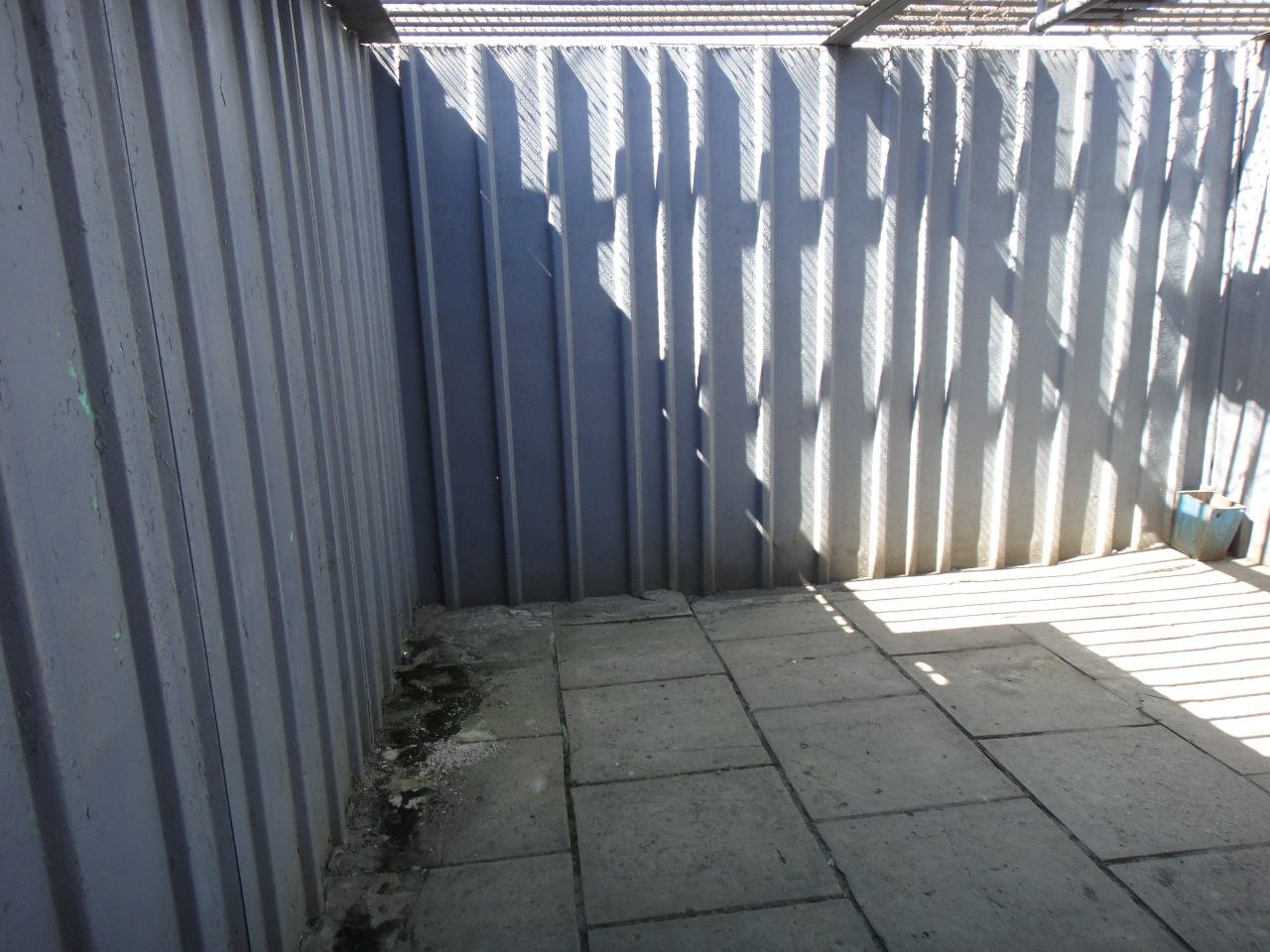
15. Some of the exercise yards of the DIC/CTP are not fitted with adequate shelter from the elements. In its Second General Report, the Committee notes that the daily period in the open air should take place in an area of sufficient size. The area for outdoor exercise should, as far as possible, be fitted with shelter against inclement weather (CPT/Inf (92) 3), paragraph 48).
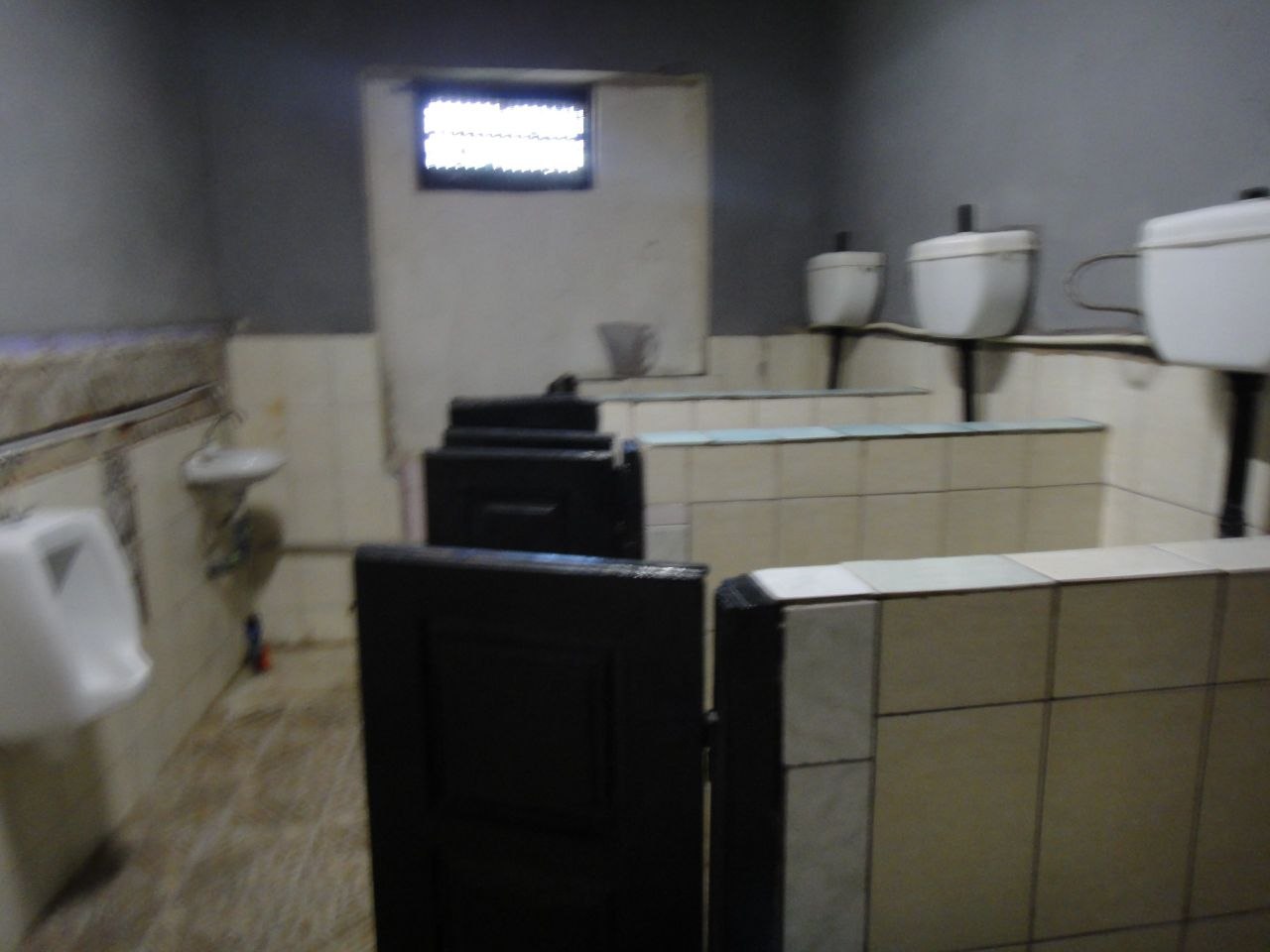
16. During the inspection of SPS unit No. 1, the monitoring group established that 57 convicted persons were held in the unit, while the number of toilet cubicles was only three. There is thus one toilet cubicle for every 19 persons, whereas the established standard is one cubicle for every 12 convicted persons, which is contrary to the Provision Standards and results in inadequate sanitary conditions that infringe convicted persons’ right to dignity and privacy.
Furthermore, the sanitary facility in SPS unit No. 1 is not fitted with adequate partitions allowing privacy, in breach of Rule 19.3 of the European Prison Rules and Rule 15 of the United Nations Standard Minimum Rules for the Treatment of Prisoners (the Nelson Mandela Rules).
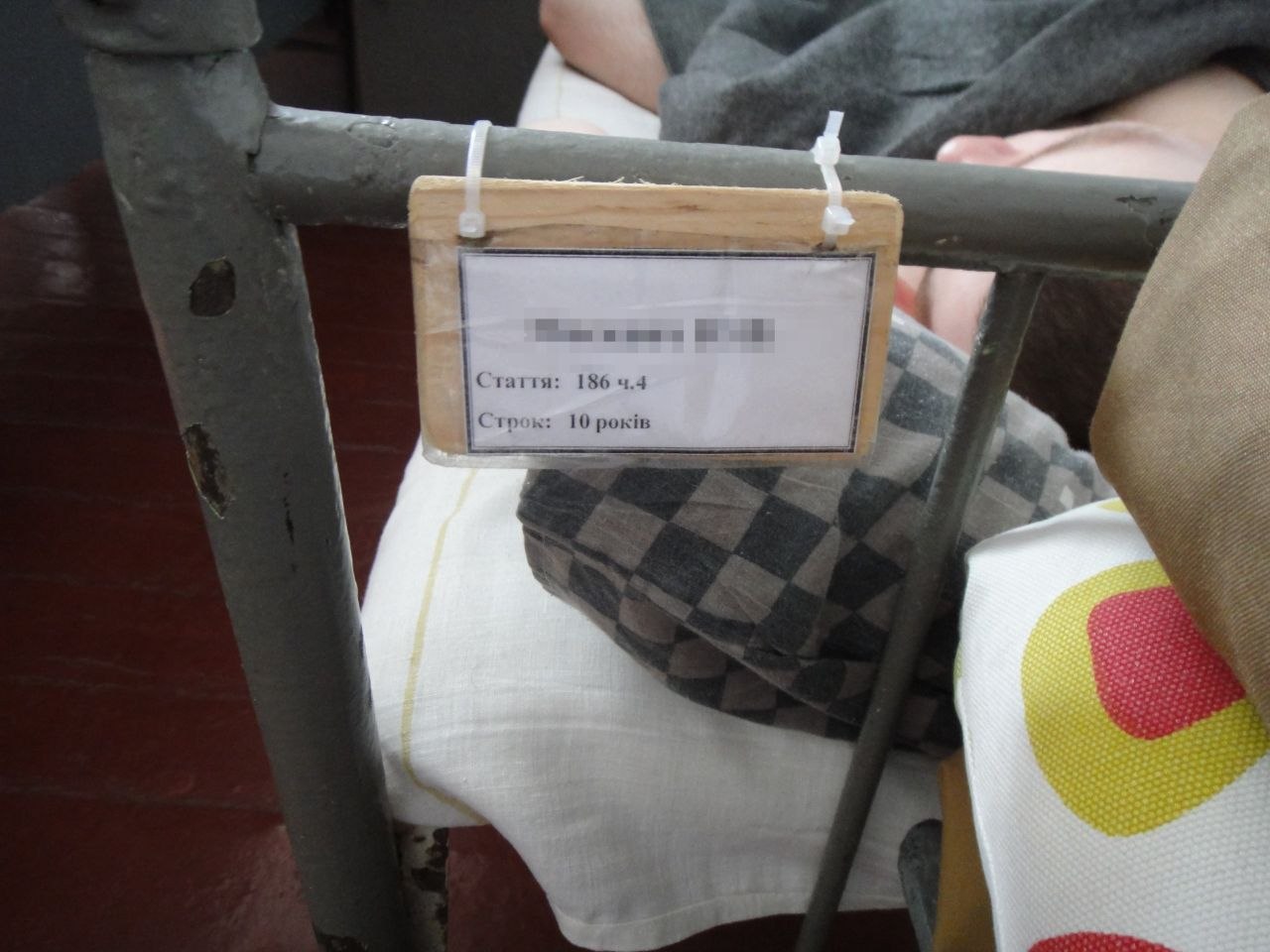
17. During the inspection of the SPS unit, it was established that name cards were placed on convicted persons’ beds in the dormitory giving a brief description of the criminal offences committed by the persons occupying those beds. In its report following its 2020 visit to Ukraine, the Committee stated, in similar circumstances, that this practice should be discontinued, since it serves no reasonable purpose and, besides being stigmatising, has an adverse effect on relations between prisoners and staff (CPT/Inf (2020) 40), paragraph 52).
18. The monitoring group established that the special equipment held at the institution, in particular protective helmets and body armour, does not bear proper individual numbering. In such circumstances, if a member of staff resorts to physical force, it is effectively impossible to identify the person who used the item of equipment in question. This is contrary to paragraph 1 of Section XXVI of the IRPI.
In its report following its 2012 visit to Ukraine, the Committee drew attention to the problem of identifying staff during interventions in institutions and recommended that each item of clothing or protective helmet bear a clear identification number enabling the member of staff concerned to be identified if necessary (CPT/Inf (2013) 23), paragraph 21).
19. The monitoring group established a number of violations in the organisation of bathing and laundry services for convicted persons and persons held in custody.
Thus, it was established during the visit that convicted persons are able to use the bathhouse only once a week. This does not comply with the requirements of Rule 19.4 of the European Prison Rules, under which prisoners must be able to take a shower, if possible daily but at least twice a week, or with paragraph 3.1 of Section III of the Regulations on the Organisation of Bathing and Laundry Services for Persons Held in Penal Institutions and Remand Prisons, approved by Order No. 849/5 of the Ministry of Justice of Ukraine of 8 June 2012 and registered with the Ministry of Justice of Ukraine on 13 June 2012 under No. 947/21259 (hereinafter — the Regulations on the Organisation of Bathing and Laundry Services), which provide for convicted persons and persons held in custody to wash in the bathhouse at least twice a week.
20. In breach of the requirements of paragraph 4 of Section XXII of the IRPI and paragraph 3.19 of Section III of the Regulations on the Organisation of Bathing and Laundry Services, the institution does not ensure compliance with sanitary, hygiene and anti-epidemic requirements.
In particular, no sanitary processing of convicted persons arriving at the institution is carried out. Thus, convicted persons arrived at the institution on 28 July 2026, yet the register of bathhouse attendance contains no record of their having washed.
21. In breach of paragraph 2.14 of Section II of the Regulations on the Organisation of Bathing and Laundry Services, the institution does not provide hairdressing services to convicted persons.
22. In breach of paragraph 2.6.2 of Section II of the Regulations on the Organisation of Bathing and Laundry Services, the showerheads are not fitted with hot and cold water taps, with the result that convicted persons are unable to adjust the water temperature while performing their hygiene routines.
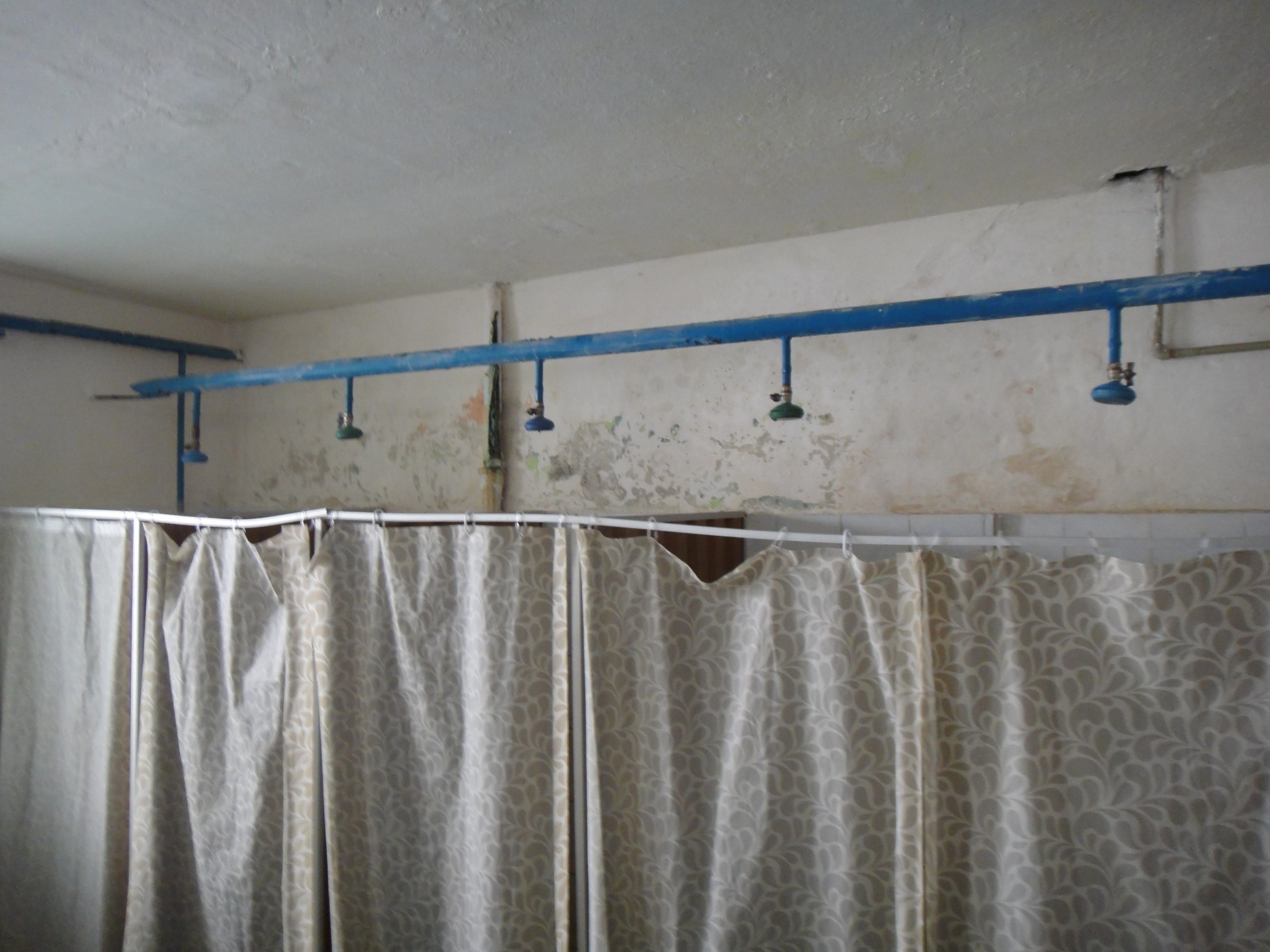
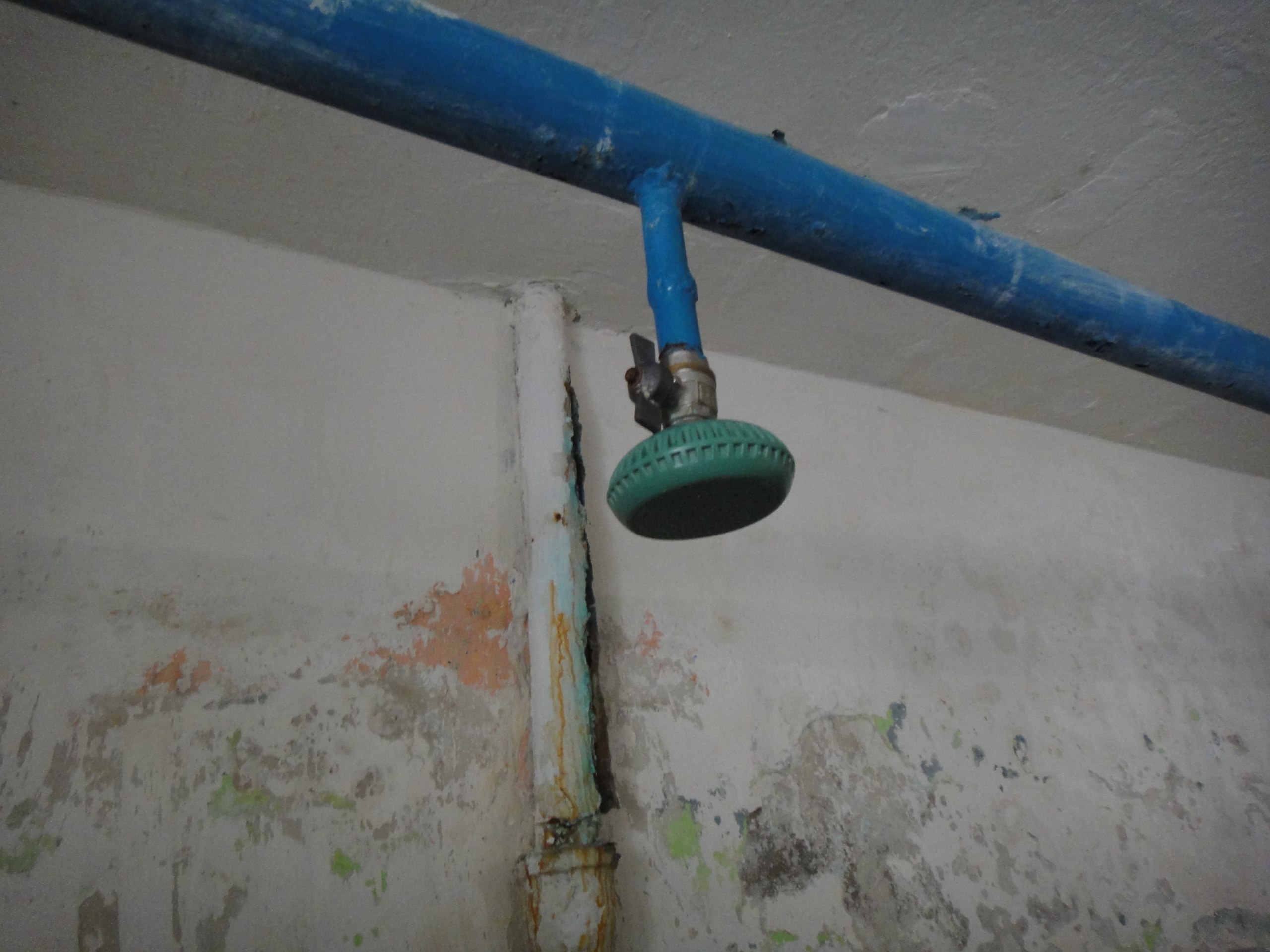
23. In breach of paragraph 2.11 of Section II of the Regulations on the Organisation of Bathing and Laundry Services, the forced supply-and-extract ventilation system in the laundry and in the shower room of the disciplinary isolation block does not work properly.
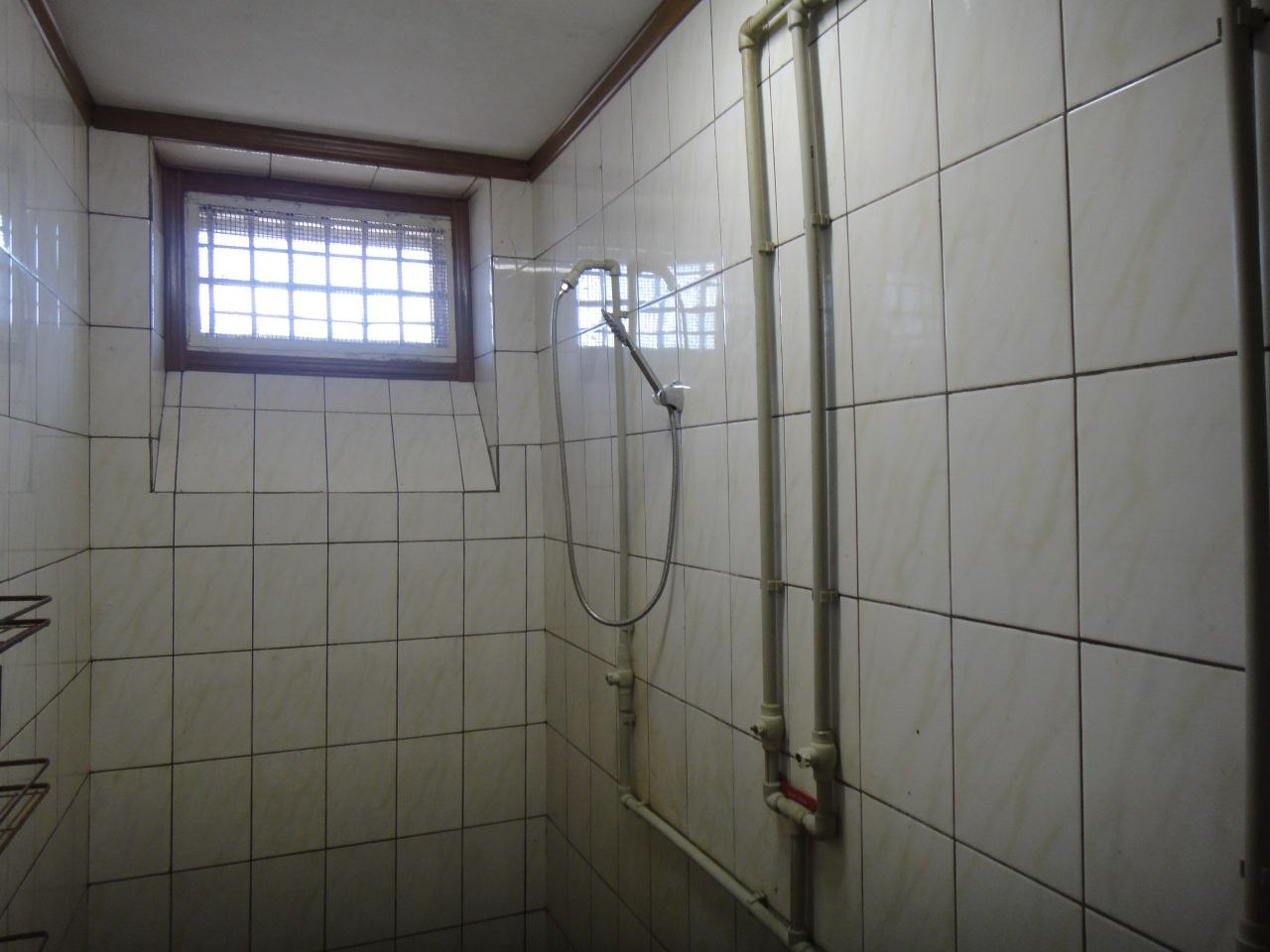
24. In breach of the requirements of Rule 19.3 of the European Prison Rules, the right to privacy is not secured in the shower room owing to the absence of curtains and shower partitions.
25. During the visit, the monitoring group recorded that staff of the institution who are in direct contact with convicted persons openly carry special equipment, in particular rubber truncheons. However, under the eighth sub-paragraph of paragraph 1 of Section XXVI of the IRPI, the carrying of special equipment by penal institution staff within the guarded perimeter of the institution must, as far as possible, be kept out of sight.
The Committee recommends that prison officers working in direct contact with prisoners should not carry special equipment such as rubber truncheons, handcuffs and tear-gas canisters openly in front of prisoners. Carrying such items in this way hinders the establishment of normal relations between staff and prisoners: paragraph 85 (CPT/Inf (2011) 29), paragraph 23 (CPT/Inf (2013) 23), paragraph 166 (CPT/Inf (2014) 15).
26. Under sub-paragraph 5 of paragraph 2 of Section IV of the Regulations on the Programme of Differentiated Educational Influence on Convicted Persons ‘Preparation for Release’, approved by Order No. 1418/5 of the Ministry of Justice of Ukraine of 16 May 2016 and registered with the Ministry of Justice of Ukraine on 17 May 2016 under No. 735/28865, the staff of the institution’s social and psychological service who directly organise and carry out measures to implement the ‘Preparation for Release’ programme are required to assist convicted persons in obtaining (renewing) a passport of a citizen of Ukraine, a taxpayer registration number and other personal documents, and in arranging pensions.
At the same time, ten convicted persons require a passport of a citizen of Ukraine to be issued and seven require a taxpayer registration number, which indicates that insufficient work has been carried out by the social, educational and psychological work department to ensure that the necessary documents are obtained for convicted persons who do not have them.
27. According to information provided by the administration, from the beginning of 2026 up to 12 August 2026, convicted persons at the State Institution ‘Polytska Correctional Colony (No. 76)’ were granted 123 short-term visits, 91 of which took place without contact, through a solid dividing glass screen with the use of an intercom.
In its report following its 2023 visit to Ukraine, the Committee stresses that, for all categories of convicted persons, open visits — for example, across a table — should be the rule and closed visits the exception, permissible only on the basis of reasoned and substantiated decisions following an individual assessment of the potential risk posed by the particular convicted person. In this connection, the Committee calls upon the Ukrainian authorities to review the arrangements for short-term visits in penal institutions with a view to ensuring that they take place, as a rule, under open conditions (CPT/Inf (2024) 20), paragraph 99).
28. According to the official records, the staff shortfall at the institution as at 12 August 2026 was 28.75 established posts. In its report following its 2023 visit to Ukraine, the Committee stresses that ensuring a positive climate in a penal institution requires a professional team of staff who must be present in sufficient numbers at all times in places of detention. An insufficient number of staff can only increase the risk of violence and intimidation among convicted persons. A shortage of front-line staff also undermines the quality and level of the activities offered to convicted persons and jeopardises the prospect of preparation for release and social rehabilitation.
In this connection, the Committee calls upon the Ukrainian authorities to take resolute measures to increase substantially the number of staff in those penal institutions in Ukraine where staffing levels are low, with a view to strengthening the presence of custodial and supervisory staff inside the institutions. Measures should also be taken to put an end to 24-hour shifts for staff on duty (CPT/Inf (2024) 20), paragraph 93).
29. During the monitoring visit, a study was carried out of the practical application of the ‘CASSANDRA’ subsystem of the Unified Register of Convicted Persons and Persons Held in Custody, in particular of the procedure for assessing the risk of reoffending and of the awareness of prisoners serving life sentences of that procedure and its outcomes.
The findings of the study showed that convicted persons had no clear understanding of the risk assessment procedure. The information given as to how frequently assessments are carried out varied considerably, with periods of about three, five or six months being cited. Some convicted persons also lacked sufficient information about the grounds for carrying out an assessment, its outcomes, the procedure for being informed of them, and the possibility of raising objections to the conclusions reached.
The study of staff practice also revealed differing understandings of certain elements of the procedure, in particular as regards how frequently reassessments are carried out, the procedure for communicating the outcome to the convicted person, the possibility of appeal, and the involvement of a lawyer.
The circumstances established indicate a lack of transparency in the practical application of the ‘CASSANDRA’ subsystem. This is of particular significance for prisoners serving life sentences, since the outcomes of the risk assessment may be taken into account when decisions of material importance to the execution of the sentence and to the assessment of the person’s degree of rehabilitation are taken.
It is therefore necessary to ensure that convicted persons are properly informed of the purpose of the risk assessment, the procedure for carrying it out, its outcomes and their possible significance, and to establish a uniform approach among staff to the application of the ‘CASSANDRA’ subsystem and to documenting the notification of convicted persons of assessment outcomes.
30. During the monitoring visit, it was established that the institution has a separate Internet room intended to provide convicted persons with access to the Internet and the opportunity to use video communication. However, at the time of the visit the Internet room was locked, so that the actual availability of the service to convicted persons was not secured.
Nor was the monitoring group shown any register of convicted persons’ use of the Internet. According to the information provided, no such register is kept. Likewise, no register of convicted persons’ use of video communication is kept. The institution therefore has no proper documentary record of the use of either of these means of communication provided for convicted persons.
The absence of such registers makes it impossible to establish how many convicted persons actually use the Internet and video communication, how often they do so and for how long, or to verify the real availability of these services. In such circumstances, the mere existence of an equipped Internet room cannot be regarded as sufficient confirmation that convicted persons are in fact afforded access to the relevant means of communication.
Taken together, the circumstances established — the locked Internet room and the complete absence of any record of the use of the Internet and video communication — indicate an inadequate organisation of the exercise by convicted persons of the rights concerned and prevent the administration of the institution from properly confirming their practical availability. The presence of technical equipment without ensuring real access to it and without documenting its use is purely formal, and the organisation of this work needs to be brought into line with the established procedure.
31. During the monitoring visit, it was established that the institution has no civil defence shelter or other suitably equipped premises that could be used to shelter convicted persons and staff during an air-raid alert or other threats connected with military action.
Accordingly, persons held at the institution, who, being deprived of their liberty, cannot leave its grounds of their own accord or choose a safe place to be, are in effect deprived of any opportunity to take shelter from aerial weapons. In the conditions of the continuing armed aggression against Ukraine, this situation poses a direct risk to their life and health.
The absence of a shelter means that the duties to protect convicted persons and staff from the dangers arising during emergencies and military action are not properly discharged, and it fails to meet the fundamental requirements of civil defence legislation. This is of particular significance in a penal institution, where the State exercises full control over the persons held and consequently bears a heightened positive obligation to ensure their safety and to protect their lives.
32. Under Article 118 of the Criminal Executive Code of Ukraine, persons sentenced to deprivation of liberty have the right to work on a voluntary basis under a fixed-term employment contract or a civil law contract. The labour of convicted persons must be organised in compliance with labour and occupational safety legislation, and its legal formalisation, the recording of working time and its remuneration must correspond to the actual nature and volume of the work performed.
During the monitoring visit, the organisation of the labour of convicted persons was examined, together with the documents concerning their assignment to production facilities, working-time records, records of the calculation and payment of wages (remuneration), material concerning the assessment of the single contribution to compulsory State social insurance, and separate records relating to the production facilities and the catering unit.
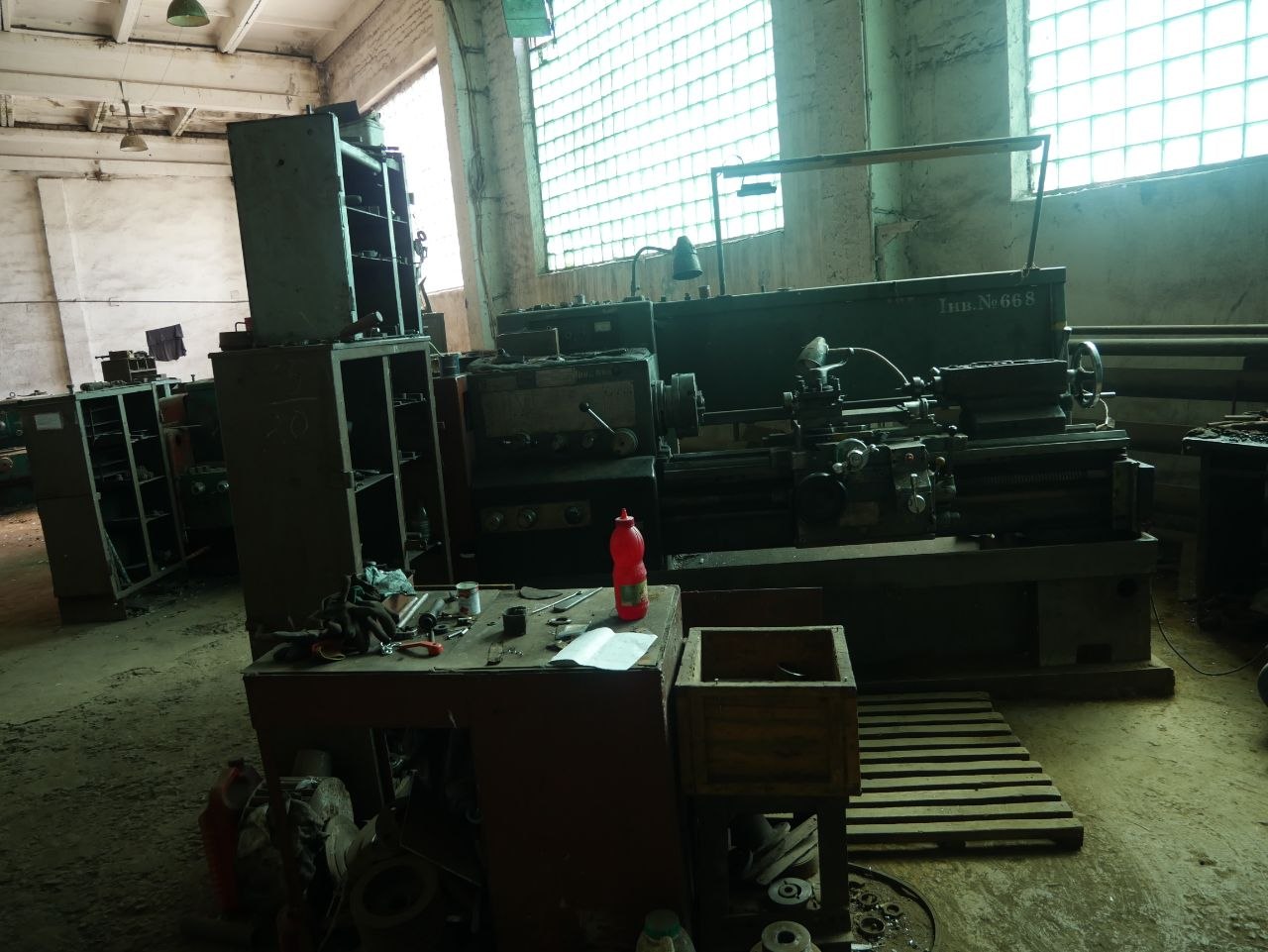
According to information provided by the administration, the branch operates sewing and joinery workshops, a sawmill, a boiler house, a repair and mechanical workshop and a garage. The labour of convicted persons at these production facilities is formalised predominantly through civil law contracts. At the same time, the register of convicted persons’ attendance at and departure from work does not specify the particular production facility, using instead the general designation ‘branch’. This method of keeping the primary record makes it impossible to establish reliably from the register entries which production facility a particular person was at, or to correlate that information with working-time records, hourly checks and other primary documentation. Separately, a workshop producing wire goods operates at a mothballed facility in the residential zone.
A comparison of the information obtained in confidential conversations with the accounting records revealed substantial differences in the documented amounts of remuneration of individual convicted persons. Thus, convicted person N., who stated that he had been working in the sewing workshop for about six months, was credited with UAH 11,338.60 for July 2026, with UAH 8,730.72 determined as payable after the relevant tax deductions. B., who also reported having worked for about six months, was credited with UAH 9,045.40 for July, with UAH 6,964.96 payable. S. was credited with UAH 28,919.80 for the same month, with UAH 22,268.25 payable.
By contrast, in the case of T., who, according to the information obtained, has been working in the sewing workshop since 3 June 2026, the accounting records for July show a credited amount of only UAH 1,401.40, with UAH 1,079.08 payable. That sum differs substantially from the amounts credited to other convicted persons working in the same line of production and, in the absence of any information in the documents provided that would explain so considerable a difference, casts doubt on whether the documented income corresponds to the actual volume of work performed.
At the sawmill, information was obtained during the visit about the work of a convicted person recorded as M. over a period of approximately six months. The accounting records, meanwhile, contain information on M., who was credited with UAH 28.19 for July, with UAH 21.71 payable. In view of the discrepancy in the spelling of the surname, the monitoring group has no sufficient documentary basis for asserting categorically that the same person is involved. At the same time, if this information does relate to a single convicted person, the documented amount of remuneration is manifestly disproportionate to the reported duration of his systematic work.
Examination of the material on the assessment of the single social contribution showed that the contribution is calculated on the basis of the declared income of the particular convicted person. The cases of negligible amounts identified therefore matter not only from the standpoint of proper remuneration for work but also in the context of the right to social protection, since the size of the contribution base directly affects the accrual of insurance record. Where the contribution paid for a given month is less than the minimum insurance contribution, the insurance record is as a general rule calculated in proportion to the contribution paid. Any discrepancy between actual employment and documented income thus potentially has long-term consequences for a convicted person’s pension and social rights.
The widespread practice of formalising long-term systematic work through civil law contracts also warrants separate attention. In particular, convicted person V. reported that he had been working in the vehicle workshop for about three years, constantly repairing cars. The performance by one person of uniform work at a specified production facility over a period of years bears the hallmarks of a settled labour function, whereas a civil law contract is by its legal nature directed primarily at obtaining a defined result of work. It is for this reason that the systematic use of civil law contracts to formalise what is in fact permanent employment creates a risk of employment relations being supplanted by civil law relations and, consequently, of a narrowing of convicted persons’ labour and social guarantees.
Convicted person T., who works in the repair and mechanical workshop, reported performing work for approximately three months without receiving any payment. The documents examined contained no information confirming that the period of work in question had been properly paid for or refuting the circumstances he reported. In such conditions there are indications that unpaid labour is in fact being used, which is incompatible with the guarantees of a convicted person’s right to paid work in cases where such work does not fall within the types of unpaid work expressly provided for by law.
A comparison of the register of convicted persons’ attendance at and departure from work with the hourly check registers revealed internal inconsistencies in the primary records. Thus, on 11 August 2026 the hourly check register of the repair and mechanical workshop recorded two persons as being at the facility at 17:35, whereas the last entry in the register of attendance at and departure from work for that day is timed at 17:30. Similarly, in the garage an hourly check was carried out at 18:00, although the last entry recording departure from work was likewise made at 17:30. The official registers thus simultaneously contain mutually exclusive information as to the presence of convicted persons at production facilities. This indicates that at least part of the primary documentation is kept in a purely formal manner and cannot be used as a reliable source for establishing actual working time. In such circumstances, it also becomes more difficult to exercise proper control over payment for work actually performed and over compliance with the prescribed length of working time.
Inspection of the paint shop revealed inadequate working conditions: there was an intense smell of paints and varnishes in the premises, there was no extract ventilation, workers were carrying out their tasks without respirators, and the production premises themselves were in a neglected state. These circumstances are inconsistent with the requirements of Articles 6, 8 and 13 of the Law of Ukraine ‘On Occupational Safety’, which provide for a worker’s right to safe and healthy working conditions, for the provision of the necessary personal protective equipment to workers engaged in work under harmful and hazardous conditions, and for the employer’s obligation to create workplace conditions that comply with legislation.
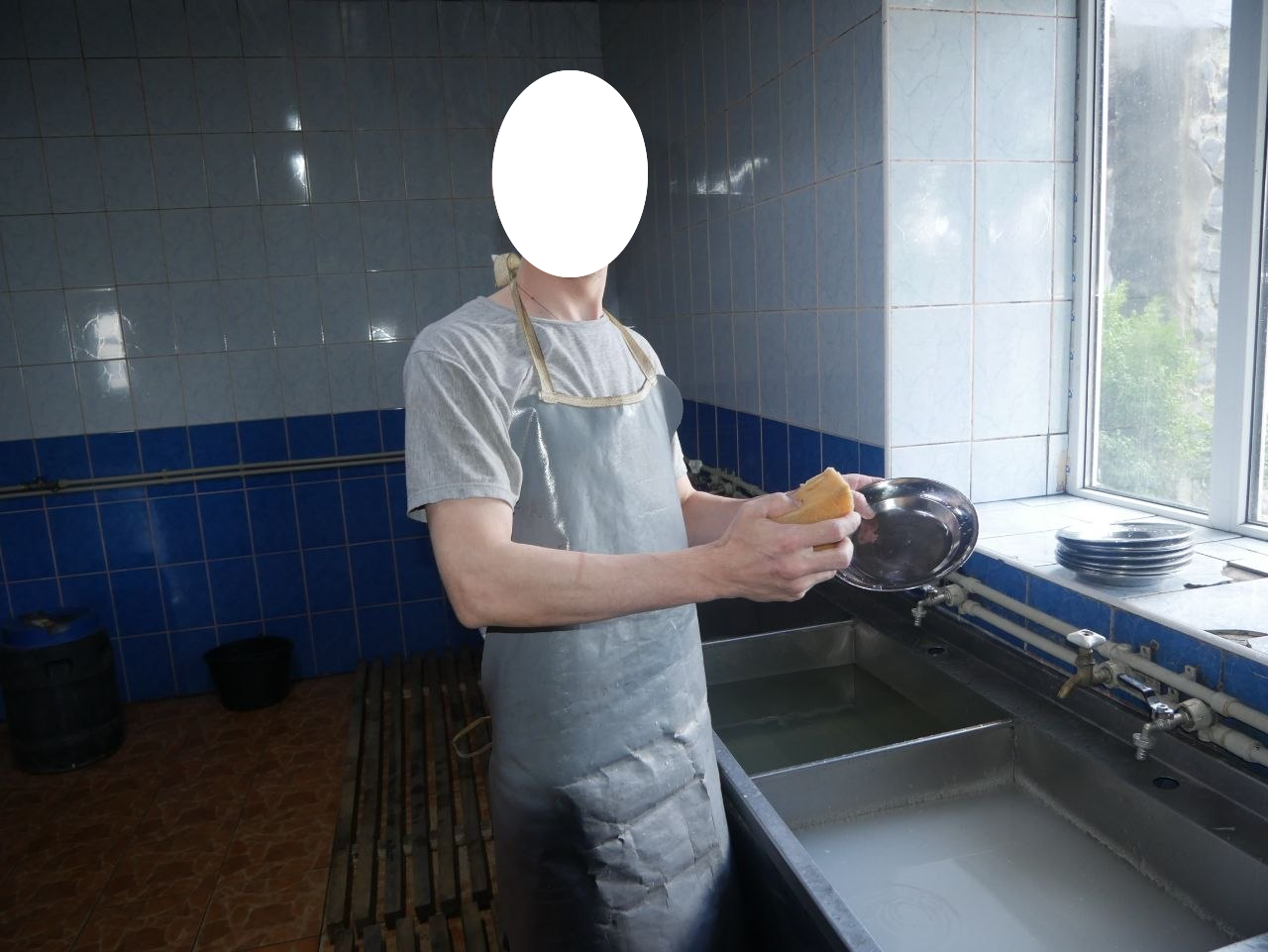
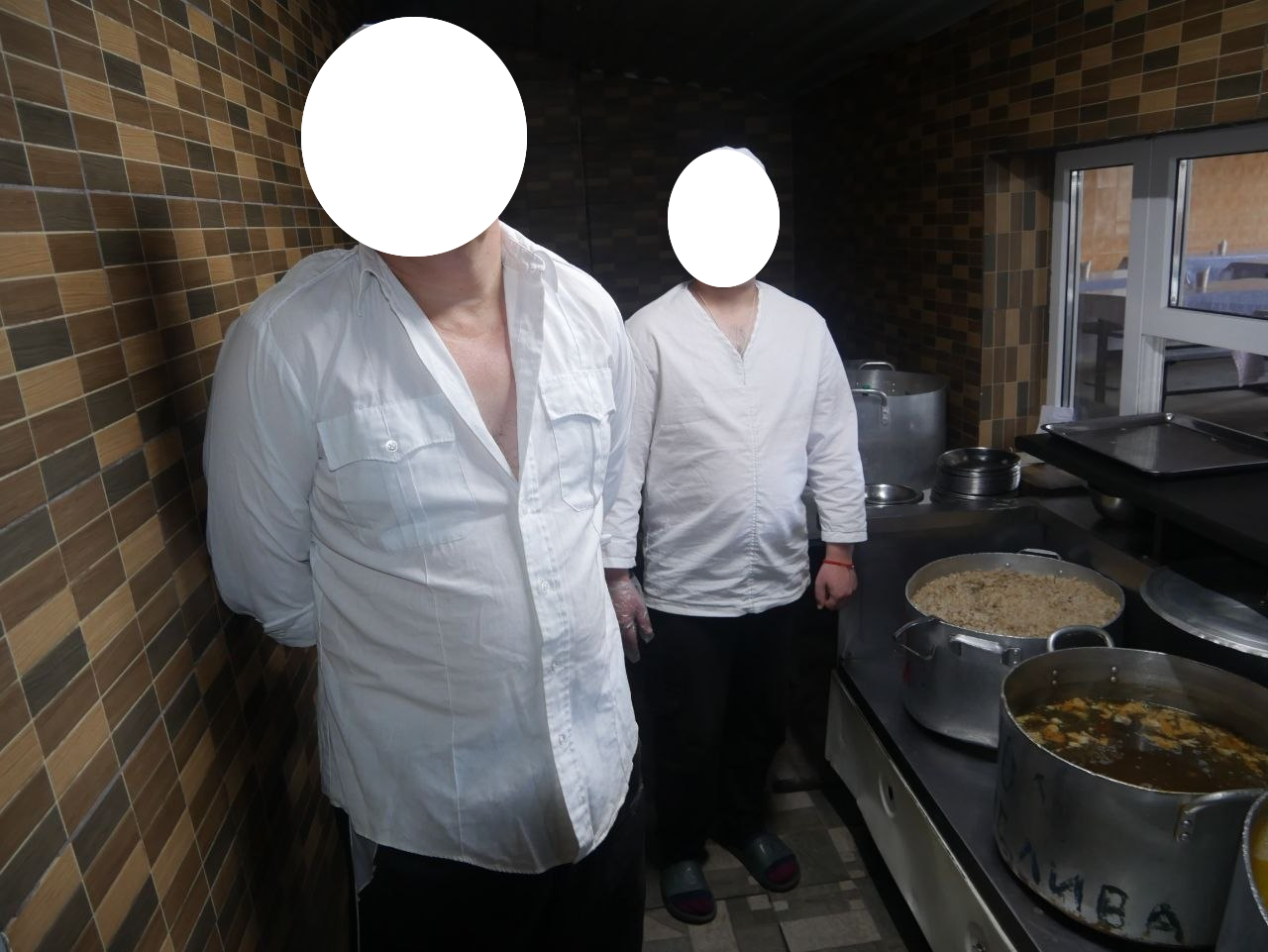
Shortcomings were also identified in the examination of the organisation of the catering unit. Convicted person Kh. has been performing the duties of senior cook for about a year; convicted person K. has worked as a dishwasher for about six months and performs this work single-handed; P. is engaged as a cook at night; and V. serves out the food. Domestic service workers are engaged, in particular, at 0.25 of a full-time position. In such circumstances, it is of fundamental importance that the established fraction of the position should correspond to the actual hours worked by each person, since formal engagement on a part-time basis cannot take the place of a record of the hours actually worked. This applies in particular to night work, which must be properly recorded and remunerated in accordance with the guarantees laid down by law.
The register of the quality assessment of prepared food does not state which of the cooks prepared it, while the register of medical examinations of catering unit workers records only the total number of persons examined, without identifying them individually. With documentation kept in this way, it is impossible to establish reliably whether a particular person underwent the relevant medical examination before being permitted to work, and the register thus largely loses its monitoring purpose.
It was also established during the visit that convicted person P. of SPS unit No. 5 systematically cleans the toilet, sweeps the yard and removes refuse without payment. Article 118 of the Criminal Executive Code of Ukraine permits convicted persons to be engaged without payment only in the types of work defined by law, in particular the maintenance of institutions and adjacent areas and the improvement of convicted persons’ living and domestic conditions, and lays down corresponding limits on the duration of such work. The systematic performance of a settled domestic function cannot therefore be classified automatically as unpaid work simply because of its domestic character; the decisive factors must be the actual content, regularity and duration of such engagement and its legal basis.
Particular safety risks are created by the established procedure for issuing sharp and cutting implements. Under current practice, a set of such implements is issued to one convicted person, who then passes the knives and other items on to others. The documentation does not provide a personalised record of the actual user of each item or of the times of transfer and return. As a result, the administration is unable to establish reliably from the register who was in possession of a given item at a particular moment, which indicates inadequate control over the circulation of potentially dangerous equipment and creates additional risks to the safety of convicted persons and staff.
The findings of the monitoring visit thus point not to isolated shortcomings but to a combination of interrelated problems in the organisation and documentary formalisation of the labour of convicted persons. Indications were established that the actual nature of long-term and systematic employment does not correspond to its formalisation through civil law contracts; there are substantial disproportions in the documented amounts of remuneration of individual workers, reports of prolonged work without payment, inconsistencies between primary registers as to the actual time spent by convicted persons at production facilities, inadequate documentation of the work of the catering unit, non-compliance with occupational safety requirements in the paint shop, and inadequate control over the use of sharp and cutting implements. Taken together, these circumstances indicate a failure to observe the guarantees enshrined in Article 118 of the Criminal Executive Code of Ukraine and, as regards occupational safety, the requirements of Articles 6, 8 and 13 of the Law of Ukraine ‘On Occupational Safety’, and create real risks of breaches of convicted persons’ right to proper payment for work actually performed and to the full accrual of insurance record. In such conditions, the system of documentary records does not provide sufficient transparency or traceability of convicted persons’ working activity and thus does not in every case make it possible to confirm convincingly that actual employment corresponds to its legal formalisation, remuneration and social guarantees.

Medical Unit No. 76 of the Volyn and Rivne Regional Branch of the State Institution ‘Health Care Centre of the State Criminal Executive Service of Ukraine’
The head of Medical Unit No. 76 of the Volyn and Rivne Regional Branch of the State Institution ‘Health Care Centre of the State Criminal Executive Service of Ukraine’ (hereinafter — the medical unit) is Oleksandr Vadymovych Harkusha.
At the time of the visit, 0.5 of an established post of clinical psychologist remained vacant.
During the monitoring visit, the monitoring group examined medical records, inspected the premises of the medical unit and held individual interviews with convicted persons, as a result of which shortcomings in the organisation of medical provision were identified that result in breaches of the rights of those persons:
1. During the visit, the monitoring group established that, for one patient receiving inpatient treatment at the medical unit, form No. 003/o of the primary records, ‘Inpatient Medical Record’, approved by Order No. 110 of the Ministry of Health of Ukraine of 14 February 2012, had not been opened. All data concerning treatment and diagnosis in the inpatient facility, including the results of the convicted person’s examinations and the prescription sheet, must be entered on that form. This breaches the requirements of paragraph 5 of Chapter 5 of Section II of the Procedure for Organising the Provision of Medical Care to Persons Sentenced to Deprivation of Liberty, approved by Order No. 1348/5/572 of the Ministry of Justice of Ukraine and the Ministry of Health of Ukraine of 15 August 2014 (hereinafter — the Procedure).
2. During the visit, the monitoring group established that the medical staff do not properly record and document the bodily injuries of persons deprived of their liberty.
Under paragraph 3 of Chapter 1 of Section II of the Procedure, where bodily injuries are found on a convicted person, the medical officer who discovers them draws up a certificate in triplicate setting out in detail:
the information (a written statement, or an oral or written explanation by the convicted person) relating to the circumstances in which the injuries were sustained (the date, time and place, the manner in which the injuries were inflicted, details of the person or persons who, in the convicted person’s view, inflicted them), as well as other information concerning the sustaining of the injuries;
an exhaustive description of the medical indicators characterising the convicted person’s state of health, the nature of the injuries, and their size and location;
the medical officer’s assumptions in the light of the information provided by the convicted person and the medical indicators, together with reasons as to how the two correspond.
The medical officer appends to the certificate form No. 511/o of the primary records, ‘Certificate of the Recording of Bodily Injuries’, approved by Order No. 110 of the Ministry of Health of Ukraine of 14 February 2012, registered with the Ministry of Justice of Ukraine on 28 April 2012 under No. 661/20974, together with photographs of the convicted person’s injuries. Two copies of the certificate and its appendices are placed in the personal file and in outpatient medical record No. 025/o, and the third copy is handed personally to the convicted person who has been examined.
Instead, as was established during the monitoring visit, where bodily injuries are found the medical staff in practice complete only form No. 511/o of the primary records, without drawing up a certificate in triplicate and without carrying out the full set of actions provided for by the Procedure. This indicates a systemic breach of the requirements of paragraph 3 of Chapter 1 of Section II of the Procedure and an inadequate organisation of the medical recording of bodily injuries.
The absence of proper recording of bodily injuries does not comply with paragraph 60 of the Committee’s recommendations, under which medical services in places of deprivation of liberty should contribute to the prevention of violence by systematically registering bodily injuries and, where necessary, informing the competent authorities (CPT/Inf (93) 12).
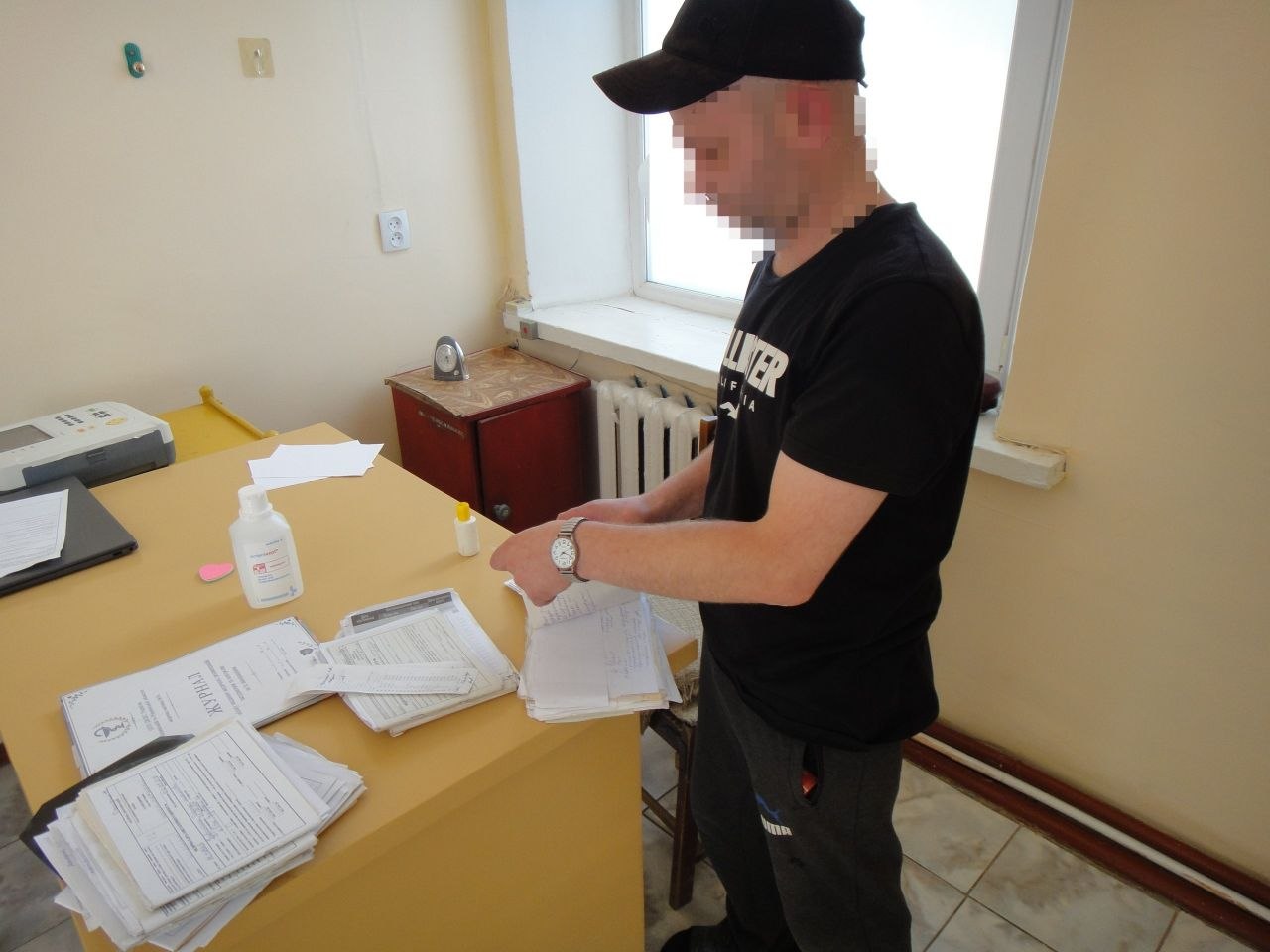
3. In breach of the requirements of the tenth sub-paragraph of paragraph 2 of Section XVII of the Internal Regulations of Penal Institutions, approved by Order No. 2823/5 of the Ministry of Justice of Ukraine of 28 August 2018 (hereinafter — the IRPI), there are convicted persons in the medical unit who perform orderly duties and have access to medical records.
In confidential conversations with convicted persons, the monitoring group established that those convicted persons are charged with organising the continuous supervision of convicted persons in the inpatient facility, monitoring their observance of the daily routine, and performing certain duties connected with caring for patients and maintaining proper sanitary conditions in the premises.
The engagement of convicted persons in these functions therefore in effect places upon them duties that ought to be performed by the staff of the medical unit and/or other authorised employees, and also creates a risk of convicted persons gaining access to information covered by medical confidentiality.
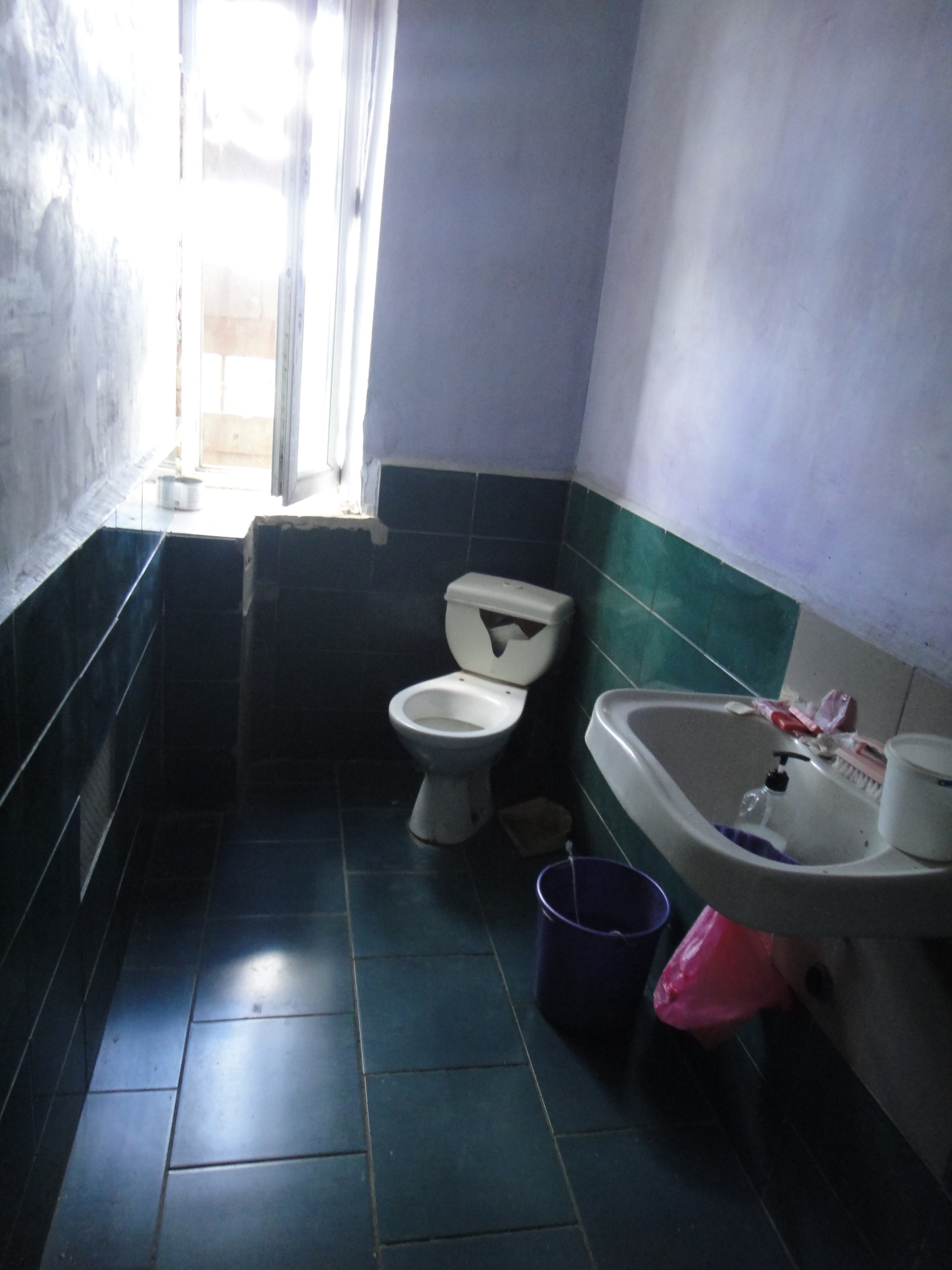
4. In breach of paragraph 9 of the Rules on the Use of Physical Restraint and/or Isolation in the Provision of Psychiatric Care to Persons Suffering from Mental Disorders, approved by Order No. 240 of the Ministry of Health of Ukraine of 24 March 2016 and registered with the Ministry of Justice of Ukraine on 15 April 2016 under No. 570/28700, and of paragraph 8.3.4 of State Building Standards of Ukraine V.2.2-10:2022 ‘Health Care Establishments’, the isolation ward for persons with mental disorders does not meet the established requirements.
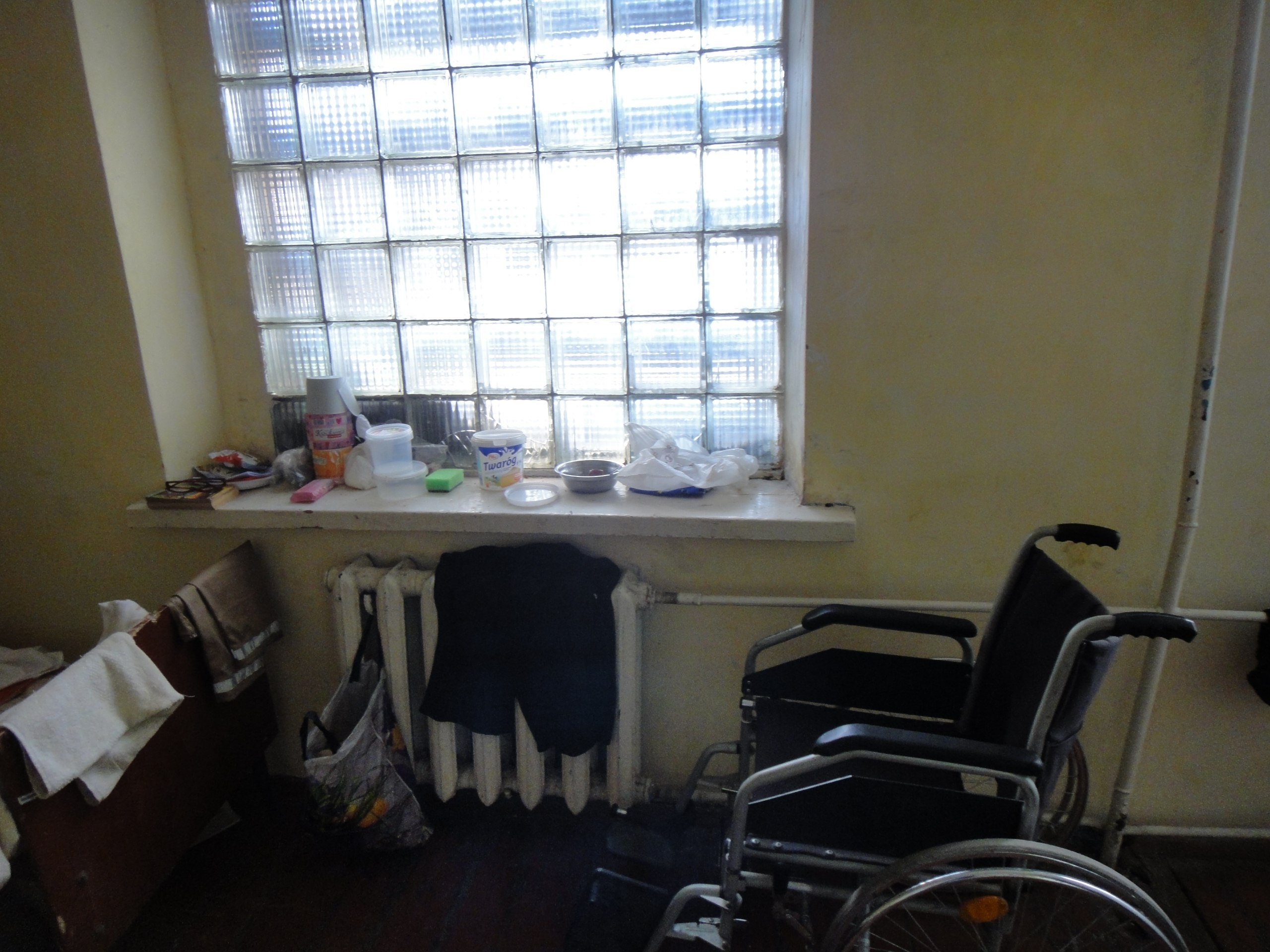
The room is designed to accommodate more than one person (two persons), which is contrary to the principles of isolation. An insufficient level of natural light was recorded in the ward. The isolation ward window is made of glass blocks, as a result of which natural light scarcely enters the room.
The room requires repair works, in particular the replacement of sanitary equipment. The sanitary facility is not fitted with partitions that would allow privacy when using it. There is no container of boiled drinking water. There is likewise no mechanical ventilation.
5. The medical unit has made no arrangements for substitution maintenance therapy (hereinafter — SMT) for persons with mental and behavioural disorders resulting from the use of opioids in accordance with the Procedure for Providing Substitution Maintenance Therapy to Persons with Mental and Behavioural Disorders Resulting from the Use of Opioids, approved by Order No. 200 of the Ministry of Health of Ukraine of 27 March 2012.
Drug-dependent persons are not provided with social and psychological support, cognitive behavioural therapy, relapse prevention, motivational interviewing, mutual support groups or similar services.
Those persons are thus deprived of the opportunity to receive SMT, which breaches their right to choose methods of treatment under Article 38 of the Law of Ukraine ‘Fundamentals of the Legislation of Ukraine on Health Care’.
In its report following its 2023 visit to Ukraine, the Committee notes that arrival in a penal institution is an opportunity to address a drug-related problem and that it is therefore important that appropriate assistance be offered to all those concerned, meaning that appropriate medical care should be available in every institution. The assistance offered to such persons should be varied; substitution therapy programmes for drug-dependent persons should be combined with genuine psychosocial and educational programmes for opioid-dependent persons who are unable to stop using drugs. Moreover, access to SMT programmes in institutions should be readily available, and they should also be managed by prison doctors, who should receive special training on drug-related matters (CPT/Inf (2024) 20), paragraph 86).
6. The post of clinical psychologist on the staff of the medical unit is vacant, which hampers the timely and effective provision of mental health care to convicted persons. In its report following its 2023 visit to Ukraine, the Committee recommends further strengthening the provision of psychological care in institutions and developing the training and role of prison psychologists, particularly as regards therapeutic clinical work with convicted persons. In this context, efforts should be made to recruit clinically trained psychologists, who should form part of the medical team and should not combine two different roles in their work, that is, risk assessment and therapeutic clinical work (CPT/Inf (2024) 20), paragraph 85).
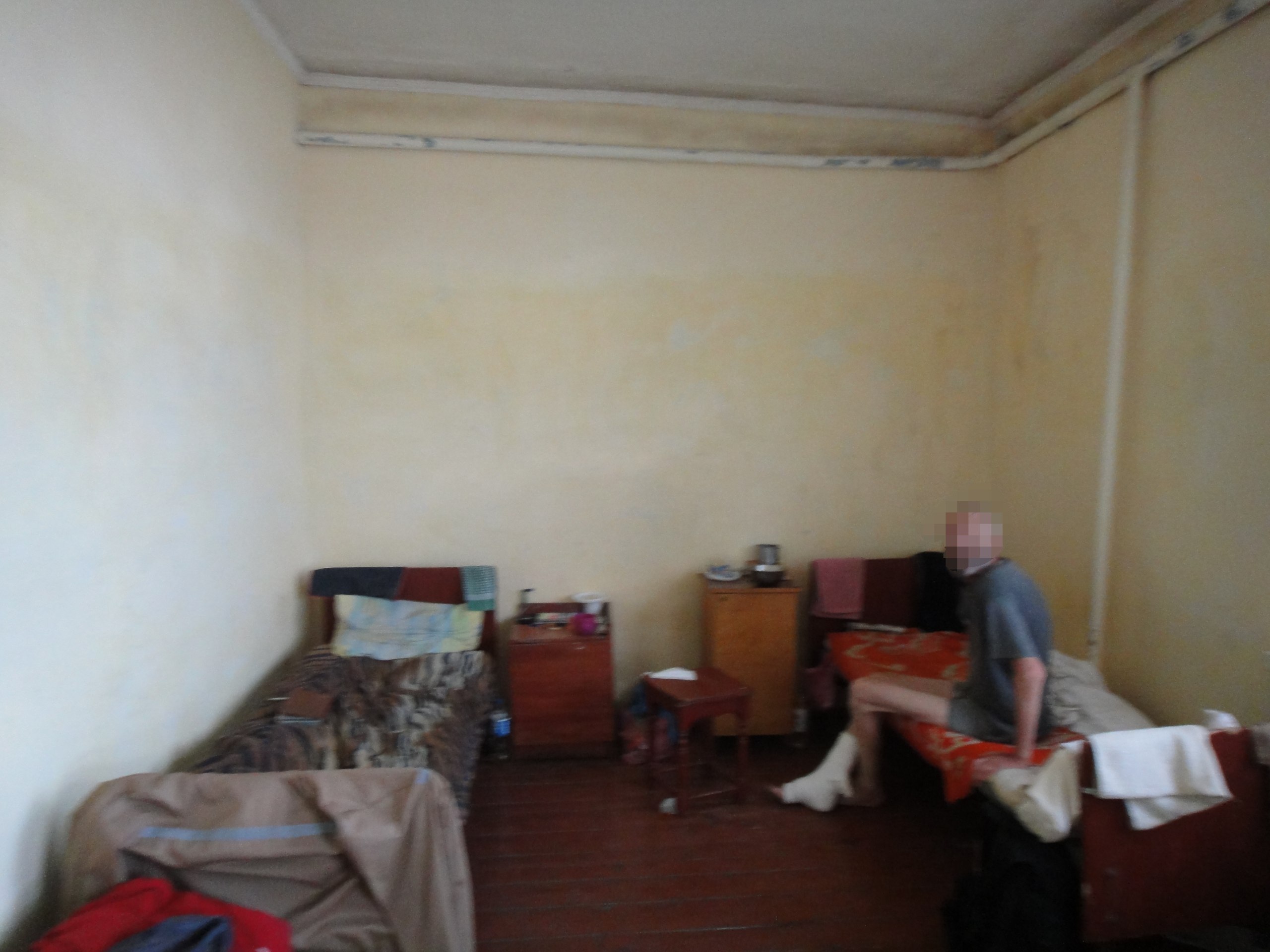
7. In breach of the Measures and Means for Preventing Infection in the Course of Patient Care, approved by Order No. 1777 of the Ministry of Health of Ukraine of 3 August 2020, the medical unit is equipped with only one isolation ward for infectious patients, which makes it impossible to accommodate patients with dangerous infectious diseases separately from one another and from other convicted persons.
Furthermore, the isolation ward for persons with infectious diseases does not meet sanitary and hygiene standards or the requirements of State Building Standards V.2.2-10:2022 ‘Health Care Establishments. Basic Provisions’. Thus, the ward intended for holding such patients is not equipped with a sanitary facility or shower cubicle, which obliges infectious patients to use the shared sanitary facilities together with other persons receiving treatment in the inpatient facility of the medical unit.
The absence of proper conditions makes effective isolation of patients impossible, facilitates the spread of infectious diseases and creates a threat to the health of both convicted persons and medical staff.
8. In breach of the requirements of the Standards of Medical Care for Viral Hepatitis C in Adults, approved by Order No. 1178 of the Ministry of Health of Ukraine of 23 July 2025, not all persons suspected of having viral hepatitis C (three persons as at 12 August 2026) undergo PCR testing, as a result of which the diagnosis is not confirmed in good time and the necessary antiviral therapy is not prescribed. Such circumstances may lead to a deterioration in patients’ health and contribute to the spread of infection among convicted persons and persons held in custody.
9. Fifteen persons with disabilities are under specialist medical supervision. There were no persons with Group I disability, two with Group II and 13 with Group III. However, in breach of the requirements of the Law of Ukraine ‘On the Rehabilitation of Persons with Disabilities in Ukraine’, persons with disabilities do not receive the appropriate diagnostic, treatment and rehabilitation measures where there is information confirming a persistent impairment of bodily functions caused by illness or by the consequences of injuries that restrict normal life activity.
Thus, an examination of convicted persons’ medical records established that one person with a disability had no individual rehabilitation programme. Moreover, the recommendations of the individual rehabilitation programme are not implemented, as a result of which that person does not receive the appropriate diagnostic, treatment and rehabilitation measures despite the existence of information confirming a persistent impairment of bodily functions caused by illness and by the consequences of injuries that restrict normal life activity.
10. In breach of the requirements of State Building Standards of Ukraine V.2.2-40:2018 ‘Inclusiveness of Buildings and Structures. Basic Provisions’, no conditions have been created in the medical unit for holding persons with disabilities.
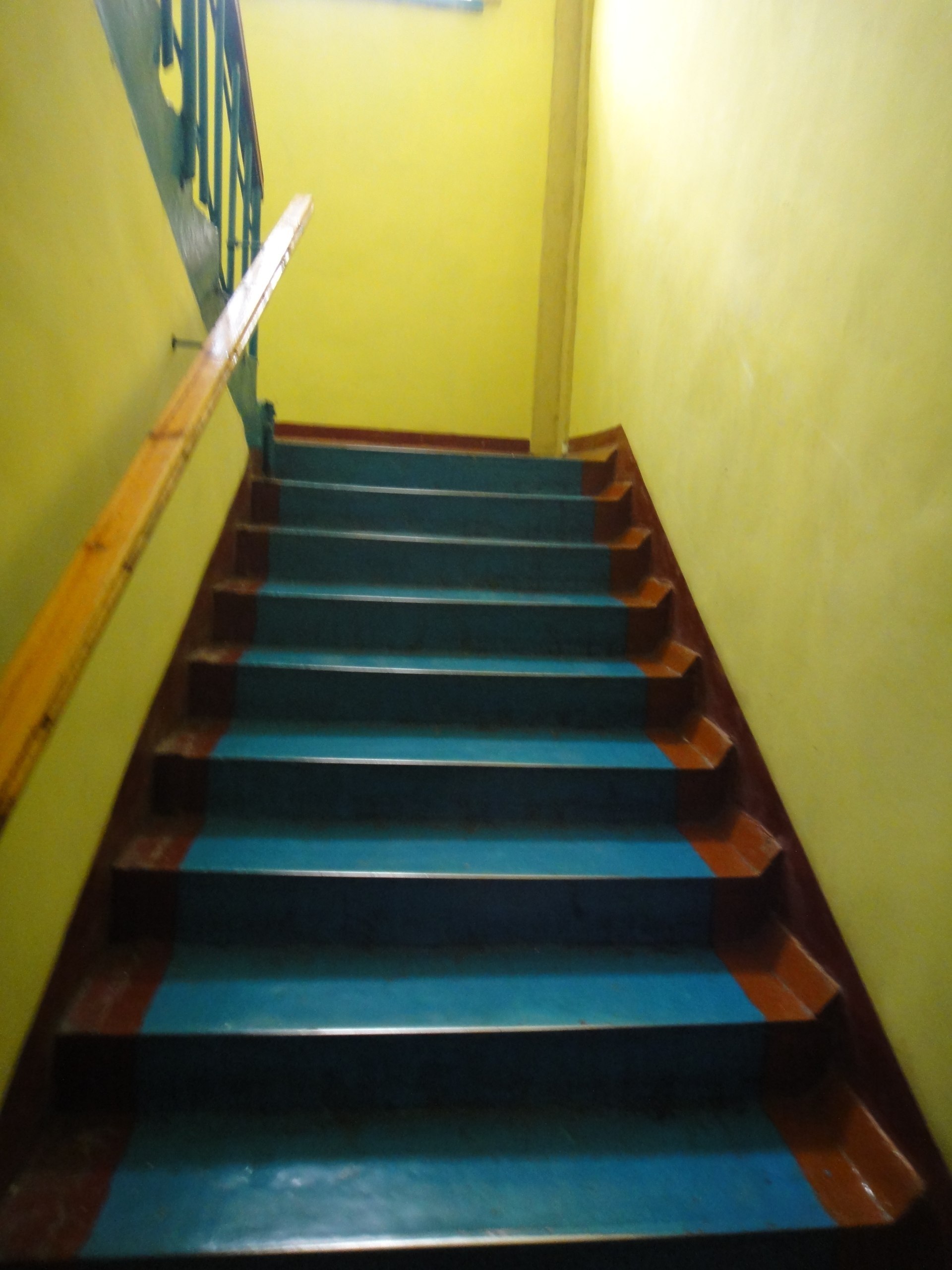
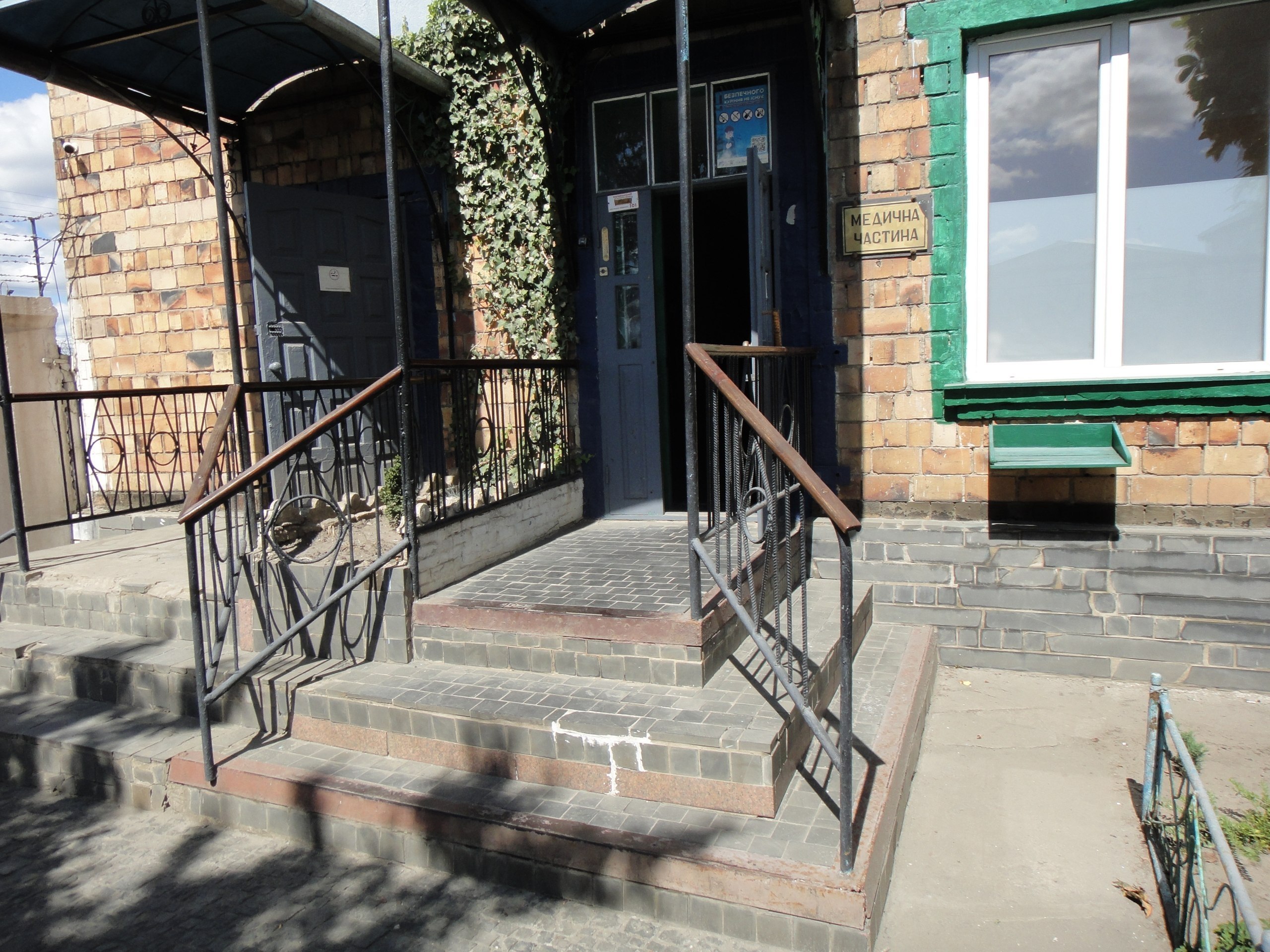
11. In breach of paragraph 37 of Resolution No. 285 of the Cabinet of Ministers of Ukraine of 2 March 2016 ‘On Approval of the Licensing Conditions for Carrying Out Economic Activity in Medical Practice’, the medical unit has no certificate confirming unimpeded access to the buildings and premises of the medical establishment for persons with reduced mobility, which it is obliged to obtain.
12. In breach of the requirements of the Schedule of Equipment for a Dentist’s and Dental Technician’s Workstation, approved by Order No. 158 of the Ministry of Health of Ukraine of 11 April 2005, the medical unit has no dental X-ray unit, which makes it impossible to carry out in-depth dental examinations of convicted persons and fails to ensure the timely provision of proper dental care.
13. In breach of the Procedure for Organising Medical Care at the Primary, Secondary (Specialised) and Tertiary (Highly Specialised) Levels Using Telemedicine, approved by Order No. 681 of the Ministry of Health of Ukraine of 19 October 2015, the staff of the medical unit are prevented, owing to technical limitations, from submitting requests for telemedicine consultations and obtaining specialist assistance in providing medical services to convicted persons.
14. In breach of the requirements of paragraph 5 of Section I of the Rules for the Storage and Quality Control of Medicinal Products in Medical and Preventive Establishments, approved by Order No. 584 of the Ministry of Health of Ukraine of 16 December 2003, medical devices whose shelf life had expired were found in the medical unit during the inspection of the treatment room.


15. In breach of the requirements of sub-paragraph 2.12 of paragraph 2 of Section III of the Fire Safety Rules in Ukraine, approved by Order No. 1417 of the Ministry of Internal Affairs of Ukraine of 30 December 2014, the door of the electrical switchboard room of the medical unit’s X-ray room was not closed.
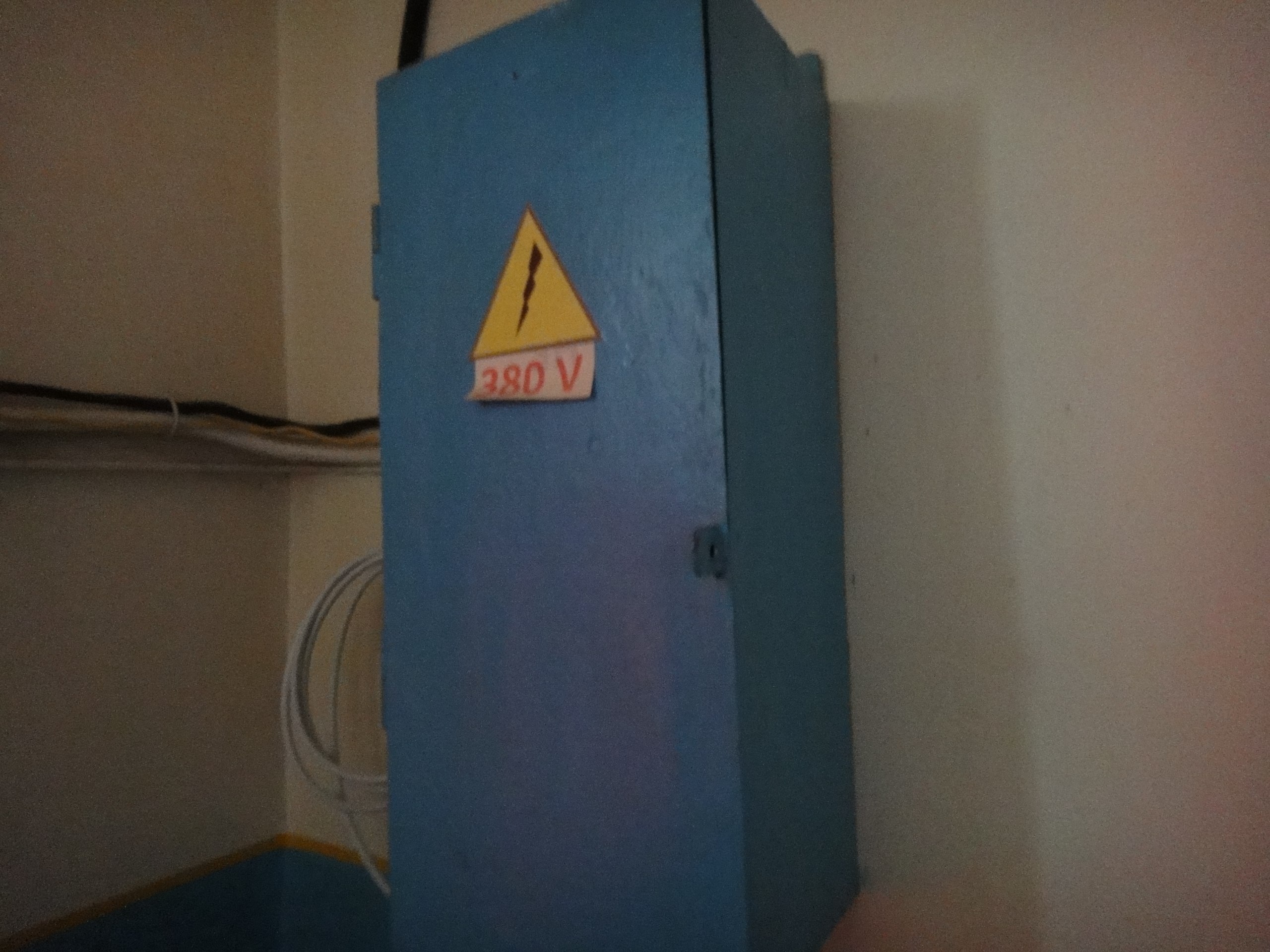
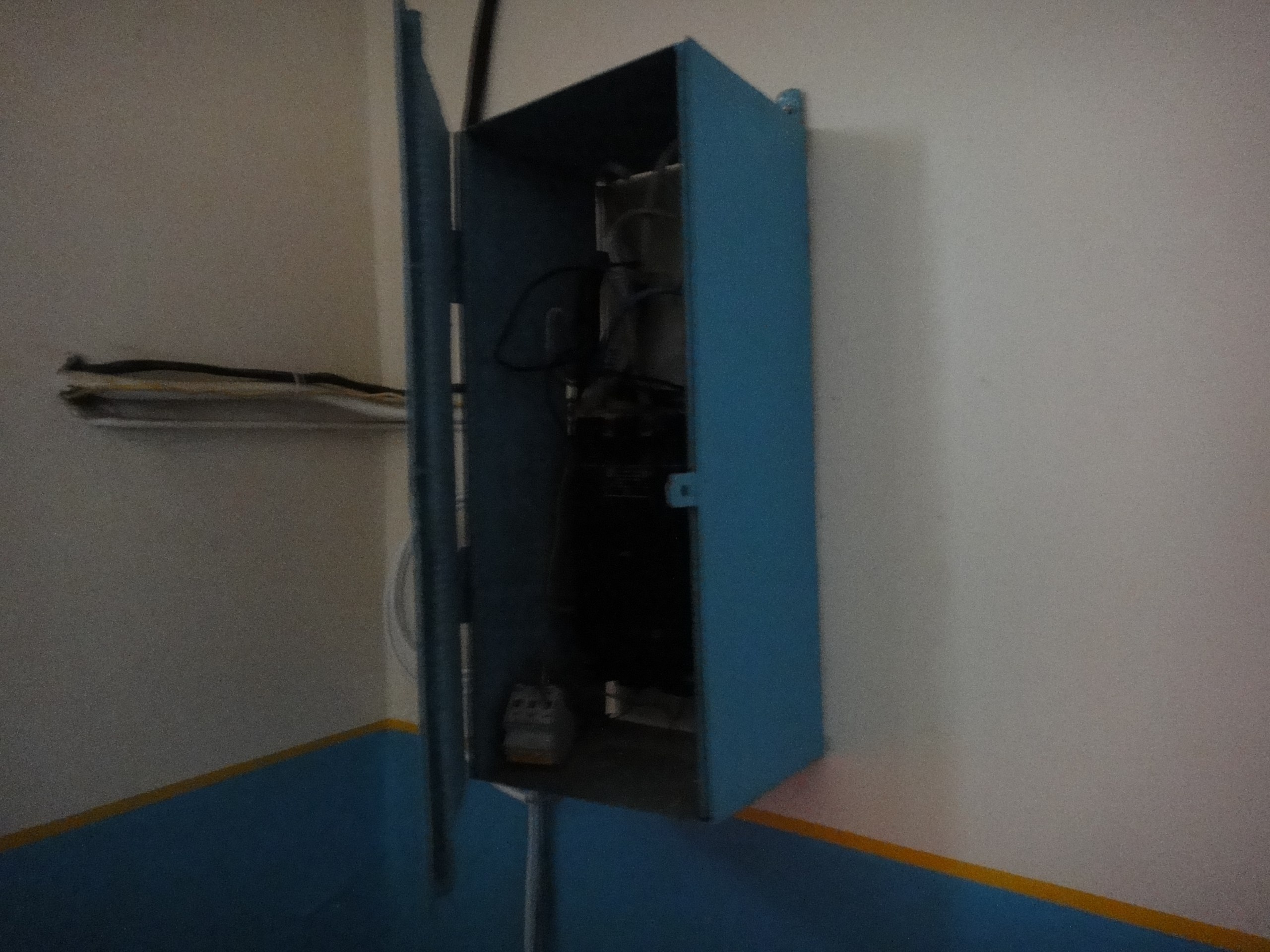
16. The doctors’ office and the X-ray room are not provided with fire extinguishers, in breach of the requirements of paragraph 3.6 of Chapter 3 of Section V of the Rules and of paragraph 10.18 of Chapter 10 of the State Sanitary Rules and Standards ‘Hygiene Requirements for the Design and Operation of X-Ray Rooms and the Performance of Radiological Procedures’, approved by Order No. 294 of the Ministry of Health of Ukraine of 4 June 2007 and registered with the Ministry of Justice of Ukraine on 7 November 2007 under No. 1256/14523.
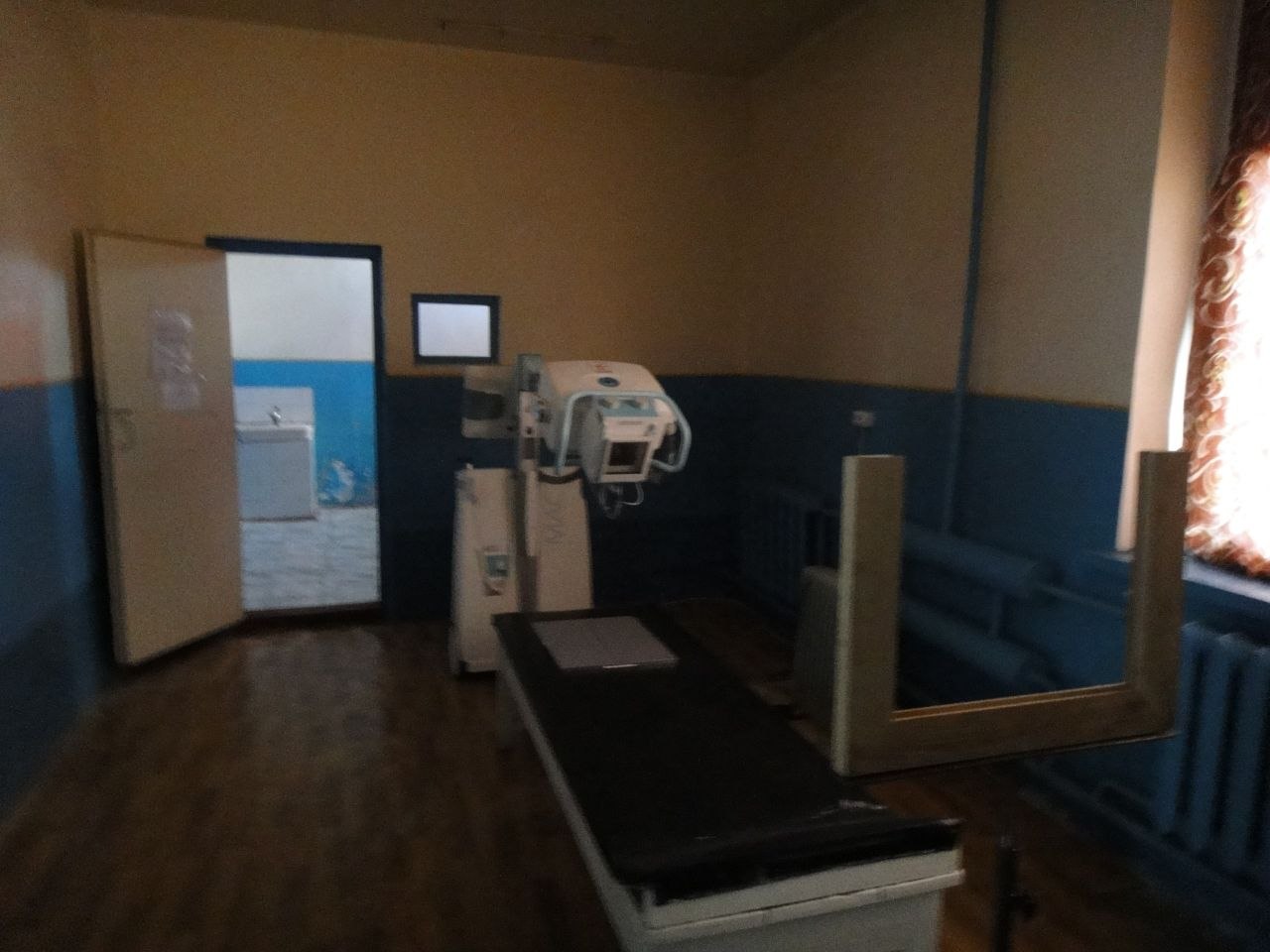
17. In breach of the Fire Safety Rules, the premises of the medical unit are not equipped with fire extinguishing or fire alarm systems.
Recommendations
1. Ensure the proper organisation of work with newly arrived convicted persons in the QDD unit, the full implementation of the programme for familiarising them with the procedure and conditions for serving their sentences, and compliance with the prescribed frequency of visits by members of the working group; bring the composition of the working group into line with the regulatory requirements.
2. For the duration of the repair works in the QDD unit, ensure that newly arrived convicted persons are accommodated in premises that meet the established material, domestic, sanitary and functional requirements.
3. Bring the conditions in the DIC/CTP and in the sector for holding persons in custody into line with national and international standards: ensure adequate natural light, working mechanical ventilation, proper privacy in sanitary facilities, constant access to drinking water and functioning radio broadcasting.
4. Display in the DIC/CTP, the sector for holding persons in custody and SPS unit No. 1 the information required by the IRPI, with up-to-date contact details for State bodies, the prosecution service, the Ukrainian Parliament Commissioner for Human Rights, the European Court of Human Rights and the free legal aid system.
5. Ensure that convicted persons held in the DIC/CTP are visited by the heads of SPS units and by the psychologist with the prescribed frequency, and that the individual preventive and psychological work carried out is properly documented.
6. Ensure that every convicted person on whom a disciplinary sanction has been imposed is given a copy of the relevant decision, together with an explanation of the procedure for appealing against it and of the right to legal assistance.
7. Bring the material and domestic provision of the ECU into line with the established standards, including by providing the necessary rooms for educational work, taking meals, storing property, domestic needs and drying clothes.
8. Review the practice of using video surveillance in the residential premises of the ECU, ensuring that it is used only where there is a substantiated need, having regard to an individual risk assessment and to convicted persons’ right to privacy.
9. Fit the exercise yards of the DIC/CTP with adequate shelter from the elements.
10. Provide the regulatory number of toilet cubicles in SPS unit No. 1 and fit the sanitary facilities with partitions guaranteeing an appropriate level of privacy.
11. Discontinue the practice of displaying information about the criminal offences committed by convicted persons beside their sleeping places, as a practice that creates a risk of stigmatisation.
12. Ensure that special equipment and items of protective kit bear individual numbering enabling a member of staff to be identified if they are used.
13. Bring bathing and laundry services into line with the regulatory requirements: provide the opportunity to wash at least twice a week, sanitary processing of newly arrived convicted persons, hairdressing services, the ability to adjust water temperature, working supply-and-extract ventilation and privacy when using the showers.
14. Ensure that staff comply with the requirement to keep special equipment as far out of sight as possible when in direct contact with convicted persons.
15. Step up work on obtaining and renewing convicted persons’ documents, in particular passports of a citizen of Ukraine and taxpayer registration numbers, above all as part of preparing persons for release.
16. Review the practice of holding short-term visits through a solid dividing glass screen, ensuring that open visits take place as a general rule and that non-contact visits are used only by way of exception, on the basis of an individual risk assessment and a duly reasoned decision.
17. Take organisational and staffing measures to reduce the staff shortfall and to ensure a sufficient presence of staff in the places where convicted persons are held.
18. Ensure the transparent and uniform application of the ‘CASSANDRA’ subsystem of the Unified Register of Convicted Persons and Persons Held in Custody: properly inform convicted persons of the purpose and procedure of risk assessment, its outcomes and their possible significance for the execution of the sentence; establish a comprehensible procedure for informing them of the outcomes and document the fact that they have been informed; and develop a uniform approach among staff to carrying out and explaining the assessment.
19. Ensure that the Internet room is genuinely accessible to convicted persons, that the use of the Internet and of video communication is properly organised, and that corresponding documentary records are kept so that the real availability and use of these means of communication can be verified.
20. Take immediate steps to provide a civil defence shelter or other suitable premises for sheltering convicted persons and staff during air-raid alerts and other threats connected with military action.
21. Carry out a comprehensive review of the organisation of convicted persons’ labour and ensure that its legal formalisation corresponds to the actual nature of the work performed, in particular by not allowing employment relations to be supplanted by civil law contracts where a permanent labour function is in fact being performed.
22. Ensure that convicted persons’ actual employment corresponds to its documentary formalisation, that working time is recorded reliably, that remuneration for work actually performed is properly calculated and paid, and that the single social contribution is paid in accordance with documented employment; and prevent the systematic engagement of convicted persons in unpaid labour beyond the cases and conditions expressly provided for by law.
23. Ensure reliable and mutually consistent recording of convicted persons’ working time, specifying the particular production facility and the actual times at which work began and ended, and eliminate the inconsistencies between the registers of attendance at and departure from work, the hourly check registers, the working-time records and other primary documentation.
24. Ensure that the actual hours worked by convicted persons engaged in domestic services correspond to the established fraction of the position, that night work is properly recorded and remunerated, and that the registers of medical examinations of catering unit workers and of the quality assessment of prepared food are kept on an individually identified basis.
25. Remedy the breaches of occupational safety requirements in the paint shop: ensure effective extract ventilation, a proper state of the production premises and the use by workers of the necessary personal protective equipment.
26. Introduce a personalised record of the issue and return of sharp and cutting implements, recording the particular user, the name of the item and the times of its receipt, transfer and return, thereby eliminating the practice of uncontrolled transfer of such items between convicted persons.
27. Take measures aimed at remedying the human rights violations identified and at preventing torture and cruel, inhuman or degrading treatment and punishment in Medical Unit No. 76 of the Volyn and Rivne Regional Branch of the State Institution ‘Health Care Centre of the State Criminal Executive Service of Ukraine’.
28. Ensure supervision of the proper keeping of medical records in accordance with the Procedure for Organising the Provision of Medical Care to Persons Sentenced to Deprivation of Liberty, approved by the joint Order of the Ministry of Justice of Ukraine and the Ministry of Health of Ukraine No. 1348/5/572 of 15 August 2014, and with other legislation.
29. Provide the medical unit with specialist doctors in accordance with its needs.
30. Ensure that form No. 003/o, ‘Inpatient Medical Record’, is kept for all patients receiving inpatient treatment, as required by the Procedure.
31. Ensure the timely and proper recording of bodily injuries of convicted persons and persons held in custody.
32. Discontinue the practice of using convicted persons as orderlies in the inpatient facility of the medical unit, ensuring that supervision, patient care and monitoring of compliance with the internal routine are carried out exclusively by officials of the institution and medical staff.
33. Ensure that the isolation ward for persons with mental and behavioural disorders is equipped in accordance with the requirements.
34. Ensure the possibility of receiving substitution maintenance therapy on the basis of a diagnosis of mental and behavioural disorders resulting from the use of opioids.
35. Ensure that isolation wards for persons with infectious diseases are provided in the medical unit in accordance with the established requirements of the legislation.
36. Ensure that individual rehabilitation is provided to those who require it.
37. Ensure the accessibility of the institution’s buildings in accordance with State Building Standards of Ukraine V.2.2-40:2018 ‘Inclusiveness of Buildings and Structures. Basic Provisions’.
38. Ensure the proper functioning of the telemedicine system so that doctors can submit requests for telemedicine consultations.
39. Provide the medical unit with a dental X-ray unit and the equipment necessary for full dental examination and treatment.
40. Comply with the requirements of paragraph 37 of Resolution No. 285 of the Cabinet of Ministers of Ukraine of 2 March 2016 ‘On Approval of the Licensing Conditions for Carrying Out Economic Activity in Medical Practice’.
41. Provide all persons suspected of having viral hepatitis C with access to PCR testing as soon as possible and arrange the necessary antiviral treatment for those with a confirmed diagnosis.
42. Ensure that medical devices whose shelf life has expired are withdrawn from use and properly written off and disposed of, and organise systematic monitoring of compliance with the established requirements for their storage and use.
43. Ensure that fire extinguishers are available in the doctors’ offices and the X-ray room.
44. Remedy the breaches of fire safety requirements.
This material was prepared as part of the project ‘Seeking Justice for Survivors’, which is funded by the Ministry of Foreign Affairs of Denmark.