Report on the Results of the Monitoring Visit to Zamkova Penal Colony No. 58
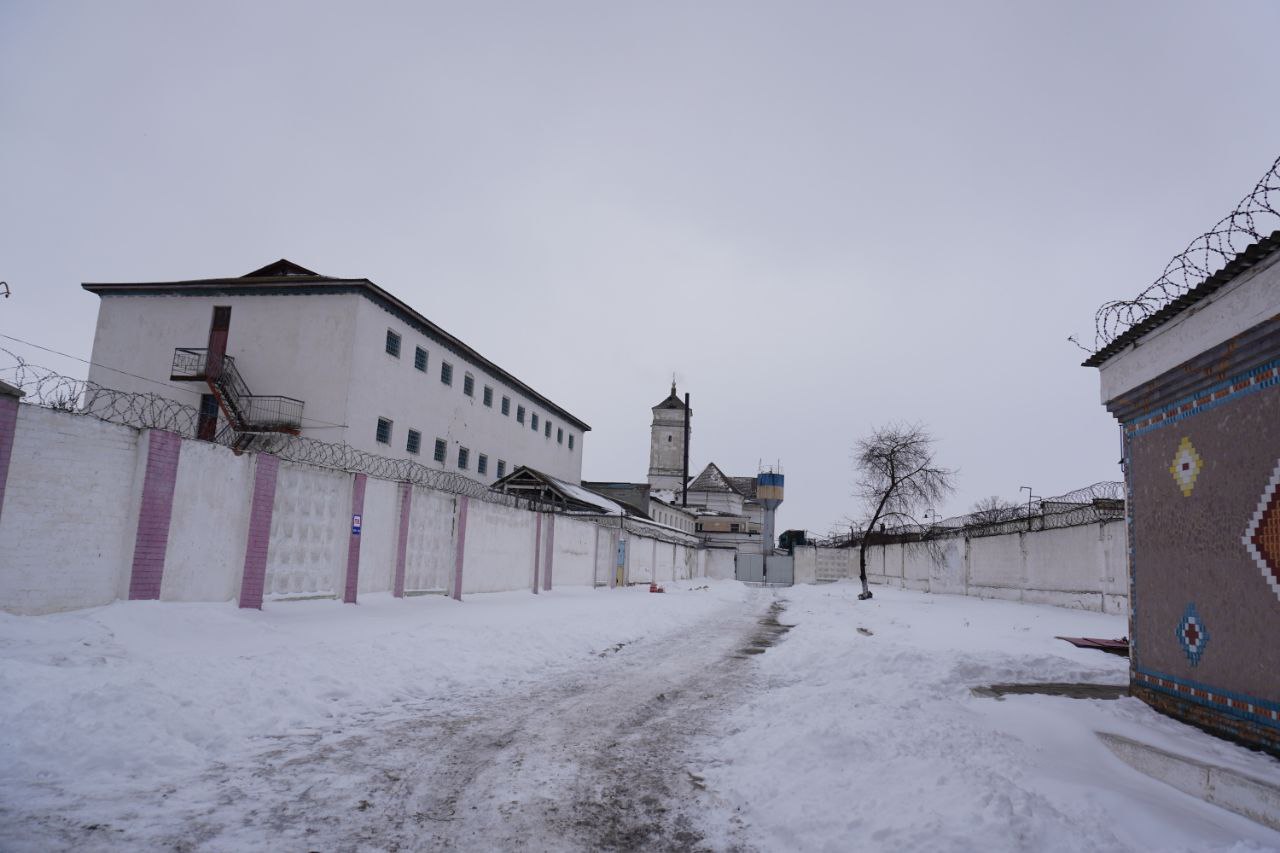
On 19 February 2026, in accordance with the Optional Protocol to the Convention against Torture and Other Cruel, Inhuman or Degrading Treatment or Punishment, taking into account the provisions of the UN Standard Minimum Rules for the Treatment of Prisoners (the Nelson Mandela Rules) and the decisions of the European Court of Human Rights, and on the basis of Article 24 of the Penal Code of Ukraine “Visiting penal institutions”, a group of monitors from the Kharkiv Human Rights Protection Group and the NGO “Protection of Prisoners of Ukraine” carried out a visit to the state institution “Zamkova Penal Colony (No. 58)” (ZPK-58, the institution, the facility, the colony). A regular planned visit was conducted without prior notice, and all facilities of the institution were examined.
The previous visit took place from 05 November 2024 to 06 November 2024.
In preparation for the visit, the monitors utilised materials from appeals by convicts and their relatives, materials from previous reports, and reports by monitors of the National Preventive Mechanism under the Ukrainian Parliament Commissioner for Human Rights (NPM).
The visit was conducted within the framework of the project “Reducing the Suffering of Prisoners in the Context of the War in Ukraine”, funded by the government of Denmark in partnership with DIGNITY — Danish Institute Against Torture.
The visit was carried out by the following monitors:
- Andrii Didenko — Assistant to People’s Deputy of Ukraine Yaroslav Yurchyshyn, programme coordinator of the Kharkiv Human Rights Protection Group, experienced in monitoring visits since 2014, NPM monitor, and member of the NPM advisory council;
- Serhii Zuikov — Assistant to People’s Deputy of Ukraine Kostiantyn Kasai, member of the public council under the Ministry of Justice of Ukraine, member of the NGO “Protection of Prisoners of Ukraine”, NPM monitor, with many years of experience in monitoring visits;
- Oleh Tsvilyi — Member of the public council under the Ministry of Justice of Ukraine, head of the NGO “Protection of Prisoners of Ukraine”, has extensive experience in monitoring visits, specialising in issues of torture, cruel, inhuman or degrading treatment or punishment.
During the monitoring visit to the state institution “Zamkova Penal Colony (No. 58)”, violations of national legislation and failures to comply with international standards in the treatment of convicts were discovered, leading to the infringement of their rights. Specifically, inadequate conditions of detention were established in the cell-type premises of the maximum-security sector (SMRB), the disciplinary unit (DIZO), and solitary confinement cells. These include non-compliance with living space standards, the use of cells smaller than the minimum permitted size, prolonged solitary confinement for life-sentenced prisoners, the lack of appropriate activities outside the cells, excessive interference with privacy through video surveillance, inadequate sanitary facilities, the absence of staff call buttons, a non-functional radio system, fixed folding beds in solitary confinement cells, and the placement of stigmatising information near cells.
Violations were also found in the procedure for applying disciplinary sanctions, the inadequate provision of exercise yards, operational failures in the quarantine, diagnostic, and distribution unit, unsatisfactory organisation of social, educational, and psychological work, formalistic maintenance of official documentation, inadequate food provision, violations in laundry and bathing services, fire safety, the lack of required goods in the shop, the absence of necessary legal acts in the library, the open carrying of special equipment by staff, the preference for non-contact short-term visits, improper processing of convict documents, and a significant staff shortage.
The unsuitable condition of the shelter was recorded separately; it lacks a second emergency exit, ventilation, and sewage, which poses a threat to the life and health of convicts and staff under martial law conditions.
In the sphere of labour and social protection, it was established that convict labour was used without proper records, employment relationships were substituted with civil law contracts, convicts were engaged in work without proper documentation, there were violations of working hours and rest periods, inadequate tool inventory, a formalistic approach to the payment of the Single Social Contribution (SSC), and a lack of medical supervision for persons working in the kitchen.
In the sphere of healthcare, improper recording of bodily injuries, understaffing of the medical unit, the absence of a psychiatrist and clinical psychologist, the lack of an isolation ward for individuals with mental disorders, violations of the right to informed voluntary consent, the absence of opioid agonist therapy, inadequate provision for the rights of persons with disabilities, the absence of accessibility features, limited telemedicine consultations, insufficient dental equipment, the malfunction or unsuitability of specific medical equipment, inadequate testing for hepatitis C, the unsatisfactory state of wards, violations of temperature regimes, improper medical waste management, the lack of hospital supplies, incomplete mandatory medical examinations for kitchen staff, and the absence of fire extinguishing and fire alarm systems in the medical unit were identified.
General Information
ZPK-58 is a maximum-security penal colony for men who have committed grave and particularly grave crimes and who have previously served sentences in places of deprivation of liberty. On the territory of the facility, there is a maximum-security sector for the detention of prisoners sentenced to life imprisonment.
The institution is located at: 2 Patriotiv St., Iziaslav, Shepetivka District, Khmelnytskyi Region, 30300.
ZPK-58 is situated on the territory of the historic Iziaslav Castle complex, which is an architectural monument of national importance. The original defensive structures at this site were founded as early as the 16th century by the Zaslavsky princes as part of a fortified residence intended to protect the south-eastern frontiers of the Polish-Lithuanian Commonwealth. Subsequently, the complex was repeatedly rebuilt, particularly in the 17th–18th centuries, when it acquired features of palace-fortress architecture with the characteristic walls, towers, and courtyards of that time. In the 19th century, after these territories became part of the Russian Empire, the castle complex lost its defensive significance and gradually began to be used for administrative and economic purposes, particularly as storage facilities and barracks.
During the Soviet period, the site was transformed into a penitentiary institution, which led to a significant change in the functional purpose of the buildings. Since then, the complex has been used as a place for the detention of persons deprived of their liberty, with partial adaptation of the historic premises to the needs of a penal institution.
As of today, the institution functions as a penal colony, while remaining a unique example of the combination of a cultural heritage site with active penitentiary infrastructure. This specificity entails both additional challenges, particularly regarding the provision of proper detention conditions, sanitary standards, and infrastructure modernisation, and an increased responsibility of the state for the preservation of historical heritage while simultaneously respecting human rights.
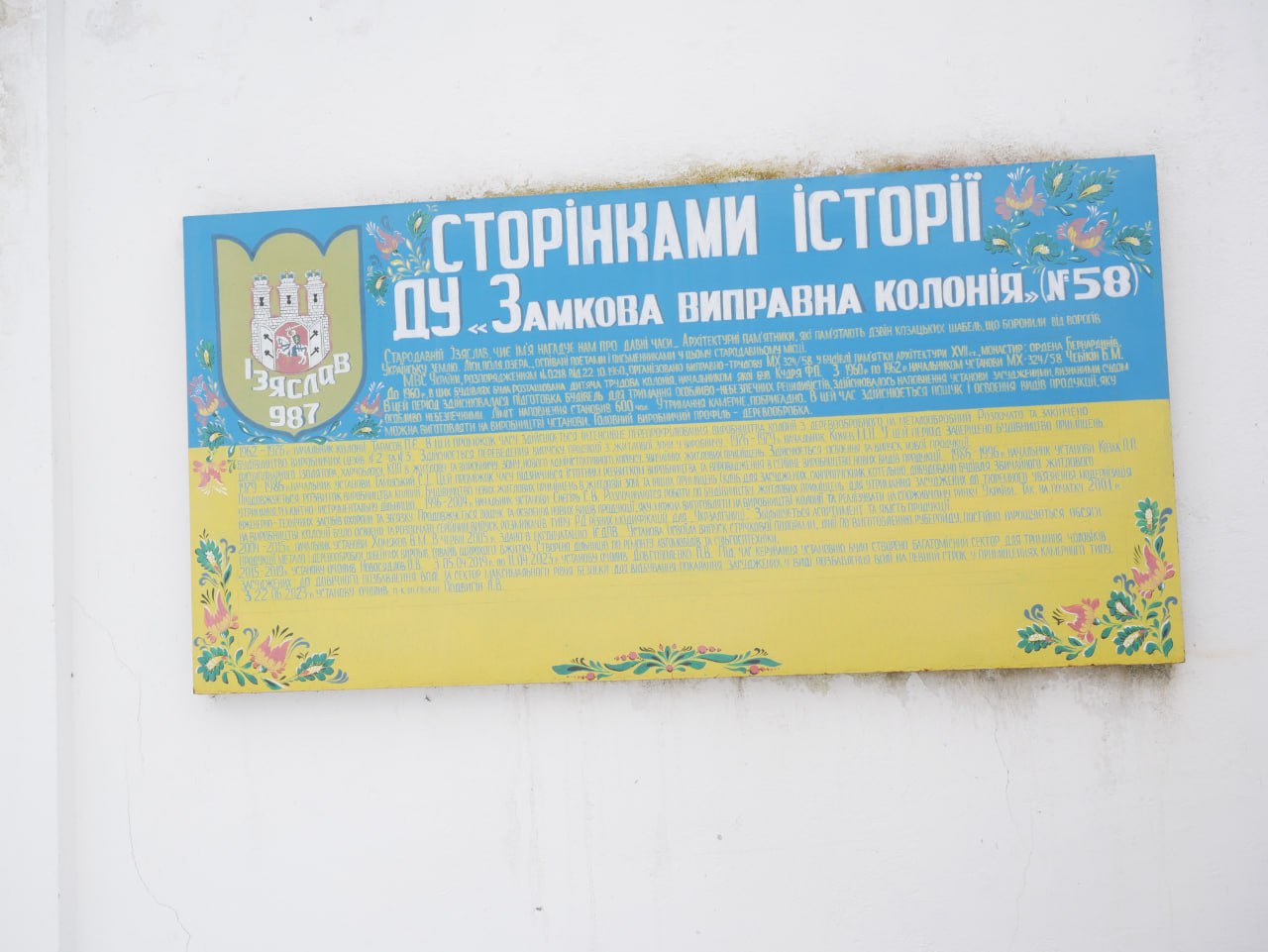
At the time of the visit, the head of the institution is Andrii Viktorovych Podvihyn.
The facility consists of a duty unit, a KDiR department (quarantine, diagnostic, and distribution unit), SPS departments (social and psychological service), a kitchen, DIZO premises (disciplinary isolation unit), PKT (cell-type premises), DPK (enhanced supervision unit), a pre-trial detention unit (SIZO), SMRB (maximum-security sector for the detention of life-sentenced prisoners), a medical unit, a laundry and bathing complex, visit rooms, a shop, a library, a room for receiving parcels, and administrative premises. The institution has 3 SPS departments.
According to the institution’s administration, the authorised staff number consists of 268 positions. The actual number is 236 positions. The total staff shortage at the institution is 32 employees. The planned capacity of the facility is 402 people. The actual number of persons held in the institution is 255 convicts. ZPK-58 employs 2 psychologists. During 2026, 5 people arrived at the colony. During 2025, 3 people died, and during 2026, 1 person died.
Operational preventive registration included: 51 persons prone to suicide; during 2025, there was 1 suicide attempt, and in 2026, 1 suicide attempt; 58 persons prone to self-harm; 8 persons prone to escape; 12 malicious violators of the regime. During 2025, 1 complaint was recorded from convicts regarding inadequate detention conditions and inadequate medical care, while during the current year, no such complaints have been recorded.
11 persons have disabilities: 1 person — group I, 1 person — group II, 9 persons — group III. In total, 27 persons are ostracised. Convicts possess 217 tablets for personal use, and 76 email addresses are registered. In the last six months, 12 acts of prosecutorial response were drawn up. During 2025, 10 cases of bodily injuries were recorded: 2 upon arrival at the institution and 8 during the stay at the facility; during 2026, 1 case of bodily injuries was recorded during the stay at the institution.
The monitoring group interviewed about 170 convicts while visiting production premises, workshops, SPS departments, the SMRB, disciplinary premises, and utility areas, conducting general conversations, providing consultations, answering questions, and surveying regarding human rights violations, as well as engaging in individual communication with persons, including on an anonymous basis.
Identified Violations of National and International Legislation
During the monitoring visit, violations of national legislation and failures to comply with international standards regarding the treatment of prisoners were discovered, which lead to violations of the rights of convicts:
1. In the course of the monitoring visit to the institution, a number of systemic violations were recorded, in particular, failure to comply with the living space standards established by legislation provided for the detention of convicts in cell-type premises, as well as other violations that indicate inadequate detention conditions. Such conditions may be regarded as cruel, inhuman or degrading treatment or punishment and may lead to new applications against Ukraine to the European Court of Human Rights in connection with violations of Article 3 of the Convention for the Protection of Human Rights and Fundamental Freedoms.
Specifically, in violation of Part 1 of Article 115 of the Penal Code of Ukraine (hereinafter — the PC of Ukraine) and Rule 13 of the UN Standard Minimum Rules for the Treatment of Prisoners (the Nelson Mandela Rules), it was established that in certain cell-type premises of the maximum-security sector of the institution (hereinafter — SMRB), the living space standard per convict is less than 4 m². Thus, in cell No. 26, where 3 convicts were held, the area of the premises is 8.2 m², in connection with which the actual area per person is 2.73 m². Similar violations were established in cell-type premises Nos. 6, 11, 26, 36, 39, and 40.
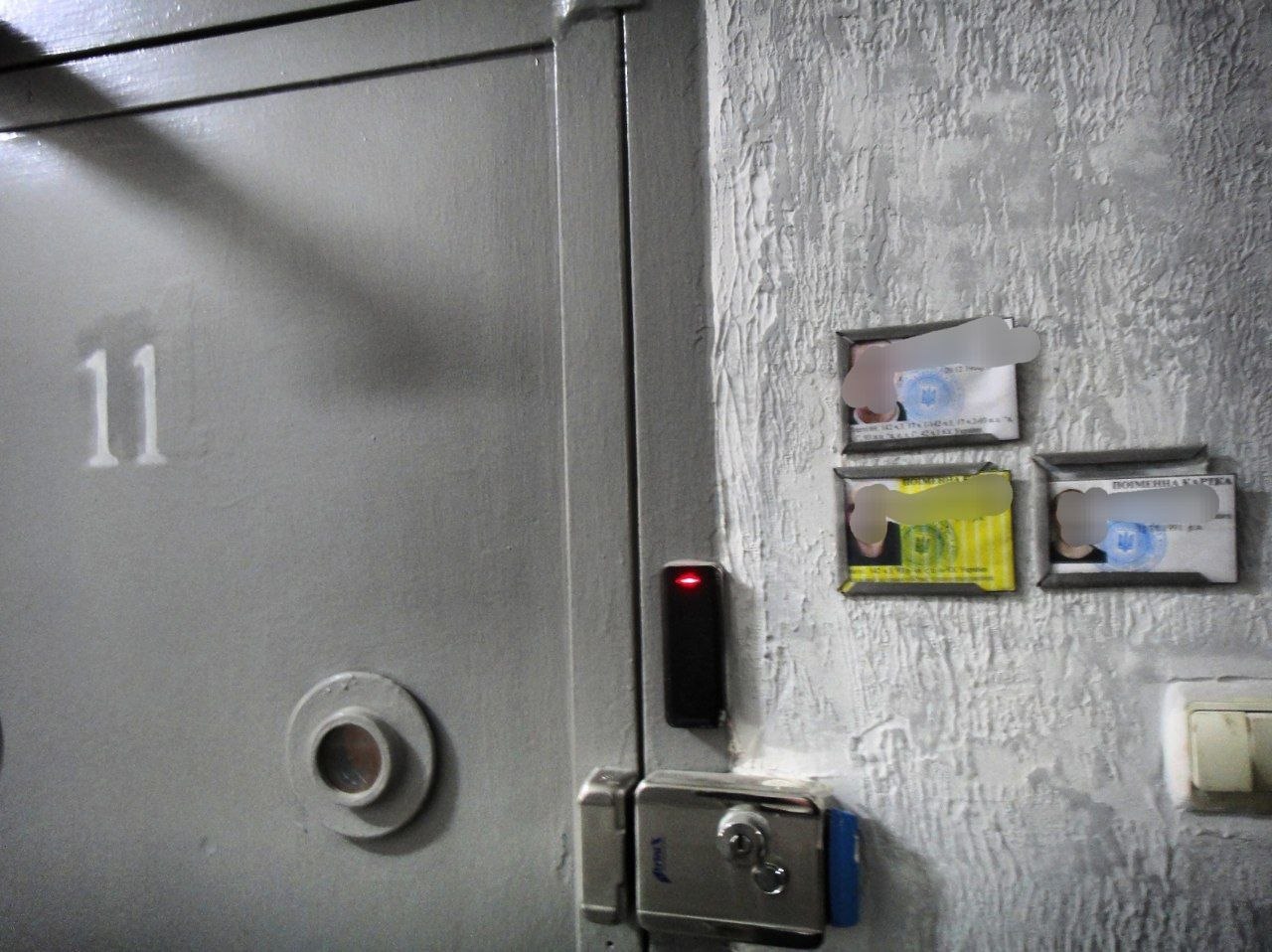
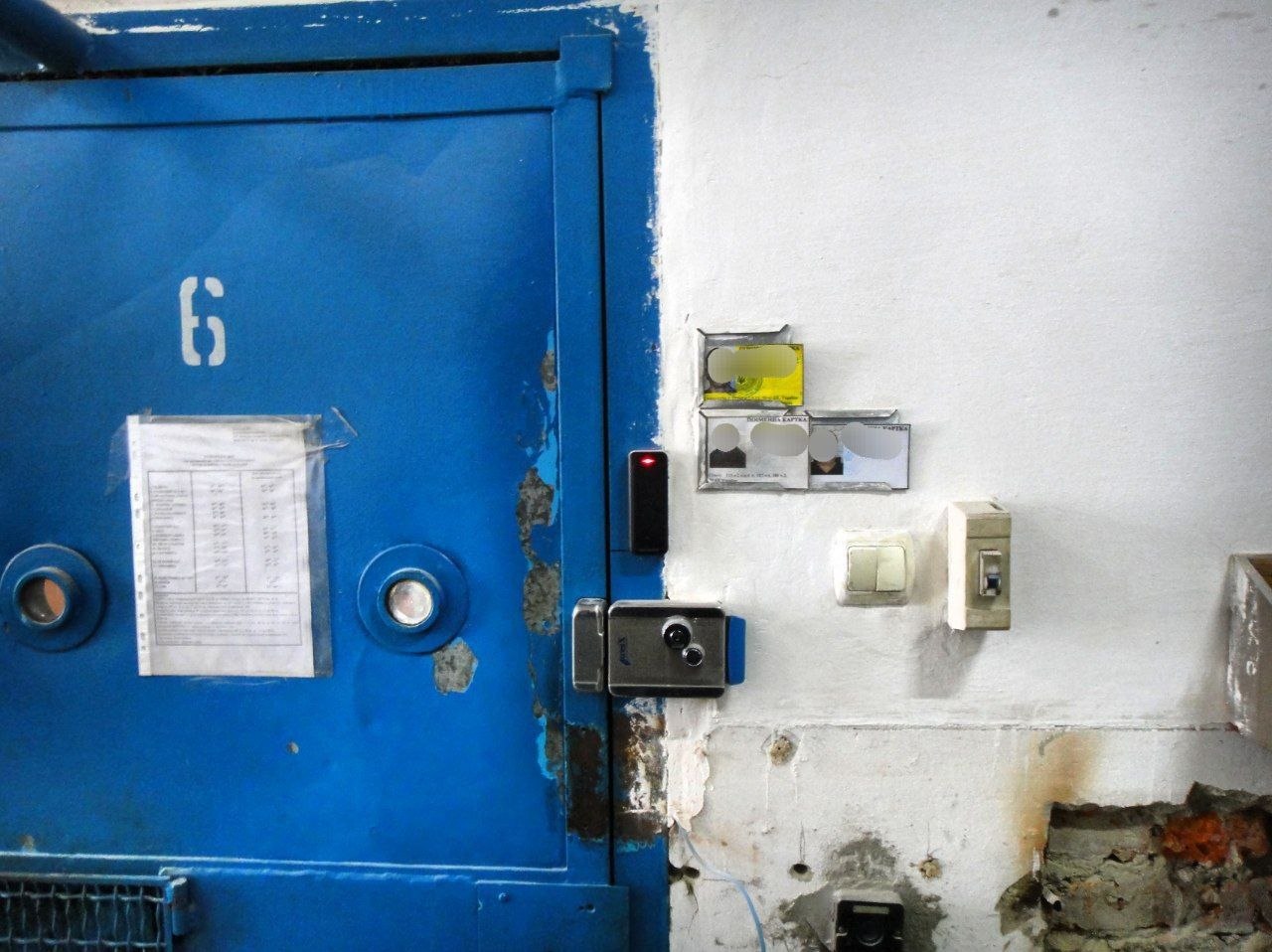
In addition, it was established that in certain cell-type premises, the actual number of sleeping places exceeds the permissible limit, which makes it impossible to comply with the living space standard provided by legislation — not less than 4 m² per person. Specifically, cell No. 9, which, according to the living space measurement act, is designed to accommodate 2 sleeping places with a total area of 8.2 m², is actually equipped with 3 beds. Similar violations were established in cell-type premises Nos. 6, 11, 12, 13, 26, 31, 33, 35, 36, 37, 38, 39, 40, 41, 43, and 46.
The aforementioned circumstances create prerequisites for possible abuses by the administration and staff of the institution regarding compliance with the living space standard per convict and do not ensure an adequate level of personal space for persons held in SMRB cell-type premises. At the same time, Paragraph 13 of the Seventh General Report of the European Committee for the Prevention of Torture and Inhuman or Degrading Treatment or Punishment (hereinafter — the Committee) states that the problem of overcrowded cell-type premises leads to unhygienic conditions, a constant lack of privacy, overstretching of medical services and institution infrastructure, and the Committee concludes that quite often the negative impact of overcrowding has resulted in inhuman or degrading conditions of detention for prisoners (CPT/Inf (97) 10).
2. The layout of certain SMRB cell-type premises does not ensure adequate detention conditions for convicts, taking into account their individual needs, which does not comply with international standards for the treatment of prisoners and established requirements. Thus, in Paragraph 59 of the 21st General Report of the European Committee for the Prevention of Torture, it is stated that any cell with an area of less than 6 m² should not be used for the detention of prisoners (CPT/Inf (2011) 28). In the report on the results of the visit to Ukraine in 2012, the Committee notes that single cells must have a living space of at least 6 m² (excluding the bathroom), and the distance between the walls must be at least 2 metres (CPT/Inf (2013) 23, Paragraph 45).
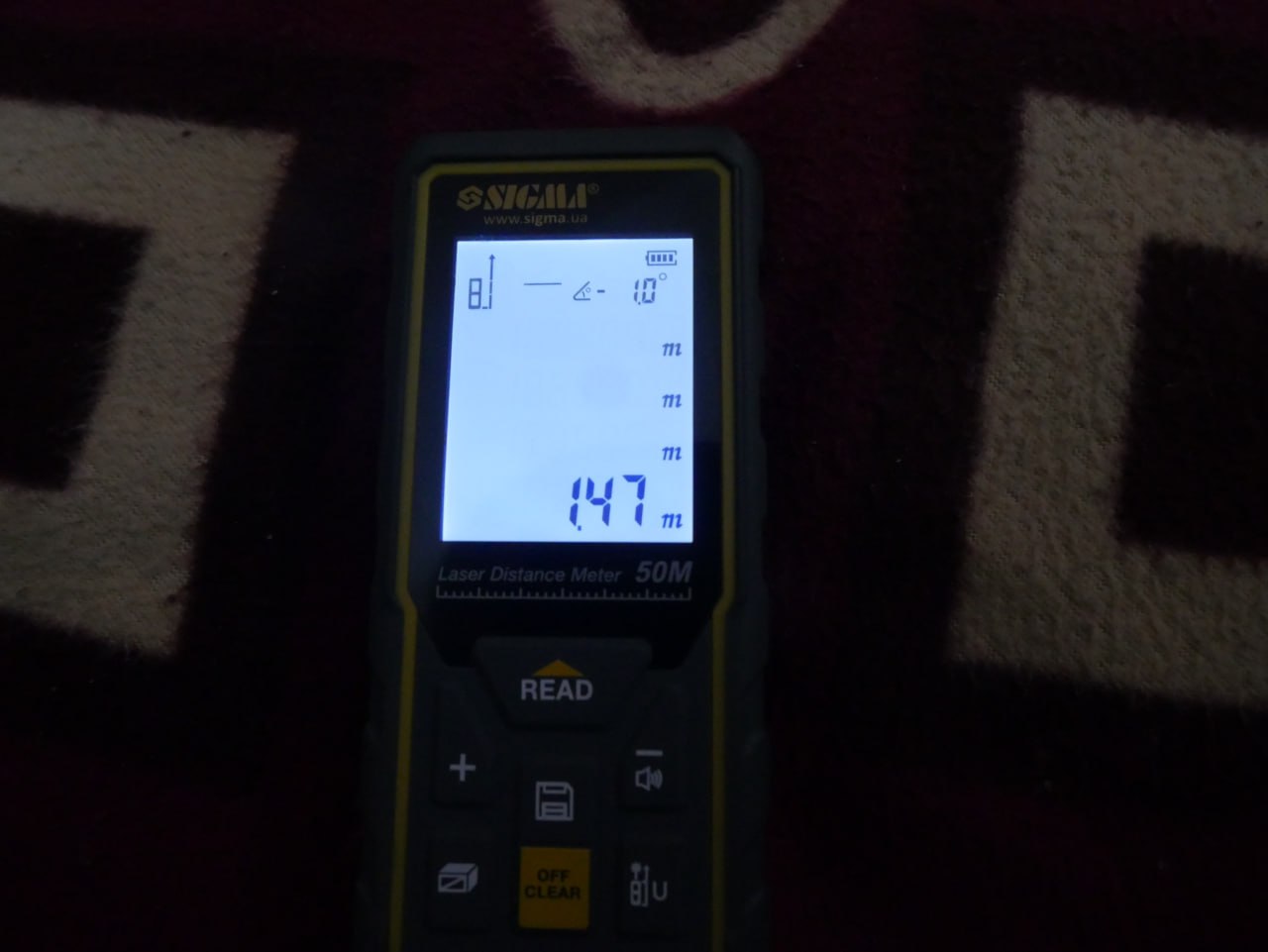
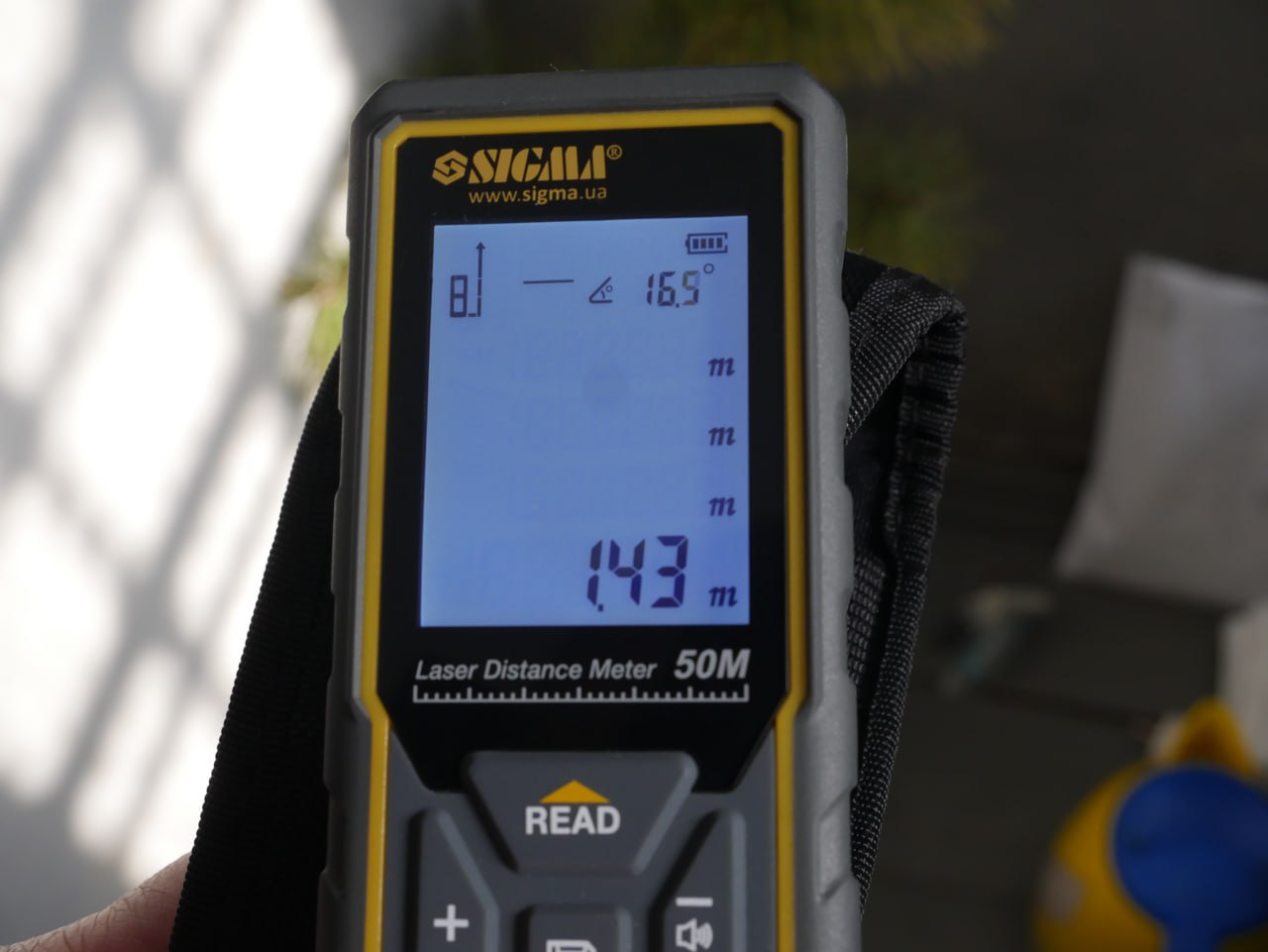
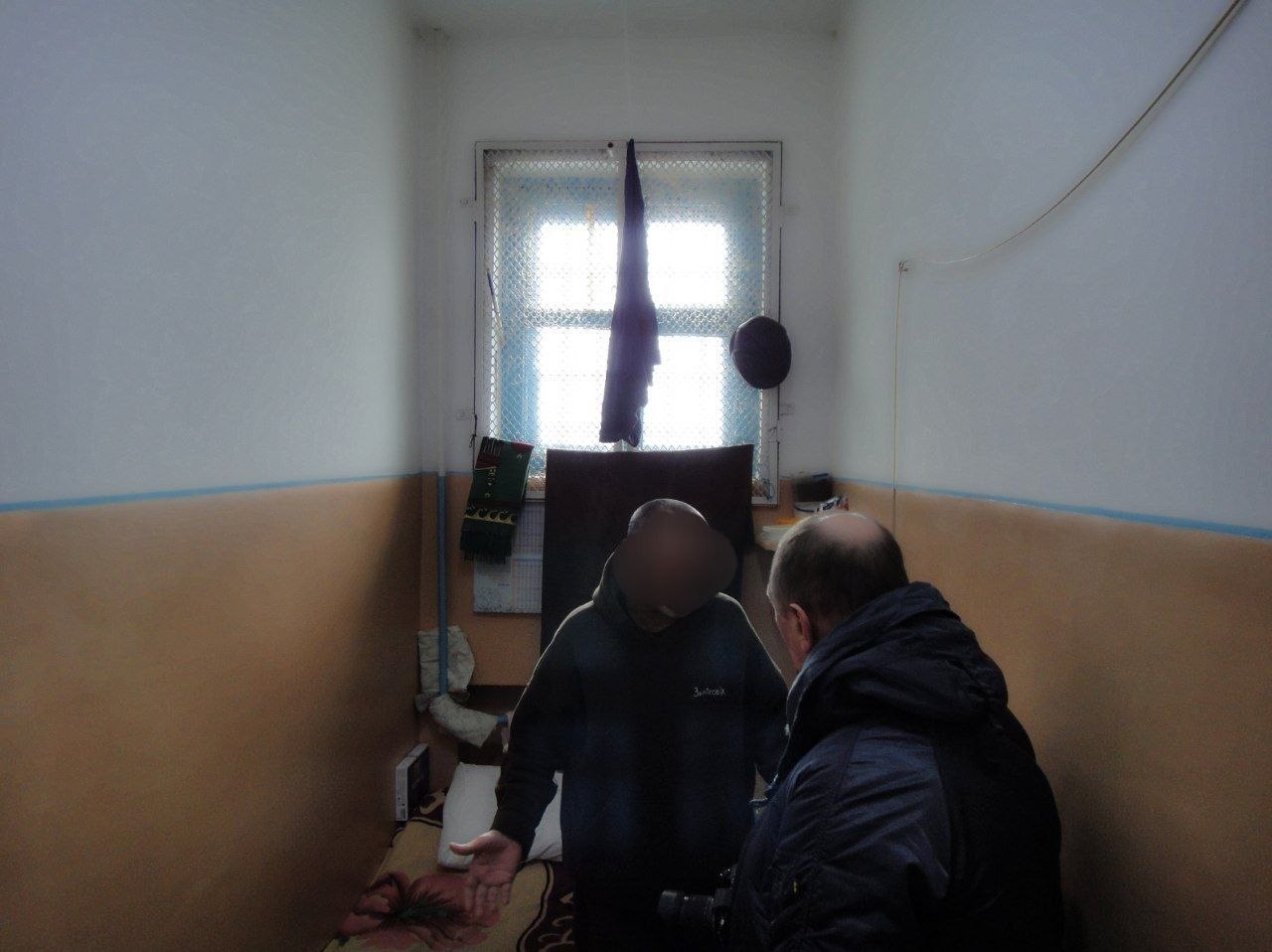
At the same time, the monitoring group established the use of premises for the detention of convicts that do not meet the specified requirements. Specifically, while measuring cell No. 15, where a prisoner sentenced to life imprisonment, Z., was held, who, according to him, had been in this cell alone for about 4 years, it was established that the distance between the walls is 1.47 m, and the total area of the premises is 5.6 m² (including the bathroom). A similar violation was established in cell No. 16 — the distance between the walls is 1.43 m. This leads to the fact that due to the limited area, convicts do not have the opportunity to move freely within the cell, which causes physical discomfort.
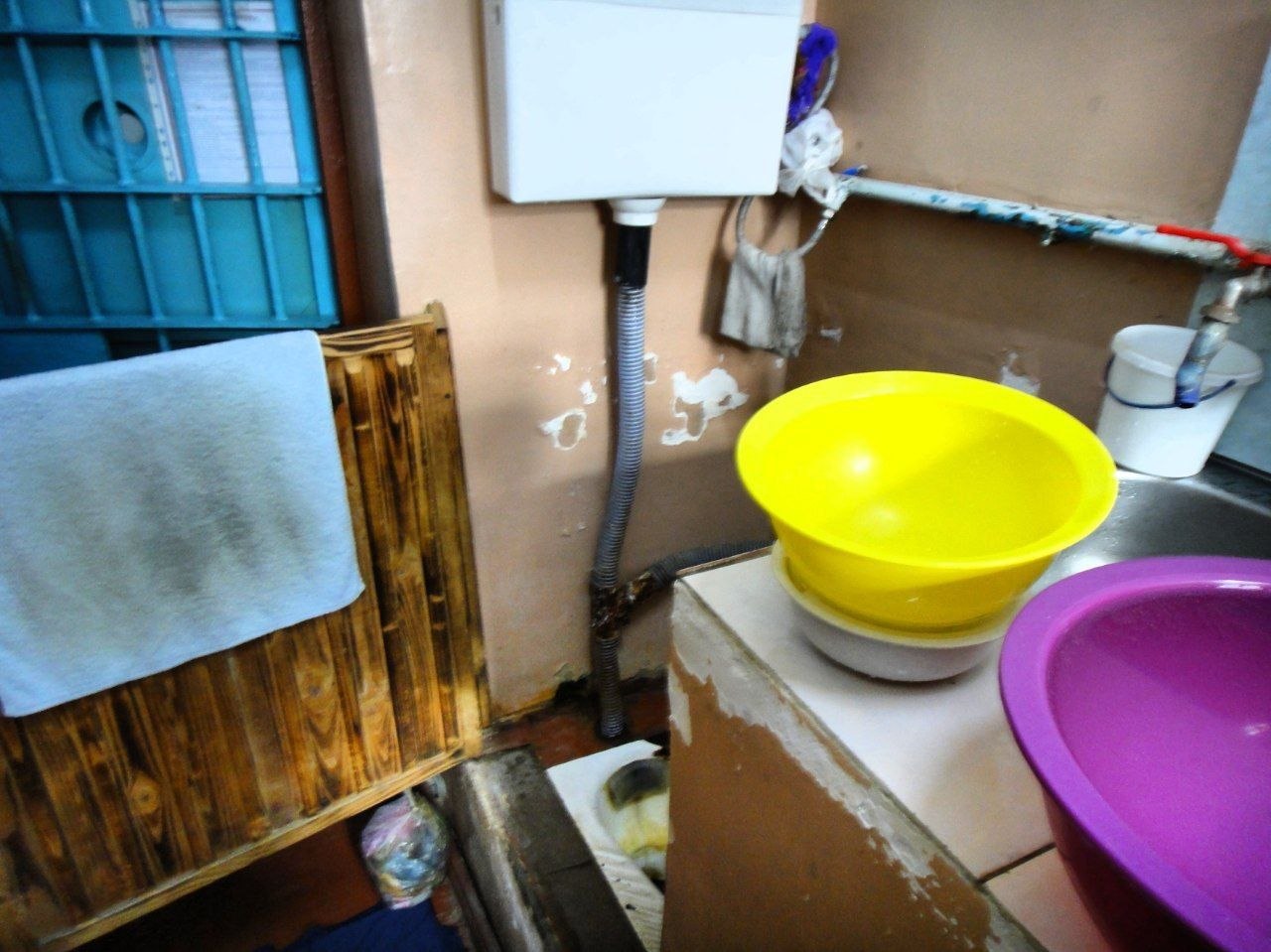
In addition, cell No. 15 does not ensure an adequate level of natural light and ventilation, and the windows do not open independently, which is a violation of Rule 18.2(a) of the European Prison Rules. In violation of Rule 22.5 of the European Prison Rules, the premises are not provided with a drinking water tank. Also, in violation of the Standards for the provision of furniture, inventory, and household items for a maximum-security penal colony, approved by the Order of the Ministry of Justice of Ukraine dated 27.07.2012 No. 1118/5 (hereinafter — the Provision Standards), there is no wardrobe. The bathroom is not equipped with sufficient partitions to ensure privacy, which is a violation of Rule 19.3 of the European Prison Rules. Such conditions do not comply with Paragraphs 13, 14, 15, and 22.2 of the UN Standard Minimum Rules for the Treatment of Prisoners (the Nelson Mandela Rules).
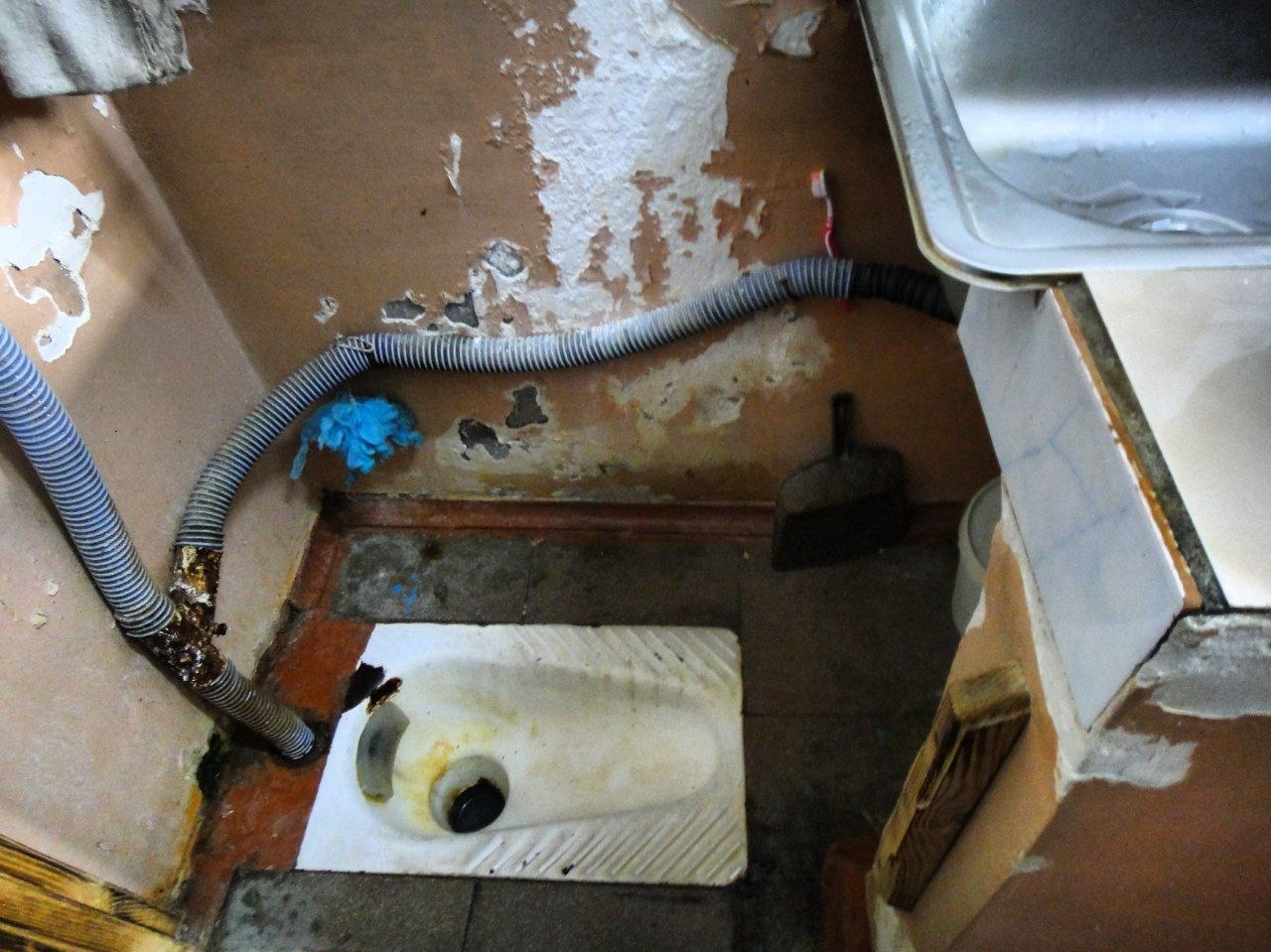
3. According to Rule 43 of the UN Standard Minimum Rules for the Treatment of Prisoners (the Nelson Mandela Rules), under no circumstances may restrictions or disciplinary sanctions be equivalent to torture or other forms of cruel, inhuman or degrading treatment or punishment; in particular, measures such as indefinite solitary confinement and prolonged solitary confinement are prohibited. In accordance with Rule 44, prolonged solitary confinement means keeping a person in conditions of isolation for more than 15 consecutive days.
At the same time, during the visit to the institution’s SMRB, it was established that certain prisoners sentenced to life imprisonment are kept for a long time in single cells designed for one person. Specifically, convict Z. is held in cell No. 15 in conditions of solitary confinement for about 4 years.
At the same time, according to Paragraph 53 of the 21st General Report of the Committee, solitary confinement can have extremely negative consequences for the mental, somatic, and social health of a person, which can manifest immediately and intensify depending on the duration of the application of such a measure and the degree of its uncertainty in time. Furthermore, such conditions can create prerequisites for ill-treatment of prisoners outside of proper control (CPT/Inf (2011) 28).
4. During the visit, it was established that in cell No. 9, a convict, B., is held, who has a group I disability, cannot move independently, and requires constant outside assistance in caring for himself. At the same time, the aforementioned cell is not a ward of the medical unit, is not adapted for the prolonged stay of a person with such functional limitations, and does not ensure the conditions necessary for proper care, hygiene, safe movement, and access to medical care. Keeping a person with a group I disability in an unadapted cell indicates a failure to ensure their individual needs and may constitute degrading treatment.
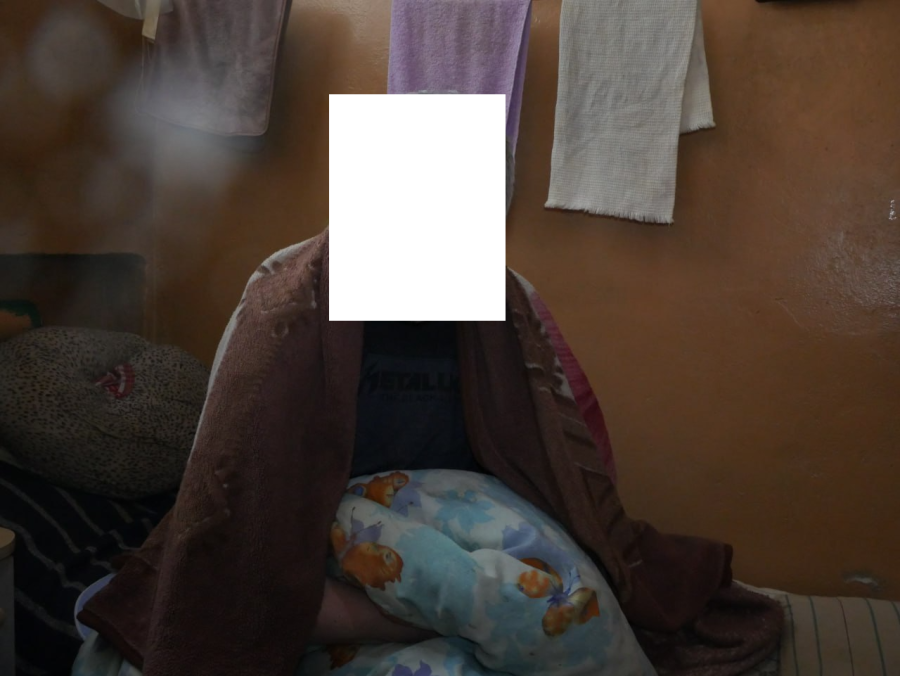
5. The monitoring group established that the institution’s staff does not provide prisoners sentenced to life imprisonment with alternative types of activities outside their cells. Appropriate measures are carried out episodically, and the number of jobs in the SMRB workshop is extremely limited, which makes it impossible to exercise the right to work for everyone who wishes. In addition, in violation of the requirements of the Provision Standards, there is no room for educational work in the institution’s SMRB. This leads to the de facto isolation of convicts and restricts the realisation of their fundamental rights while serving their sentences.
At the same time, the Committee in its report on the results of the visit to Ukraine calls on state authorities to take urgent measures to develop and implement a regime of out-of-cell activities, including group activities, for prisoners sentenced to life imprisonment. In this context, the need to ensure the possibility for such convicts to communicate with each other, particularly during walks in the fresh air, is emphasised (CPT/Inf (2024) 20, Paragraph 72).
6. Item 1 of Section XXIII of the Internal Rules of Penal Institutions, approved by the Order of the Ministry of Justice of Ukraine dated 28.08.2018 No. 2823/5 (hereinafter — PWR UVP), defines that the supervision of convicts is a system of measures aimed at ensuring the serving and execution of criminal penalties in the form of restriction and deprivation of liberty, life imprisonment, and arrest through round-the-clock and constant control over the behaviour of convicts in their places of residence and work, the prevention and suppression of unlawful actions on their part, and the assurance of the requirements for the isolation of convicts and the safety of the staff of penal institutions.
Thus, during the inspection of the SMRB cell premises, installed video surveillance cameras were recorded. At the same time, in its 2012 report, the Committee criticised the excessive interference with privacy through the installation of video cameras in the living quarters of convicts: “The Committee agrees that video surveillance in cells can be a useful safeguard in certain cases, for example, when a person is considered to be of concern regarding the risk of self-harm or suicide, or if there are specific suspicions that a convict is carrying out certain actions in the cell that could jeopardise safety.
However, any decision to use video surveillance regarding a specific convict must always be based on an individual assessment of real risks and must be frequently reviewed on a regular basis. Video surveillance is a serious interference with the private life of prisoners and makes the regime even more repressive, particularly when applied over a long period of time” (CPT/Inf (2013) 23, Paragraph 52).
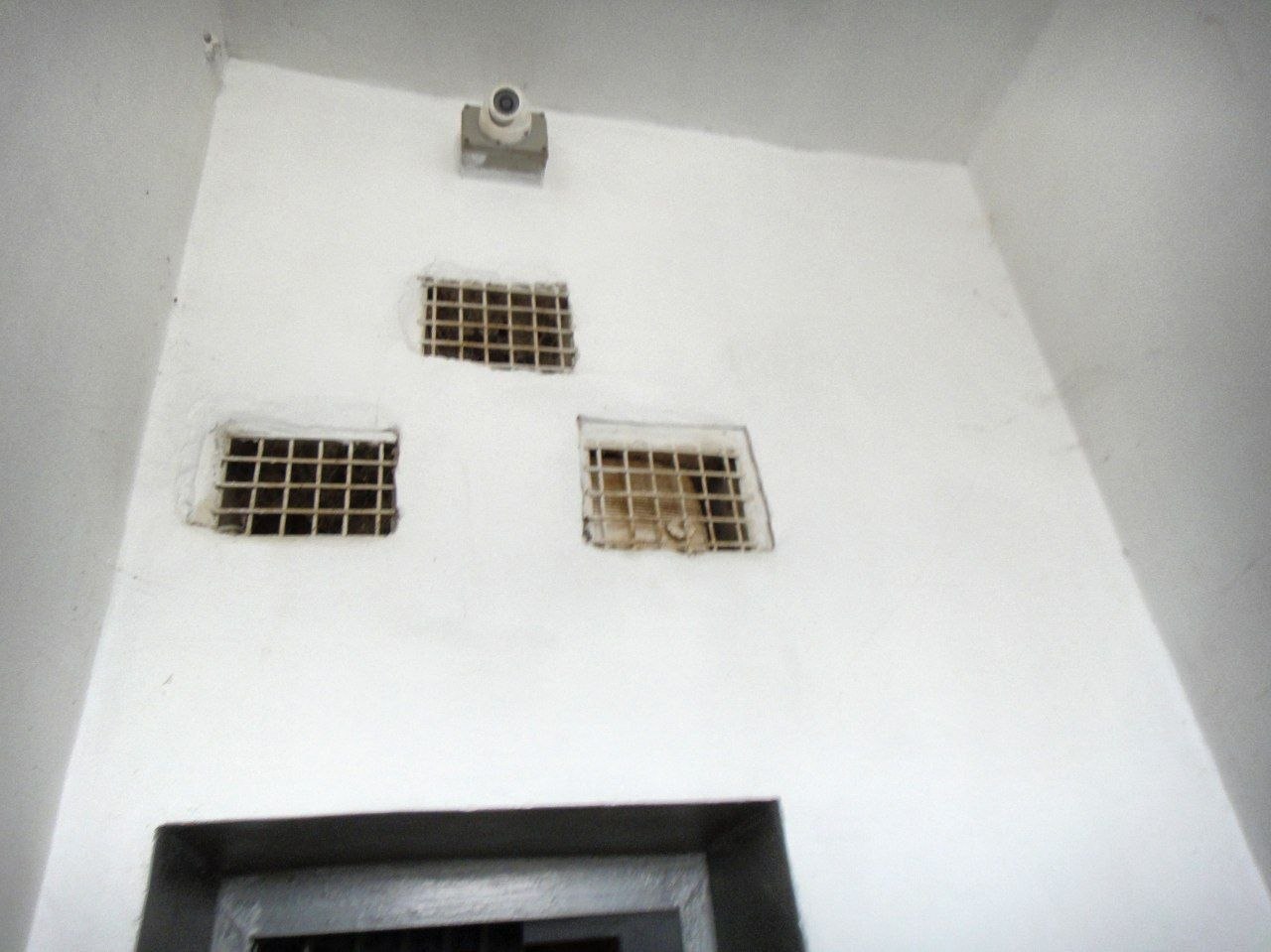
7. During the visit to the SMRB solitary confinement cell, it was established that the detention conditions of convicts do not comply with the established standards for the treatment of prisoners, do not ensure proper living and sanitary-hygienic conditions, and lead to the violation of their rights.
Thus, in violation of Item 4 of Section IV of the Procedure for the use of technical means of supervision and control in penal and educational colonies of the State Penitentiary Service of Ukraine, approved by the Order of the Ministry of Justice of Ukraine dated 26.06.2018 No. 2025/5 (hereinafter — the Procedure for using technical means), the solitary confinement cell is not equipped with staff call buttons, which complicates operational contact between convicts and institution staff.
During the measurement of the solitary confinement cell area, it was established that the distance between the walls is less than 2 m, which does not comply with the Committee’s recommendations. The solitary confinement cell does not ensure an adequate level of natural light, as the cell window is located at a considerable height, is small in size, and has excessive grilles, as a result of which natural light practically does not penetrate the premises. This does not comply with the requirements of Rule 18.2(a) of the European Prison Rules and Rule 14 of the UN Standard Minimum Rules for the Treatment of Prisoners (the Nelson Mandela Rules).
The bathroom is not equipped with partitions and doors that guarantee the possibility of privacy, which is a violation of Rule 19.3 of the European Prison Rules. In violation of the requirements of Rule 22.5 of the European Prison Rules, Rule 22.2 of the UN Standard Minimum Rules for the Treatment of Prisoners (the Nelson Mandela Rules), and the Provision Standards, the premises are not provided with a 15-litre drinking water tank with a faucet, lid, mug, and basin. The radio system in the solitary confinement cell does not function, which contradicts the requirements of Item 3 of Section XX of the PWR UVP and Item 63 of the UN Standard Minimum Rules for the Treatment of Prisoners (the Nelson Mandela Rules).
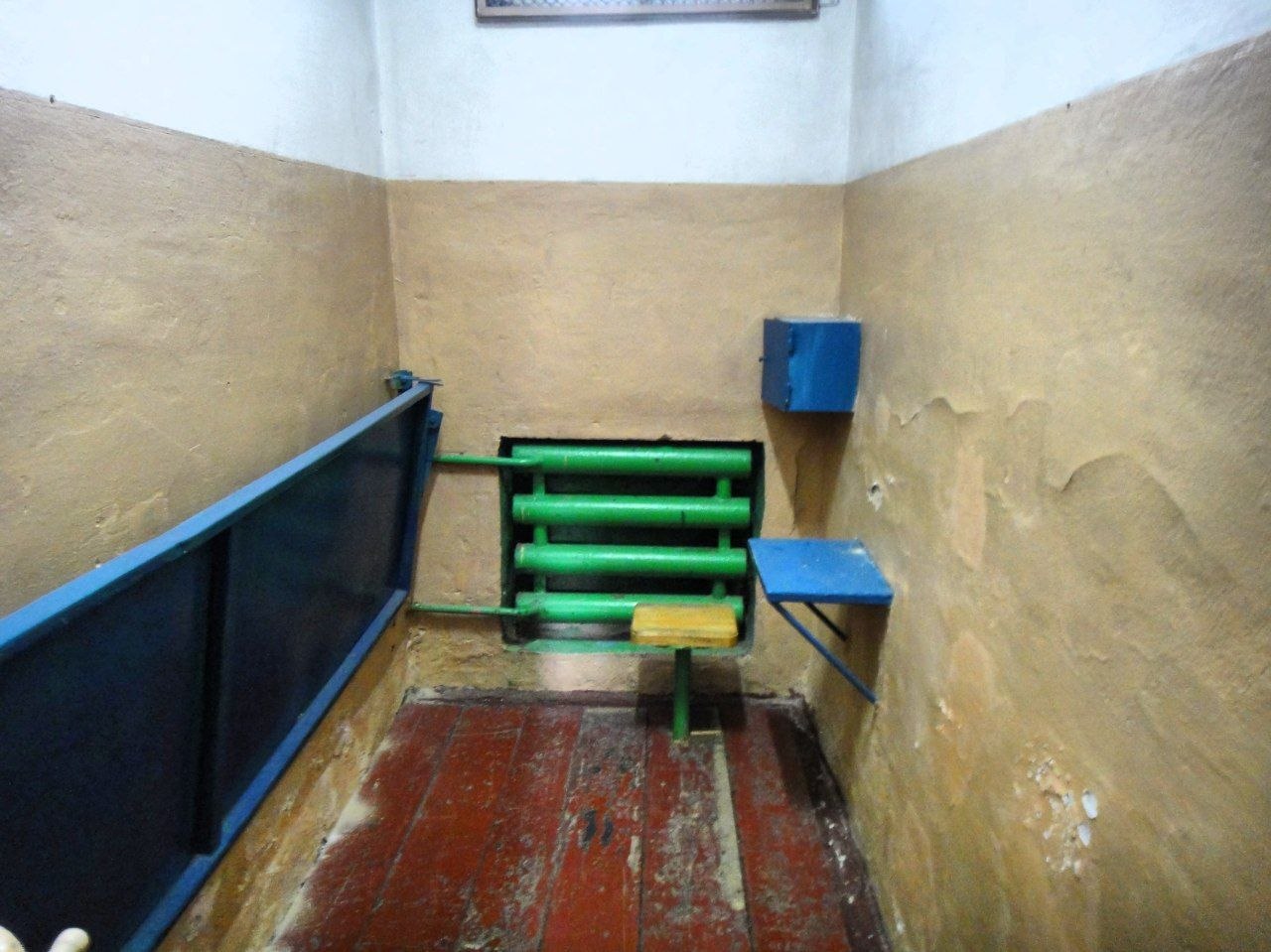
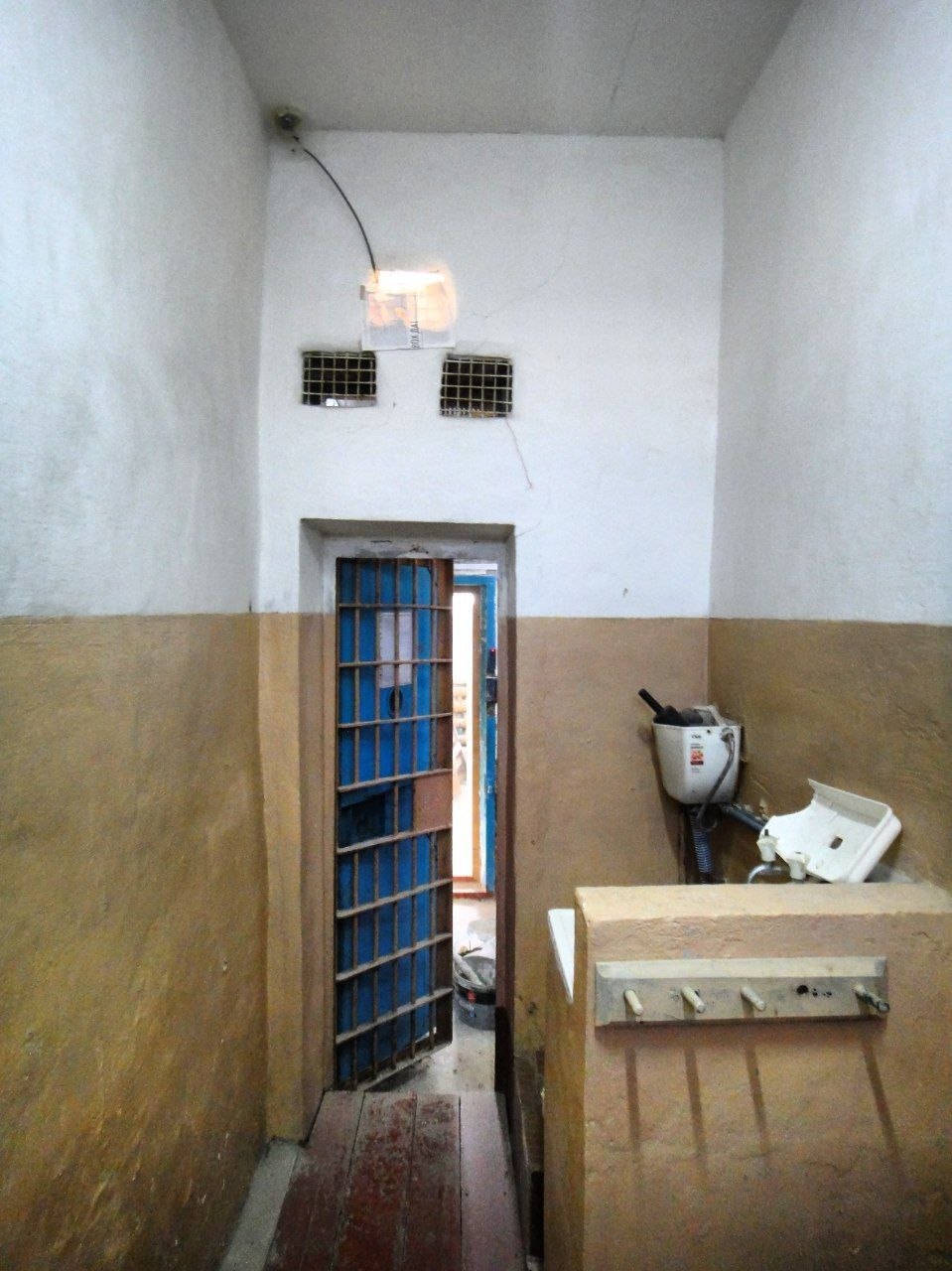
8. The monitoring group established that in the SMRB solitary confinement cell, means for fixing the bed to the wall have been installed. At the same time, legal acts do not provide for locking folding beds in solitary confinement cells, cell-type premises, and disciplinary isolation units where convicts are serving sanctions. This creates conditions for possible abuses on the part of the institution’s staff, as convicts may be deprived of the opportunity to sit or lie on the bed during the day.
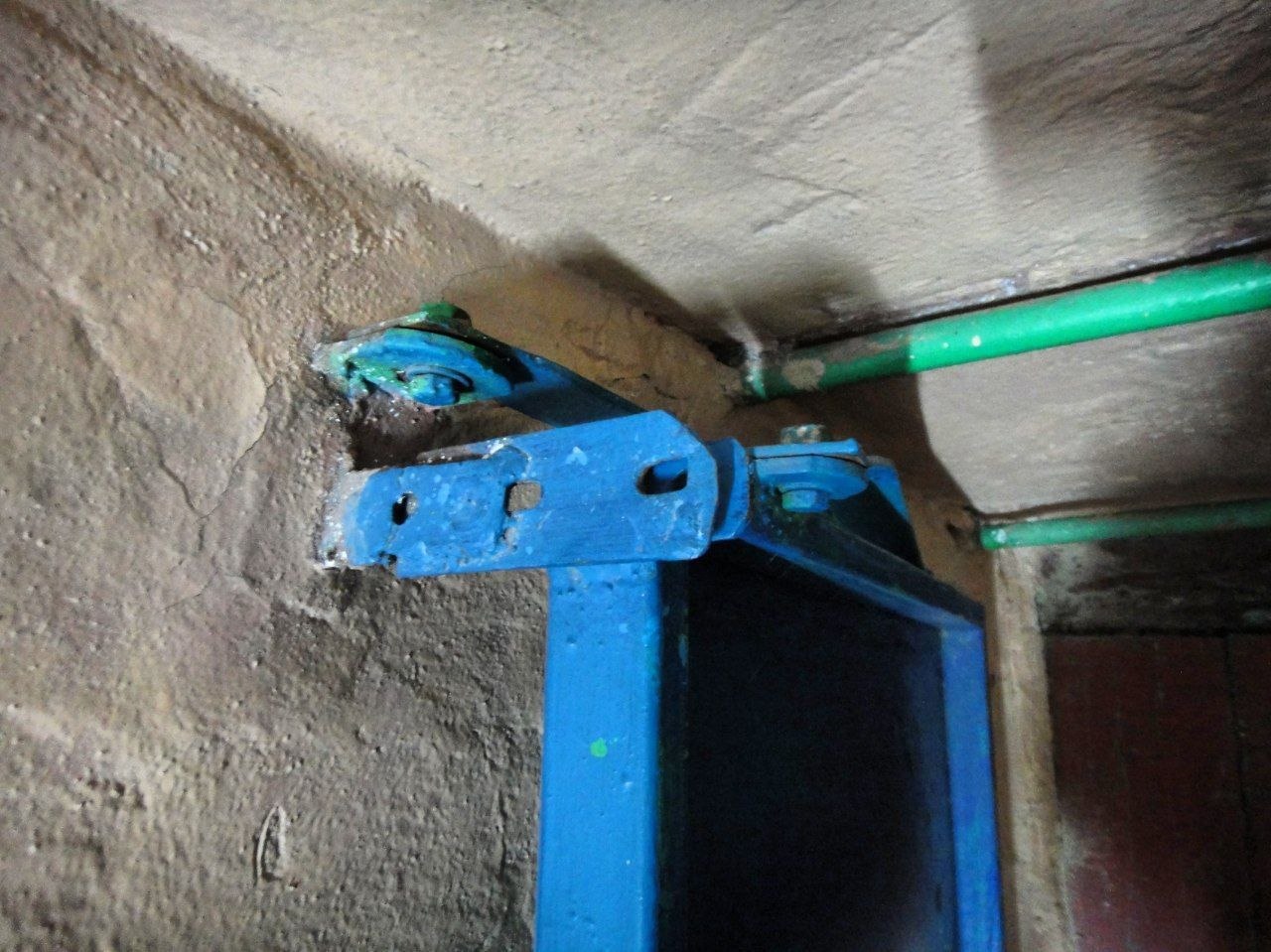
9. During the visit to the SMRB, near the exterior doors of the cells for the detention of prisoners sentenced to life imprisonment, it was established that name cards were placed providing information with a brief description of the crimes committed by the persons in the cells. In its report on the results of the visit to Ukraine in 2020, the Committee noted that this practice should be stopped, as it serves no reasonable purpose and, in addition to stigmatisation, has the effect of worsening relationships between prisoners and prison staff (CPT/Inf (2020) 40, Paragraph 52).
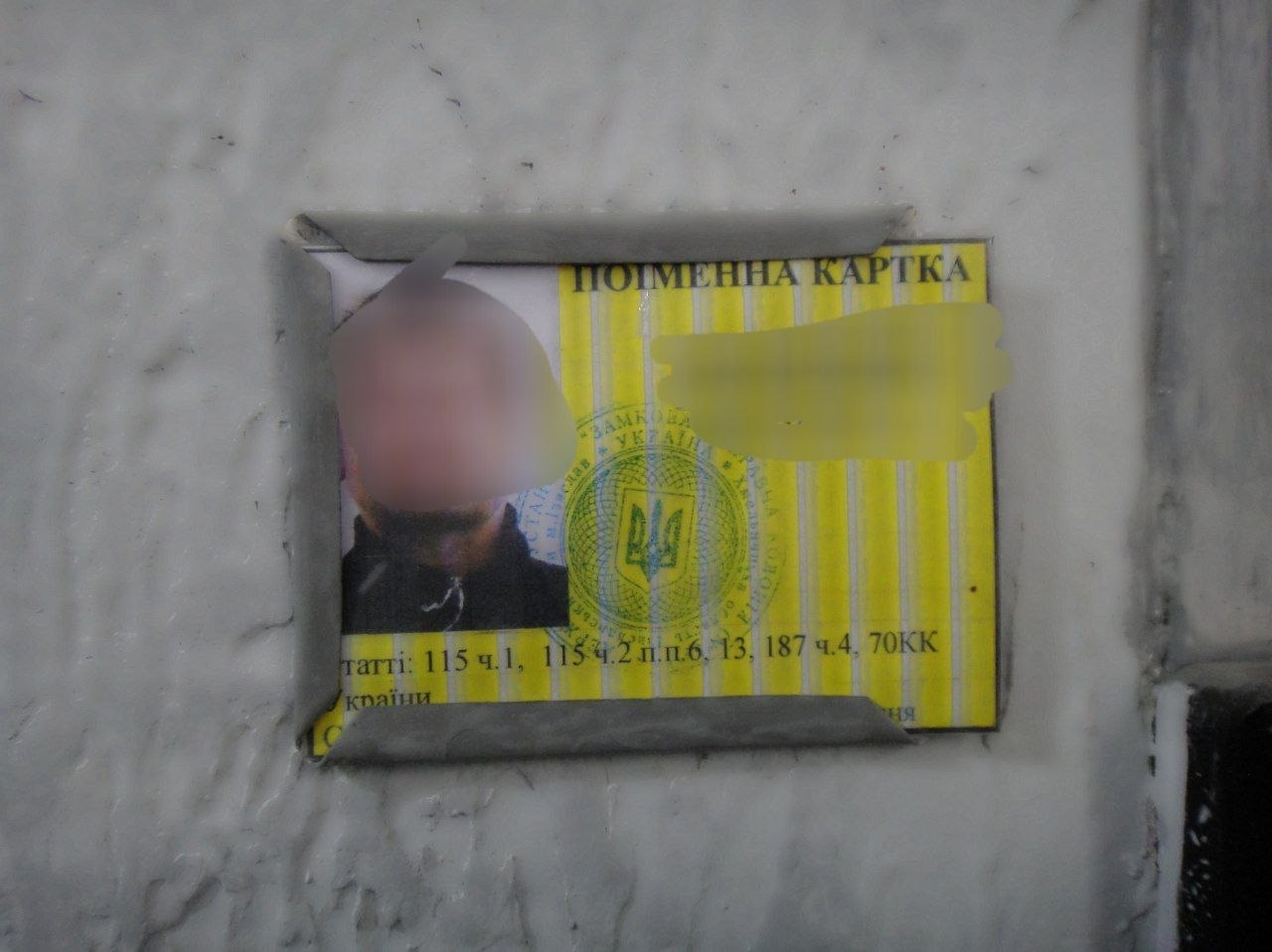
10. The layout of the institution’s disciplinary isolation unit (hereinafter — DIZO) does not fully comply with the established standards for the treatment of prisoners and does not ensure adequate living and sanitary-hygienic conditions, which leads to the violation of the rights of convicts. Specifically, during the measurement of the DIZO and solitary confinement cells, it was established that the distance between the walls is less than 2 m, which does not comply with the Committee’s recommendations. The bathrooms of individual cell-type premises are not equipped with sufficient partitions and doors that guarantee the possibility of privacy, which is a violation of Rule 19.3 of the European Prison Rules.
At the same time, in the report to the Government of Ukraine following the 2023 visit, the Committee called on the Ukrainian authorities to take the necessary measures to improve the material conditions of detention, in particular, to keep all places where convicts and persons in custody are held, including sanitary facilities, in a proper state of repair and hygiene, to regularly and frequently carry out disinfestation; to ensure sufficient access to natural light and ventilation in the cells, and to fully equip internal sanitary facilities with partitions, i.e., from floor to ceiling (CPT/Inf (2024) 20, Paragraph 58).
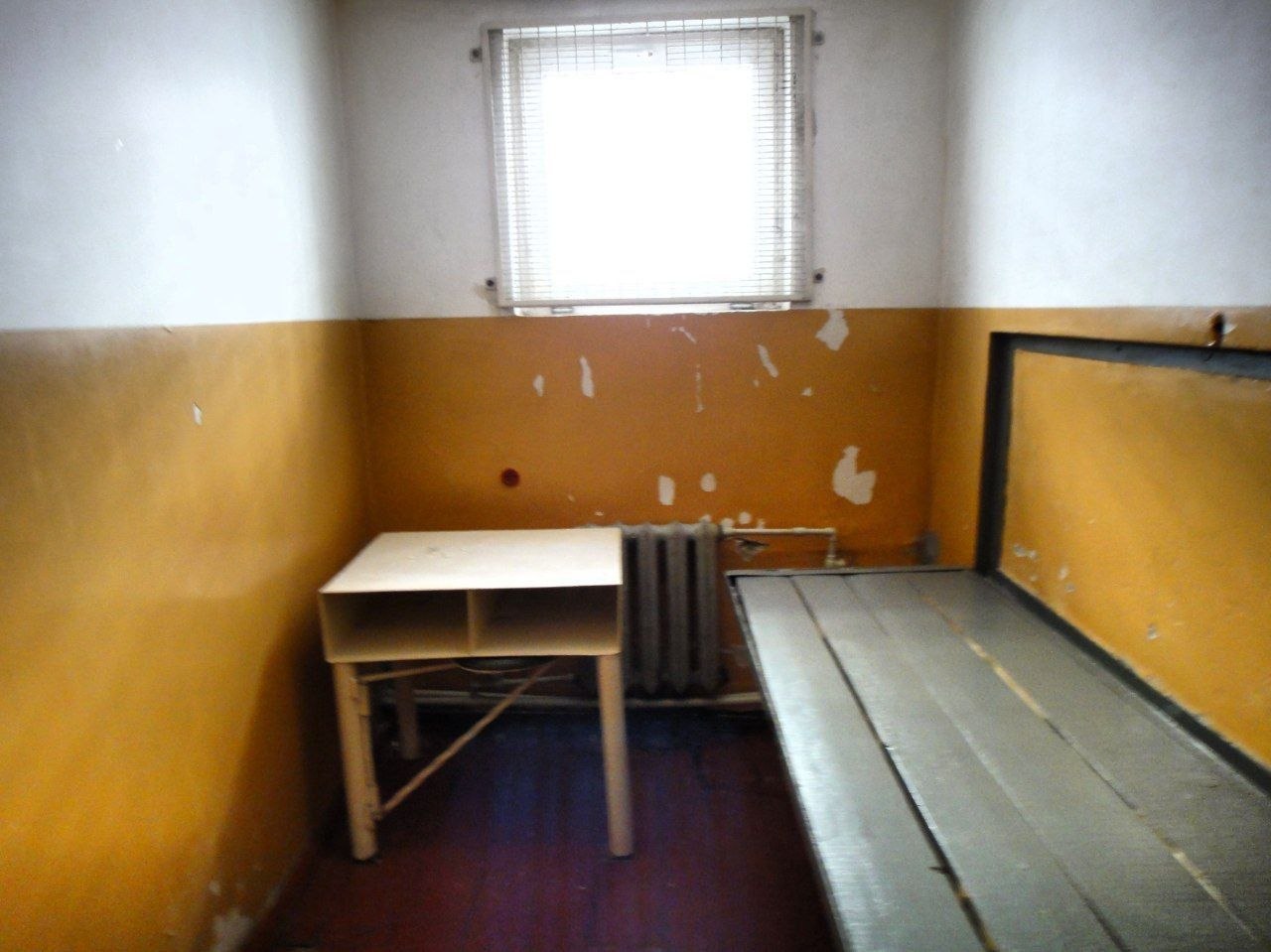
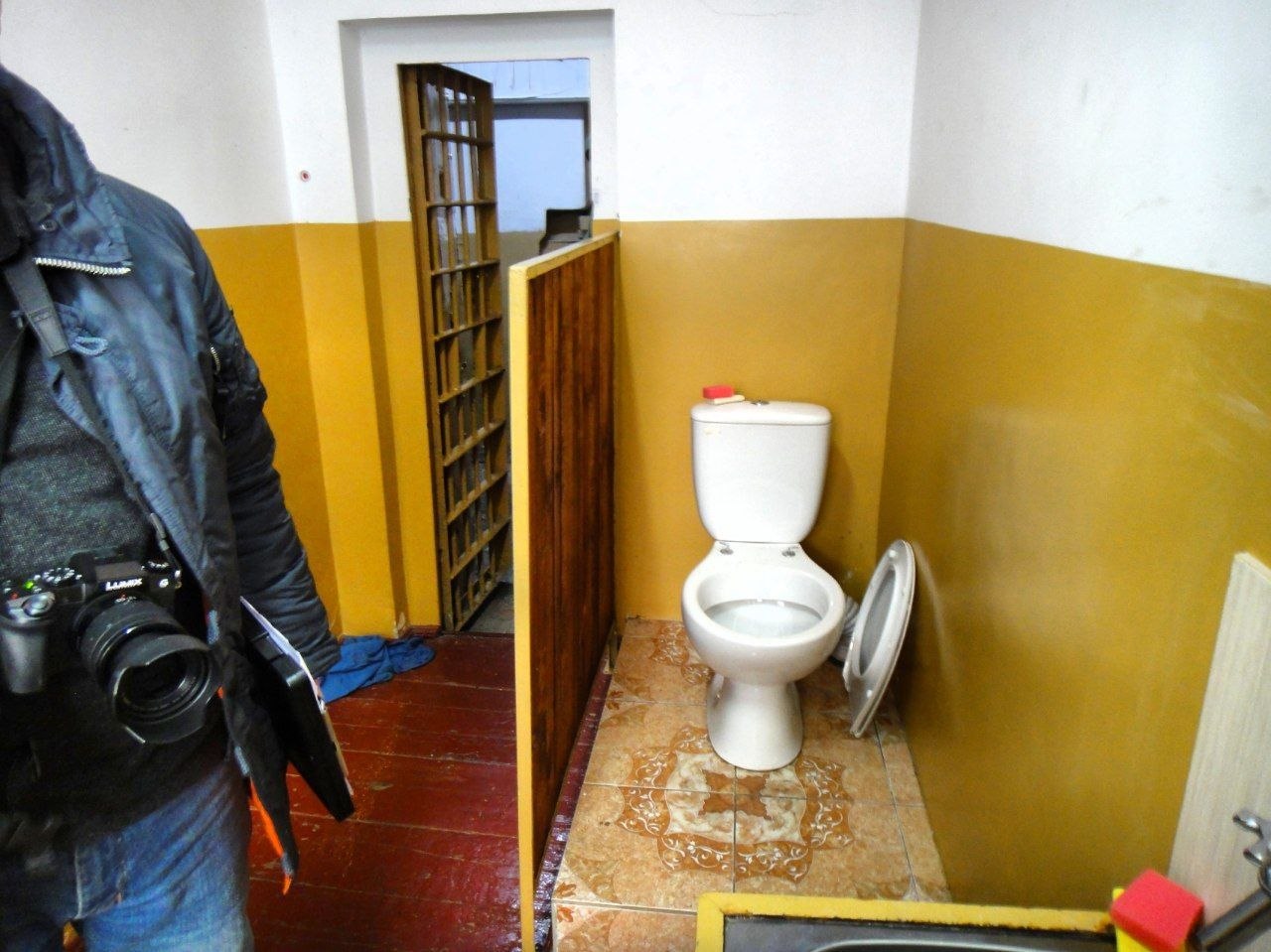
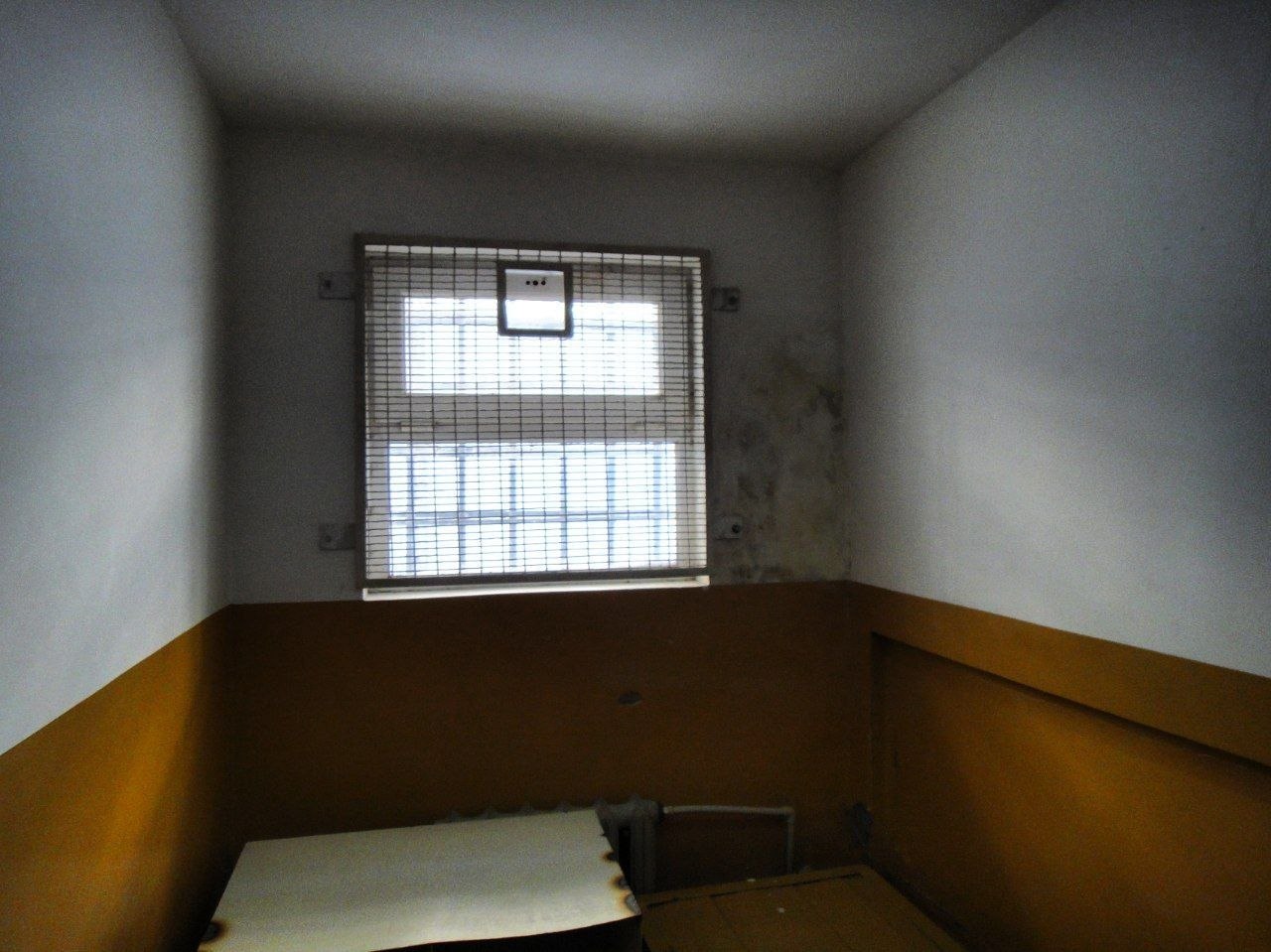
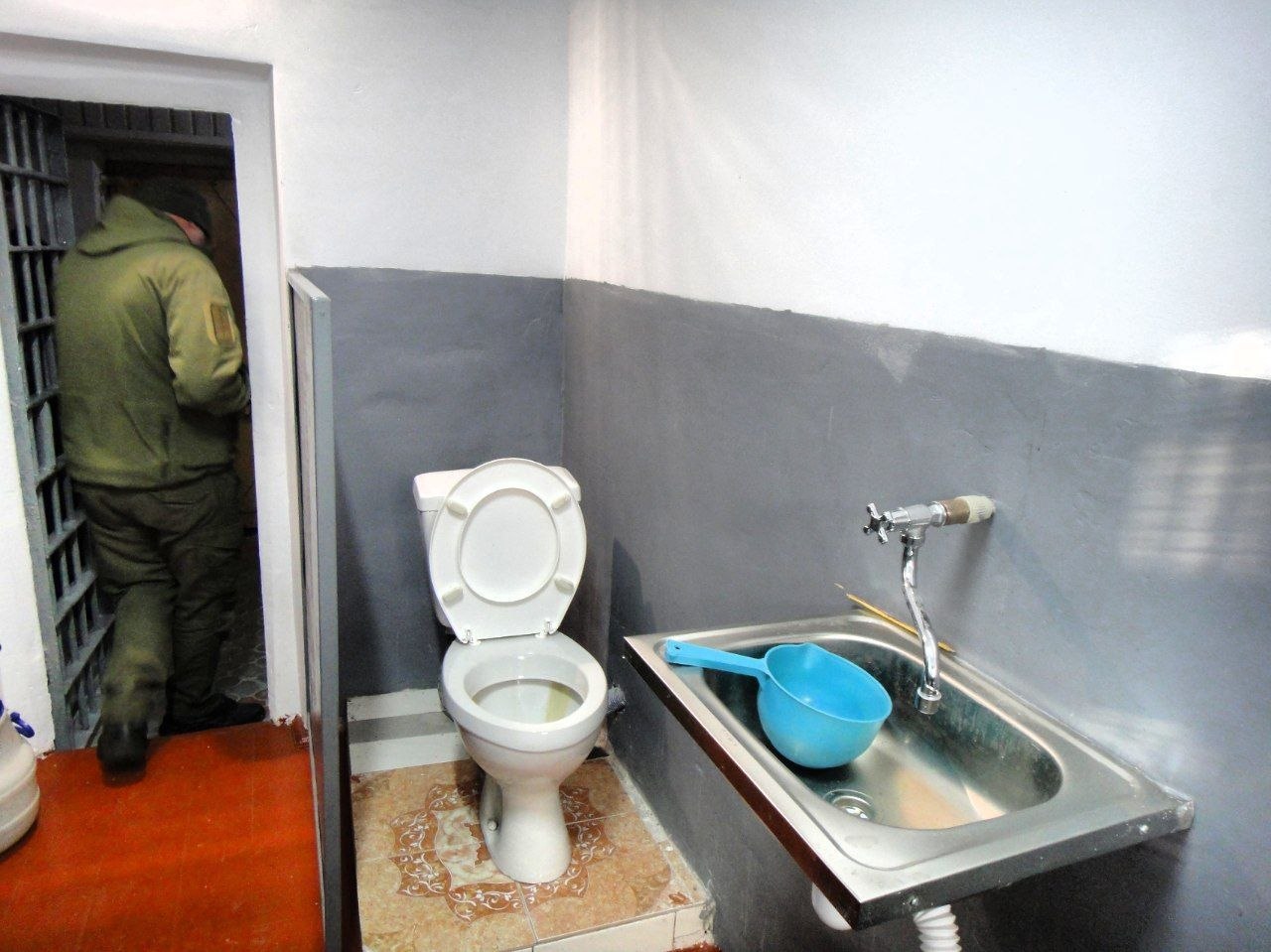
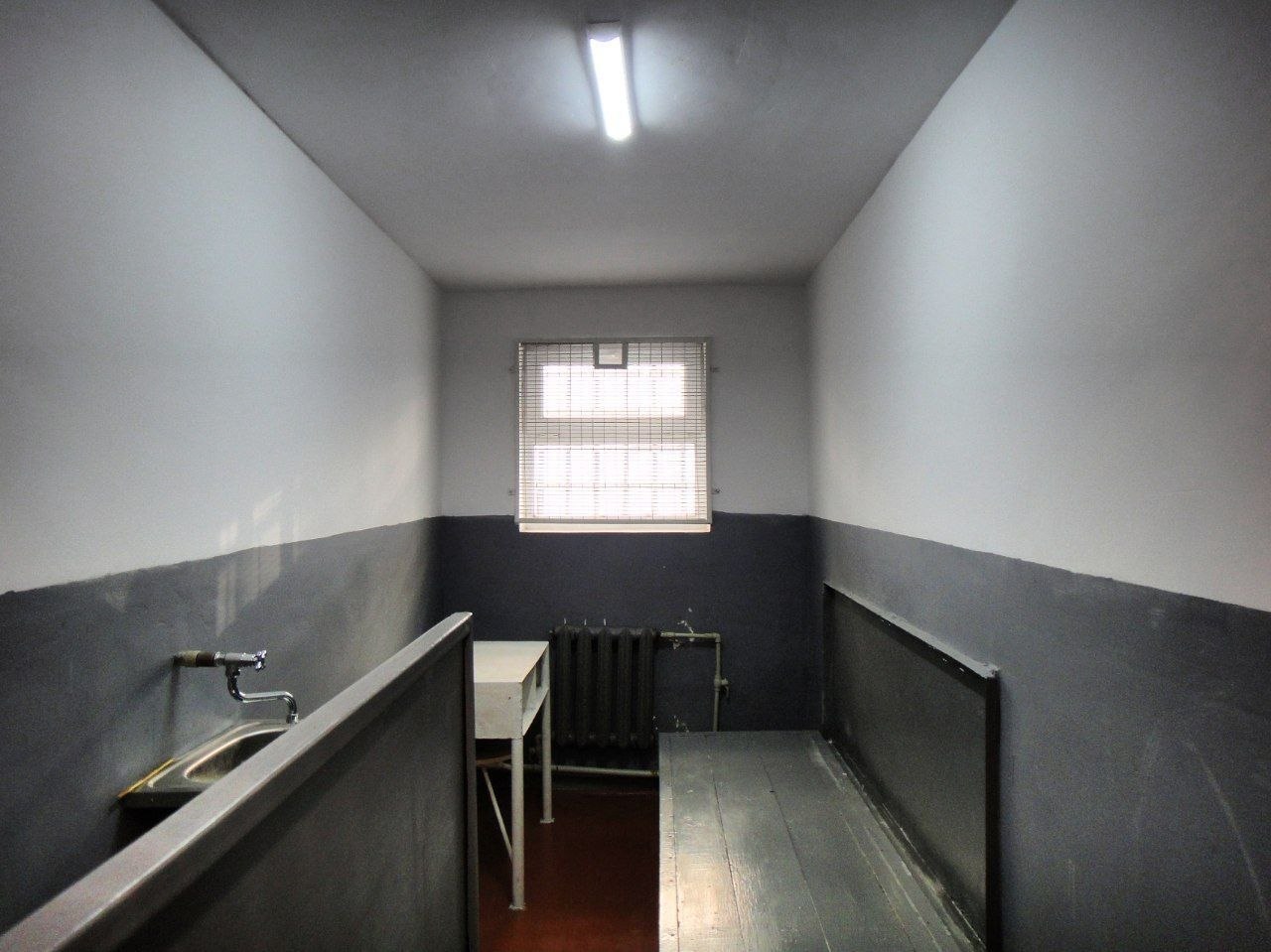
11. The radio system in the DIZO cell-type premises does not function, which contradicts the requirements of Item 3 of Section XX of the PWR UVP and Item 63 of the UN Standard Minimum Rules for the Treatment of Prisoners (the Nelson Mandela Rules).
12. During the visit to the DIZO, it was established that for convicts who had been serving a disciplinary sanction for more than three days, the institution’s administration had not issued a copy of the decision on the application of the sanction to them, indicating the possibility and procedure for appealing it, which contradicts Article 135 of the Penal Code of Ukraine. At the same time, in the report to the Government of Ukraine following the 2023 visit, the Committee recommends taking measures in penitentiary institutions of Ukraine to ensure that convicts to whom disciplinary sanctions have been applied systematically receive a copy of the corresponding decision. In addition, convicts should be informed of their right to access a lawyer in the context of disciplinary proceedings (CPT/Inf (2024) 20, Paragraph 103).
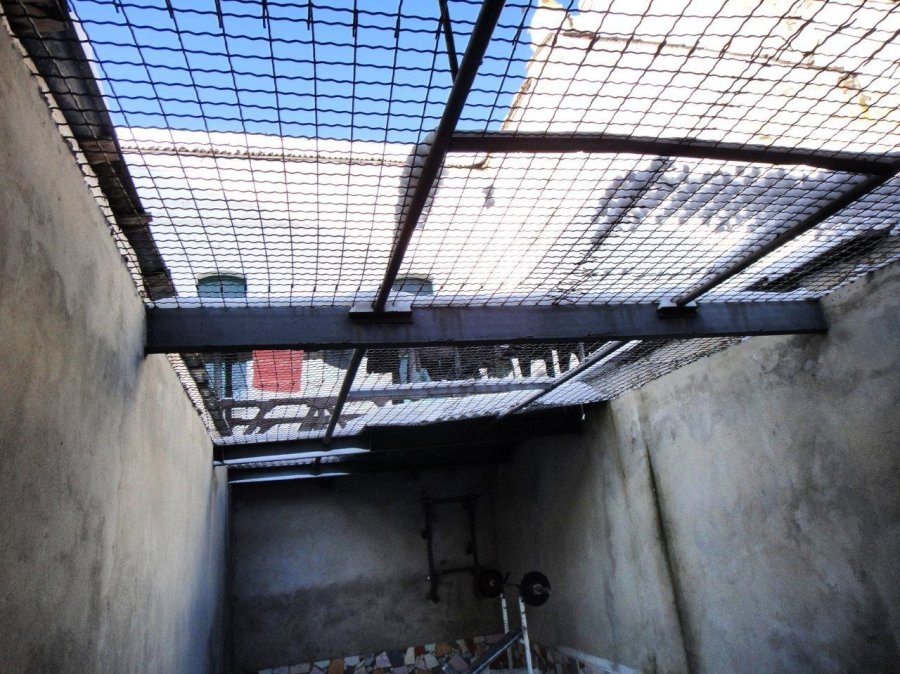
13. The SMRB exercise yards are not equipped with sufficient shelter from atmospheric precipitation. At the same time, the Committee in its Second General Report states that daily time in the fresh air should take place in an area of sufficient size. The area for walks in the fresh air should be, as far as it appears possible, equipped with shelter in case of bad weather (CPT/Inf (92) 3, Paragraph 48).
14. The procedure and conditions for admitting convicts to the institution do not fully comply with the requirements of current legislation and standards for the treatment of prisoners, which leads to the violation of their rights. In accordance with Items 1 and 2 of Section II of the Regulations on the quarantine, diagnostic, and distribution unit, approved by the Order of the Ministry of Justice of Ukraine dated 04.11.2013 No. 2300/5 (hereinafter — the KDiR Regulations), in order to organise work with newly arrived convicts, a working group is created by order of the head of the institution, which includes deputies of the head of the institution, heads of structural units, a psychologist, and a medical worker. With the aim of planning this work, a programme is drawn up annually for introducing newly arrived convicts to the procedure and conditions for serving a sentence, which is approved by the head of the institution.
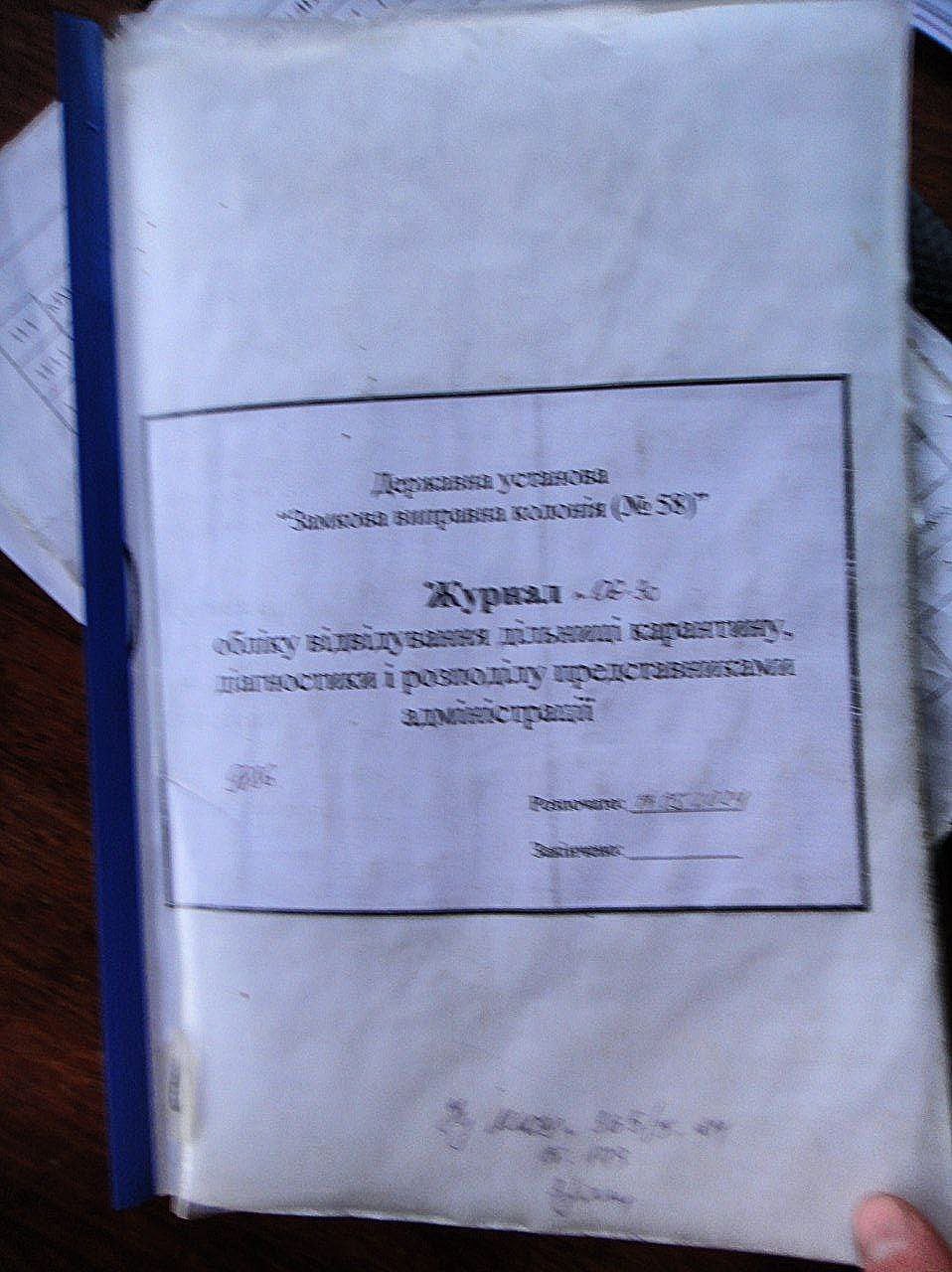
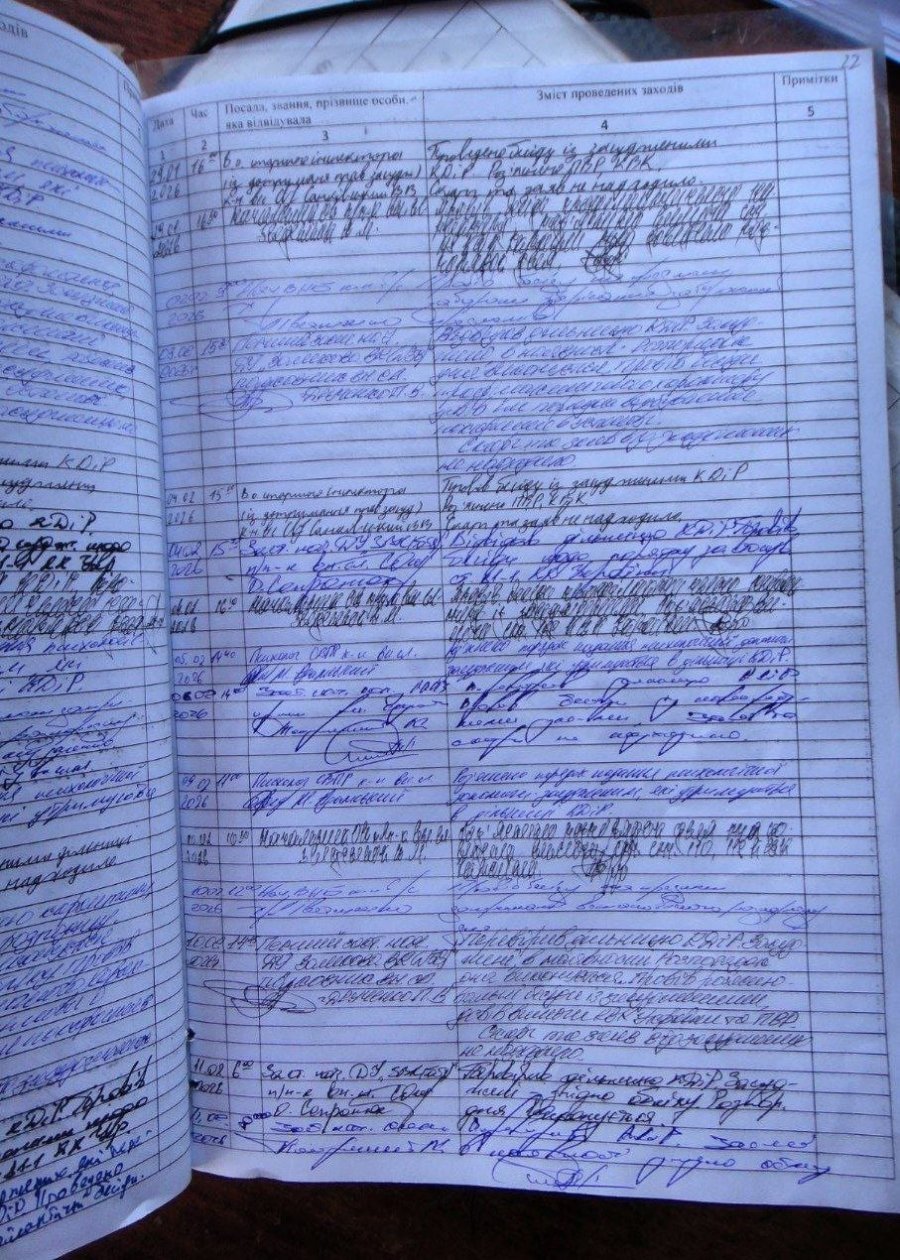
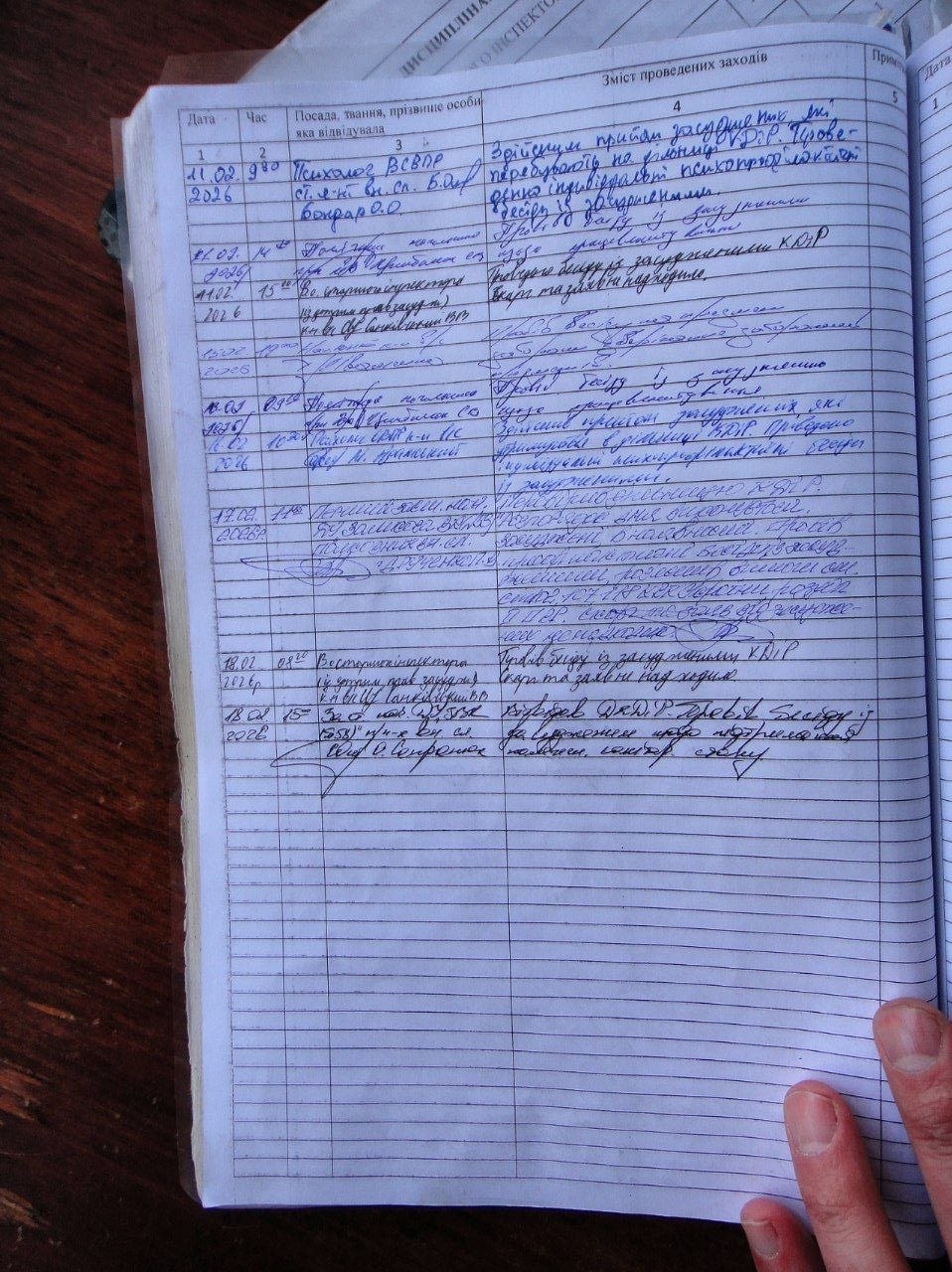
At the same time, it was established that the implementation of measures provided for by the programme for introducing newly arrived convicts to the procedure and conditions for serving a sentence is carried out in violation of the requirements regarding their frequency, specifically the obligation of each member of the working group to visit the quarantine, diagnostic, and distribution unit (KDiR) at least once a week. Thus, in the period from 09.02.2026 to 15.02.2026, according to the logbook of visits to the KDiR unit by administration representatives, measures with newly arrived convicts were conducted by only seven out of the ten members of the working group, which does not meet the requirements of Item 5 of Section II of the KDiR Regulations. Specifically, the following did not participate in conducting the aforementioned measures: Alla Vasylivna Shportun — acting chief accountant of the institution; Larysa Volodymyrivna Vasyliuk — acting senior inspector of the group for control over the execution of court decisions; Vasyl Vasylovych Bondar — head of the medical unit No. 58 of the branch of the state institution “Health Care Centre of the State Penitentiary Service of Ukraine” in the Khmelnytskyi region.
15. The monitoring group established that the material and household support of the KDiR unit does not fully comply with the established regulatory requirements. Thus, in violation of the requirements of the Provision Standards, the unit lacks a number of premises, namely: a corridor, a room for storing food products; a room for eating; a room for storing the exchange fund of bedding, personal property, and special clothing; a storeroom for the temporary storage of dirty bedding, personal property, and special clothing; a washing room; a cloakroom; a utility room; a drying room.
The absence of the aforementioned premises or their inadequate layout leads to the violation of sanitary-hygienic norms, makes it difficult to maintain cleanliness and order in the premises where convicts are held, which, in its turn, negatively affects the overall sanitary state of the institution.
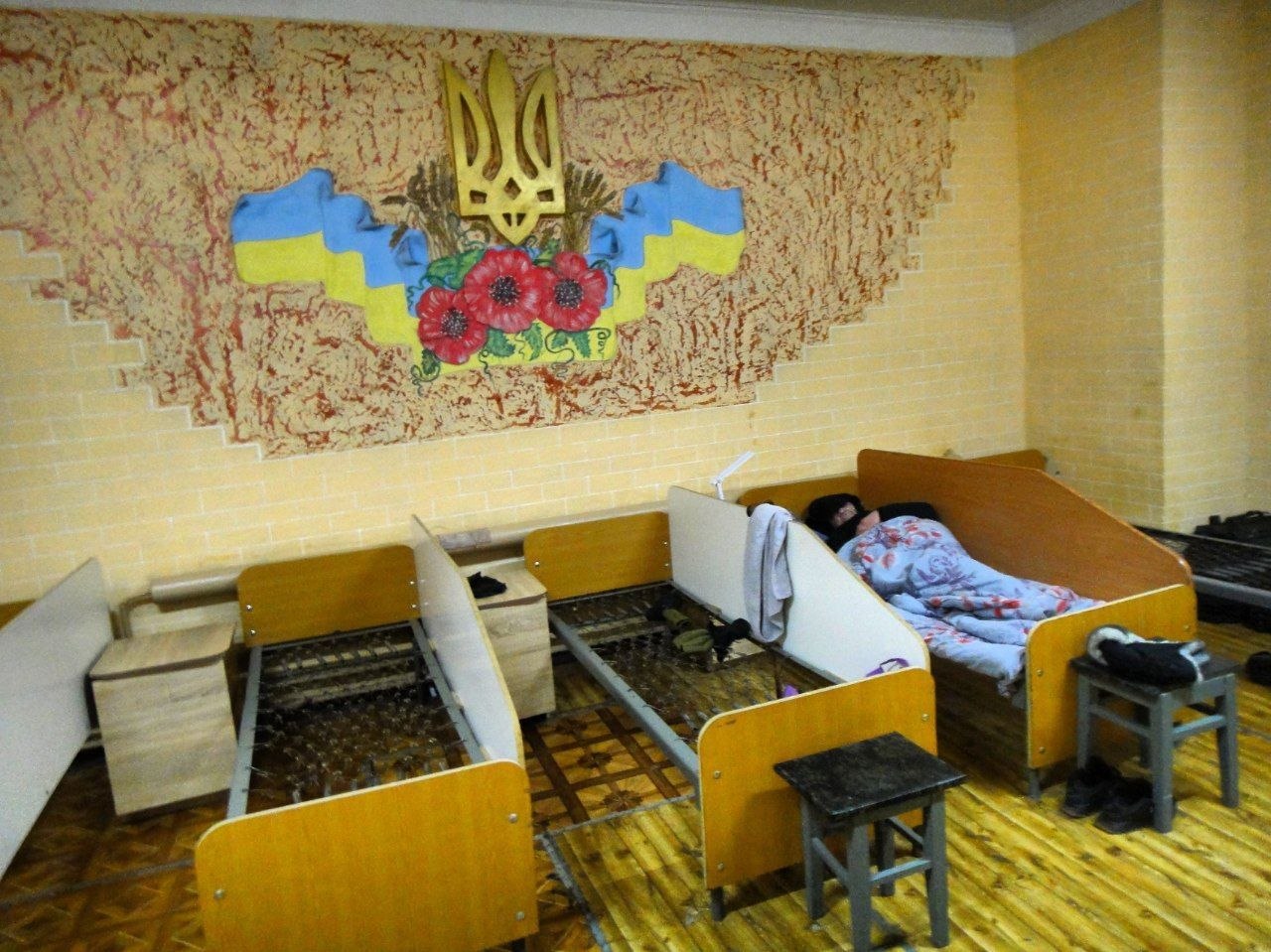
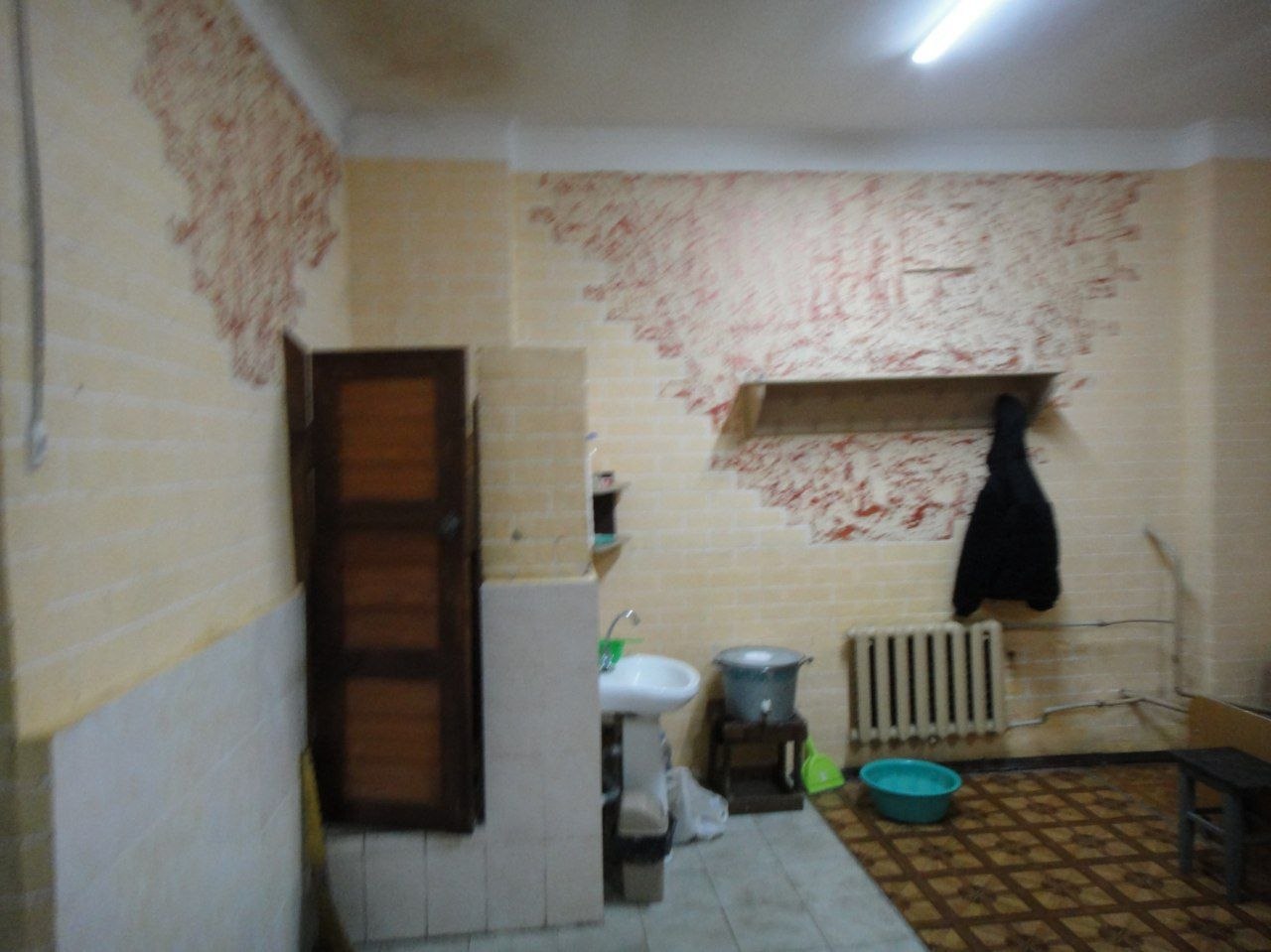
16. The monitoring group established that the state of organisation and implementation of social-educational and psychological work with convicts is unsatisfactory. Specifically, the head of the social-psychological service (hereinafter — SPS) department fails to ensure the implementation of the measures provided for in the plan of work with convicts of SPS Department No. 6 for the 1st quarter of 2026 (hereinafter — the quarterly plan), which is confirmed by the explanations of convicts obtained during confidential communication. At the same time, the marks entered into the quarterly plan about the alleged conduct of the corresponding measures have signs of formalistic and unreliable documentation.
Thus, according to the quarterly plan, the head of SPS Department No. 6 had conducted a lecture on the topic: “22 January — Day of Unity of Ukraine” (Section 3 “Legal education of convicts”) by 22.01.2026; a lecture on the topic: “27 January — International Holocaust Remembrance Day” (Section 4 “Moral-aesthetic education of convicts”) by 27.01.2026; and a lecture on the topic: “29 January — Day of Remembrance of the Kruty Heroes” by 29.01.2026. Instead, during confidential communication, the convicts unequivocally denied the fact that these measures had been conducted with them.
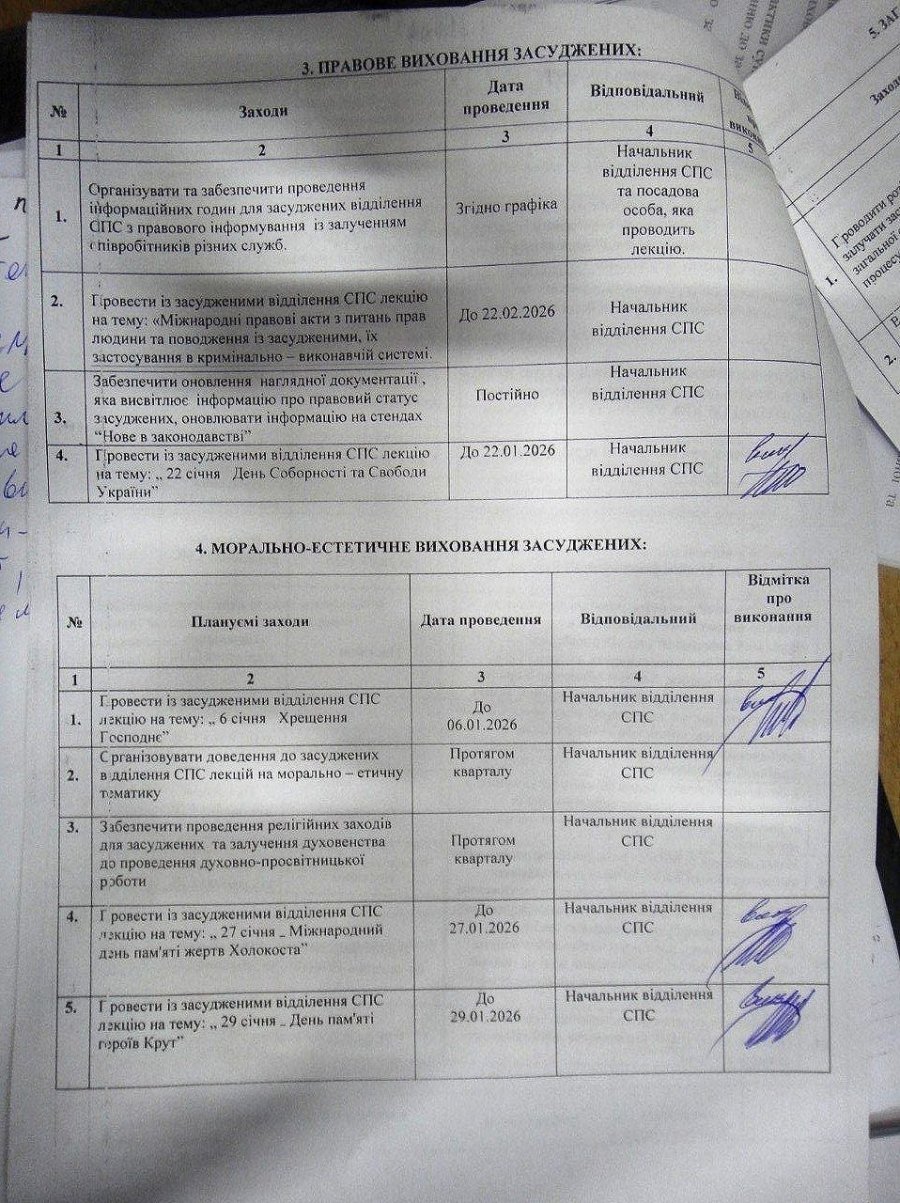
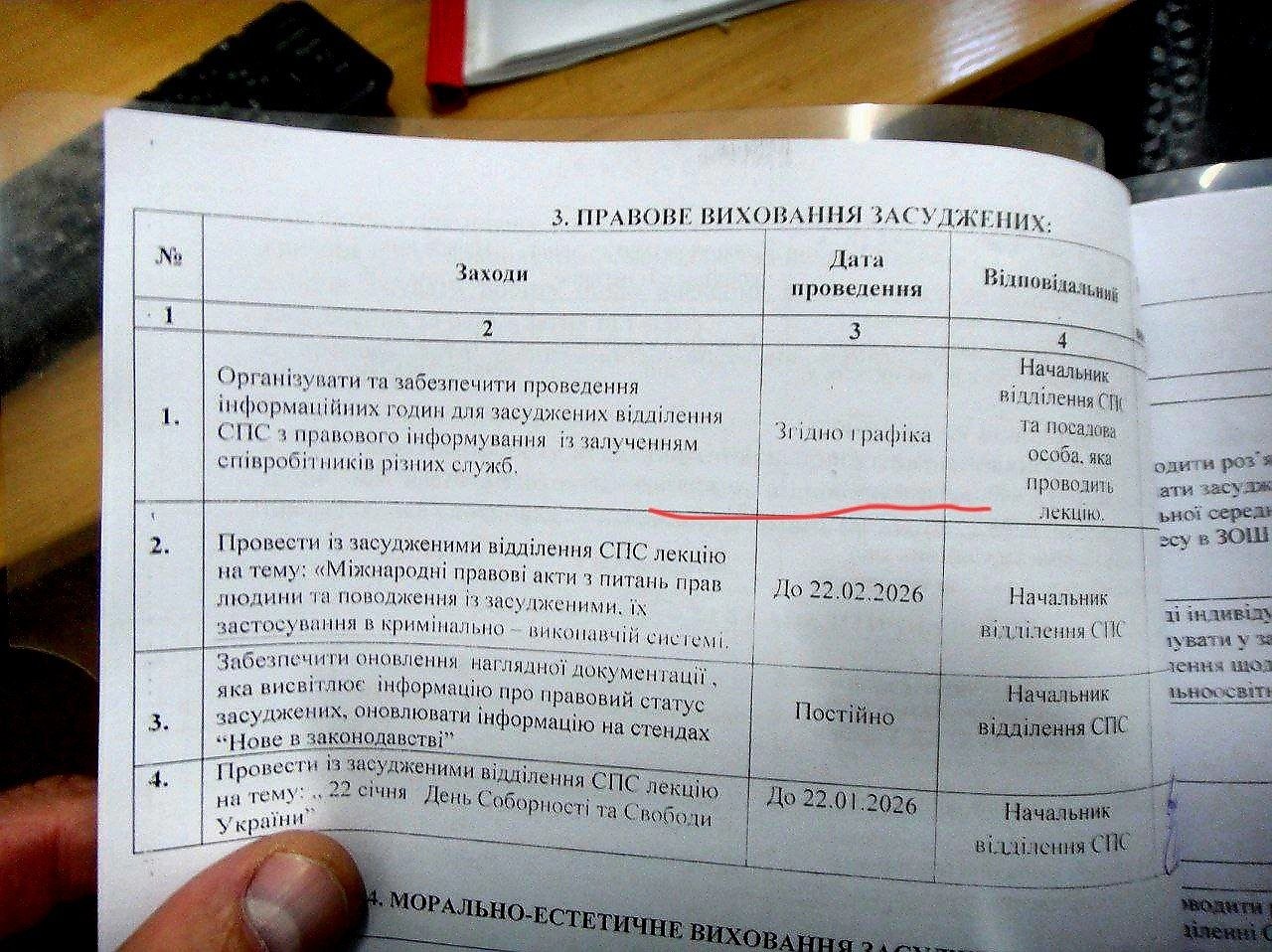
In accordance with Section 3 “Legal education of convicts” of the quarterly plan, the head of the SPS Department No. 6 is obligated to organise and ensure the holding of information hours for convicts of the SPS department regarding legal information with the involvement of staff from various services in accordance with an approved schedule. Instead, during the visit, it was established that the aforementioned schedule is absent, and the measures are not conducted.
In addition, there is no room for conducting educational work in the department, which objectively makes it impossible to properly organise and conduct relevant measures. The aforementioned indicates a formalistic approach to the performance of assigned duties, possible entry of unreliable information into official documentation, and systemic failure to comply with the requirements of Item 20 of Section III of the Regulations on the social-psychological service department, approved by the Order of the Ministry of Justice of Ukraine dated 04.11.2013 No. 2300/5 (hereinafter — the SPS Department Regulations). Furthermore, information is entered into the Logbook of work with convicts of SPS Department No. 7 in an untimely and incomplete manner.
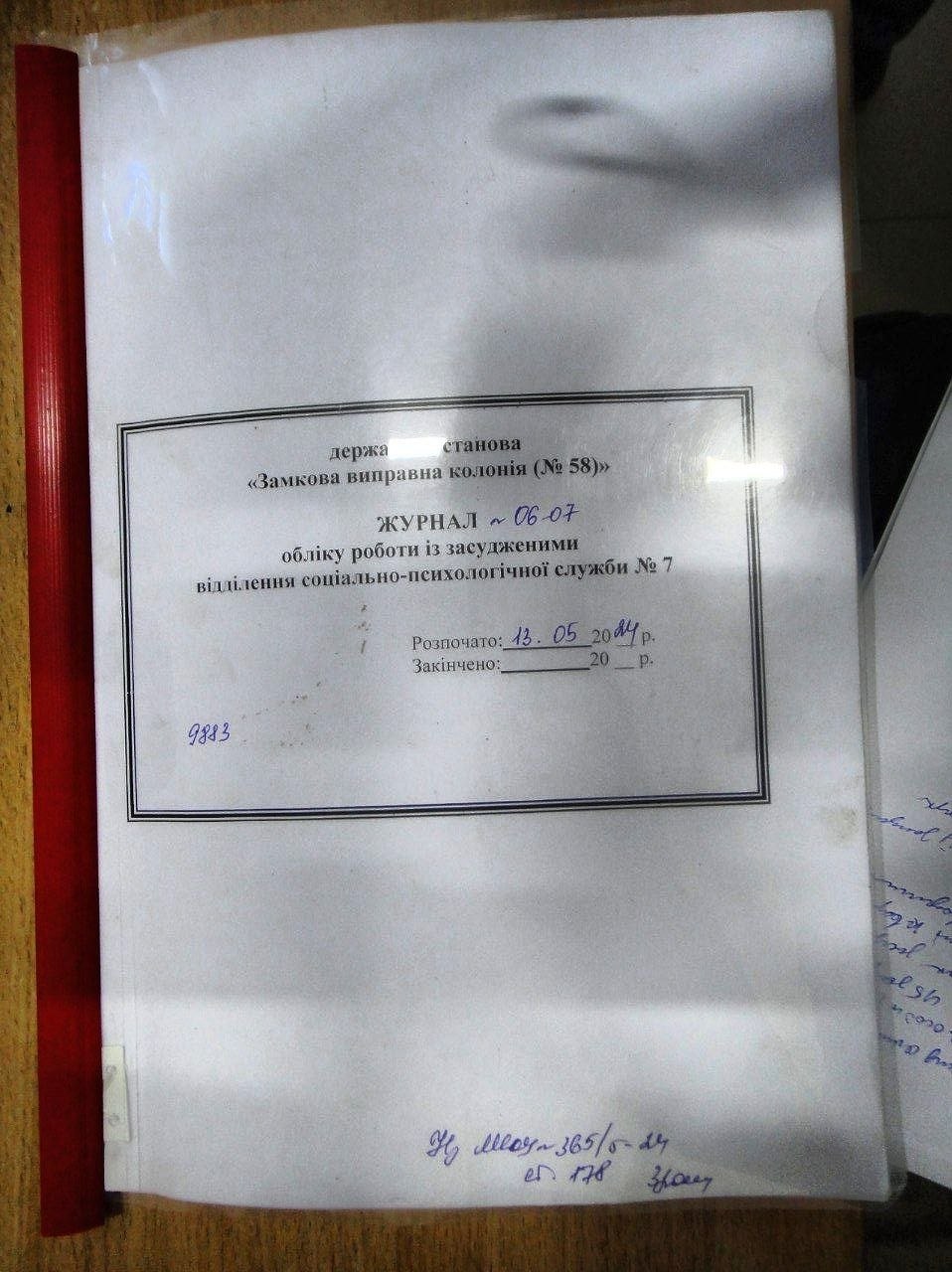
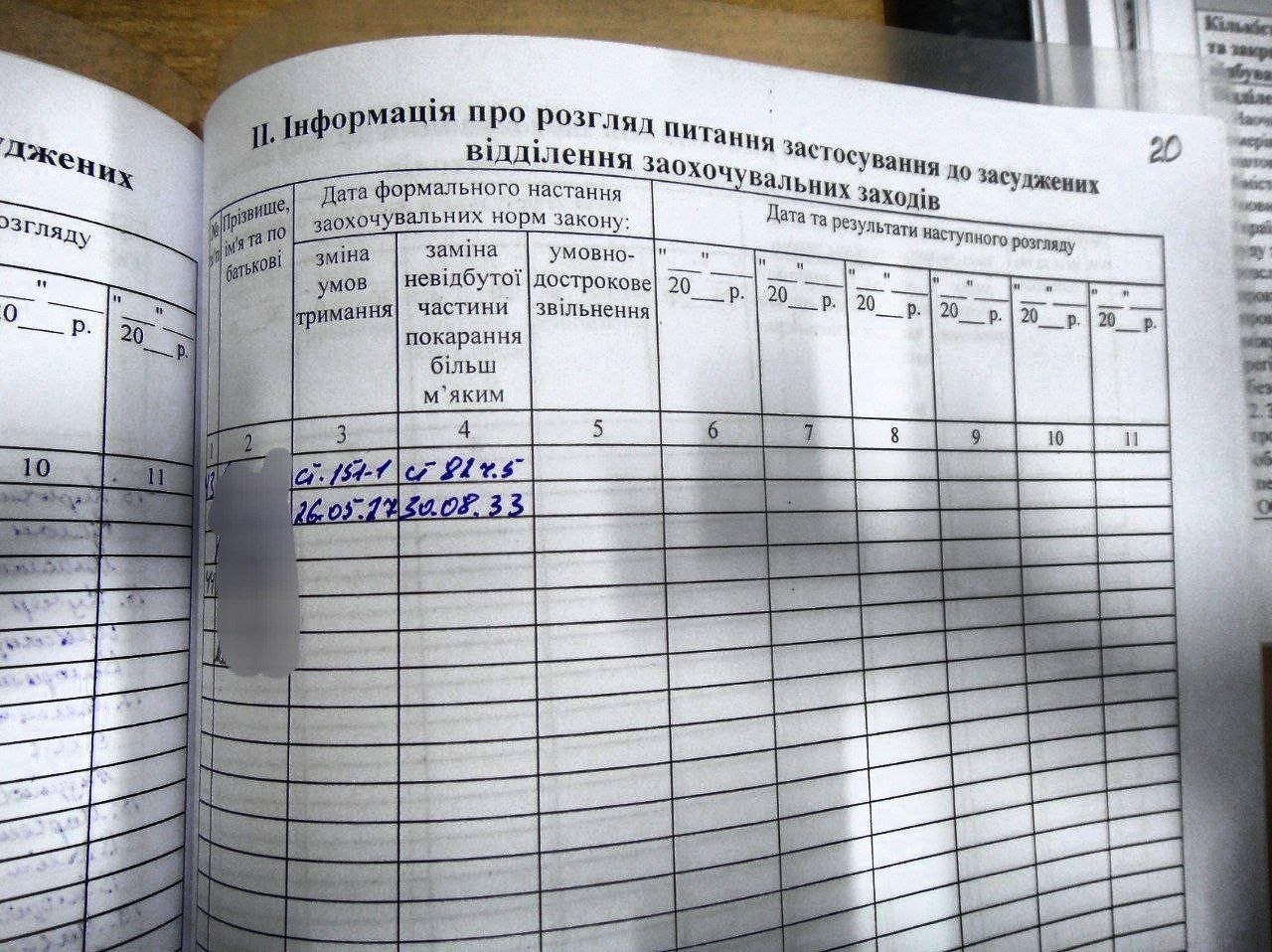
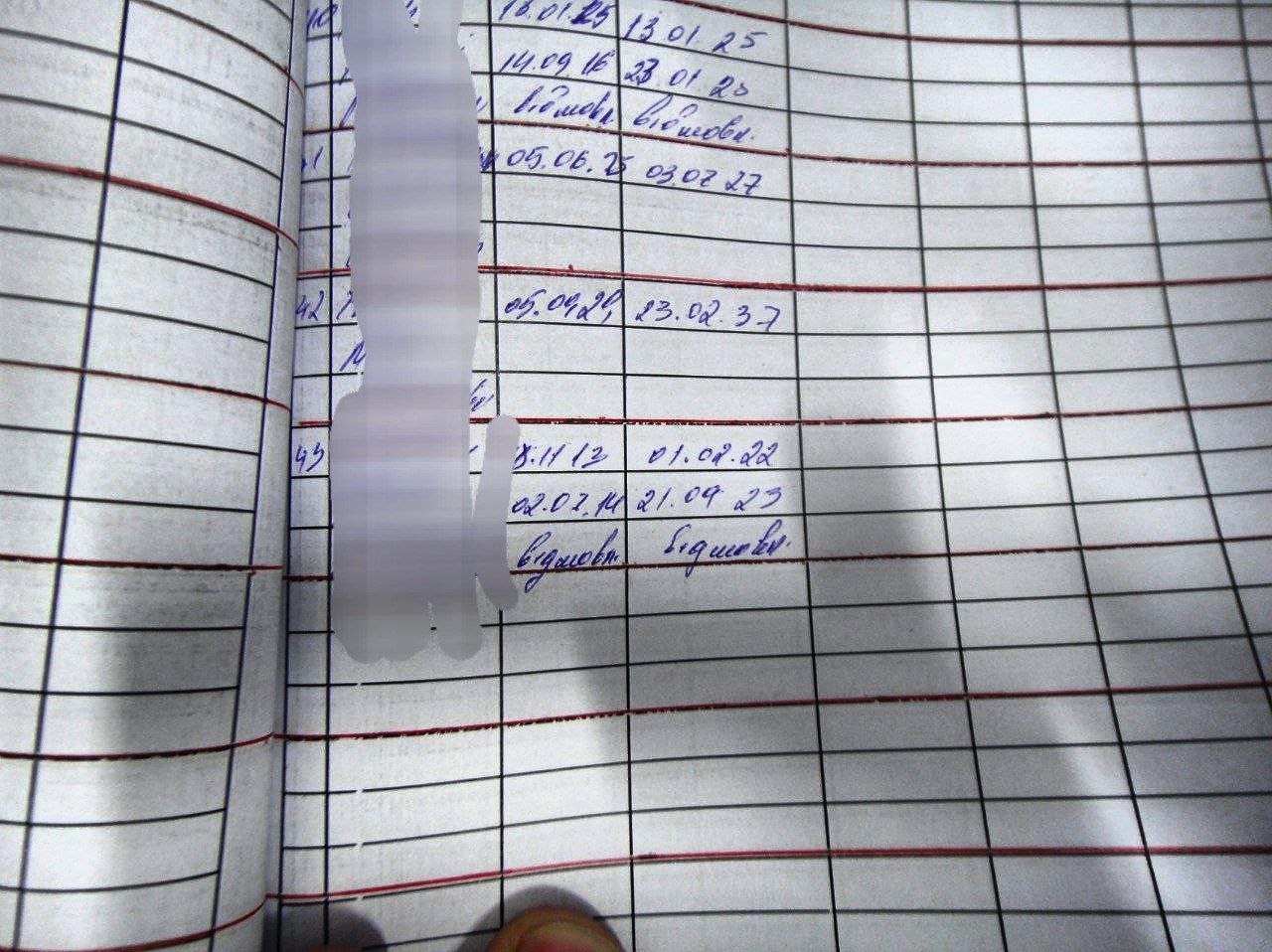
Thus, during the inspection, it was established that according to the Logbook of work with convicts of SPS Department No. 7, the number of convicts in the department is 44 people, while in fact, there are 47 convicts in the department. In the section “Information on the consideration of issues regarding the application of incentive measures to convicts” of the Logbook, the dates and results of the consideration of materials are not recorded, nor is information about the application of incentives and benefits provided for by law. The aforementioned indicates improper accounting of convicts and a formalistic approach to the performance of assigned duties, which contradicts Sub-item 3 of Item 1 of Section IV of the SPS Department Regulations.
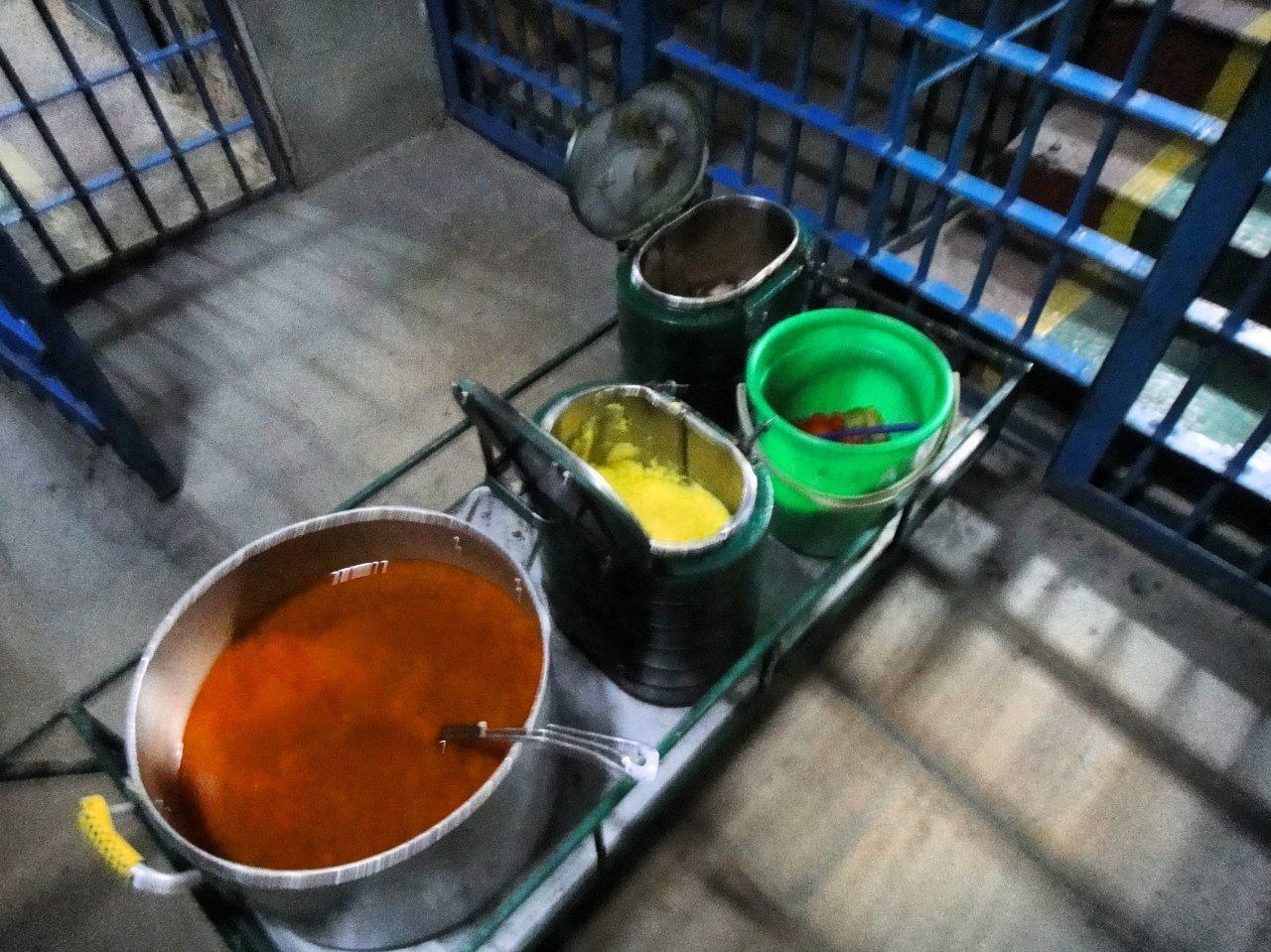
17. In violation of the requirements of Item 14 of Section V of the Regulations on the organisation of food provision in the State Penitentiary Service of Ukraine in peacetime, approved by the Order of the Ministry of Justice of Ukraine dated 15.06.2021 No. 2160/5 (hereinafter — the Regulations on the organisation of food provision), food for convicts is delivered from the institution’s canteen in metal pots and plastic buckets, not in labelled thermoses.
18. The monitoring group established a number of violations in the organisation of laundry and bathing services for convicts and persons in custody. In accordance with Item 3.19.1 of Section III of the Regulations on the organisation of laundry and bathing services for persons held in penal institutions and pre-trial detention centres, approved by the Order of the Ministry of Justice of Ukraine dated 08.06.2021 No. 849/5 (hereinafter — the Regulations), sanitary treatment involves washing convicts (persons taken into custody) in a bathhouse using soap and a washcloth, mandatory replacement of bedding and underwear, as well as disinfection (destruction of pathogenic microorganisms) and disinfestation (destruction of insects and mites that are carriers of infectious diseases) of personal clothing and bedding (pillows, mattresses, blankets) in a disinfection chamber.
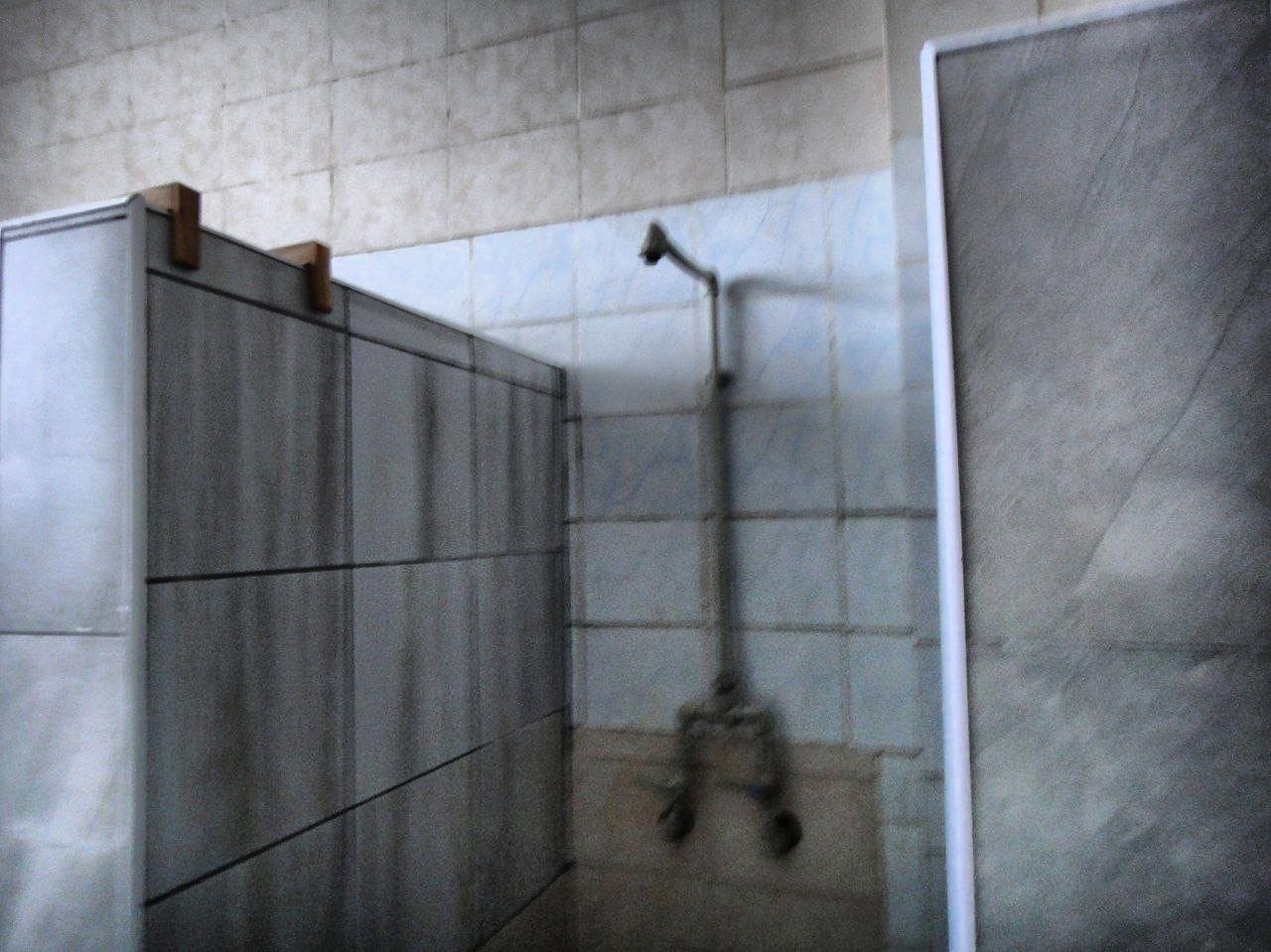
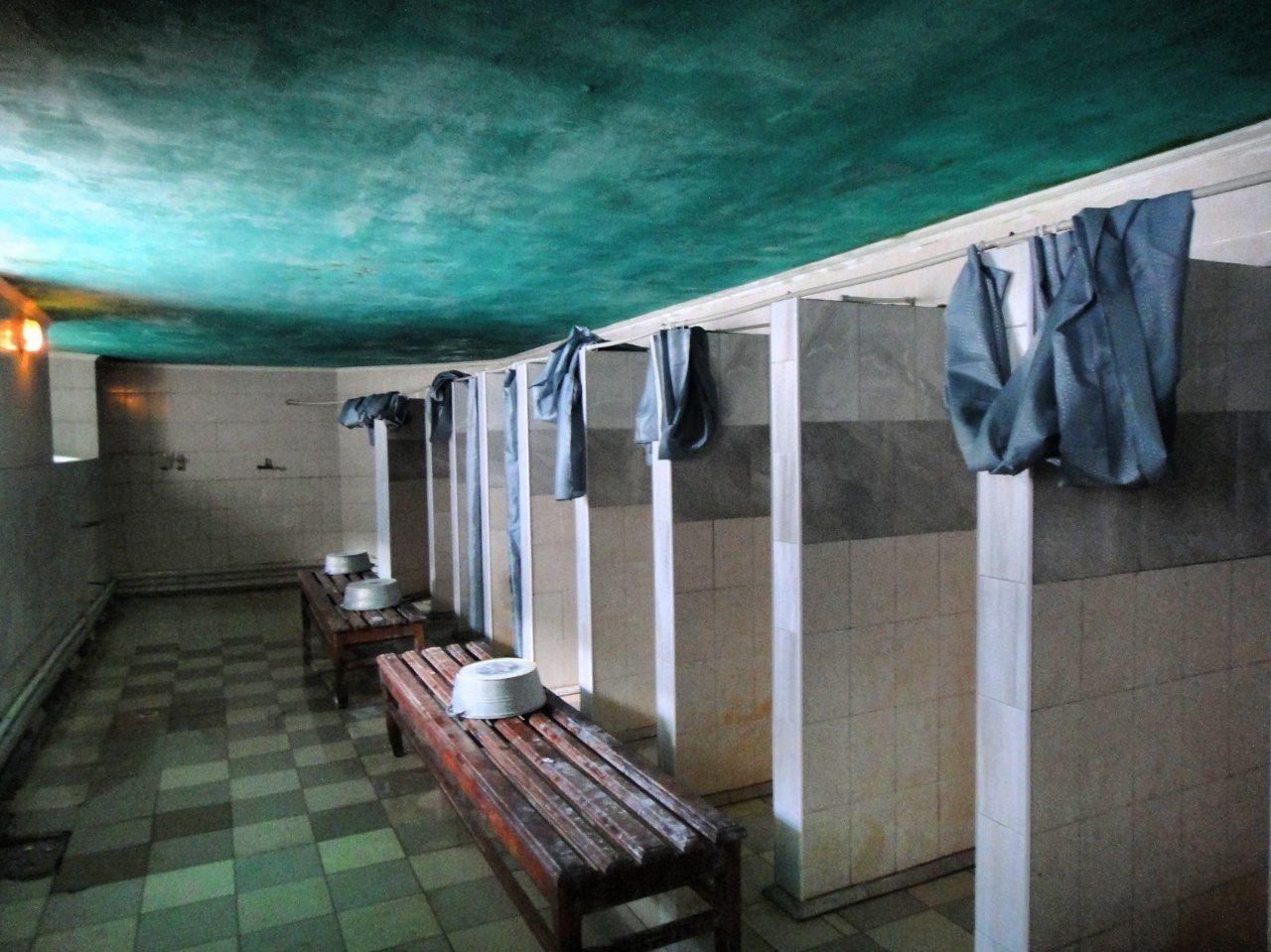
However, as established by the monitoring group, the disinfection chamber at the institution does not work, which makes it impossible to carry out proper sanitary treatment of bedding and clothing, increases the risk of spreading infectious diseases among convicts and staff, and also contradicts established sanitary-hygienic norms. In violation of Item 2.11 of Section II of the Regulations, the forced supply-and-exhaust ventilation system in the laundry room does not work. In violation of the requirements of Rule 19.3 of the European Prison Rules, the right to privacy is not ensured in the SMRB shower room due to the absence of curtains on the shower partitions.
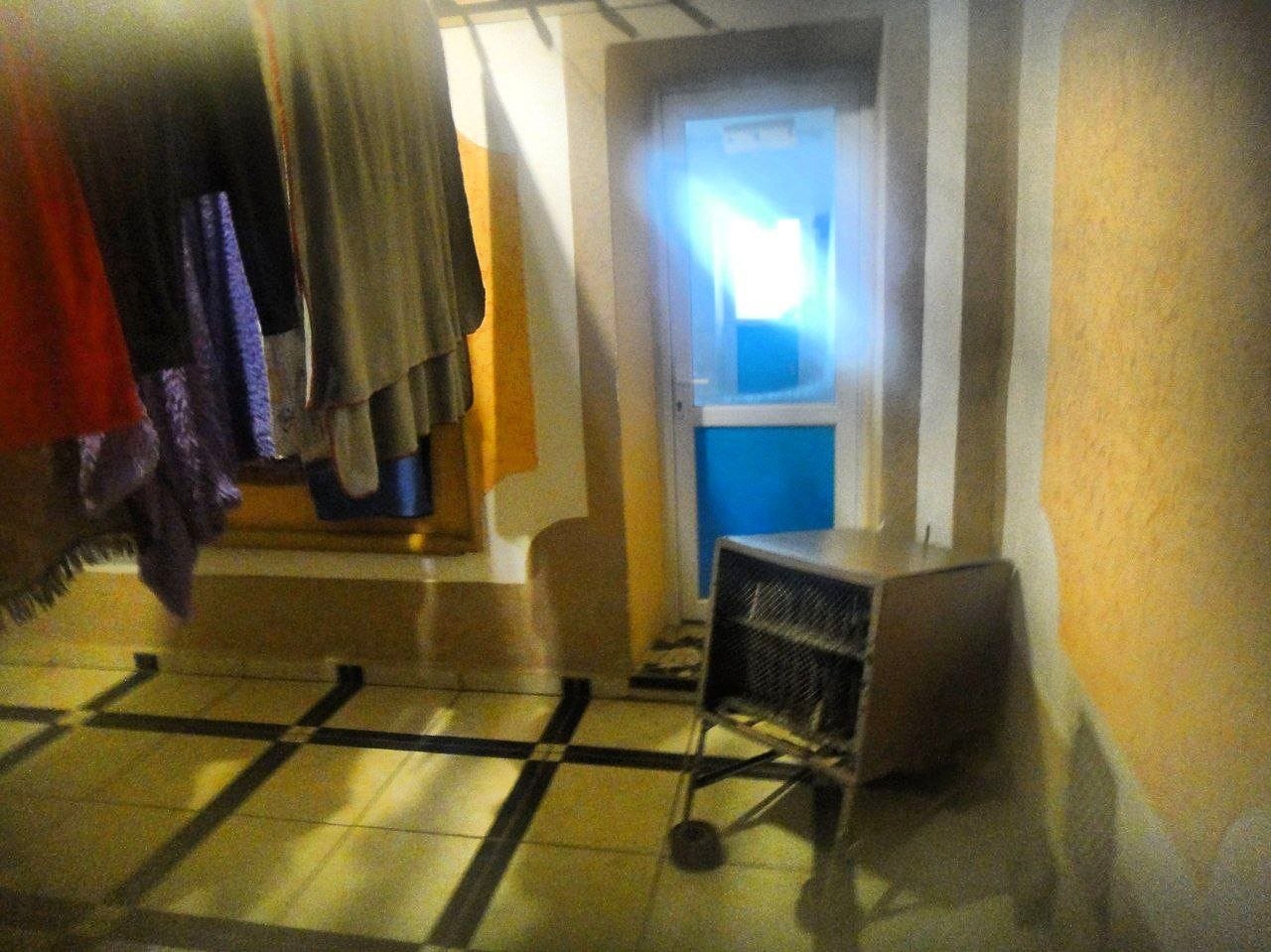
19. In the laundry’s drying room, a gross violation of the requirements of the Fire Safety Rules in Ukraine, approved by the Order of the Ministry of Internal Affairs of Ukraine dated 30.12.2014 No. 1417, registered in the Ministry of Justice of Ukraine on 05.03.2015 under No. 252/26697 (hereinafter — the Fire Safety Rules), was established. Specifically, the maintenance of the temperature regime in the aforementioned room is carried out through the operation of a homemade heating device placed in close proximity to the clothes being dried. Such a method of heating is a fire hazard, creates an increased risk of fire, and may lead to severe consequences, including posing a threat to the life and health of persons who are in the institution.
20. During the visit to the institution, the monitoring group established that the institution’s shop lacks underwear, gloves, sports shoes, slippers, a mirror, a comb, envelopes, stamps, devices for consuming tobacco products and inhaling aerosols (vapour) without burning them, and chargers for them, the availability of which is provided for by Appendix 5 to the PWR UVP.
21. During the visit to the institution’s library, the monitoring group established that, contrary to the requirements of the third paragraph of Item 4 of Section XX of the PWR UVP, the library’s book collection is not provided with copies of the Penal Code of Ukraine, the Internal Rules of Penal Institutions, or the Internal Rules of Pre-trial Detention Centres.
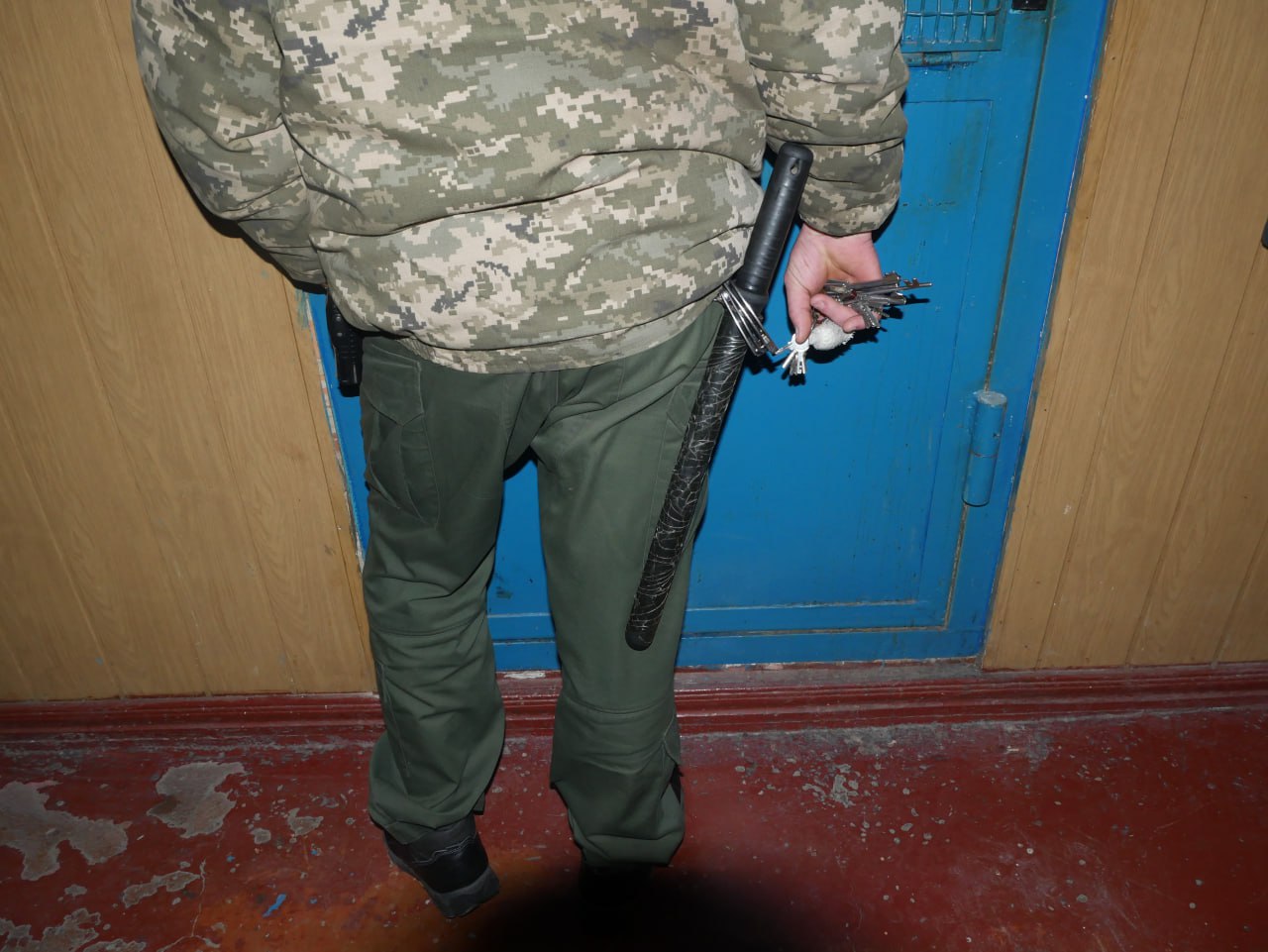
22. During the visit, the monitoring group recorded that the institution’s staff who directly interact with convicts openly carry special equipment, including rubber batons. At the same time, according to the eighth paragraph of Item 1 of Section XXVI of the PWR UVP, the carrying of special equipment by staff of penal institutions within the protected territory of the penal institution should, if possible, be maximally hidden from those around them.
At the same time, the Committee recommends that penitentiary officers working in direct contact with prisoners should not carry special equipment (such as rubber batons, handcuffs, and canisters equipped with tear gas) openly in front of prisoners. Such carrying prevents the establishment of normal relationships between staff and prisoners (CPT/Inf (2011) 29, Paragraph 85; CPT/Inf (2013) 23, Paragraph 23; CPT/Inf (2014) 15, Paragraph 166).
23. According to the information provided by the administration, in 2025 at ZPK-58, 327 short-term visits were granted to convicts, of which 285 took place in a non-contact manner — through a continuous partition glass using a communication device. At the same time, in the report to the Government of Ukraine on the results of the 2023 visit, the European Committee for the Prevention of Torture emphasises that for all categories of convicts, open visits, for example, at a table, should be the rule, and closed ones — the exception, the application of which is allowed only on the basis of justified and reasoned decisions after an individual assessment of the potential risk of a specific convict. In this regard, the Committee calls on the Ukrainian authorities to review the procedure for conducting short-term visits in penitentiary institutions with the aim of ensuring they are held, as a rule, in open conditions (CPT/Inf (2024) 20, Paragraph 99).
24. In accordance with Sub-item 5 of Item 2 of Section IV of the Regulations on the programme of differentiated educational influence on convicts “Preparation for release”, approved by the Order of the Ministry of Justice of Ukraine dated 16.05.2016 No. 1418/5, registered in the Ministry of Justice of Ukraine on 17.05.2016 under No. 735/28865, the staff of the institution’s social-psychological service, who directly organise and carry out measures for the implementation of the “Preparation for release” programme, are obligated to provide assistance to convicts in obtaining (renewing) a passport of a citizen of Ukraine, a taxpayer registration number (RNOKPP), other personal documents, and also in applying for pensions. At the same time, 7 convicts need the production of a passport of a citizen of Ukraine, and 7 — the receipt of an RNOKPP, which indicates insufficiently performed work of the social-educational and psychological work department regarding ensuring the processing of necessary documents for convicts who do not have them.
25. According to official documentation, the staff shortage in the institution as of 19.02.2026 amounts to 32 authorised positions. At the same time, in the report to the Government of Ukraine following the 2023 visit, the Committee emphasises that ensuring a positive climate in a penitentiary institution requires the presence of a professional team of staff, who must be present in sufficient numbers at any moment in time in places of detention. An insufficient number of staff can only increase the risk of violence and intimidation between convicts. The shortage of staff on the front line also undermines the quality and level of measures offered to convicts and jeopardises the prospect of preparation for release and social rehabilitation.
In this regard, the Committee calls on the Ukrainian authorities to take decisive measures for a substantial increase in the number of staff in penitentiary institutions of Ukraine where a low level of staffing is observed, with the aim of strengthening the presence of security and supervision service staff inside the institutions. It is also necessary to take measures to put an end to 24-hour shifts for staff who are on duty (CPT/Inf (2024) 20, Paragraph 93).
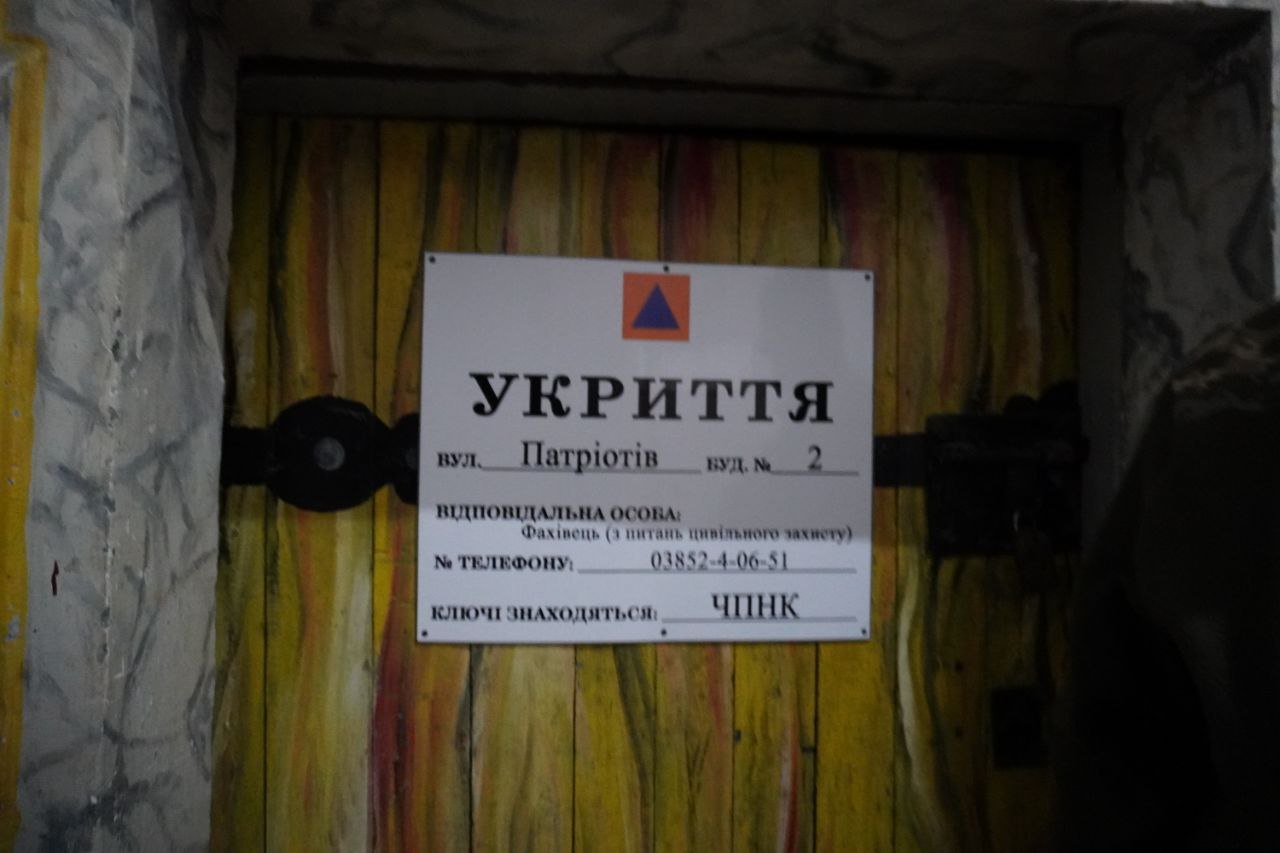
26. During the monitoring visit to ZPK-58, the civil protection shelter (shelter) located on the territory of the institution was inspected. It was established that the available shelter is formally marked with a corresponding information plate indicating the address, the responsible person, and the location of the keys, which indicates its accounting as a civil protection object. At the same time, the actual state of the shelter does not comply with basic safety requirements and does not allow for ensuring proper protection of persons in the event of an emergency or military threat.
Specifically, during the inspection, it was established that the shelter does not have a second emergency exit, which is a critical violation of safety requirements, as it makes safe evacuation of people impossible in the event of the main entrance being blocked. The absence of an alternative exit poses a direct threat to the life and health of persons who may be inside the shelter.
In addition, there is no ventilation system in the shelter premises, which makes proper air exchange impossible. Under conditions of a significant number of people being present, this can lead to rapid deterioration of air quality, an increase in the level of carbon dioxide, and the creation of life-threatening conditions. Also, the absence of sewage was established, which makes a prolonged stay of people in the shelter impossible and indicates its unsuitability for use as intended in the event of prolonged air raid alerts or other emergency situations.
The totality of the detected shortcomings indicates that the shelter actually does not comply with the requirements for civil protection structures defined by the legislation of Ukraine and does not ensure minimum safety standards. Such a state creates a real threat to the life and health of convicts and the institution’s staff, and also indicates a failure to properly perform the state’s duty to ensure safe conditions for the stay of persons deprived of their liberty under martial law conditions.
27. During the monitoring visit to ZPK-58, the organisation of convict labour was investigated based on an analysis of documents provided by the administration, including labour and civil law contracts, lists of engaged persons, work assignment lists, payment documents regarding the payment of the single social contribution, logbooks, as well as reports on the engagement of convicts to perform work.
It was established that various types of engagement of convicts in labour function at the institution. Convicts perform work in production units, including carpentry, tailoring, and souvenir-making; they manufacture metal products, wire products, tarpaulin products, and other components; they are engaged in work at the facilities of third-party business entities; they work in the kitchen as bakers, cooks, dishwashers, and utility workers; in the subsidiary farm; and they also perform work on site improvement and other auxiliary functions. The processing of such relationships is carried out through the conclusion of labour contracts, civil law contracts (TsPD), and also through the issuance of internal administrative documents, including reports and assignment lists.
According to the administration, as of 19.02.2026, 77 convicts were engaged in labour, of whom 10 were under labour contracts and 67 under TsPD. 10 convicts were noted separately, working under labour contracts, mainly in the kitchen and the subsidiary farm. Such a model indicates the simultaneous use of several legal mechanisms for engagement in labour, however, the actual content of the work performed in many cases has signs of being precisely labour, rather than civil law relationships.
Analysis of TsPD contracts indicates that they are concluded not for the execution of a one-time individual service, but to ensure the constant production process of the institution or enterprise. For example, the TsPD contract with convict S. provides for sewing 100 items at a price of 51 UAH per unit, the total cost of the work is 5100 UAH. Another contract with convict N. provides for the manufacture of 200 items in the amount of 4000 UAH, 200 items in the amount of 4000 UAH, and 60 items of another product in the amount of 9180 UAH, the total amount of the contract is 17180 UAH. Such work is performed on the territory of the institution, using the institution’s equipment, materials, and tools, under the control of the administration, which in its content is an organised production activity.
The settlement and payment statements confirm that the convicts’ remuneration under TsPD is extremely low after deductions are made. Specifically, for convict G., 950 UAH was accrued for January 2026, however, after deductions, only 237.50 UAH was credited to his personal account. For convict G., 450 UAH was accrued, 225 UAH was credited to the personal account. For N., 4896 UAH was accrued, after deductions, 2448 UAH was credited. For S., 990 UAH was accrued, 495 UAH was credited. For R., 2499 UAH was accrued, 1249.50 UAH was credited. For Ch., 480 UAH was accrued, 240 UAH was credited. In total, according to the relevant statement, 18351 UAH of remuneration was accrued, however, after deductions, 8883 UAH was actually credited to the convicts.
A similar situation is observed regarding convicts engaged in repair and construction work. For convict P., 6094.39 UAH was accrued, however, 3047.20 UAH was credited to his personal account. For S., 4021.31 UAH was accrued, 2010.66 UAH was credited. For R., 3985.84 UAH was accrued, 1992.92 UAH was credited. For M., 3000 UAH was accrued, 1500 UAH was credited. In total, according to this statement, 17101.54 UAH was accrued, and 8550.78 UAH was actually credited to the convicts.
Such examples indicate that a significant part of the remuneration actually does not reach the convicts’ personal accounts, and the system of deductions and distribution of funds requires additional verification in view of the requirements of Article 120 of the Penal Code of Ukraine, Articles 94, 95, 97, and 115 of the Labour Code of Ukraine, and Article 30 of the Law of Ukraine “On Remuneration”. In accordance with Article 30 of the Law of Ukraine “On Remuneration”, the employer is obligated to ensure reliable accounting of the work performed by the employee and accounting of labour costs. In this case, the provided documents do not make it possible to fully correlate the specific type of work, the actual time of its performance, the volume of output, the amount of accrual, deductions, and the actual amount credited to the personal account.
The engagement of convicts in work at the facilities of third-party business entities requires special attention. It was established that at least 22 convicts work at the facilities of M., among them G., S., O., T., and M. In addition, about 15 convicts are engaged in work at facilities for the manufacture of wire products, including V. and D. Based on available documents, it is impossible to establish the actual volume of work performed by them, the regime of working hours, the specific amount of accrued remuneration, and the procedure for its payment. The absence of personalised labour accounting and proper primary documents indicates the risk of de facto use of labour without proper legal processing.
Gross violations were established separately in the sphere of work organisation in the kitchen. Thus, convict G. actually works from 06:00 to 18:00 every day, i.e., 12 hours a day, without weekends and holidays, performing work on a vegetable cutter. Convict T., who performs the functions of a dishwasher, works from 05:30 to 18:00 every day, also without weekends and holidays. At the same time, in the labour contracts with convicts working in the kitchen, part-time work is indicated — 0.25 or 0.75 of a rate. Such an inconsistency between the formal terms of the contract and the actual workload indicates an artificial reduction in the volume of employment, which affects the amount of remuneration, social guarantees, and the accrual of SSC.
The aforementioned violates Article 43 of the Constitution of Ukraine, which guarantees the right to proper, safe, and healthy working conditions and wages not lower than those determined by law; Article 50 of the Labour Code of Ukraine regarding the normal duration of working hours not exceeding 40 hours per week; Article 56 of the Labour Code of Ukraine regarding part-time work, which should not lead to any restrictions on the labour rights of employees; Article 66 of the Labour Code of Ukraine regarding breaks for rest and meals; Article 67 of the Labour Code of Ukraine regarding weekly continuous rest; as well as Article 70 of the Labour Code of Ukraine, which determines the duration of weekly continuous rest as not less than 42 hours.
The examination of reports on engaging convicts in site improvement work also revealed signs of circumventing labour legislation. Specifically, the reports provide for convicts to be engaged in work at night, from 22:00 to 06:00, while formally stating that such work should last no more than two hours per day. However, in the absence of proper recording of the actual working hours, it is impossible to verify whether this limit is observed. This practice creates a risk of the hidden use of convict labour at night without proper documentation, recording, and payment.
It was also established that the logbook for the handover of convicts by production staff is not maintained. Because of this, it is impossible to establish exactly when convicts were taken into the industrial zone, how long they were at work, and when they returned to the residential zone. Such practice violates the requirements for proper recording of working hours, makes it impossible to monitor compliance with labour and rest standards, and creates conditions for the hidden use of labour.
An analysis of the civil law contracts (CLCs) shows that they actually contain signs of an employment relationship. Convicts perform work on the territory of the institution, within an organised production process, under the control of the administration, using its equipment and materials, and in compliance with occupational health and safety rules and internal regulations. At the same time, the subject of the contracts is not, in fact, an independent civil-law result, but the performance of a specific labour function in the interests of the institution or enterprise. Such practice contradicts Article 21 of the Labour Code of Ukraine, according to which an employment contract is an agreement under which an employee undertakes to perform work subject to internal labour regulations, and the employer undertakes to pay wages and provide working conditions. The requirements of Part 3 of Article 24 of the Labour Code of Ukraine are also violated, according to which an employee cannot be admitted to work without the conclusion of an employment contract and notification of the relevant authority about the hiring of the employee.
In this context, the legal position of the Supreme Court should be taken into account, set out, in particular, in the resolution of 20 December 2023 in case No. 480/1815/22, where the court defined the characteristic features of an employment relationship: systematic payment for the labour process, and not just for the final result; subordination to internal labour regulations; performance of work by profession or position; the employer’s obligation to provide a workplace; and compliance with occupational health and safety rules. The Supreme Court also noted that the performance of interconnected production operations within a single production process is indicative specifically of an employment relationship, rather than a civil-law relationship. The same features were identified in the examined contracts and the actual organisation of convict labour at ZPK-58.
Furthermore, the Supreme Court’s resolution of 02 October 2024 in case No. 560/11269/23 states that employers are prohibited from using the labour of citizens without properly formalising employment relationships and from taking actions aimed at concealing employment relationships. This position is relevant to the circumstances established during the visit, as the formal conclusion of civil law contracts does not change the actual employment nature of the relationship.
The issue of paying the Single Social Contribution (SSC) requires separate analysis. From the provided payment instructions, it is evident that the institution pays SSC at a rate of 22%. Specifically, 5,104 UAH was paid in SSC via the payment instruction dated 20 January 2026, and 21,243.37 UAH in SSC via the payment instruction dated 30 January 2026. At the same time, these payments are generalised in nature and do not make it possible to establish which specific convicts, for what work, for what period, and from what amounts the corresponding accruals were made. In the absence of personalised records, it is impossible to verify whether these accruals correspond to the actual volume of labour and the income received by each convict. This practice does not meet the requirements of the Law of Ukraine “On the Collection and Accounting of the Single Contribution to Compulsory State Social Insurance”, as SSC must ensure personalised insurance accounting for an individual and the formation of their social rights, particularly insurance length of service. Formal payment of SSC without the possibility of verifying its connection to a specific person effectively negates the social function of this payment.
Additionally, violations were established in the sphere of medical supervision for individuals engaged in work in the kitchen. The medical examination logbook does not indicate the names of the convicts undergoing the examination, which makes it impossible to verify that it was actually conducted for specific individuals. This practice is particularly dangerous given that these individuals work with food products and may pose an epidemiological risk if they do not undergo mandatory medical examinations.
Violations were also found in the maintenance of the tool inventory logbook. It was established that tools, including knives and other items, are issued to one person as a set or in a box, after which they independently distribute them among other convicts. Such a procedure does not ensure individual accounting and personal responsibility for the received inventory, and it creates risks of injury, loss of control over potentially dangerous items, and the misuse of tools.
The totality of the established circumstances points to a systemic violation of the labour rights of convicts, including the right to proper working conditions, fair pay, social protection, rest, and safe working conditions. The identified facts of substituting employment relationships with civil law ones, using labour without proper records, exceeding working hour limits, non-transparency in wage accrual, and the formal nature of social deductions indicate that the state has failed to fulfil its positive obligation to ensure the rights of persons deprived of their liberty.
Such violations contradict Articles 43 and 46 of the Constitution of Ukraine, Articles 21, 24, 50, 56, 66, 67, 70, 94, 95, 97, and 115 of the Labour Code of Ukraine, Article 120 of the Penal Code of Ukraine, Article 30 of the Law of Ukraine “On Remuneration”, the Law of Ukraine “On the Collection and Accounting of the Single Contribution to Compulsory State Social Insurance”, as well as Rule 103 of the UN Standard Minimum Rules for the Treatment of Prisoners (the Nelson Mandela Rules), according to which the labour of convicts must be paid fairly.
Medical Unit No. 58 of the Branch of the State Institution “Health Care Centre of the State Penitentiary Service of Ukraine” in the Khmelnytskyi Region
Head of Medical Unit No. 58 of the branch of the state institution “Health Care Centre of the State Penitentiary Service of Ukraine” in the Khmelnytskyi Region (hereinafter — the medical unit) — Vasyl Vasylovych Bondar.
At the time of the visit, the vacant positions were: general practitioner — 0.5 of a full-time equivalent; clinical psychologist — 0.5 of a full-time equivalent; senior paramedic — 1 full-time equivalent. 2 people were receiving inpatient treatment.
During the monitoring visit, violations of national legislation and failures to comply with international standards regarding the treatment of prisoners were discovered, leading to the infringement of the rights of convicts:
1. During the visit, the monitoring group established that the medical staff does not ensure the proper recording and documentation of bodily injuries sustained by persons deprived of their liberty.
In accordance with Paragraph 3 of Chapter 1 of Section II of the Procedure for organising the provision of medical care to convicts deprived of their liberty, approved by the Order of the Ministry of Justice of Ukraine and the Ministry of Health of Ukraine dated 15 August 2014 No. 1348/5/572 (hereinafter — the Procedure), in the event that bodily injuries are detected in a convict, the medical worker who discovered such injuries must compile a report in triplicate, which must detail:
- information (a written statement, oral or written explanation of the convict concerning the circumstances of receiving the bodily injuries (date, time, place of receipt, methods of causing the injuries, information about the person(s) who, in the convict’s opinion, caused them), as well as other information regarding the receipt of bodily injuries);
- a comprehensive description of the medical indicators characterising the convict’s health status, the nature of the injuries, their size, and location;
- the medical worker’s assumptions based on the information provided by the convict and medical indicators, as well as a justification for their correlation.
The medical worker must attach to the report Form No. 511/o “Certificate of recording bodily injuries”, approved by the Order of the Ministry of Health of Ukraine dated 14 February 2012 No. 110, registered in the Ministry of Justice of Ukraine on 28 April 2012 under No. 661/20974, and photographs of the convict’s existing bodily injuries. Two copies of the report and its attachments are added to the materials of the personal file and the outpatient medical card No. 025/o, and the third copy is issued personally to the convict who underwent the examination.
Instead, as established during the monitoring visit, in cases where bodily injuries are detected, the medical staff in fact only fill out Form No. 511/o without compiling a report in triplicate and without carrying out the full complex of actions provided for by the Procedure. This indicates a systemic violation of the requirements of Paragraph 3 of Chapter 1 of Section II of the Procedure and inadequate organisation of medical recording of bodily injuries.
2. According to Paragraphs 2 and 3 of Chapter III of Section II of the Procedure, a general practitioner (or general practitioner — family doctor), a psychiatrist, and a dentist must participate in the preventive medical examination. At the same time, the medical unit’s staff lacks a psychiatrist position, which indicates the incompleteness of the initial and preventive medical examination, due to which convicts and persons in custody do not receive appropriate medical care.
The aforementioned violates Paragraph 38 of the Committee’s recommendations, which states that medical services in places of deprivation of liberty must be able to ensure medical care and treatment, as well as an appropriate diet, physiotherapy, rehabilitation, or any other special care at the same level as that offered to patients in civilian medical facilities. Provision should be made for the availability of medical, auxiliary medical, and technical personnel, and appropriate premises, equipment, and apparatus must be provided (CPT/Inf (93) 12-part).
3. The position of clinical psychologist in the medical unit is vacant, which complicates the timely and effective provision of mental health medical care to convicts. The Committee, in its report on the results of the visit to Ukraine in 2023, recommends further strengthening the provision of psychological assistance in institutions, as well as developing the training and role of penitentiary psychologists, especially in terms of therapeutic clinical work with convicts. In this context, efforts must be made to recruit clinically trained psychologists, who should be part of the medical team and, in their work, should not combine two different roles, i.e., risk assessment and therapeutic clinical work (CPT/Inf (2024) 20, Paragraph 85).
4. In violation of Paragraph 8 of Chapter 5 of Section 2 of the Procedure, the medical unit’s inpatient ward lacks an equipped isolation ward for persons with mental disorders who are dangerous to those around them.
5. In violation of the requirements of the Instructions for filling out the primary accounting form No. 003-6/o “Informed voluntary consent of the patient to diagnosis, treatment, and to surgery and anaesthesia, and to the presence or participation of educational process participants”, approved by the Order of the Ministry of Health of Ukraine dated 14 February 2012 No. 110, it was established that for a patient who was in the inpatient ward of the medical unit, there was no signed informed voluntary consent for diagnosis and treatment. The aforementioned may indicate the absence of the patient’s voluntary consent for the application of diagnostic, preventive, and treatment methods, which is a violation of Article 43 of the Law of Ukraine “Fundamentals of Ukrainian Legislation on Healthcare” and Paragraph 47 of the Committee’s recommendations (CPT/Inf (93) 12-part).
6. The medical unit has not organised the provision of opioid agonist therapy (hereinafter — OAT) for persons with mental and behavioural disorders due to opioid use in accordance with the Procedure for conducting opioid agonist therapy for persons with mental and behavioural disorders due to opioid use, approved by the Order of the Ministry of Health of Ukraine dated 27 March 2012 No. 200.
Persons with drug dependence are not provided with socio-psychological support, cognitive-behavioural therapy (CBT), relapse prevention, motivational interviewing, self-help groups, etc.
Thus, these individuals are deprived of the opportunity to receive OAT, which violates their right to choose treatment methods in accordance with Article 38 of the Law of Ukraine “Fundamentals of Ukrainian Legislation on Healthcare”.
At the same time, the Committee, in its report on the results of the visit to Ukraine in 2023, notes that admission to a penitentiary institution is an opportunity to solve the problem associated with drugs, and therefore it is important that appropriate assistance be offered to all interested persons; hence, appropriate medical services must be available in all institutions. The assistance offered to such persons must be diverse; agonist therapy programmes for persons with drug dependence must be combined with genuine psychosocial and educational programmes for persons with opioid dependence who are unable to stop using drugs. Furthermore, access to OAT programmes in institutions must be easily available and must also be managed by penitentiary doctors, who should undergo special training on issues related to drug use (CPT/Inf (2024) 20, Paragraph 86).
7. Dispensary supervision is carried out for 20 people with disabilities. Of them: 1 person — group I; 9 people — group II; 10 people — group III. At the same time, in violation of the requirements of the Law of Ukraine “On the Rehabilitation of Persons with Disabilities in Ukraine”, persons with disabilities do not receive appropriate diagnostic, treatment, and rehabilitation measures despite the existence of information confirming persistent impairment of bodily functions caused by illnesses or consequences of injuries that lead to limitations in normal vital activity.
Thus, during the study of the medical documentation of the convicts, it was established that 2 people with disabilities lack an individual rehabilitation programme (hereinafter — IRP). In addition, the recommendations of the IRP are not being carried out, in connection with which they do not receive appropriate diagnostic, treatment, and rehabilitation measures despite the existence of information confirming persistent impairment of bodily functions caused by illnesses and consequences of injuries that lead to limitations in normal vital activity.
8. In violation of the requirements of State Building Norms of Ukraine V.2.2-40:2018 “Inclusivity of buildings and structures. Basic provisions”, no conditions for the detention of people with disabilities have been created in the medical unit.
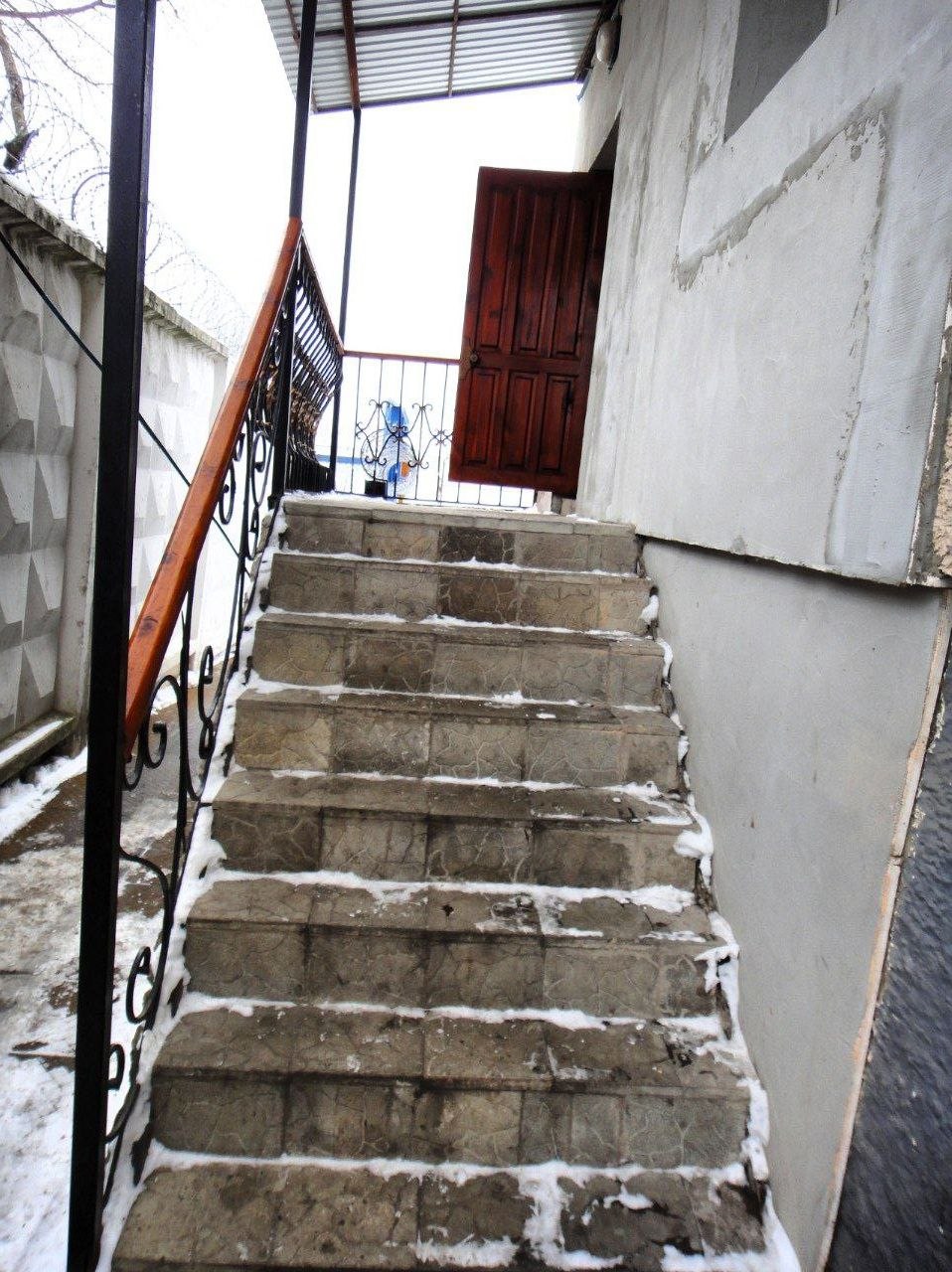
9. In violation of Paragraph 37 of the Resolution of the Cabinet of Ministers of Ukraine dated 02 March 2016 No. 285 “On Approval of Licensing Conditions for the Conduct of Business Activities in Medical Practice”, the medical unit lacks a conclusion confirming free access to the buildings and premises of the medical facility for low-mobility groups of the population, the obtaining of which is mandatory.
10. In violation of the Procedure for organising medical care at the primary, secondary (specialised), and tertiary (highly specialised) levels using telemedicine, approved by the Order of the Ministry of Health of Ukraine dated 19 October 2015 No. 681, the medical unit’s staff, due to technical limitations, are deprived of the opportunity to send requests for telemedicine consultations and receive professional assistance for providing medical services to convicts.
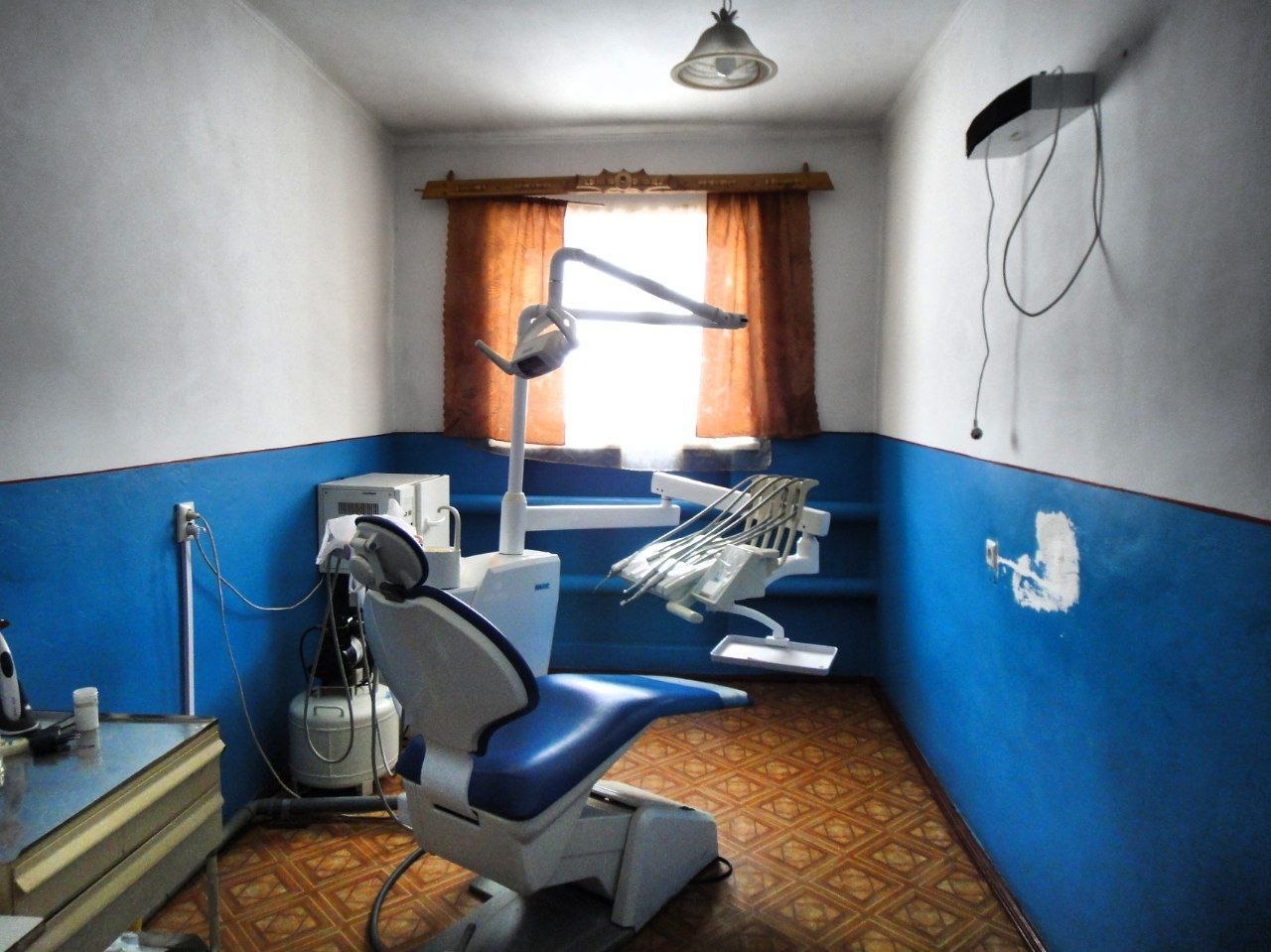
11. In violation of the requirements of the Equipment Supply Table for one workstation of a dentist and dental technician, approved by the Order of the Ministry of Health of Ukraine dated 11 April 2005 No. 158, the medical unit lacks a dental X-ray machine, which makes it impossible to conduct an in-depth dental examination of convicts and does not ensure the timely provision of appropriate dental care.
12. During the inspection of the defibrillator’s functionality, it was established that the expiration date of the electrodes had passed. At the same time, the Committee, in its report on the results of the visit to Ukraine in 2017, recommended that medical services in all visited prisons and other penitentiary institutions of Ukraine be equipped with equipment for life-saving by doctors (CPT/Inf (2018) 41, Paragraph 87).
13. In violation of the requirements of the Standards for medical care for HCV in adults, approved by the Order of the Ministry of Health of Ukraine dated 23 July 2025 No. 1178, not all persons with suspected viral hepatitis C undergo PCR testing, in connection with which they do not receive the necessary treatment, which may lead to the deterioration of their health and the spread of the aforementioned infectious disease among convicts and persons in custody.
14. In violation of the requirements of Part 1 of Article 115 of the Penal Code of Ukraine, most of the examined ward premises require repair work, in particular, the replacement of sanitary equipment, floor repair, painting, and the replacement of inventory. There is no mechanical ventilation. In violation of the requirements of Rule 22.5 of the European Prison Rules and the provisions of the Provision Standards, the ward premises are not equipped with drinking water tanks. In violation of the requirements of Rule 19.3 of the European Prison Rules, the bathroom in the wards for somatic patients and wards for infectious patients is not equipped with doors, in connection with which the right of convicts to privacy is not respected.
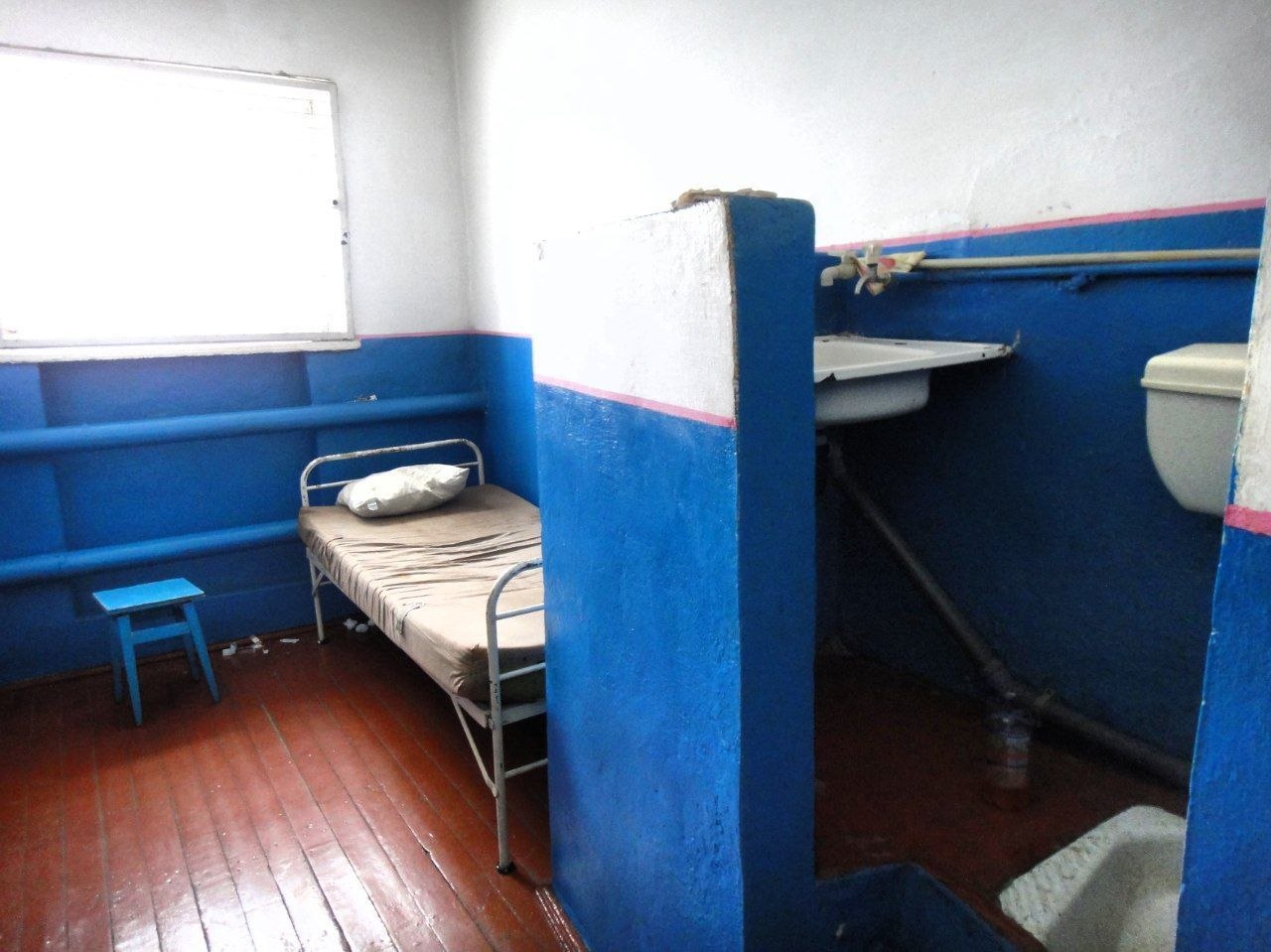
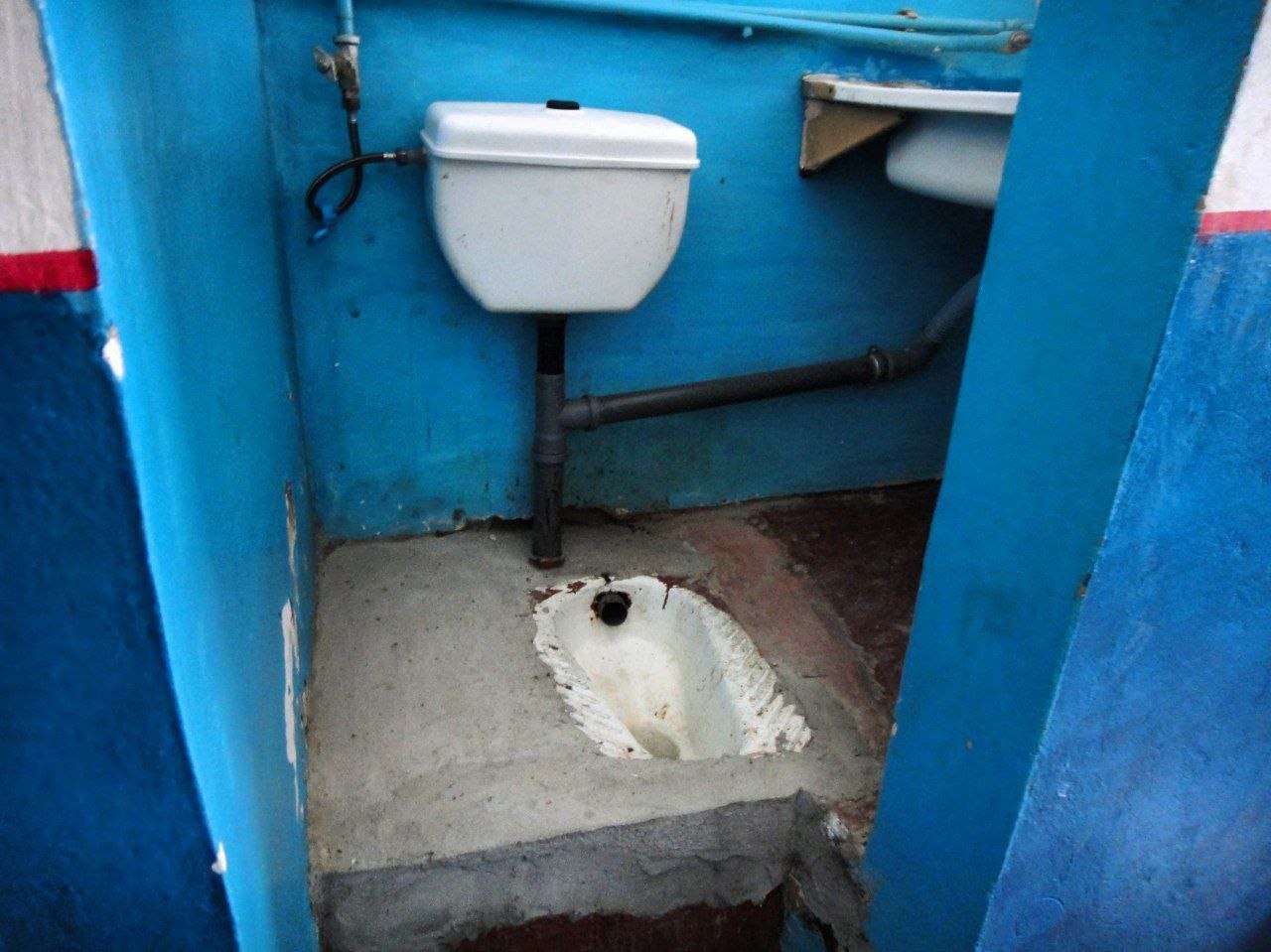
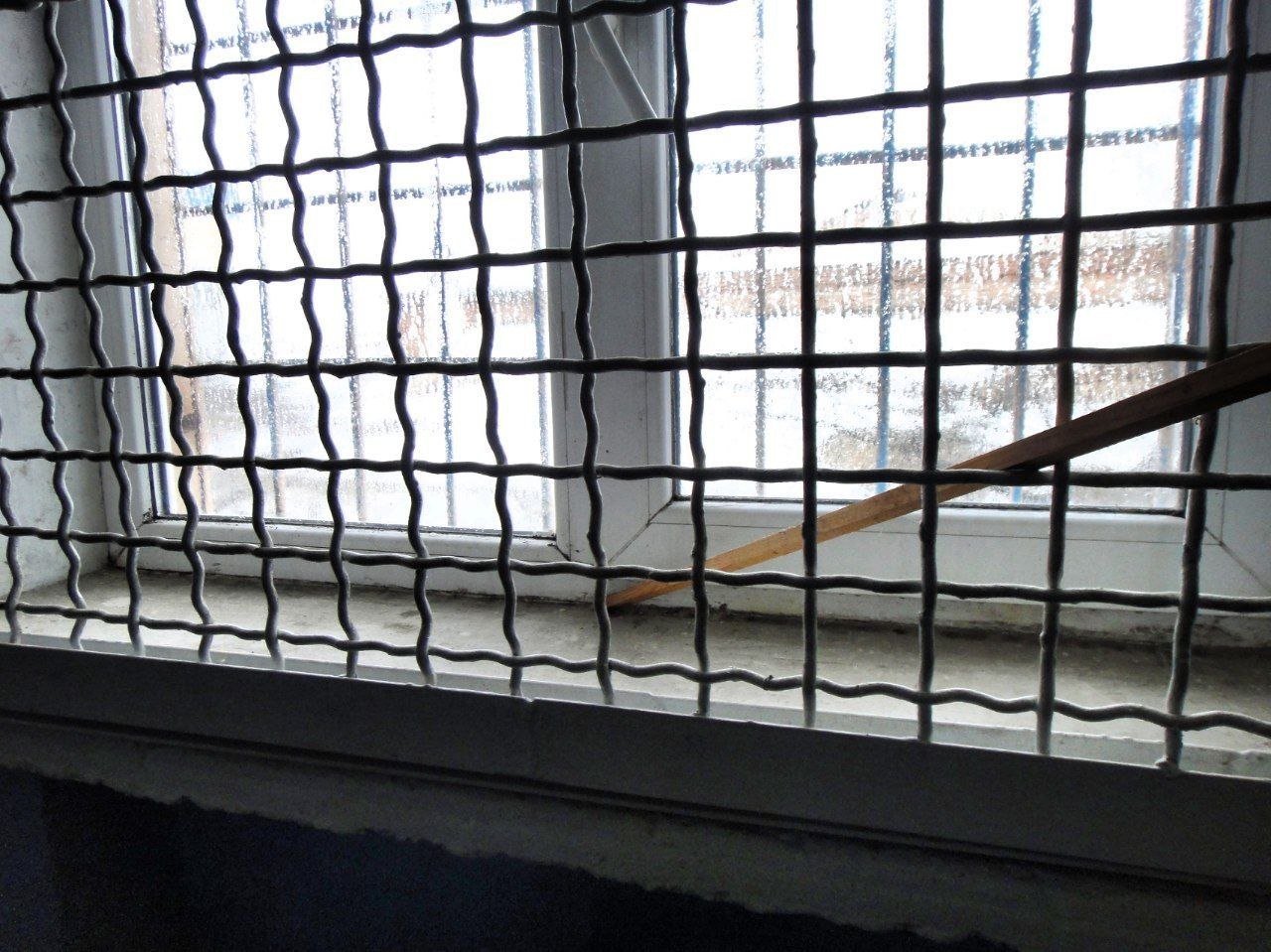
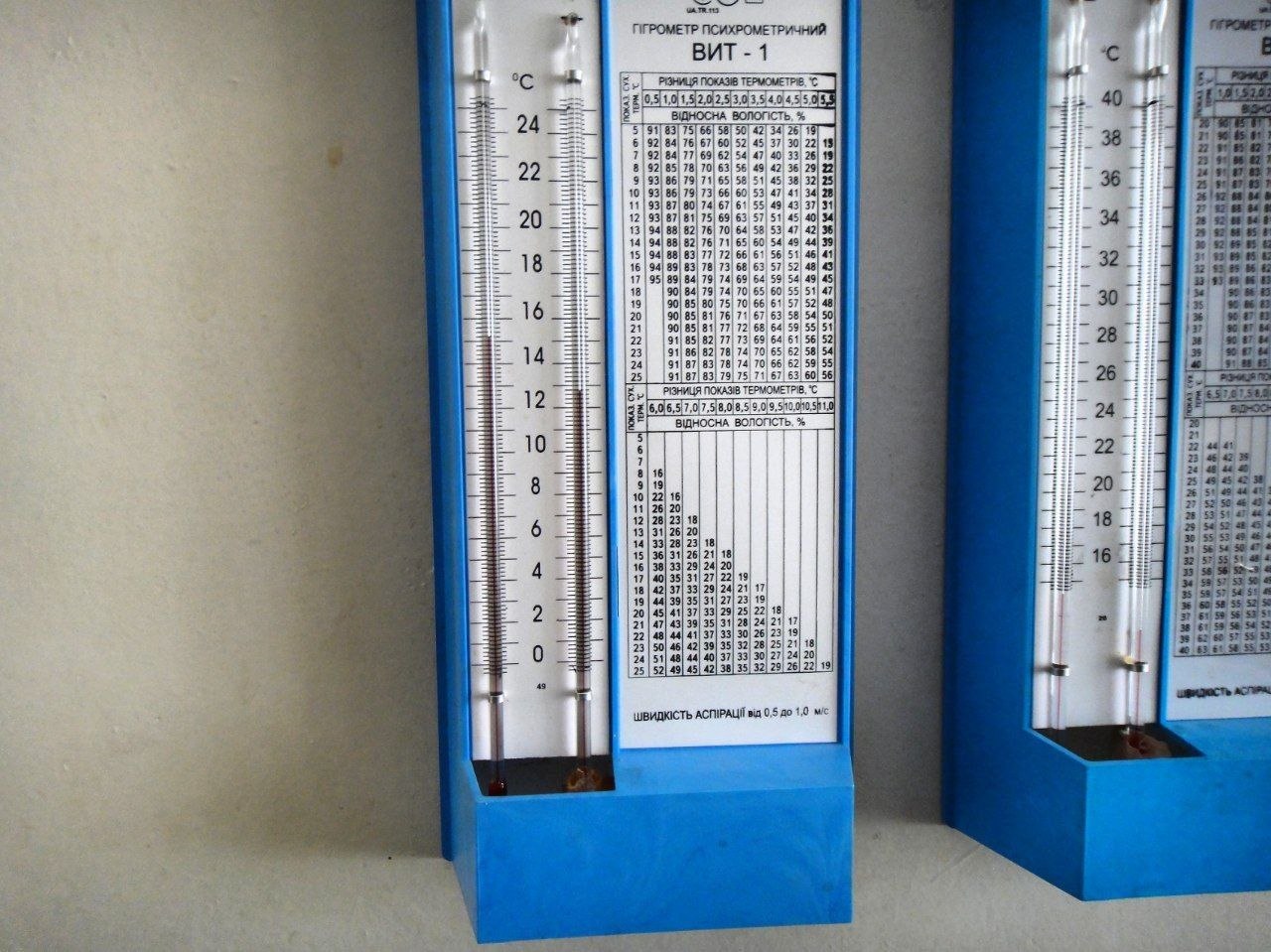
15. In the medical unit, particularly in wards and doctor’s offices, the monitoring group recorded violations of the temperature regime. Thus, at the time of the inspection, the air temperature in certain premises was +14–16°C, which does not comply with the requirements of Section VI of the State Sanitary Norms and Rules, approved by the Order of the Ministry of Health of Ukraine dated 02 April 2013 No. 259, and Paragraph 1 of Section XXII of the PWR UVP, according to which, in the cold season, the temperature regime in the residential premises of penal institutions must be maintained at a level no lower than +18°C.
16. In violation of the State Sanitary Norms and Rules “Procedure for managing medical waste, including requirements for safety for human health during the generation, collection, storage, transportation, and processing of such waste”, approved by the Order of the Ministry of Health of Ukraine dated 31 October 2024 No. 1827, the branch of the SI “Health Care Centre of the State Penitentiary Service of Ukraine” in the Khmelnytskyi region has not concluded an agreement with a specialised institution for the disposal of medical waste, in connection with which proper collection, sorting, and disposal of medical waste has not been organised in the medical unit since the beginning of 2026.
17. In violation of the requirements of the Standards of entitlement for bedding, special clothing, and special footwear (inventory property) for convicts undergoing treatment in medical-preventive institutions, institutions with the rights of medical facilities, and medical units at penal institutions and pre-trial detention centres, approved by the Order of the Ministry of Justice of Ukraine dated 20 February 2012 No. 280/5, convict persons do not receive hospital property (a hospital suit, robe, and slippers). Convicts stay in the ward in their everyday clothes, sometimes with their own bedding. Some mattresses need replacement.
18. According to Paragraph 7 of Chapter III of Section II of the Procedure, convicts who work at food facilities (except for work related to positions of salespeople, managers of food and clothing warehouses, storekeepers), the processing industry, in children’s homes, institutions of general secondary education, professional training units in special educational colonies, medical units (paramedic stations), and hospital institutions of the SPSU (except for work related to the provision of medical care), laundries, bathhouses, rooms for long-term visits, dormitories, clubs, at water supply and sewage facilities, and sections for breeding and raising animals, undergo mandatory preliminary and preventive medical examinations in accordance with the Resolution of the Cabinet of Ministers of Ukraine dated 23 May 2001 No. 559 “On Approval of the List of Professions, Productions, and Organisations whose Employees are Subject to Mandatory Preventive Medical Examinations, the Procedure for Conducting these Examinations and Issuing Personal Medical Books”.
For each convict of the aforementioned category, Form No. 1-OMK “Personal Medical Book”, approved by the Order of the Ministry of Health of Ukraine dated 21 February 2013 No. 150, registered in the Ministry of Justice of Ukraine on 23 April 2013 under No. 662/23194, is opened. At the same time, during the inspection of personal medical books of convicts who work in the canteen, it was established that these employees had not undergone an examination by an otolaryngologist, which violates the requirements of Paragraph 6 of the Rules for conducting mandatory preventive medical examinations of employees of certain professions, productions, and organisations whose activities are related to serving the population and may lead to the spread of infectious diseases, approved by the Order of the Ministry of Health of Ukraine dated 23 July 2002 No. 280 (as amended by the Order of the Ministry of Health of Ukraine dated 21 February 2013 No. 150).
19. In violation of the Fire Safety Rules in Ukraine, approved by the Ministry of Internal Affairs of Ukraine dated 30 December 2014 No. 1417, the medical unit premises are not equipped with fire extinguishing and fire alarm systems.
Recommendations:
1. Ensure compliance with the living space standard of at least 4 m² per convict in all SMRB cell-type premises.
2. Bring the actual number of sleeping places in cell-type premises into compliance with living space measurement acts.
3. Cease the use of cell-type premises with an area of less than 6 m² for the solitary confinement of convicts.
4. Ensure proper natural light, ventilation, the ability to open windows, drinking water tanks, wardrobes, and other provided property in cell-type premises.
5. Equip bathrooms in cell-type premises, DIZO, and solitary confinement cells with partitions and doors that ensure privacy.
6. Immediately review the practice of prolonged solitary confinement of prisoners sentenced to life imprisonment and ensure regular individual assessment of the necessity for such detention.
7. Develop and implement a real regime of out-of-cell activities for prisoners sentenced to life imprisonment, including group activities, work, education, walks, and social-educational work.
8. Equip an educational work room in the SMRB in accordance with the established Provision Standards.
9. Cease the practice of constant video surveillance in residential cells without an individual risk assessment and regular review of such a decision.
10. Equip solitary confinement cells with staff call buttons.
11. Bring solitary confinement cells into compliance with minimum standards for area, lighting, ventilation, access to drinking water, sanitary equipment, and radio systems.
12. Dismantle or take out of use means for fixing folding beds in solitary confinement cells, DIZO, and PKT, if their application is not provided for by current legislation.
13. Cease the placement of name cards with descriptions of crimes near cells.
14. Ensure the functionality of the radio system in the DIZO, SMRB, and solitary confinement cell premises.
15. Ensure that convicts are issued copies of decisions on the application of disciplinary sanctions, with an explanation of the procedure for appealing them and the right to legal assistance.
16. Equip the SMRB exercise yards with proper shelter from atmospheric precipitation.
17. Ensure full implementation of the programme for introducing newly arrived convicts in the KDiR, with regular participation of all working group members.
18. Bring the material and household support of the KDiR into compliance with the Provision Standards, in particular, by equipping necessary premises for eating, storing belongings, washing, utility needs, and drying.
19. Ensure the actual conduct of social-educational and psychological measures with convicts and cease the formal documentation of measures not conducted.
20. Ensure reliable, complete, and timely maintenance of work-with-convicts logbooks in SPS departments.
21. Equip a room for educational work in departments where it is absent.
22. Ensure food is delivered to convicts exclusively in labelled thermoses in accordance with food provision requirements.
23. Restore the operation of the disinfection chamber and ensure full sanitary treatment of bedding, clothing, and other property.
24. Ensure the operation of forced supply-and-exhaust ventilation in the laundry.
25. Equip shower premises with partitions or curtains that ensure privacy.
26. Immediately cease the use of a homemade heating device in the laundry drying room and eliminate fire safety violations.
27. Ensure the availability in the institution’s shop of all goods provided for by Appendix 5 to the PWR UVP.
28. Replenish the library collection with current texts of the PC of Ukraine, PWR UVP, and PWR SIZO.
29. Ensure the concealed carrying of special equipment by staff or cease their open carrying during direct contact with convicts.
30. Review the practice of conducting short-term visits and ensure open visits are the general rule, with non-contact visits only on the basis of an individual risk assessment.
31. Ensure the issuance of passports of a citizen of Ukraine and RNOKPPs to convicts who need them.
32. Take measures to reduce staff shortages and ensure the proper presence of staff in residential and high-security zones of the institution.
33. Bring the institution’s shelter into a usable state: equip a second emergency exit, ventilation, sewage, and other minimum conditions for the safe stay of people.
34. Ensure proper recording of the movement of convicts to the industrial zone and their return to the residential zone.
35. Conduct an inspection of the legal grounds for engaging convicts in work at facilities and ensure proper formalisation of employment relationships.
36. Cease the substitution of employment relationships with civil law contracts in cases where signs of an employment relationship are actually present.
37. Ensure personalised recording of working hours, volumes of work performed, accrued remuneration, and paid SSC for each convict.
38. Review the working conditions of convicts in the kitchen and cease the practice of working beyond the established duration of working hours, without weekends and holidays.
39. Ensure the payment of convicts’ labour in accordance with actual time worked, volume of work, and minimum state guarantees.
40. Ensure the proper conduct and documentation of medical examinations for convicts working in the kitchen and other facilities of increased sanitary risk.
41. Introduce individual issuance of tools to each convict under a personal signature, indicating the type, quantity, and time of return of the inventory.
42. Take measures aimed at eliminating identified human rights violations and preventing torture and other cruel, inhuman, or degrading treatment or punishment in Medical Unit No. 58 of the branch of the state institution “Health Care Centre of the State Penitentiary Service of Ukraine” in the Khmelnytskyi region.
43. Ensure control over the proper maintenance of medical documentation in accordance with the Procedure for organising the provision of medical care to convicts deprived of their liberty, approved by the joint order of the Ministry of Justice of Ukraine and the Ministry of Health of Ukraine dated 15 August 2014 No. 1348/5/572, and other legal acts.
44. Provide the medical unit with specialist doctors in accordance with needs.
45. Ensure timely and proper recording of bodily injuries in convicts.
46. Ensure that informed consent of patients for examination and treatment is obtained in the established form.
47. Ensure the possibility of receiving opioid agonist therapy based on a diagnosis of mental and behavioural disorders due to opioid use.
48. Ensure the equipping of an isolation ward for persons with mental and behavioural disorders in accordance with requirements.
49. Ensure the medical unit is equipped with a defibrillator and other necessary life-saving equipment in accordance with the recommendations of the European Committee for the Prevention of Torture.
50. Ensure the conduct of individual rehabilitation for persons who need it.
51. Ensure the accessibility of the institution’s buildings in accordance with State Building Norms of Ukraine V.2.2-40:2018 “Inclusivity of buildings and structures. Basic provisions”.
52. Ensure the proper operation of the telemedicine complex for doctors to make requests for telemedicine consultation.
53. Provide the medical unit with a dental X-ray machine and necessary equipment for conducting a full dental examination and treatment.
54. Fulfil the requirements of Paragraph 37 of the Resolution of the Cabinet of Ministers of Ukraine dated 02 March 2016 No. 285 “On Approval of Licensing Conditions for the Conduct of Business Activities in Medical Practice”.
55. Ensure all persons with suspected HCV have access to PCR testing in the shortest possible time and organise necessary antiviral treatment for persons with a confirmed diagnosis.
56. Ensure proper disposal of medicinal products and medical devices.
57. Provide the medical unit with hospital property: a hospital suit, robe, and slippers.
58. Ensure compliance with the temperature regime in the medical unit premises of no lower than +18°C.
59. Ensure all kitchen staff have personal medical books and the full complex of required medical examinations necessary for their admission to work at food facilities.
60. It is recommended to bring the state of ward premises and the sanitary-household support of convicts into compliance with the requirements of Part 1 of Article 115 of the Penal Code of Ukraine by carrying out necessary repair work, eliminating unsanitary conditions, replacing worn-out equipment, and properly equipping bathrooms.