Report on the results of the monitoring visit to Olekseivska Penal Colony No. 25
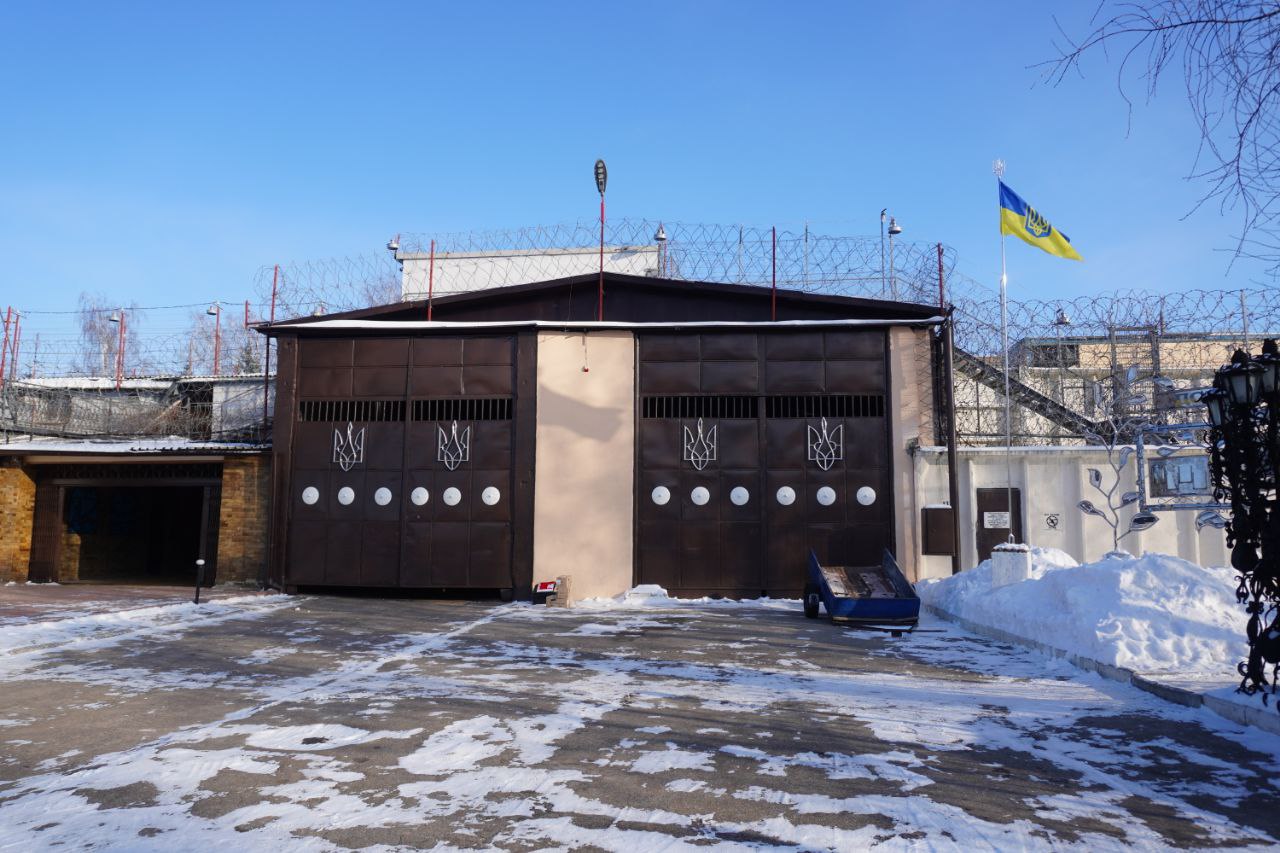
On 19–20 January 2026, in accordance with the Optional Protocol to the Convention against Torture and other Cruel, Inhuman or Degrading Treatment or Punishment, taking into account the provisions of the UN Standard Minimum Rules for the Treatment of Prisoners and the decisions of the European Court of Human Rights, and on the basis of Article 24 of the Criminal Executive Code of Ukraine — “Visiting penal institutions”, a group of monitors from the Kharkiv Human Rights Protection Group and the NGO “Prisoners’ Defense of Ukraine” conducted a visit to the state institution “Olekseivska Penal Colony (No. 25)” (hereinafter — OPC-25, the institution, the facility, the colony).
Another planned unannounced visit was conducted, and all facilities of the institution were examined. The previous visit took place on 21–22 July 2025.
In preparation for the visit, the monitors used materials from appeals by convicts and their relatives, materials from previous reports, and reports from monitors of the National Preventive Mechanism under the Commissioner for Human Rights of the Verkhovna Rada of Ukraine (NPM).
The visit was carried out within the framework of the project “Reducing the suffering of prisoners in the context of the war in Ukraine”, funded by the government of Denmark in partnership with DIGNITY — Danish Institute Against Torture.
The visit was conducted by the following monitors:
- Andrii Didenko — Assistant to the People’s Deputy of Ukraine Yaroslav Yurchyshyn, programme coordinator of the Kharkiv Human Rights Protection Group, experienced in monitoring visits since 2014, NPM monitor (National Preventive Mechanism), member of the NPM advisory council;
- Serhii Zuikov — Assistant to the People’s Deputy of Ukraine Kostiantyn Kasai, member of the public council under the Ministry of Justice of Ukraine, member of the NGO “Prisoners’ Defense of Ukraine”, NPM monitor, with many years of experience in monitoring visits;
- Oleh Tsvilyi — member of the public council under the Ministry of Justice of Ukraine, head of the NGO “Prisoners’ Defense of Ukraine”, with extensive experience in monitoring visits, specialising in issues of torture and cruel, inhuman, or degrading treatment.
The institution has demonstrated a positive dynamic of development, in particular: infrastructure modernisation, connection of backup power supply, arrangement of shelters, improvement of conditions for visits, implementation of the SCANDY project, development of sports infrastructure, and updating of medical equipment.
At the same time, during the monitoring visit, systemic violations of convicts’ rights were identified, concerning the practice of delegating control to ‘orderlies’, the use of unpaid labour of newly arrived inmates, deficiencies in the work of the QDD (Quarantine, Diagnosis, and Distribution ward), inadequate living conditions and provision of privacy, violations in the disciplinary isolation unit (DIU), excessive video surveillance, restriction of open visits, formal access to the Internet, problems in the organisation and payment of labour, deficiencies in food and laundry provision, staff shortages, as well as numerous violations in the provision of medical care, including inadequate documentation of bodily injuries, violation of infectious isolation and temperature regulations, lack of OST (opioid substitution therapy), failure to uphold the rights of persons with disabilities, and limited access to specialised and dental care.
General information
OPC-25 is a medium-security correctional colony for holding men who have previously served sentences in places of deprivation of liberty.
The institution is located at the following address: 44 Cezar Cui St., Kharkiv, 61064.
The state institution “Olekseivska Penal Colony (No. 25)” was established in the post-war period within the structure of penal-labour institutions of the USSR, when the camp-industrial type system was being actively formed. Like most colonies of that time, it combined a regime of isolation with the mandatory involvement of convicts in production. In the 1960s–1980s, an extensive production complex was formed on its territory, which worked on state orders and was integrated into the industrial infrastructure of Kharkiv. The labour of convicts was used as an economic resource of the system.
After 1991, the institution passed to the penitentiary system of independent Ukraine. Changes in legislation and the rejection of the Soviet punitive model have gradually, but steadily, moved the institution towards the implementation of European standards, transforming both the legal status of the institution and the approaches to the detention of convicts and the organisation of labour.
Thus, the history of the colony reflects the evolution of the entire penitentiary system — from the Soviet penal-labour model to the modern penitentiary system of Ukraine.
At the time of the visit, the head of the institution was Colonel of the Internal Service Viacheslav Mykolaiovych Popov.
The facility consists of a duty unit, a QDD ward (quarantine, diagnosis, and distribution ward), SPS (socio-psychological service) wards, a canteen, DIU (disciplinary isolation unit) premises, cell-type premises, an enhanced control ward, a pre-trial detention ward, a medical unit, a laundry and bathhouse complex, visitation rooms, a shop, a library, a parcel receipt room, and administrative premises.
According to the administration of the institution, the authorised staff number is 266.5 positions. The actual number is 223.5 positions. The total staff shortage in the institution is 43 employees.
The planned capacity of the facility is 1,112 persons. The actual number of persons held in the institution is 281 convicts.
There is 1 psychologist working at the facility.
During 2025, 290 persons arrived at the colony. In 2024, 1 person died; in 2025, 1 person died.
On operational-preventive registration were: 5 persons prone to suicide, 1 person prone to self-harm, 1 person prone to escape, and 2 malicious violators of the detention regime.
During 2024–2025, no complaints were recorded regarding inadequate conditions of detention or inadequate provision of medical care.
5 persons have disabilities: 1 person with group II disability and 4 persons with group III disability.
There are 5 rejected persons in total.
Convicts have 23 tablets and 9 registered email addresses in their own use.
During 2024–2025, no cases of bodily injuries were recorded.
The group of monitors interviewed about 180 of the convicts during visits to production premises, workshops, SPS wards, disciplinary and utility rooms, during general conversations providing consultations and answers to questions, surveys regarding human rights violations, as well as individual communication with persons, including on conditions of anonymity.
Positive experience
In the course of the monitoring visit, a number of positive changes in the institution’s activities were identified, which took place during 2025. Based on the available information and the results of a direct inspection, some of these changes were made possible as a result of the change in the institution’s management and the review of managerial approaches to the organisation of security, living conditions, and the environment for serving sentences. The change in administrative policy has facilitated the intensification of modernisation processes and the implementation of a more systematic approach to ensuring the rights of convicts.
Taking into account the risks of emergency power outages under martial law, diesel generator sets were connected in 2025. The backup power supply ensures the operation of dormitories in the residential area, the canteen for convicts, and refrigeration chambers for food storage. This allows for maintaining the continuity of food preparation, keeping food at the proper temperature, and minimising the risks of deterioration of sanitary and living conditions.
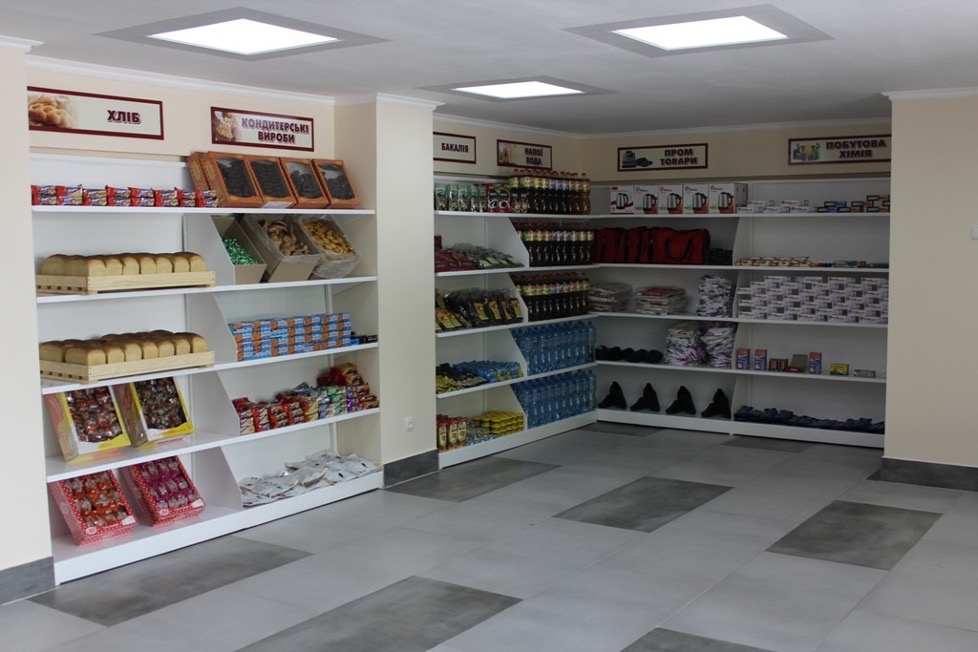
The administration is taking measures to improve the material and living conditions of detention. A shop for convicts is functioning, ensuring the ability to purchase essential goods. Repair work has been carried out in the rooms for long-term visits, which contributes to maintaining decent conditions for communication with relatives and preserving social ties.
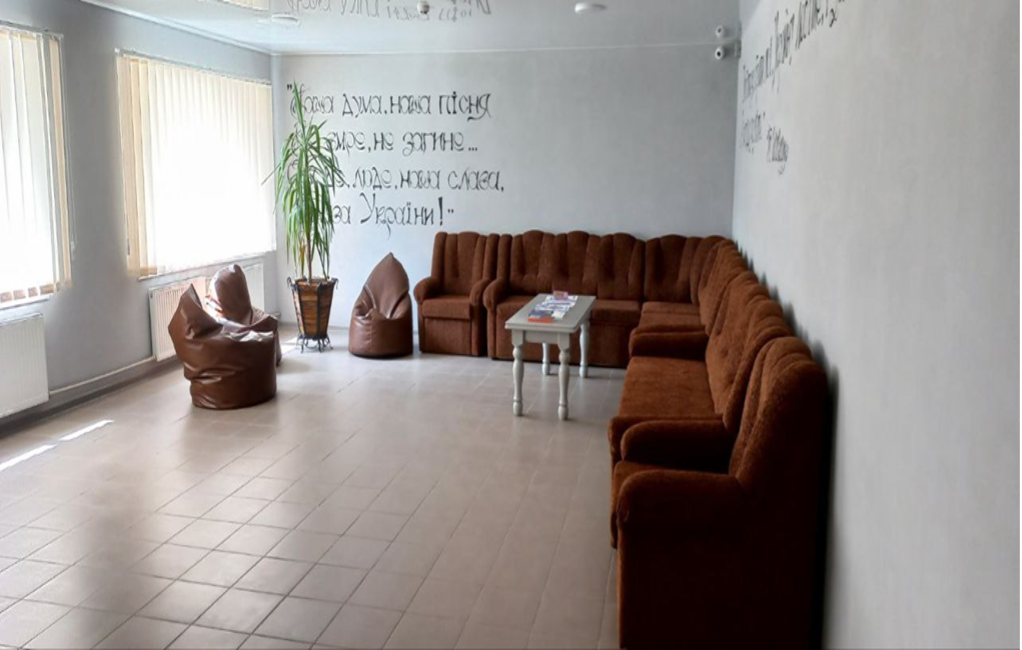
As part of the modernisation of residential premises, wards are being arranged with the provision of individual space, which corresponds to modern approaches to the organisation of the environment in penal institutions and contributes to reducing conflict.
New approaches are being introduced in the institution’s activities, in particular within the framework of the SCANDY project, aimed at changing the environment for serving sentences, humanising the space, and forming a more open management model.
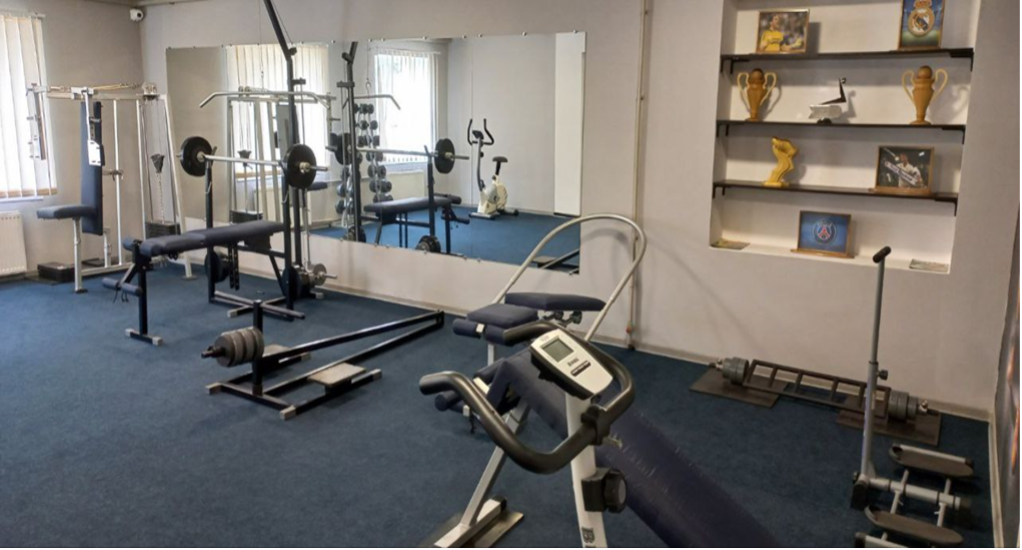
A volleyball court and a sports ground have been arranged on the territory of the social rehabilitation ward. Convicts have the opportunity to engage in sports in their free time, which has a positive impact on their physical and psycho-emotional state. During short-term and long-term visits, relatives can spend time together playing sports. A playground has been equipped for children. A gazebo has been installed for communication and shared leisure, which contributes to maintaining family ties.
A modern X-ray machine has been installed in the medical unit, which expands diagnostic capabilities and improves access to medical services. In addition, a multifunctional bed has been purchased for patients who need long-term care or have limited mobility.
The aforementioned measures in combination testify to the positive dynamic of the institution’s development, the focus of the management on issues of security, infrastructure modernisation, and the gradual approximation of detention conditions to standards oriented towards respect for human dignity.
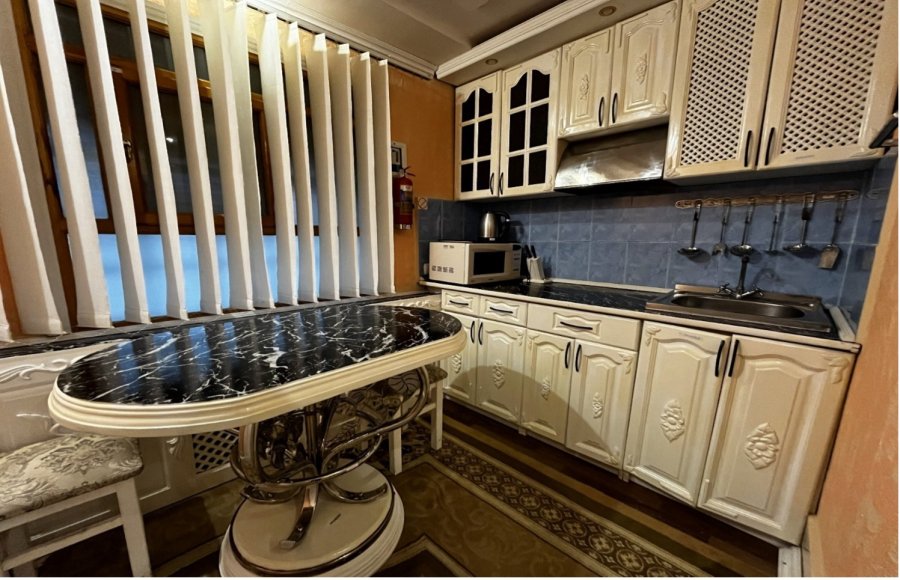
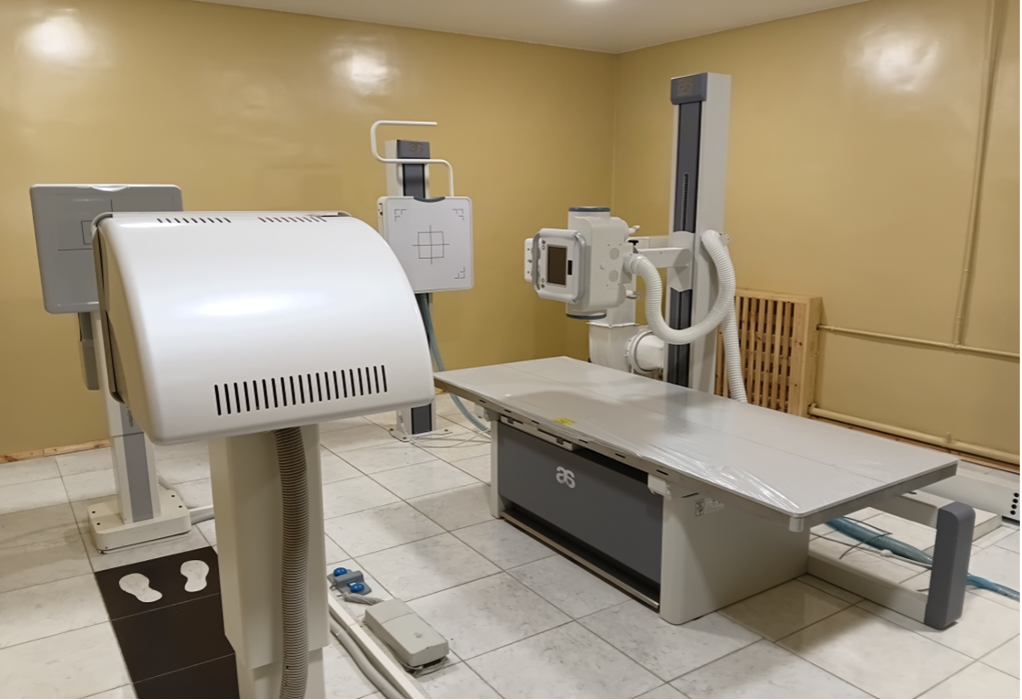
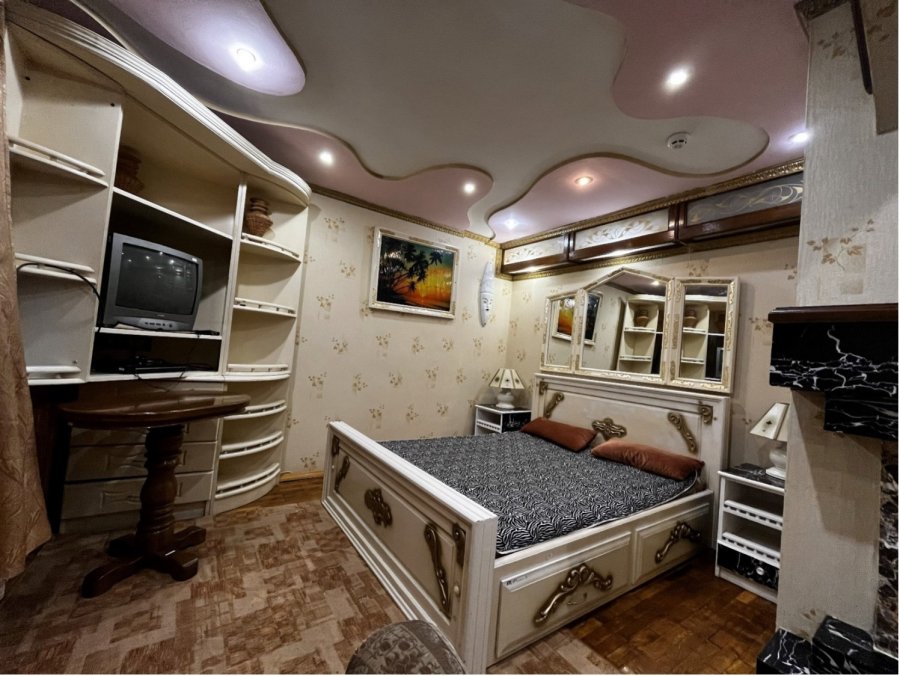
Identified violations of national and international legislation
In the course of the monitoring visit, violations of national legislation requirements and failure to comply with international recommendations in the field of prisoner treatment were identified, which lead to the violation of the rights of convicted persons:
1. The monitoring group established that the administration and staff of the institution did not ensure proper organisation of work with newly arrived convicts. During the visit to the QDD, the practice of involving certain convicts in performing functions related to maintaining order and controlling the behaviour of other persons was recorded. In fact, the administration delegated to a convict (“orderly”) the authority to exercise constant supervision over newly arrived convicts and control their compliance with the daily routine, which is unacceptable.
This contradicts the requirements of paragraph 4 of Section II of the Internal Regulations of Penal Institutions, approved by the Order of the Ministry of Justice of Ukraine dated 28.08.2018 No. 2823/5 (hereinafter — IRPI), as well as paragraph 2 of Section I of the Regulations on the QDD ward, approved by the Order of the Ministry of Justice of Ukraine dated 04.11.2013 No. 2300/5 (hereinafter — Regulations on the QDD ward).
In addition, during confidential communication, the convicts reported that the said “orderly” uses coercive and humiliating practices against new arrivals, in particular, forcing them to publicly perform humiliating actions and undergo an informal “interview” regarding their belonging to castes in the prison hierarchy. Such actions have signs of humiliation of human dignity, contribute to the formation of discriminatory relations between convicts, reinforce the criminal subculture, and create risks of psychological and physical violence.
These circumstances contradict the first part of Article 8 of the Criminal Executive Code of Ukraine, Article 3 of the Convention for the Protection of Human Rights and Fundamental Freedoms, as well as the standards and recommendations of the European Committee for the Prevention of Torture (hereinafter — the Committee).
Thus, in its report on the results of the visit to Ukraine in 2020, the Committee expressed serious doubts regarding the practice of using some prisoners as “orderlies” who perform control functions over other prisoners in residential premises and at work and report to staff about any incidents and violations of the regime. Therefore, the Committee noted with concern during the said visit that this practice persists. Furthermore, despite specific recommendations previously provided by the Committee, the practice of using “orderlies” is also officially provided for by the Internal Regulations of Penal Institutions.
As previously emphasised, the Committee believes that any partial abdication of responsibility for order and security in prisons, which lies with the regime staff of the institution, is unacceptable. Such a practice exposes weaker prisoners to the risk of ill-treatment and exploitation by other prisoners. The Committee calls on the Ukrainian authorities to take all necessary measures, including legislative ones, with the aim of ending this practice. No prisoner (in any penitentiary institution in the country) should have power over other prisoners (CPT/Inf (2020) 40, paragraph 27).
Furthermore, in the report on the results of the visit to Ukraine in 2023, the Committee called on the Ukrainian authorities to develop and implement a comprehensive strategy to combat violence and intimidation among convicts and to overcome the phenomenon of informal hierarchy among convicts with all its negative consequences. In this context, the penitentiary administration must also streamline risk and needs assessment, classification, and allocation of individual convicts with the aim of ensuring that convicts are not exposed to the influence of other convicts who may harm them (CPT/Inf (2024) 20, paragraph 45).
2. During confidential interviews with convicts who arrived at the institution on 08.01.2026 and were held in the QDD ward, it was established that these persons are involved in performing work in the wire product manufacturing ward, allegedly in the order provided for by the fifth part of Article 118 of the Criminal Executive Code of Ukraine.
The actual performance of such work was confirmed, in particular, by the personal belongings of the convicts in the production area, the presence of bodily injuries characteristic of the corresponding type of labour (cuts on fingers and hands) on the convicts, and significant soiling of their outerwear.
At the same time, the convicts reported that the duration and volume of their working day do not actually differ from the working hours of employees who receive wages for similar work, namely: from 08:30 to 17:00 and longer, six days a week.
The aforementioned circumstances indicate the existence of a systemic practice of using the labour of convicts without entering into employment or civil-law contracts with them and without proper remuneration, which has signs of violating the requirements of the first part of Article 118 and the first part of Article 120 of the Criminal Executive Code of Ukraine.
In addition, the said convicts do not undergo training on occupational health and safety, which contradicts the requirements of the third part of Article 119 of the Criminal Executive Code of Ukraine and Article 153 of the Labour Code of Ukraine.
At the same time, while visiting the production zone of the institution to perform the specified work, the newly arrived convicts are in contact with other convicts, which contradicts the requirements of paragraph 2 of Section I of the Regulations on the QDD ward, which provides for their isolation in order to make uncontrolled communication impossible.
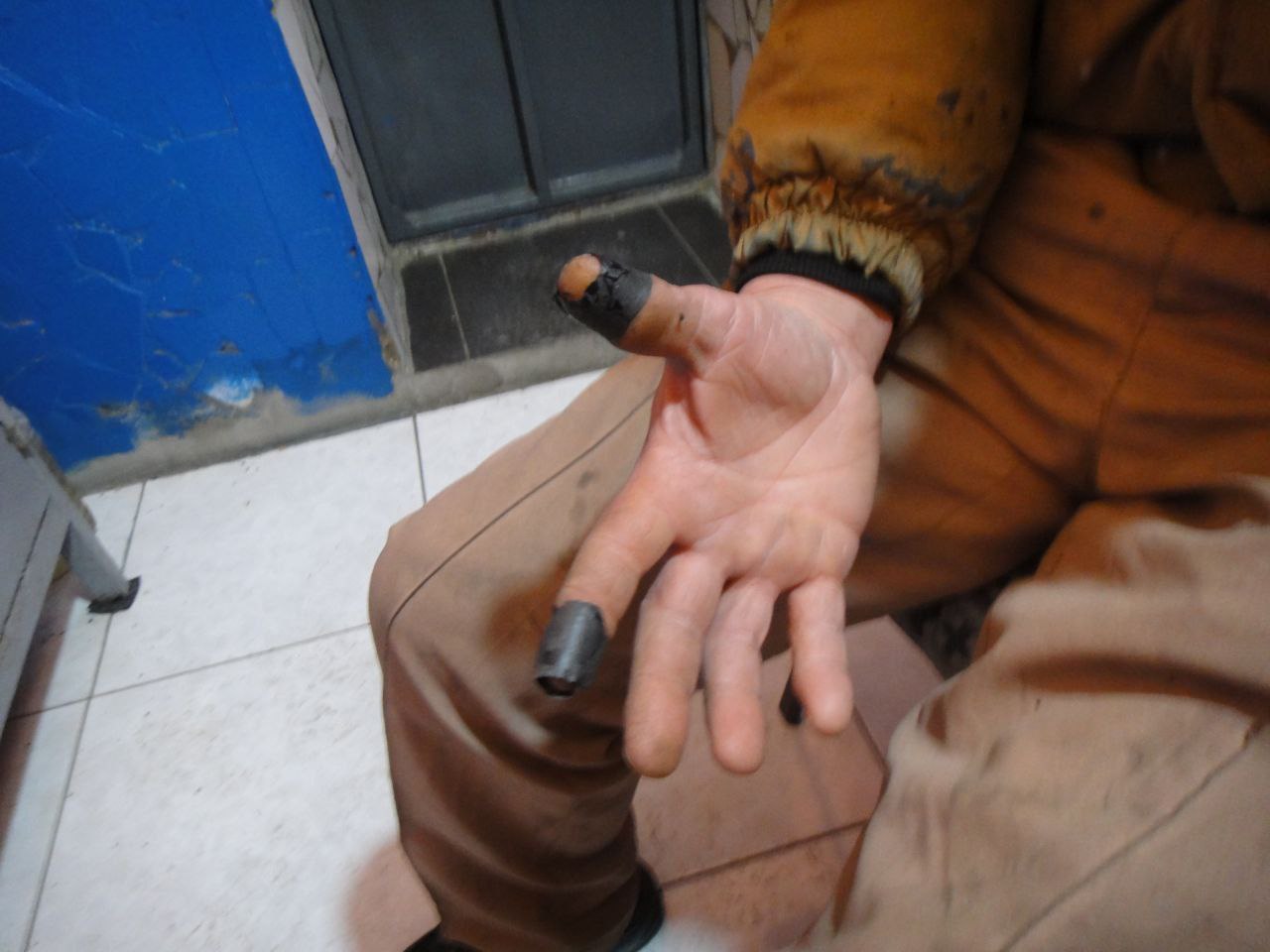
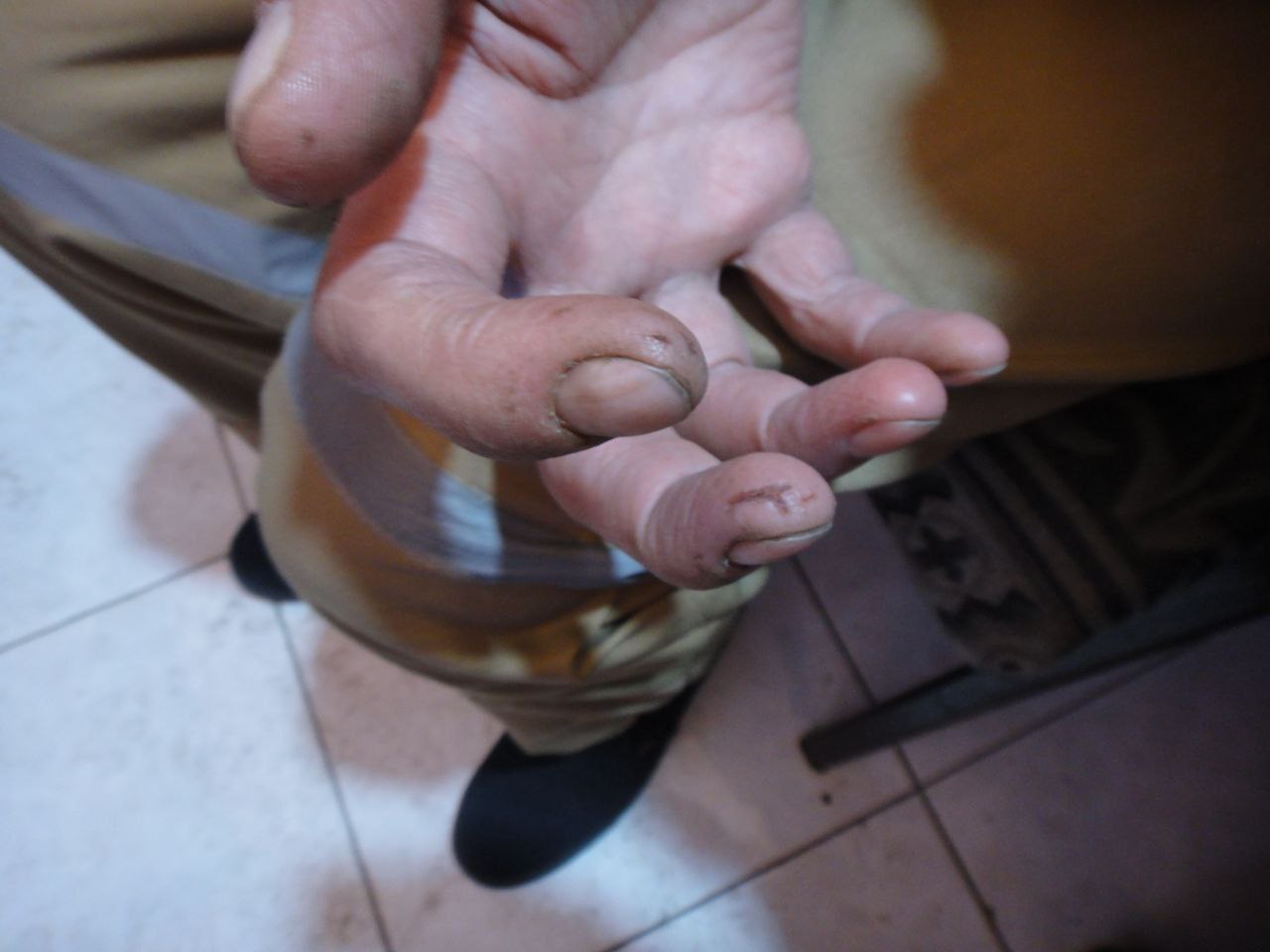
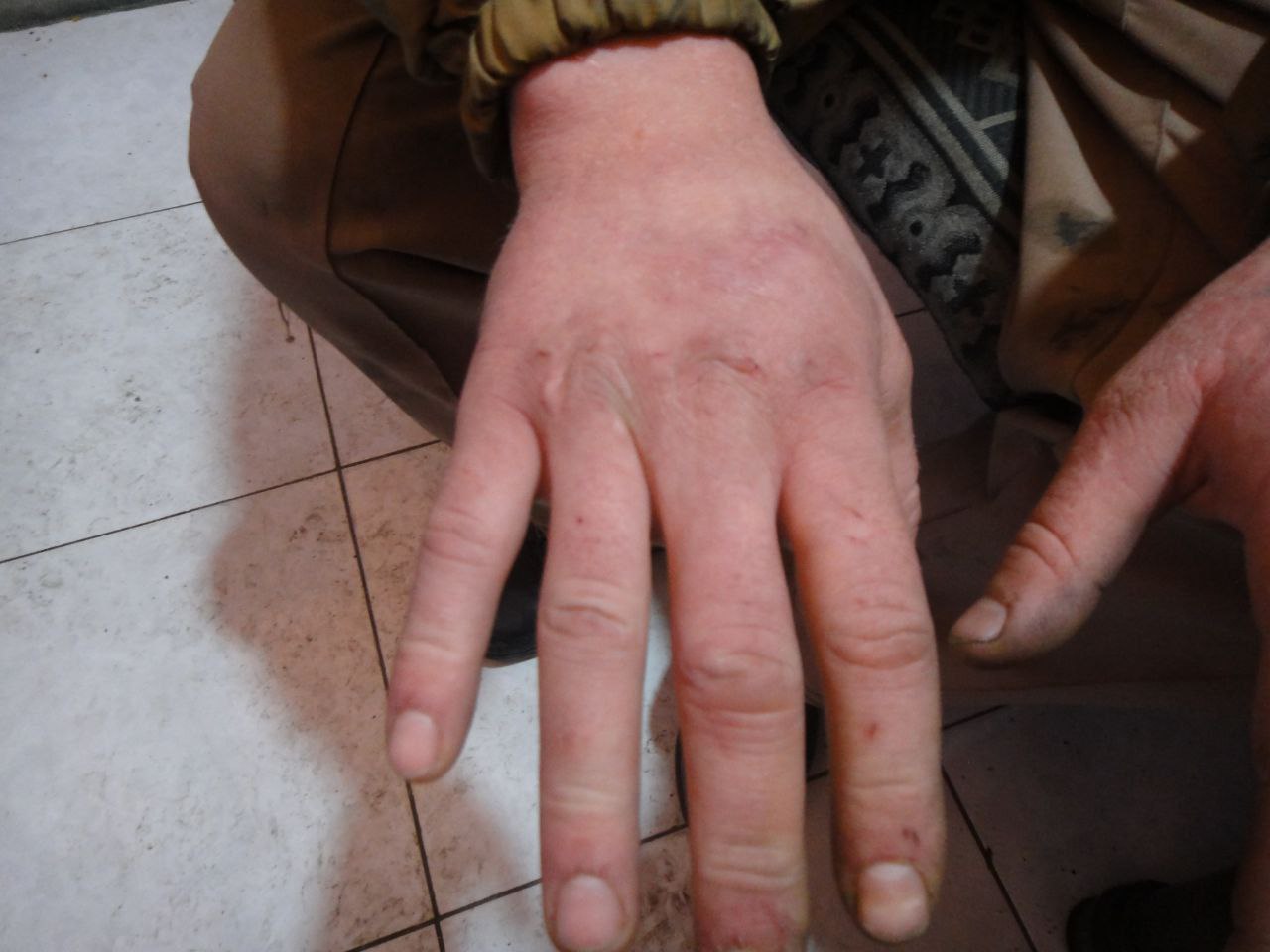
3. In accordance with paragraphs 1 and 2 of Section II of the Regulations on the QDD ward, for the purpose of organising work with newly arrived convicts, a working group is created by the order of the head of the institution, which includes deputy heads of the institution, heads of structural units, a psychologist, and a medical worker. To plan the said work, a programme of familiarisation of newly arrived convicts with the order and conditions of serving the sentence is developed annually, which is approved by the head of the institution.
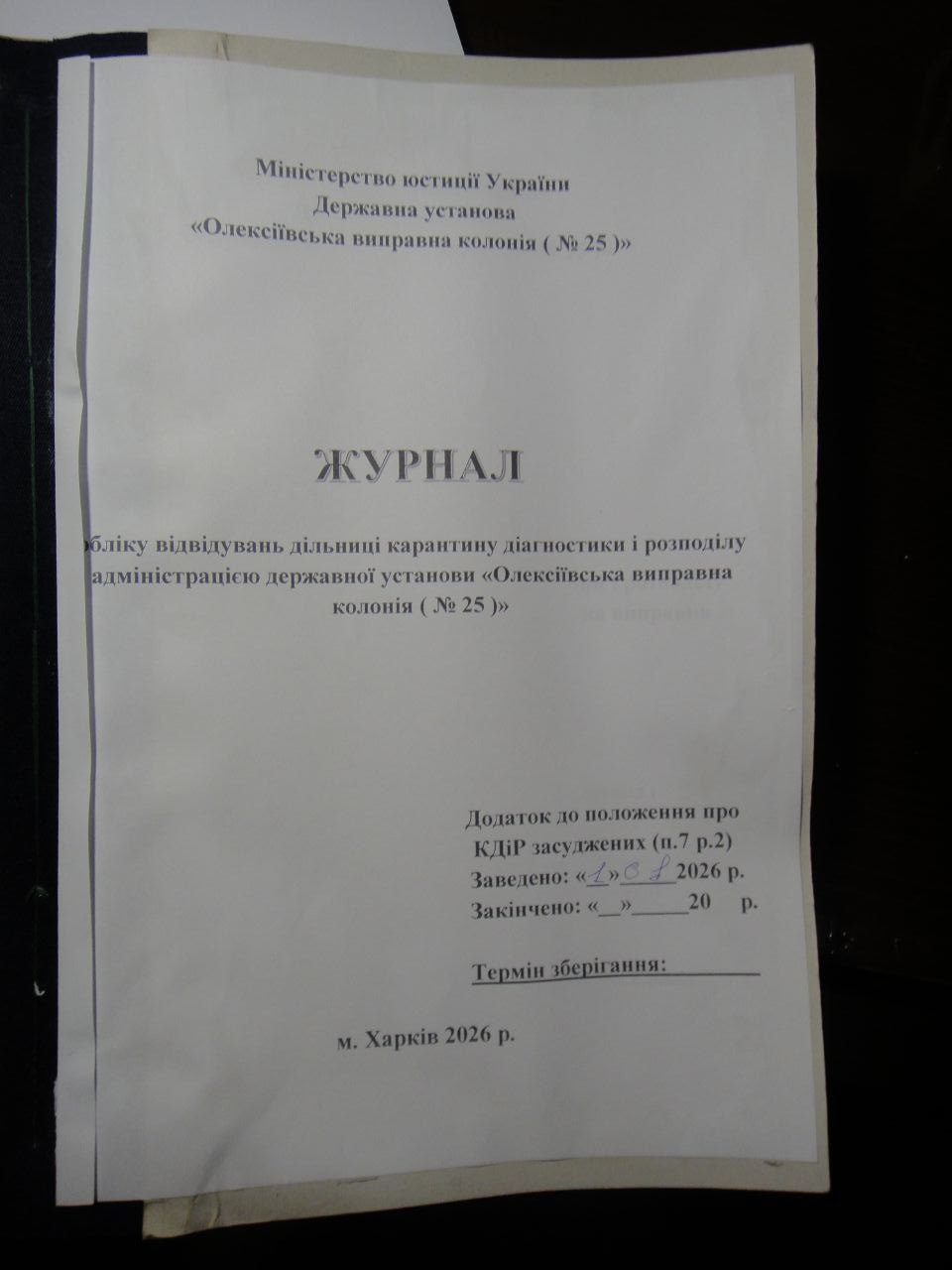
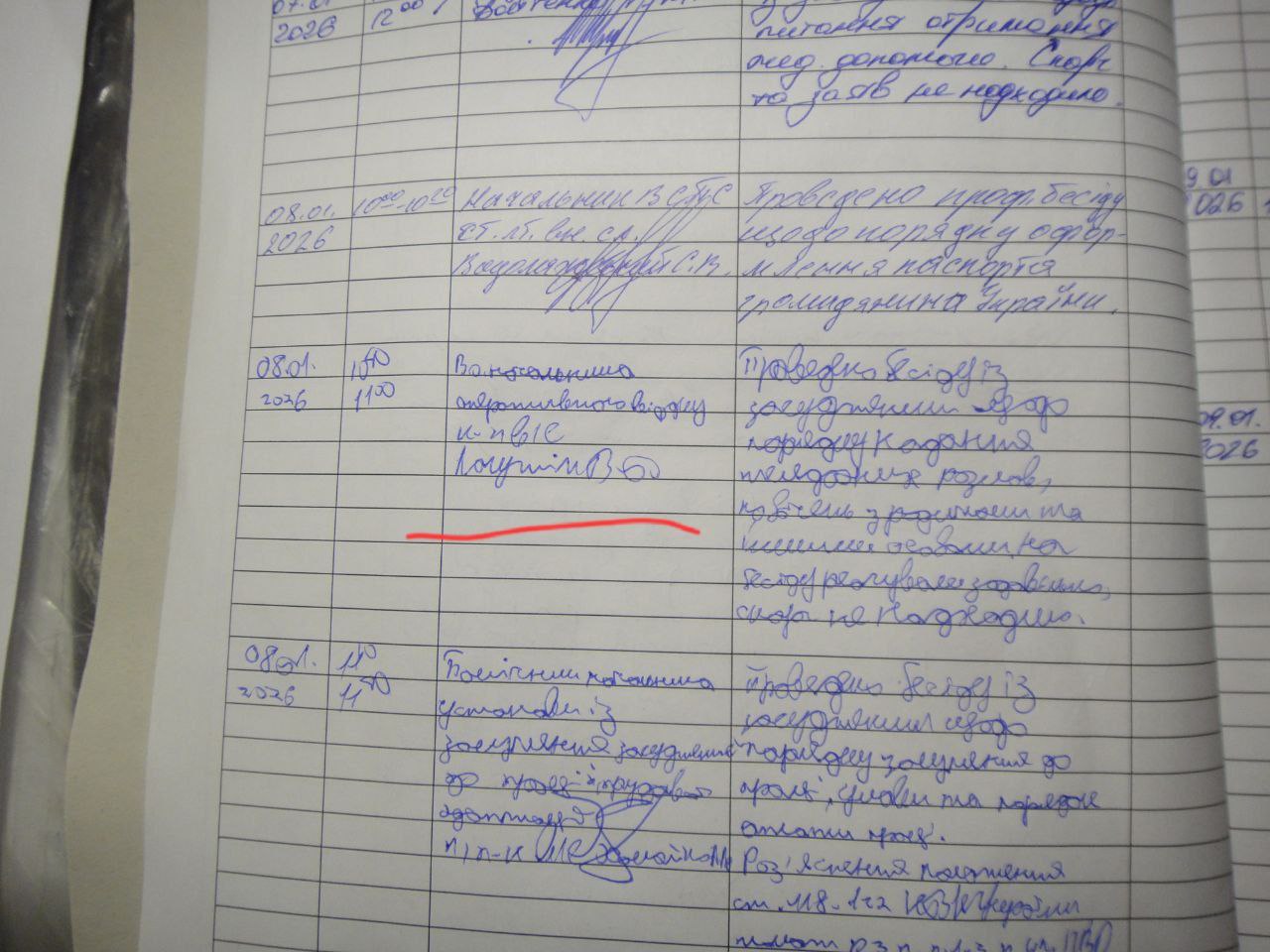
At the same time, during confidential communication with convicts and analysis of official documentation, the monitoring group established that the members of the working group do not fully implement the measures provided for by the said programme. This is confirmed, in particular, by the absence of corresponding entries in the logbook of visits to the QDD ward by representatives of the administration.
In particular, it was established that the entry about conducting an event, which according to the distribution of duties was supposed to be carried out by the acting head of the operational department of the institution, Vadym Valentynovych Lahutin, was actually entered by the acting head of the QDD ward, while the signature of the official responsible for conducting the event is missing in the logbook.
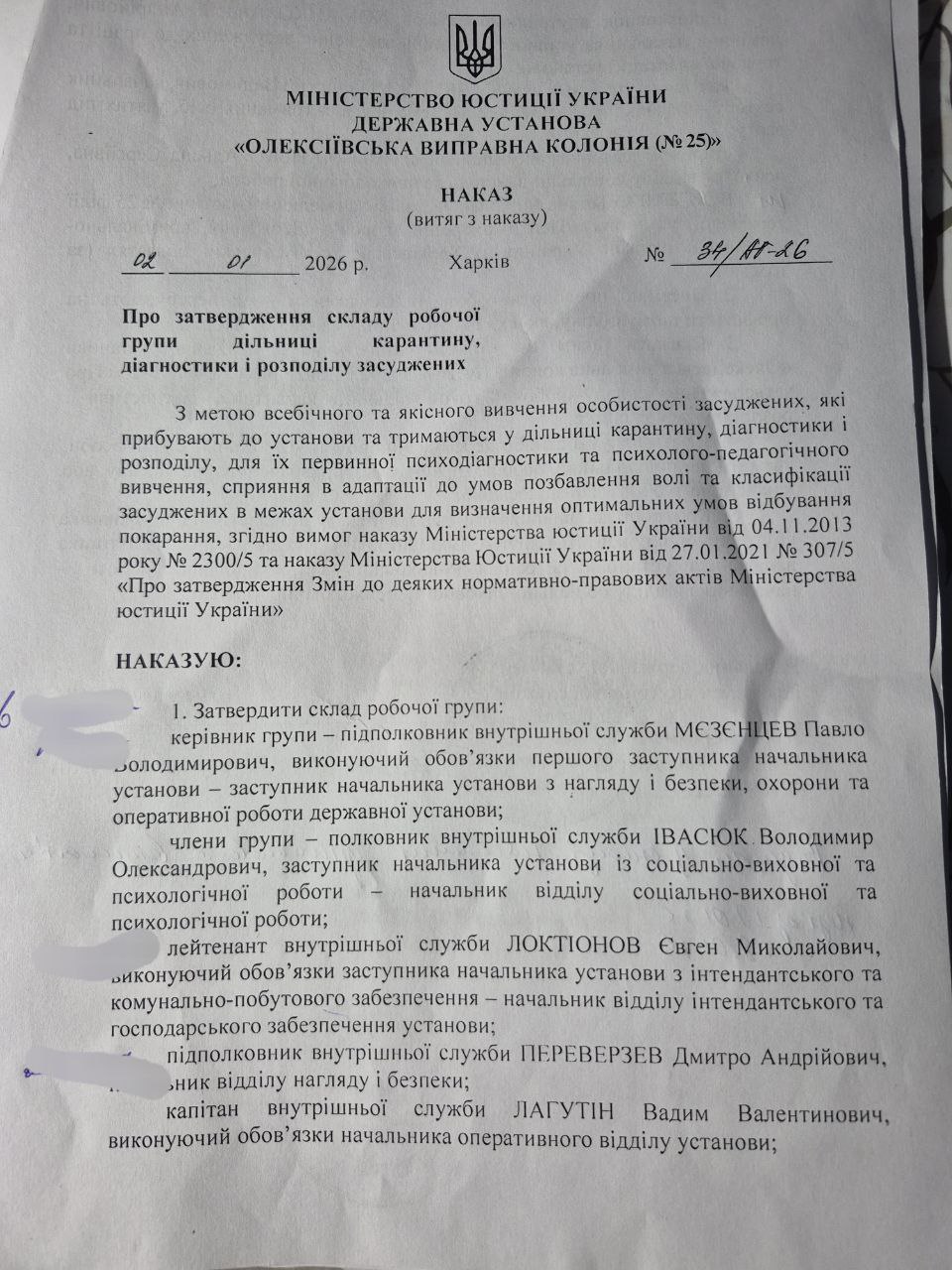
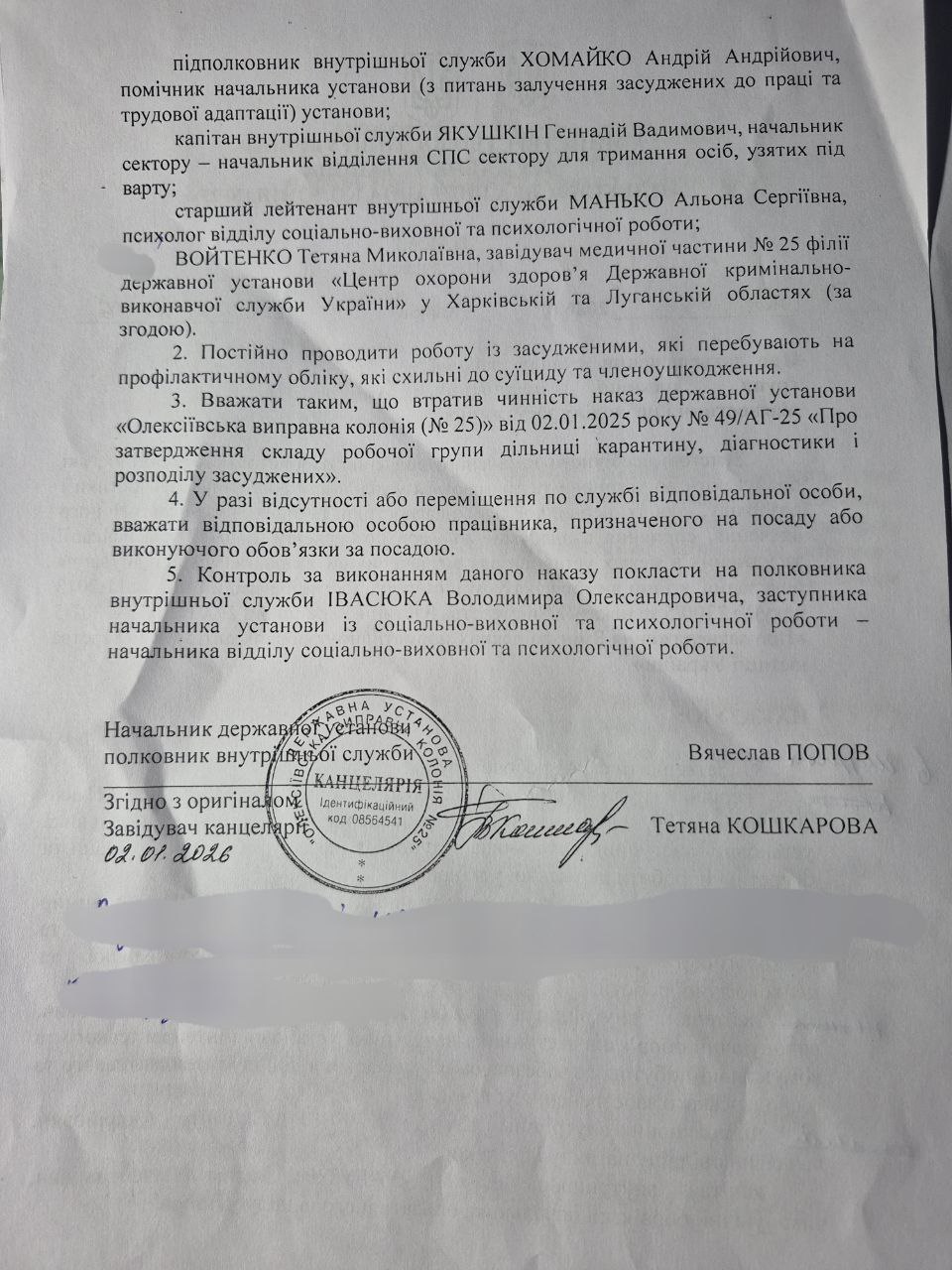
4. In violation of paragraph 1 of Section II of the Regulations on the QDD ward, the working group for work with newly arrived convicts does not include the head of the department for control over the execution of court decisions and the head of the financial support and accounting department — chief accountant.
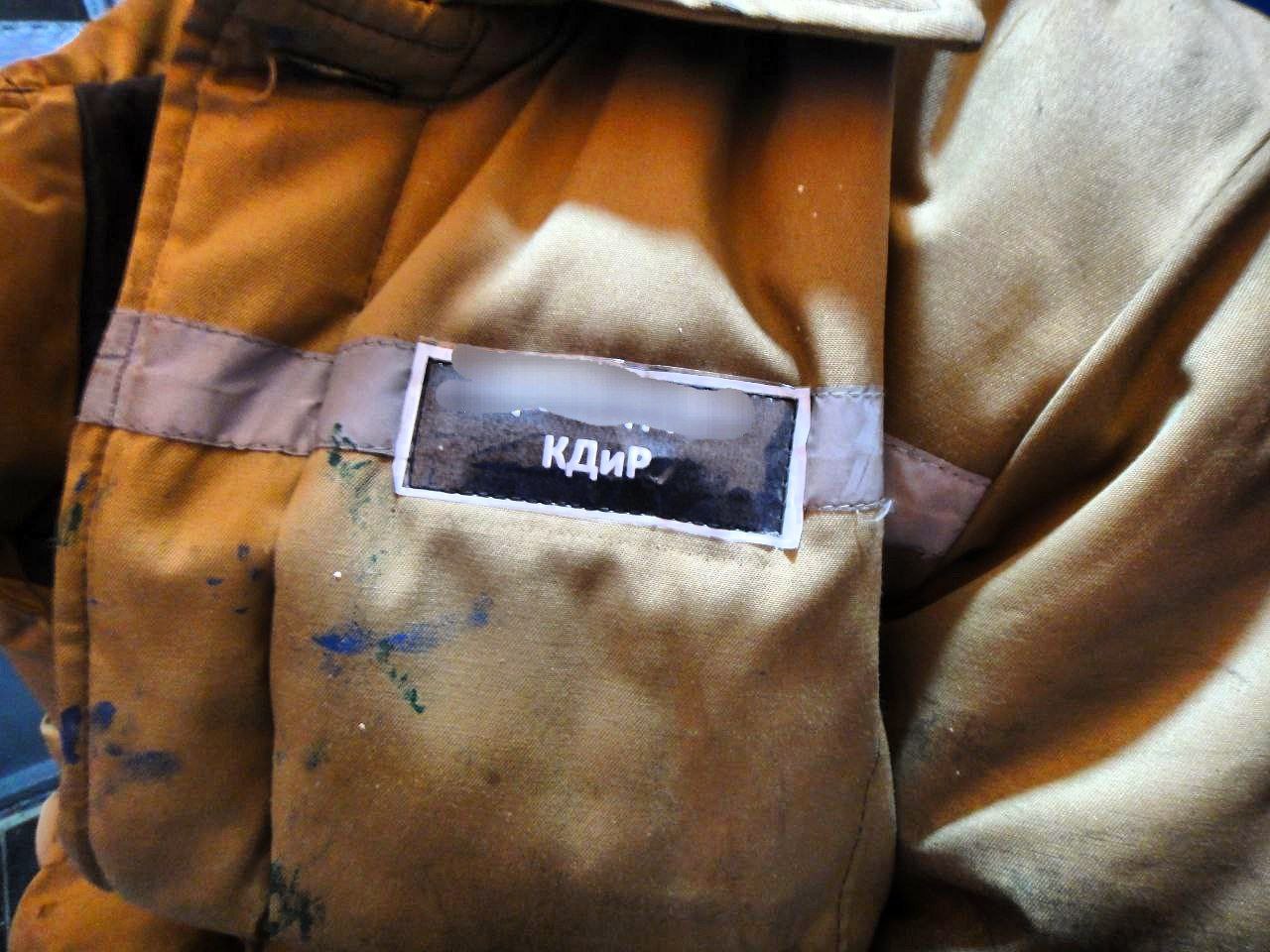
5. In accordance with paragraph 7 of the first part of Article 1 of the Law of Ukraine “On ensuring the functioning of the Ukrainian language as the state language”, the status of the Ukrainian language as the only state language determines the mandatory nature of its use throughout the territory of Ukraine during the exercise of powers by public authorities and in other public spheres of social life. Instead, during the visit to the QDD ward, it was established that on the chest identification badges of certain convicts, their surnames and initials are indicated in a foreign language. This practice does not comply with the requirements for the use of the state language in the activities of a penal institution and indicates the administration’s failure to comply with the requirements of the legislation on ensuring the functioning of the Ukrainian language as the state language.
6. The monitoring group established that the material and living provision of the QDD ward does not meet established regulatory requirements. Thus, in violation of the requirements of the Standards for Provision with Furniture, Inventory, and Household Items of a Medium-Security Penal Colony, approved by the Order of the Ministry of Justice of Ukraine dated 27.07.2012 No. 1118/5 (hereinafter — Standards of Provision), a number of premises are missing in the ward, namely: a room for storing food products; a room for storing the exchange fund of bedding, clothing, and special workwear; a pantry for temporary storage of dirty bedding, clothing, and special workwear; a wardrobe; a household room.
The absence of these premises creates conditions that do not meet living standards, makes it impossible to properly observe sanitary and hygienic requirements, and complicates the maintenance of cleanliness and order in the places where convicts live. Such a state of household organisation negatively affects the general sanitary state of the institution and may pose a risk to the health of persons held there.
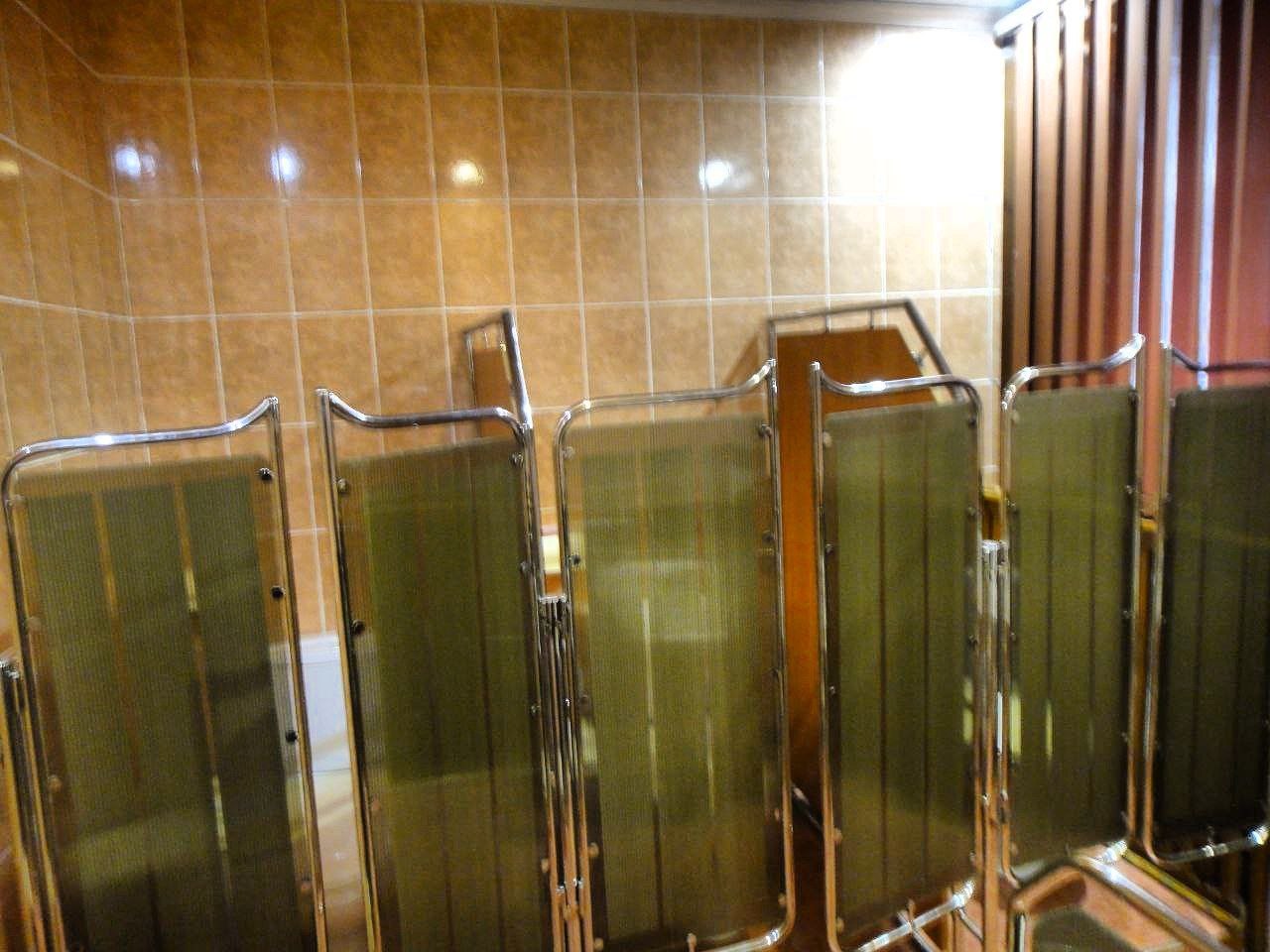
7. The bathrooms in the QDD ward are not equipped with sufficient partitions that ensure the possibility of privacy, which violates Rule 19.3 of the European Prison Rules. At the same time, in the report of the Government of Ukraine on the results of the visit in 2023, the Committee called on the Ukrainian authorities to take necessary measures to improve the material conditions of detention, in particular: to keep all places where convicts and detainees are housed, including sanitary facilities, in a proper state of repair and hygiene; to ensure regular and frequent disinsection; to ensure sufficient access to natural light and ventilation in cells; and to fully equip internal sanitary facilities with partitions (i.e., from floor to ceiling) (CPT/Inf (2024) 20, paragraph 58).
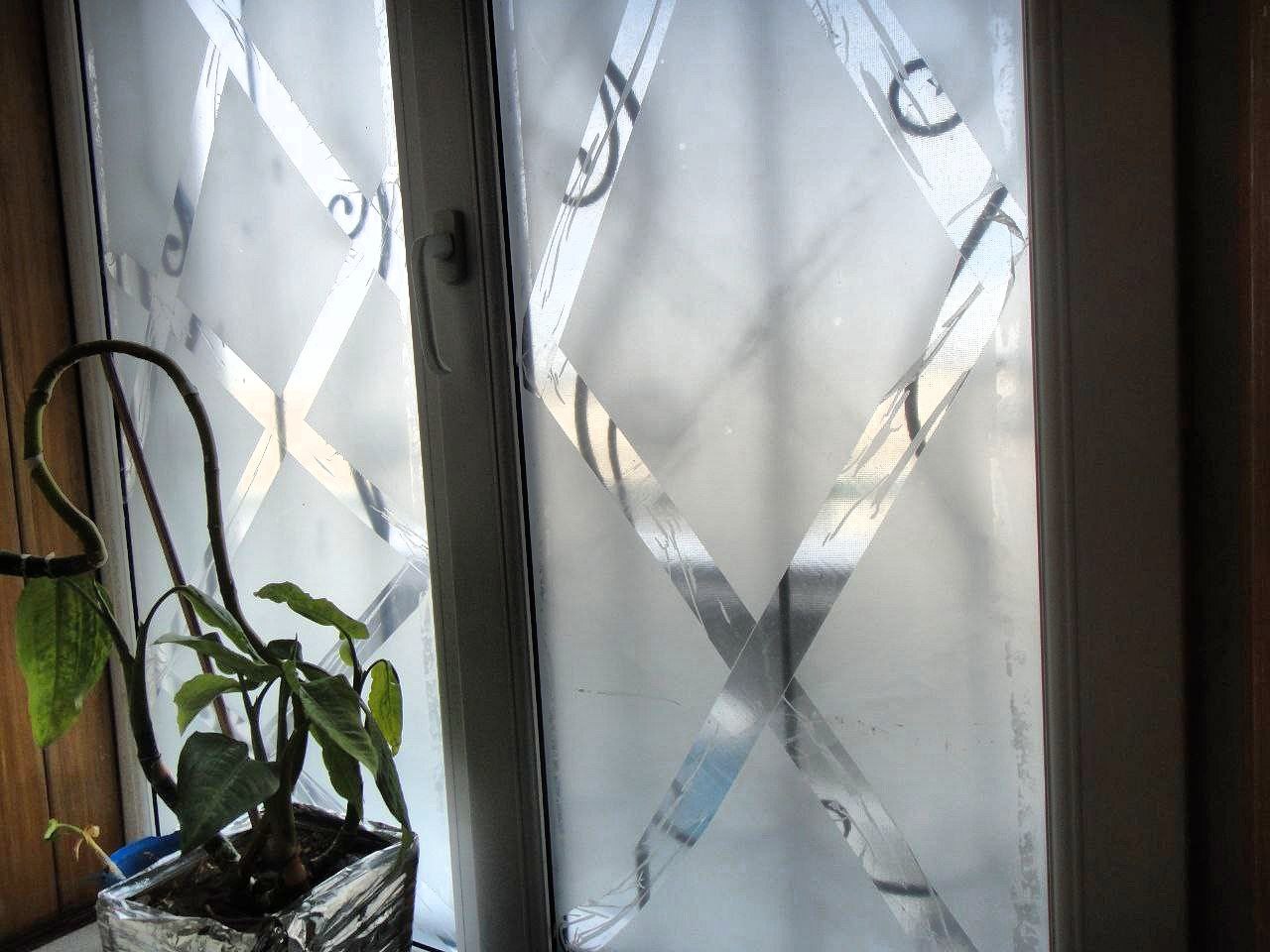
8. In the residential premises of the QDD ward, the monitoring group established the presence of windows equipped with frosted glass, due to which natural light practically does not penetrate the premises. In its report on the results of the visit to Ukraine in 2020, the Committee had already drawn attention to this and recommended taking measures to revise the design of windows in cells in order to provide prisoners with the opportunity to see what is outside the cell (CPT/Inf (2020) 40, paragraph 48).
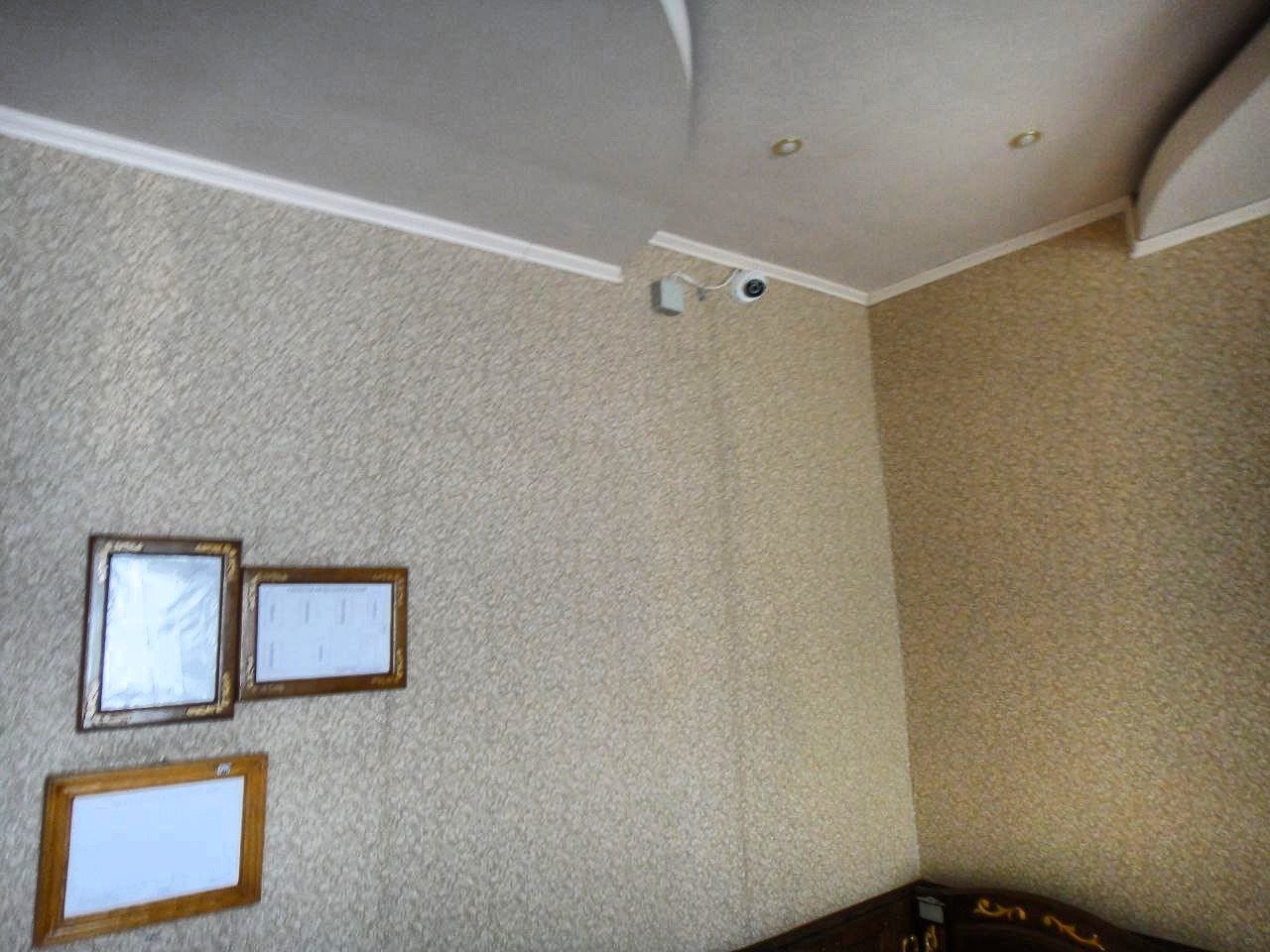
9. Paragraph 1 of Section XXIII of the IRPI stipulates that supervision over convicts is a system of measures aimed at ensuring the serving and execution of criminal sentences in the form of restriction of liberty, deprivation of liberty, life imprisonment, and arrest through round-the-clock and constant control over the behaviour of convicts in places of their residence and work, preventing and stopping illegal actions on their part, and ensuring the requirements of convict isolation and the safety of the staff of penal institutions.
During the inspection of the residential premises of the QDD ward, an installed video surveillance camera was recorded. At the same time, in its 2012 report, the Committee criticised excessive interference with privacy through the installation of video cameras in convicts’ residential premises: “The Committee agrees that video surveillance in cells can be a useful safeguard in certain cases, for example, when a person is considered to be of concern regarding the risk of self-harm or suicide, or if there are specific suspicions that a convict is performing certain actions in the cell that may jeopardise safety.
However, any decision to apply video surveillance to a specific convict must always be based on an individual assessment of real risks and must be regularly reviewed. Video surveillance is a serious interference with the private life of prisoners and makes the regime even more repressive, particularly when applied for a long time” (CPT/Inf (2013) 23, paragraph 52).
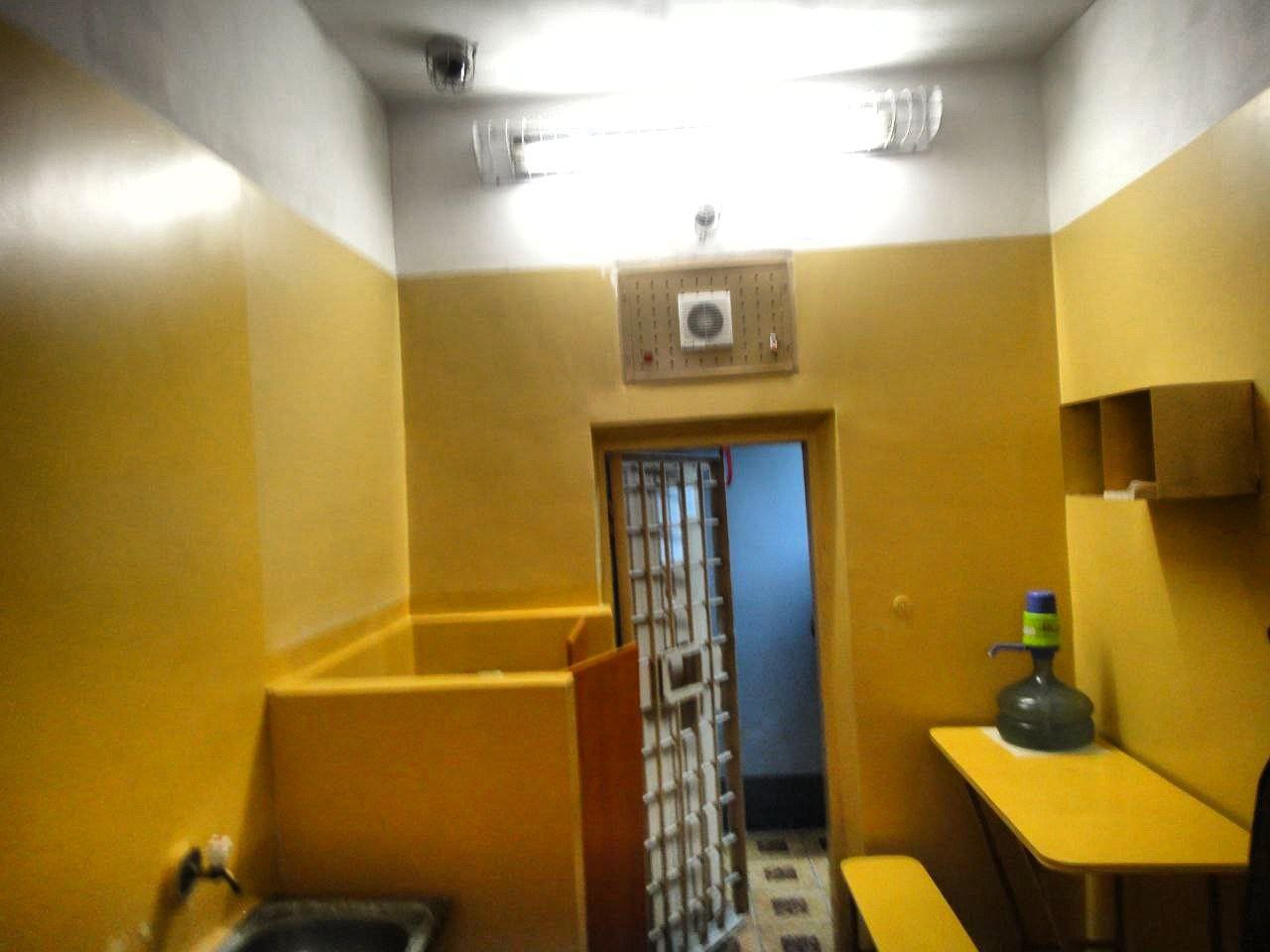
10. The arrangement of the DIU/cell-type premises (CTP) of the institution does not fully comply with established standards for the treatment of prisoners and does not ensure proper conditions of detention, taking into account their needs. Thus, in violation of the requirements of the Standards of Provision, a number of premises are missing in the DIU/CTP, namely: rooms for storing personal belongings of convicts; rooms for storing the exchange fund of bedding, clothing, and special workwear; and a barbershop.
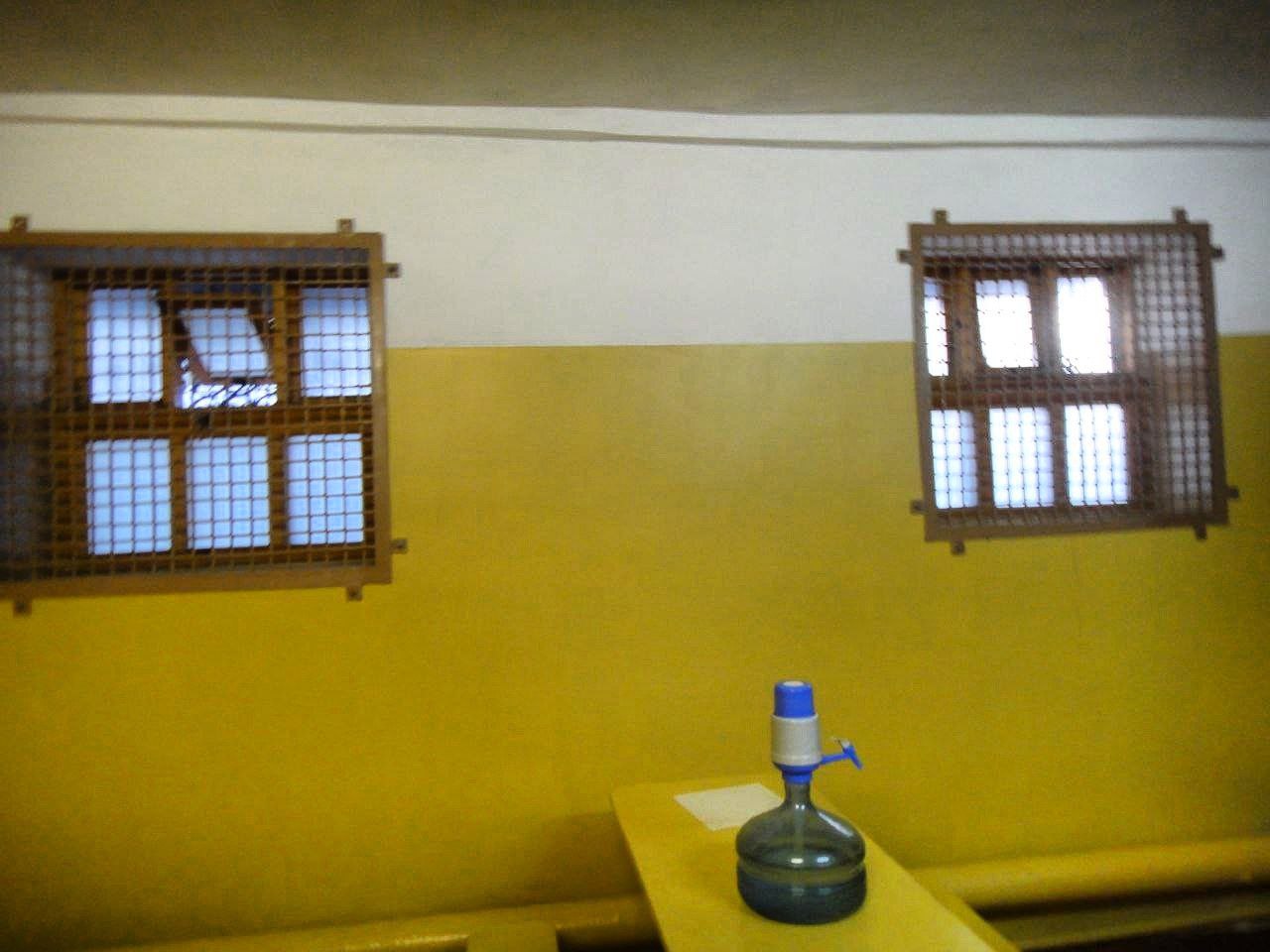
In the cell premises of the DIU, a sufficient level of natural lighting is not ensured, as the windows are equipped with frosted (darkened) glass, which significantly limits the penetration of daylight into the cells. Such conditions negatively affect the psycho-emotional state of the convicts and effectively deprive them of visual contact with the outside environment. This does not meet the requirements of Rule 18.2 (a) of the European Prison Rules and Rule 14 (a) of the UN Standard Minimum Rules for the Treatment of Prisoners (the Nelson Mandela Rules).
In addition, the bathrooms in the DIU/CTP cell premises are not equipped with sufficient partitions that ensure the possibility of privacy, which violates Rule 19.3 of the European Prison Rules and Rule 15 of the UN Standard Minimum Rules for the Treatment of Prisoners (the Nelson Mandela Rules).
11. During the visit to the DIU/CTP, it was established that convict S., who had been serving a disciplinary penalty for more than three days, was not issued a copy of the decision on the application of the penalty to him, indicating the possibility and procedure for its appeal, by the administration of the institution, which contradicts Article 135 of the Criminal Executive Code of Ukraine. At the same time, in the report of the Government of Ukraine on the results of the visit in 2023, the Committee recommends taking measures in Ukrainian penitentiary institutions to ensure that convicts to whom a disciplinary penalty has been applied systematically receive a copy of the corresponding decision. In addition, convicts should be informed about their right to access a lawyer in the context of disciplinary proceedings (CPT/Inf (2024) 20, paragraph 103).
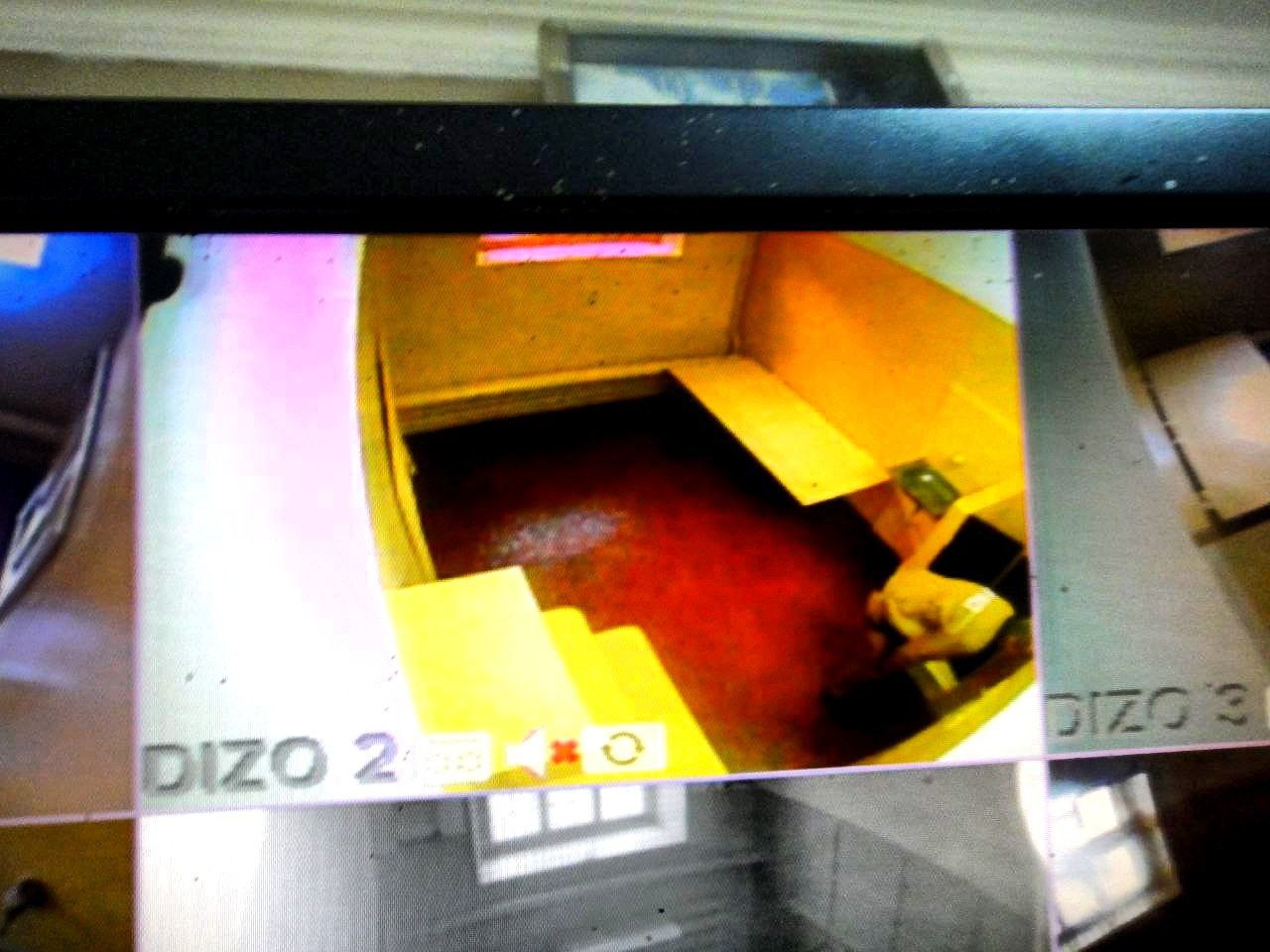
12. The monitoring group established violations of Article 8 of the Convention for the Protection of Human Rights and Fundamental Freedoms, which guarantees the right to respect for private life, in cells No. 2 and No. 3 of the DIU. Thus, contrary to the requirements of the third paragraph of paragraph 1 of Section XXIII of the IRPI, according to which the viewing angle of video cameras installed in residential premises and cells should not cover sanitary facilities and showers, video surveillance was carried out in the said cells, which covered the bathroom, which violated the convict’s confidentiality while using the toilet.
13. The monitoring group established that the state of organisation and implementation of social, educational, and psychological work with convicts is unsatisfactory. In particular, conducting the initial assessment of the risk of committing a repeat criminal offence, provided for by paragraph 4 of Section II of the Methodological Recommendations on Assessing the Risk of Committing a Repeat Criminal Offence by Convicts to Deprivation of Liberty, approved by the Order of the Ministry of Justice of Ukraine dated 27.11.2020 No. 4121/5 (hereinafter — Methodological Recommendations), is carried out untimely and without observing the established deadline — no later than 30 calendar days from the date of the convict’s arrival at the institution.
Thus, according to the entries in the individual work diaries of convicts A., B., K., and O., who arrived at the institution on 11.12.2025, as of 20.01.2026, an initial assessment of the risk of committing a repeat criminal offence had not been conducted, despite the fact that the decision on their distribution between the divisions of the socio-psychological service was made by the distribution commission of the institution on 25.12.2025.
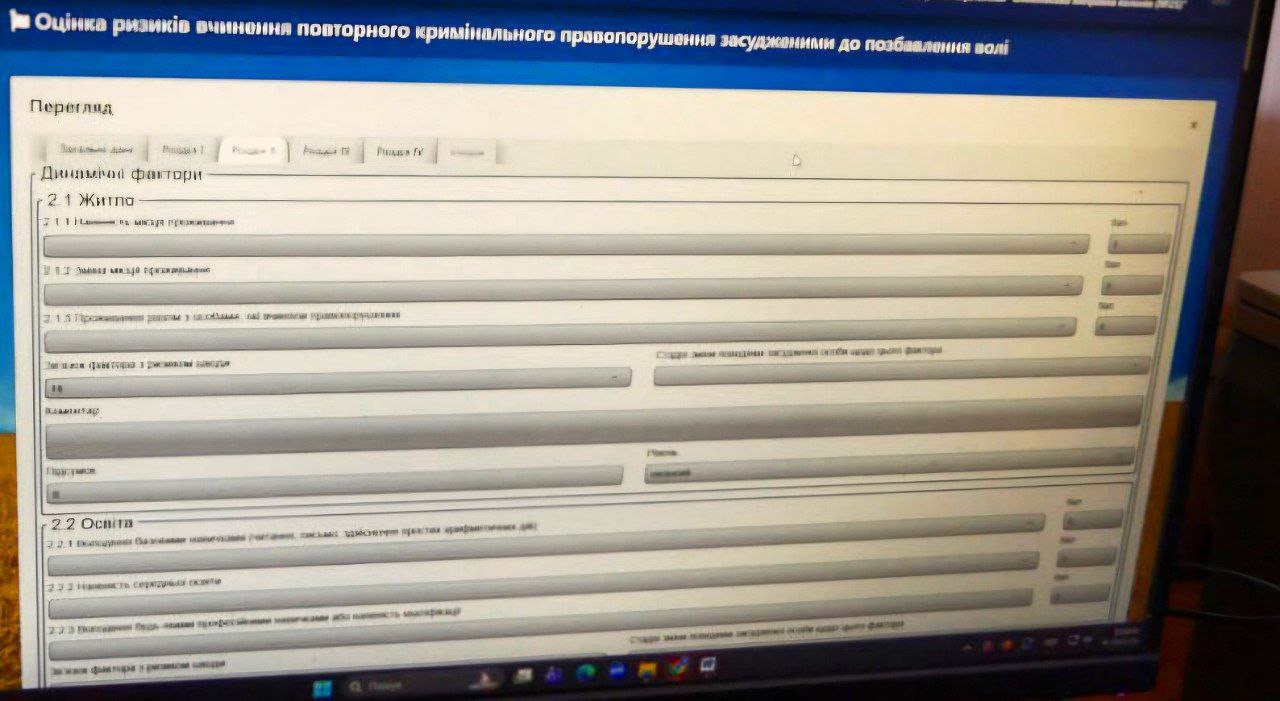
Furthermore, in violation of the requirements of the seventh paragraph of paragraph 9 of Section I of the Regulations on the Socio-Psychological Service Division, approved by the Order of the Ministry of Justice of Ukraine dated 04.11.2013 No. 2300/5, as well as paragraph 4 of Section II of the Methodological Recommendations, as of 20.01.2026, the initial individual programmes of social and educational work with convicts A., B., Ko., Kr., and Ku. have not been compiled, although their development is mandatory and must be carried out within a period not exceeding 30 calendar days from the date of the convicts’ arrival at the institution.
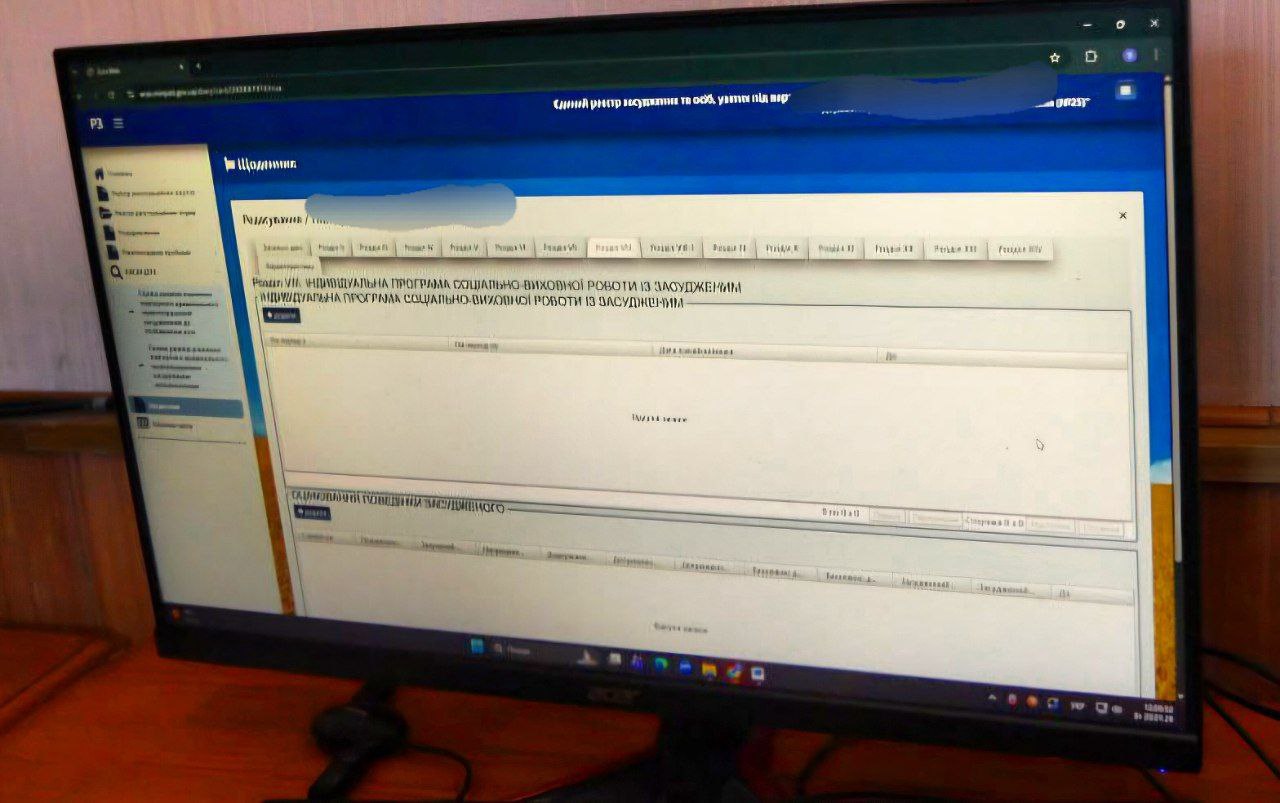
At the same time, it was established that for convicts who, according to the protocols of the distribution commission of the institution No. 51 of 25.12.2025 and No. 2 of 09.01.2026, were distributed between the SPS divisions, data from psychological examination, psychological characteristics, as well as recommendations regarding the organisation and conduct of individual work with them are missing in Section IX of the individual work diaries.
The aforementioned indicates the failure to comply with the requirements of paragraph 2 of Section V of the Typical Job Responsibilities of a Psychologist of a Penal Institution and Pre-Trial Detention Centre, approved by the Order of the Ministry of Justice of Ukraine dated 04.11.2013 No. 2300/5, according to which a psychologist is obliged to study convicts and persons taken into custody, compile their psychological characteristics, and provide the institution’s staff with reasoned recommendations regarding the organisation of work with them.
14. The monitoring group established facts of involving certain convicts in performing cleaning work in the administrative building of the institution, located within the guarded zone, in particular, in the office of the head of the institution. This contradicts the requirements of paragraph 2 of Section XVII of the IRPI, which establishes a direct prohibition on the use of convict labour for any work or positions in administrative buildings, as well as in premises where official documentation is stored.
15. During the visit, the monitoring group established that during personal searches of convicts with stripping in the search room, the institution’s staff carry out video recording using body-worn video recorders. At the same time, according to paragraph 8 of Section VII of the Procedure for the Use of Technical Means of Supervision and Control in Penal and Educational Colonies of the State Penitentiary Service of Ukraine, approved by the Order of the Ministry of Justice of Ukraine dated 26.06.2018 No. 2025/5 (hereinafter — the Procedure), the use of video cameras and portable video recorders is prohibited in premises (cells) where medical examinations (checks) of convicts are conducted, personal searches with stripping, as well as in medical unit wards.
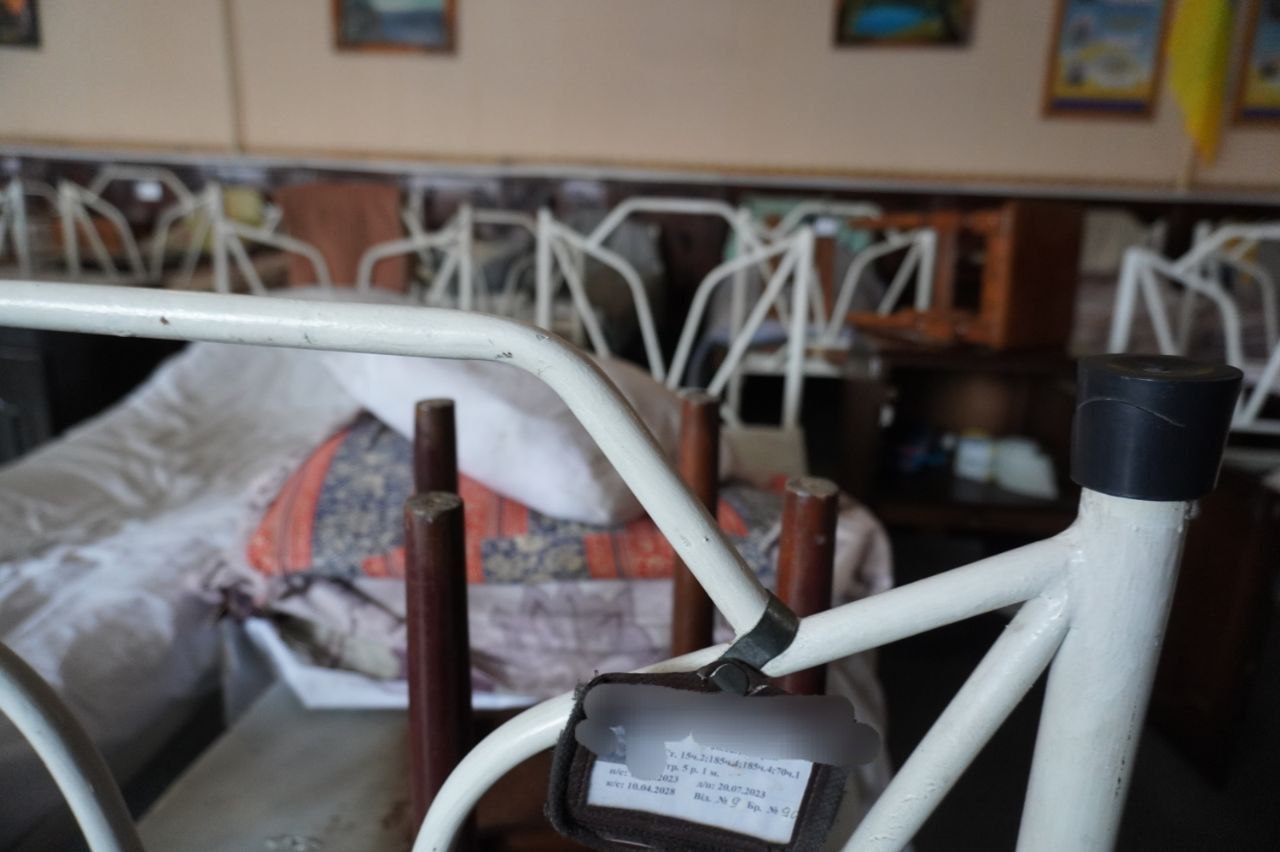
16. During the visit to the SPS divisions of the institution, it was found that in the sleeping quarters on the convicts’ beds, nominal cards were placed providing information in the form of a brief description of the crimes committed by the persons occupying these beds. In its report on the results of the visit to Ukraine in 2020, under similar circumstances, the Committee noted that this practice should be discontinued, as it does not serve any reasonable purpose and, in addition to stigmatisation, has the effect of worsening relations between prisoners and prison staff (CPT/Inf (2020) 40, paragraph 52).
17. During the visit to the library of the institution, the monitoring group established that, contrary to the requirements of the third paragraph of paragraph 4 of Section XX of the IRPI, the library’s book collection is not provided with the text of the European Prison Rules.
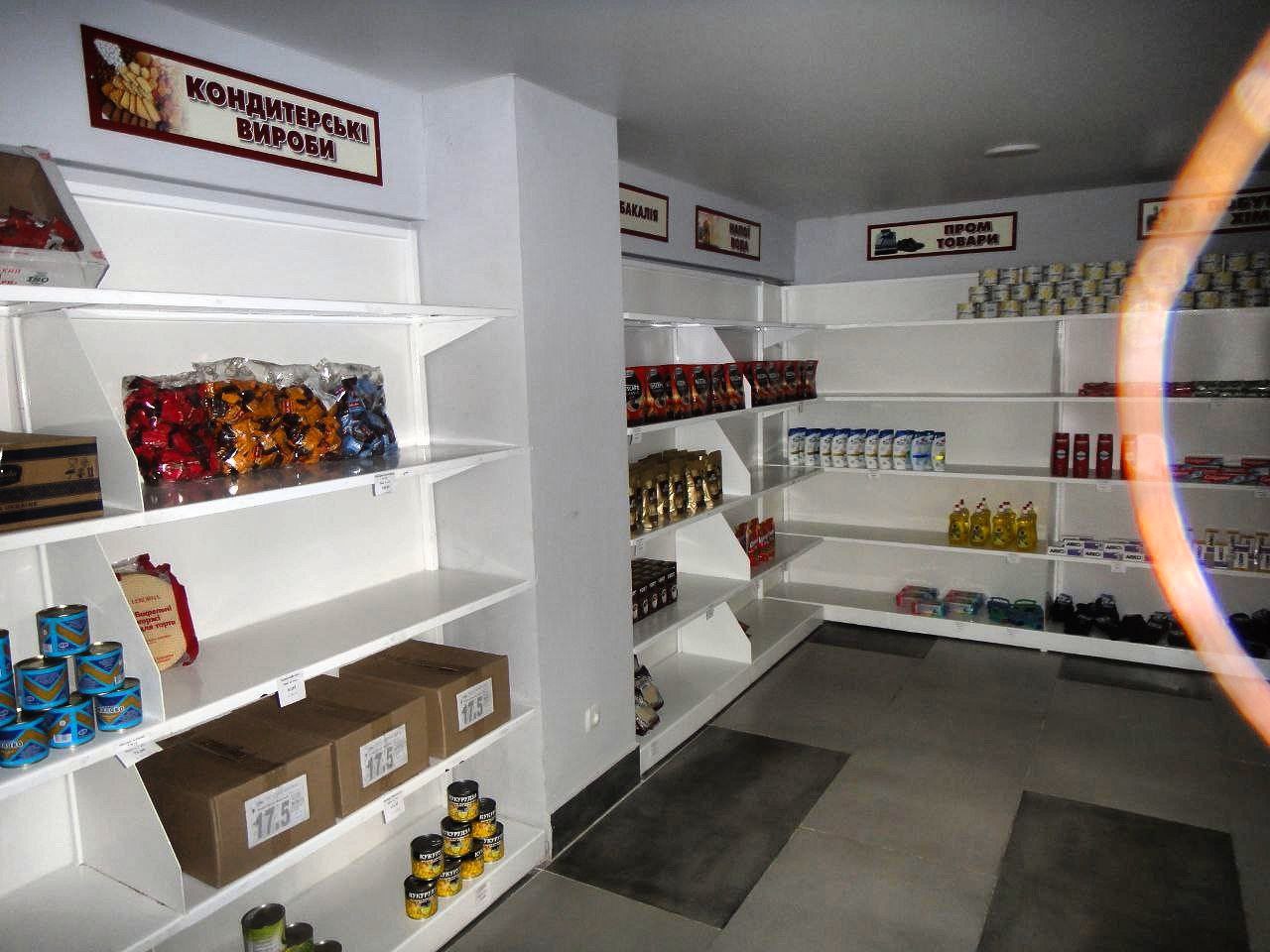
18. During the visit to the institution, the monitoring group established that the institution’s shop lacks underwear, gloves, sports shoes, slippers, watches, a mirror, writing paper, notebooks, pencils, pens, envelopes, and stamps, the presence of which is provided for by Annex 5 to the IRPI.
19. According to paragraph 17 of Section V of the Regulations on the Organisation of Food Provision in the State Penitentiary Service of Ukraine for peacetime, approved by the Order of the Ministry of Justice of Ukraine dated 15.06.2021 No. 2160/5 (hereinafter — Regulations on Food Provision), daily samples of each dish of the ration must remain in the institution’s canteen. The sampling is carried out by the cook from the pot in the presence of a medical worker of the healthcare facility in clean utensils with a lid (pre-washed and boiled) before the food is issued. Daily samples are stored in the canteen’s refrigerator at a temperature from +4°C to +8°C and must be stored for a day until the end of the similar meal the next day.
At the same time, in violation of the specified requirements, during the inspection of the canteen’s refrigerator, the monitoring group established the absence of samples of breakfast dishes according to standards 3A, 8A, and 8B for 19.01.2026, as well as the absence of samples of lunch and dinner dishes according to standards 3A, 8A, and 8B for 18.01.2026.
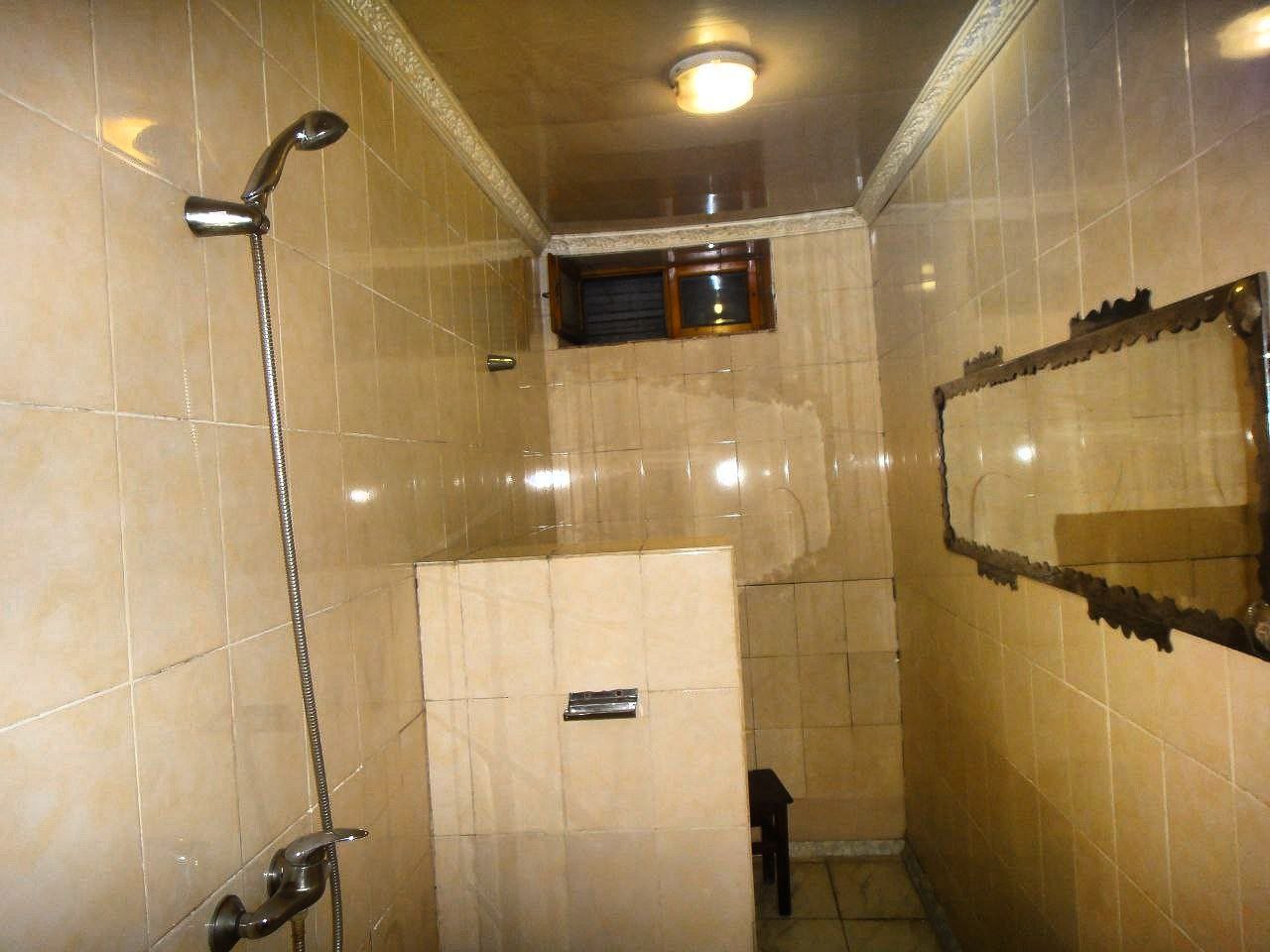
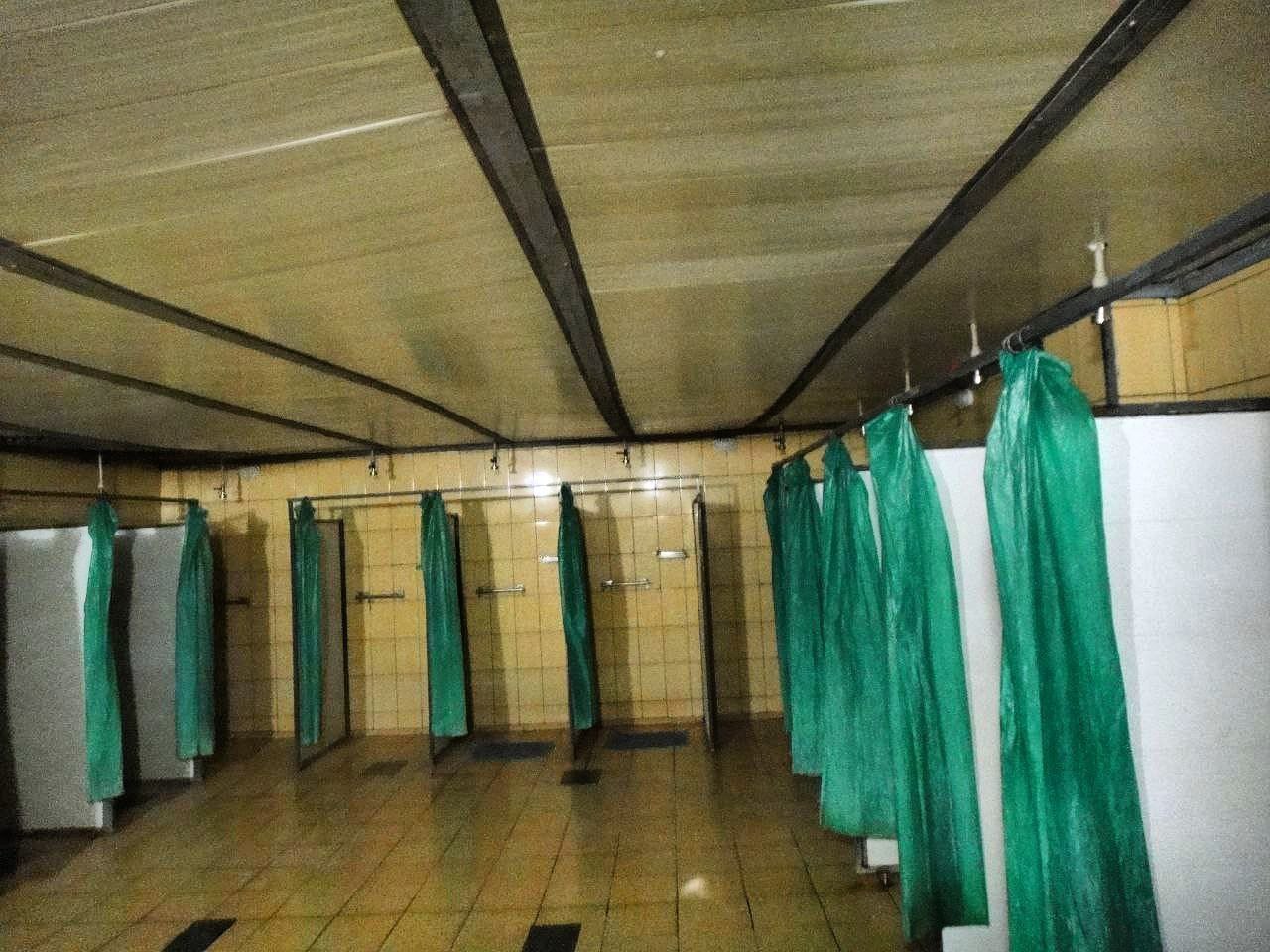
20. The monitoring group established a number of violations in the organisation of bath and laundry services for convicts and detainees. Thus, in violation of paragraph 2.11 of Section II of the Regulations on the Organisation of Bath and Laundry Services for Persons Held in Penal Institutions and Pre-Trial Detention Centres, approved by the Order of the Ministry of Justice of Ukraine dated 08.06.2021 No. 849/5 (hereinafter — the Regulations), the forced supply and exhaust ventilation system does not work properly in the laundry and sanitary inspection room.
In violation of paragraph 2.6.2 of Section II of the Regulations, the shower heads are not equipped with hot and cold water taps, due to which convicts do not have the opportunity to regulate the water temperature in the sanitary inspection room while washing.
In violation of the requirements of Rule 19.3 of the European Prison Rules, the right to privacy is not ensured in the medical unit’s shower room due to the absence of curtains on the shower partitions.
21. During the visit, the monitoring group recorded that the institution’s staff who are in direct contact with convicts openly carry special means, including rubber batons. At the same time, according to the eighth paragraph of paragraph 1 of Section XXVI of the IRPI, the carrying of special means by the staff of penal institutions within the guarded territory of the penal institution should, if possible, be maximally concealed from the surroundings.
At the same time, the Committee recommends that penitentiary staff working in direct contact with prisoners should not carry special means (such as rubber batons, handcuffs, and tear gas canisters) openly before prisoners, as such carrying hinders the establishment of normal relations between staff and prisoners (CPT/Inf (2011) 29, paragraph 85; CPT/Inf (2013) 23, paragraph 23; CPT/Inf (2014) 15, paragraph 166).
22. According to the information provided by the administration, in 2025, 198 short-term visits were granted to convicts at OPC-25, 196 of which took place in a non-contact way — through a solid partition glass using an intercom device.
At the same time, in the report of the Government of Ukraine on the results of the visit in 2023, the Committee emphasises that for all categories of convicts, open visits (for example, at a table) should be the rule, and closed ones — the exception, the application of which is allowed only on the basis of substantiated and motivated decisions after an individual assessment of the potential risk of a specific convict. In this regard, the Committee calls on the Ukrainian authorities to revise the procedure for conducting short-term visits in penitentiary institutions with the aim of ensuring their conduct, as a rule, in open conditions (CPT/Inf (2024) 20, paragraph 99).
23. In accordance with sub-paragraph 5 of paragraph 2 of Section IV of the Regulations on the Programme of Differentiated Educational Influence on Convicts “Preparation for Release”, approved by the Order of the Ministry of Justice of Ukraine dated 16.05.2016 No. 1418/5, registered with the Ministry of Justice of Ukraine on 17.05.2016 under No. 735/28865, the staff of the socio-psychological service of the institution, who directly organise and carry out measures for the implementation of the “Preparation for Release” programme, are obliged to provide convicts with assistance in obtaining (renewing) a passport of a citizen of Ukraine, a taxpayer registration card number (RNOKPP), other personal documents, as well as in processing pensions.
At the same time, 25 convicts require the production of a passport of a citizen of Ukraine, and 12 require obtaining an RNOKPP, which indicates insufficiently conducted work by the social-educational and psychological work department regarding ensuring the processing of necessary documents for convicts who do not have them.
24. According to official documentation, the staff shortage in the institution as of 19.01.2026 is 43 authorised units. At the same time, in the report of the Government of Ukraine on the results of the visit in 2023, the Committee emphasises that ensuring a positive climate in a penitentiary institution requires the presence of a professional team of staff, who must be present in sufficient numbers at any moment in time in places of detention. An insufficient number of staff can only increase the risk of violence and intimidation among convicts.
The shortage of staff working on the front line also undermines the quality and level of measures offered to convicts and jeopardises the prospect of preparation for release and social rehabilitation. In this regard, the Committee calls on the Ukrainian authorities to take decisive measures to significantly increase the number of staff in penitentiary institutions of Ukraine where low staffing levels are observed, with the aim of strengthening the presence of security and supervision service staff inside the institutions. It is also necessary to take measures to put an end to the 24-hour shift of staff on duty (CPT/Inf (2024) 20, paragraph 93).
25. The right to use the Internet at the institution is formally ensured, however, its actual implementation is extremely limited. According to the information provided by the administration, convicts have 23 tablets in their personal use. 8 email addresses have been registered. In the Internet classroom, there are several tablets and one laptop, which are used for video communication and accessing the network in the established order. At the same time, in the SPS divisions, convicts do not have access to the Internet, which effectively limits the possibility of regular and convenient use of digital services for the majority of persons held in the institution.
Such a practice needs to be assessed for compliance with Article 8 of the Criminal Executive Code of Ukraine, which guarantees convicts the right to receive information and apply to public authorities, as well as Article 7 of the CEC of Ukraine, which provides for respect for human rights and freedoms during the execution of sentences.
In the Internet classroom, according to the video communication log via the Internet, video calls take place daily, on average over 3–4 calls per day. In the current year, 64 video calls have been made. This indicates the practical realisation of the right to maintain social ties in the format of remote communication, which is consistent with the provisions of Article 110 of the CEC of Ukraine regarding maintaining ties with the family, as well as with international standards, in particular Rule 58 of the UN Standard Minimum Rules for the Treatment of Prisoners (the Nelson Mandela Rules) and Rule 24 of the European Prison Rules, which emphasise the importance of maintaining social contacts.
At the same time, an analysis of the Internet usage log (viewing permitted sites, sending emails, submitting electronic appeals and complaints) showed a critically low level of actual use of this right. At the time of the visit, only 7 records of Internet usage were recorded in the current year, and all seven cases relate to one convict — T. Thus, out of 281 convicts held in the institution, only one person actually exercised the right of access to the Internet to realise information and communication rights.
The aforementioned indicates the formal nature of ensuring Internet access. The presence of technical means alone does not guarantee real accessibility of the right. The lack of access in the SPS divisions, the limited number of registered email addresses, the insignificant number of users, and the minimal number of recorded network usage sessions may indicate organisational barriers or the complexity of the access procedure.
In the legal dimension, this issue is related to the guarantees of Article 34 of the Constitution of Ukraine regarding the freedom to receive information, Article 40 of the Constitution of Ukraine regarding the right to apply to public authorities, as well as Article 55 of the Constitution of Ukraine regarding the right to an effective means of legal protection. In the international aspect, limited and effectively unavailable access to information resources and the possibility of electronic appeal may affect the realisation of Article 10 of the European Convention on Human Rights (freedom to receive and impart information) in conjunction with Article 13 of the Convention (right to an effective remedy), especially in conditions where electronic means of communication are one of the main ways of appealing to public authorities and international institutions.
The European Prison Rules (in particular Rules 24 and 99) emphasise that convicts must be able to maintain contacts with the outside world and receive information to the maximum extent possible, taking into account security requirements. The Mandela Rules (Rules 58 and 63) also emphasise the right of prisoners to contact their family and access to information.
Thus, the actual situation in the institution indicates an imbalance between the formal consolidation of the right to access the Internet and its actual use. In the absence of access in the SPS divisions, with a minimal number of users and limited functionality of digital services, the right to access information and electronic means of communication is realised selectively, which requires a review of approaches to organising Internet access in order to ensure its real, rather than declarative, accessibility for the majority of convicts.
26. In the course of the monitoring visit, two shelters functioning on the territory of the institution were inspected — one in the industrial zone, the second in the residential zone. The presence of shelters in various functional sectors of the institution indicates the taking of organisational measures to respond to war risks and the fulfilment of the administration’s duty to ensure the safety of persons deprived of liberty during the period of armed aggression.
The shelter located in the industrial zone is used for convicts and staff during air raids and other emergencies. The premises are equipped with seating, have lighting, and a separate second exit, which meets basic safety requirements regarding evacuation. The presence of a second exit is a positive characteristic in terms of minimising risks in case of blocking the main entrance and generally meets the evacuation safety requirements provided for by legislation in the field of civil protection.
At the same time, the ventilation system, according to the administration, is functional, but its capacity is insufficient. When a large number of people are in an enclosed space, this can create an air exchange problem, especially in the case of a prolonged stay in the shelter. No signs of effective forced ventilation or an autonomous air purification system were recorded during the inspection. The lack of proper air exchange may contradict the requirements of Article 32 of the Civil Protection Code of Ukraine regarding ensuring the readiness of protective structures for use as intended, as well as general sanitary and hygienic norms for the safe stay of people in enclosed premises.
There is no sewage or sanitary facility in the room. In case of a prolonged stay in the shelter, this creates risks of violating sanitary and hygienic requirements, especially given the number of people who can be there at the same time. No autonomous sanitary solutions (dry closets, water tanks, etc.) were found during the inspection. Such a state may indicate incomplete compliance of the shelter with the requirements regarding proper engineering support of civil protection structures and creates risks of violating Article 115 of the Criminal Executive Code of Ukraine, which places the duty on the administration to ensure proper material and living conditions for the detention of convicts.
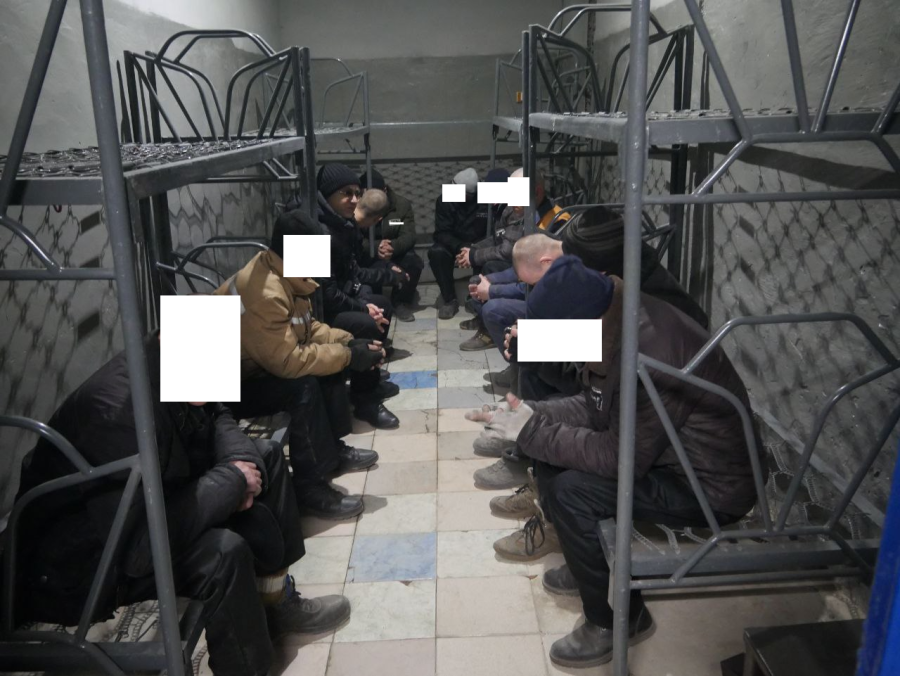
The shelter in the residential zone is also intended for convicts during air raids. The premises are equipped with benches and seating, and have artificial lighting. The space is relatively spacious, which allows for the accommodation of a significant number of people. At the same time, as in the case of the shelter in the industrial zone, the issues of ventilation and sanitary provision require additional attention in terms of compliance with the requirements for the safe and prolonged stay of people. The absence of confirmed solutions regarding autonomous water supply, a sanitary facility, and effective ventilation can, in case of a prolonged stay, lead to the creation of conditions incompatible with the requirements of hygiene and safety.
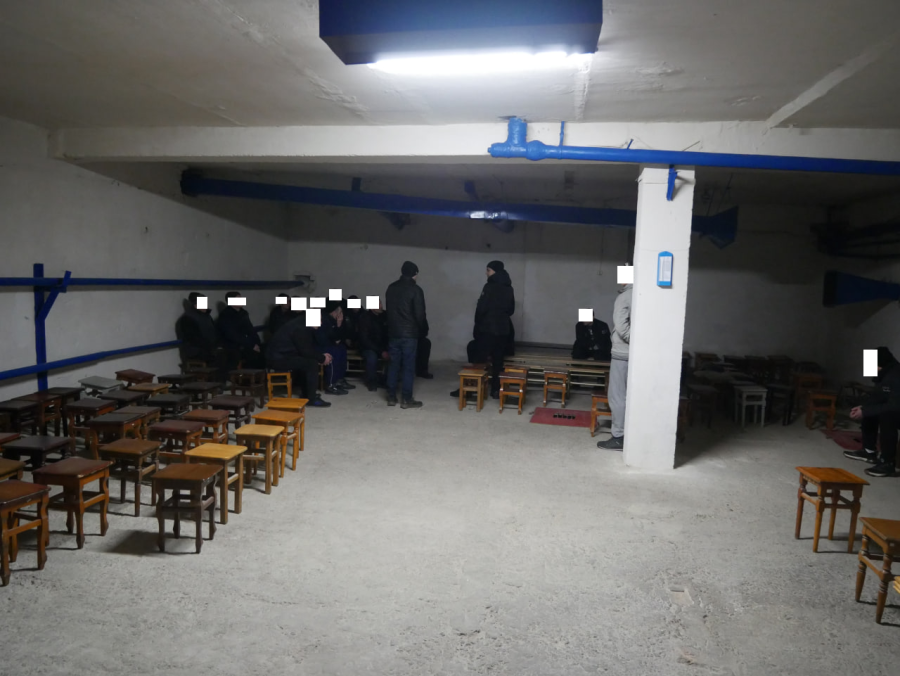
From the position of international standards, the state is obliged to ensure safe and humane conditions of stay for persons deprived of liberty, even in emergency situations. The Mandela Rules (Rules 13 and 15) require the provision of proper sanitary and hygienic conditions and sufficient ventilation of premises. The European Prison Rules (in particular Rule 18) provide that accommodation conditions must meet the requirements of health and human dignity. In the event that persons are forced to stay in a room for a long time during an air raid without proper ventilation and sanitary provision, risks of violating Article 3 of the European Convention on Human Rights regarding the prohibition of torture, inhuman or degrading treatment or punishment may arise — especially in case of systematic or prolonged such conditions.
In general, the presence of two separate shelters in different functional zones of the institution is a positive step in the context of responding to the war threat and fulfilling the state’s duty to protect the life and safety of persons deprived of liberty (Article 27 of the Constitution of Ukraine). At the same time, the technical condition of the ventilation systems, the lack of sewage, and autonomous sanitary solutions indicate the need to equip the shelters to bring them into full compliance with the requirements of the Civil Protection Code of Ukraine, the CEC of Ukraine, and international standards for the treatment of persons deprived of liberty, with the aim of ensuring proper, safe, and hygienic conditions in case of a prolonged stay of people under conditions of an air threat.
27. As a result of the monitoring visit to OPC-25, the organisation of convict labour, the terms of employment contracts, actual timekeeping, payroll, and payment of the single social contribution were investigated. The analysis was carried out on the basis of employment contracts, timesheets, logbooks for the issuance and return of tools, logs of convict acceptance by production staff, payrolls, personalised data of the ESC (Unified Social Contribution), work orders, and other primary documents provided by the administration.
According to the administration, 152 convicts work in the institution, of whom 133 are involved in production activities and 19 in household chores. The organisation of work is carried out through a brigade system. 10 people work in the canteen. Production activity is carried out in several workshops and wards, in particular in Workshop No. 3, at LPK-20, in brigades No. 100, No. 133, No. 111, and others.
In the context of the legal regulation of convict labour, it should be noted that involvement in labour must be carried out in the order and on the conditions determined by the Criminal Executive Code of Ukraine (in particular Articles 118–120 of the CEC of Ukraine), in compliance with minimum state guarantees in remuneration and occupational safety requirements (Article 119 of the CEC of Ukraine, Article 153 of the Labour Code of Ukraine, Law of Ukraine “On Occupational Health”).
According to the logbook for the issuance and return of tools, convicts receive tools at 7:30 and return them at 19:30. At the same time, the log of convict acceptance by production staff states that convicts who work in production cross the inter-zone checkpoint at 17:30. Thus, a daily discrepancy of two hours is documented. Under conditions of 26 working days, this amounts to 52 hours per month. None of the examined timesheets contains a reflection of such an amount of overtime, which gives reason to argue either about the unreliability of the log “Convict acceptance by production staff” or about the non-payment of part of the actually worked time.
Such a situation indicates risks of violating the requirements regarding accurate timekeeping and payment for actually performed work (Articles 30, 31 of the Law of Ukraine “On Remuneration of Labour”, Articles 94, 115–116 of the Labour Code of Ukraine), and in the case of actual performance of overtime work without proper documentation and compensation — also guarantees regarding overtime work (Articles 62, 106 of the Labour Code of Ukraine).
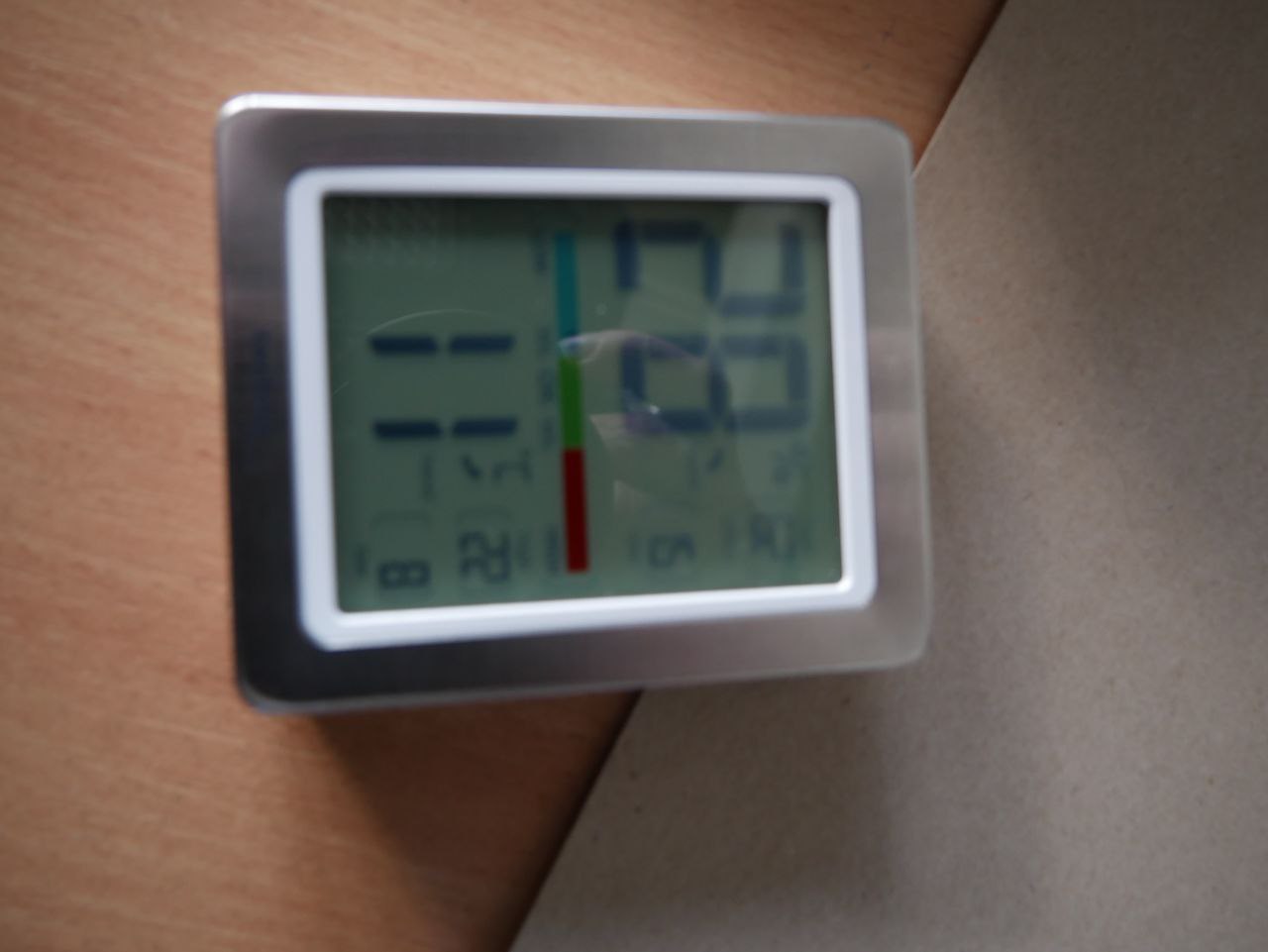
In Workshop No. 3, during the visit, a temperature of 11°C was recorded, which does not meet the proper conditions for performing work in enclosed premises and creates a risk of violating occupational safety requirements and safe working conditions (Article 153 of the Labour Code of Ukraine, Article 13 of the Law of Ukraine “On Occupational Health”).
An analysis of the provided standard employment contract indicates that by its structure it is a fixed-term contract, as in the section on the term of validity, it is determined that the contract is valid for the period of the person’s sentence serving in the institution. That is, the duration of employment relations is limited by the period of stay in the institution, which corresponds to the features of a fixed-term contract within the meaning of Article 23 of the Labour Code of Ukraine. At the same time, the term is defined not by a specific date, but by an event, which reduces legal certainty and may contradict the requirements for proper and unambiguous definition of essential terms of employment relations (Articles 21, 24 of the Labour Code of Ukraine).
The “Remuneration of labour” section is formulated generally. The contract does not contain a specific remuneration system (hourly or piece-rate), does not determine the tariff rate, rate, minimum guaranteed part, the procedure for calculating surcharges for night, overtime, harmful working conditions, intensity, or combination. The absence of clearly defined essential terms deprives the employee of the possibility to check the correctness of the calculation and contradicts the requirements of transparency and certainty of remuneration terms, as well as the employer’s duty to ensure minimum state guarantees (Article 94 of the Labour Code of Ukraine, Articles 3, 15, 21–22, 30 of the Law of Ukraine “On Remuneration of Labour”; in terms of surcharges and compensation — Articles 100, 105–106, 108 of the Labour Code of Ukraine, depending on the nature of the work).
The section on working hours allows for aggregate time recording but does not define the accounting period, the procedure for compensating overtime, or the mechanism for recording it. It is separately stipulated that time spent on inspections, searches, and being escorted to work is not counted as working time, which, given the limited freedom of movement of convicts, calls into question the completeness of the record of actually worked time and compliance with the guarantees of remuneration for work actually performed (Articles 94, 115–116 of the Labour Code of Ukraine; Articles 30–31 of the Law of Ukraine “On Remuneration of Labour”).
An analysis of the payroll records for December 2025 for Brigade No. 133 showed that for 26 days worked, the accruals were 7,000.11 UAH, 6,096.59 UAH, 5,350.96 UAH, 10,894.41 UAH, and 6,000.10 UAH. The difference between the minimum and maximum accrual exceeds 5,500 UAH. At the same time, no documentary evidence of different production standards or bonuses was provided, which indicates the absence of a transparent mechanism for salary formation and the risk of violating the requirements regarding the organisation of remuneration and notifying employees of payment terms (Articles 97, 110 of the Labour Code of Ukraine; Articles 15, 30 of the Law of Ukraine “On Remuneration of Labour”).
For Brigade No. 111, with 12–26 days worked, the accruals were 427.50 UAH, 1,421.07 UAH, and 2,740.00 UAH. After deducting personal income tax, military levy, and communal/living expenses, the amounts to be credited were 213.75 UAH and 710.53 UAH, which indicates a low level of real remuneration and requires assessment for compliance with minimum state guarantees (Article 95 of the Labour Code of Ukraine; Articles 3, 21–22 of the Law of Ukraine “On Remuneration of Labour”).
Convict S. from Brigade No. 2 (performing the work of a cleaner) is listed in the lists of workers and work orders; however, his surname is absent from the examined payroll records, which indicates a risk of non-payment for work and a violation of the guarantees of wage payment (Articles 94, 115–116 of the Labour Code of Ukraine; Article 24 of the Law of Ukraine “On Remuneration of Labour”).
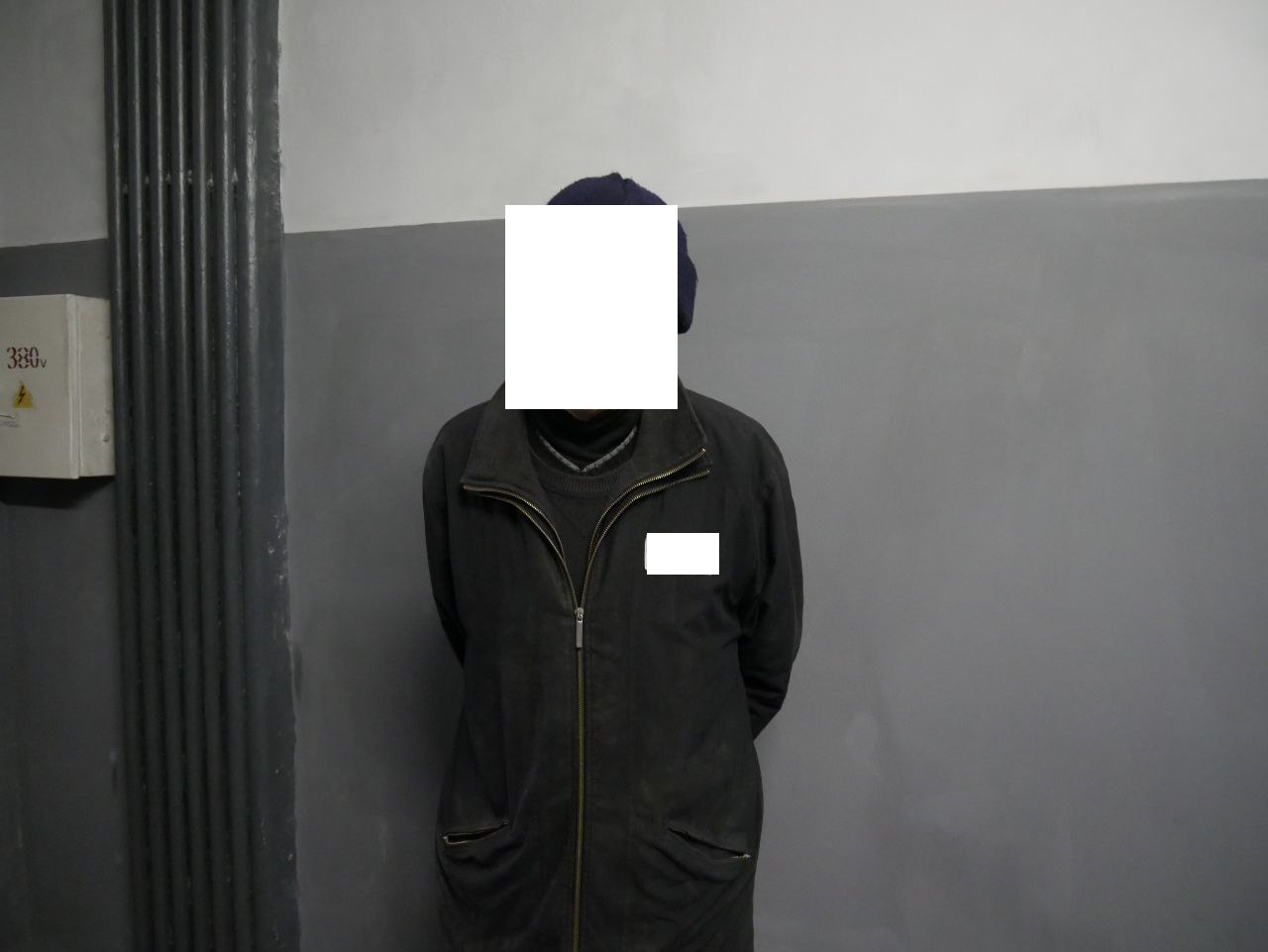
Convict S., who has been working as a welder for five years, states that he receives between 356 UAH and 1,424 UAH in salary per month. The payrolls lack surcharges for hazardous working conditions, although the work of a welder usually belongs to work with increased danger and may involve compensation and increased guarantees. The absence of a reflection of allowances/surcharges for hazardous conditions or an increased rate indicates a likely failure to comply with the guarantees of remuneration in special conditions and occupational safety requirements (Articles 100, 105, 106 of the Labour Code of Ukraine — depending on the established conditions; Article 7 of the Law of Ukraine “On Occupational Health” regarding guarantees and compensation for work in hazardous conditions; Article 119 of the Criminal Executive Code of Ukraine).
Convicts V., T., K., P., and T. (LPK-20) are reflected in the timesheets and work orders, but their accruals show significant fluctuations for a similar number of days worked, which points to a piece-rate system without a guaranteed minimum part and requires verification of compliance with minimum state guarantees in remuneration and the rules for establishing/applying piece-rates (Articles 95, 97 of the Labour Code of Ukraine; Articles 3, 15, 21–22 of the Law of Ukraine “On Remuneration of Labour”).
Convict P. works as a janitor without a passport, having only a birth certificate. The lack of an identity document makes full identification in the personalised accounting system impossible and creates a risk of improper formation of insurance seniority and the realisation of the right to social protection (Article 46 of the Constitution of Ukraine; Law of Ukraine “On Collection and Accounting of the Single Contribution to Compulsory State Social Insurance”; Law of Ukraine “On Compulsory State Pension Insurance”).
Personalised ESC (Unified Social Contribution) data confirm that the contribution is calculated based on the actual base. However, in cases where the base is 700–3,000 UAH per month, insurance seniority is formed proportionally, rather than as a full month, which lowers the level of social protection for convicts and points to the consequences of systematically low wages for pension rights (Article 46 of the Constitution of Ukraine; Law of Ukraine “On Compulsory State Pension Insurance”; Law of Ukraine “On Collection and Accounting of the Single Contribution”).
In the international legal dimension, the established problems (lack of transparency in payment mechanisms, risks of non-payment for time actually worked, failure to ensure safe working conditions) contradict the basic standards for the treatment of persons deprived of liberty, which provide for safe working conditions and fair/adequate remuneration for work, as well as real social protection: European Prison Rules (in particular Rules 26.01–26.17 regarding the work of convicts, including issues of occupational safety and remuneration), the UN Standard Minimum Rules for the Treatment of Prisoners (the Mandela Rules, Rules 96–103 regarding work), as well as general guarantees of the right to fair working conditions and remuneration.
Separately, it should be taken into account that in cases where labour actually takes on a forced character or is carried out without proper legal formalisation and remuneration, there arise risks of non-compliance with the standards of prohibition of forced labour (Article 8 of the International Covenant on Civil and Political Rights), even taking into account the special regime of convict labour.
The totality of the established facts indicates systemic problems in the organisation of work, timekeeping, and remuneration. Formally, the work of convicts is formalised by employment contracts; however, the content of the contracts does not contain sufficiently defined essential terms that would allow for guaranteeing the transparency of accruals and compliance with minimum state guarantees.
Discrepancies between logs, timesheets, and payrolls, the absence of surcharges for hazardous working conditions, fluctuations in payment for identical indicators of time worked, the absence of accruals for individual persons, and the risks of incomplete insurance seniority indicate that the right of convicts to fair remuneration, safe working conditions, and social protection (Articles 43 and 46 of the Constitution of Ukraine) is not being fully realised and requires a systemic response.
Medical Unit No. 25 of the branch of the State Institution “Public Health Centre of the State Penitentiary Service of Ukraine” in Kharkiv and Luhansk Oblasts
The Head of Medical Unit No. 25 of the branch of the SI “Public Health Centre of the State Penitentiary Service of Ukraine” in Kharkiv and Luhansk Oblasts is Tetiana Mykolaivna Voitenko.
In the medical unit’s staff, the positions of dentist (0.75 FTE) and clinical psychologist (0.25 FTE) remain vacant.
On the day of the visit, there was 1 patient in the inpatient ward.
In the course of the monitoring visit, violations of national legislation requirements and failure to comply with international recommendations in the field of prisoner treatment were identified, which lead to the violation of the rights of convicted persons:
1. During the visit, the monitoring group established that the medical staff does not ensure proper recording and documentation of bodily injuries of persons deprived of liberty.
In accordance with paragraph 3 of Chapter 1 of Section II of the Procedure for organising the provision of medical care to convicts sentenced to deprivation of liberty, approved by the Order of the Ministry of Justice of Ukraine and the Ministry of Health of Ukraine dated 15.08.2014 No. 1348/5/572 (hereinafter — the Procedure), in case of detection of bodily injuries in a convict, the medical worker who discovered them draws up a certificate in three copies, which details:
- information (a written statement, oral or written explanation of the convict regarding the circumstances of receiving the bodily injuries (date, time, place of receipt, methods of inflicting the injuries, information about the person(s) who, in the convict’s opinion, inflicted them), as well as other information regarding the receipt of the bodily injuries);
- an exhaustive description of medical indicators characterising the state of health of the convict, the nature of the injuries, their size, and location;
- the medical worker’s assumption based on the information provided by the convict and medical indicators, as well as the justification for their correlation.
To the certificate, the medical worker attaches the form of primary accounting documentation No. 511/o “Certificate of recording bodily injuries”, approved by the Order of the Ministry of Health of Ukraine dated 14.02.2012 No. 110, registered with the Ministry of Justice of Ukraine on 28.04.2012 under No. 661/20974, and photographs of the convict’s existing bodily injuries.
Two copies of the certificate and its annexes are attached to the materials of the personal file and the outpatient medical card No. 025/o; the third copy is given personally to the convict who underwent the examination.
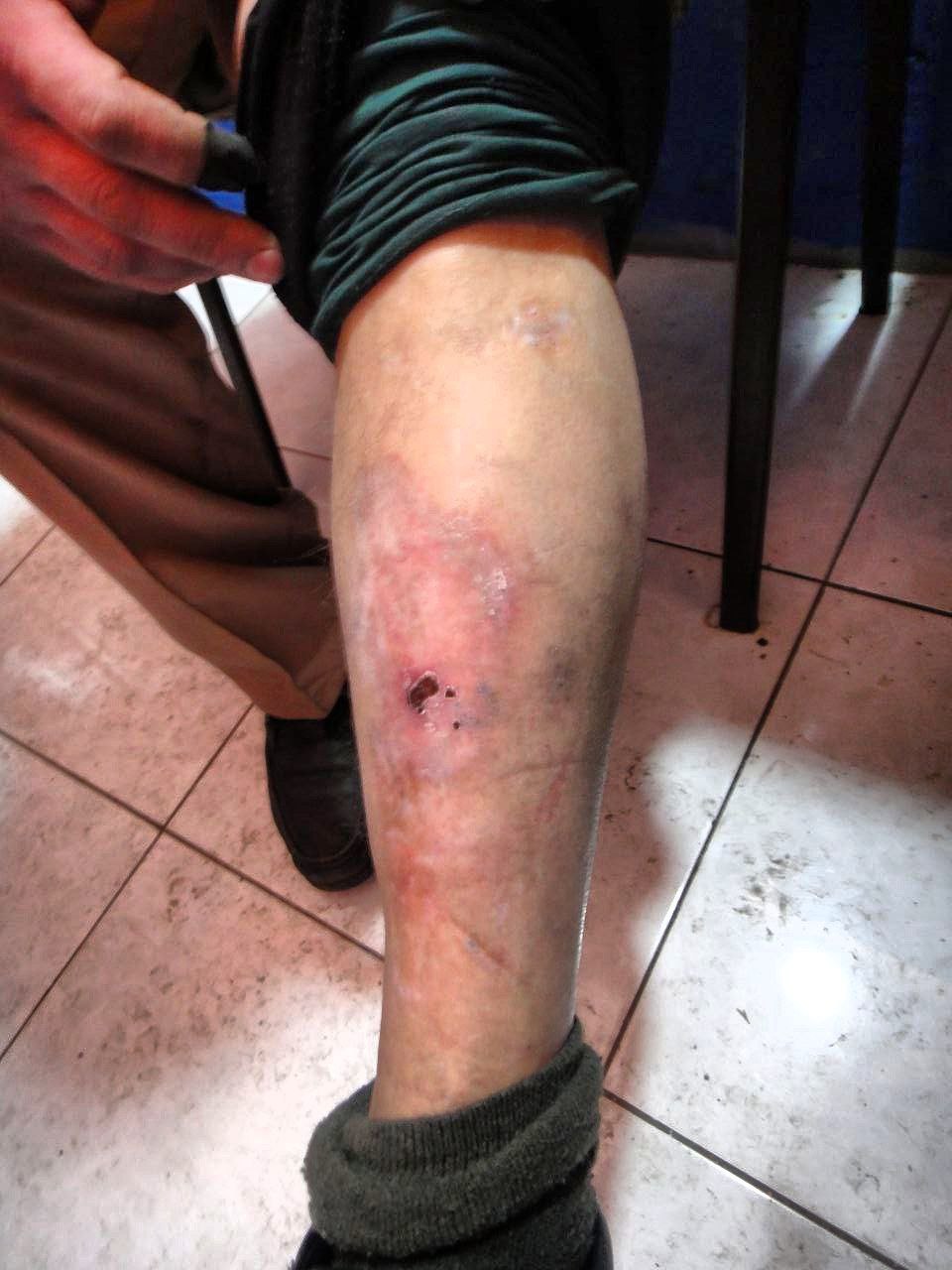
Instead, during the visit, the monitoring group established facts of improper recording of bodily injuries. In particular, during an examination of a convict who was in the Quarantine, Diagnosis, and Distribution (QDD) ward, an abrasion was found on the front surface of the lower leg, which, according to the convict, had formed as a result of scratching his skin due to a dermatological condition.
Despite the convict’s appeal to the medical unit, information about the said bodily injury was not documented in the established order: the relevant information is absent from the log of facts of detected bodily injuries and from the medical documentation.
Such actions (inaction) of medical workers may indicate an improper performance of their professional duties regarding the mandatory recording of bodily injuries, create a risk of concealing facts of injuries to convicts, and prevent a timely and complete verification of the circumstances of the incident.
This leads to a violation of the right of convicts to proper medical care and proper medical documentation of injuries, and also complicates the effective investigation of incidents and the holding of guilty persons accountable.
In addition, as established during the monitoring visit, in cases of detecting bodily injuries, the medical staff actually fills out only the primary accounting documentation form No. 511/o without drawing up a certificate in three copies and without carrying out the full range of actions provided for by the Procedure. This indicates a systemic violation of the requirements of paragraph 3 of Chapter 1 of Section II of the Procedure and an improper organisation of medical recording of bodily injuries.
At the same time, the lack of proper recording of bodily injuries does not comply with paragraph 60 of the Committee’s recommendations (CPT/Inf(93)12-part), which states that medical services in places of deprivation of liberty can contribute to preventing violence against persons held in custody by systematically registering bodily injuries, and also, if necessary, by informing the relevant authorities.
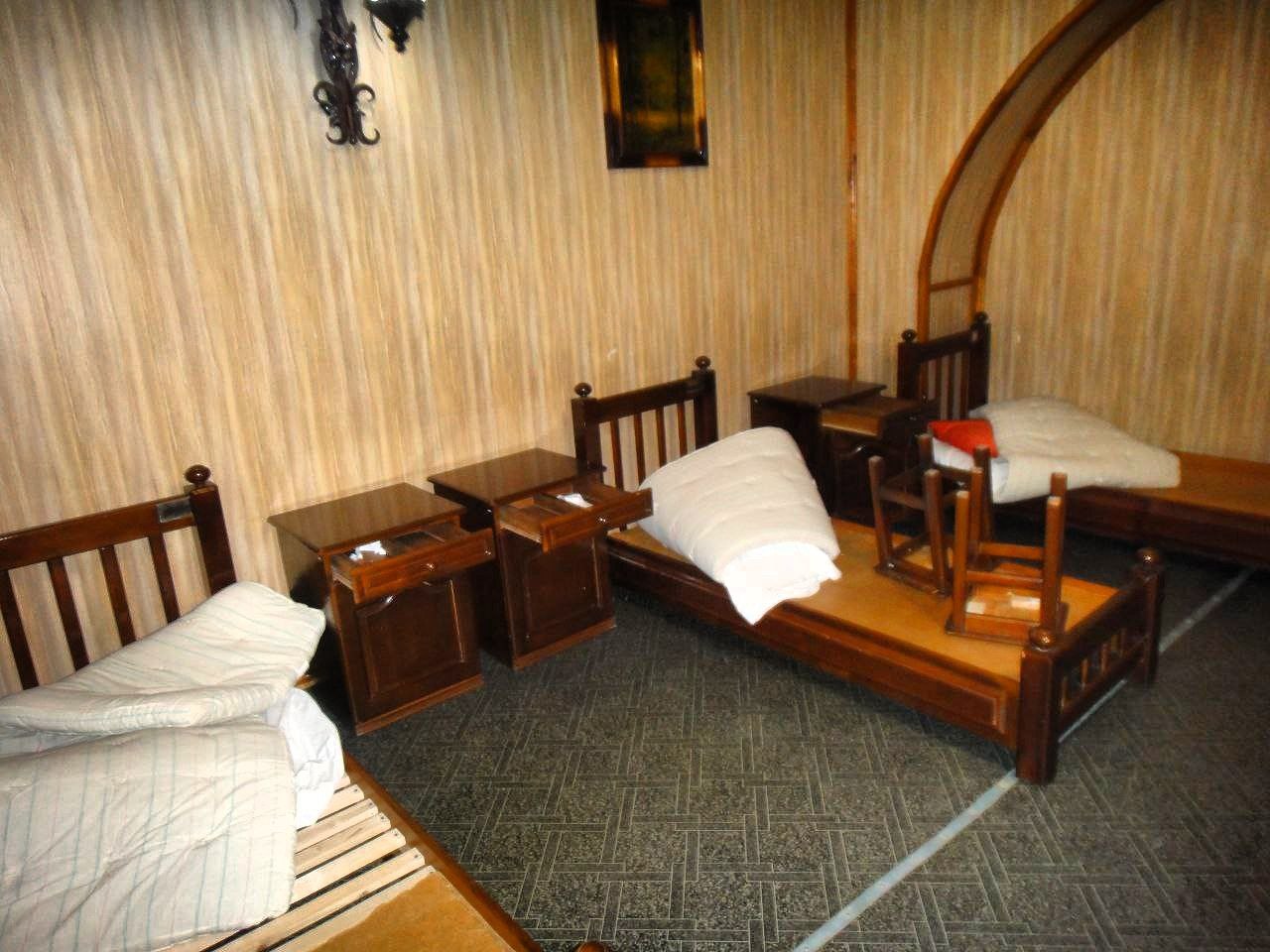
2. In the medical unit’s inpatient ward, two isolation rooms for infectious patients are equipped. At the same time, the said premises have a shared corridor, bathroom, washbasin, and shower, which does not ensure the isolation of patients with dangerous infectious diseases from each other and from other convicts, and contradicts the Measures and means to prevent infection during patient care, approved by the Order of the Ministry of Health of Ukraine dated 03.08.2020 No. 1777.
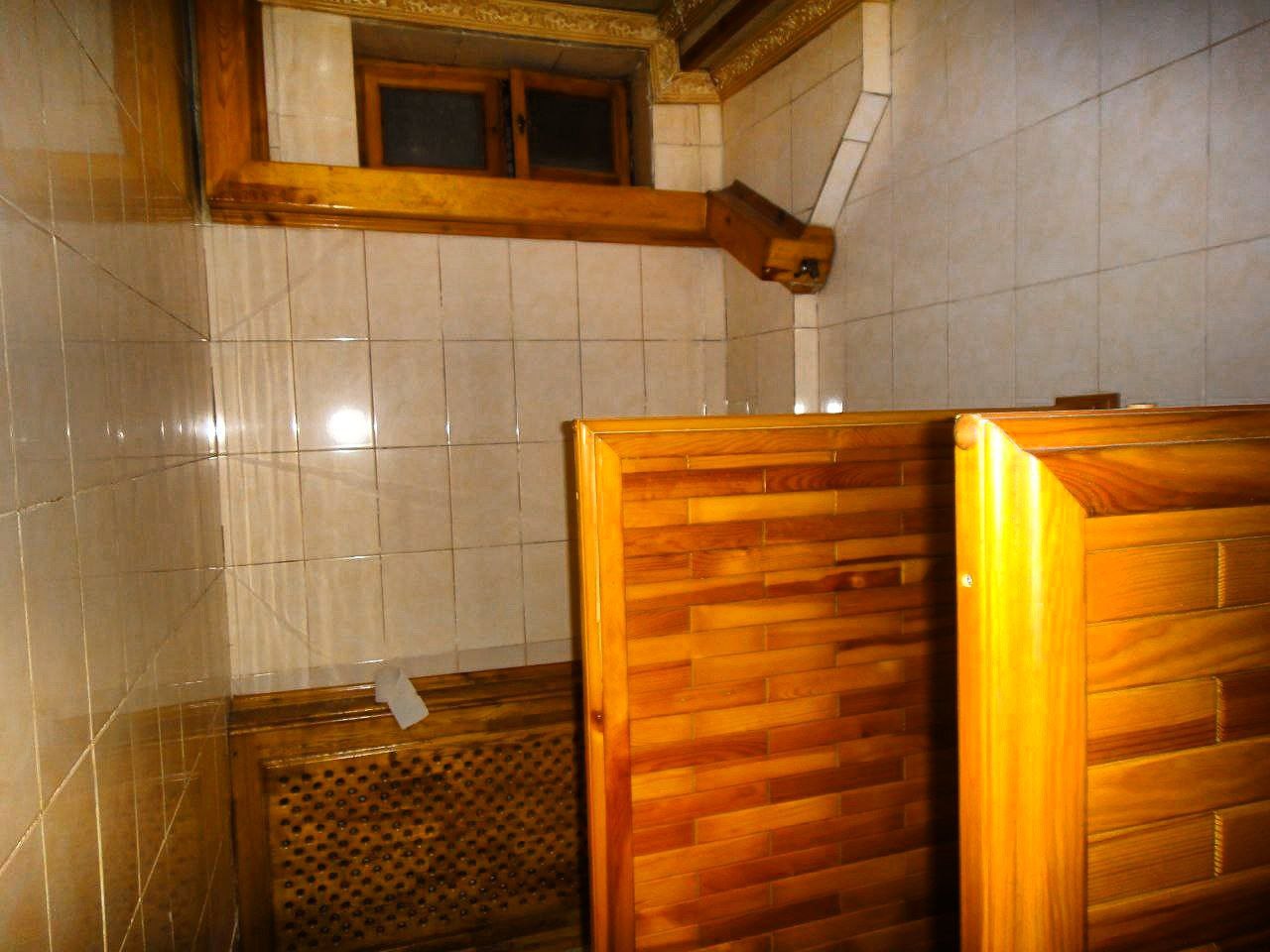
3. In violation of the requirements of Rule 19.3 of the European Prison Rules, the bathroom in the ward for somatic patients and the infectious isolation ward is not equipped with a door, due to which the right of convicts to privacy is not observed.
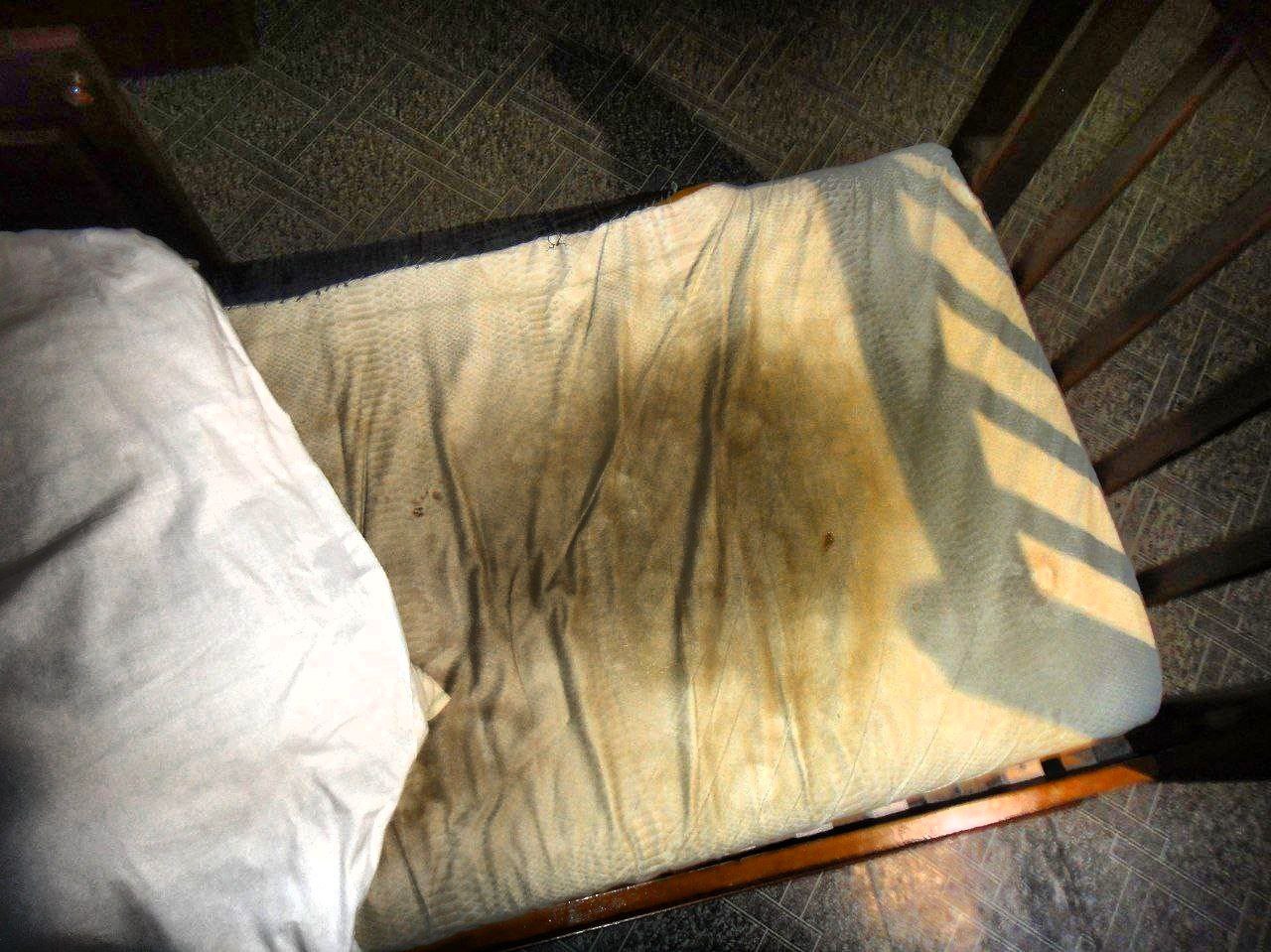
4. In violation of the requirements of the Standards of provision with bedding, special clothing, and special footwear (inventory property) for convicts undergoing treatment in medical-preventive institutions, institutions with the rights of medical facilities, and medical units at penal institutions and pre-trial detention centres, approved by the Order of the Ministry of Justice of Ukraine dated 20.02.2012 No. 280/5, convicted persons do not receive hospital property (hospital suit, robe, and slippers).
Convicts are in the inpatient ward in their everyday clothes, sometimes with their own bedding. Some mattresses need to be replaced.
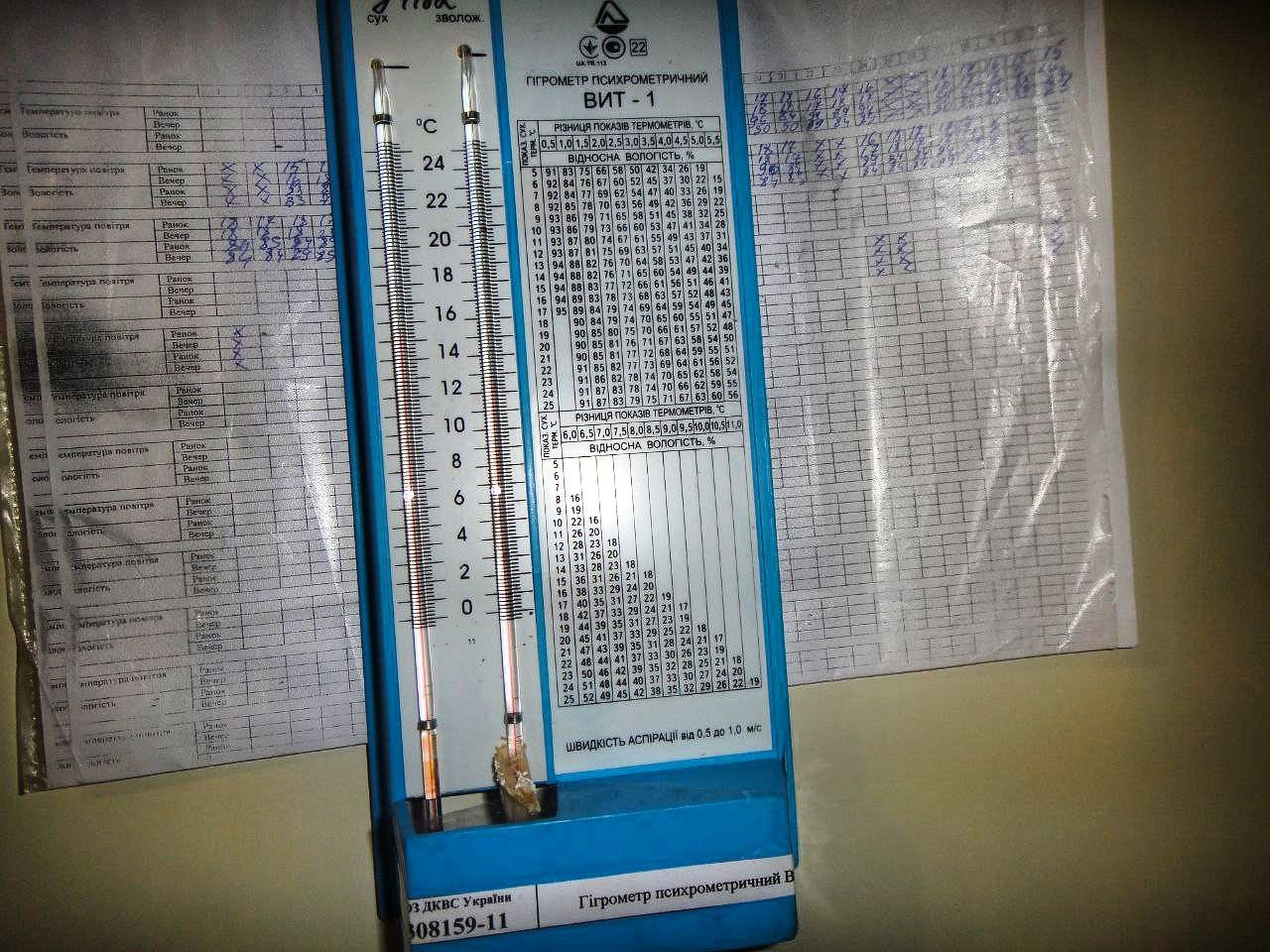
5. In the medical unit, particularly in wards and doctors’ offices, the monitoring group recorded a violation of temperature regulations. During the inspection, the air temperature in some premises was +14°C–16°C, which does not meet the requirements of Section VI of the State Sanitary Norms and Rules, approved by the Order of the Ministry of Health of Ukraine dated 02.04.2013 No. 259, and paragraph 1 of Section XXII of the Internal Regulations of Penal Institutions.
During the cold season, the temperature in the residential premises of penal institutions must be maintained at a level of at least +18°C.


6. In the medical unit, the provision of opioid substitution therapy (hereinafter — OST) for persons with mental and behavioural disorders due to opioid use is not organised in accordance with the Procedure for conducting opioid substitution therapy for persons with mental and behavioural disorders due to opioid use, approved by the Order of the Ministry of Health of Ukraine dated 27.03.2012 No. 200.
Drug-addicted persons are not provided with social-psychological support, cognitive-behavioural therapy (CBT), relapse prevention, motivational interviewing, self-help groups, etc.
Thus, these persons are deprived of the opportunity to receive OST, which violates their right to choose methods of treatment in accordance with Article 38 of the Law of Ukraine “Fundamentals of Ukrainian Legislation on Healthcare”.
At the same time, the Committee in its report on the results of the visit to Ukraine in 2023 notes that entering a penitentiary institution is an opportunity to solve a problem related to drugs, and therefore it is important that appropriate assistance be offered to all interested persons. Therefore, appropriate medical care should be available in all institutions.
Assistance offered to such persons must be diverse; substitution therapy programmes for persons with drug addiction should be combined with genuine psychosocial and educational programmes for persons with opioid dependence who are unable to stop using drugs.
Furthermore, access to OST programmes in institutions must be easily accessible, and they should also be managed by penitentiary doctors who have received special training in issues related to drug use (CPT/Inf(2024)20) paragraph 86).
7. In violation of paragraph 9 of the Rules for the use of physical restraint and (or) isolation when providing psychiatric care to persons suffering from mental disorders, approved by the Order of the Ministry of Health of Ukraine dated 24.03.2016 No. 240, registered with the Ministry of Justice of Ukraine on 15.04.2016 under No. 570/28700, as well as paragraph 8.3.4 of the State Building Norms of Ukraine V.2.2-10:2022 “Healthcare Institutions”, the isolation ward for persons with mental disorders does not meet the established requirements.
In particular, the isolation ward premises are designed for the stay of more than one person (two persons), which contradicts the principle of individual isolation. The equipment of the isolation ward has sharp corners, which creates a potential danger for patients. There is no bathroom in the room, nor a container with boiled drinking water.
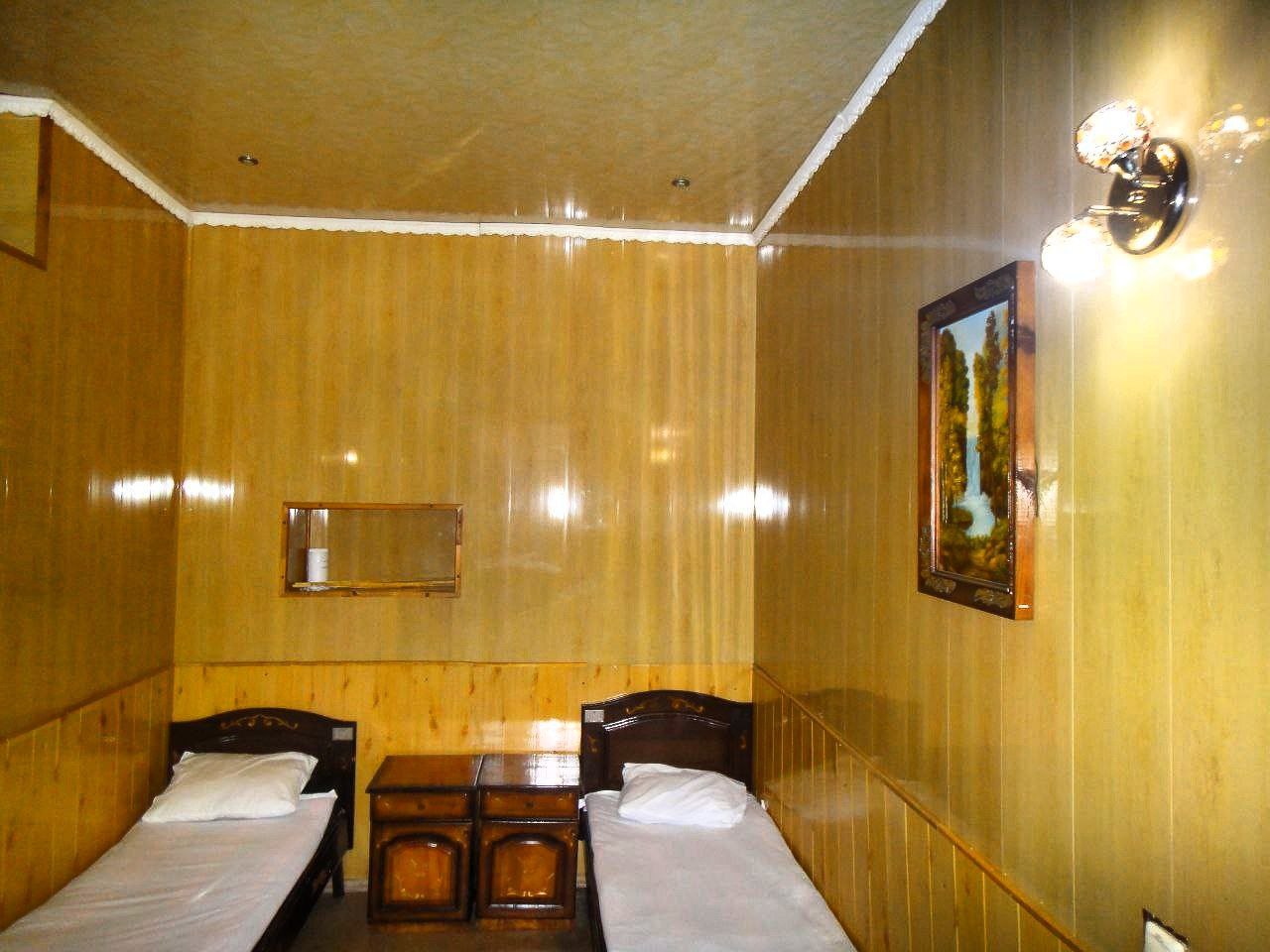
8. The monitoring group established that the psychiatrist conducts psychiatric examinations of patients without proper formalisation of written informed consent.
In particular, contrary to the requirements of the Instruction on filling out the primary accounting documentation form No. 003-7/o “Informed consent of a person for a psychiatric examination”, approved by the Order of the Ministry of Health of Ukraine dated 15.09.2016 No. 970, it was established that the medical documentation (in particular, the outpatient medical card form No. 025/o and the inpatient medical card form No. 003/o) lacks the patient-signed informed consent for the psychiatric examination.
9. There is no position of clinical psychologist on the medical unit’s staff, which complicates the timely and effective provision of mental health medical care to convicts.
The Committee, in its report on the results of the visit to Ukraine in 2023, recommends further strengthening the provision of psychological assistance in institutions, as well as developing the training and role of penitentiary psychologists, especially in terms of therapeutic clinical work with convicts.
In this context, efforts must be made to recruit clinically trained psychologists, who should be part of the medical team and, in their work, should not combine two different roles, i.e., risk assessment and therapeutic clinical work (CPT/Inf (2024) 20) paragraph 85).
10. In violation of the requirements of the Standards of medical care for HCV in adults, approved by the Order of the Ministry of Health of Ukraine dated 23.07.2025 No. 1178, not all persons (65 persons as of 19.01.2026) with suspected viral hepatitis C are undergoing PCR testing, due to which they do not receive the necessary treatment, which may lead to a deterioration of their health and the spread of the said infectious disease among convicts and detainees.
In addition, on the day of the visit, drugs for the treatment of viral hepatitis C were absent from the medical unit’s pharmacy.
11. Dispensary supervision is carried out for 5 persons who have disabilities. Of these: Group I — 0 persons; Group II — 1 person; Group III — 4 persons.
At the same time, in violation of the requirements of the Law of Ukraine “On the Rehabilitation of Persons with Disabilities in Ukraine”, persons with disabilities do not receive proper diagnostic, treatment, and rehabilitation measures, despite evidence confirming persistent impairment of bodily functions caused by diseases and consequences of injuries that cause limitations in normal daily activities.
Thus, during the study of the convicts’ medical documentation, it was established that 2 persons who have disabilities lack an Individual Rehabilitation Programme (hereinafter — IRP).
Furthermore, the recommendations of the IRP are not being fulfilled, due to which they are not receiving proper diagnostic, treatment, and rehabilitation measures.
12. In violation of the requirements of the State Building Norms of Ukraine V.2.2-40:2018 “Inclusivity of buildings and structures. Basic provisions”, no conditions for the detention of persons with disabilities have been created in the medical unit.
13. In violation of paragraph 37 of the Resolution of the Cabinet of Ministers of Ukraine dated 02.03.2016 No. 285 “On approval of Licensing conditions for carrying out economic activities in medical practice”, the medical unit lacks a certificate confirming free access to the medical institution’s buildings and premises for people with limited mobility, the receipt of which is mandatory.
14. In violation of the Procedure for organising medical care at the primary, secondary (specialised), and tertiary (highly specialised) levels using telemedicine, approved by the Order of the Ministry of Health of Ukraine dated 19.10.2015 No. 681, the medical unit staff, due to technical limitations, are deprived of the ability to send requests for telemedical consultations and receive professional assistance for providing medical services to convicts.
15. In violation of the requirements of the Equipment supply schedule for a dentist’s and dental technician’s workstation, approved by the Order of the Ministry of Health of Ukraine dated 11.04.2005 No. 158, the medical unit lacks a dental X-ray machine, which makes it impossible to conduct an in-depth dental examination of convicts and does not ensure the timely provision of proper dental care.
Recommendations:
1. Cease the practice of delegating functions of control and supervision over other convicts to convicts, ensure that regime powers are carried out exclusively by the institution’s staff, and develop measures to counter informal hierarchy and violence among convicts.
2. Immediately cease the use of labour of newly arrived convicts without the conclusion of employment or civil-law contracts and without remuneration; ensure the conduct of mandatory occupational safety training and compliance with isolation requirements for persons in the QDD.
3. Ensure the full functioning of the working group for work with newly arrived convicts, proper documentation of the measures taken, and the personal responsibility of officials for the implementation of the adaptation programme.
4. Bring the composition of the QDD working group into compliance with the requirements of legislation by including the heads of the relevant structural units.
5. Ensure the use of the state language in the institution’s activities, including on the chest identification badges of convicts.
6. Equip the QDD ward with the necessary premises in accordance with the provision standards and ensure proper sanitary and hygienic living conditions.
7. Equip bathrooms in the QDD with partitions that ensure privacy and ensure proper sanitary state and ventilation of the premises.
8. Ensure sufficient access to natural light in the residential premises of the QDD by revising the window design.
9. Ensure the use of video surveillance in residential premises exclusively on the basis of an individual risk assessment and in compliance with the right to privacy.
10. Bring the conditions of detention in the DIU/CTP into compliance with national and international standards, ensuring proper lighting, privacy of bathrooms, and the availability of necessary auxiliary premises.
11. Ensure that convicts are handed copies of decisions on the application of disciplinary penalties with an explanation of the procedure for appeal and the right to legal assistance.
12. Remove video surveillance that covers sanitary facilities and ensure respect for the convicts’ private life.
13. Ensure the timely conduct of initial risk assessment and the compilation of individual programmes of social-educational work, proper psychological examination, and documentation of the results of the psychologist’s work.
14. Cease the use of convict labour in administrative buildings and office premises where documentation is stored.
15. Cease video recording of personal searches with stripping and ensure compliance with confidentiality requirements for such procedures.
16. Cease the practice of placing information on convicts’ beds about the crimes they have committed as it has signs of stigmatisation.
17. Provide the library with texts of the European Prison Rules and other international standards.
18. Provide the institution’s shop with the full list of goods provided for by regulatory acts.
19. Ensure proper sampling and storage of daily food samples in accordance with food provision requirements.
20. Eliminate violations in the organisation of bath and laundry services, ensure functional ventilation, the ability to regulate water temperature, and privacy in showers.
21. Ensure that the carrying of special means by staff in direct contact with convicts is as concealed as possible.
22. Review the procedure for conducting short-term visits, ensuring that open visits are the general rule, and closed ones are held only on the basis of individually justified decisions.
23. Intensify work on processing passports of citizens of Ukraine, RNOKPP, and other necessary documents for convicts.
24. Take measures to eliminate staff shortages and ensure a sufficient number of employees for the proper functioning of the institution.
25. Ensure real, not formal, access of convicts to the Internet, expand the possibility of use in SPS divisions, simplify the access procedure, and increase the level of awareness among convicts about digital services.
26. Equip shelters with efficient ventilation systems, sanitary facilities, and autonomous engineering support for the possibility of safe prolonged stay of people.
27. Bring the organisation of convict labour into full compliance with the requirements of labour legislation: eliminate discrepancies in timekeeping, ensure payment for actually worked hours, clearly define essential terms of employment contracts, ensure surcharges for hazardous working conditions, guarantee minimum state guarantees in remuneration, and ensure full formation of insurance seniority.
28. Take measures aimed at eliminating identified human rights violations and preventing torture, other cruel, inhuman, or degrading treatment and punishment in Medical Unit No. 25 of the branch of the State Institution “Public Health Centre of the State Penitentiary Service of Ukraine” in Kharkiv and Luhansk Oblasts.
29. Ensure control over the proper keeping of medical documentation in accordance with the Procedure for organising the provision of medical care to convicts sentenced to deprivation of liberty, approved by the joint order of the Ministry of Justice of Ukraine and the Ministry of Health of Ukraine dated 15.08.2014 No. 1348/5/572, and other regulatory legal acts.
30. Provide the medical unit’s staff with medical specialists in accordance with needs.
31. Ensure timely and proper recording of bodily injuries in convicts.
32. Bring isolation wards for infectious patients into compliance with the requirements of the Order of the Ministry of Health of Ukraine dated 03.08.2020 No. 1777.
33. Ensure the equipment of the isolation ward for persons with mental and behavioural disorders in accordance with established requirements.
34. Ensure that informed consent of patients for examination and treatment is obtained in the established form.
35. Ensure the possibility of receiving opioid substitution therapy based on a diagnosis of mental and behavioural disorders due to opioid use.
36. Provide the medical unit with a dental X-ray machine and the necessary equipment for conducting a full dental examination and treatment.
37. Ensure the conduct of individual rehabilitation for persons who need it.
38. Ensure the accessibility of the institution’s buildings in accordance with the State Building Norms of Ukraine V.2.2-40:2018 “Inclusivity of buildings and structures. Basic provisions”.
39. Fulfill the requirements of paragraph 37 of the Resolution of the Cabinet of Ministers of Ukraine dated 02.03.2016 No. 285 “On approval of Licensing conditions for carrying out economic activities in medical practice”.
40. Ensure all persons with suspected HCV have access to PCR testing in the shortest possible time and organise the necessary antiviral treatment for persons with a confirmed diagnosis.
41. Ensure the proper operation of the telemedicine complex for doctors to make requests for telemedical consultation.
42. Ensure the replacement of mattresses and the issuance of hospital property to convicts during hospitalisation in accordance with the standards of provision.
43. Ensure compliance with the temperature regime in the medical unit’s premises of at least +18°C.
44. Equip the bathroom in the medical unit with a door to ensure the convicts’ right to privacy in accordance with Rule 19.3 of the European Prison Rules.