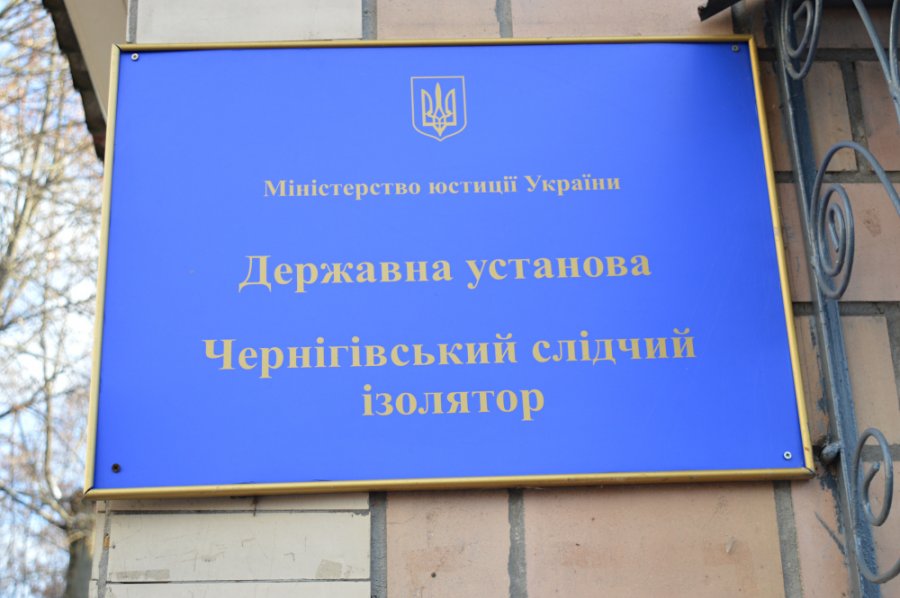
Monitoring visit to the State Institution "Chernihiv Remand Center"
I. General Information
On 2 December 2021, a monitoring group consisting of an assistant consultant to a People’s Deputy of Ukraine, Maksym Revyakin, and two journalists – Hanna Ovdiienko and Pavlo Shvab – visited the state institution "Chernihiv Remand Center." This institution consists of a remand center, a block for prisoners sentenced to fixed-term imprisonment who have been left in the remand center as maintenance personnel, a transit sector, and a medical unit.
At the time of the visit, there were 348 detainees, 18 people in the maintenance block, and 8 people sentenced to life imprisonment in the institution. The planned capacity of the institution is 375 people. The staff size is 165 employees.
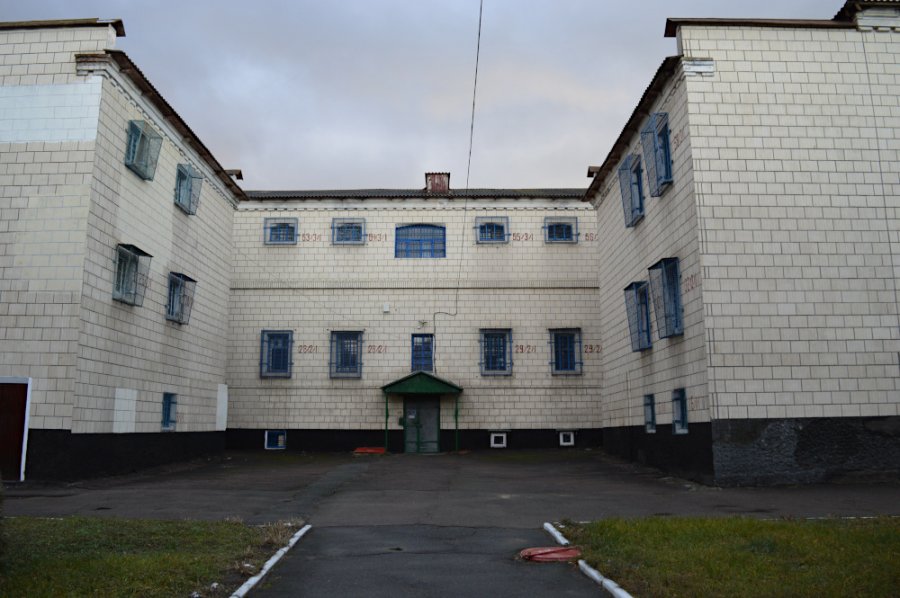
The institution has been functioning since 1705. It is located in the central part of the city of Chernihiv.
The monitors were met by the duty assistant to the head of the institution. He checked the monitors' documents and asked them to wait for some time. The monitors had to wait more than thirty minutes for admission to the institution, after which they were finally allowed into the remand center. At the entrance, a staff member of the medical unit conducted temperature screening of the monitors. For the most part, the institution’s administration representatives followed anti-epidemic measures (mask regime), but the first deputy did not comply and wore a mask on his chin throughout the monitoring visit. According to the institution's administration, all persons in the remand center who expressed a desire to be vaccinated were vaccinated against coronavirus disease.
At the entrance to the institution, the monitors stated that they wished, among other things, to speak with life-sentenced prisoners. The duty assistant to the head of the institution reported that there is a maximum-security sector in the remand center and that the monitors would be allowed into this sector without hindrance, but later the deputy head of the institution said that there is no such sector in the remand center, and instead there are transit cells where life-sentenced prisoners are held who have been brought for participation in court hearings. Some such prisoners have been in the institution for "participation in court hearings" for over five years.
The deputy head of the institution stated that he would not allow the monitors to see the life-sentenced prisoners, but would only allow them to see the prisoners who perform maintenance work for the institution. He claimed that, supposedly, the Criminal Executive Code does not apply to prisoners sentenced to life imprisonment in transit cells. Such logic from the deputy head is incomprehensible, as, according to Article 3 of the Criminal Executive Code, the Code applies both to prisoners sentenced to life imprisonment, even those who are in transit, and to prisoners who perform maintenance work for the institution. The monitors believe that the obstruction of access to the cells of life-sentenced prisoners is linked to an intent to conceal the inadequate conditions of detention, about which the monitors had information.
II. Medical Unit
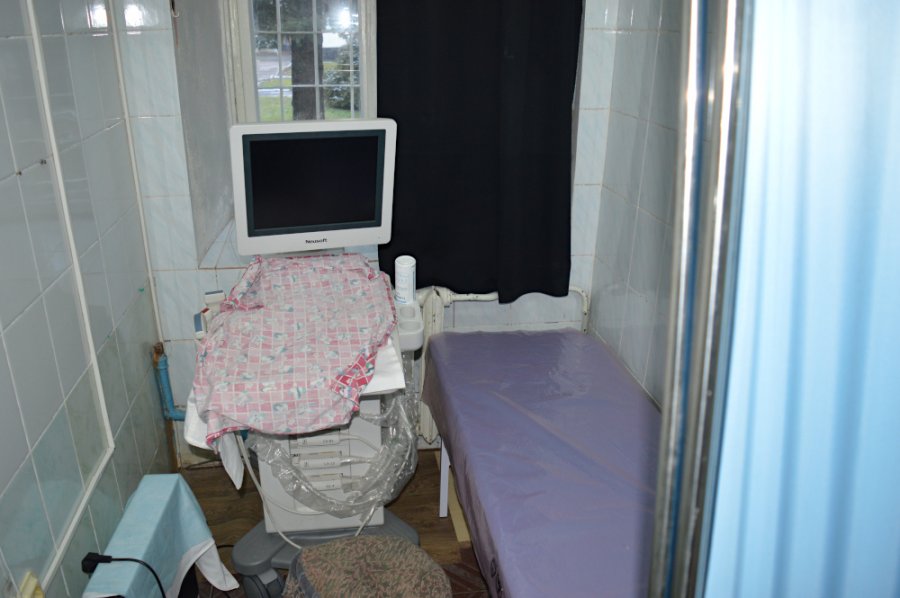
Over the last two years, diagnostic equipment has been purchased for the medical unit, thanks to which it is possible to promptly diagnose various diseases in persons held in the remand center. In particular, there is an ultrasound machine, an X-ray machine, and laboratory equipment for conducting analyses.
The monitors were unpleasantly surprised by the information about the salary of junior staff in the medical unit, which is approximately 4,500 hryvnias. Almost every day, this staff faces the danger of contracting COVID-19 and tuberculosis, yet they continue to save the lives of prisoners despite the lack of any salary supplements for this.
The staffing table of the institution’s medical unit provides for 22 positions. On the day of the monitors' visit, only 0.5 of a disinfector position and 0.5 of a therapist position were vacant. According to the medical unit staff, the institution is provided with essential medicines. In case of need, sick prisoners can be taken to Ministry of Health facilities.
This year, 31 cases of bodily injuries among detainees and prisoners were recorded in the institution.
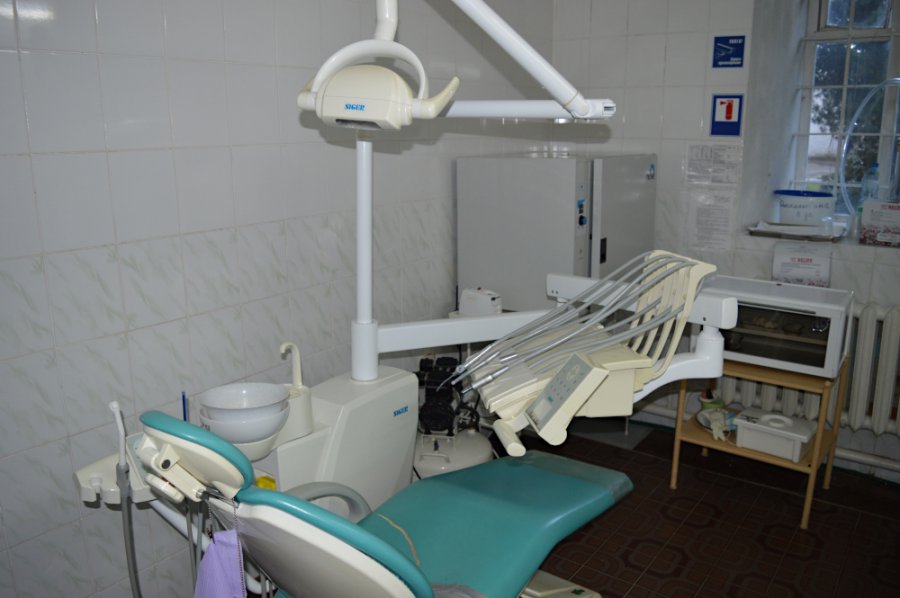
The medical unit has a modern dental office and updated diagnostic equipment.
III. Canteen
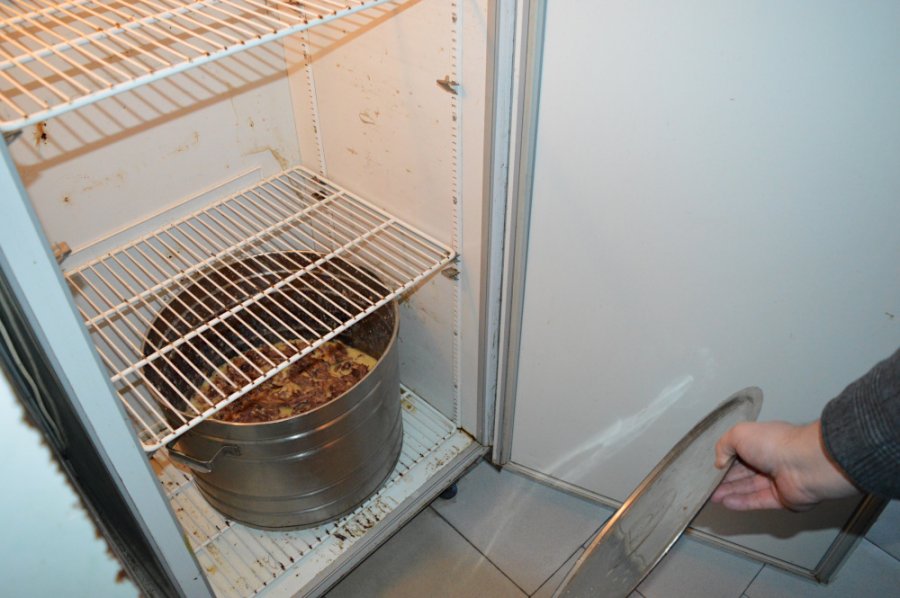
In the institution's canteen, the monitors visited the meat, vegetable, and fish processing areas. In the meat processing area, inside a cold storage chamber, the monitors saw meat which, according to the administration, was to be prepared for dinner. In the opinion of the monitors, this meat was inedible. It had a rotten smell and a wind-dried, stale appearance. Moreover, in the refrigerator, as in the kitchen as a whole, unsanitary conditions prevailed – the surfaces were covered with a layer of old, unwashed dirt.
Since detainees in the remand center are held in cell-type premises and cannot contact one another outside of such premises, there is no separate canteen in the remand center. At the same time, food is delivered to the cells in rusty iron containers, which appear unsuitable for storing food products.

IV. Laundry
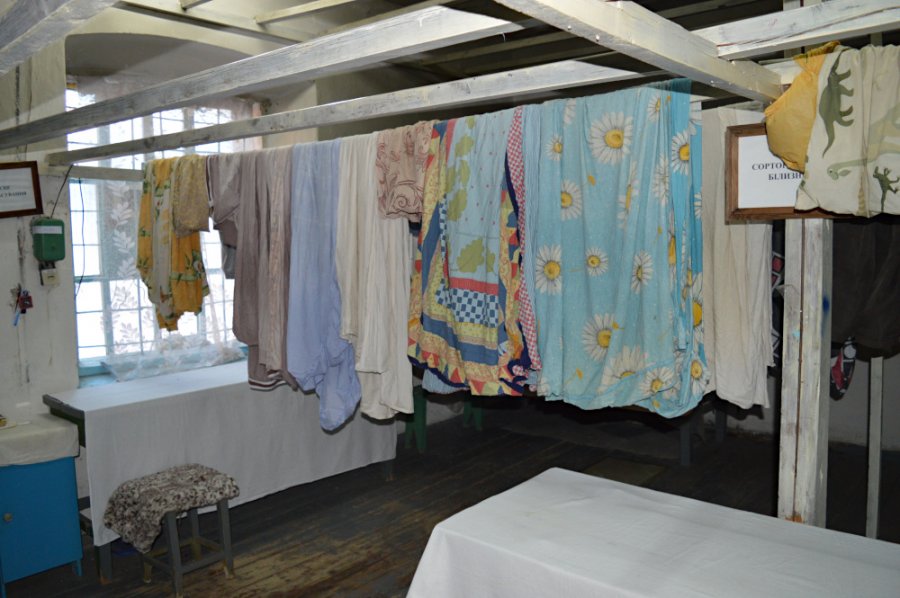
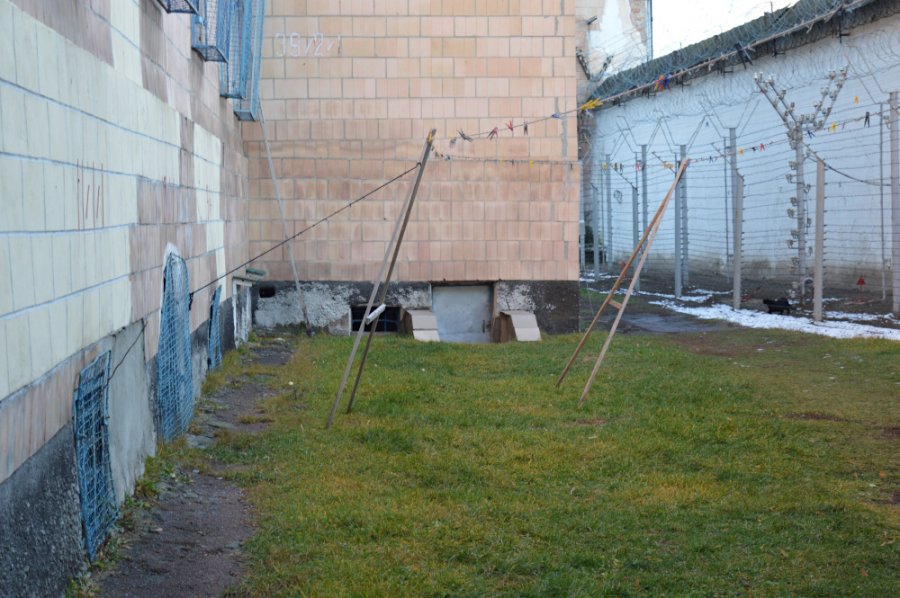
Washing machines are installed in the laundry room, the capacity of which is sufficient for serving all prisoners in the remand center. However, the room for drying laundered items is too small. Because of this, laundered items are dried outdoors, even in winter. This is evidenced, in particular, by the wires stretched for drying items near the laundry room. On the wires, the monitors noticed clothespins, and thus, the drying wires are used not only in summer but also at the time of the visit – in the month of December.
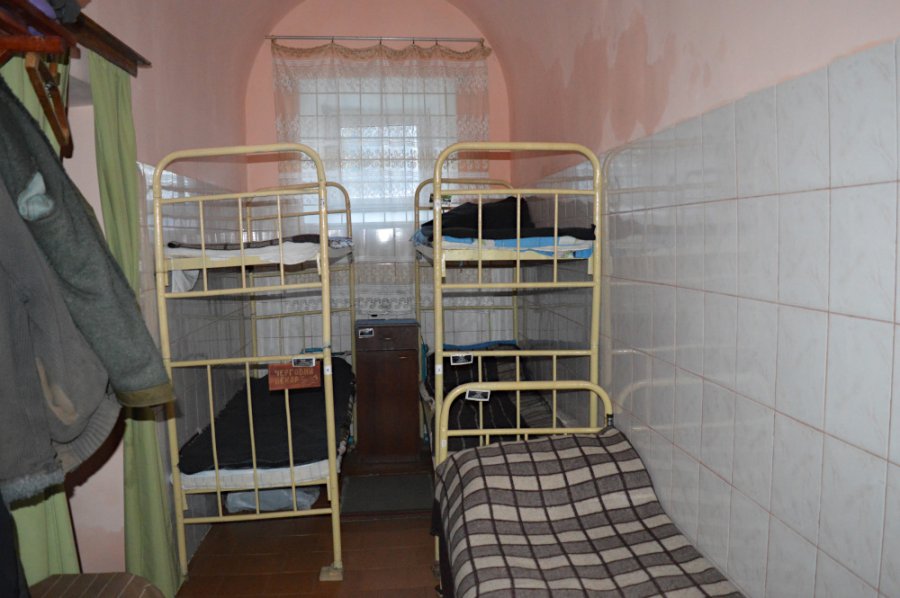
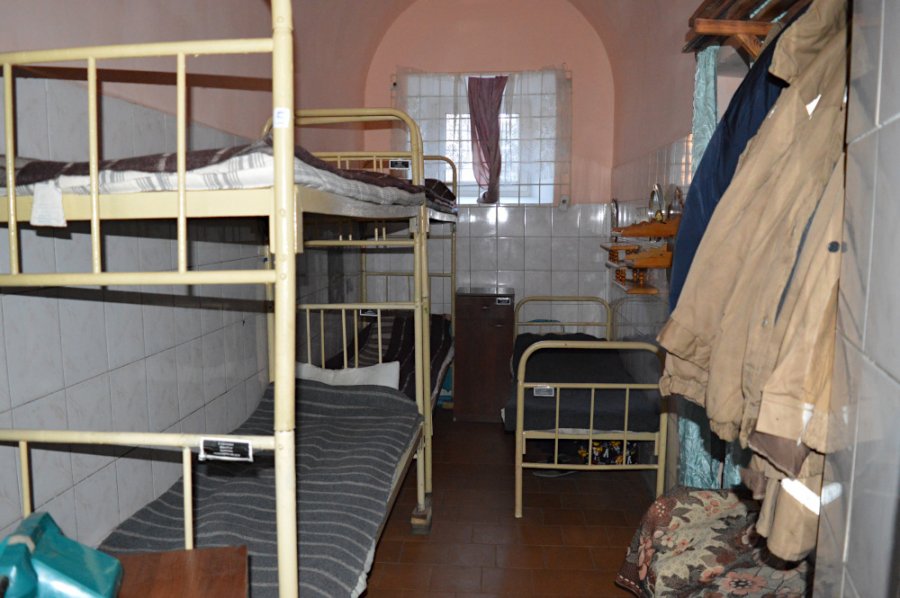
According to the deputy head, the residential premises, some of which were built in the 18th century, were covered with tiles on the outside and inside during the Soviet era, which traps moisture. Because of this, these premises suffer from dampness, mildew, and mold.
V. Residential Zone
The living conditions for prisoners who perform maintenance work for the institution are among the worst the monitors have seen in remand centers and penal institutions. The prisoners are housed in cell-type premises. In these rooms, the prisoners are forced to sleep and rest on bunk beds. There is clearly a lack of personal space for the prisoners in these rooms. A logical assumption arises that conditions for life-sentenced prisoners must be worse than for the prisoners of the maintenance block.
VI. Exercise Yards
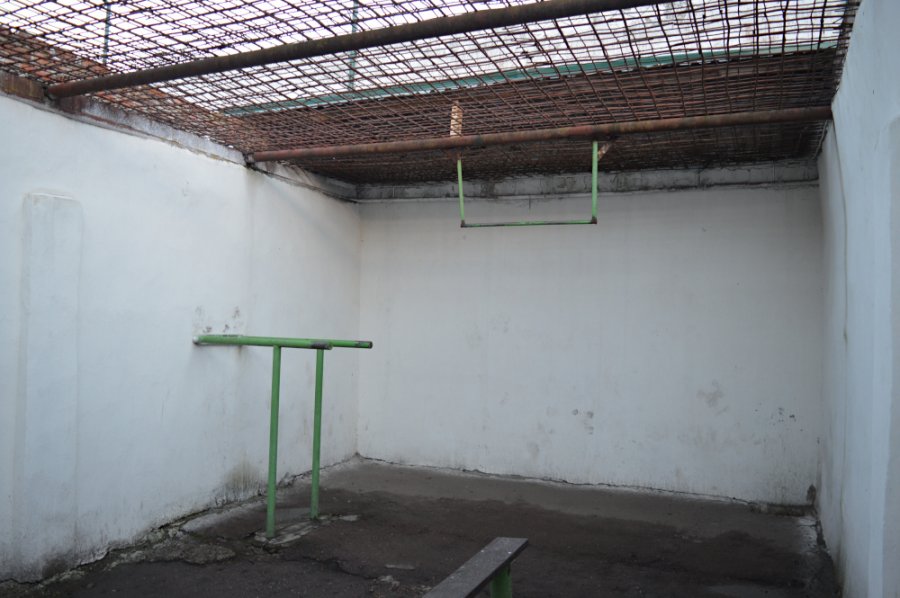
The exercise yards are in a dilapidated state. They are insufficiently protected from atmospheric precipitation.
Due to the lack of a rainwater drainage system and insufficient covering during rain, the yards fill with water. The prisoners are forced to bail out the water themselves.