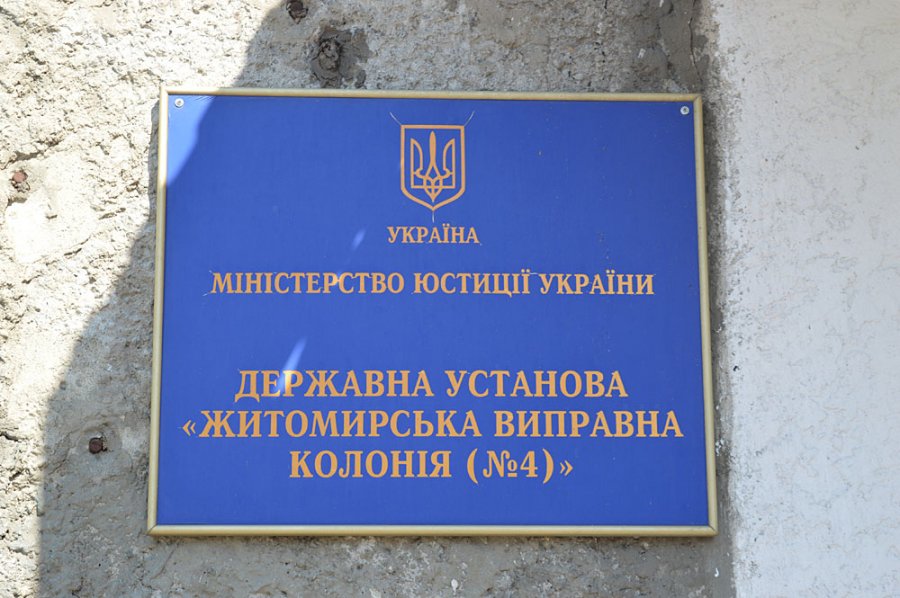
Monitoring Visit to the State Institution "Zhytomyr Penal Colony No. 4"
1. General Information
On 23 July 2021, the KHPG monitoring group consisting of Maksym Revyakin, Pavlo Shvab, and Hanna Ovdiienko visited the State Institution "Zhytomyr Penal Colony No. 4". This colony is located in the city of Zhytomyr, not far from the central local bus station. The institution has been in operation since 1933 and occupies a rather large area, which is unusual for a penal institution located in a densely populated district of the city. It is a medium-security colony for men convicted for the first time for committing serious and particularly serious crimes. The planned capacity of the institution is 1,240 people; on the day of the visit, 937 inmates were serving sentences in the institution. It should be noted that due to the mass closure of penal institutions, more than 200 inmates have arrived at the colony in the last two months, which is already leading to overcrowding in residential units – even with the colony not being fully occupied.
According to the staffing schedule, the colony has 243 positions for administrative staff, but only 206 are actually filled. The monitors note that the ratio of 1 administrative representative per 5 inmates is extremely insufficient to maintain discipline and order in the institution, as on average, in other penal institutions, such a ratio is 1 to 2 or 1 to 3. However, it should be noted that even under such difficult conditions, the institution's administration manages to maintain order at a decent level. The monitors do not understand the actions of the Ministry of Justice, which, by closing colonies and sending inmates to other institutions (as a rule, from several mothballed ones to one active one), does not increase the number of personnel in the institutions where these inmates are transferred.
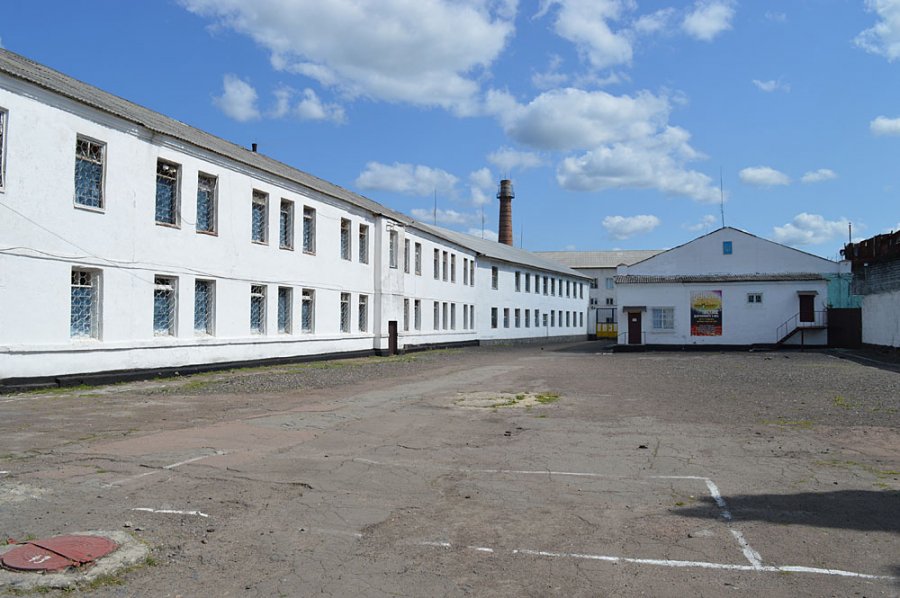
At the entrance to the colony, the monitors underwent a temperature screening and were allowed into the territory without obstruction. There was a container for disinfectant at the checkpoint of the institution, but the disinfectant itself was missing from the container – both upon entry to the institution and upon exit.
During the current year, 129 people were released on parole from the institution, which is quite surprising and contrary to the general practice of releasing persons convicted of serious or particularly serious crimes.
2. Living Premises
The living premises are located in buildings constructed in the first half of the 20th century. Due to the lack of planned reconstructions and capital repairs over the last 30 years, these premises are in a dilapidated state. The administration, with significant financial assistance from the Ministry of Justice, which is uncharacteristic of most institutions visited by the monitoring group, maintains the premises in a satisfactory condition. For example, the roofs in two units were recently overhauled for a total amount of about 1 million hryvnias.
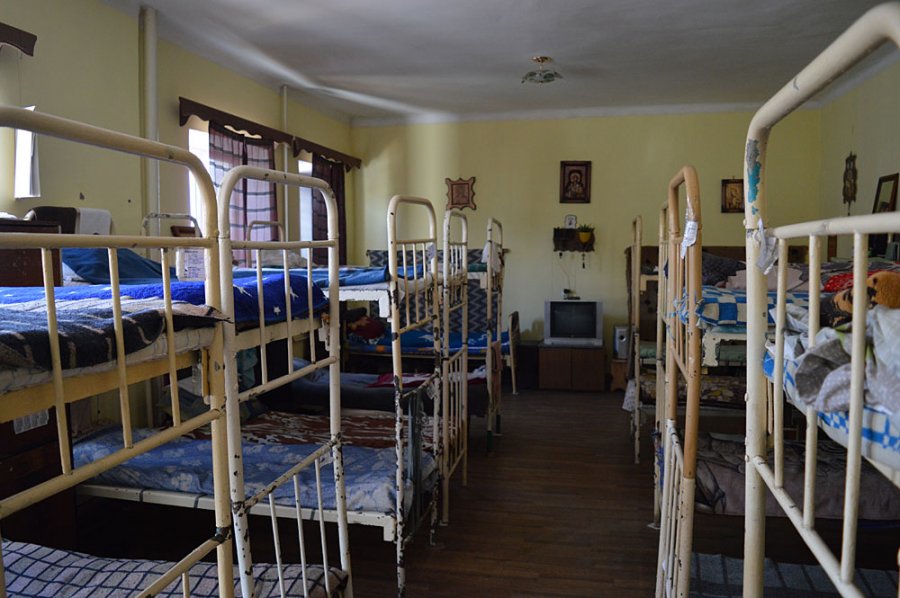
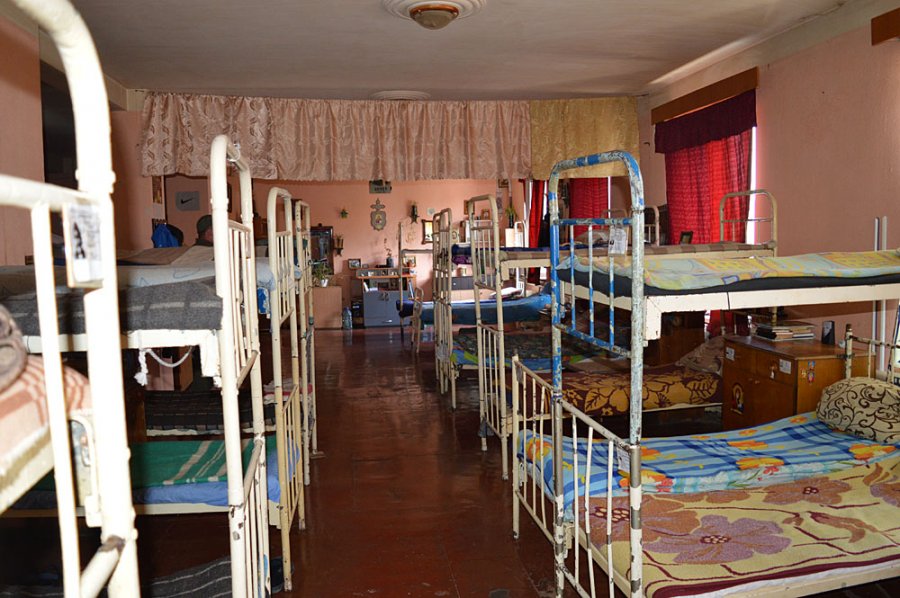
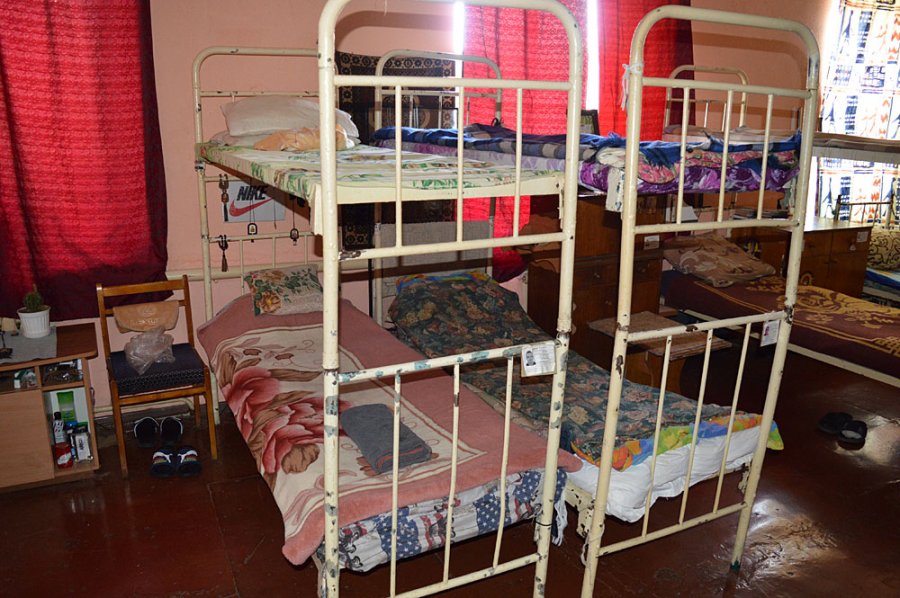
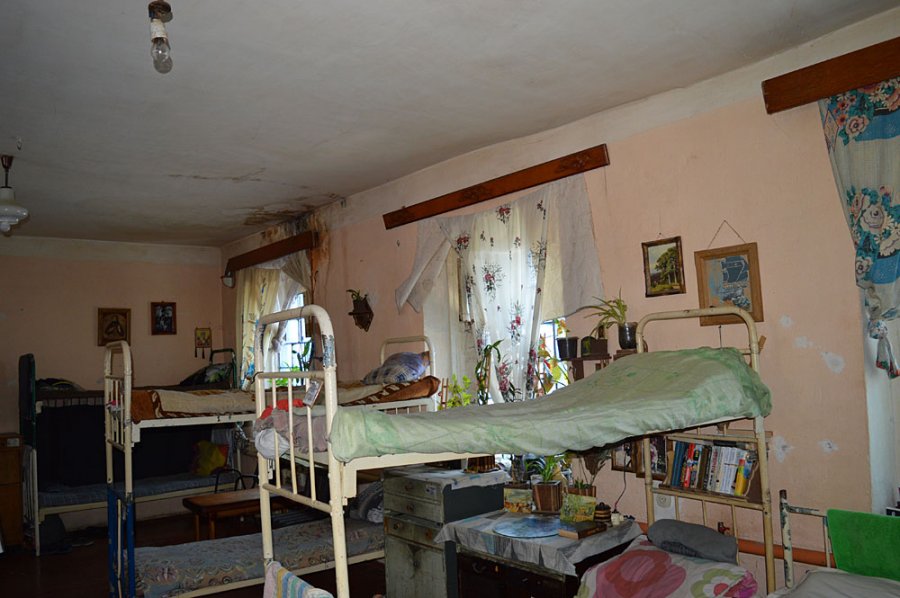
There are 8 operating units in the institution, with none mothballed. All units are of the barrack type. On average, 100–110 inmates live in each unit. All units have outdated repairs, and the windows are covered with rags. The sleeping area is large and spacious, but all this space is occupied by old iron beds. Furthermore, about half of these beds are bunk beds, and some beds are placed close to each other. This violates the inmates' right to privacy and contradicts the European Prison Rules. The room is stuffy, and there is a specific smell. In the visited units, there are no tanks with boiled drinking water. Representatives of the administration could not provide substantial explanations for this absence, instead emphasising that the inmates could have used the tank for their own purposes, specifically during repair work.
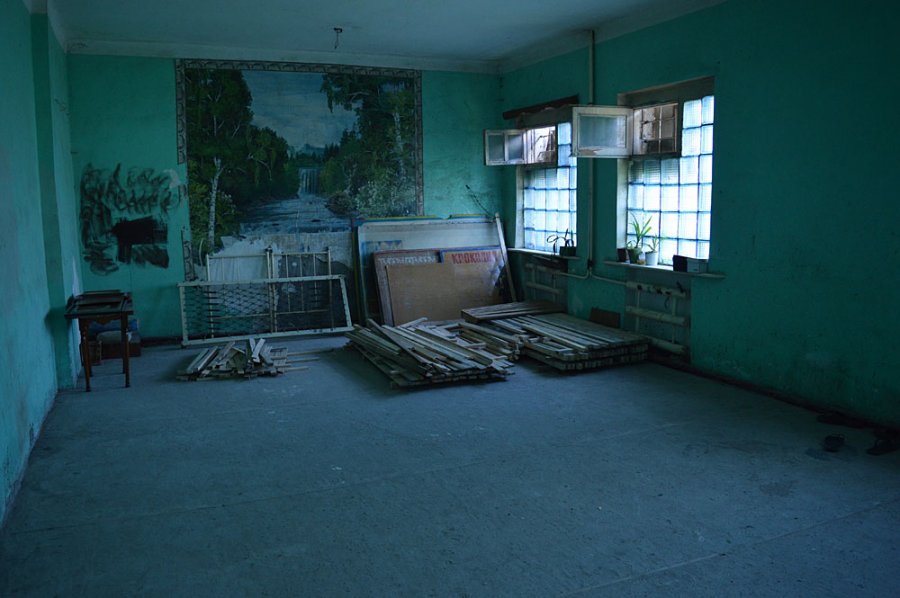
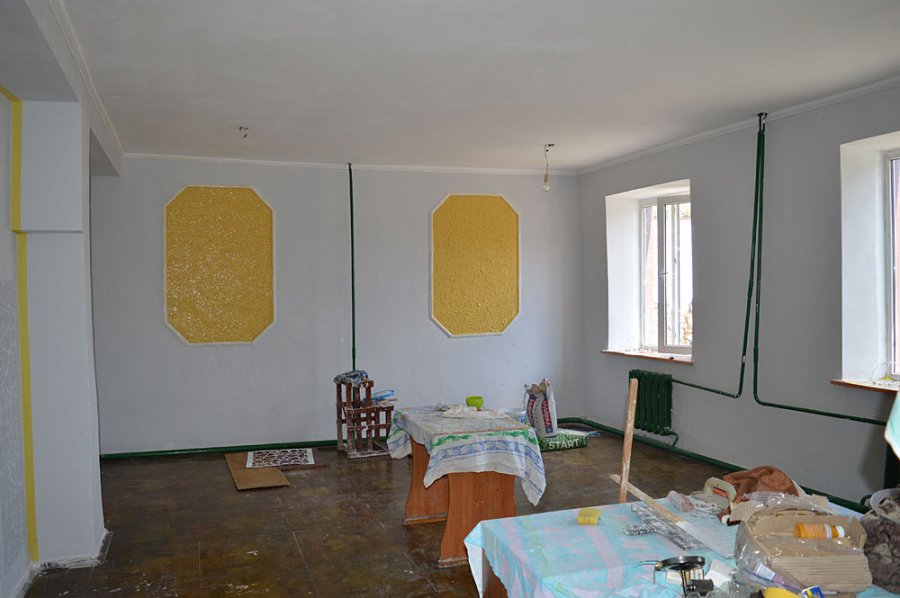
Repair work is being carried out in some rooms.
Traces of past flooding and mould are visible on the walls and ceilings in some units.
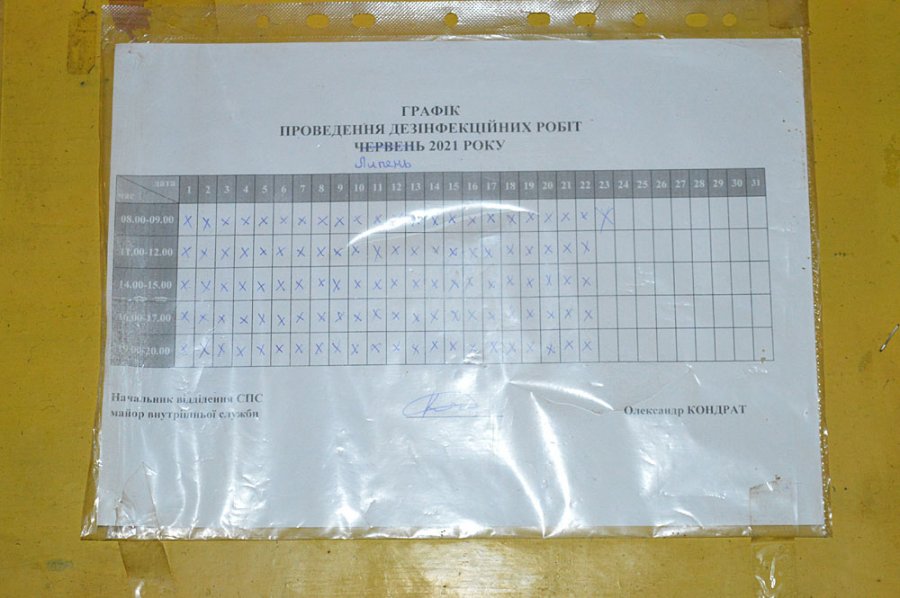
There is a disinfection schedule in the residential units.
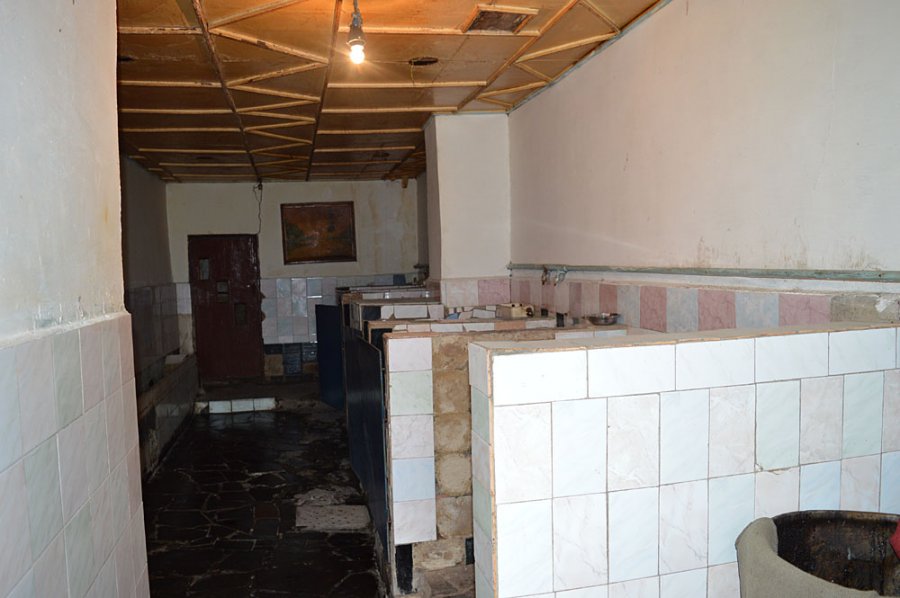
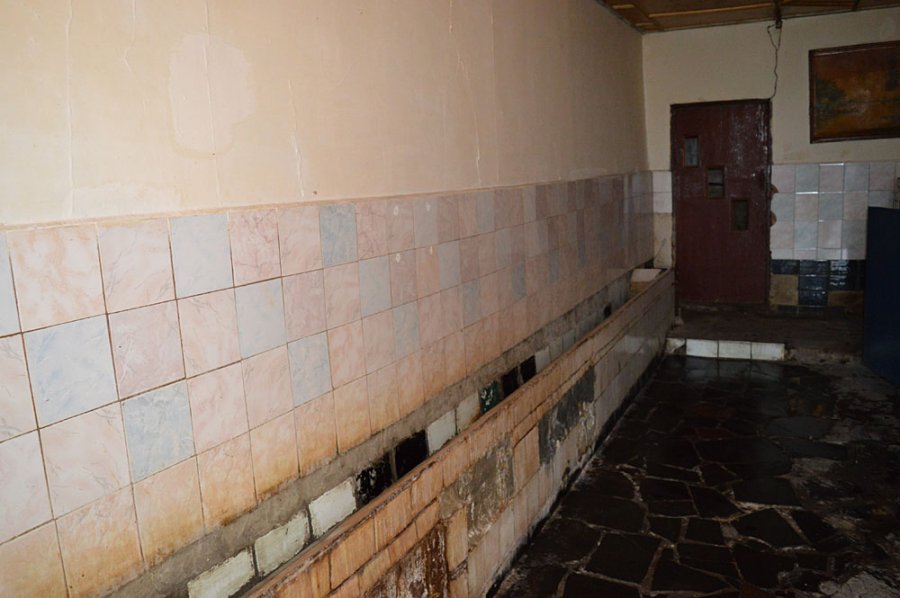
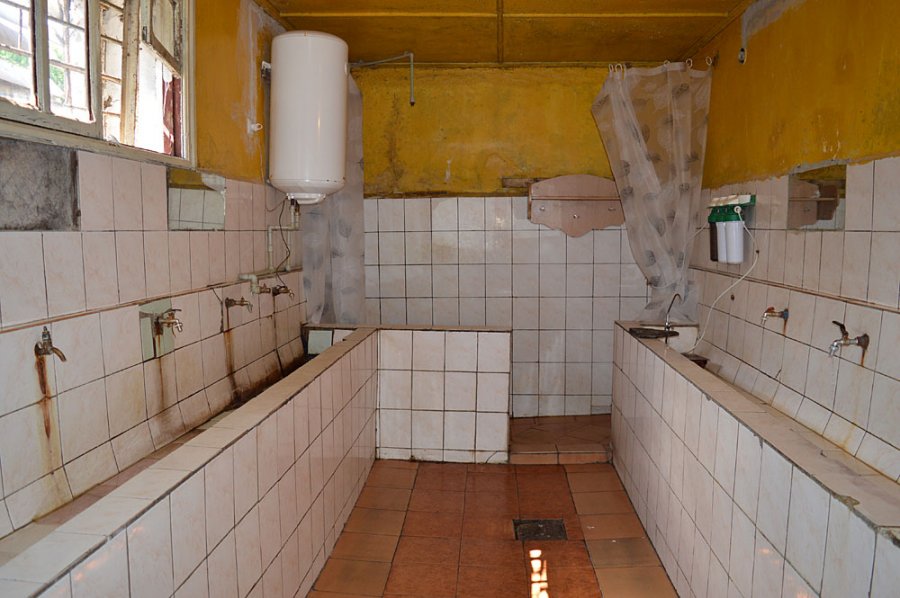
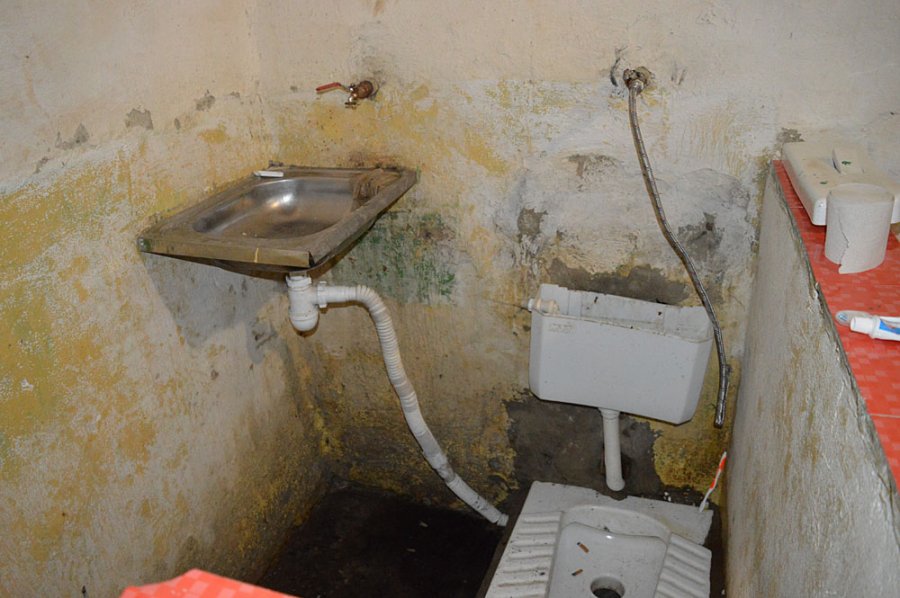
The sanitary facilities are partially tiled, with the tiles partially broken. A Soviet-era hand-washing system is installed in the sanitary facilities, and the inmates have also fitted a shower themselves. The toilets are also in a semi-derelict state; there are traces of past flooding and mould on the walls. Also, the toilets are separated by low partitions, and in some places, toilet doors are missing, which violates the inmates' right to privacy during sanitary and hygienic procedures.
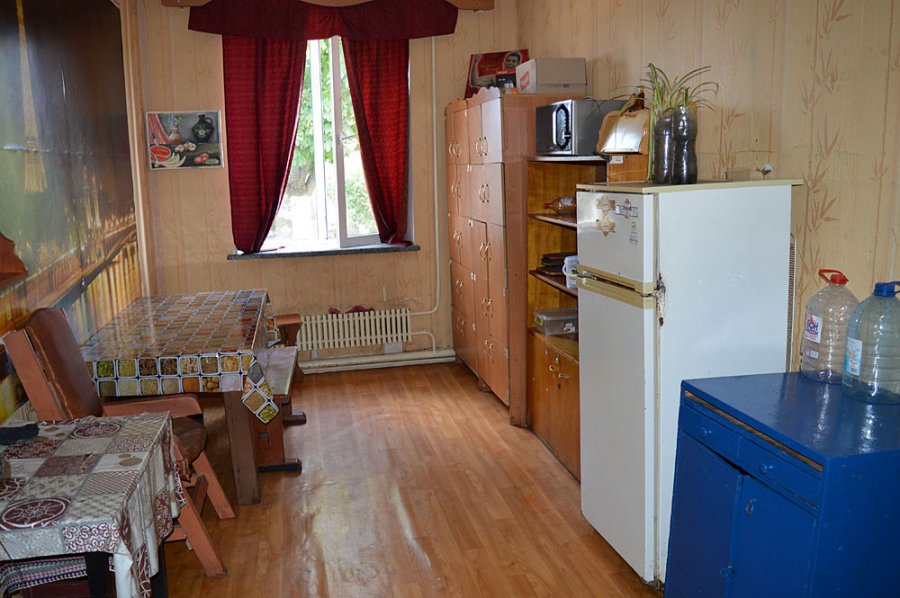
There is a refrigerator, microwave, electric kettle, and other kitchen utensils in the dining rooms.
3. Bath and Laundry Complex
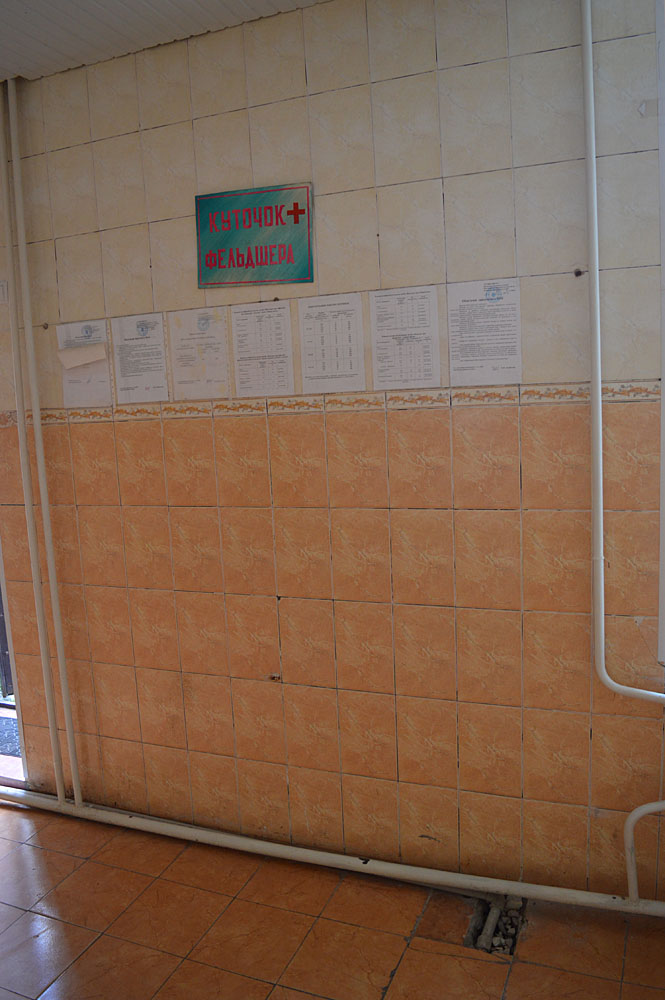
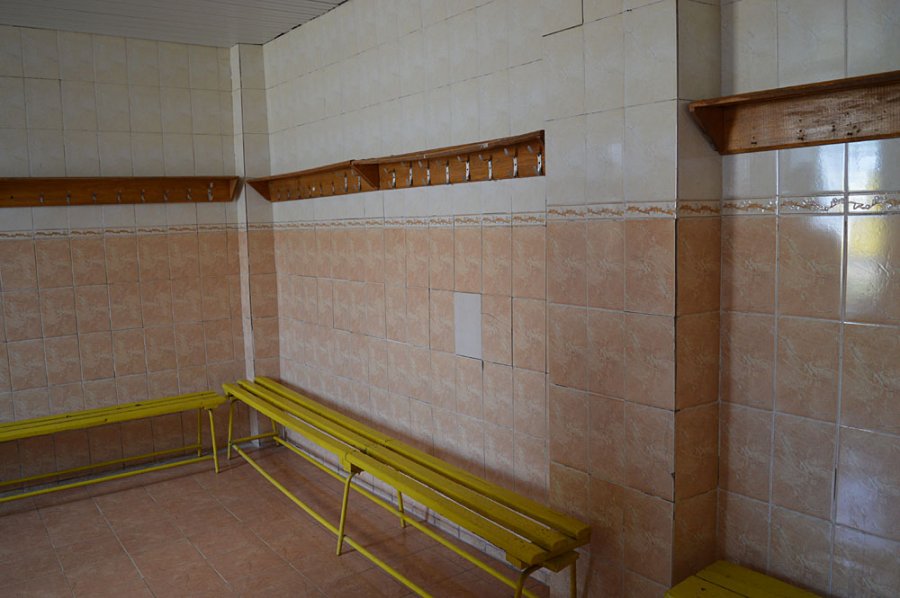
In the changing room of the bathhouse, there is a paramedic's corner without any equipment, marked only by a sign. According to the administration, they bring a table and chair each time for the paramedic to check for the presence of bodily injuries without any partitioning of this place from the rest of the changing room. The monitors note that minimum privacy conditions are not observed during such an inspection. Such an inspection should be conducted in a separate room.
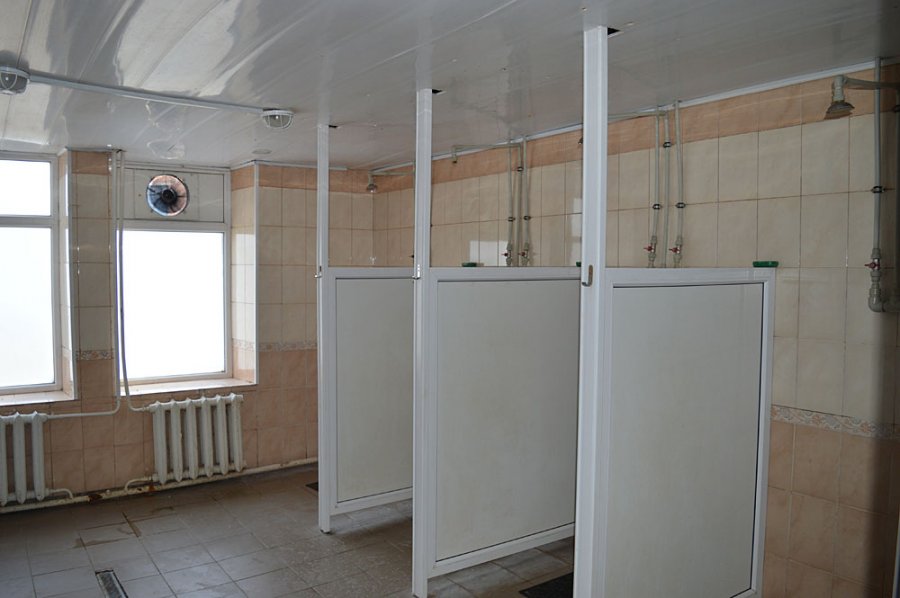
The shower stalls are separated from each other by plastic partitions and have mats, but at the time of the visit, there were no curtains. However, representatives of the administration assured that they were just being disinfected.
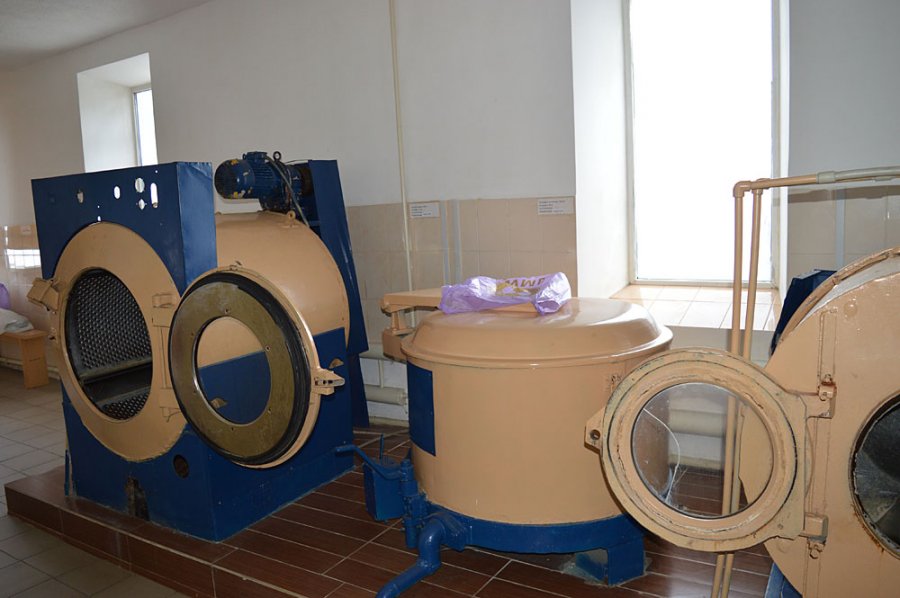
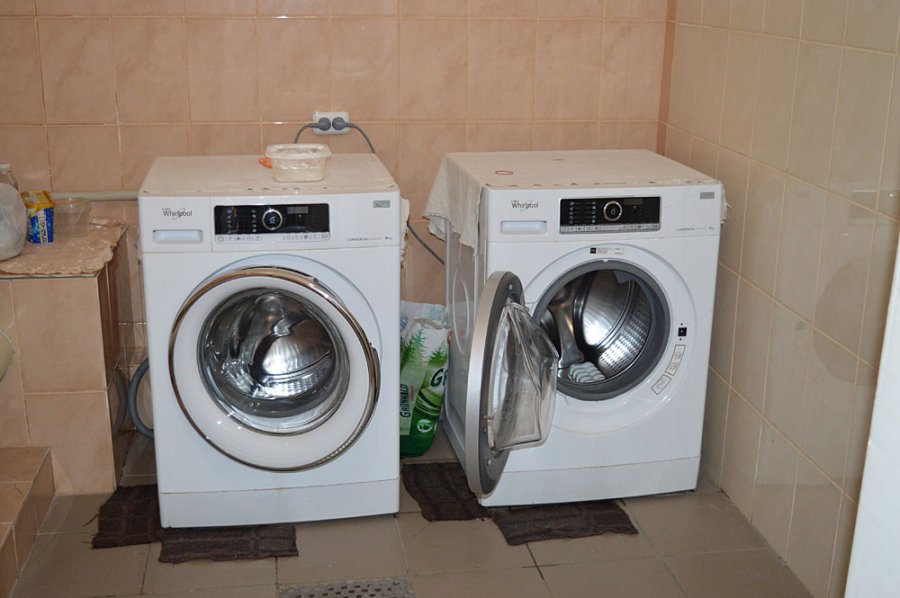
Both old and new washing machines are used in the laundry. According to the administration, their capacity is sufficient to meet the institution's needs.
4. Disciplinary Isolation Ward / Chamber-Type Premises
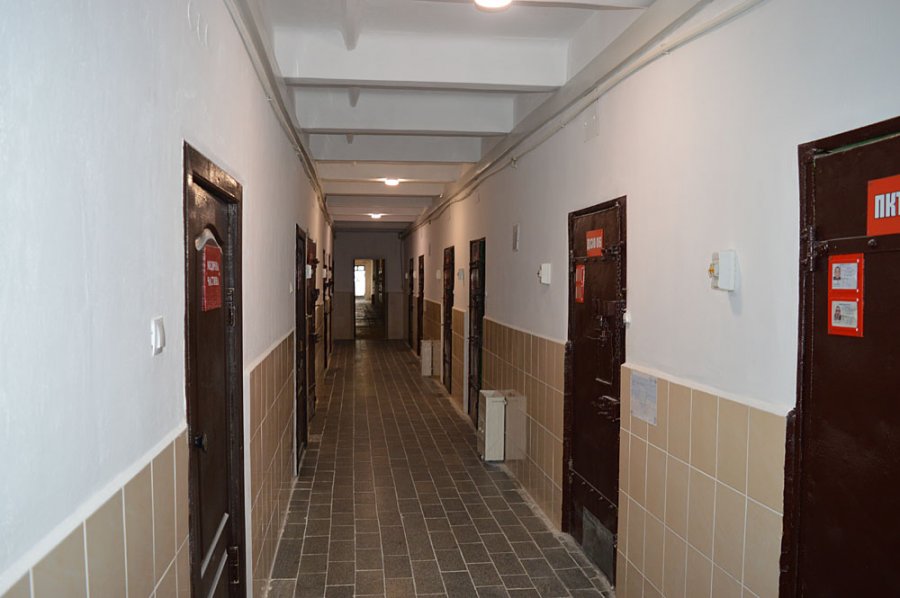
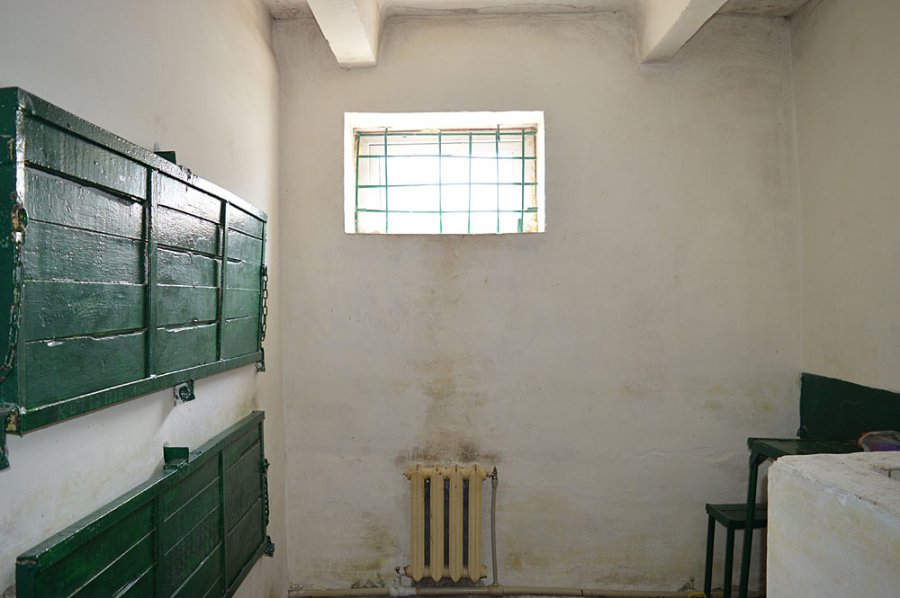
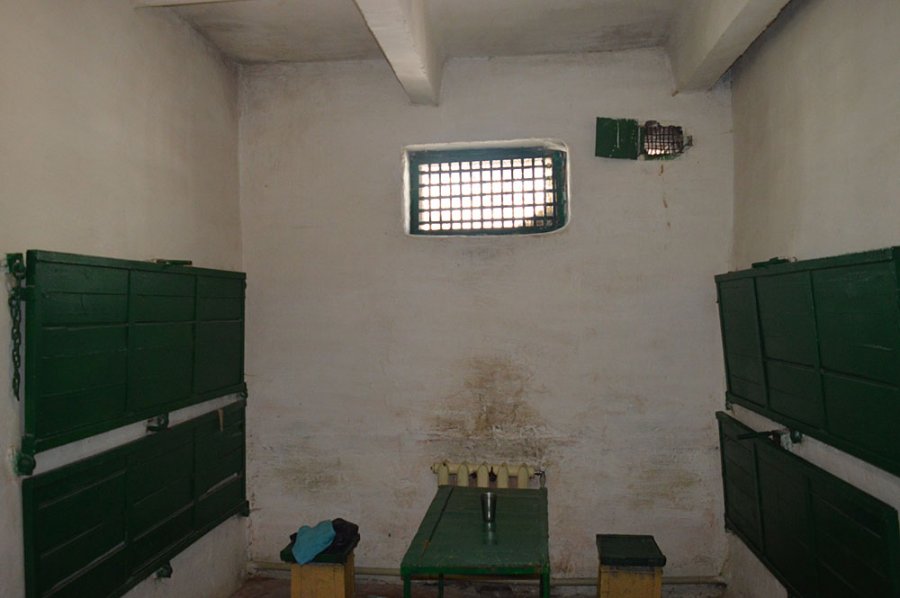
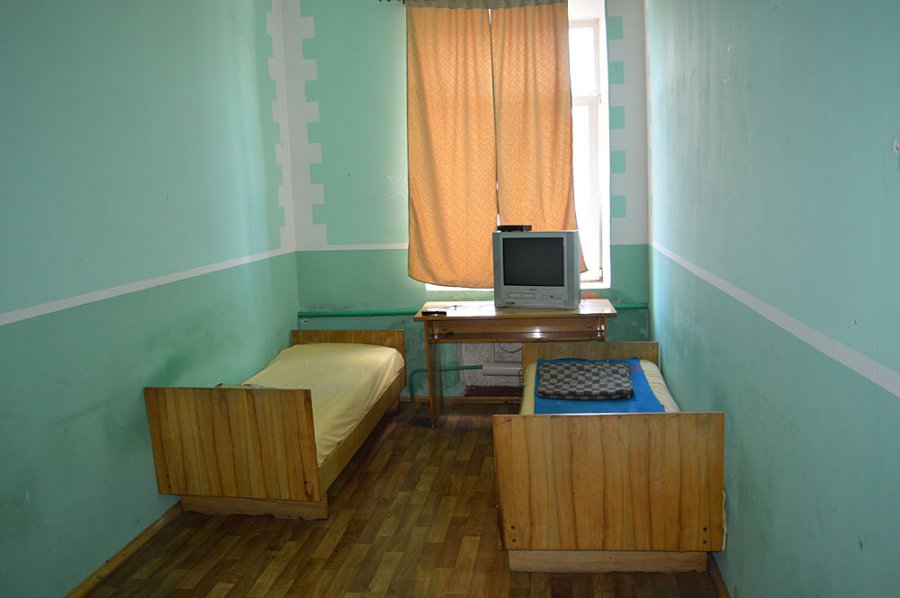
At the time of the visit, eight people were serving disciplinary sanctions in the disciplinary isolation ward, and no one was in the chamber-type premises. Since the beginning of the year, 129 people have served disciplinary sanctions in the disciplinary isolation ward, and none in the chamber-type premises. The material conditions in the cells of the disciplinary isolation ward were satisfactory. The walls had been whitewashed quite a long time ago, and there are signs of fungus on them. Metal-plastic windows have been installed, which do not open in all cells, creating increased humidity and dampness in those cells where the windows do not open. During the visit, the beds in the cell were fastened to the wall. The administration forces the inmates to fasten the beds, citing an order for official use No. 30/5. Unfortunately, this order is not public and applies only to representatives of the administration. This order should in no way restrict the rights of inmates, who cannot familiarise themselves with it and should not have to comply with it. The two small benches near the table are clearly insufficient to accommodate the five people for whom the cell is intended.
The toilets are separated by a low partition without doors and are in a dilapidated state.
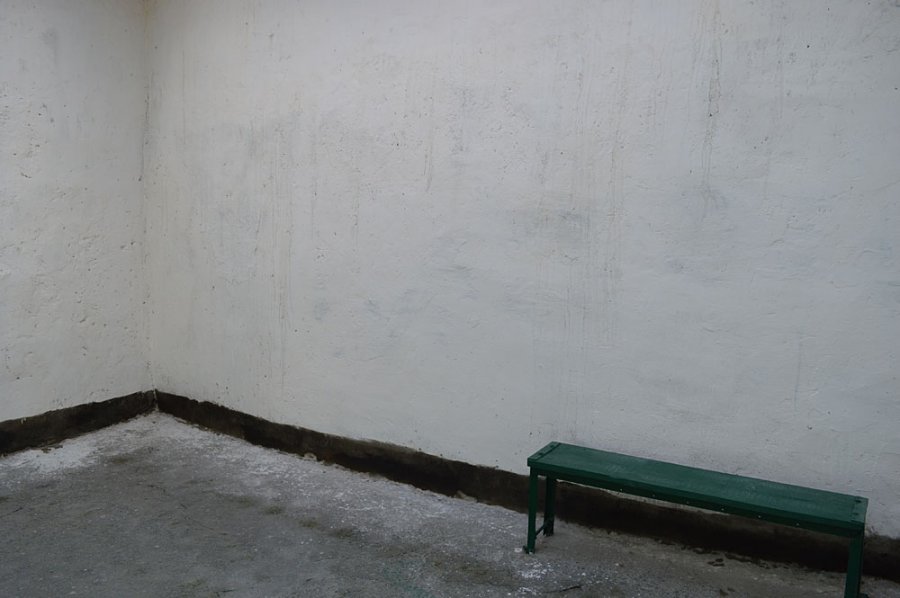
The exercise yards are equipped with a bench and sports equipment.
5. Canteen and Kitchen
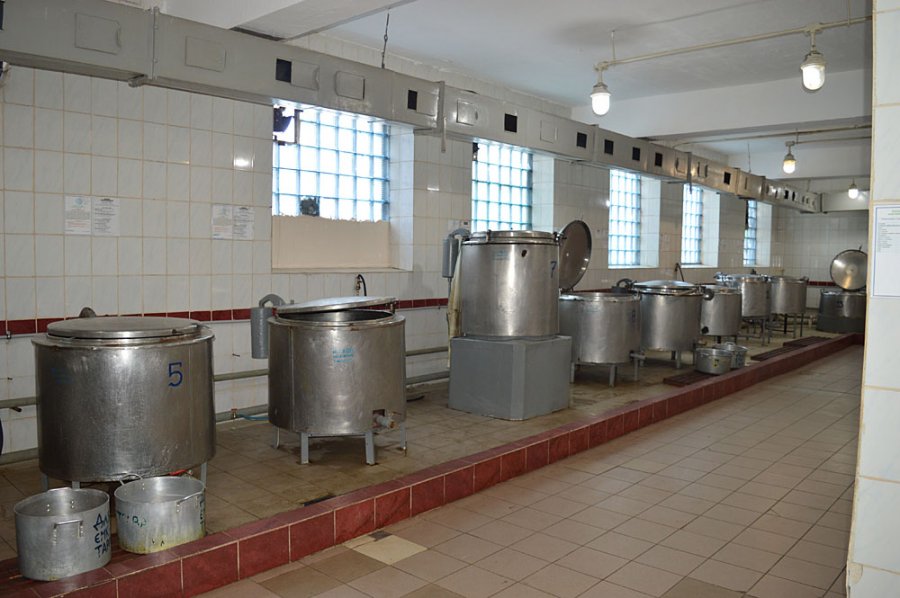
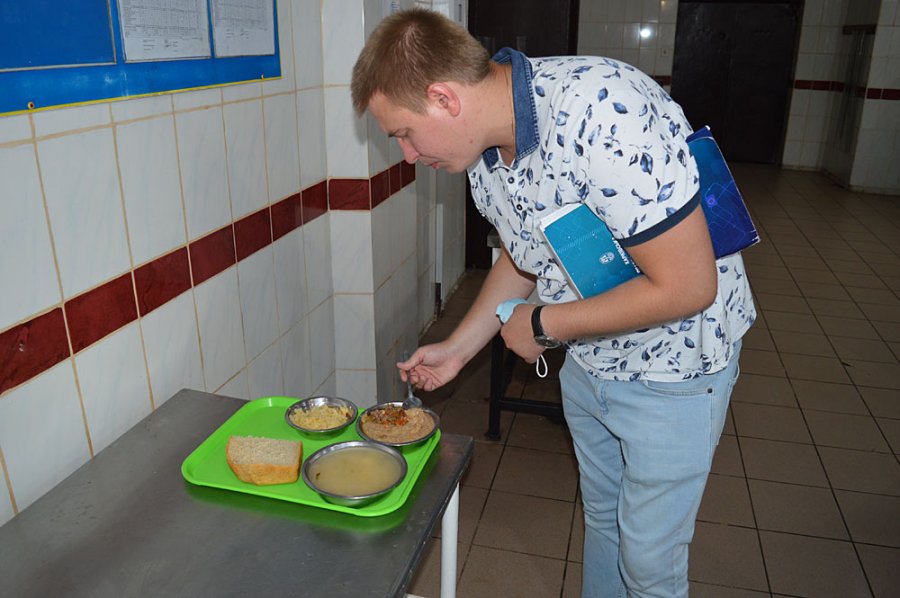
At the time of the visit, lunch was being prepared in the kitchen. The monitors tasted the lunch dishes and note their acceptable organoleptic qualities. The kitchen's capacity is sufficient to ensure proper nutrition for all inmates.
The monitors note that the inmates working in the kitchen do not receive any wages at all, as the institution's administration engages them free of charge in accordance with Part 5, Article 118 of the Penal Executive Code of Ukraine. This is due to the lack of funding for kitchen staff positions by the Ministry of Justice.
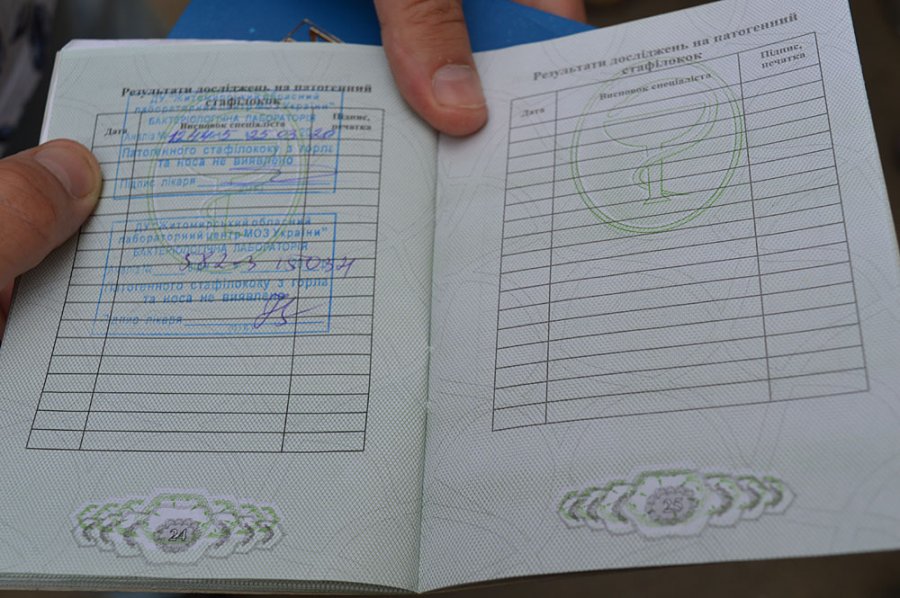
The inmates have medical books.
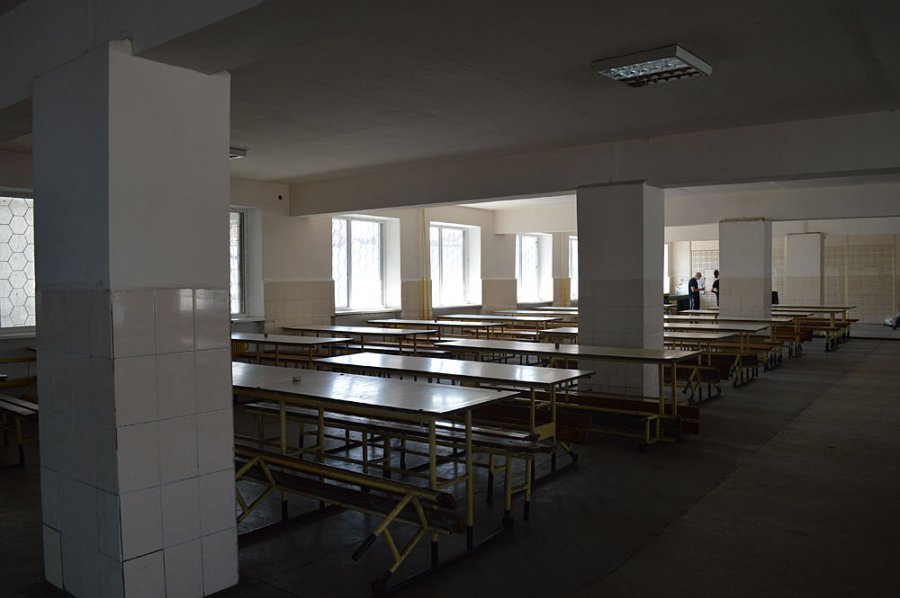
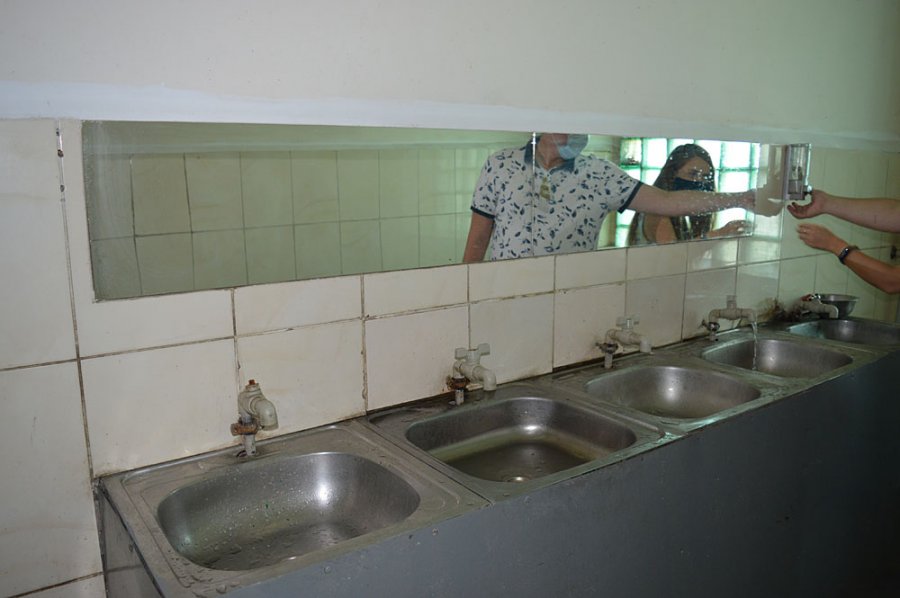
The dining hall is large. At the entrance, there are washbasins without towels or soap in the dispensers. The administration assured that the administration fills the dispensers before mealtimes.
6. Medical Unit
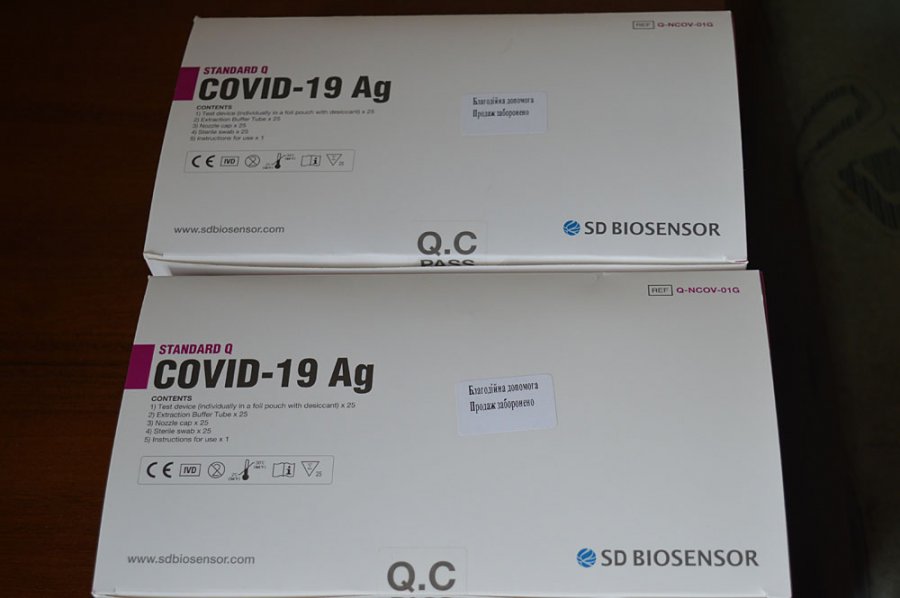
According to the staffing schedule, 16 employees should work in the medical unit, but as of today, only 12 are employed. There is no infectious disease specialist or paramedics. According to the head of the medical unit, the institution is fully provided with medicines. Moreover, according to general practice, the institution does not accept packages with medicinal preparations from relatives. The head of the medical unit considers this unnecessary. Therefore, the institution does not maintain the relevant medical documentation that must be in every medical unit of the Centre for Health Care of the State Penitentiary Service in accordance with the joint order of the Ministry of Justice and the Ministry of Health No. 1348. The institution is also provided with test systems for coronavirus, as well as rapid tests for HIV and hepatitis. At the same time, according to the head, tests for CD4 cells have not been conducted since the beginning of the year due to the lack of cartridges for laboratory equipment.
There was no one in the institution's inpatient ward. This seemed strange to the monitors for a colony in which almost a thousand people are serving sentences. The head of the medical unit reported that the institution should not have an inpatient ward at all, and the medical unit represents an outpatient-polyclinic department. This also sounded strange to the monitors, because according to current legislation, inpatient wards are exactly what are created at medical units.
During the current year, twelve cases of inmate injury were recorded in the institution, which also looks strange for such a large institution. Four inmates died in the institution during the year. No inmate was released from serving the sentence due to illness. Moreover, there is no medical-consultative commission in the institution.
During the current year, inmates were hospitalised in Ministry of Health hospitals five times.
During the pandemic, 7 inmates contracted the coronavirus disease.
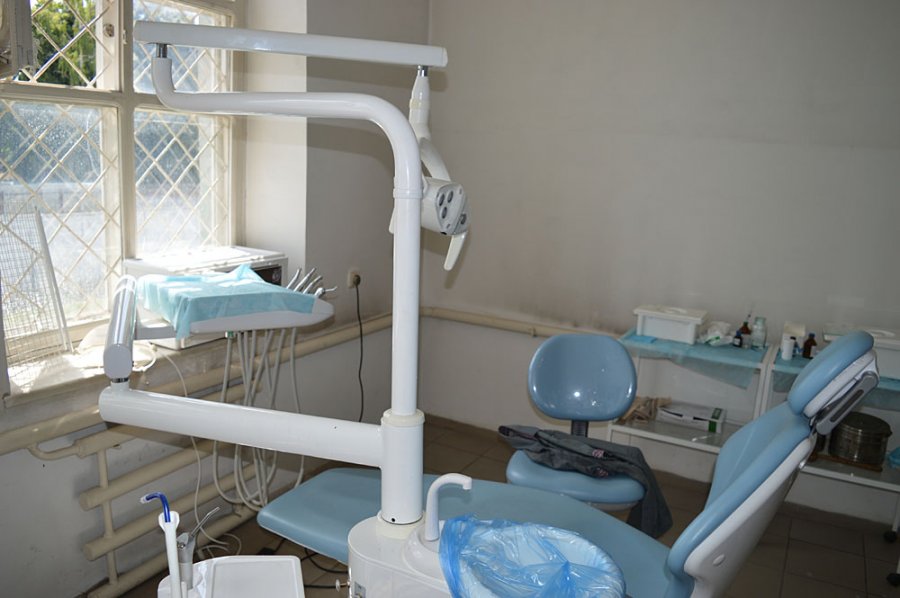
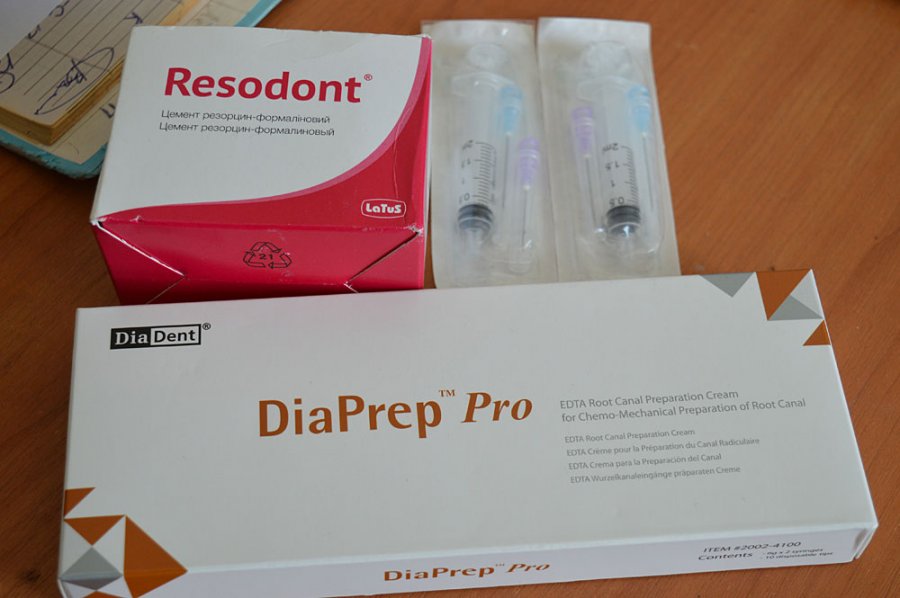
The monitors examined the dentist's office. During the conversation, the latter reported that he sees on average from 5 to 7 inmates. The dentist demonstrated the available filling material, which was already running out. The doctor noted that such material is in short supply.
7. Shop
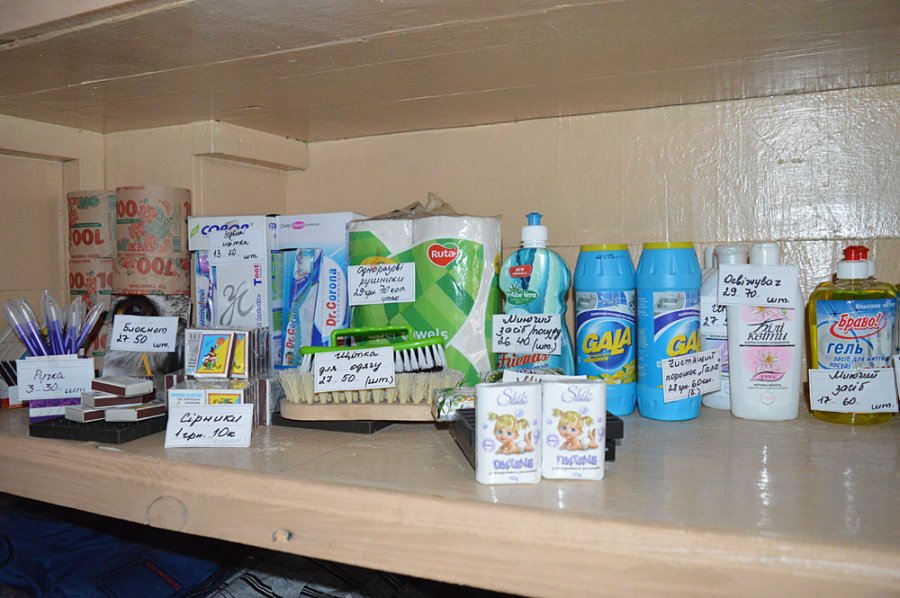
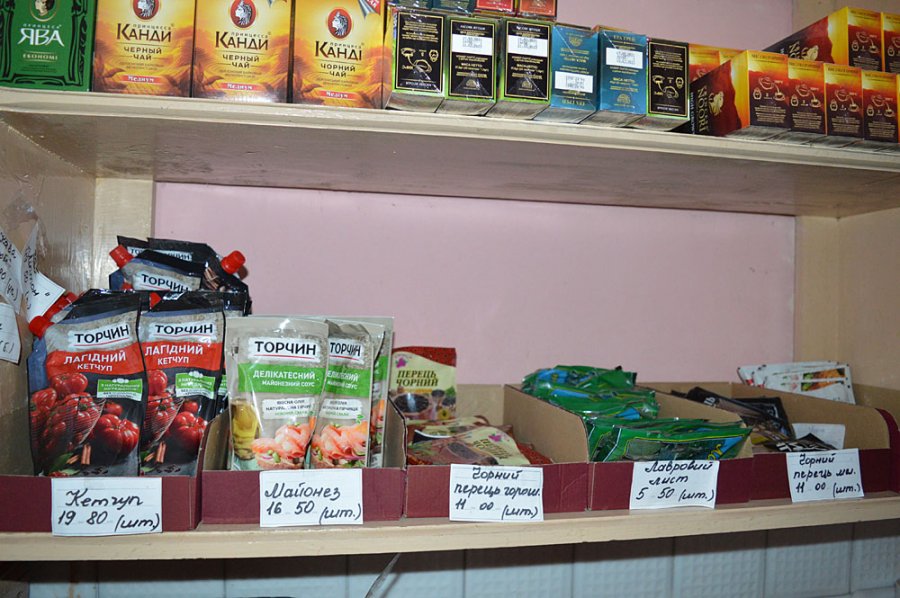
The prices in the shop differ greatly from retail prices. For example, black peppercorns cost 11 hryvnias per pack in the colony, while the average market price is 5.50 hryvnias; matches in the institution's shop cost 1.10 hryvnias per pack, while the average market price is 60 kopecks; "Lahidnyi" ketchup in the shop is 19.90 hryvnias, the average market price is 11.50 hryvnias; "Gala" cleaning powder in the shop is 28.60 hryvnias, the average market price is 17.70 hryvnias.
The monitors emphasise that a mark-up of almost 100 percent on the average market price of a product is unacceptable for such a socially vulnerable group as inmates, who for the most part do not work due to a lack of jobs, and those who do work receive meagre money, from which 50 percent of deductions are also withheld.
8. Production
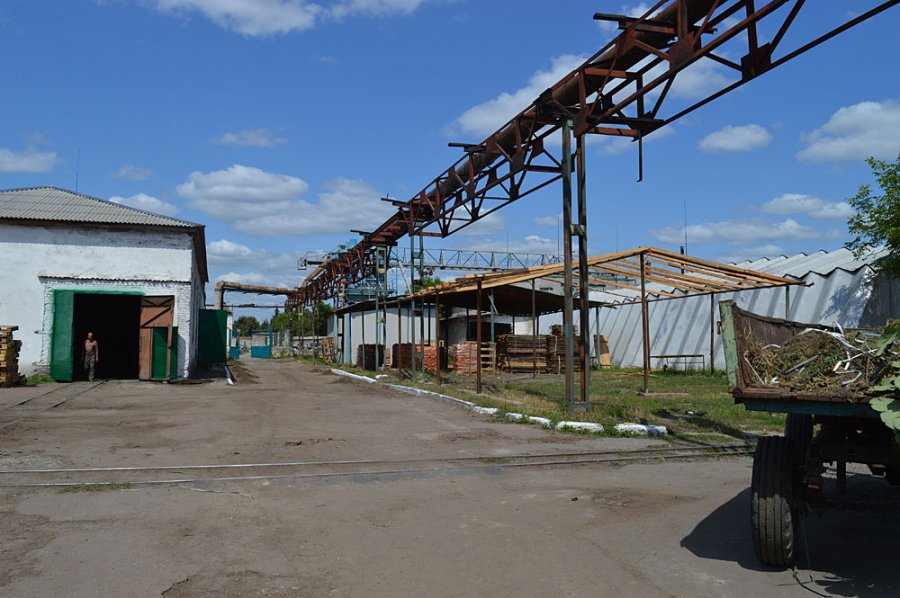
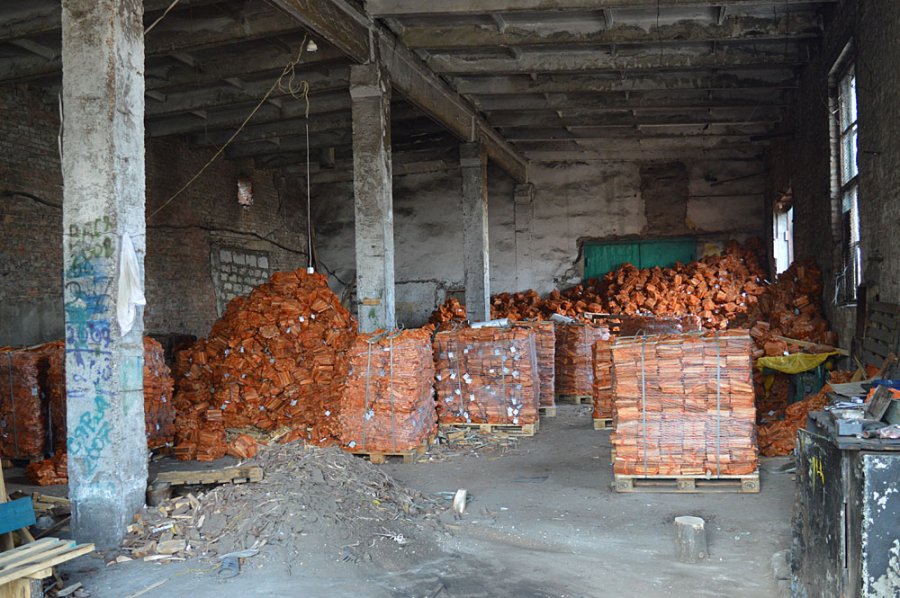
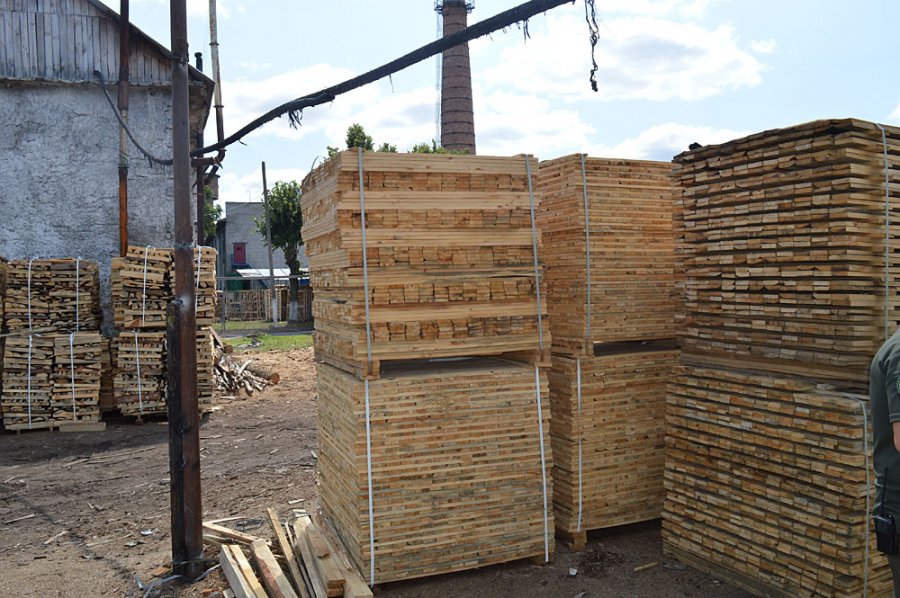
According to the administration, production is represented by woodworking. However, the monitors were unable to obtain complete information about production. The director of the enterprise ignored the request of the monitors and the administration of the institution to be present during the inspection of the enterprise. During the conversation, the working inmates could not answer about the nature of contractual relations with the enterprise (labour or civil-law), about the system of wage payment and its amount. Some inmates were clearly confused in their answers to these questions and contradicted themselves.
The monitors intended to turn to the production director for explanations, whom they were forced to wait for more than forty minutes. Upon appearing, the director of the enterprise refused to provide the requested information, which the monitors have the right to receive without obstruction, upon oral request, in accordance with Article 24 of the Penal Executive Code of Ukraine. In this regard, the monitors have significant suspicions that the labour rights of inmates are being grossly violated at the enterprise and that some of them are working without a proper formalisation of employment relations with the enterprise.