Report on the results of the monitoring visit on 03.05.2017 to Chernihiv Penal Colony No. 44
The monitoring group of the Kharkiv Human Rights Protection Group, consisting of Vasyl Melnychuk and Oleksandr Pavlichenko, visited Chernihiv Penal Colony No. 44 on 3 May 2017, where women sentenced to imprisonment for a specific term, who have previously served a sentence in the form of imprisonment, serve their sentences. Convicted women with disabilities and elderly women are also sent to this colony to serve their sentences.
On the day of the visit, 200 convicted women were held in the colony, of whom those engaged in paid work—mostly in garment production—numbered about half, i.e., 97; when there is work, in reality, it is fewer. This is one of two colonies in Ukraine (the second is located in Odesa) where mothers with children who have not yet turned three years old are held.
Disciplinary isolation unit (DIZ) and cell-type premises (PKT)
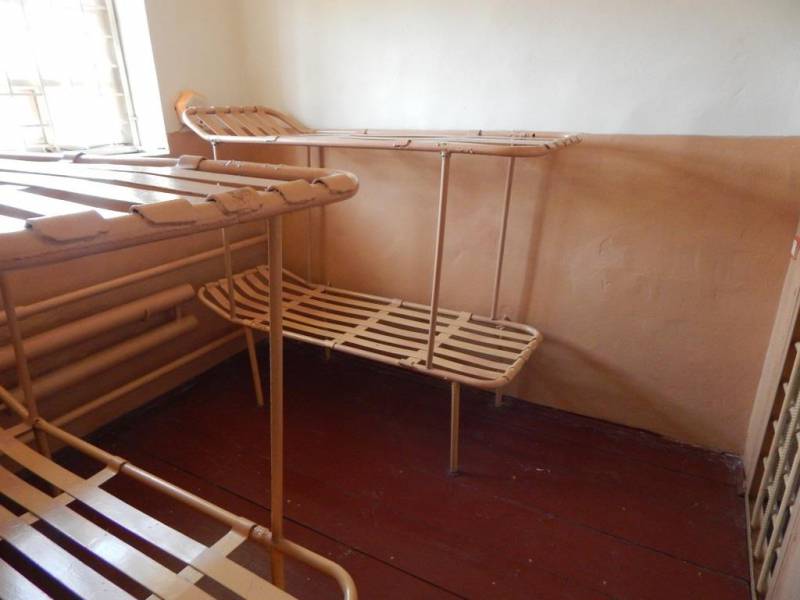
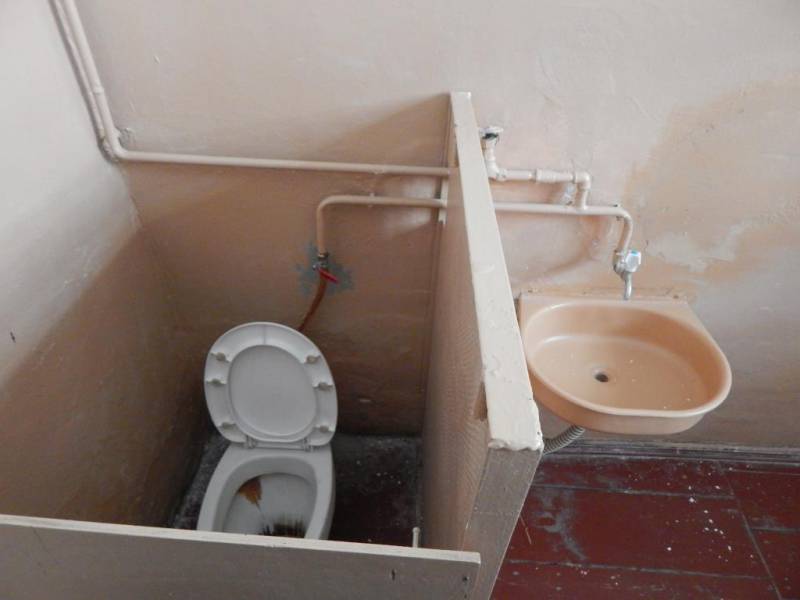
In the DIZ-PKT unit, on the day the colony was visited, there were no convicts. This year, a disciplinary penalty involving the placement of a convict in the DIZ was imposed only once. The premises of the disciplinary isolation unit are in a proper condition; the walls are painted, there is a wooden floor, and the toilets are separated by a partition from the main room. Natural lighting is sufficient. All DIZ cells consist of two rooms, one of which has cots, and the second contains a table and information stands; the total area of the cell is about 15 sq. m. According to the administration, in 2016, disciplinary penalties involving placement in the DIZ were applied 13–14 times during the year. As can be seen, the number of disciplinary penalties involving placement in the DIZ this year is significantly lower.
Children's Home
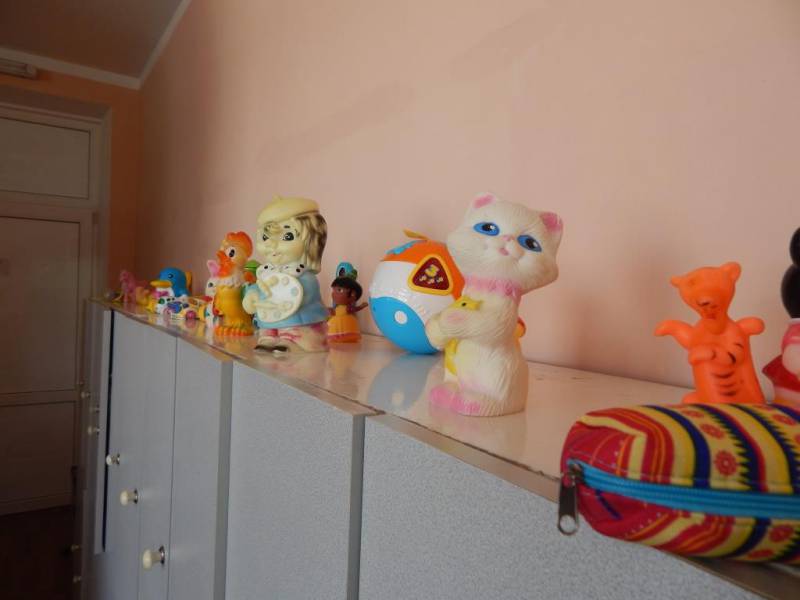
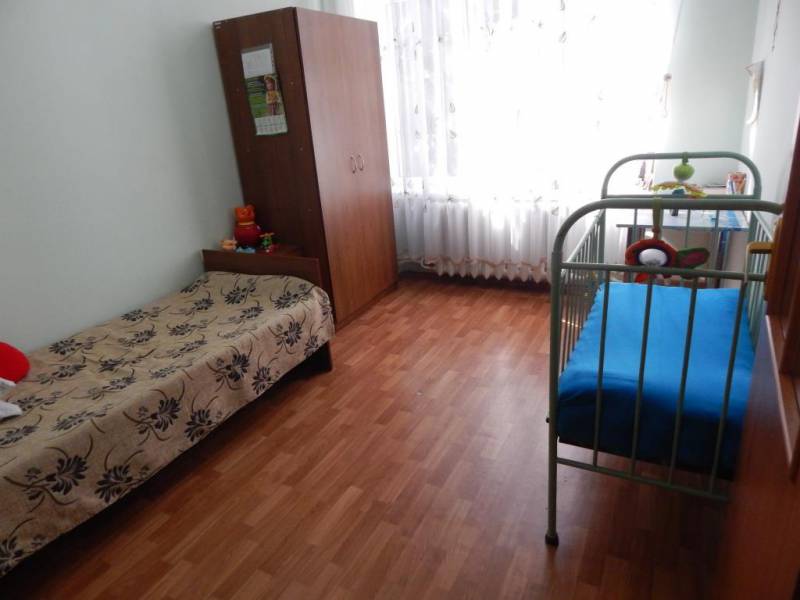
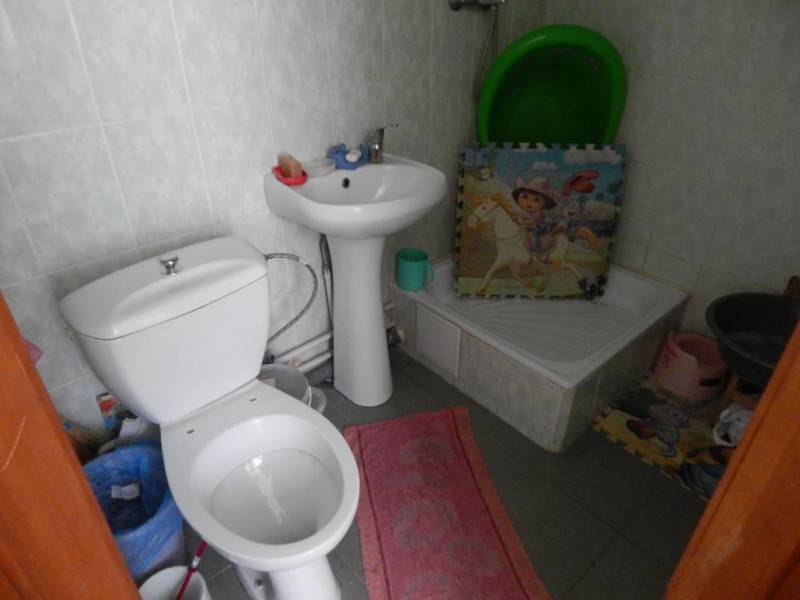
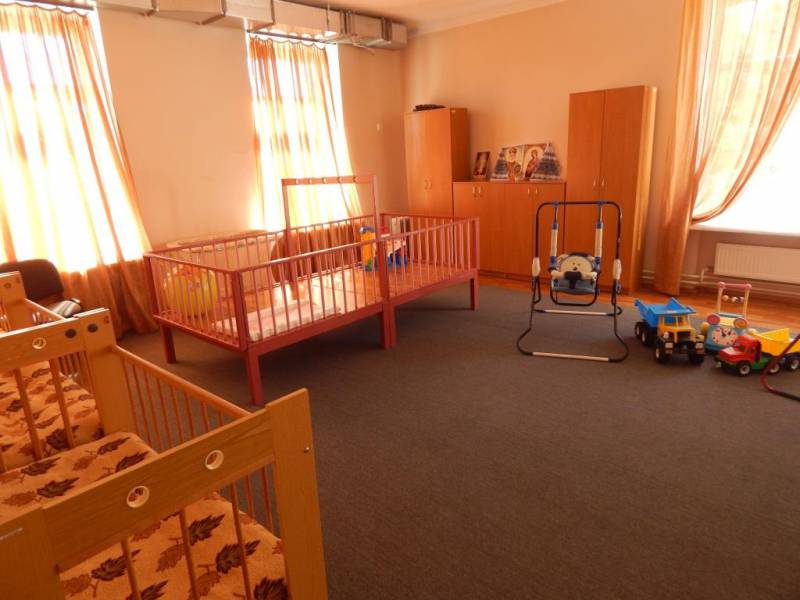
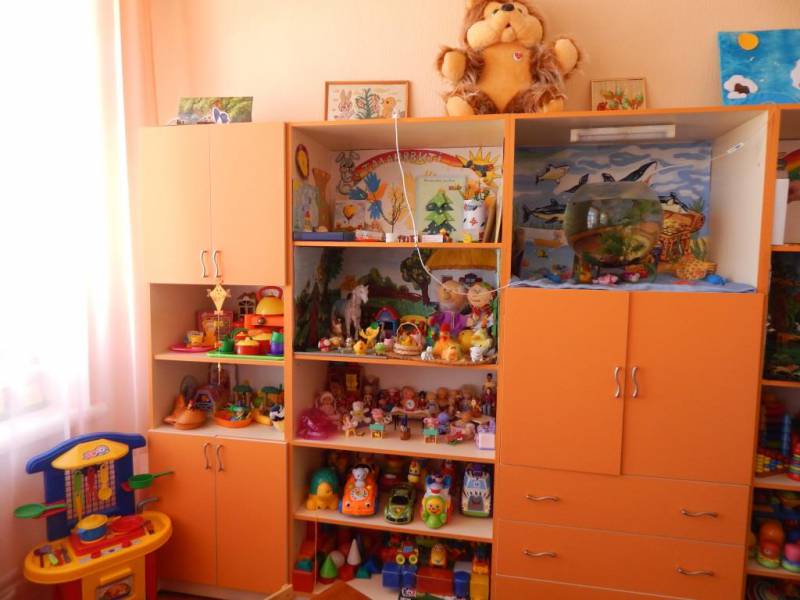
On the territory of the colony, there is a Children's Home, where children of convicted women under the age of 3 are held. In 2008–2011, a renovation and re-equipment of the Children's Home premises on the colony's territory took place, and now it is possible for mothers to live and stay together with their children in separate ward-rooms. 9 mothers lived together with their children in separate rooms. Each number is provided with one room with a sufficiently spacious bathroom, which is standardly equipped with a washbasin, shower, and toilet. The room has a separate cot, a sleeping place for the mother, two cupboards, and a changing table for the child.
So that the children are not only in the conditions of a closed-type children's home, the Children's Home staff organise various educational events involving the children outside the colony territory.
On the day of the visit, there were 10 children in the colony, 6 in the 'senior' group, with whom educators conduct classes, and 4 in the smaller one. Children stay with their mothers until they are three years old; then, if the mother is to be released within a year, the child is kept with the mother for no more than 4 years. If the child turns three years old and the mother still has more than a year of the sentence to serve, the child is either handed over to the convict's relatives, which happens most often, or transferred to the children's home in Pryluky (this is about 155 km from Chernihiv, although within the same region). Children from the children's home are not brought to visit their mothers in the colony.
Two of the ten children have quite serious illnesses. An eight-month-old boy needs urgent heart surgery; the head of the children's home informed us about an arrangement with one of the leading medical institutions in Kyiv to operate on the child on a planned basis. The second child also has a heart condition but does not require surgical intervention.
The children's home requires better and more funding allocated for medicines from the institution's budget. According to the head of the children's home, as of today, the colony receives about 700 UAH per month for medicines for children, and this is insufficient, because just the cost of one vial of medicine for a child with a heart condition is about 200 hryvnias, and several such vials are needed per month for constant treatment. The lack of funds for purchasing medicines is particularly felt when children fall ill with colds or viral diseases, when more medicines are needed for many children. According to the head of the children's home, at least 1,500 UAH per month is needed to normally meet the need for medicines.
The issue of a legislative gap remains open regarding the provision of children's homes with children's hygiene products, such as nappies, wet wipes, etc., as it is not currently permitted to purchase such items, and they are received thanks to humanitarian aid. This gap is currently allowed to be closed by various charitable organisations – often religious organisations that provide aid to the colony.
Labour in the colony
Ninety-seven convicts work in the colony, including convicts involved in housekeeping work.
On the territory of the colony, a garment production workshop built in the eighties functions. The workshop, located on three floors, is properly equipped, has a lift, trolleys for transporting raw materials and shipping finished products; it has forced exhaust ventilation, large windows that provide daylight, and workplaces equipped with artificial lighting lamps.
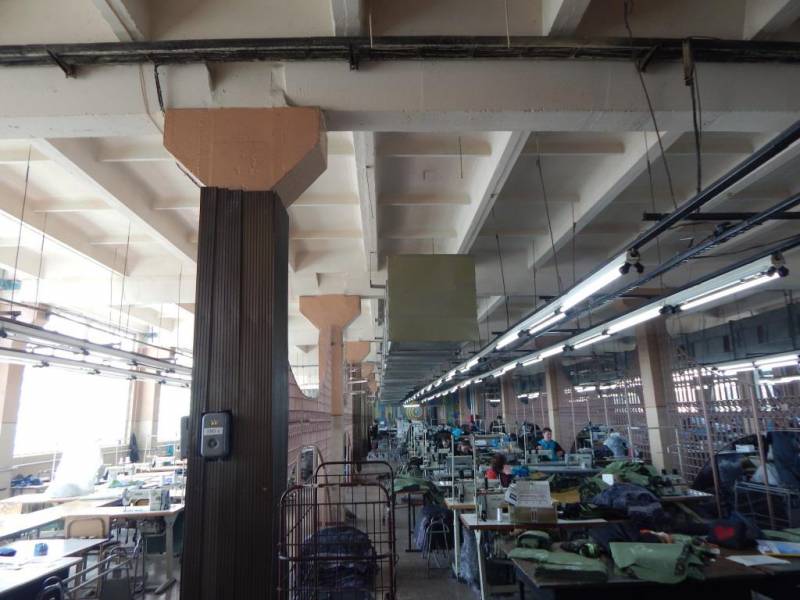
Due to the decrease in the number of convicts working in the sewing workshop (in the last two years, the number of convicts in the colony has decreased almost threefold – from 600 to 200 people), according to the production manager who accompanied the monitors during the visit to the workshop, they can only manufacture sewing products in the colony that do not require a large number of technological operations or are complex to manufacture. On the day of the visit, the convicts were making workwear (jackets).
During a conversation with the convicted women working in the sewing workshop, it was possible to find out the level of their wages. Thus, one of the best workers noted that last month she received about 1,800 hryvnias into her own account (this is already after deductions). However, in general, this figure is significantly lower. The average salary (before deductions) in the colony is 1,085 UAH. The convicts themselves named sums that they received into their accounts already after deductions, which is in the range of 200–400 hryvnias, noting at the same time that the size of payments has increased several times recently. The production manager noted that the level of payment depends on the volume of work performed, which is also connected to professional experience, skill, and the desire to work, which is why there is a different level of payment.
Dining room and feeding of convicts
When communicating, the convicts did not express complaints about the quality of the food; on the contrary, they emphasised that their daily diet includes meat. On the day of the colony visit, fried fish was being prepared for lunch.
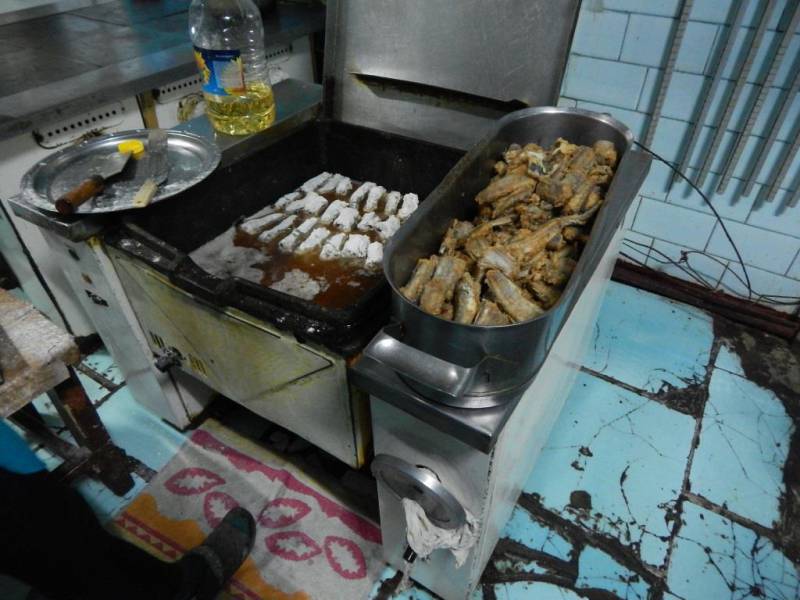
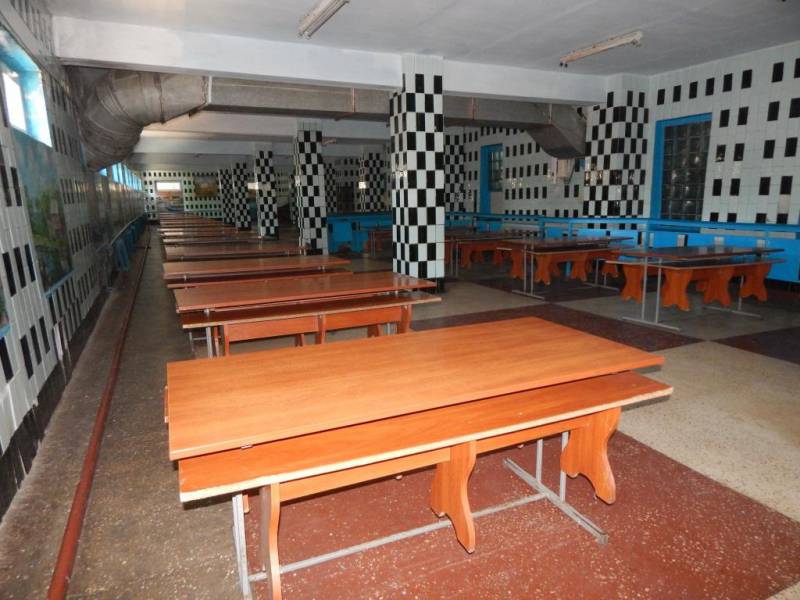
A feature of women's colonies is that in certain situations, women are forced to perform 'men's' work related to lifting or moving heavy loads. First and foremost, this is related to unloading food products brought to the dining room, which may be packaged in containers that are heavy for women – 50 kg sacks, for example. In Chernihiv Penal Colony No. 44, this is also present – convicted women are engaged in unloading and carrying food products brought to the colony's territory, and the unloading is carried out manually. This practice is not normal; women should not be involved in such work, and this issue should be resolved for all women's colonies by relieving convicts from excessive burdens.
Residential sector of the colony
The sector is divided into three resocialisation units; other units are mothballed due to a significant decrease in the number of convicts. The monitors visited the third unit, in which the oldest convicts and disabled persons are held. Despite the significant vacated areas where women could be located, the convicts are housed in premises designed for approximately 20 people.
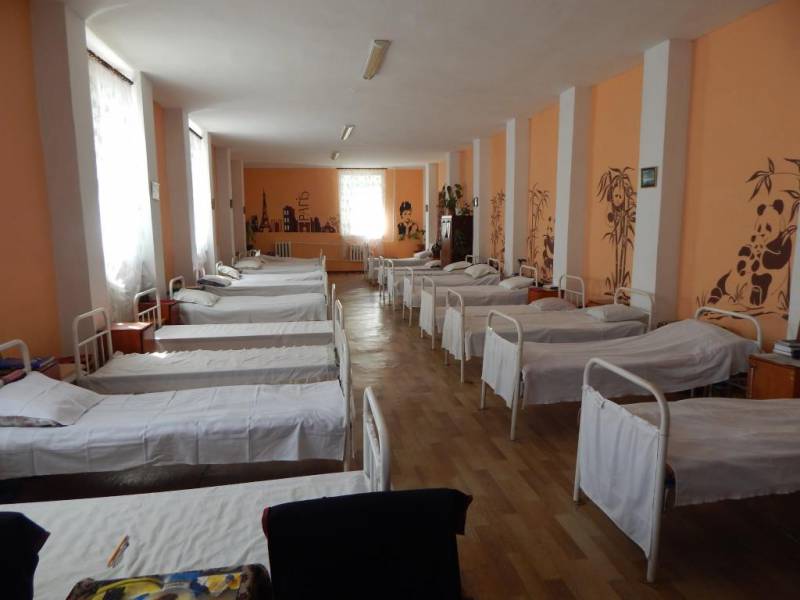
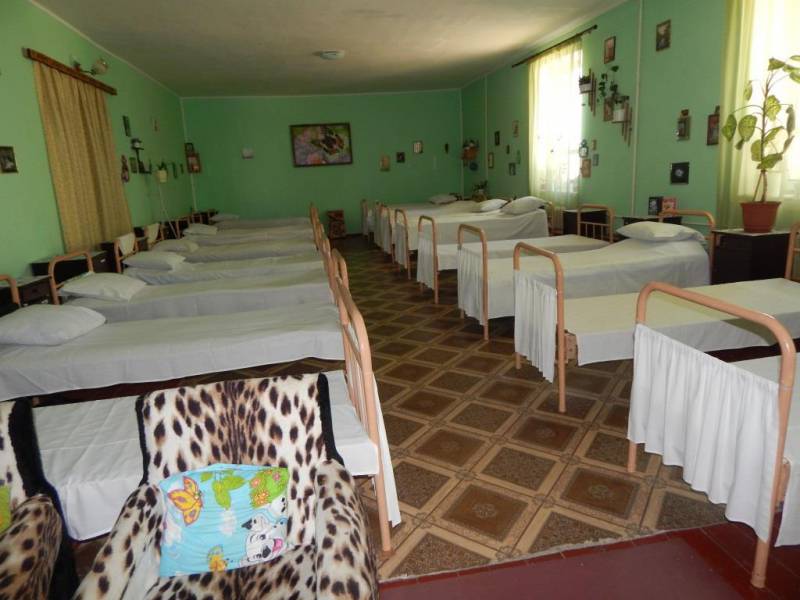
Living in barracks-type premises should be replaced by living in separate rooms designed for a small number of people (2–6); to do this, work needs to be carried out to re-equip the premises and ensure proper conditions of detention, including for ensuring the right to privacy.
The units are equipped with bathrooms, which allows convicts to wash outside the bathhouse visiting schedule (once a week, as a rule). In the showers of unit number 3, elderly convicts and disabled persons have priority to wash; for the rest, the order and schedule for visiting the shower are not determined or fixed, and due to the lack of a schedule or a clearly established order for taking a shower in the units, this causes certain problems, in connection with which it is necessary to develop an appropriate order for visiting the bathroom in the units and bring it to the attention of the convicts. This will allow for the relief of corresponding tension and ensure that all women in the unit have the opportunity to visit the shower in a timely manner when necessary.
Telephone calls, access to the internet, communication with the outside world
Telephone calls are carried out with prior permission and according to a set schedule, which provides for the possibility of communicating using mobile phones under the supervision of the administration. Each convict has their own SIM card, which is kept by the administration, and up to 20 people at a time can talk on the phone in a separate, dedicated room (there are about 20 mobile phone handsets). Up to 500 calls are made per week, which are recorded in the log. There are women who use Skype for conversations with relatives. Tablets with a 'cut-down' internet did not catch on in the colony and are currently not used.
Education in the colony
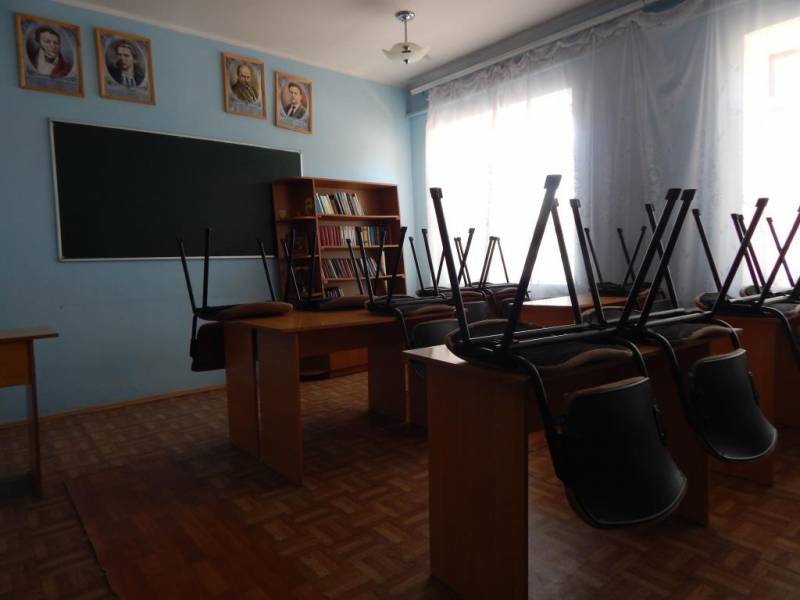
On the basis of the colony, an evening school functions, in which twenty-one convicts study under the 11th-grade programme; convicts also have the opportunity to master the profession of seamstress and hairdresser in a special vocational institution at the colony.
Bathhouse and laundry
The bathhouse is tiled with ceramic tiles, is neat, and the mixers are separated by partitions; however, there is no forced artificial ventilation.
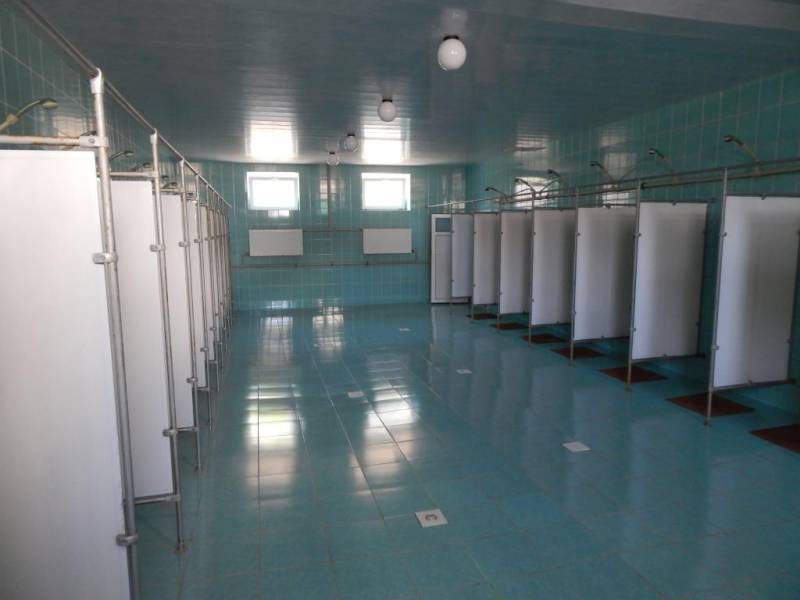
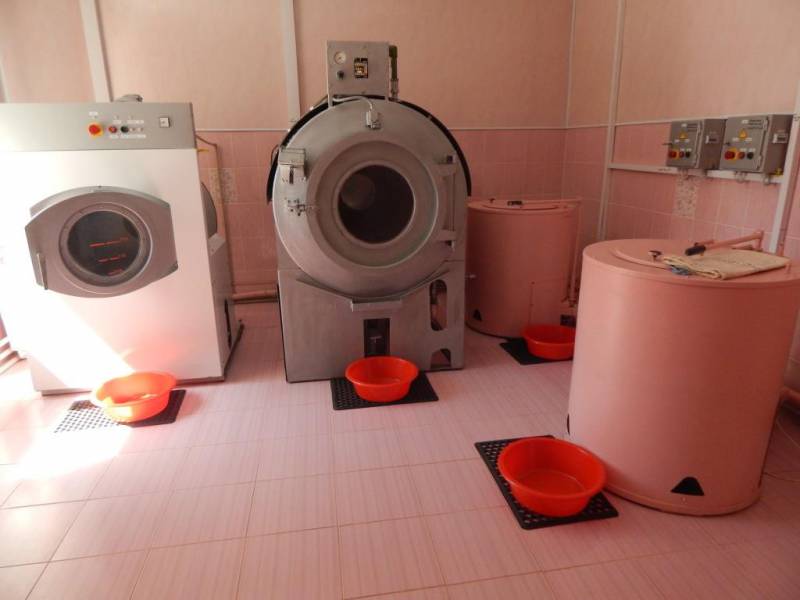
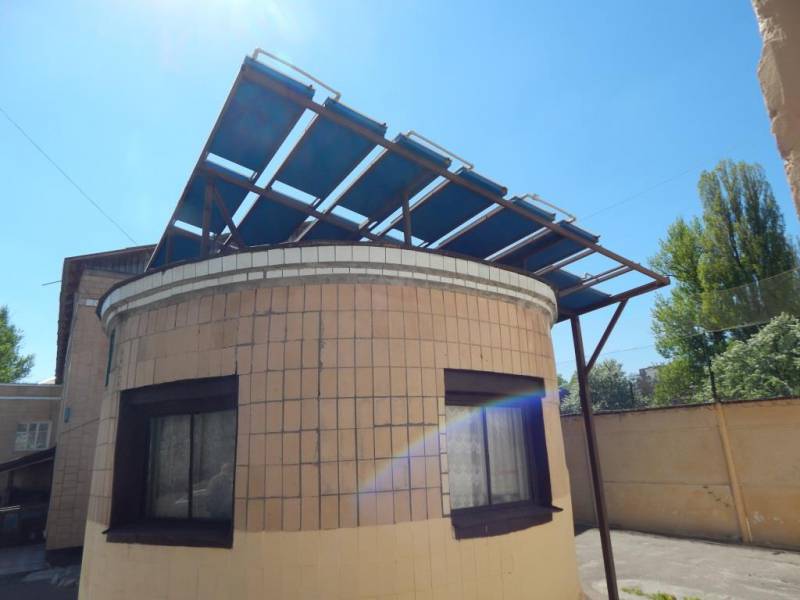
Visiting the bathhouse takes place according to an established schedule, according to which a convict has the opportunity to visit it once a week, and for those who work – daily. Due to centralised hot water supply from the city network, in the event of technical work, the water is turned off; then the convicts cannot visit the bathhouse. To overcome such cases, the administration of the institution installed a solar collector, which will heat water using the sun's rays; it is an environmentally friendly energy source and also provides the opportunity to save on hot water supply.
Restraint devices
The monitors drew attention to the fact that the instructors overseeing order in the colony carry rubber batons, which are restraint devices. According to the administration, there has not been a single case of using such a restraint device in this colony; in particular, they could not recall any. However, according to the relevant instructions, carrying such a restraint device is mandatory. It would be appropriate to review both these instructions and the practice of using restraint devices, by maximally reducing the number of people who must mandatorily have such a restraint device with them.