The Reform Prisoners Never Saw: What Was Really Left Undone in the Penitentiary System Reform Strategy
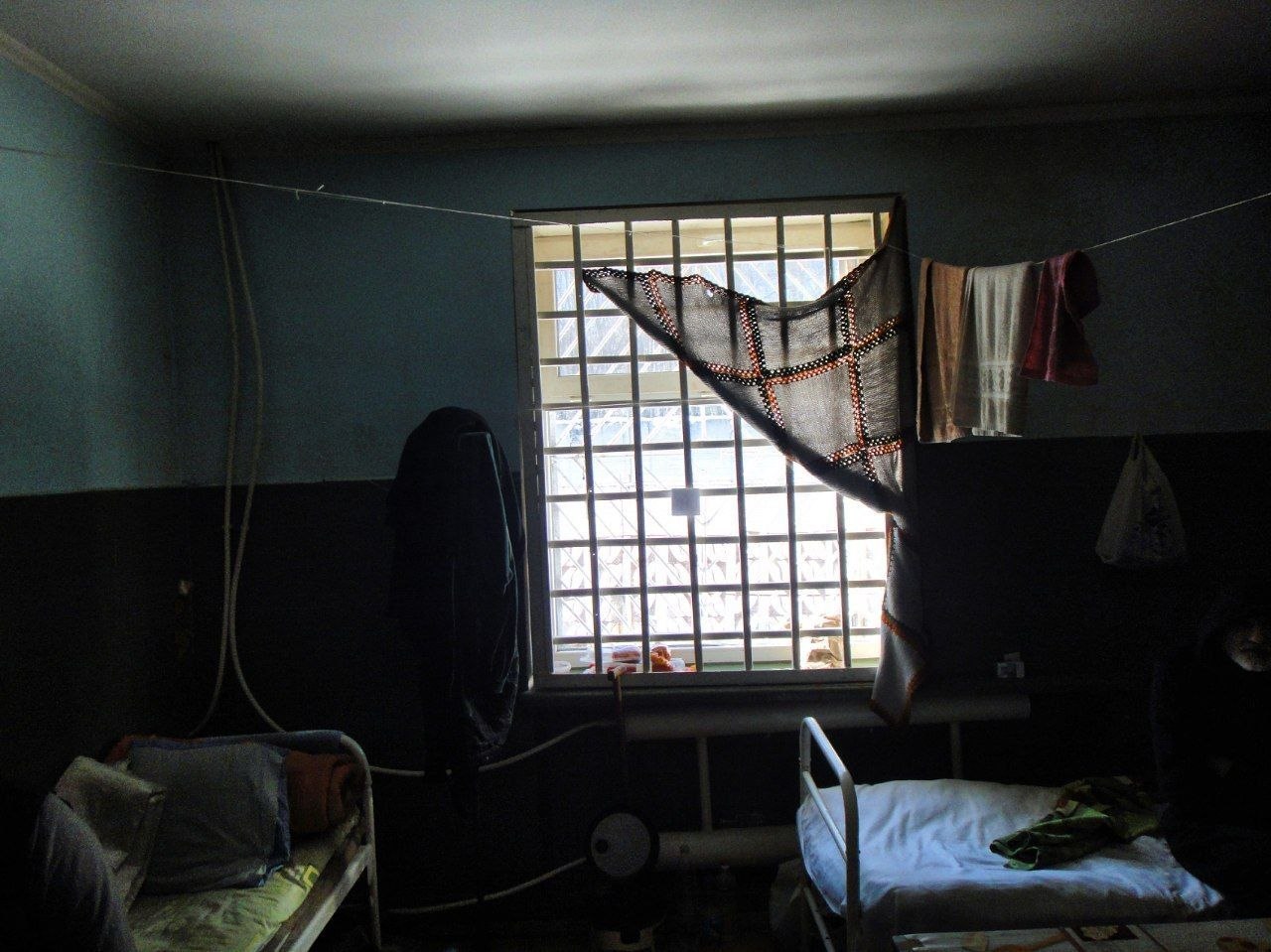
The true state of the penitentiary reform is determined not by the number of reports, but by the conditions in which prisoners live. Joint monitoring reports by the Kharkiv Human Rights Protection Group and the NGO ‘Protection of Prisoners of Ukraine’ for 2025–2026 bear witness to the failure to implement the Strategy: 1.42–3.97 m² of living space per person, temperatures of 13–16°C in hospital wards, 13–19-hour workdays, and shelters unfit for use during wartime.
Based on the results of the analysis, six out of eight strategic goals remain unfulfilled in substance. The seventh goal (staff training) has been fulfilled only partially, while the fourth (probation) requires a separate assessment based on nationwide statistics.
Eight Strategic Goals: Preliminary Summary
|
Strategic goal |
Our assessment |
What the monitoring reports revealed |
|
1. Adequate conditions of detention |
Unfulfilled |
Overcrowding, 1.42–3.97 m² per person, cold, dampness, insufficient lighting, lack of privacy |
|
2. Prevention of torture and ill-treatment |
Unfulfilled |
Improper recording of injuries, informal hierarchy, use of ‘orderlies’ (dnyuvalni), obstruction of confidential monitoring |
|
3. Right to healthcare |
Unfulfilled |
Staff shortages, lack of diagnostics, dependency of penitentiary healthcare, problems with releasing the severely ill |
|
4. Probation and alternatives to imprisonment |
Requires separate assessment |
Requires nationwide data on court decisions, probation supervision, and actual reductions in the use of detention |
|
5. Rehabilitation and resocialisation |
Unfulfilled |
Formalistic individual programmes, unpaid and excessive labour, obsolete equipment and vocational training, lack of prospects for life-sentenced prisoners |
|
6. Safety and law and order |
Unfulfilled |
Informal authority of certain convicts over others, unfit shelters, lack of effective evacuation plans |
|
7. Staff training and activities |
Partially fulfilled |
Certain educational and material improvements exist, but significant understaffing, professional deformation, and legacy practices persist |
|
8. Digitalisation |
Unfulfilled |
Empty internet access logs, lack of tablets and email, blocking of human rights websites, contradictory paper record-keeping |
Goal 1. Four Square Metres That Are Still Missing
The Strategy sets a mandatory expected result — at least 4 m² of personal space per person (5 m² in tuberculosis in-patient wards, 4.5 m² for women with children in pre-trial detention centres). Although the Law “On Pre-trial Detention” retains an obsolete standard of 2.5 m², the Strategy envisaged a transition to a 4 m² standard.
Monitoring revealed widespread violations of these standards:
- in Kholodnohirsk Correctional Colony No. 18 — 3.21 m² per convict;
- in Zhytomyr Correctional Colony No. 4 and Raykivtsi Correctional Colony No. 73 — a mere 1.42 m²;
- in Naderzhynshchyna Correctional Colony No. 65 — 3.97 m²;
- in Kryvyi Rih Penal Execution Institution No. 3 — 2.07 m² (detainees slept in shifts);
- in the hospital at Shepetivka Correctional Colony No. 98 — 4.16 m² instead of the required 5 m².
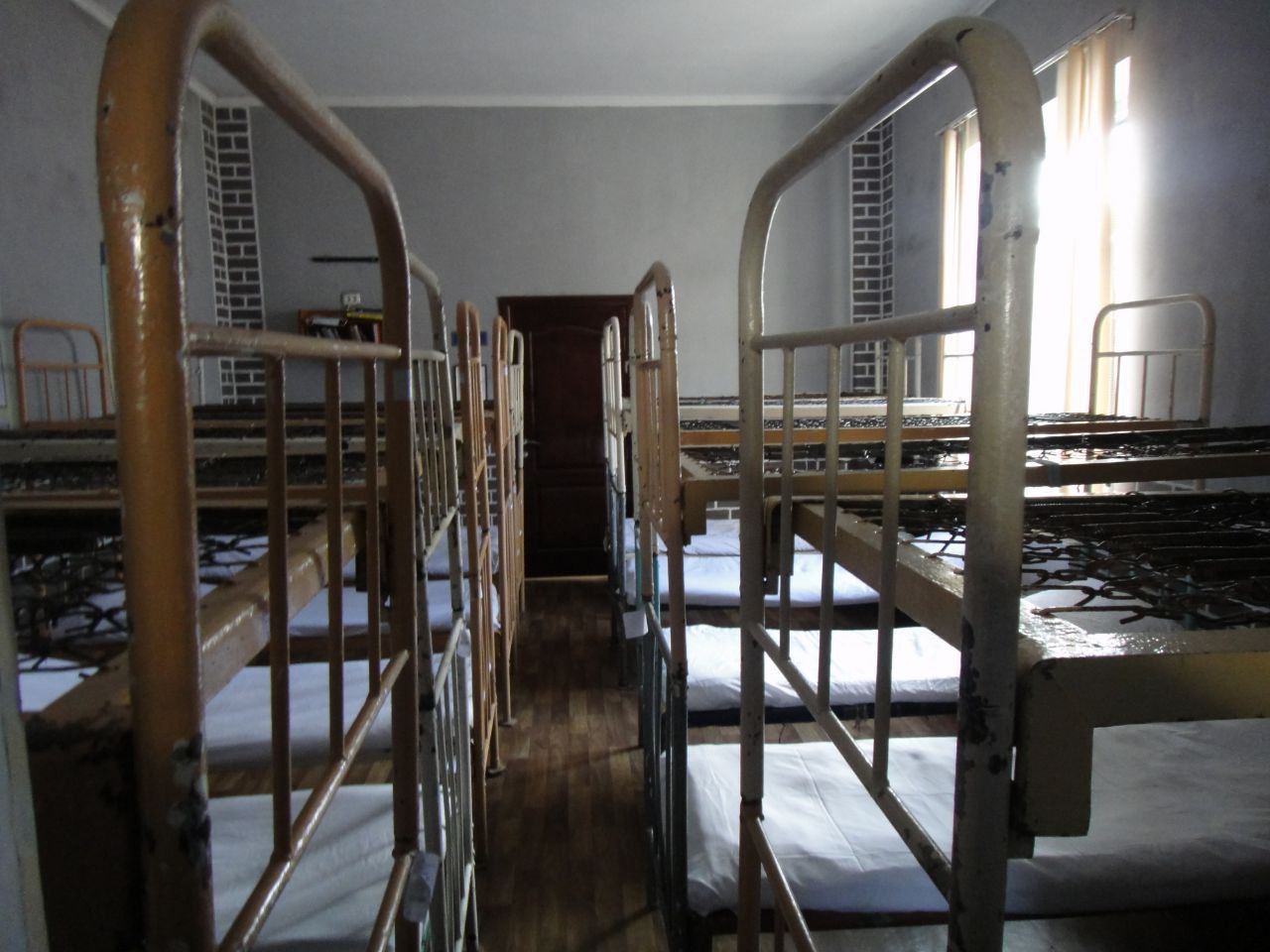
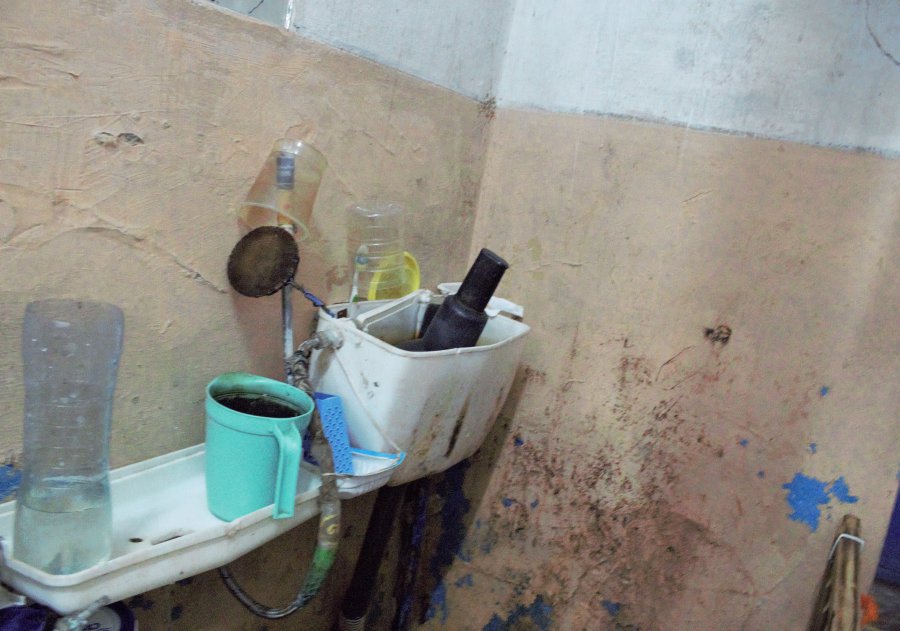
Apart from the lack of space, substandard conditions were recorded: temperatures of 13–16°C, absence of drinking water, mould, lighting levels of 1.7–5 lux (Kyiv Pre-trial Detention Centre), and violations of privacy in sanitary facilities. In a facility with obsolete architecture — Zamkova Correctional Colony No. 58 — cells measuring 5.6 m² are entirely incapable of meeting modern standards of lighting, ventilation, and sanitary facilities.
Goal 2. Prevention of Torture: Mechanisms Established, Results Absent
Despite introducing the position of senior human rights inspector and installing CCTV monitoring, the violence prevention system is ineffective. The European Commission’s 2025 Report confirms the persistence of torture in Ukraine’s penitentiary system.
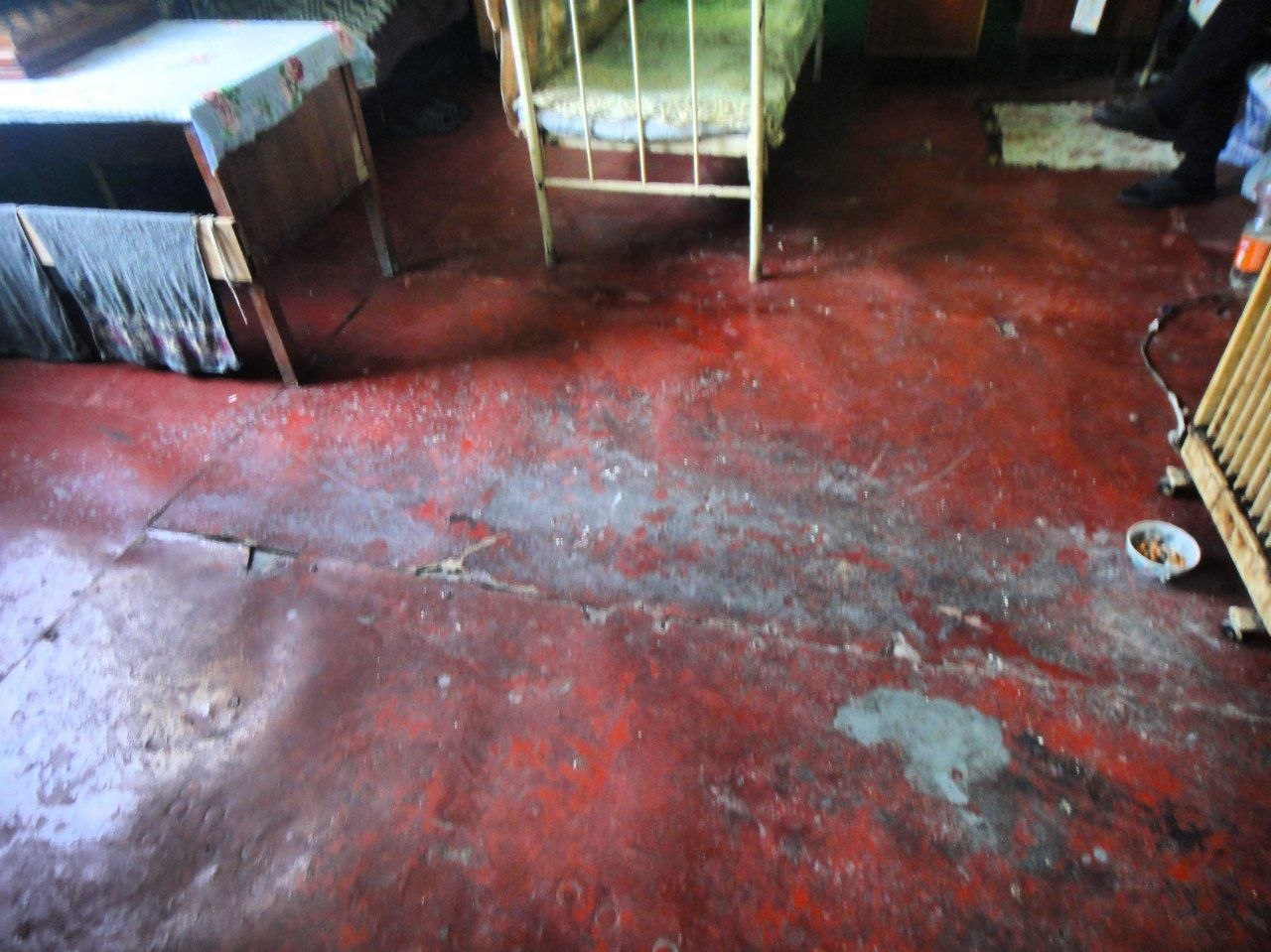
In the hospital at Shepetivka Correctional Colony No. 98, injuries were not recorded in logbooks, and photographs were not attached to case files. The State Bureau of Investigation (SBI) is investigating an uncovered organised group at Bozhkovske Correctional Colony No. 16 accused of torture and murder, and detained the management of Oleksiivka Correctional Colony No. 25 for subjecting convicts to forced unpaid labour and torture. Inspectors’ dependency on facility management and the closed nature of these institutions preclude effective investigations.
Goal 3. Penitentiary Healthcare Remains Closed and Dependent
Medical staffing in the hospital at Shepetivka Correctional Colony No. 98 stood at merely 63%, while patients suspected of hepatitis C lacked access to PCR testing. Medical units remain subordinate to colony administrations, restricting the professional independence of doctors. The mechanism for releasing the severely ill under Article 84 of the Criminal Code of Ukraine is lengthy and opaque. The European Committee for the Prevention of Torture (CPT) recommendation to transfer penitentiary healthcare under the Ministry of Health has still not been implemented.
Goal 4. Probation and Alternatives to Imprisonment Require Separate Assessment
Despite positive legislative amendments and the introduction of probation supervision, assessing the fulfilment of this goal requires a detailed analysis of nationwide judicial statistics, data on detention, and reoffending rates.
Goal 5. Labour as Resocialisation or Hidden Exploitation
Rather than fostering resocialisation, convict labour remains a tool of exhausting exploitation:
- in Starobabanove Correctional Colony No. 92, convicts worked in the kitchen seven days a week for 13.5–14 hours a day over a period of 18–24 months;
- in Petrove Correctional Colony No. 49, shifts lasted 15–19 hours a day;
- in the Kropyvnytskyi Pre-trial Detention Centre, detainees performed work without pay for over 11 hours a day;
- in Naderzhynshchyna Correctional Colony No. 65, monthly wages ranged between 133 and 4,217 UAH, while overtime labour was disguised as "orderly duties" or "facility maintenance".
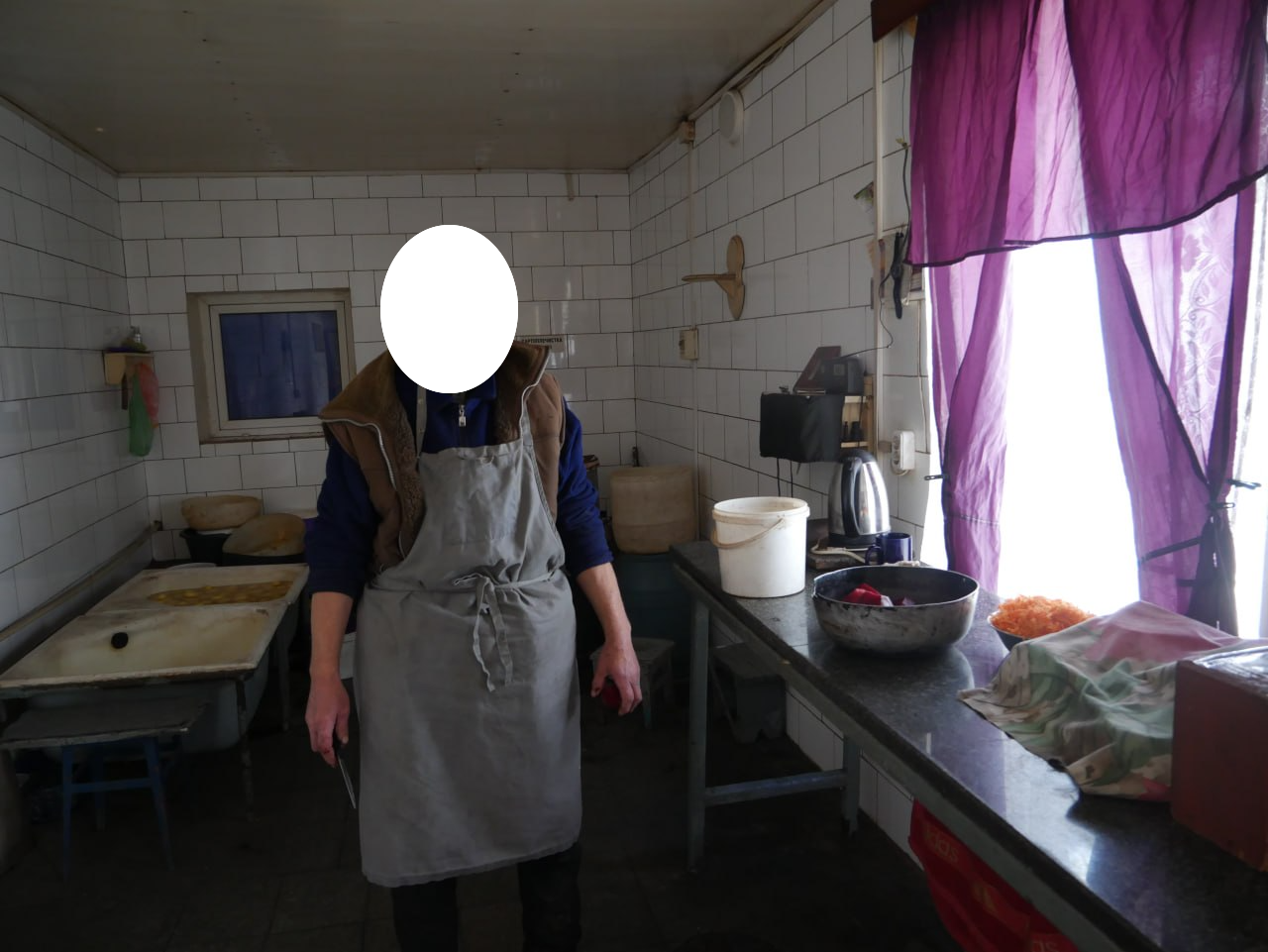
Social and educational work remains formalistic (Sumy Correctional Colony No. 116, Raykivtsi Correctional Colony No. 73). The issue of life-sentenced prisoners (“Petukhov v. Ukraine (No. 2)”) is particularly acute: they remain confined to cells for years without adequate access to work, as documented in Temnivka Correctional Colony No. 100 and Zamkova Correctional Colony No. 58.
Goal 6. Safety Shifted onto the Prisoners Themselves
In certain facilities (Kholodnohirsk Correctional Colony No. 18), the administration delegates authority to an informal prison hierarchy by appointing “orderlies”, violating CPT standards. Blanket CCTV monitoring in sleeping quarters and name tags detailing offences attached to beds (Drohobych Correctional Colony No. 40, Pivdennoukrainsk Correctional Colony No. 83, Kachanivka Correctional Colony No. 54) violate privacy and stigmatise detainees.
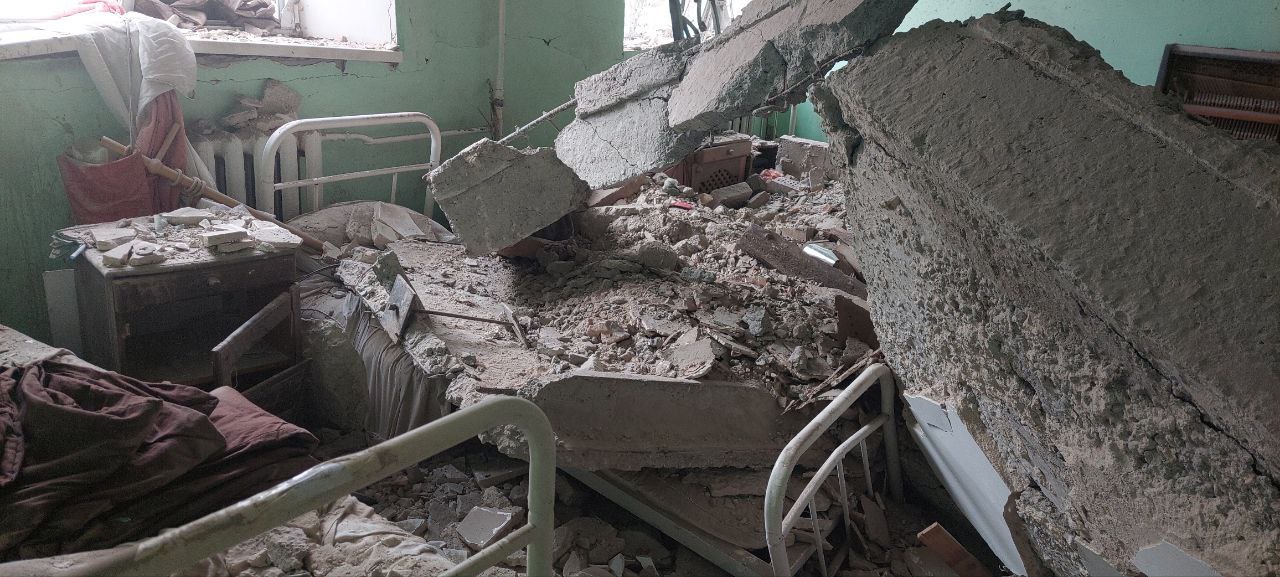
The most catastrophic failure is the lack of safety during wartime: bomb shelters in Kholodnohirsk, Sumy, and Starobabanove Correctional Colonies, Kropyvnytskyi Pre-trial Detention Centre, and Zamkova Correctional Colony No. 58 lack a second emergency exit, ventilation, and plumbing, and remain locked. The consequence of this negligence was a Russian strike in July 2025 on Bilenke Correctional Colony No. 99, where, owing to the absence of proper shelters, 17 convicts were killed and 42 wounded.
Goal 7. Staff: Isolated Changes Present, Systemic Transformation Absent
This goal is fulfilled only partially. Despite refurbishments and training, facilities face catastrophic understaffing: Sumy Correctional Colony No. 116 lacks 52 staff members, Vinnytsia Correctional Colony No. 86 lacks 78.25 (nearly one-third of the establishment), and typically only a single psychologist works with convicts. This leads to staff burnout and formalistic performance of duties.
Goal 8. Digitalisation That Has Not Reached Prisoners
Digitalisation has failed to improve the protection of prisoners’ rights: internet classrooms in Sumy Correctional Colony No. 116, Temnivka Correctional Colony No. 100, and Kropyvnytskyi Pre-trial Detention Centre lack functional tablets, while access to the websites of the Kharkiv Human Rights Protection Group and the NGO “Protection of Prisoners of Ukraine” is blocked by administrations.
Why the Strategy Failed to Yield Expected Results
The primary reasons for failing to achieve the goals are: substituting processes for real results (reporting on established commissions and issued orders), focussing on isolated showcase facilities, the dominance of departmental control over independent oversight, and the government’s delayed adoption of the Operational Plan for 2025–2026 (in late October 2025).
What the New Leadership of the Ministry of Justice Must Do
The new Minister of Justice, Denys Maslov, must ensure an independent evaluation of the Strategy involving the Ukrainian Parliament Commissioner for Human Rights (“Ombudsman+”), human rights defenders, and international partners.
Priority steps:
- Conduct an independent evaluation of the implementation of each of the eight goals.
- Introduce public reporting with real, measurable indicators for every institution.
- Conduct a full inventory of living quarters, recording the actual area per person.
- Develop a programme to decongest pre-trial detention centres and evacuate prisoners from hazardous war zones.
- Conduct an independent audit of bomb shelters with the involvement of the State Emergency Service.
- Initiate the transfer of penitentiary healthcare to the Ministry of Health system.
- Introduce electronic tracking of labour and put an end to unpaid “traineeships”.
- Create an effective mechanism for responding to torture with direct reporting to the SBI.
- Abolish the system of “orderlies” (dnyuvalni) and the informal authority of convicts.
- Ensure genuine digital access for prisoners to legal information.
- Prepare a new Strategy post-2026 based on an independent assessment.
By Way of Conclusion
The reform yielded no results because the state substituted adopting new documents for genuine systemic change. Space standards, adequate medical care, paid labour, and safe shelters are not privileges, but legally mandated state obligations. A true reform will begin only when results are judged by the plight of the individual behind closed doors.
Main Sources
Strategic and Regulatory Documents
- Strategy for the Reform of the Penitentiary System for the Period until 2026
- Operational Plan for the Implementation of the Strategy for 2025–2026
- Penitentiary Code of Ukraine
- Law of Ukraine “On Pre-trial Detention”
- Criminal Code of Ukraine
- European Convention on Human Rights
International and Independent Sources
- European Commission 2025 Report on Ukraine
- Materials of the European Committee for the Prevention of Torture on Ukraine
- Official Explanation of the “Ombudsman+” NPM Model
Monitoring Reports and Human Rights Publications
- Kholodnohirsk Correctional Colony No. 18
- Zhytomyr Correctional Colony No. 4
- Raykivtsi Correctional Colony No. 73
- Naderzhynshchyna Correctional Colony No. 65
- Hospital at Shepetivka Correctional Colony No. 98
- Zamkova Correctional Colony No. 58
- Petrove Correctional Colony No. 49
- Kryvyi Rih Penal Execution Institution No. 3
- Kropyvnytskyi Pre-trial Detention Centre
- Starobabanove Correctional Colony No. 92
- Sumy Correctional Colony No. 116
- Temnivka Correctional Colony No. 100
- “Trap Behind Bars”: Bilenke Correctional Colony No. 99
Official Statements
- Profile of Minister of Justice of Ukraine Denys Maslov
- SBI Statement Regarding Events at Bozhkovske Correctional Colony No. 16
- SBI Statement on Referring the Case on Torture and Murder to Court
- Statement on the Consequences of the Strike on Bilenke Correctional Colony No. 99
This material has been prepared as part of the “Seeking Justice for Survivors” project, which is funded by the Danish Ministry of Foreign Affairs. The opinions, conclusions and views expressed in this document are those of the author and may not reflect the official position of DIGNITY or the Danish Ministry of Foreign Affairs.