Freedom that could have become a death sentence. The story of Mykola Maliarenko
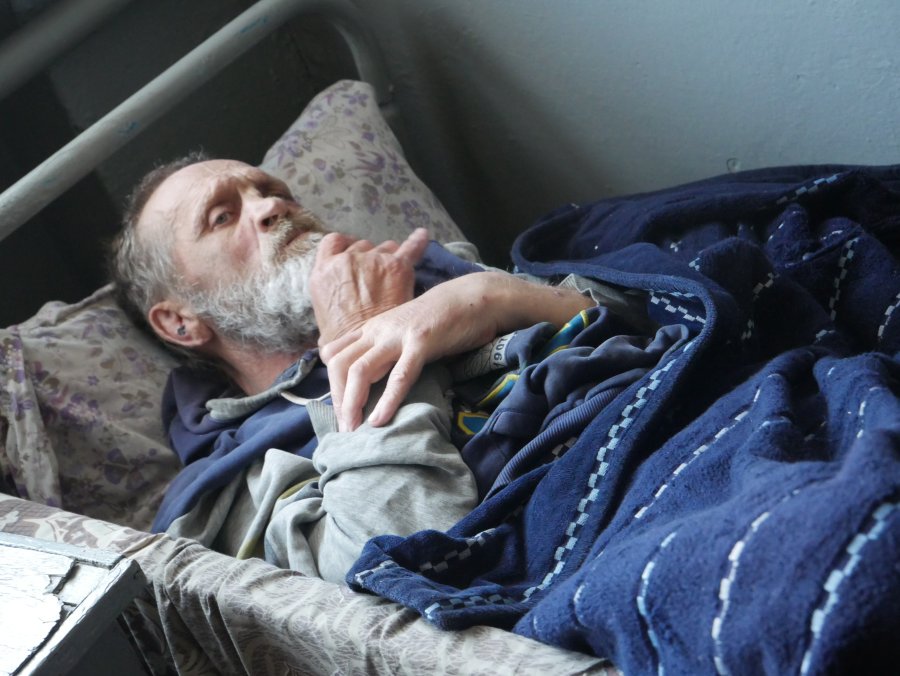 Medical documentation testified to the prisoner’s severe illnesses and mental disorders, but what we saw exceeded any clinical findings. Before us lay a bedridden man, unable to move or care for himself, with almost five years still remaining until the end of his prison sentence (2031).
Other convicts looked after Mykola — feeding him, bathing him, and changing his clothes and diapers, effectively performing the functions of a palliative care system. Within the framework of the DIGNITY project, we planned to facilitate his release due to illness, and on 7 May 2026, I received all the medical documentation. Shortly after, the prison administration informed us that the court materials were ready.
It seemed the problem was almost solved. In reality, it had only just begun.
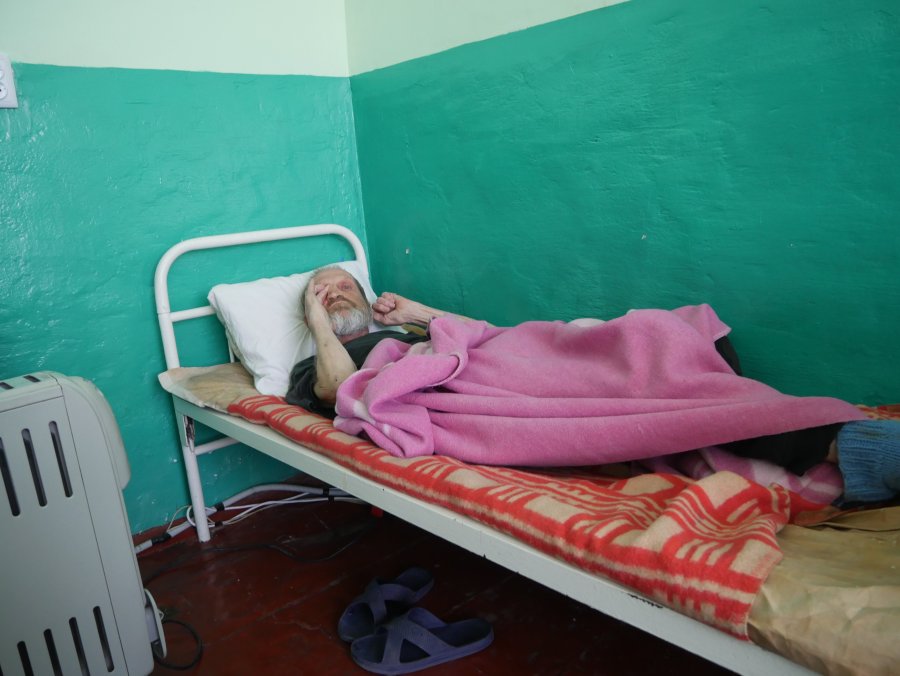
After his release, there was no one to look after Mykola: his sister had turned her back on him, he did not have a disability classification or social benefits, and he was incapable of surviving on his own. A question arose that went beyond the scope of the penal system: release without subsequent care would mean not freedom for him, but homelessness and effectively a death sentence.
The case was considered at a meeting of the Advisory Board of the National Preventive Mechanism. We appealed to Vitalii Nikulin, the Representative of the Ukrainian Parliament Commissioner for Human Rights in places of deprivation of liberty, and to the Ombudsman’s hotline. Through joint efforts, a solution was found.
The prison administration received a positive court ruling for his release. Social services, the Secretariat of the Parliament Commissioner for Human Rights, the State Penitentiary Service, the Healthcare Centre of the State Penitentiary Service, and the public joined forces. A specialised facility in Zhytomyr was found for Mykola, and transport and fuel arrangements were made. On Friday, 5 June 2026, he was released and transported to the facility for permanent care.
Mykola Maliarenko’s story serves as a reminder of a simple truth: the value of a state is measured not by the severity of punishment, but by its ability not to abandon a person to their fate. This is a story about humanity, responsibility, and the fact that even where the law has fulfilled its function, human dignity remains, requiring protection.
The right to dignity does not end behind barbed wire. Sometimes, it is precisely after release that the fight for it only begins.