“A ‘welcoming’ procedure with a bag over the head, tea and tobacco instead of wages — a report on the results of a monitoring visit to KhVK-43
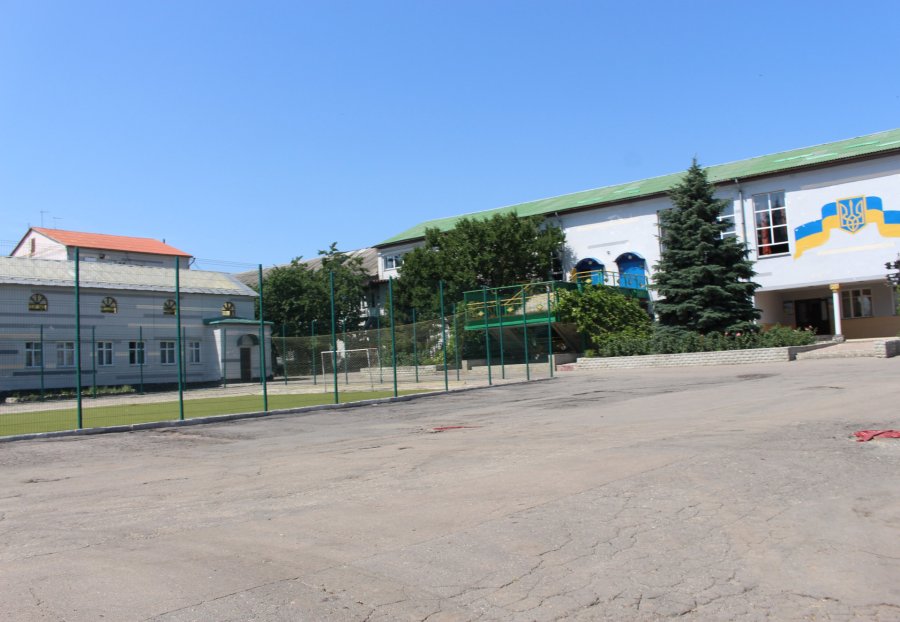
This material aims to highlight the general situation regarding human rights violations and contains an analysis, recommendations, and statistical data. We continue to investigate the degree of compliance with human rights in the penitentiary institutions of the Kharkiv region.
We are seeking answers in order to refute or confirm information received from convicted persons and their relatives, who claim that systemic and brutal human rights violations are taking place specifically in Kharkiv penal institutions, and that prisoners assigned to serve their sentences in penitentiary facilities of the Kharkiv region very often commit acts of suicide and self-harm, or deliberately commit illegal acts in order to receive an additional sentence, so as to avoid serving their time in correctional facilities in the Kharkiv region.
The preventive monitoring visit was carried out within the framework of the project “Reducing the suffering of prisoners in the context of the war in Ukraine”, funded by the government of Denmark in partnership with DIGNITY — Danish Institute Against Torture, in accordance with the Optional Protocol to the Convention against Torture and other Cruel, Inhuman or Degrading Treatment or Punishment, taking into account the provisions of the Standard Minimum Rules for the Treatment of Prisoners and the decisions of the European Court of Human Rights, on the basis of Article 24 of the Criminal Executive Code of Ukraine — Visiting institutions for the execution of sentences. The visit was carried out by a group of monitors from the Kharkiv Human Rights Protection Group and the NGO “Protection of Prisoners of Ukraine”. The visit was conducted by the following monitors:
- Didenko Andriy Andriyovych — assistant to a Member of Parliament of Ukraine, Yaroslav Yurchyshyn, has experience of monitoring visits since 2014;
- Zuykov Serhiy Yuriyovych — assistant to a Member of Parliament of Ukraine, Kostiantyn Kasai, member of the Public Council under the Ministry of Justice of Ukraine, has extensive experience of monitoring visits, and specialises in researching issues of medical care provision;
- Tsvilyi Oleh Volodymyrovych — member of the Public Council under the Ministry of Justice of Ukraine, has extensive experience of unannounced visits to penitentiary facilities, and specialises in researching issues of torture and ill-treatment;
- Zaporozhtsev Kostiantyn Viktorovych — specialist in the field of forensic medical examination.
To assess the information obtained during the monitoring visit, the following were used: previous reports and recommendations, reports of the NPM (National Preventive Mechanism under the Commissioner for Human Rights of the Verkhovna Rada), reports from convicted persons and their relatives, the national legislation of Ukraine, and regulatory legal acts of the SESU (State Executive Service of Ukraine) and the Ministry of Health.
The visit took place without prior notice. As part of the visit, there were communications with convicted persons, including on the condition of anonymity, as well as with staff and the institution's management. As part of the summing-up of the visit, consultations were held with the management of KhVK-43.
Date of the visit: 5 July 2024
Date of the previous visit: 16 June 2023
General information
KhVK-43 is a medium-security correctional colony for holding men who have previously served sentences in places of deprivation of liberty.
The colony is located at the address: 17 Tadzhytska Street, Kharkiv.
The head of the institution is Colonel of the Internal Service Dmytro Petrovych Fendrikov.
The institution consists of a production zone, a canteen, a residential zone with SPS [Socio-psychological Service] wards, a QDD [Quarantine, Diagnostics and Distribution] ward, a medical unit, a bath and laundry facility, a DIZO/PKT/DPK/SIZO ward, a shop, a library, and administrative premises.
According to the institution's administration, the authorised staff size consists of 252.5 positions. The actual number is 246 positions. The general staff shortage at the institution is 13 employees. The planned capacity of the institution is 980 persons. The actual number is 635 convicted persons and four detainees. There are two psychologists working at the institution. In KhVK-43, there are 13 SPS wards, and one SPS ward is mothballed.
During the current year, 268 people have arrived at the institution. In 2023, two convicted persons died, and in 2024 — one. 151 people are employed under an employment contract.
There were zero people in the DIZO [Disciplinary Isolation Ward], one in the PKT [Cell-type Premises], two in the DPK [Disciplining Premises], and four in the SIZO [Pre-trial Detention Centre] ward. There were four people undergoing treatment in the medical unit. 73 people are registered as HIV/AIDS positive. The operational and preventive records in the institution included: 12 people prone to suicide, five people prone to self-harm, and three people prone to escape. There were two malicious violators of the detention regime.
During 2023–2024, not a single complaint was recorded from convicted persons regarding inappropriate detention conditions or improper provision of medical care. 12 people have Group II disability, eight people have Group III, and three people are considered ‘outcast’ in total.
Convicted persons have 45 tablets with internet access in their own use. 27 convicted persons have their own email addresses. The monitoring group conducted a survey of about 186 convicted persons. It is worth noting that practices of ill-treatment towards convicted persons upon arrival continue: forcing them to perform public cleaning for the purpose of segregation and stigmatisation.
Practices of intimidation continue, as well as the closed nature of the institution, as evidenced by the lack of complaints regarding the actions/inaction of the administration during the current year. During the visit, the monitors paid special attention to researching issues of torture and ill-treatment, the provision of proper medical care, and the right to work and social protection.
Convicted persons addressed the monitors en masse with questions regarding the possibility of being transferred to another institution outside the Kharkiv region and with requests to facilitate parole for service in the Armed Forces of Ukraine.
It is worth noting that during the current year, shelling of the Kharkiv region by Russia has significantly increased. We recall that in the north and north-east, the Kharkiv region borders the Belgorod region of the Russian Federation; to the east, it borders the Luhansk region; and to the south-east, the Donetsk region. The institution has been subjected to shelling on multiple occasions and continues to be in a danger zone; the convicted persons and staff require evacuation.
Preliminary remarks
The previous visit to KhVK-43 by the monitoring group was carried out on 17 June 2023. As a result of the visit, the following recommendations were sent to the management of the institution and the penitentiary department:
-
Stop creating an atmosphere of fear and humiliation in the institution;
-
Stop assigning convicted persons to serve their sentences in the institution due to the danger, because the institution has been subjected to shelling many times, and the life and health of the convicted persons and staff are at risk;
-
Stop the practice of forbidding inmates from sitting on their beds in residential areas, because the rules of internal order of penal institutions and the daily routine do not forbid convicted persons from sitting or even lying on their own sleeping beds during their free time;
-
Stop the practice of prohibiting the use of tablet computers and their accessories, because the right to freely use tablets is provided for by law;
-
Stop the practice of searches in the canteen, because the practice of total searches of convicted persons after every meal is a humiliation of the honour and dignity of the convicted persons;
-
Provide working convicted persons with the minimum wage, because labour without adherence to the right to work and social guarantees for convicted persons does not contribute to their resocialisation and social adaptation;
-
Ensure proper working conditions, including workwear and occupational safety measures;
-
Stop the use of two-hour labour in accordance with Article 118 of the Criminal Executive Code (CEC) as an element of pressure. Two hours of work on the improvement of the institution in turns is used as an element of pressure, and in some cases, as a humiliation of the honour and dignity of the convicted persons;
-
Assist convicted persons in restoring family ties lost due to the war.
The recommendations provided following the previous visit were partially fulfilled, namely:
There is a trend towards an increase in the number of tablets in the personal use of convicted persons, and the number of registered email accounts is increasing.
Facts discovered during the visit
1. Torture and ill-treatment. Protection against torture and other forms of ill-treatment (Article 5 of the Universal Declaration of Human Rights, Article 3 of the Convention for the Protection of Human Rights and Fundamental Freedoms, Article 28 of the Constitution of Ukraine)
1.1 During the visit to the institution, numerous complaints were received from convicted persons regarding torture, ill-treatment, intimidation, and the use of psychological violence against them. Thus, during a confidential interview, the majority of prisoners reported that upon arriving at the colony, they went through a so-called ‘welcoming’ procedure, when the administration forced new arrivals to publicly determine their place in the informal prison hierarchy. After that, some convicted persons had a bag put over their heads and were escorted to the DIZO ward, where, by falsifying case files, disciplinary sanctions in the form of placement in a disciplinary isolation ward were applied to the convicted persons.
In the Quarantine, Diagnostics and Distribution (hereinafter — QDD) ward, staff members of the institution and ‘duty prisoners’ [dyzhurnalni], with the aim of forcing them to perform actions contrary to their will, forced them to perform humiliating tasks in public, in order of turn, in particular to demonstrate cleaning in general, including of a toilet/bathroom. In case of refusal, disciplinary sanctions in the form of placement in the DIZO were applied to the convicted persons, with falsification of the case files.
Convicted persons who went through this procedure note that under psychological pressure and threats of violence, including of a sexual nature, and being transferred to the lowest caste of convicted persons in the informal prison hierarchy, they are forced to violate the regime of serving their sentence and come to an agreement with the administration so that Article 391 of the Criminal Code of Ukraine is applied to them with subsequent transfer to another institution.
In most such cases, as the convicted persons claim, the penalties are artificially created by the administration and applied for the formal observance of conditions for the conviction of a person under Article 391 of the Criminal Code of Ukraine. Thus, the abuse by the institution's administration opens up the possibility for them to exert pressure on individual convicted persons and arbitrarily take measures of criminal repression. In 2016, the Committee recommended reviewing the practice of disciplinary isolation and segregation in Colony No. 25 (if necessary, in all other penitentiary institutions) and recommended abolishing this article (CPT/Inf (2017) 15, point 46). Subsequently, this recommendation was repeated again, with a call to abolish Article 391 “without further delay” (CPT/Inf (2018) 41, point 103).
At the same time, during the visit to the institution, numerous complaints were received from convicted persons regarding the use of physical and psychological violence against them. Thus, during a confidential interview, the majority of prisoners reported being beaten by employees of the operational department, which took place in an office room of the administrative building.
It is necessary to note the widespread practice of using convicted persons as ‘duty prisoners’ [dyzhurnalni], who performed tasks related to maintaining order and control in the institution. Thus, in violation of Annex 8 to the Rules of Internal Order of Penal Institutions, approved by the Order of the Ministry of Justice of Ukraine dated 28.08.2018 No. 2823/5 (hereinafter — the Rules), it was established that the administration of the institution arbitrarily introduced a ban on convicted persons using their sleeping places during the day in their free time. Control over the implementation of this restriction in the SPS units was assigned to the ‘duty prisoners’. The use of ‘duty prisoners’ as an instrument of pressure on individual convicted persons in the context of holding them disciplinarily liable for violating the regime of serving their sentence is especially noted.
For example, considering that labour for convicted persons is a right, not an obligation, and given the meagre wages, intolerable living conditions in the SPS unit were created for convicted persons who refused to go to work in the industrial zone, one element of which was being forced to perform humiliating and unnecessary tasks, such as cleaning the toilet/bathroom, dusting clean furniture surfaces, windows, etc. Control over the change of tasks and their performance was carried out by the ‘duty prisoners’ themselves. In case of refusal or objection, measures of disciplinary action were applied to the convicted persons by the institution's management.
In the report following the visit of the European Committee to Ukraine on the prevention of torture (hereinafter — the Committee, CPT/Inf (2020) 40, point 27), it is noted that in reports on previous visits, the Committee expressed serious concerns regarding the practice of using some prisoners as ‘duty prisoners’ [dyzhurnalni], who perform control functions over other prisoners in residential premises and at work, and report to staff about any incidents and violations of the regime. Therefore, the Committee observed with concern during this visit that this practice remained. Moreover, unfortunately, despite the specific recommendations previously given by the Committee, the practice of using ‘duty prisoners’ is also officially provided for by the Rules of Internal Order of Penal Institutions.
As emphasised previously, the Committee believes that any partial abdication of responsibility for order and safety in prisons, which is borne by the institution's security staff, is unacceptable. Such a practice exposes weaker prisoners to the risk of ill-treatment and exploitation by other prisoners. The Committee calls on the authorities of Ukraine to take all necessary steps — including legislative ones — to put an end to this practice. No prisoner (in any penitentiary institution in the country) should have power over other prisoners.
1.2 The monitoring group established the existing practice of segregation and stigmatisation of a separate, particularly vulnerable category of convicted persons, which is based on the negative influence of the informal prison hierarchy and leads to discrimination and unacceptable restrictions in the recognition, realisation, and enjoyment of the generally recognised fundamental right to respect for human dignity of these persons. Thus, convicted persons classified in the category of ‘outcast in total’ reported that they are forced to remain in isolation from the general mass of convicted persons, that they are subjected to oppression, eat separately, and wash the personal clothing of other convicted persons, perform dirty work in the units, and are prone to a high level of violence from other convicted persons. At the same time, the Committee, in its report following the visit to Ukraine in 2023, calls on the Ukrainian authorities to develop and implement a comprehensive strategy to combat violence and intimidation among prisoners and to overcome the phenomenon of the informal hierarchy among prisoners with all its negative consequences. (CPT/Inf (2024) 20, point 45).
1.3 According to Part 1 of Article 115 of the Criminal Executive Code of Ukraine (hereinafter — CEC), Rule 10 of the Standard Minimum Rules for the Treatment of Prisoners, and point 18.1 of the European Prison Rules, it is stated that the living space norm per one convicted person cannot be less than four m². At the same time, the area in the sleeping room of the QDD ward is 45.9 m² and is designed for the simultaneous holding of 11 people. However, 16 beds have been installed in this sleeping room, due to which the area per person is 2.8 m². In its seventh general report, the Committee notes that the problem with overcrowded living premises leads to unhygienic conditions, a constant lack of privacy, and the overloading of medical services and the institution's infrastructure, and therefore requires correction. (CPT/Inf (97) 10, point 13).
1.4 Point 1 of Section XXIII of the Rules No. 2823/5 defines that supervision of convicted persons is a system of measures aimed at ensuring the serving and execution of criminal sentences in the form of restriction and deprivation of liberty, life imprisonment, and arrest through round-the-clock and constant control over the behaviour of convicted persons in their places of residence and work, preventing and stopping illegal actions on their part, and ensuring the requirements of isolation of convicted persons and the safety of the staff of penal institutions.
During the inspection of the sleeping room of the QDD ward, installed video surveillance cameras were recorded. At the same time, in its report in 2012, the Committee criticised excessive interference in privacy through the installation of video cameras in prisoners' living quarters. The CPT agrees that video surveillance in cells can be a useful safeguard in specific cases, for example, when a person is considered to be a concern regarding the risk of self-harm or suicide, or if there are specific suspicions that a prisoner is performing certain actions in the cell that could jeopardise safety. However, any decision to apply video surveillance to a specific prisoner must always be based on an individual assessment of real risks and must be frequently reviewed on a regular basis. Video surveillance is a serious interference in the private life of prisoners and makes the regime even more repressive, in particular, when applied for a long time. (CPT/Inf (2013) 23, point 52).
The Committee repeated its recommendation in its report to the Government of Ukraine following the visit to Ukraine in 2020, where it noted that the Ukrainian authorities should review the need for the use of video surveillance in the cells of Colony No. 100 (and, if appropriate, in other penitentiary institutions) in light of the remarks made above.
2. Violation of the right to decent detention conditions (Article 5 of the Universal Declaration of Human Rights, Part 1 of Article 28 of the Constitution of Ukraine)
2.1 The equipment of the QDD ward does not meet the standards for the treatment of prisoners and conditions of their detention by functional purpose. In violation of the requirements of the Norms for the provision of furniture, inventory, and household items for a medium-security correctional colony, approved by the Order of the Ministry of Justice of Ukraine dated 27.07.2012 No. 1118/5 (hereinafter — Provision Norms), there is no utility room, drying room, or room for storing the exchange fund of bedding, clothing, and workwear in the ward.
2.2 In violation of the requirements of point 2 of Section 1 of the Regulations on the Quarantine, Diagnostics and Distribution Ward, approved by the Order of the Ministry of Justice of Ukraine dated 04.11.2013 No. 2300/5, in the QDD ward, convicted persons are taken out to perform hygiene procedures in the general bathhouse. The aforementioned does not ensure the isolated detention of newly arrived convicted persons with the aim of preventing their contact with other convicted persons.
2.3 In violation of the requirements of point 2.19 of the Regulations on the organisation of bath and laundry services for persons held in penal institutions and pre-trial detention centres, approved by the Order of the Ministry of Justice of Ukraine No. 849/5 dated 08.06.2021 (hereinafter — the Regulations), information containing the job duties of persons responsible for providing bath and laundry services, safety rules, and norms for the provision of detergents is not posted in a visible place in the barbershop and laundry room.
2.4 In violation of the requirements of point 4.1 of the Regulations, not all employees of the bathhouse and laundry have undergone introductory occupational safety training, as evidenced by the absence of a record in the Register of introductory occupational safety training.
2.5 In violation of the requirements of Rule 19.3 of the European Prison Rules, the right to privacy is not respected in the bathhouse of production zone No. 2 due to the absence of curtains on the shower partitions.
2.6 In violation of the requirements of point 13.1 of Section XIII of the Provision Norms, there is no cloakroom in the institution's canteen, which leads to convicted persons eating in their outer clothing.
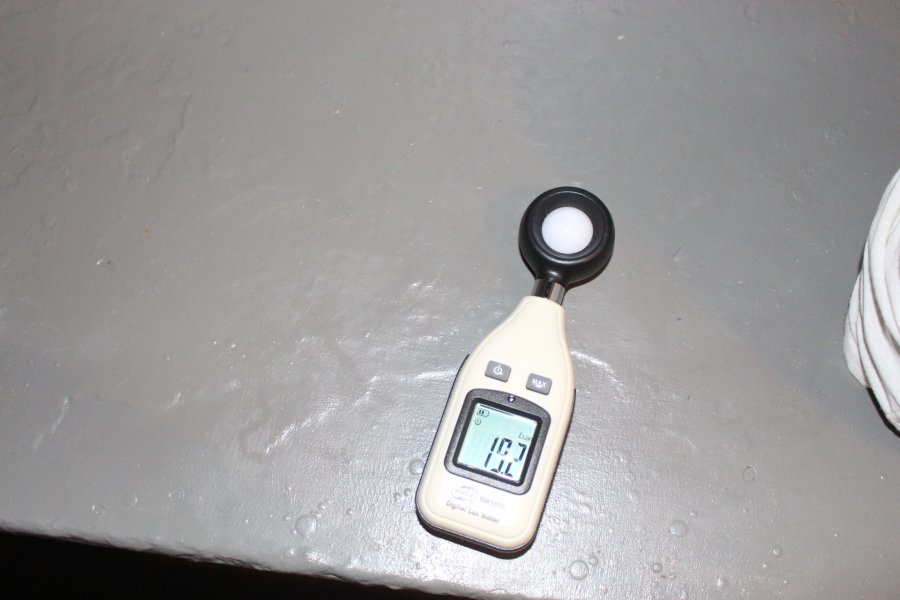
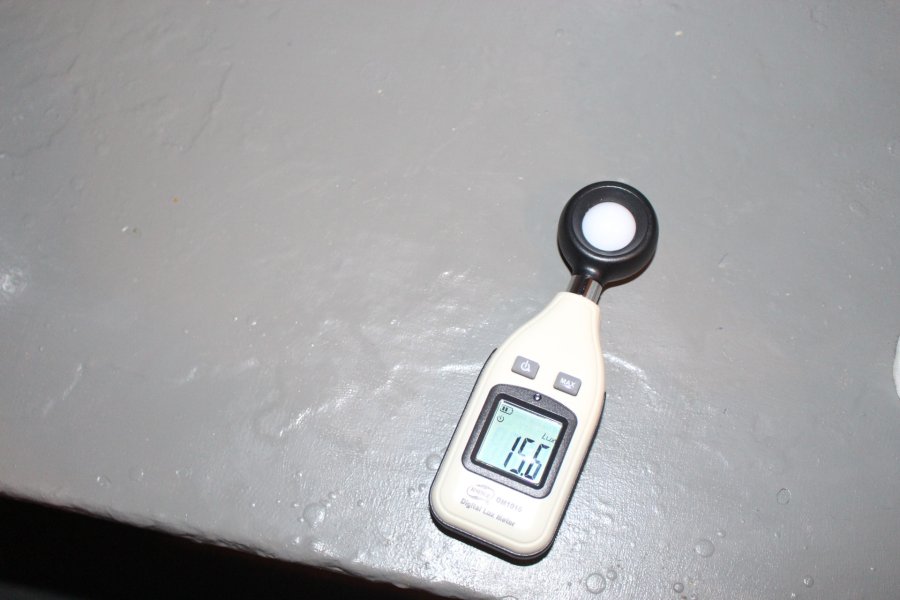
2.7 The monitors recorded that in the PKT [Cell-type Premises] cells, due to excessive grating and insufficient natural light, the general lighting is constantly on. At the time of the visit, the general lighting level was 19.2 lux, and with the light turned off — 15.6 lux, despite the fact that according to Annex Zh ‘Normative indicators of lighting for premises of residential buildings’, DBN V.2.5-28:2018 ‘Natural and artificial lighting’, approved by the Order of the Ministry of Regional Development, Construction and Housing and Communal Services of Ukraine dated 03.10.2018 No. 264, the illumination of working surfaces in sleeping and residential rooms should be 150 lux.
Medical Unit No. 43 of the branch of the State Institution “Public Health Centre of the State Criminal Executive Service of Ukraine” in the Kharkiv and Luhansk regions
The head of Medical Unit No. 43 of the branch of the State Institution “Public Health Centre of the State Criminal Executive Service of Ukraine” in the Kharkiv and Luhansk regions is Denys Drokin.
During the visit, the monitoring group studied the medical documentation, inspected the premises of the medical unit for their compliance with the requirements of the legislation of Ukraine and international standards, and identified shortcomings in the work of Medical Unit No. 43, which lead to a violation of the rights of convicted persons at the State Institution “Kharkiv Correctional Colony No. 43”, in particular:
1.1. In violation of point 37 of the Resolution of the Cabinet of Ministers of Ukraine No. 285 dated 2 March 2016 “On approval of Licensing conditions for the conduct of economic activities in medical practice”, there is no document confirming free access to buildings and premises of the medical facility for persons with limited mobility, the receipt of which is mandatory.
1.2. In accordance with the requirements of point 7 of Part 1 of the Resolution of the Cabinet of Ministers of Ukraine dated 22 December 2023 No. 1394 “Some issues of implementing the program of state guarantees of medical care for the population in 2024”, the National Health Service of Ukraine (NHSU) pays for medical services provided based on paper referrals for patients held in penal institutions or pre-trial detention centres of the State Criminal Executive Service, until the establishment of the technical capability by healthcare institutions of the State Criminal Executive Service to issue electronic referrals.
However, due to the absence of concluded declarations with a primary care physician by the convicted persons, they do not have the opportunity to receive necessary medical services at the expense of the NHSU, which leads to a violation of the requirements of paragraphs 4 and 5 of Article 4 of the Law of Ukraine “Fundamentals of Ukrainian legislation on healthcare”.
1.3. The medical unit has not organised the provision of opioid substitution therapy (hereinafter — OST) for persons with mental and behavioural disorders as a result of opioid use, in accordance with the Procedure for conducting opioid substitution therapy for persons with mental and behavioural disorders as a result of opioid use, approved by the Order of the Ministry of Health of Ukraine dated 27.03.2012 No. 200. Drug-dependent persons are not provided with socio-psychological support, cognitive-behavioural therapy (CBT), relapse prevention, motivational interviewing, self-help groups, etc.
Thus, these persons are deprived of the opportunity to receive OST, which violates their right to choose methods of treatment, in accordance with Article 38 of the Law of Ukraine “Fundamentals of Ukrainian legislation on healthcare”. At the same time, the European Committee for the Prevention of Torture or Inhuman or Degrading Treatment or Punishment (hereinafter — the Committee), in its report following the visit to Ukraine in 2023, notes that admission to a penitentiary institution is an opportunity to solve the problem associated with drugs, and therefore it is important that appropriate assistance is offered to all interested persons; therefore, appropriate medical care must be available in all institutions.
Assistance offered to such persons must be diverse; substitution therapy programs for persons with drug dependence must be combined with genuine psychosocial and educational programs for persons with opioid dependence who are unable to stop using drugs. In addition, access to OST programs in institutions should be easily accessible, and they should also be managed by prison doctors who have undergone special training on issues related to drug use. (CPT/Inf (2024) 20, point 86).
1.4. During the inspection of the DIZO ward, the monitors established that when a convicted person is placed in a disciplinary isolation ward, it is practiced to include a medical certificate in the case, which contains health status information and according to the conclusion of which the convicted person can be held in the DIZO, PKT, or lock-up for health reasons. The identified facts certify that the institution's employees possess confidential information regarding the health status of convicted persons who are in the DIZO ward.
The aforementioned violates the requirements of Article 39-1 of the Law of Ukraine “Fundamentals of Ukrainian legislation on healthcare” regarding the right of persons to secrecy about their health status. At the same time, the Committee has repeatedly emphasised that the obligation of prison doctors to certify the fitness of convicted persons to serve a disciplinary penalty is unlikely to contribute to the development of positive relations between the doctor and the patient. In principle, medical personnel should never participate in any part of the decision-making process regarding the application of any type of solitary confinement, unless this measure is applied for medical reasons.
On the other hand, medical personnel should be very attentive to the condition of prisoners who are in solitary confinement. Medical personnel must be immediately informed of every such placement and must visit the prisoner immediately after placement, and then regularly, at least once a day, and provide them with prompt medical care and treatment if necessary. Medical personnel must notify the institution's management if the prisoner’s health is under serious threat due to solitary confinement. (CPT/Inf (2024) 20, point 104).
In addition, the aforementioned contradicts points 43.2 and 43.3 of the European Prison Rules.
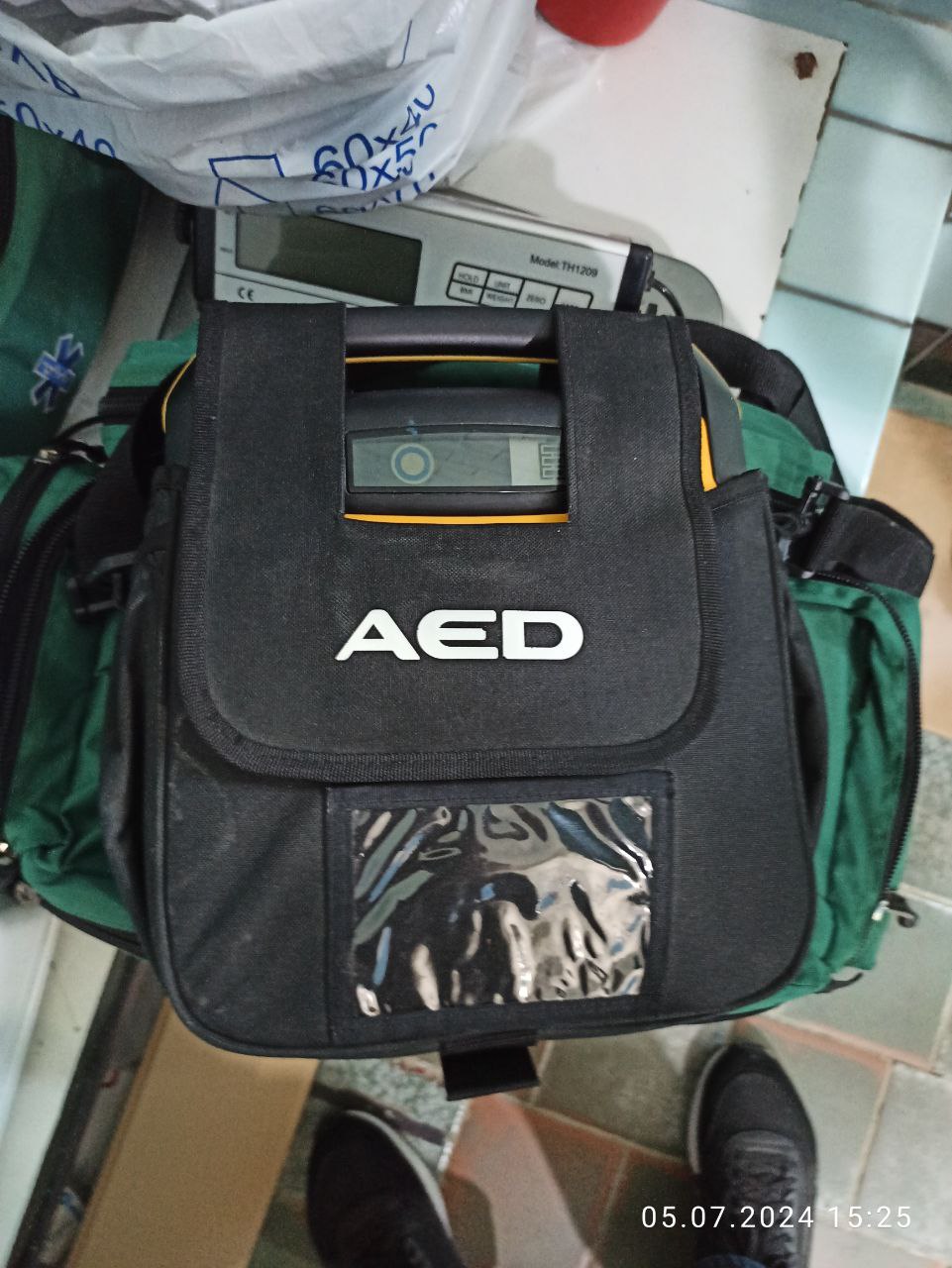
1.5. During the inspection of the defibrillator's functionality, it was established that the expiration date of the electrodes had passed. At the same time, the European Committee for the Prevention of Torture or Inhuman or Degrading Treatment or Punishment recommended that medical services in all visited prisons (and all other penitentiary institutions in Ukraine) be equipped with life-saving equipment for doctors (Committee Report following the visit to Ukraine in 2017, (CPT/Inf (2018) 41, point 87).
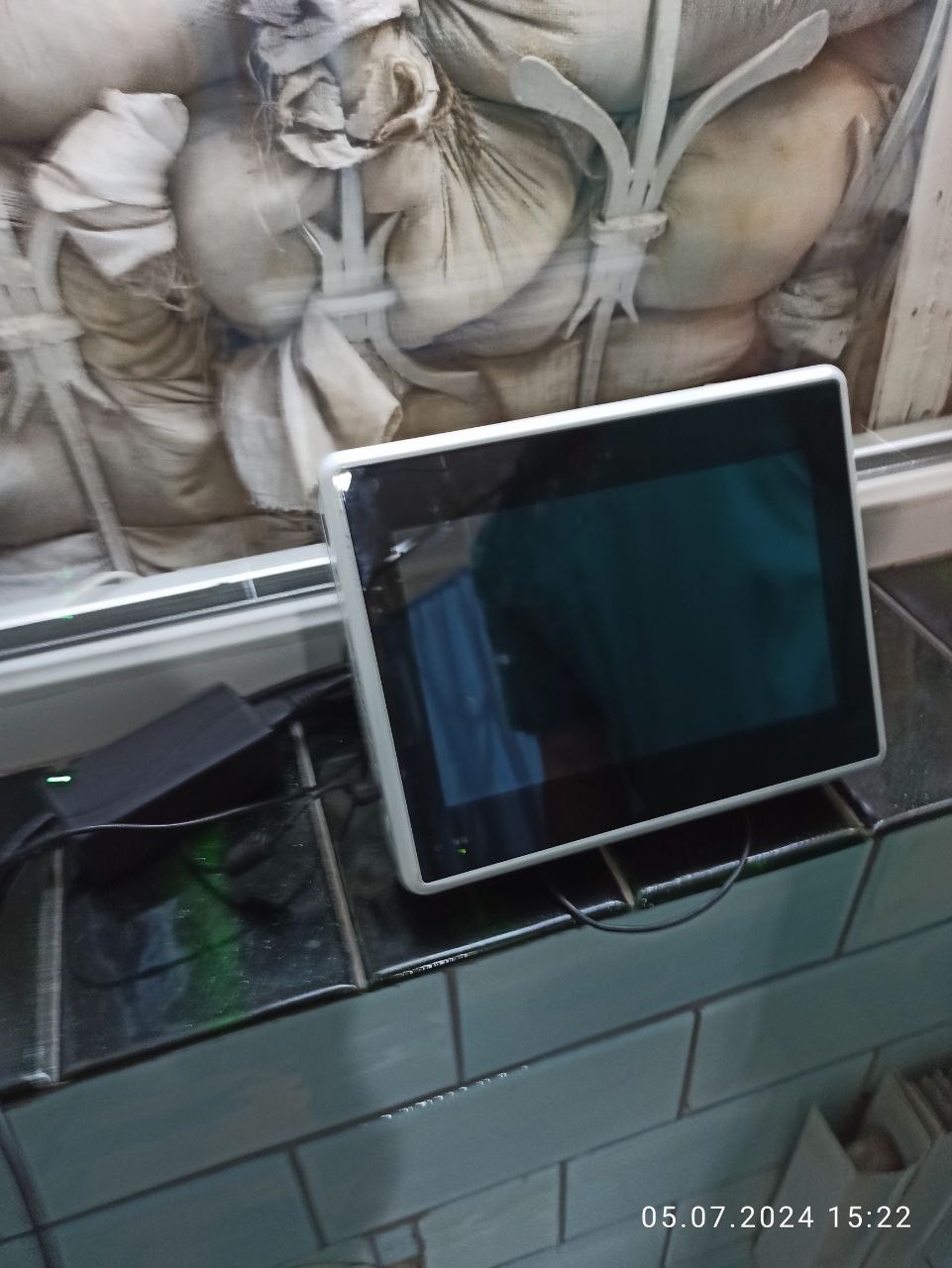
1.6. In violation of the Procedure for organising medical care at the primary, secondary (specialised), and tertiary (highly specialised) levels using telemedicine, approved by the Order of the Ministry of Health of Ukraine dated 19.10.2015 No. 681, the medical unit staff are deprived of the ability to make requests for telemedical consultation and receive consultation for the provision of medical care to convicted persons for technical reasons.
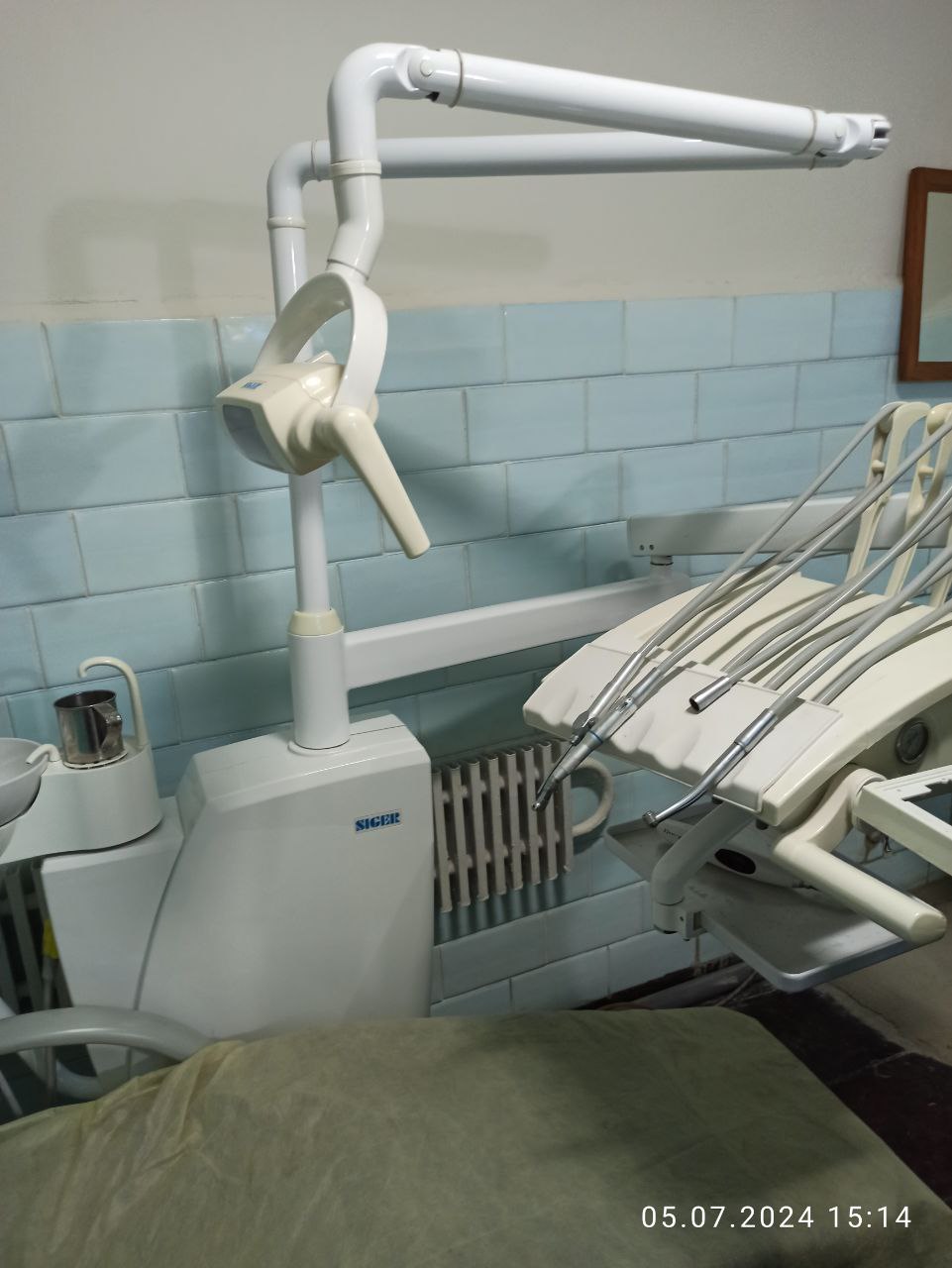
1.7. In violation of the requirements of the Equipment Table for a dental office and dental technician workplace, approved by the Order of the Ministry of Health of Ukraine dated 11.04.2005 No. 158, there is no dental X-ray machine in the medical unit, which makes it impossible to conduct an in-depth dental examination of convicted persons and does not ensure the timely provision of proper dental care.
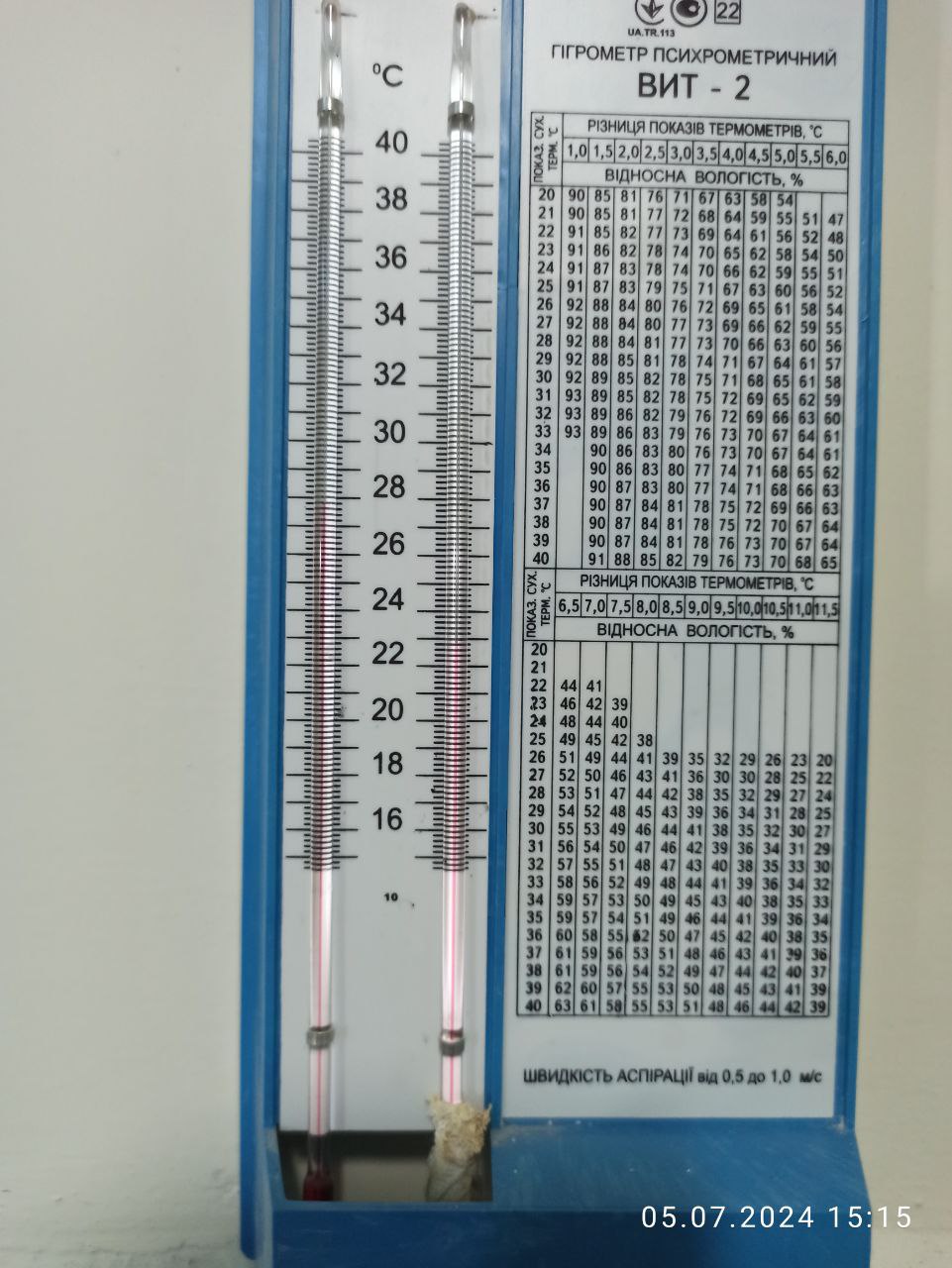
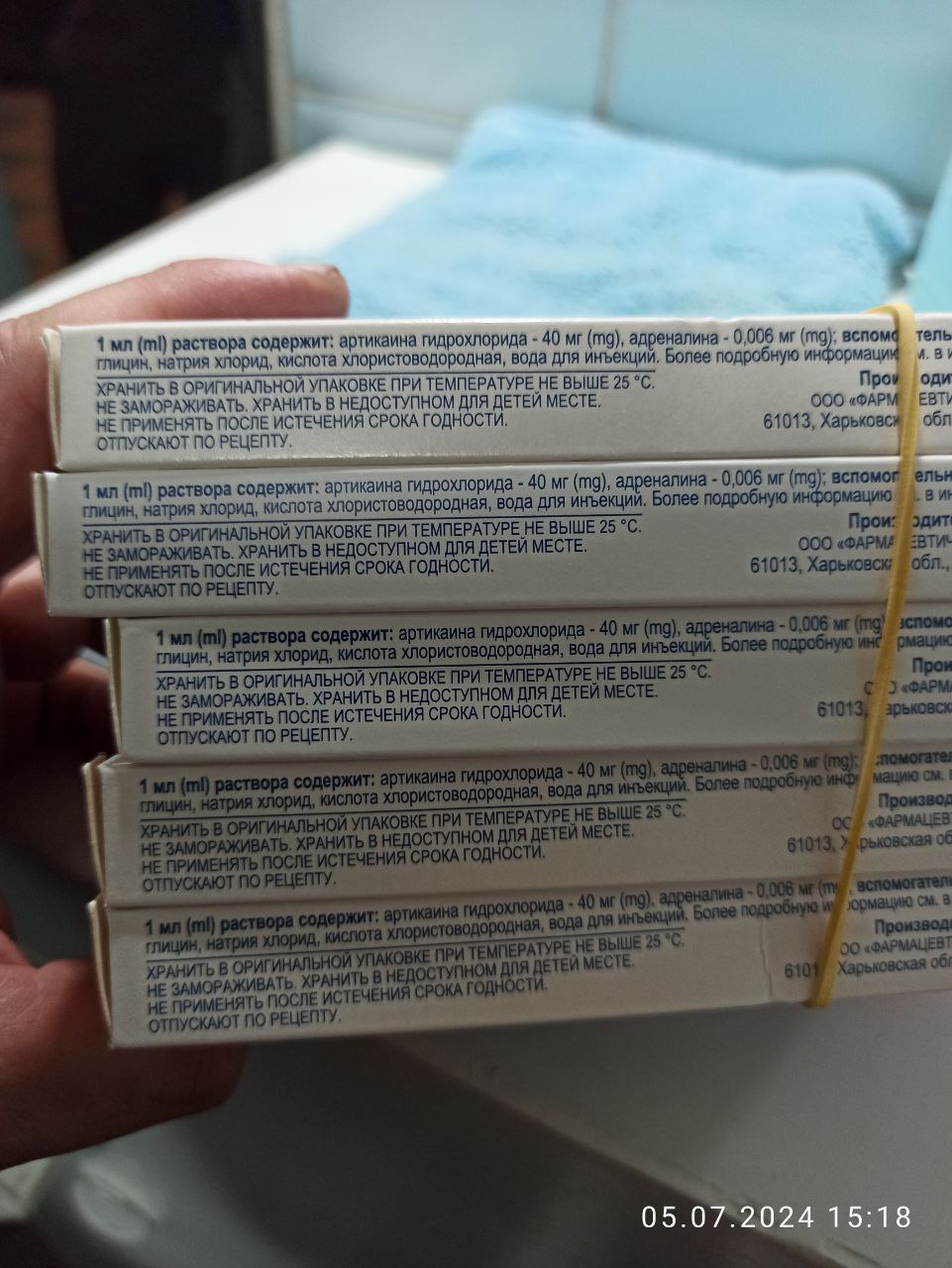
1.8. In violation of the requirements of the Order of the Ministry of Health of Ukraine dated 16.12.2003 No. 584 “On approval of the Rules for storage and quality control of medicines in medical and preventive institutions” (hereinafter — Storage Rules), medicines are stored without regard for the temperature regimes specified by the manufacturers. Thus, medicines whose storage conditions cannot exceed a temperature higher than 25°C were stored in the room, while the temperature in the room reached 28°C.
1.9. In violation of the requirements of point 2.23 of Chapter 2 of the State Sanitary Rules and Norms “Hygienic requirements for the arrangement and operation of X-ray cabinets and conducting X-ray procedures”, approved by the Order of the Ministry of Health of Ukraine dated 04.06.2007 No. 294, registered in the Ministry of Justice of Ukraine on 07 November 2007 under No. 1256/14523, the X-ray cabinet premises are used for storing hygiene products.
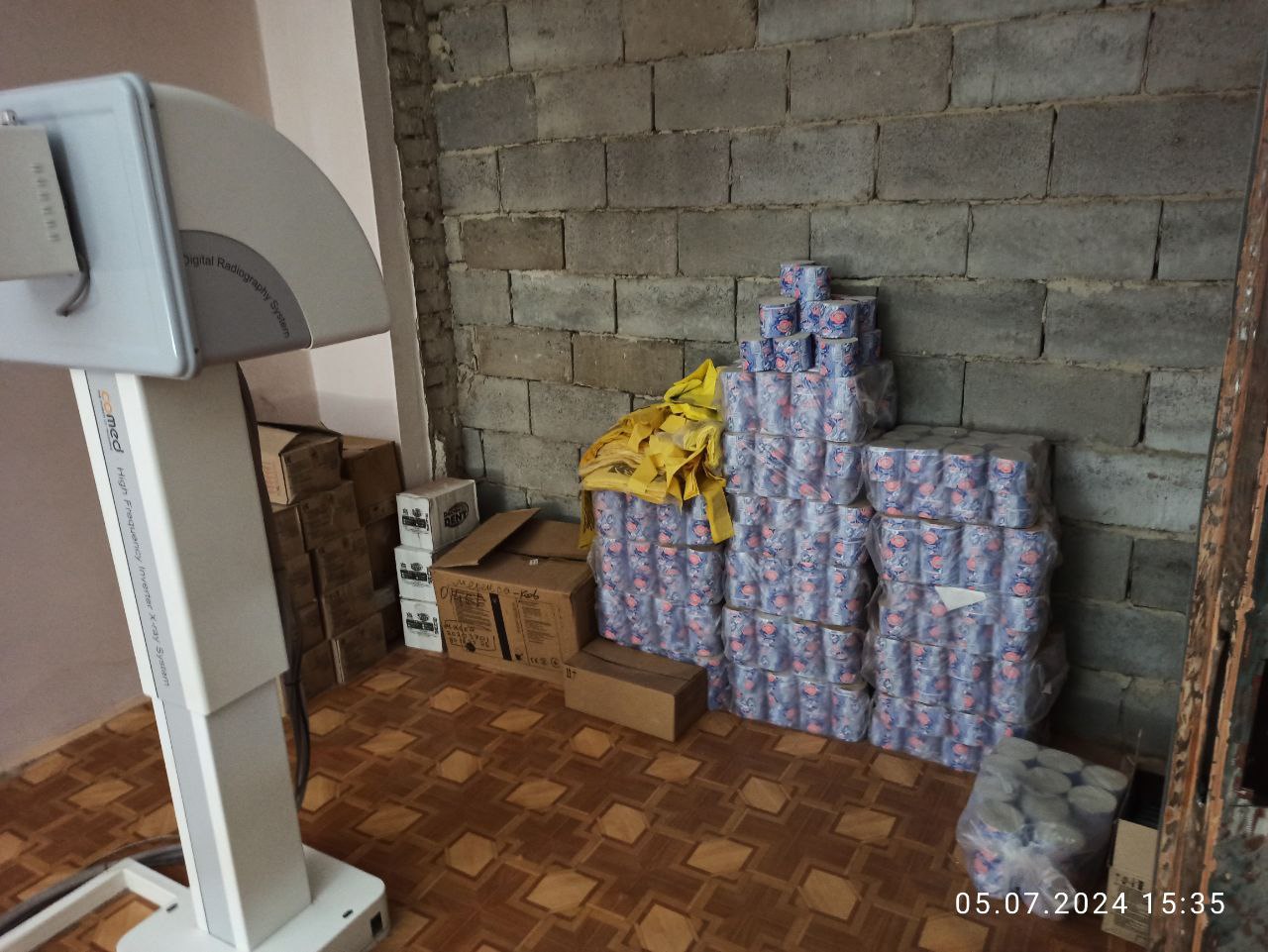
1.10. In violation of the “State sanitary-antiepidemic rules and norms regarding the handling of medical waste”, approved by the Order of the Ministry of Health of Ukraine dated 08.06.2015 No. 325, the branch of the State Institution “Public Health Centre of the State Criminal Executive Service of Ukraine” in the Kharkiv and Luhansk regions has not concluded an agreement with a specialised institution for the disposal of medical waste, due to which proper collection, sorting, and disposal of medical waste has not been organised in the medical unit since the beginning of 2024.
1.11. Dispensary supervision is carried out for 12 persons who have a disability. Of these, Group II — 4 persons; Group III — 8 persons. At the same time, in violation of the requirements of the Law of Ukraine “On the rehabilitation of persons with disabilities in Ukraine”, persons with disabilities do not receive proper diagnostic, treatment, and rehabilitation measures in the presence of information confirming a persistent impairment of body functions caused by diseases or the consequences of injuries that cause a limitation of normal life activity.
During the study of the medical documentation of the convicted persons, it was established that four persons with disabilities do not have individual rehabilitation programs (hereinafter — IRP). Moreover, the recommendations of the IRP are not being fulfilled, due to which they are not receiving proper diagnostic, treatment, and rehabilitation measures in the presence of information confirming a persistent impairment of body functions caused by diseases and the consequences of injuries, which cause a limitation of normal life activity.
1.12. In violation of the requirements of the Standards of medical care for HCV in adults, approved by the Order of the Ministry of Health of Ukraine dated 15.01.2021 No. 51, not all persons with a suspected viral hepatitis C infection are undergoing PCR testing, due to which they are not receiving the necessary treatment, which may lead to a deterioration of their health status and the spread of the mentioned infectious disease among convicted persons and detainees.
1.13. In violation of the requirements of the State Building Norms of Ukraine V.2.2-17:2006 “Buildings and structures. Accessibility of buildings and structures for persons with limited mobility”, conditions for holding people with disabilities have not been created in the medical unit.
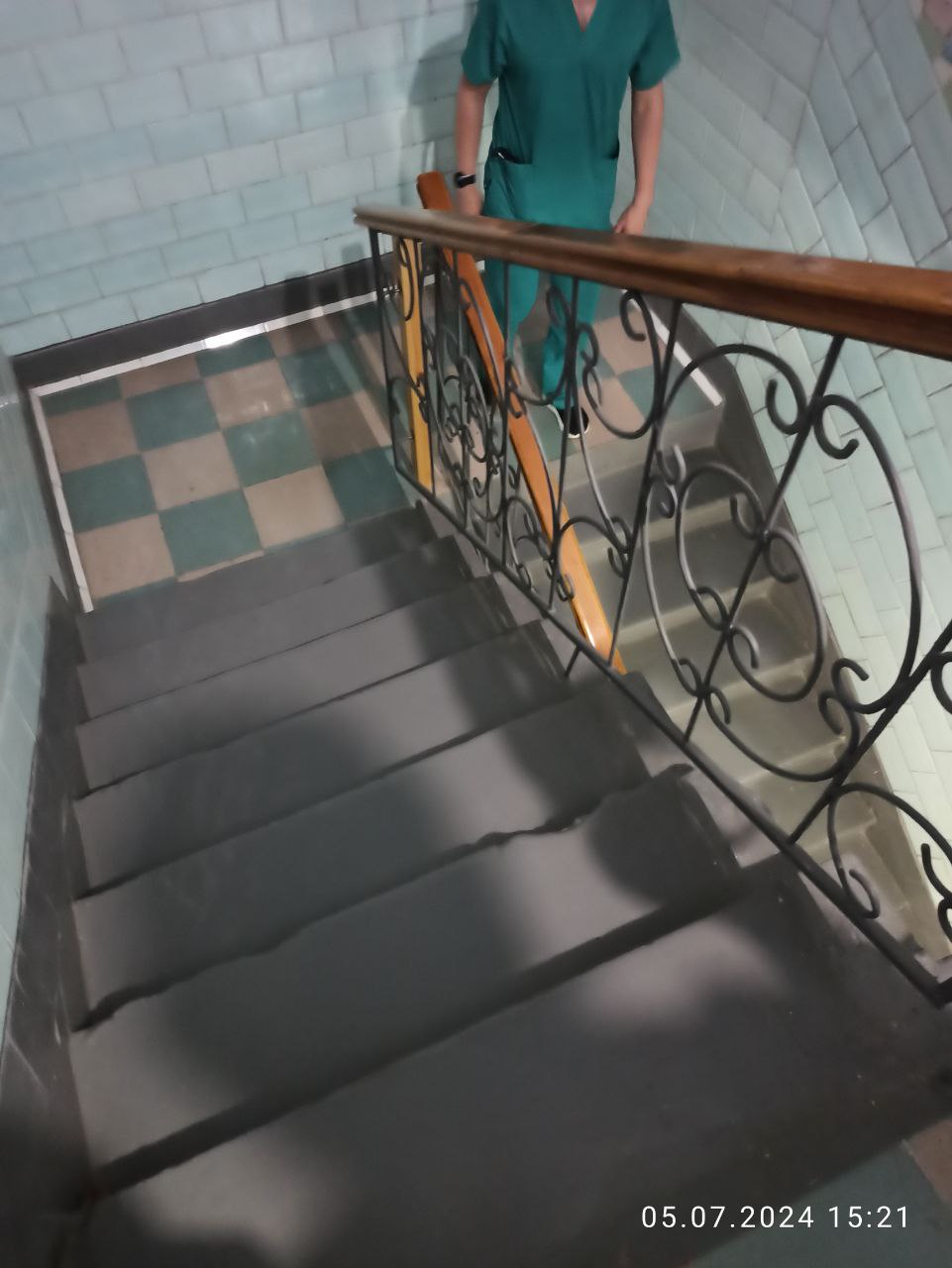
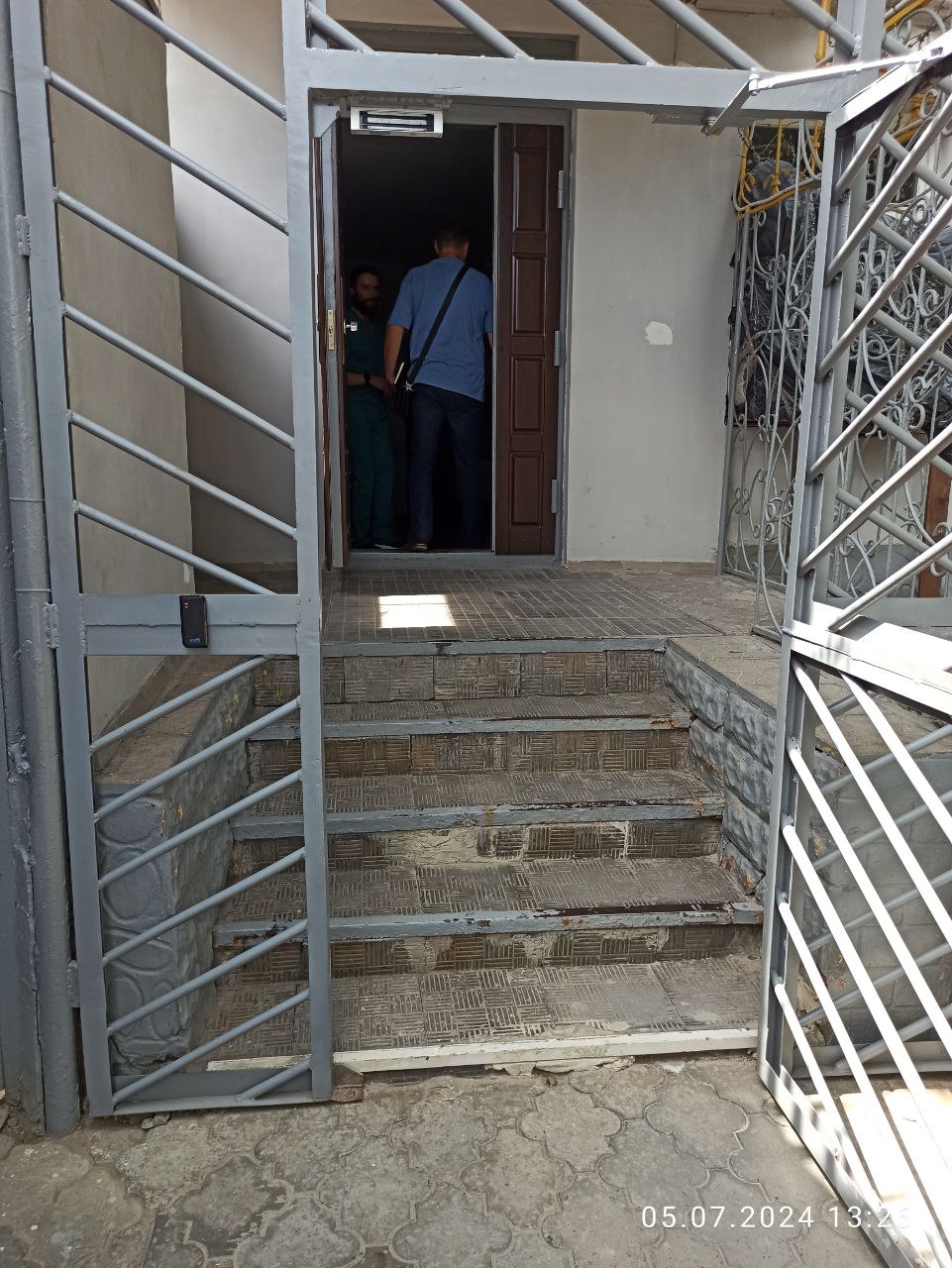
1.14. In violation of the Fire Safety Rules in Ukraine, approved by the Ministry of Internal Affairs of Ukraine dated 30.12.2014 No. 1417, the premises of the medical unit are not equipped with fire extinguishing and fire alarm systems.
1.15. According to point 7 of Chapter III of Section II of the Procedure for organising the provision of medical care to persons sentenced to deprivation of liberty, approved by the joint Order of the Ministry of Justice of Ukraine and the Ministry of Health of Ukraine dated 15.08.2014 No. 1348/5/572, convicted persons working at food facilities (except for work related to the positions of sellers, managers of food and clothing warehouses, storekeepers) and in the processing industry, in children's homes, institutions of general secondary education, professional training units in special educational colonies, medical units (feldsher-midwife points) and hospital institutions of the SESU (except for work related to the provision of medical care), laundries, bathhouses, rooms for long-term visits, dormitories, clubs, at water supply and sewage facilities, and sites for the breeding and raising of animals, undergo mandatory preliminary and preventive medical examinations in accordance with the Resolution of the Cabinet of Ministers of Ukraine dated 23 May 2001 No. 559 “On approval of the list of professions, production facilities, and organisations whose employees are subject to mandatory preventive medical examinations, the procedure for conducting these examinations, and the issuance of personal medical records”, a form of primary accounting documentation No. 1-OMK “Personal medical record”, approved by the Order of the Ministry of Health of Ukraine dated 21 February 2013 No. 150, registered in the Ministry of Justice of Ukraine on 23 April 2013 under No. 662/23194, is created for each convicted person of this category.
At the same time, during the check of personal medical records for convicted persons working in the canteen, it was established that these employees had not been examined by an otolaryngologist and a dermatovenereologist, which violates the requirements of point 6 of the “Rules for conducting mandatory preventive medical examinations of employees of certain professions, production facilities, and organisations whose activities are related to serving the population and may lead to the spread of infectious diseases”, approved by the Order of the Ministry of Health of Ukraine dated 23.07.2002 No. 280 (in the wording of the Order of the Ministry of Health of Ukraine dated 21.02.2013 No. 150).
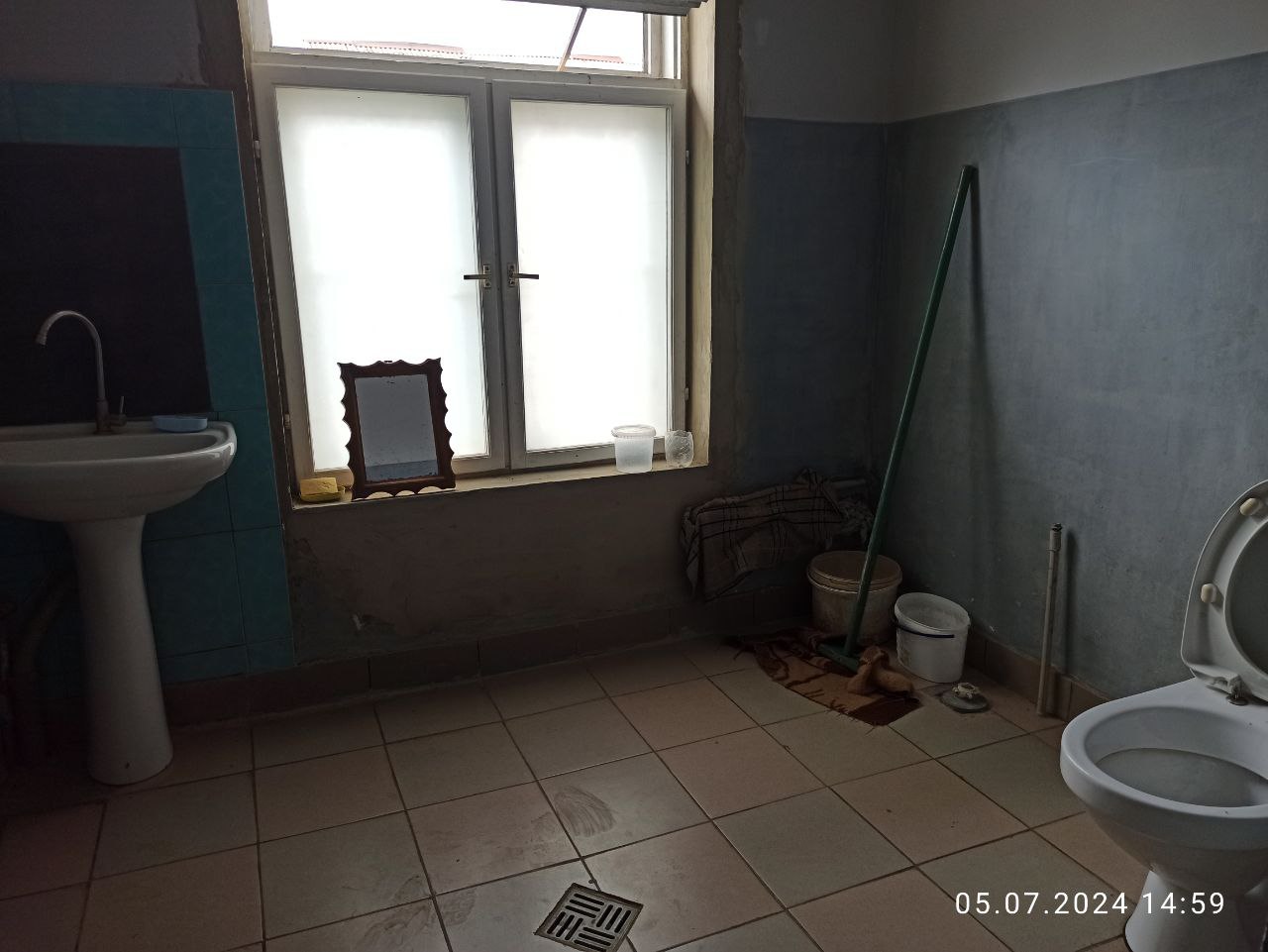
1.16 In violation of the requirements of Rule 19.3 of the European Prison Rules (Recommendation No. R (2006) 2 of the Committee of Ministers of member states), the bathroom in the medical unit is not equipped with partitions necessary for privacy, due to which the right of convicted persons to privacy is not respected.
Violation of the right to work and social protection
Industrial zone of the institution
In accordance with Article 118 of the CEC of Ukraine, persons sentenced to deprivation of liberty have the right to work. Labour is carried out on a voluntary basis on the basis of a civil-law contract or an employment contract. According to Article 26 of the Law of Ukraine “On mandatory state pension insurance”, persons have the right to be assigned an old-age pension after reaching the age of 60, provided they have a certain insurance period.
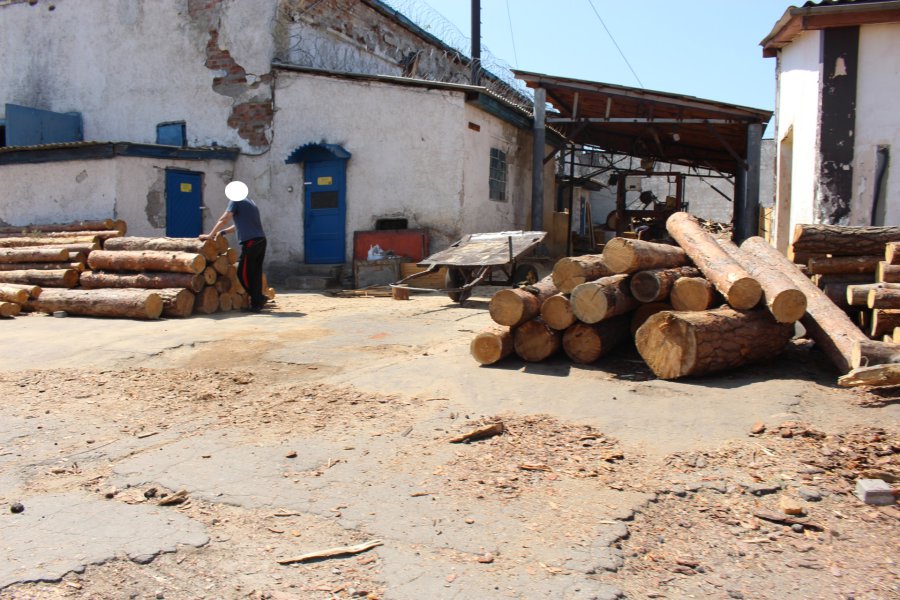
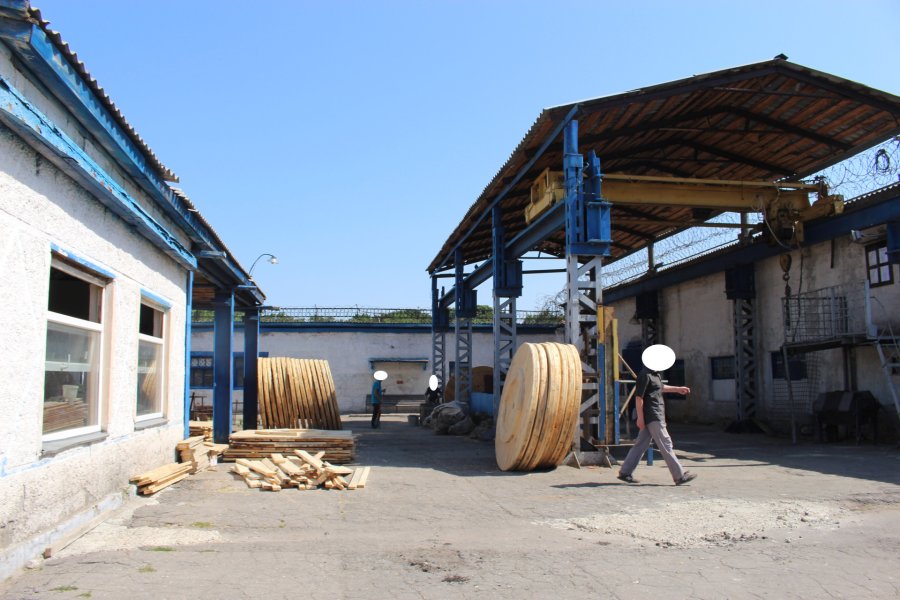
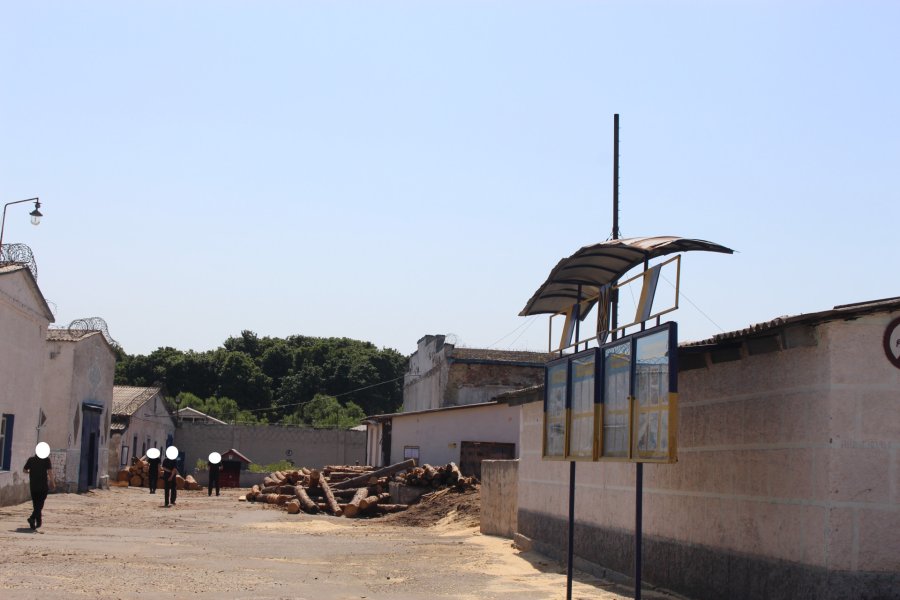
Violation of the right to work and protection against exploitation (Art. 4 of the Convention for the Protection of Human Rights and Fundamental Freedoms, Article 43 of the Constitution of Ukraine)
According to Article 119 of the CEC, the labour of persons sentenced to deprivation of liberty is paid according to its quantity and quality. In addition, point 6.1 of the Instruction on working conditions and wages of persons sentenced to restriction of liberty or deprivation of liberty, approved by the Order of the Ministry of Justice of Ukraine dated 07.03.2013 No. 396/5 (hereinafter — Labour Instruction), states that the salary accrued to convicted persons, provided they meet their production quota or working time duration, cannot be less than the legislatively established minimum wage.
In violation of the requirements of the ninth paragraph of Part 1 of Article 8 and Part 1 of Article 118 of the CEC, convicted persons are involved in production work without concluding an employment contract. Also, convicted persons who perform the functions of a ‘duty prisoner’ [dyzhurnalni] are involved in work on an unpaid basis.
During the monitoring visit to the institution's production facilities and workshops, working convicted persons were interviewed. Relevant documentation was checked. According to the administration, the convicted persons work in one shift. However, the interviewed convicted persons testified that the night shift is a general practice, and in some production workshops — two shifts of 12 hours: from 6 am to 6 pm and from 6 pm to 6 am. The monitors were unable to confirm or refute this information because, according to the work attendance rosters, the convicted persons work in one shift.
At the same time, during the summing-up of the visit with the institution's management, the colony administration did not refute the information that convicted persons work in the night shift. According to Article 119 of the CEC of Ukraine, the labour of persons sentenced to deprivation of liberty is paid according to its quantity and quality. The practice of involving convicted persons in work without a passport is also common. Thus, convicted person V. and convicted person T. work without a passport, and accordingly do not have an employment record and corresponding social guarantees.
The interviewed convicted persons reported that remuneration for labour occurs through the issuance of tea and tobacco. In the room where work assignment logs are kept, boxes of tea and tobacco were found. The interviewed convicted persons noted that for a work shift of six people, a pack (50 grams) of tea and a pack (50 grams) of tobacco are issued.
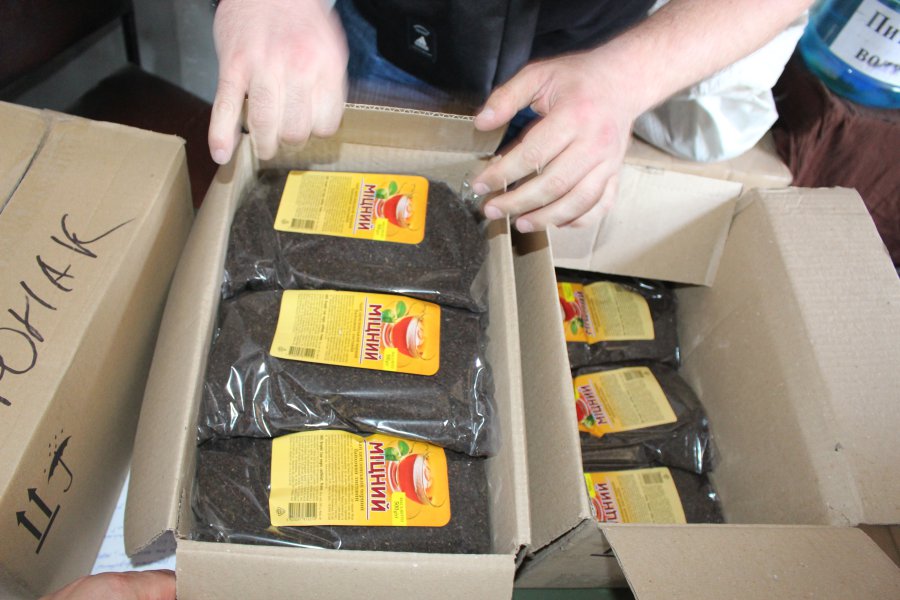
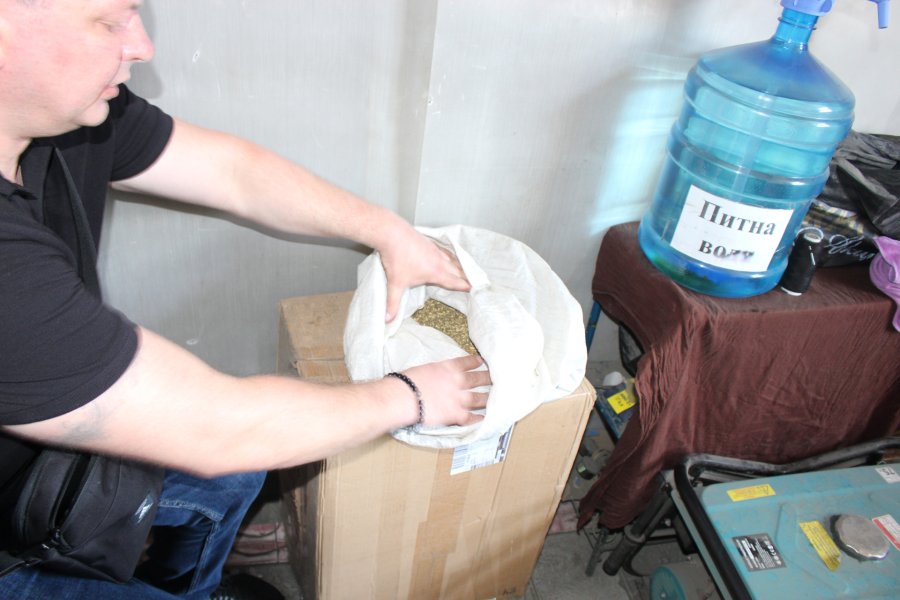
According to the statement on the salary/remuneration that was accrued to convicted persons for May, convicted person K. received 22 UAH 11 kop., convicted person L. — 539 UAH 98 kop., convicted person F. — 494 UAH 98 kop., convicted person B. — 254 UAH 01 kop., convicted person B. — 254 UAH 01 kop., convicted person K. — 508 UAH 02 kop., convicted person L. — 508 UAH 02 kop., convicted person O. — 25 UAH 85 kop., convicted person Z. — 12 UAH 50 kop., convicted person F. — 20 UAH 10 kop., convicted person Kh. — 20 UAH 10 kop., convicted person Kh. — 20 UAH 10 kop., convicted person Ch. — 20 UAH 10 kop., convicted person D. — 20 UAH 10 kop., convicted person D. — 20 UAH 10 kop., convicted person Z. — 20 UAH 10 kop., convicted person K. — 20 UAH 10 kop., convicted person K. — 20 UAH 09 kop., convicted person K. — 20 UAH 10 kop., convicted person P. — 20 UAH 10 kop., convicted person P. — 20 UAH 10 kop., convicted person N. — 10 UAH 05 kop., convicted person N. — 20 UAH 10 kop., convicted person Z. — 107 UAH 82 kop., convicted person K. — 107 UAH 82 kop., convicted person K. — 360 UAH 00 kop., convicted person A. — 494 UAH 98 kop., convicted person B. — 472 UAH 48 kop., convicted person K. — 472 UAH 48 kop., convicted person P. — 472 UAH 48 kop., convicted person S. — 472 UAH 48 kop., convicted person D. — 12 UAH 75 kop., convicted person I. — 12 UAH 75 kop., convicted person K. — 12 UAH 75 kop., convicted person N. — 24 UAH 31 kop., convicted person N. — 12 UAH 75 kop., convicted person P. — 12 UAH 75 kop., convicted person Sh. — 25 UAH 50 kop., convicted person D. — 2574 UAH 65 kop., convicted person S. — 2790 UAH 90 kop., convicted person A. — 267 UAH 64 kop., convicted person B. — 43 UAH 39 kop., convicted person B. — 43 UAH 39 kop., convicted person B. — 43 UAH 39 kop., convicted person B. — 86 UAH 78 kop., convicted person V. — 86 UAH 78 kop. According to the salary accrual sheet for Brigade No. 110 for the month of May, the maximum accrued funds amount to 267 UAH 64 kop. and the minimum — 21 UAH 71 kop.
Polyethylene waste processing workshop
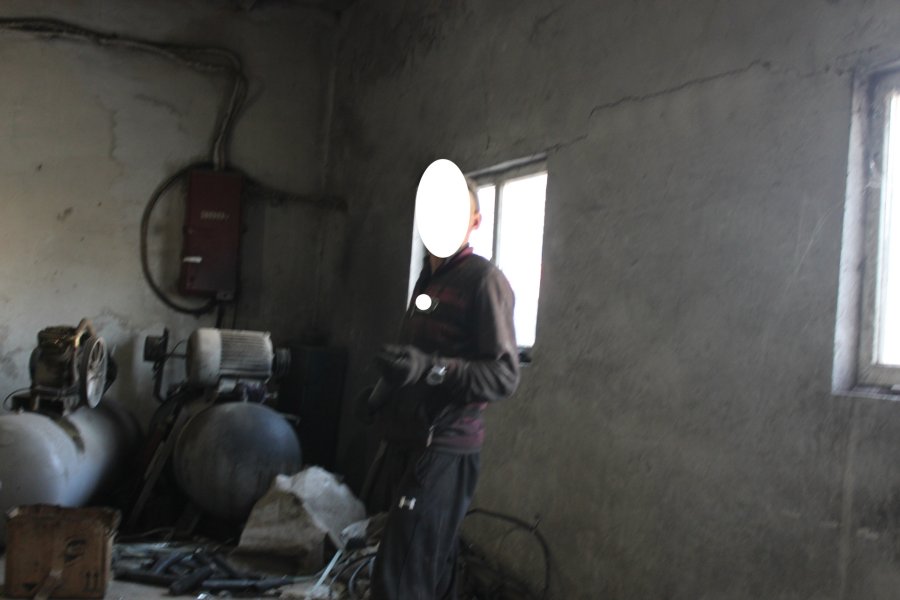
Raw materials for production
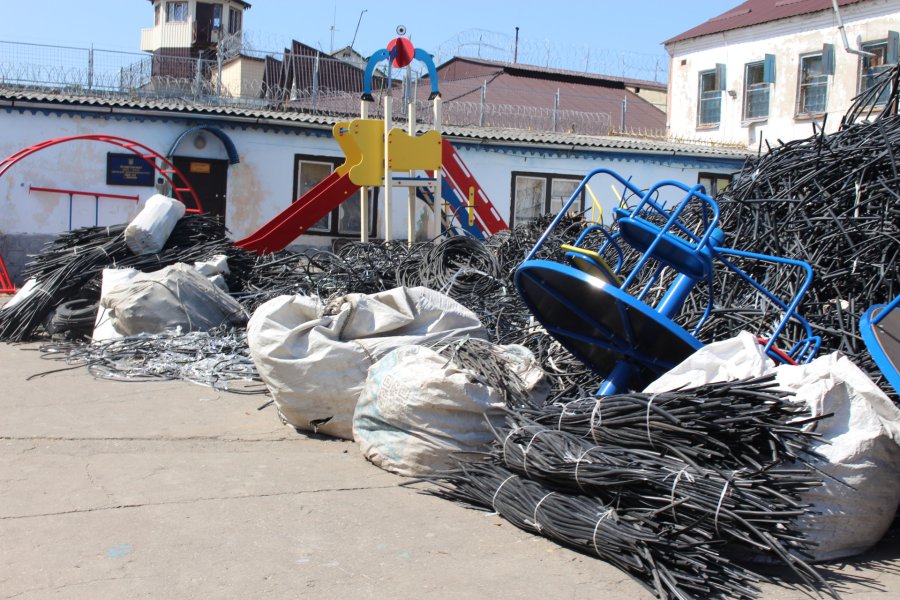
Sewer [skewer] manufacturing workshop
Convicted persons work without workwear and protective equipment.
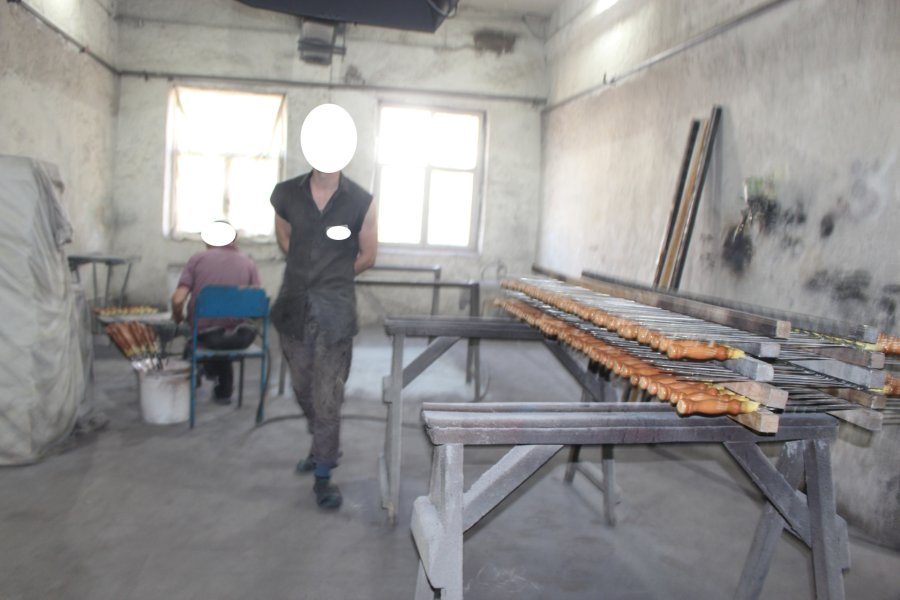
Backgammon manufacturing workshop
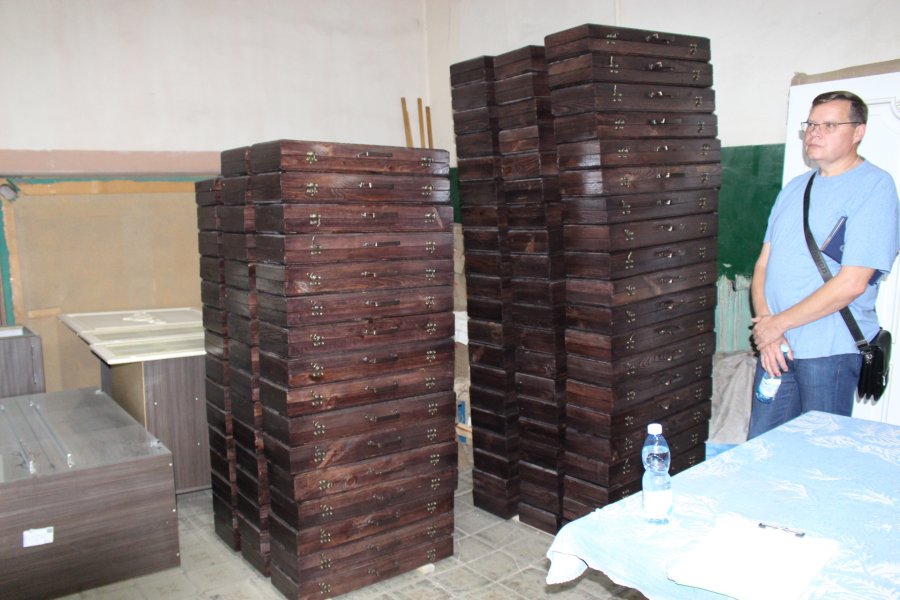
Woodworking workshop
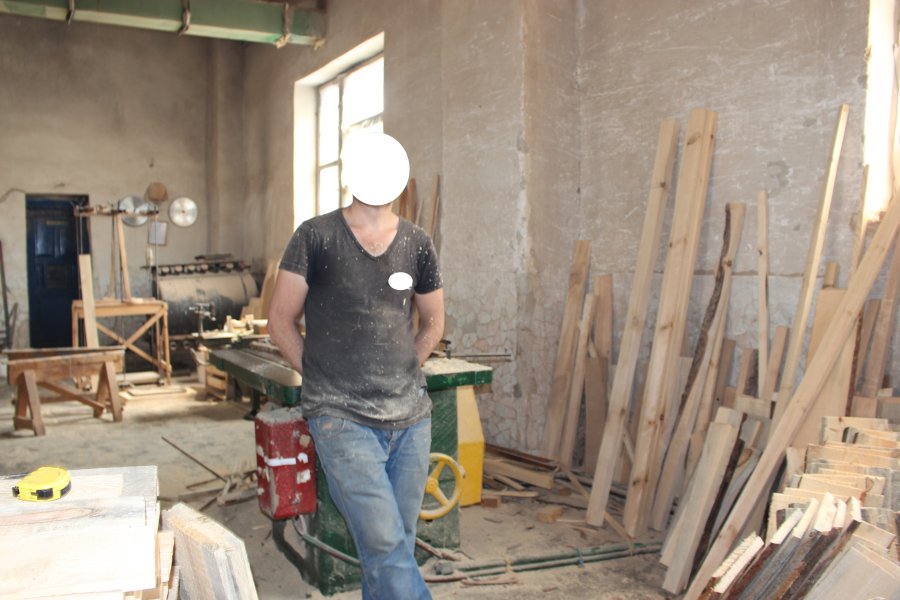
Coffin manufacturing workshop
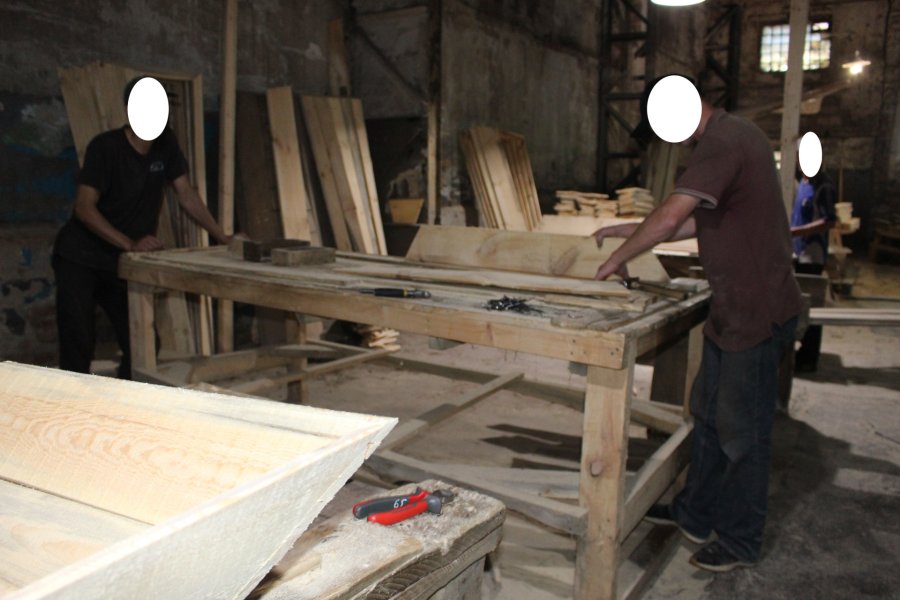
According to the convicted persons, they are paid 16 UAH 50 kop. for one coffin; according to the supplementary agreement to the service contract for the manufacture of one coffin, the customer pays 92 UAH 50 kop. excluding VAT (value added tax), and with VAT — 111 UAH 00 kop.
Such labour can be considered ‘slave labour’ and humiliating to human dignity. Such methods cannot contribute to the correction of convicted persons, namely, resocialisation and social adaptation.
Thus, the monitoring group, after communicating with the convicted persons and processing the information on wages received by the convicted persons for May 2024, has established that the earnings of convicted persons who work in production facilities and workshops and are involved in maintenance work are significantly lower than the minimum wage in the country, which as of April 2024 was 8000 UAH.
According to the Labour Code of Ukraine, enterprises and organisations, when concluding a collective agreement, can establish a lower norm of working time duration than 40 hours per week. According to Article 52 of the Labour Code of Ukraine, a five-day working week with two days off is established for employees.
During the visit, the monitoring group established that convicted persons in the institution work more than 40 hours per week, which is a violation of Article 52 of the Labour Code of Ukraine, Article 119 of the CEC, and point 5.1 of the Labour Instruction.
In Section V, point 5.1.1 of the Labour Instruction, it is stated that if, due to the nature of production and working conditions, as well as based on the specifics of the functioning of penal institutions, the introduction of a five-day working week is inexpedient, a six-day working week with one day off is established by the decisions of the heads of penal institutions, agreed upon with the interregional territorial bodies of the Ministry of Justice on the execution of criminal sentences. With a six-day working week, the duration of daily work cannot exceed 7 hours with a weekly norm of 40 hours.
Based on the above, it can be considered that an atmosphere of ‘labour slavery’ has been created in the institution.
Recommendations:
-
Take measures aimed at eliminating identified human rights violations and preventing torture, other cruel, inhuman, or degrading types of treatment and punishment in Medical Unit No. 43 of the branch of the State Institution “Public Health Centre of the State Criminal Executive Service of Ukraine” in the Kharkiv and Luhansk regions;
-
Fulfil the requirements of point 37 of the Resolution of the Cabinet of Ministers of Ukraine No. 285 dated 2 March 2016 “On approval of Licensing conditions for the conduct of economic activities in medical practice”;
-
Ensure the accessibility of the institution's buildings in accordance with the State Building Norms of Ukraine V.2.2-17:2006 “Buildings and structures. Accessibility of buildings and structures for persons with limited mobility”;
-
Stop the practice of doctors certifying the health status of convicted persons and detainees when placing them in the DIZO/PKT ward;
-
Ensure proper disposal of medicines and medical devices;
-
Ensure proper medical care for persons with viral hepatitis C;
-
Ensure the conduct of proper preventive examinations;
-
Equip the fire safety system in accordance with established requirements;
-
Ensure the proper operation of the telemedical complex for doctors to make requests for telemedical consultation;
-
Ensure the possibility of receiving opioid substitution therapy based on a diagnosis of mental and behavioural disorders due to opioid use;
-
Replace the pads for the external automated defibrillator;
-
Ensure the conduct of individual rehabilitation for persons in need of it;
-
Eliminate violations of Fire Safety Rules;
-
Ensure proper disposal of medicines and medical devices;
-
Conduct explanatory work among convicted persons regarding the realisation of their rights to appeal against the actions/inaction of the colony administration;
-
Stop the practice of forbidding convicted persons from sitting and lying on beds during the daytime;
-
Stop the practice of involving convicted persons (‘duty prisoners’) in supervisory/security functions;
-
Stop creating an atmosphere of fear and humiliation in the institution;
-
Stop the practice of granting authority to some convicted persons to influence other convicted persons, and eliminate the unofficial SPS — the Law and Order Section;
-
Assist convicted persons in restoring family ties lost due to the war;
-
Stop the practice of placing convicted persons in the premises of a multidisciplinary hospital as a disciplinary punishment;
-
Stop the practice of violating the right to work and social protection of convicted persons.