Report on the findings of a monitoring visit to Dykanivska Correctional Colony No. 12
Historical background
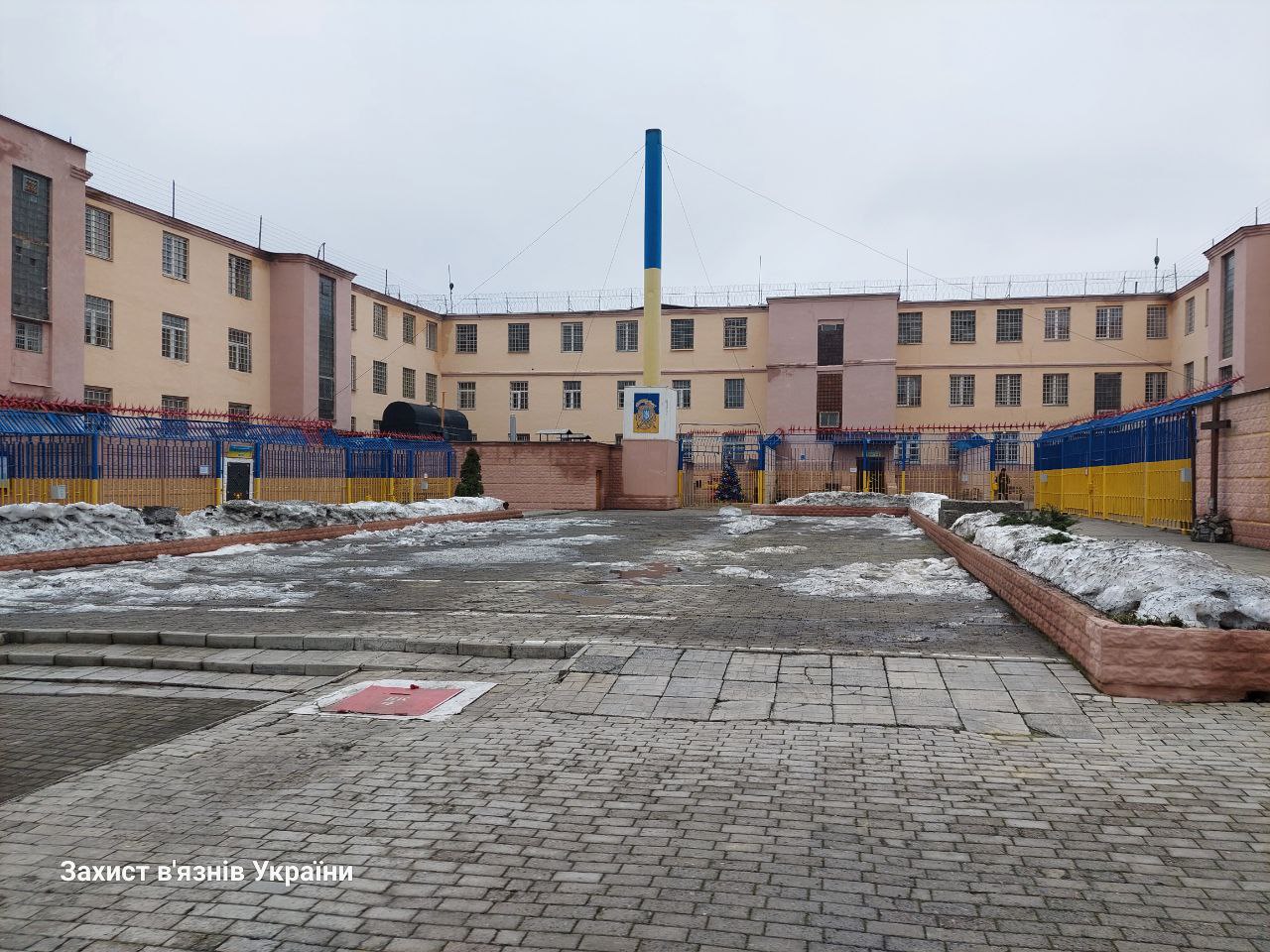
The history of Dykanivska Correctional Colony No. 12 began in July 1956, when prison camp No. 12 was established in a suburb of Kharkiv, amidst the marshy dams of the Lopan River. This area of the city is historically named Dykanivka. Initially, two wooden barracks were built with a temporary fence. In connection with the reorganization of correctional labour legislation, from January 1957, the camp point was reformed into the reinforced regime correctional colony No. 12 of the Kharkiv Region Department of Internal Affairs. During 1960, production facilities with a total area of over 1,500 square metres were commissioned. With the participation of the Malyshev and ‘Elektrostanok’ plants, the premises were provided with modern equipment, resulting in the launch of over 1,000 types of products requiring metalworking.
From 1974, reconstruction of communal-domestic and production premises was carried out; the old barrack-type premises for convicts were completely demolished, and new three-storey stone structures were built in their place. Currently, Dykanivska Correctional Colony No. 12 is a medium-security penal institution for holding men sentenced to imprisonment for a fixed term for the first time.
General information
According to official data provided by the institution’s management, the staff size is 238.5 full-time units, with the actual number being 196.5. The institution is designed for 1,232 people. During 2023, 845 people arrived at the facility. At the time of the visit, 503 people were being held in the institution. The institution has four structural units: resocialisation, Quarantine, Diagnosis, and Distribution (QDD), Cell-Type Room (CTR), and Social and Psychological Service departments. In 2022, one convict died in the institution; in 2023, there was also one death. 333 convicts are employed under labour contracts. The average monthly salary is 3,078.09 hryvnias. Two people were in the medical unit. In the Disciplinary Isolation Ward (DIZO), Chamber-Type Room (PKT), and Cell-Type Room (DPK), there were three people. There are 27 people registered with HIV/AIDS, eight are prone to suicide, and one is prone to escape. One person has a Group II disability, and 12 have a Group III disability.
During 2022 and 2023, no complaints were recorded from convicted persons regarding inadequate detention conditions or the inadequate provision of medical care. Such a practice is a cause for concern. During 2022, 285 people were released, of whom 82 were released on parole, and three people had their detention conditions changed to more lenient ones. In 2023, 236 people were released, of whom 64 were released on parole, and one person had their detention regime changed to a more lenient one. In 2022, one emergency medical call was recorded; in 2023, there was also one call.
In 2022, two cases of bodily injuries were recorded during the stay at the institution. In 2023, there was one case during the stay at the institution. During 2023, special means (handcuffs) were used once. None of the convicts have a personal tablet with internet access. 12 people were rejected in total. In 2022, there were three long-term visits and 115 short-term visits through a glass partition. During 2023, there were 54 long-term visits and 463 short-term visits through a glass partition. There is no practice of providing short-term contact visits in the institution.
The staff shortage is 42 employees. During 2023, 22,190 telephone calls were made.
During the visit, 132 convicts were interviewed. None of the convicts agreed to communicate on the condition of anonymity. The monitors observed that the convicts were intimidated, and the institution lacks a practice of challenging the actions (inaction) of the administration.
The humanitarian needs of the institution include tablets, computers, and tableware.
On the eve of the visit, a request for public information was sent to the management of the institution with the following questions: the number of appeals from convicts during 2022–2023 sent to the Ukrainian Parliament Commissioner for Human Rights, the prosecutor’s office in sealed form, other state bodies, and human rights organisations, as well as the number of responses to these appeals. The received response stated that during 2022 and 2023, not a single appeal was sent from prisoners to the Ukrainian Parliament Commissioner for Human Rights, the prosecutor’s office, other state bodies, or human rights organisations, nor were any received.
We consider such a practice unacceptable. A complete lack of communication with state bodies and human rights organisations indicates a lack of awareness among convicts, or a lack of trust in such communication, or a lack of opportunity. A certain number of convicts have a desire to serve in the Armed Forces of Ukraine, and about 20 people have combat experience.
During the visit, the monitoring group examined the documentation relating to the life of the colony and inspected the utility, production, and residential premises, as well as the medical unit, for their compliance with the requirements of the legislation of Ukraine and international standards. The head of the institution is Colonel of the Internal Service Andriy Volodymyrovych Humenyuk. The monitoring group was accompanied by the First Deputy Head of the institution, Colonel of the Internal Service Vyacheslav Mykolayovych Popov.
Medical Unit No. 12 of the branch of the State Institution ‘Healthcare Center of the State Penitentiary Service of Ukraine’ in Kharkiv and Luhansk regions
The head of Medical Unit No. 12 of the branch of the State Institution ‘Healthcare Center of the State Penitentiary Service of Ukraine’ in Kharkiv and Luhansk regions is E.G. Ushynska.
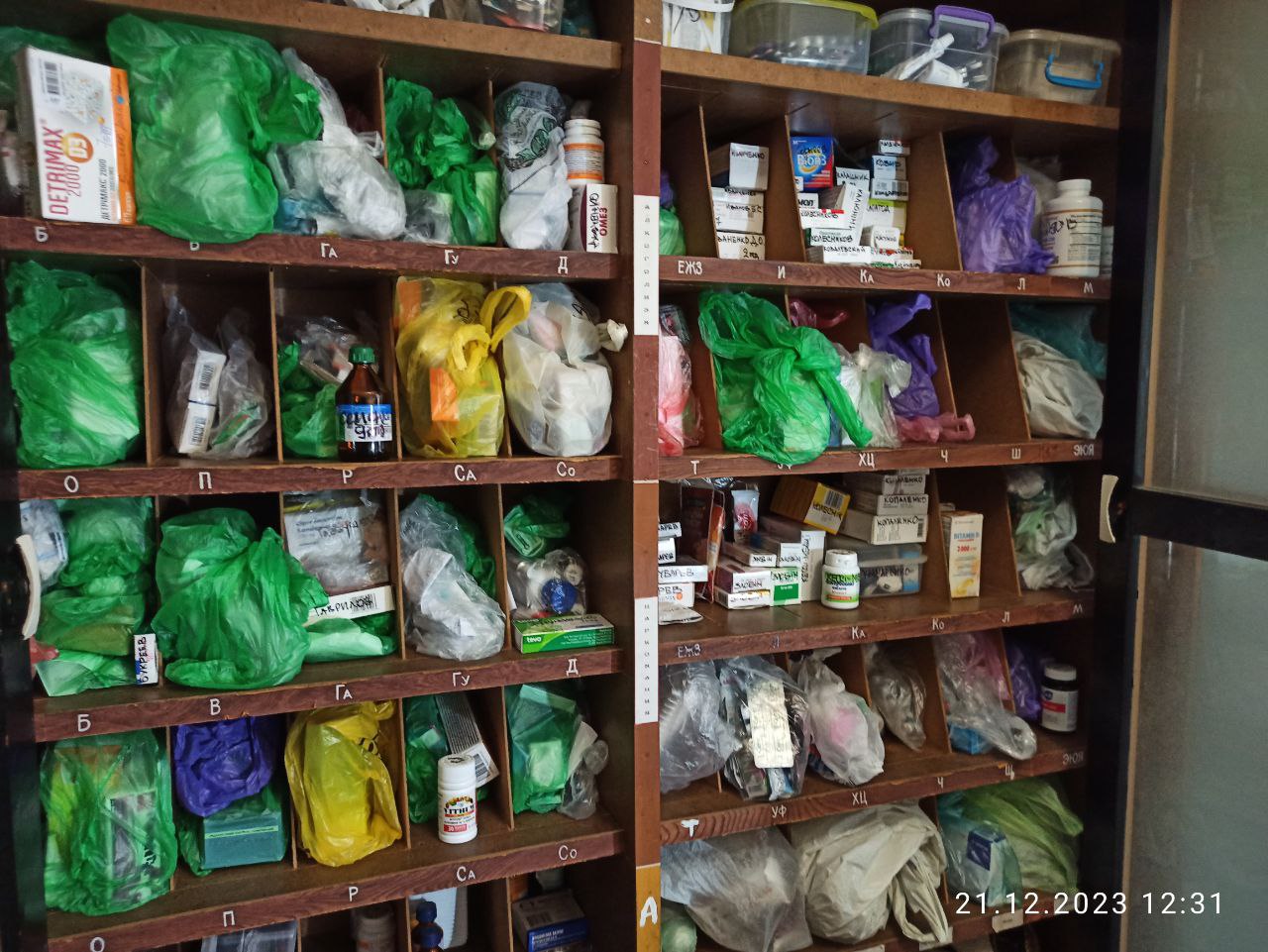
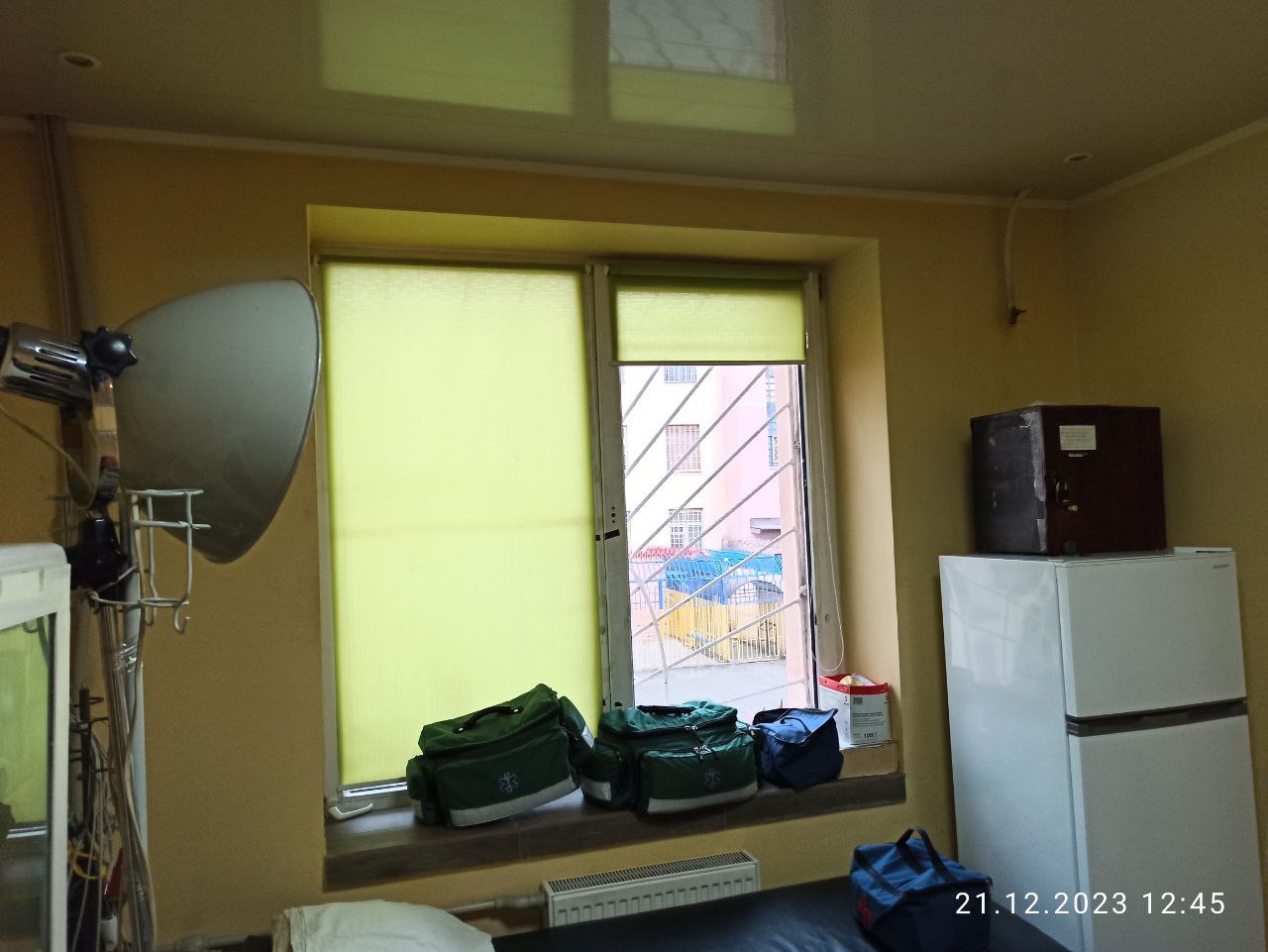
During the visit, the monitoring group studied the medical documentation and inspected the premises of the medical unit for their compliance with the requirements of the legislation of Ukraine and international standards. Deficiencies were found in the work of Medical Unit No. 12 that lead to the violation of the rights of convicts and persons held in custody at Dykanivska Correctional Colony No. 12, in particular:
1. Violation of the rights of convicted persons to medical assistance. Violations during preventive medical examinations and medical check-ups
1.1 Due to the absence of concluded declarations with a primary care physician by the convicts, they are unable to receive the necessary medical services at the expense of the National Health Service of Ukraine (NHSU), which leads to a violation of the requirements of paragraphs 4 and 5 of Article 4 of the Law of Ukraine ‘Fundamentals of the Legislation of Ukraine on Healthcare’.
1.2 There are no recommendations from preventive medical examinations, which should be registered in the ‘Logbook of results of undergoing a preventive medical examination’, the form of which is provided in Appendix 4 to the Procedure.
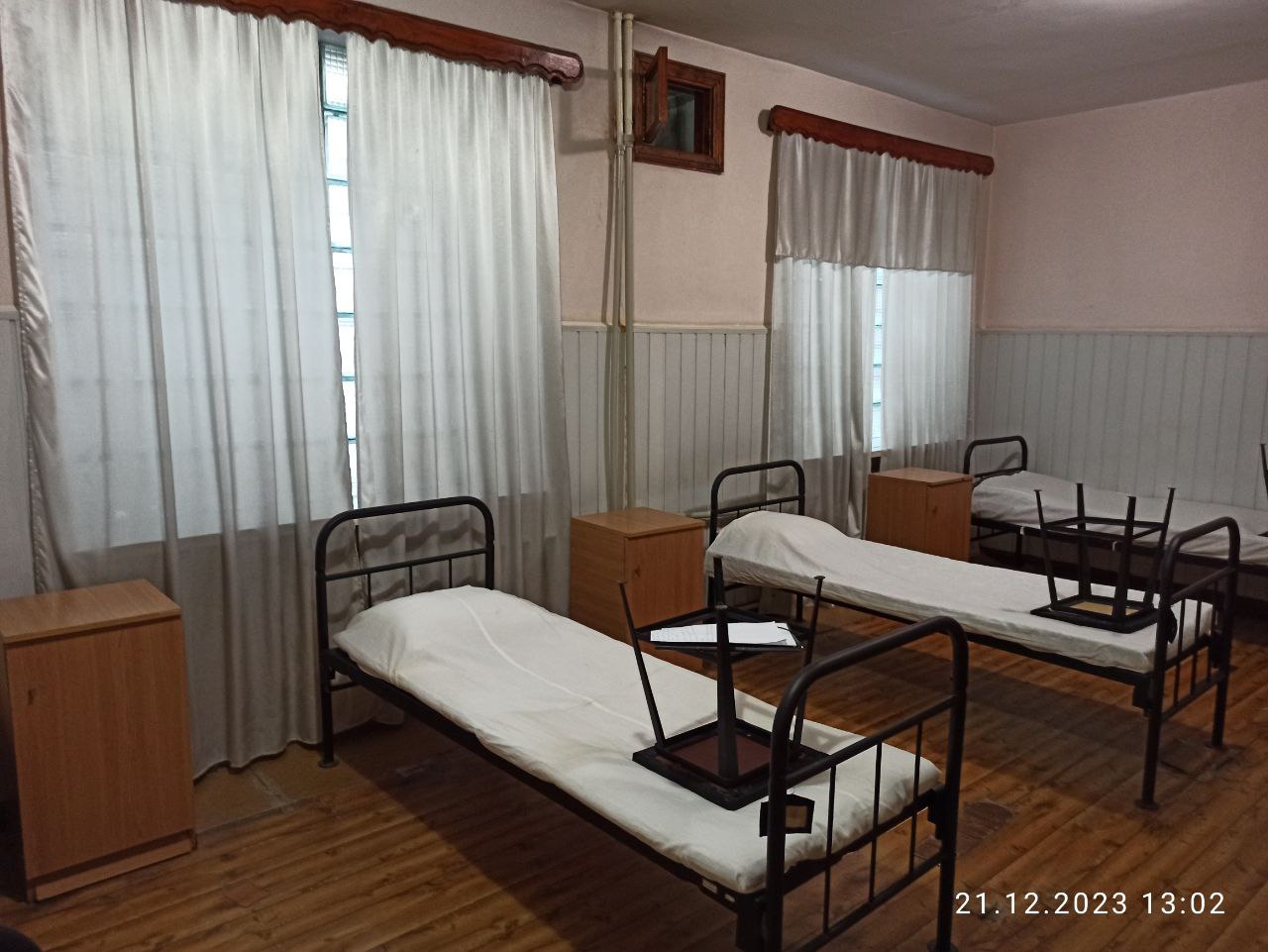
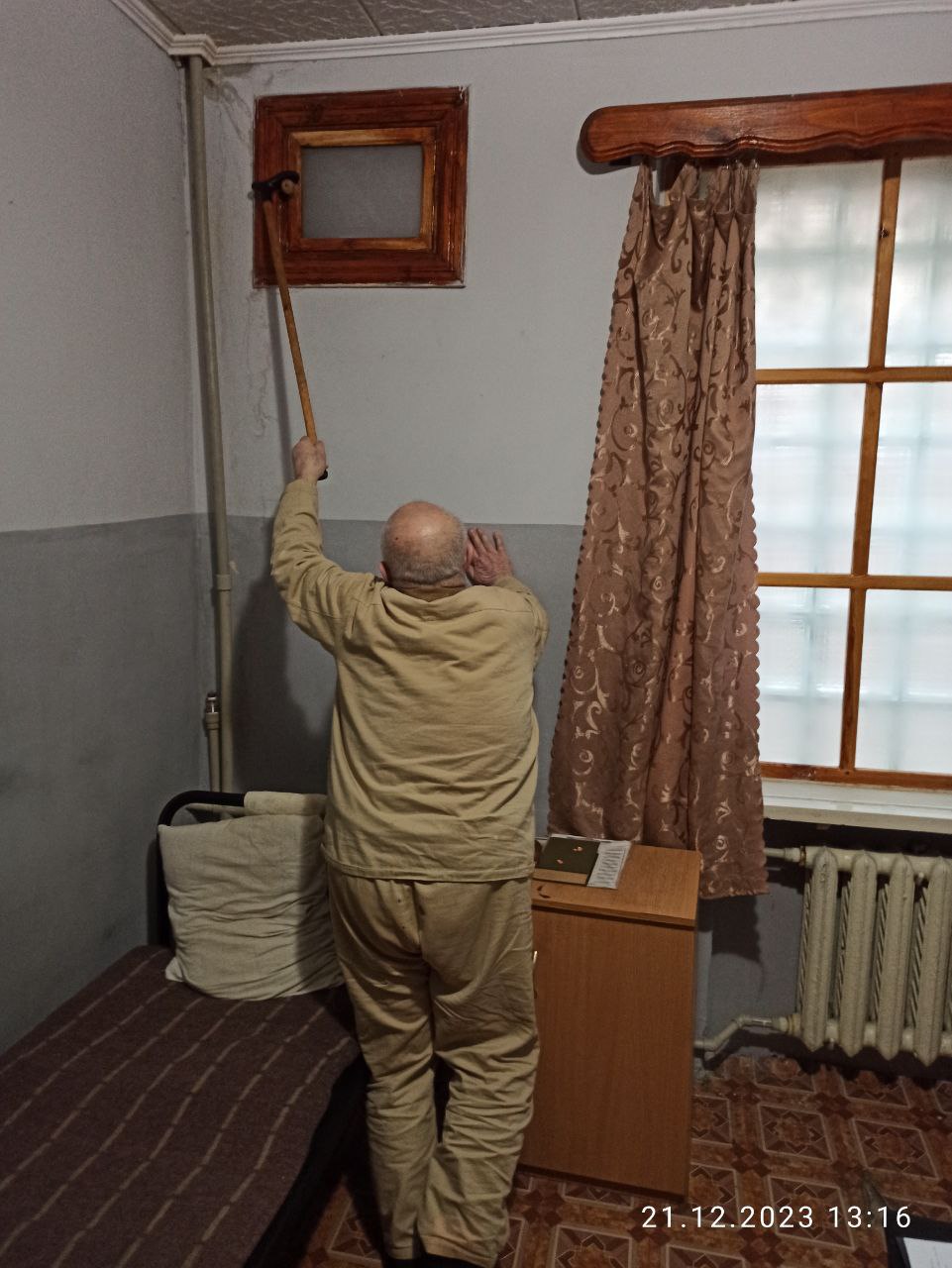
1.3 The wards in the medical unit do not meet the requirements of paragraph 8.3.2.11 of the section of the State Building Norms of Ukraine for buildings and structures of healthcare institutions. In particular, each external window and/or external glazed door must have a clear glazing area of at least 8% of the area of the relevant room. The area of windows that open in patient wards must be at least 5% of the total area of the patient ward room.
2. Violation of the right of convicted persons to choose methods of treatment and improper maintenance of documentation
2.1 The medical unit has not organised the provision of opioid substitution therapy (hereinafter — OST) for persons with mental and behavioural disorders due to opioid use. Drug-dependent persons are not provided with social and psychological support, cognitive-behavioural therapy (CBT), relapse prevention, motivational interviewing, self-help groups, etc. Thus, these individuals are deprived of the opportunity to receive OST, which violates their right to choose methods of treatment in accordance with Article 38 of the Law of Ukraine ‘Fundamentals of the Legislation of Ukraine on Healthcare’.
2.2 During the study of medical documentation, it was established that certificates and photographs of existing bodily injuries are not attached to the outpatient medical record 025/o, as stipulated in paragraph 3 of Chapter 1, Section II of the Procedure, but are stored separately.
2.3 In the medical documentation (medical record No. 025/o or No. 003/o), applications from relatives of convicts or other persons regarding the transfer of medicines or medical devices are absent or stored separately, which violates paragraph 23 of the General Provisions of the Procedure for organising the provision of medical care to persons sentenced to imprisonment.
2.4 During the inspection of the DIZO (disciplinary isolation ward) section, monitors established that when a convict is placed in the disciplinary isolation ward, it is practiced to attach a medical certificate to the file that contains information about the state of health, diagnosis, and, according to the conclusion of which, the convict can be kept in the DIZO, PKT, or solitary confinement cell due to their state of health. The facts discovered indicate that the institution’s staff possess confidential information regarding the state of health of the convicts who are in the DIZO section. This violates the requirements of Article 39-1 of the Law of Ukraine ‘Fundamentals of the Legislation of Ukraine on Healthcare’ regarding the right of individuals to the confidentiality of their health status.
Furthermore, the European Committee for the Prevention of Torture and Inhuman or Degrading Treatment or Punishment has repeatedly recommended that doctors should not certify that the health of convicts allows for placement in a DIZO/PKT. Medical professionals working in correctional facilities are the personal doctors of the prisoners, which ensures the existence of a positive relationship between doctor and patient. The aforementioned undermines the positive relationship between convicts and doctors. In addition, it contradicts paragraph 43.3 of the European Prison Rules.
3. Violation of the right to proper psychiatric care
3.1 The isolation ward for persons with mental disorders is not properly equipped: there is no bed, sanitary unit, or access to water and fresh air.
4. Lack of equipment, medical devices, and medicines in the medical unit. Violation of fire safety rules
4.1 The medical unit lacks a dental X-ray machine, which makes it impossible to conduct an in-depth dental examination of convicts and does not ensure the timely provision of proper dental care.
4.2 During the inspection of the defibrillator’s functionality, it was established that the electrodes were missing.
4.3 There is no hot water supply in the doctors’ offices; the workplaces of medical staff do not meet the requirements of current legislation and violate Article 19 of the Law of Ukraine ‘Fundamentals of the Legislation of Ukraine on Healthcare’ and Article 13 of the Law of Ukraine ‘On Occupational Safety’.
4.4 The premises of the medical unit are not equipped with fire extinguishing and fire alarm systems.
5. Violation of the rights of persons with disabilities (Article 9 of the UN Convention on the Rights of Persons with Disabilities)
5.1 Dispensary supervision is carried out for 13 persons who have disabilities. Of them, Group II — one person; Group III — 12 persons. At the same time, in violation of the requirements of the Law of Ukraine ‘On the rehabilitation of persons with disabilities in Ukraine’, persons with disabilities do not receive proper diagnostic, treatment, and rehabilitation measures, despite the existence of information confirming persistent impairment of bodily functions caused by diseases or the consequences of injuries that cause limitations in normal life activities.
5.2 During the study of the convicts’ medical documentation, it was established that two persons with disabilities lack individual rehabilitation programmes (hereinafter — IRP). Furthermore, the recommendations of the IRP are not fulfilled, due to which they do not receive proper diagnostic, treatment, and rehabilitation measures, despite the existence of data.
6. Violation of the rights of persons with viral hepatitis C
During 2023, 717 tests for viral hepatitis C were conducted in the medical unit. In 98 cases, a suspicion of the disease was established. Six people were tested using the PCR method. Not all persons suspected of having viral hepatitis C undergo PCR testing, due to which they do not receive the necessary treatment, which may lead to a deterioration in their state of health and the spread of the said infectious disease among convicts.
Production
The institution has a powerful, multidisciplinary, and diverse production facility. The assortment includes wood and metal products, garment production, and more.
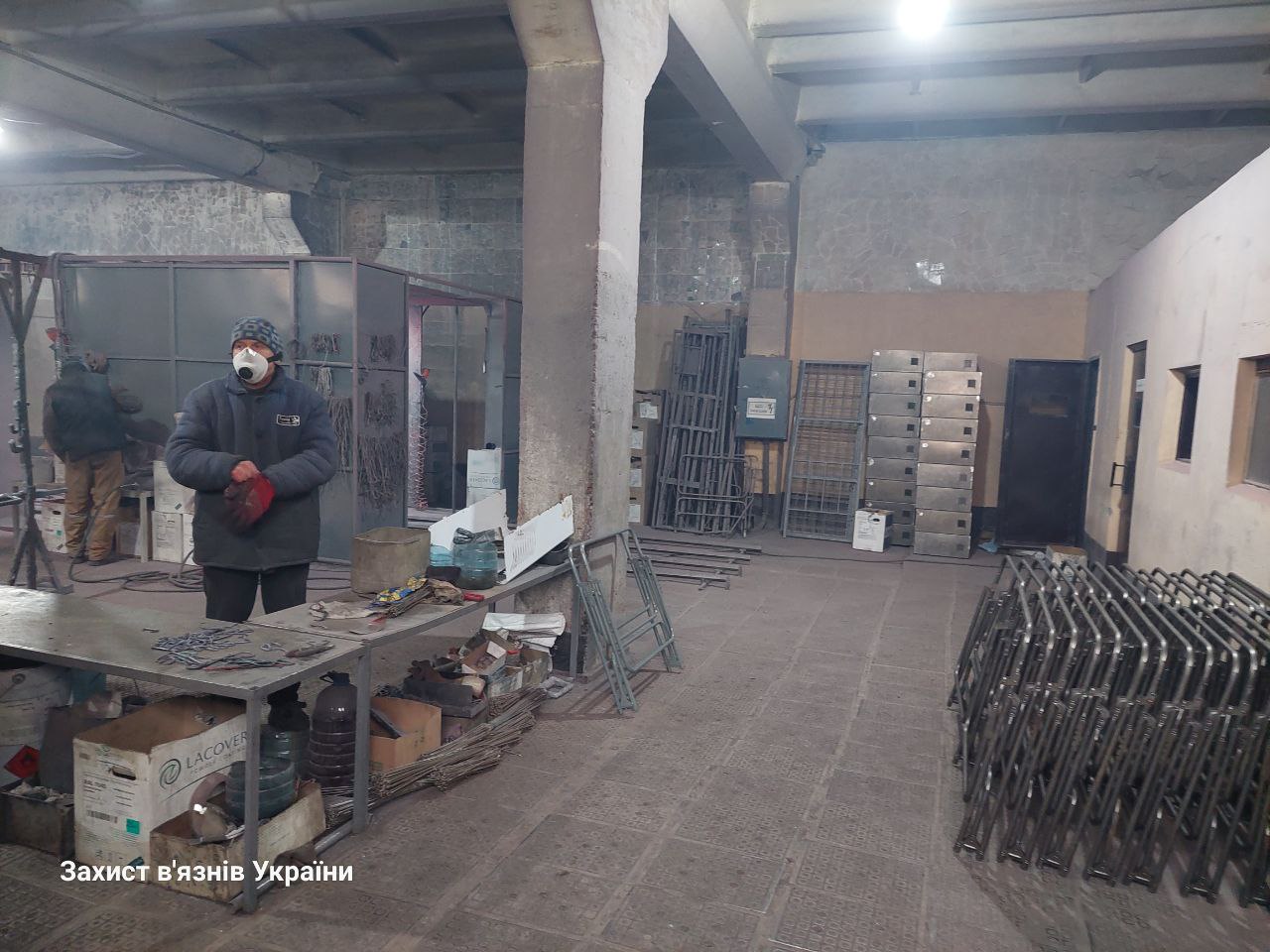
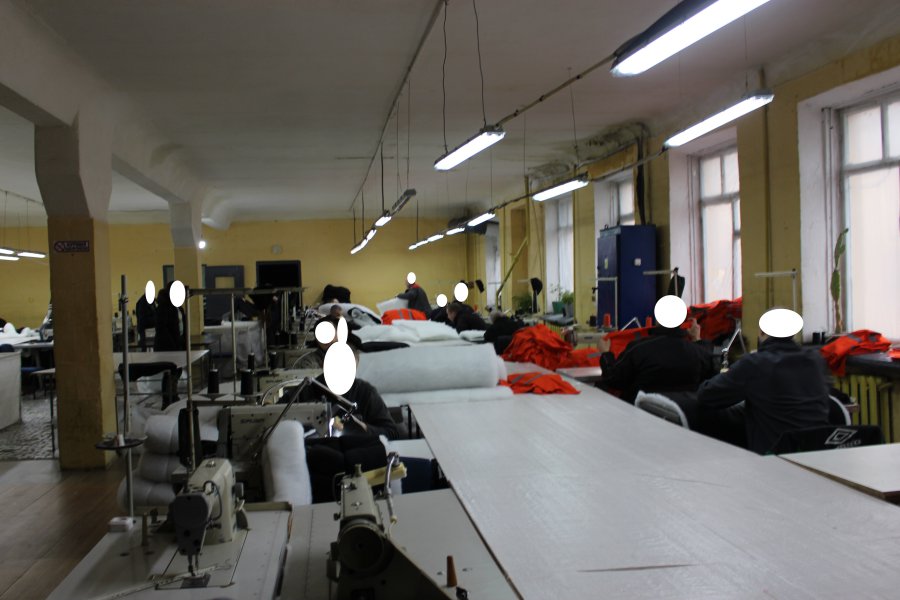

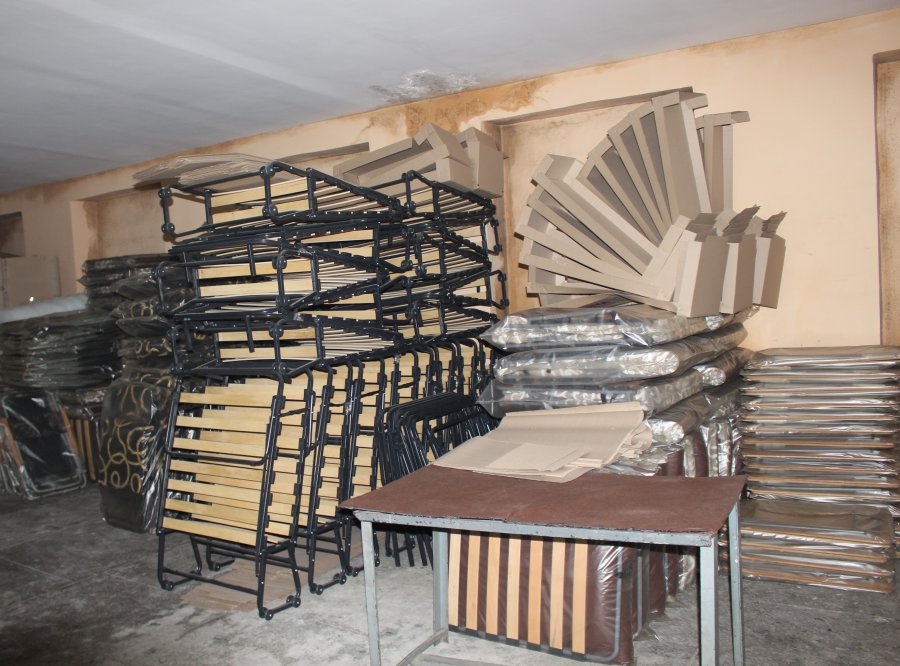
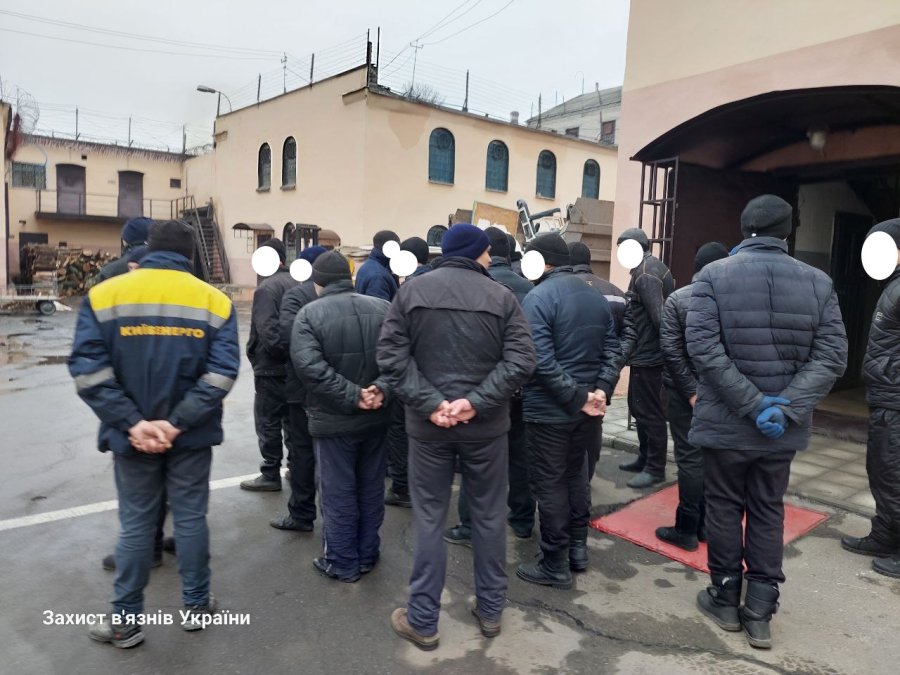
On the day of the visit, 200 convicts were working. All convicts move around the territory of the institution with their hands behind their backs.
During the NMP (National Preventive Mechanism) monitoring visits, human rights violations in production were noted. Specifically, gross violations in the foundry. At the time of the visit, the foundry was closed, and the premises of this workshop were being used as a product warehouse.
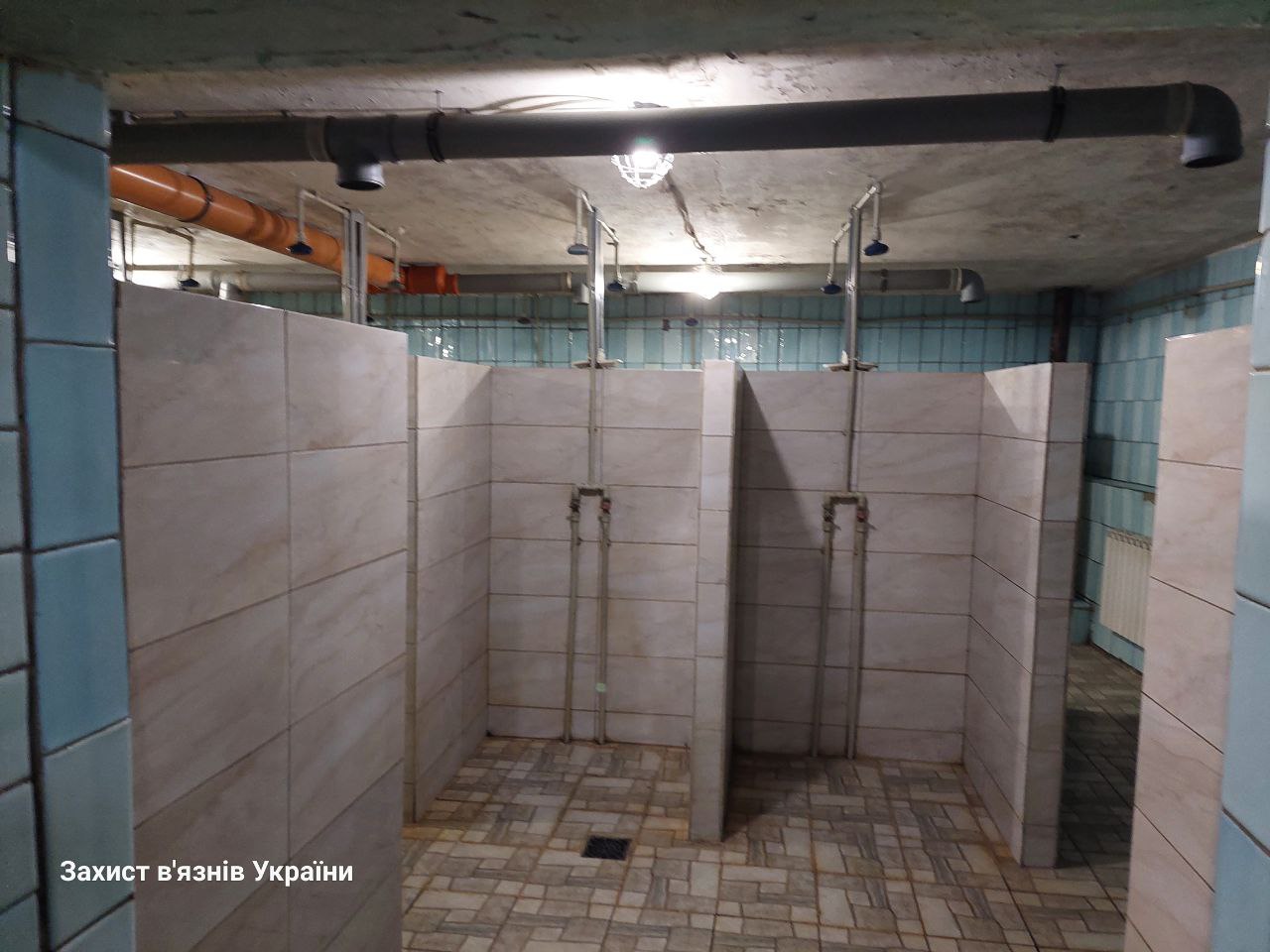
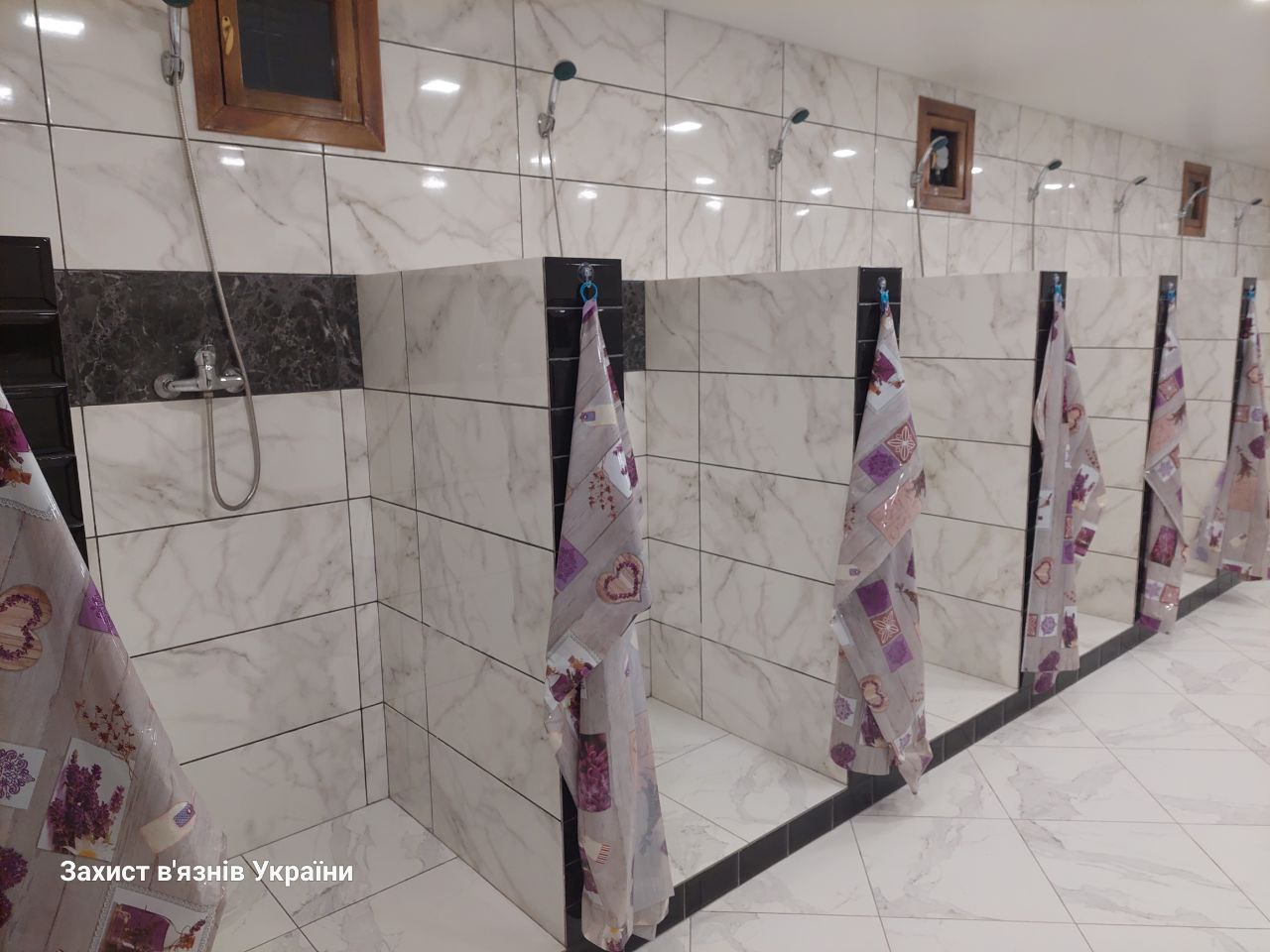
In the industrial zone dressing room, there is a bathhouse with 50 shower cubicles. Curtains and rubber mats are missing.
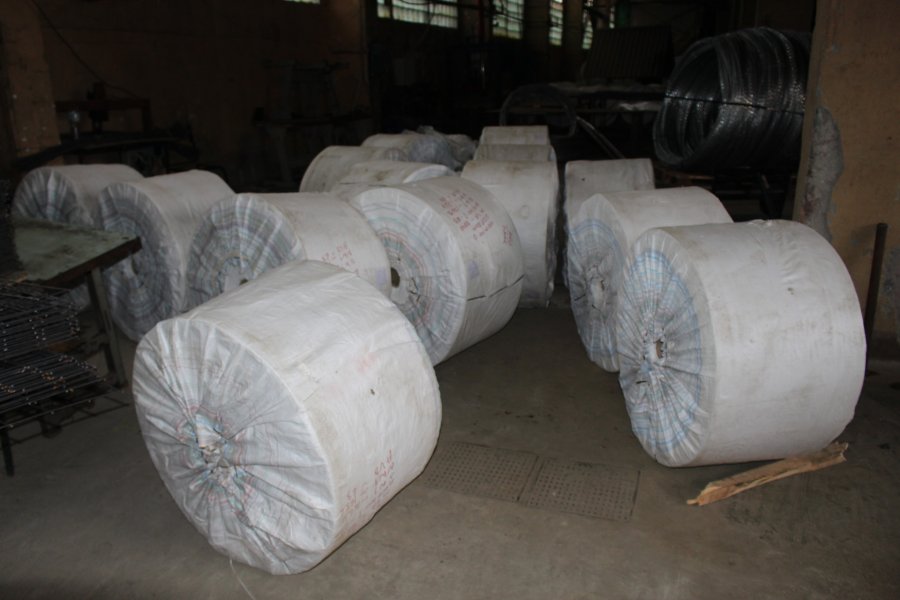
In a separate room, there are coils from which sacks are produced.
Equipment repair section.
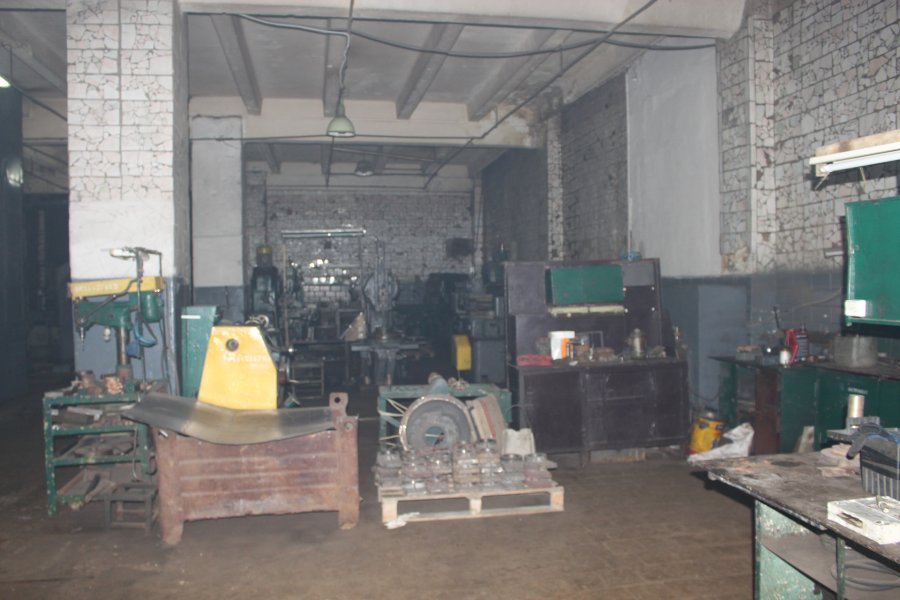
During the monitoring visit, facts of violations of labour legislation requirements regarding the involvement of convicts and prisoners in socially useful work were discovered.
Violation of the form and timing of conclusion of employment contracts
Article 21 of the Labour Code of Ukraine regarding the definition of an employment contract applies to convicts among the working population. In particular, it is an agreement under which the employee undertakes to perform the work defined by this agreement, and the employer undertakes to pay the employee a salary and provide working conditions necessary for the performance of the work and provided for by labour legislation. On the day of the monitoring visit, it was established that the convicts involved in work are working under fixed-term employment contracts registered in the employment contract registration log.
Employment contracts with working convicts are systematically concluded for incomplete months. In particular, the monitoring group was presented with fixed-term employment contracts (No. 1307, 1349, 1566, 1506, 1537, 1550, 1517), which were concluded from 02 August 2023 to 29 September 2023. Contracts (No. 1581, 1574, 1604) — from 14 August 2023 to 29 September 2023. Contracts (No. 1849, 1960, 1890, 1839, 1858, 1732, 1965, 1899, 1873, 1690) — from 3 October 2023 to 29 November 2023.
A fixed-term contract (No. 2225) was discovered without specifying the term of conclusion, which is a significant violation of the labour rights of the convict-workers.
The purpose of concluding employment contracts for incomplete months is to avoid paying the Single Social Contribution (SSC) in the minimum amount for such working convicts in accordance with part 5 of Article 8 of the Law of Ukraine ‘On the collection and accounting of the single contribution to compulsory state social insurance’ (if the employee is hired not from the first working day and dismissed not on the last working day of the reporting month). Such an approach to drawing up employment contracts for convicts violates their labour and social rights, as these individuals are not credited with the minimum insurance contribution. Accordingly, this period of work is not fully counted towards the insurance period.
Convicts receive a salary below the minimum wage, which violates their labour and social rights. Specifically, convicts do not earn insurance seniority.
Garment workshop, where various products are made. Convict H. has been working for about half a year; according to the convict, he received 700 hryvnias for the last month. According to statement No. 19, for October 2023, 293 hryvnias and 48 kopecks were credited to H.’s personal account.
Convict M. has been working for one year; according to the convict, he received 2,000 hryvnias for the last month. According to statement No. 21, for October, 1,243 hryvnias and 47 kopecks were credited to convict M.’s personal account.
Garment section, where mattress covers are made. Convict Sh. makes straps for covers; according to the convict, he receives 6,000 hryvnias per month for his work. According to statement No. 6, for September, 344 hryvnias were credited to convict Sh.’s personal account; in October, 433 hryvnias; in November, 448 hryvnias.
Workshop for the production of various products. Convict V. reported that he has been working for three years and earns 300 hryvnias per month. He was afraid to take a business card.
Convict I. has been working for one year; according to him, he earns 1,000 hryvnias per month. According to statement No. 17, for November, 262 hryvnias were credited to convict I.’s personal account.
Convict P. and convict F. reported that they earn 1,000 hryvnias per month each. According to statement No. 17, for November, 525 hryvnias were credited to convict P.’s personal account, and 474 hryvnias to convict F.’s personal account.
On the day of the monitoring visit, convicts were found who are engaged in work with harmful and heavy working conditions: painters (powder coating), bakers, cooks, etc.
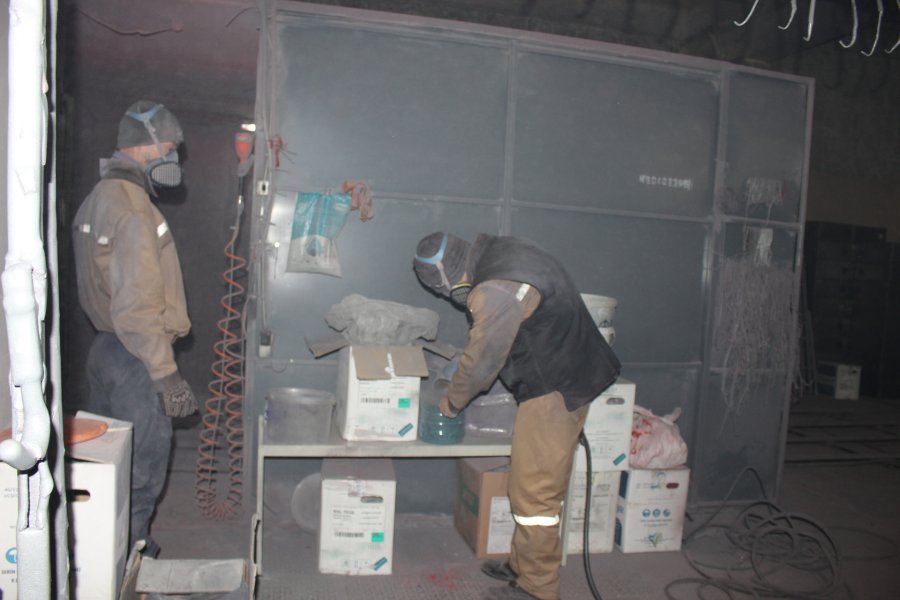
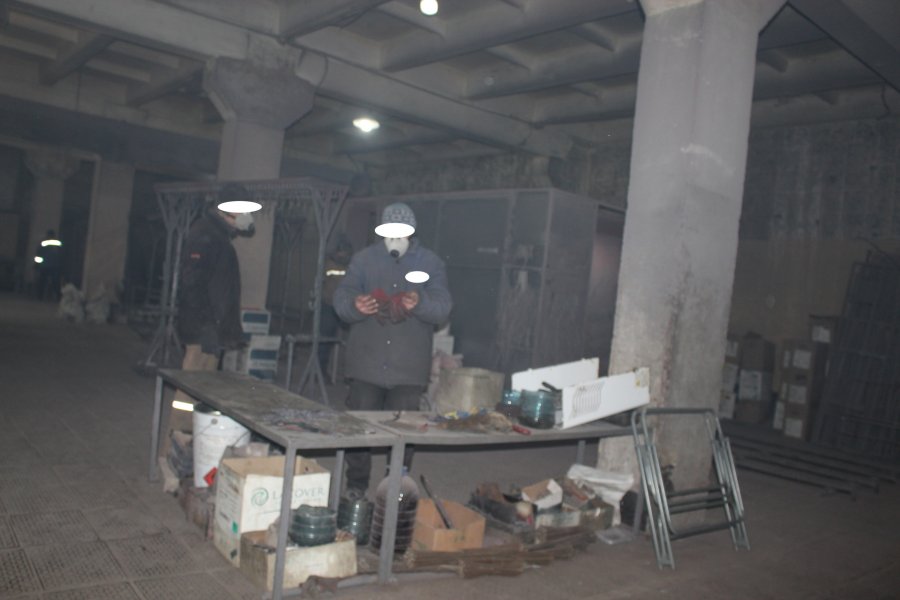
In particular, in the workshops where painting is carried out by powder coaters, there is a feeling of suffocation, and the ventilation is not working.
Powder section. It is difficult to breathe in the workshop, and it is impossible to stay there without protective equipment because they are sifting powder for the manufacture of products.
According to Art. 118 of the Criminal Executive Code (CEC), the institution’s administration is obliged to create working conditions for convicts and comply with the labour legislation of Ukraine regarding the protection of the labour rights of workers among convicts. Therefore, it is recommended to provide convict-workers with compensation for harmful work.
Canteen
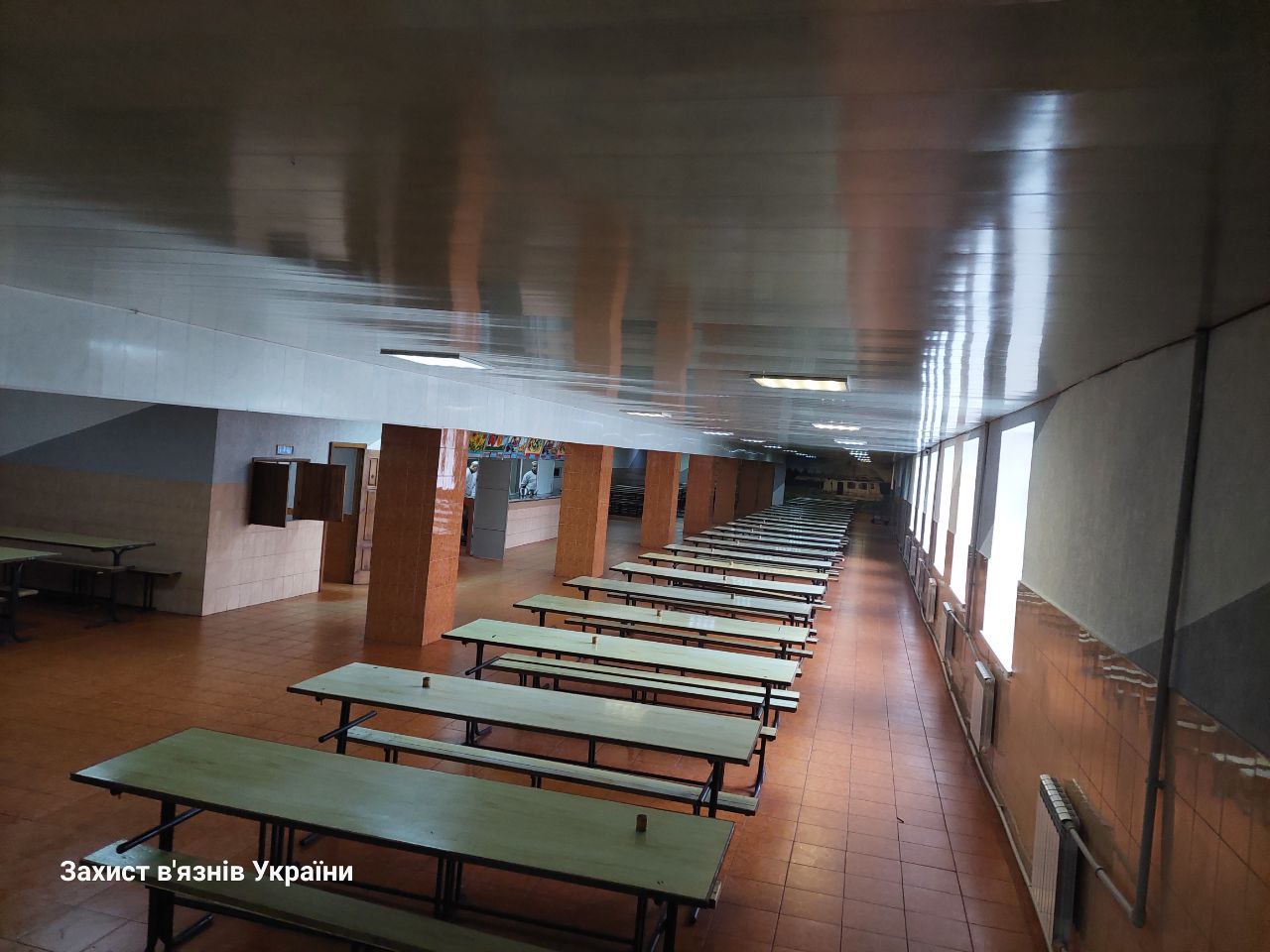
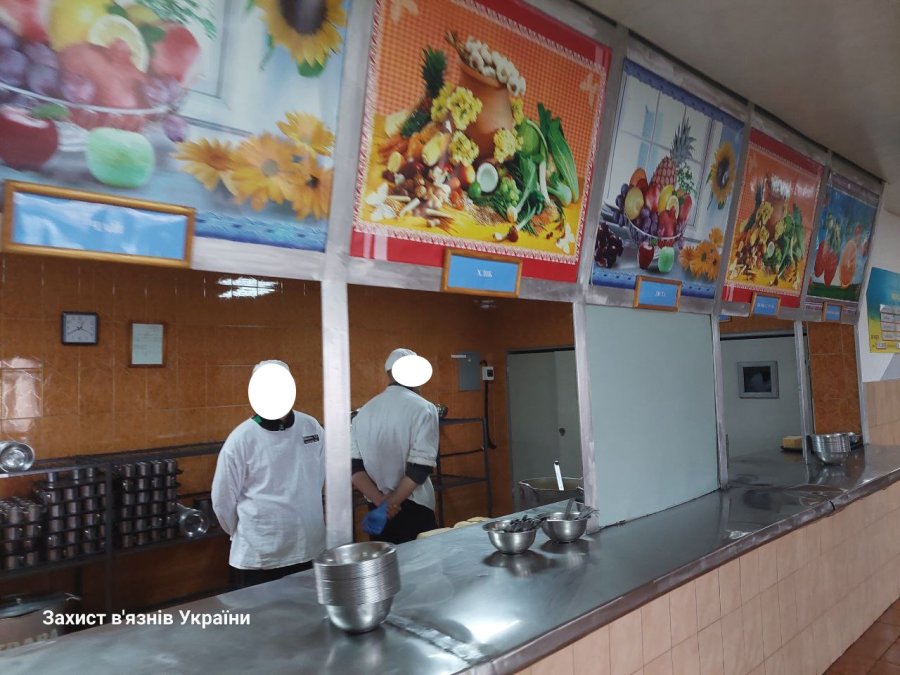
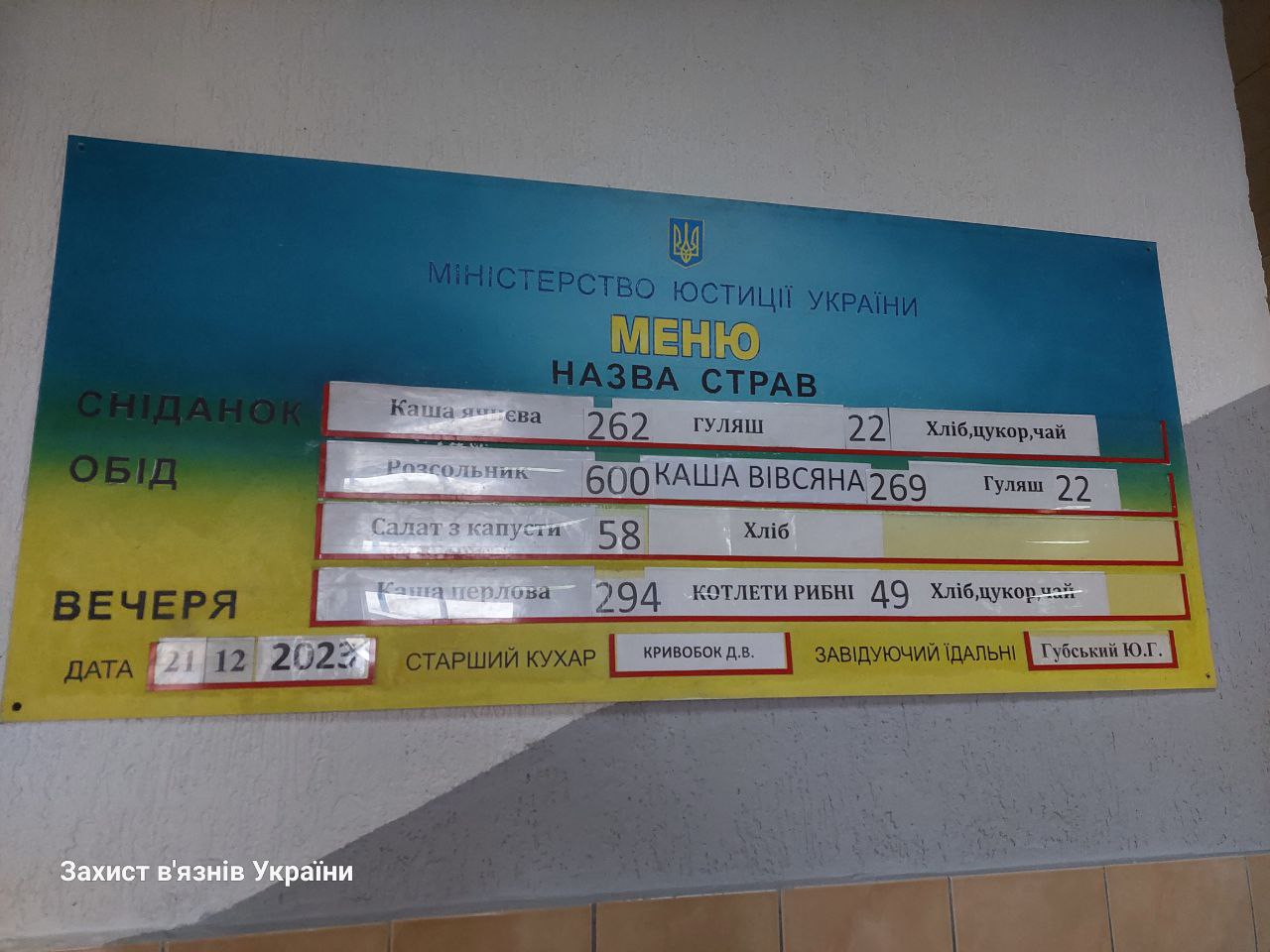
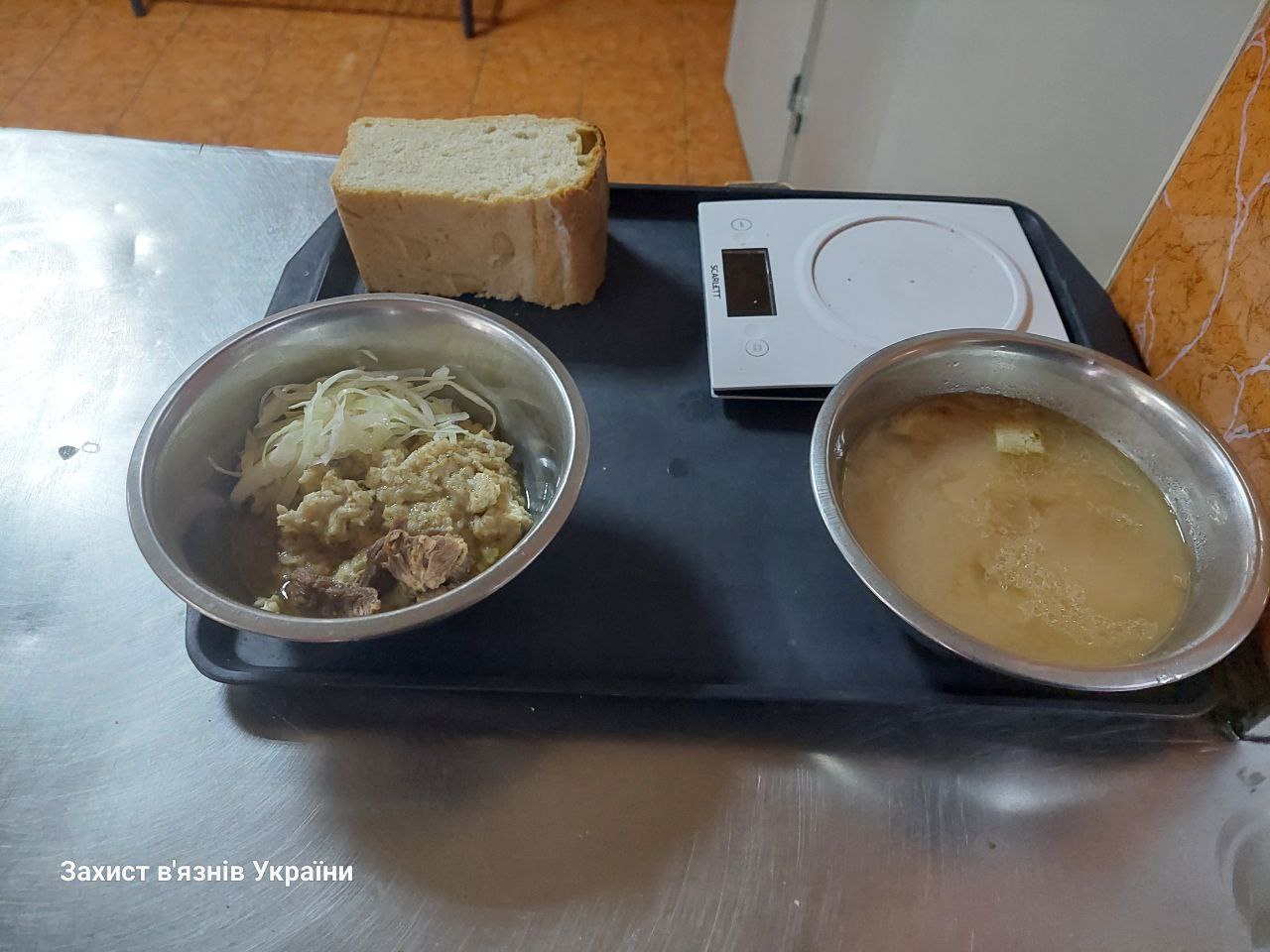
The canteen is renovated; the premises are in a satisfactory condition. There is a subsidiary farm. In case of power outages, there are alternative stoves. There are 10 boilers for cooking. After cooking, food is lifted to the second floor by an elevator.
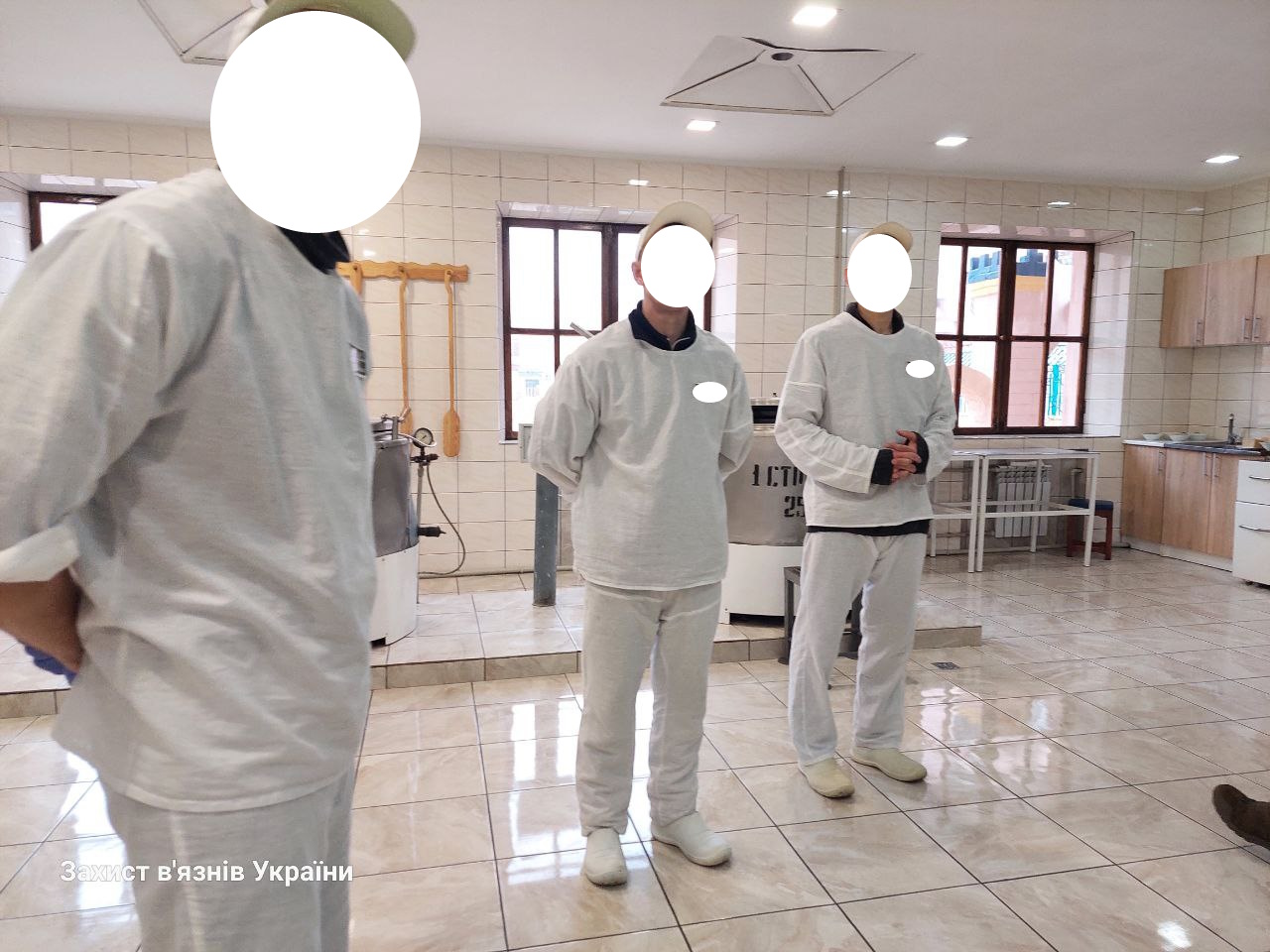
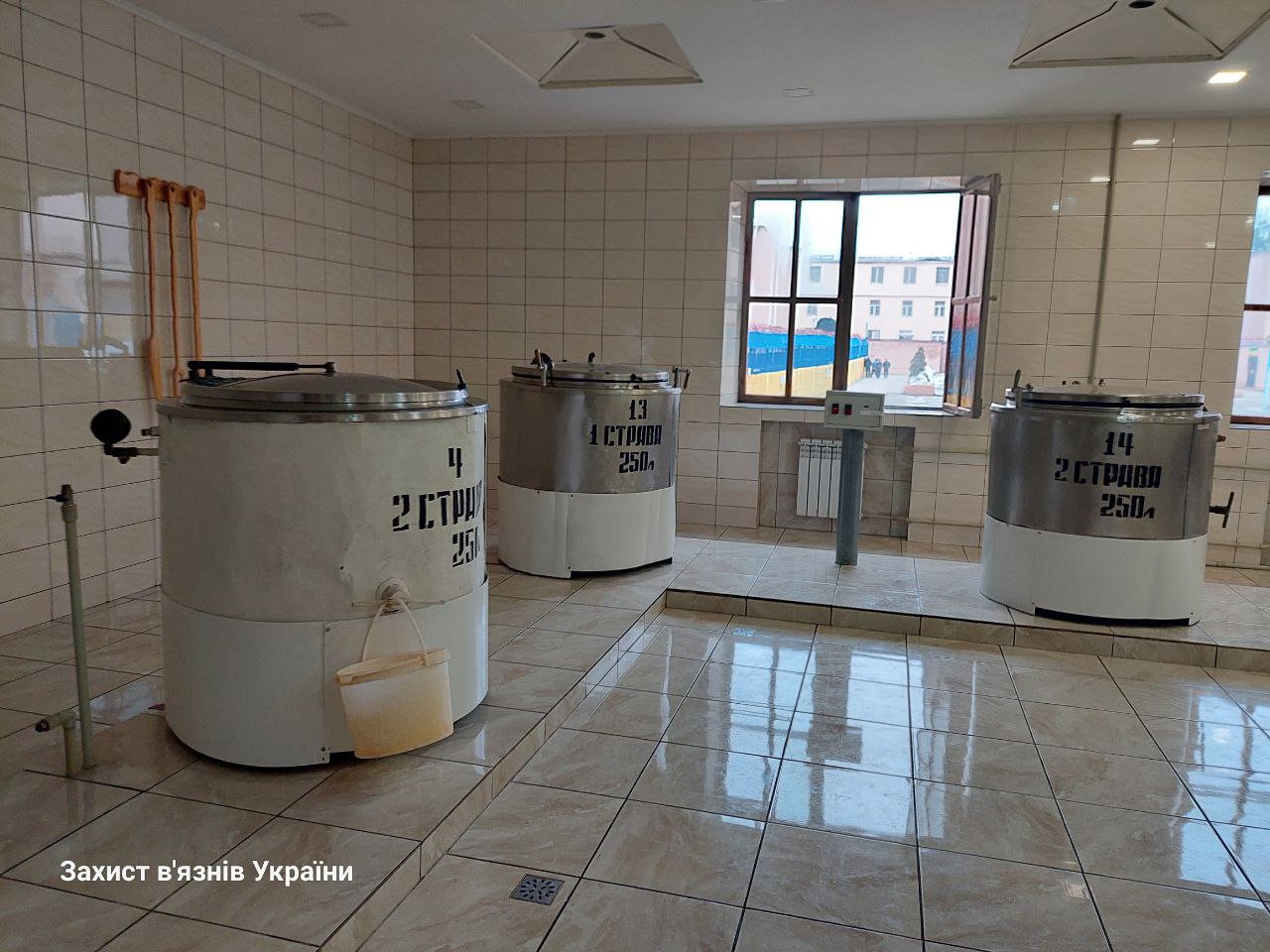
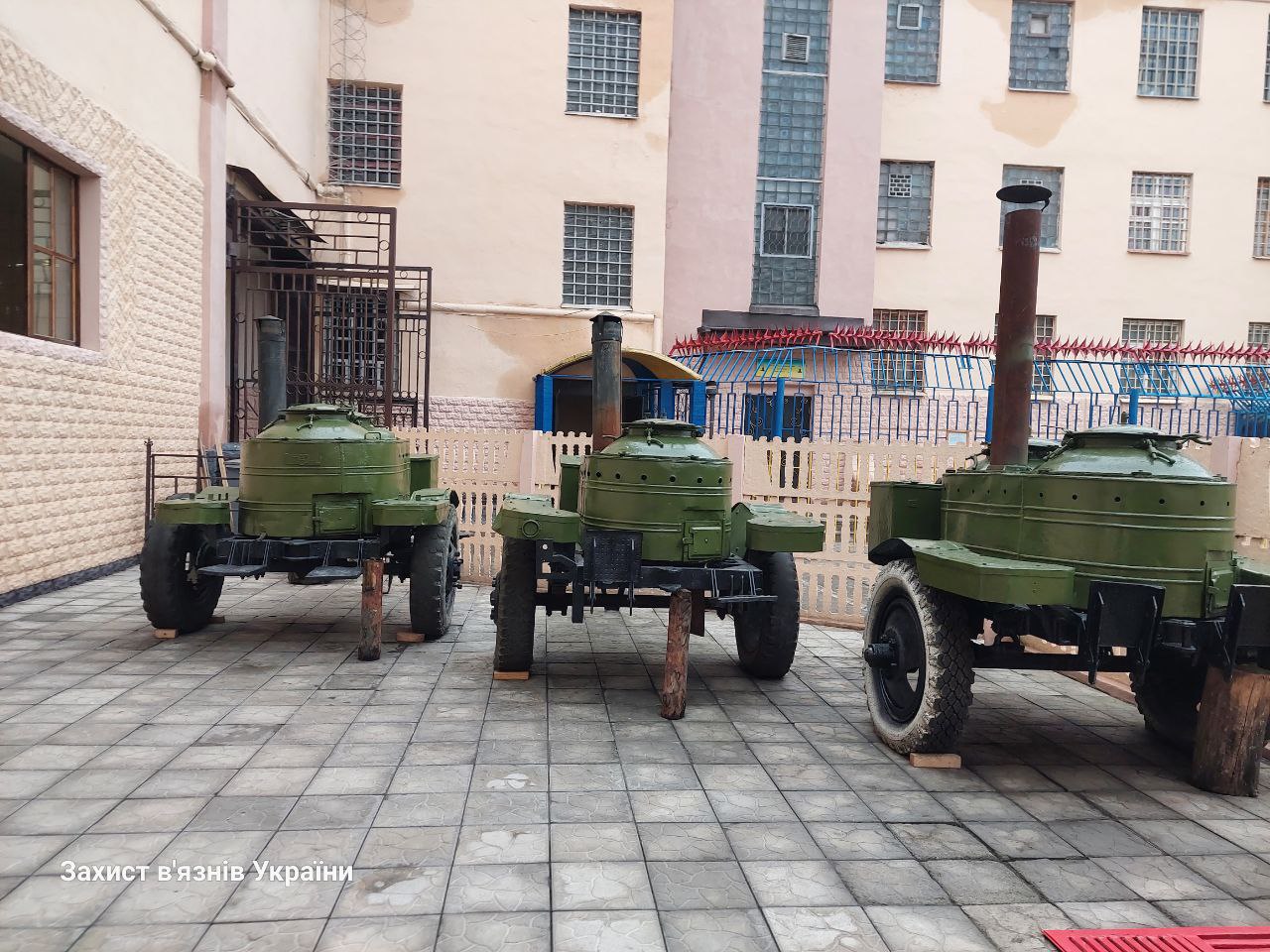
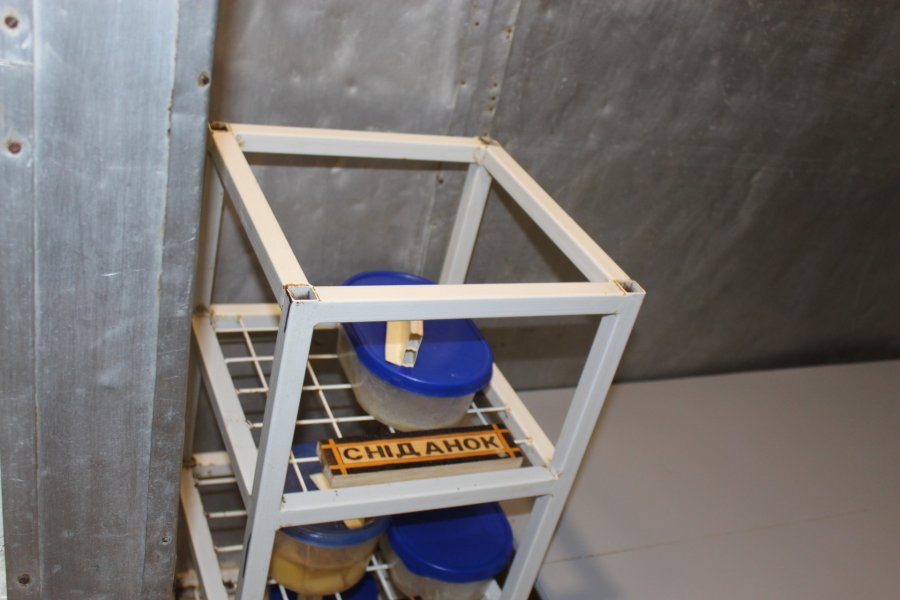
Convict D. works in the canteen. He reported that he works two hours a day. At the same time, he reported that he receives a salary. Having checked the information, it was clarified that the convict is engaged in unpaid work for the improvement of the institution.
At the same time, daily work at a specific facility cannot be used as unpaid work for the improvement of the colony. In addition, the convict has contact with food products, but does not undergo a special medical examination, as evidenced by the absence of his medical record.
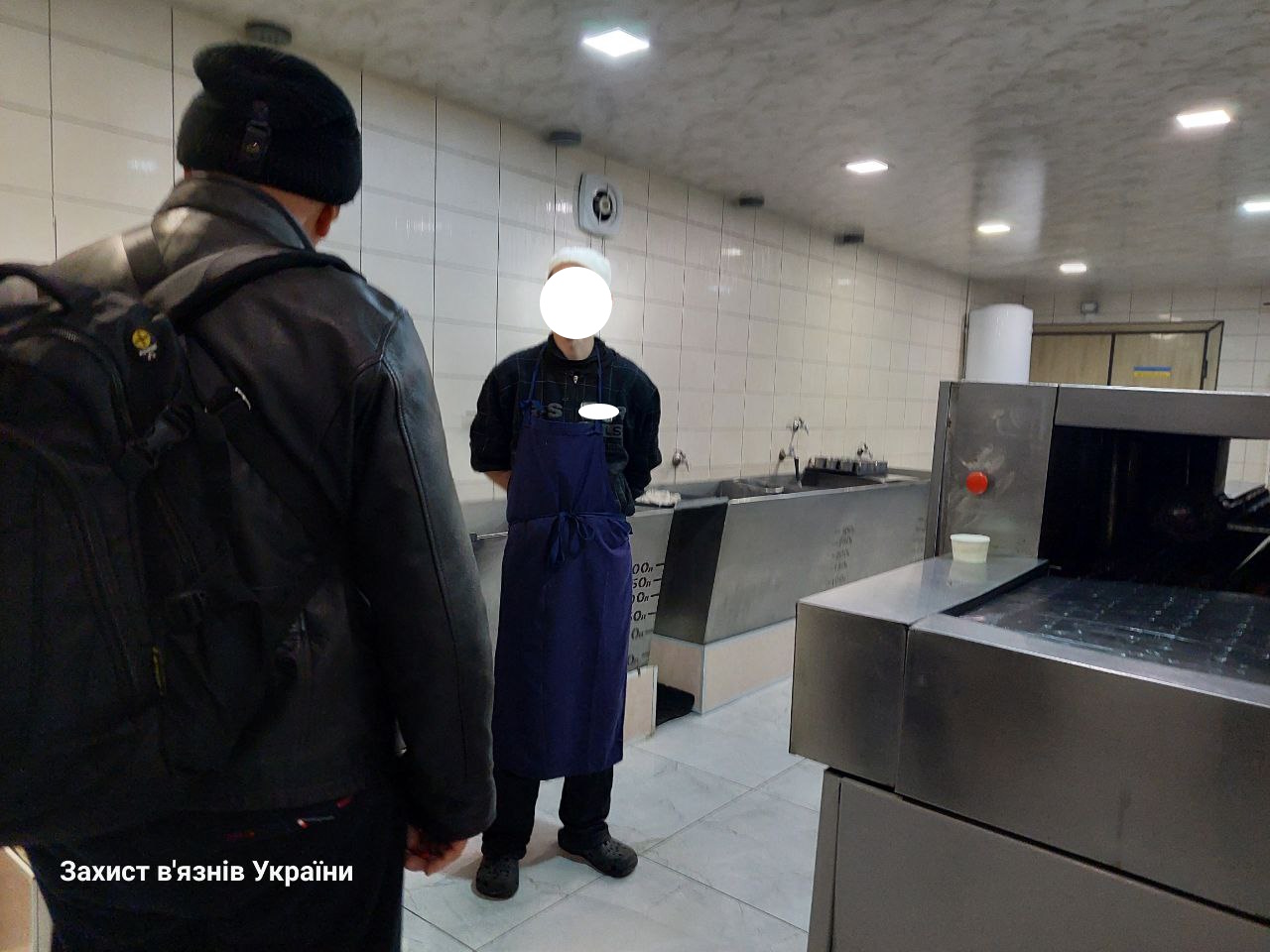
The dining hall is large, bright, and designed for 500 people. There is water and soap in the washbasins, but there are no towels.
Living quarters
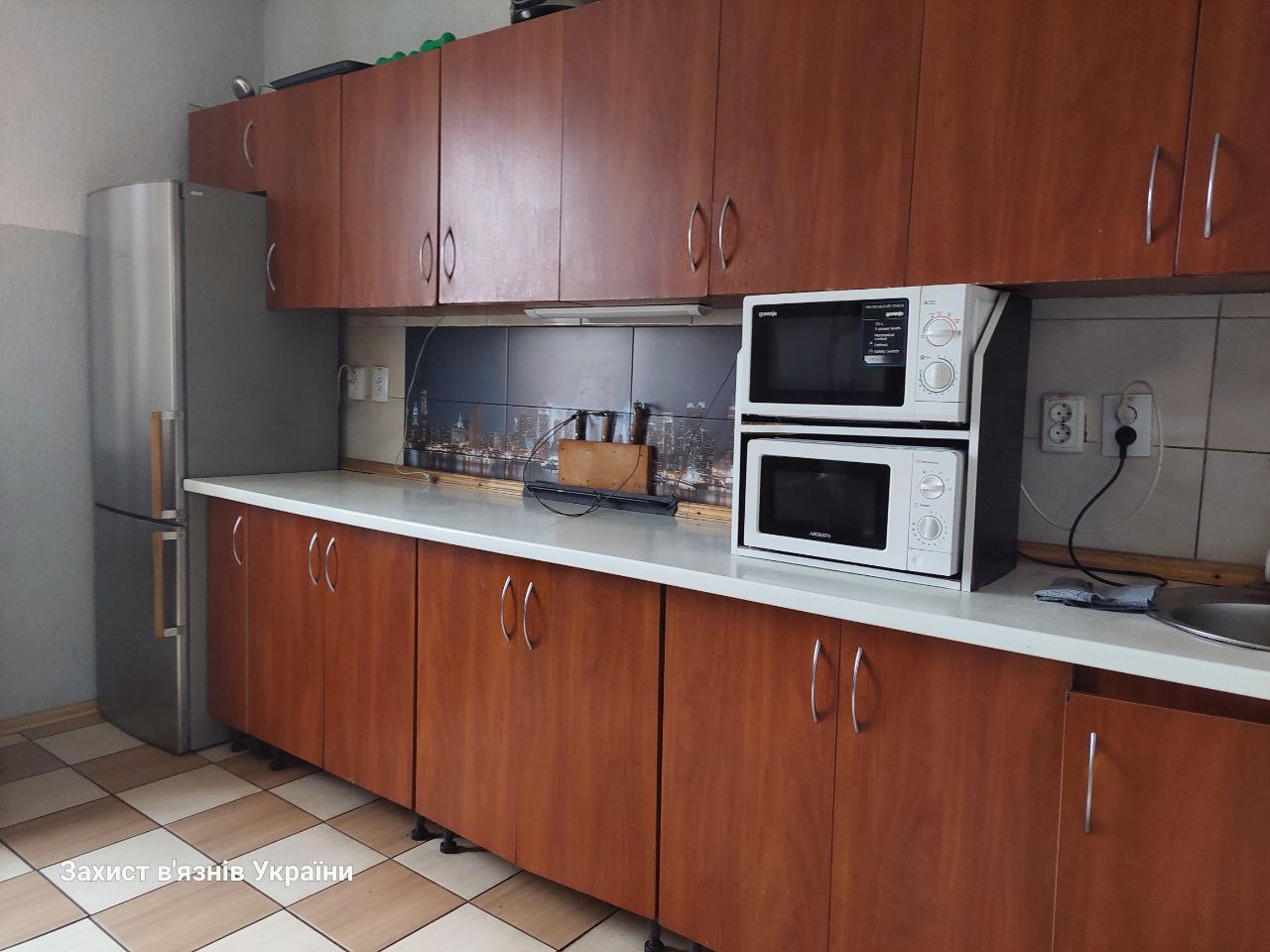
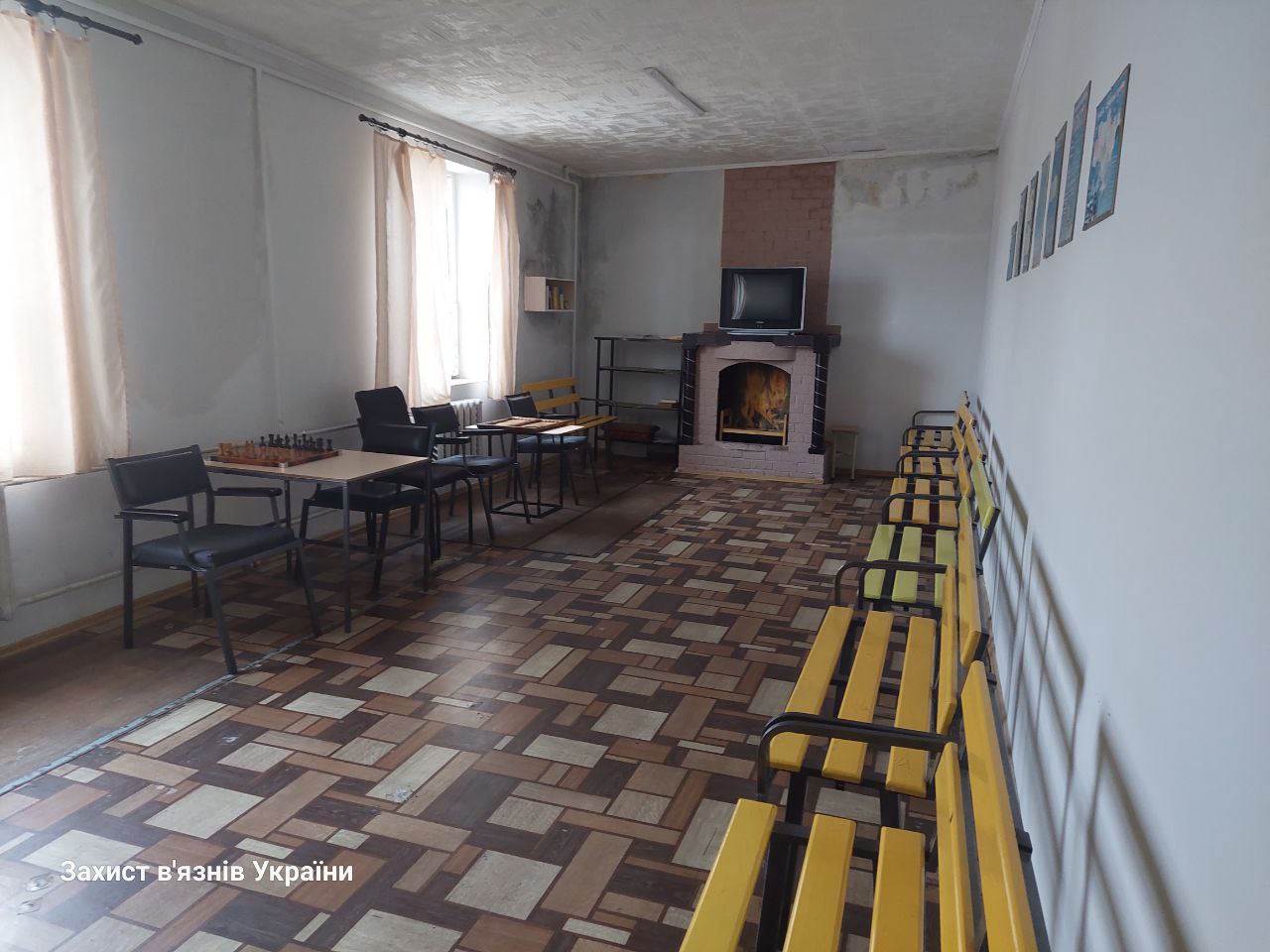
The institution has 14 Social and Psychological Service (SPS) departments, four of which are mothballed. The living quarters are warm, tidy, and comfortable for living.
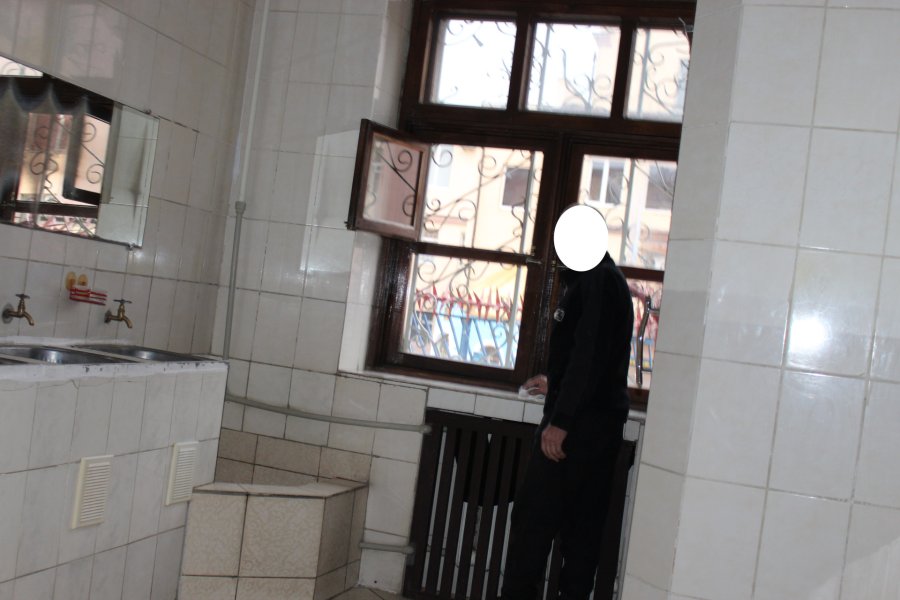
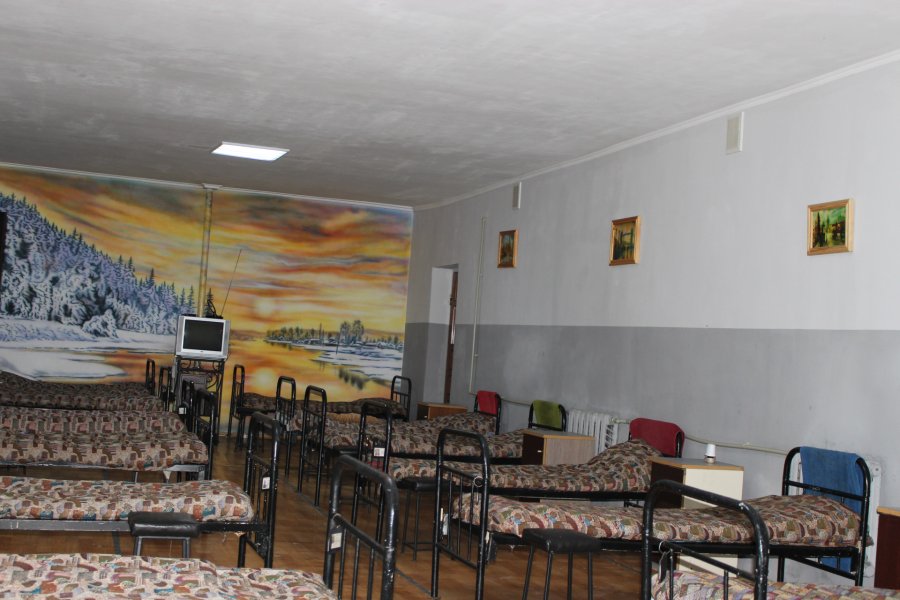
Equipped premises for cooking and eating, and recreation rooms are available.
QDD (Quarantine, Diagnosis, and Distribution)
There were four people in the Quarantine, Diagnosis, and Distribution ward. The convicts were dressed in the standard uniform. At the time of the visit, three convicts were sitting at a table and pretending to carefully study information about the management of the institution.
When asked how long they had been in the QDD department, they answered that it was their second week. When asked what they had been doing for the second week, they answered that they were studying the management of the institution. The deputy head of the institution explained that newly arrived convicts must know the managers by sight.
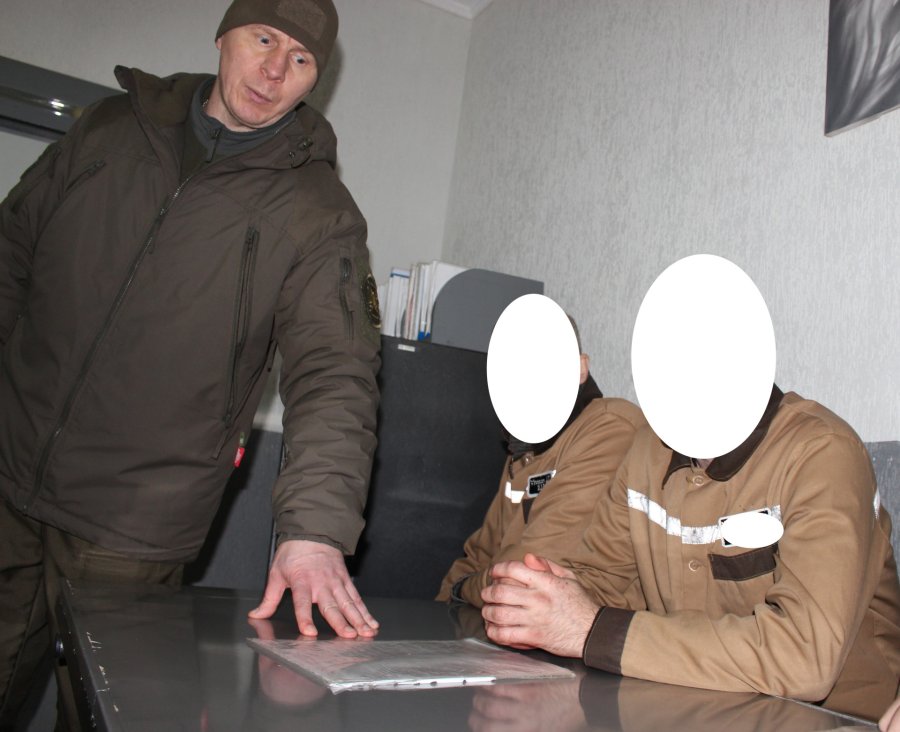
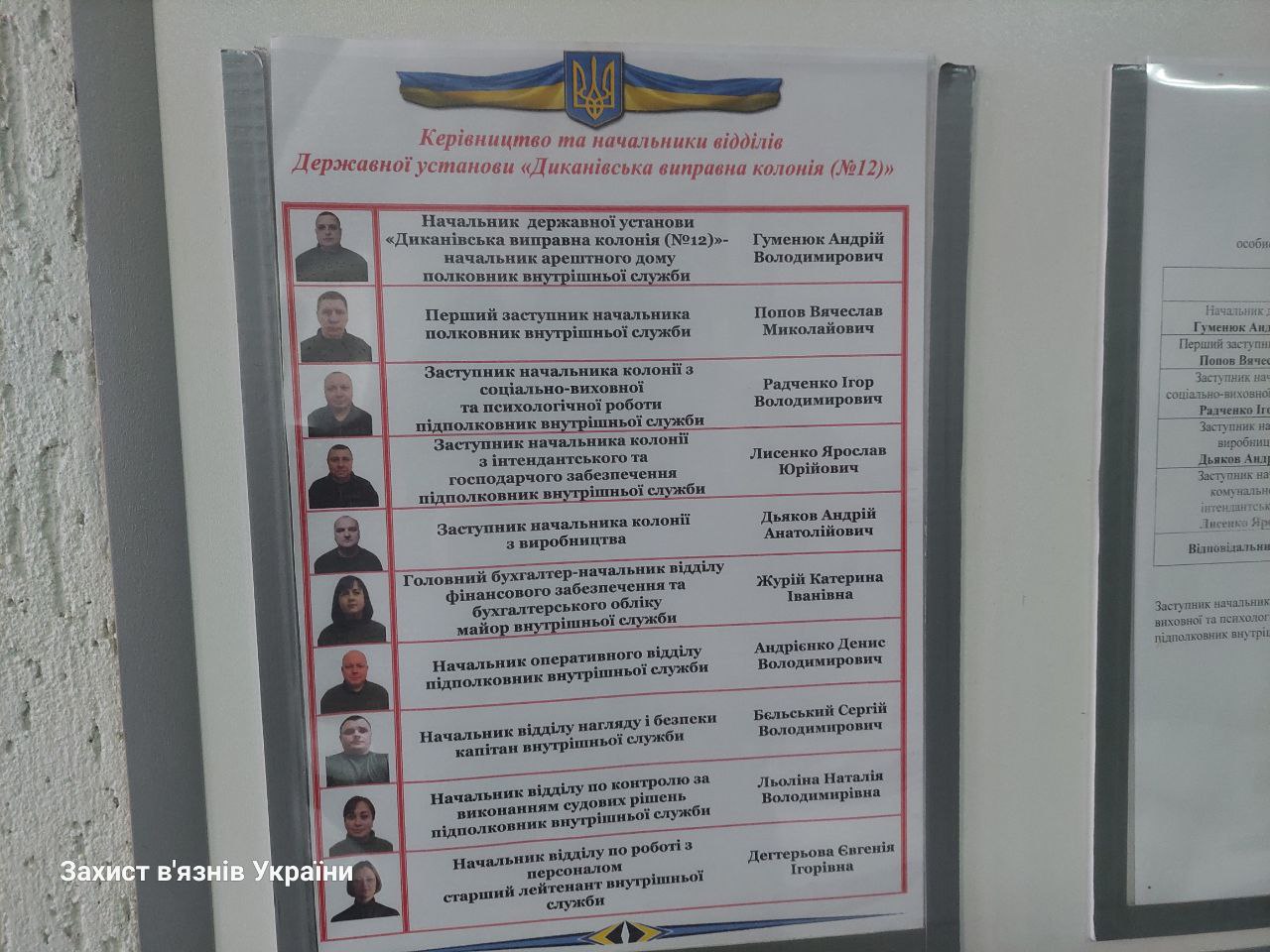
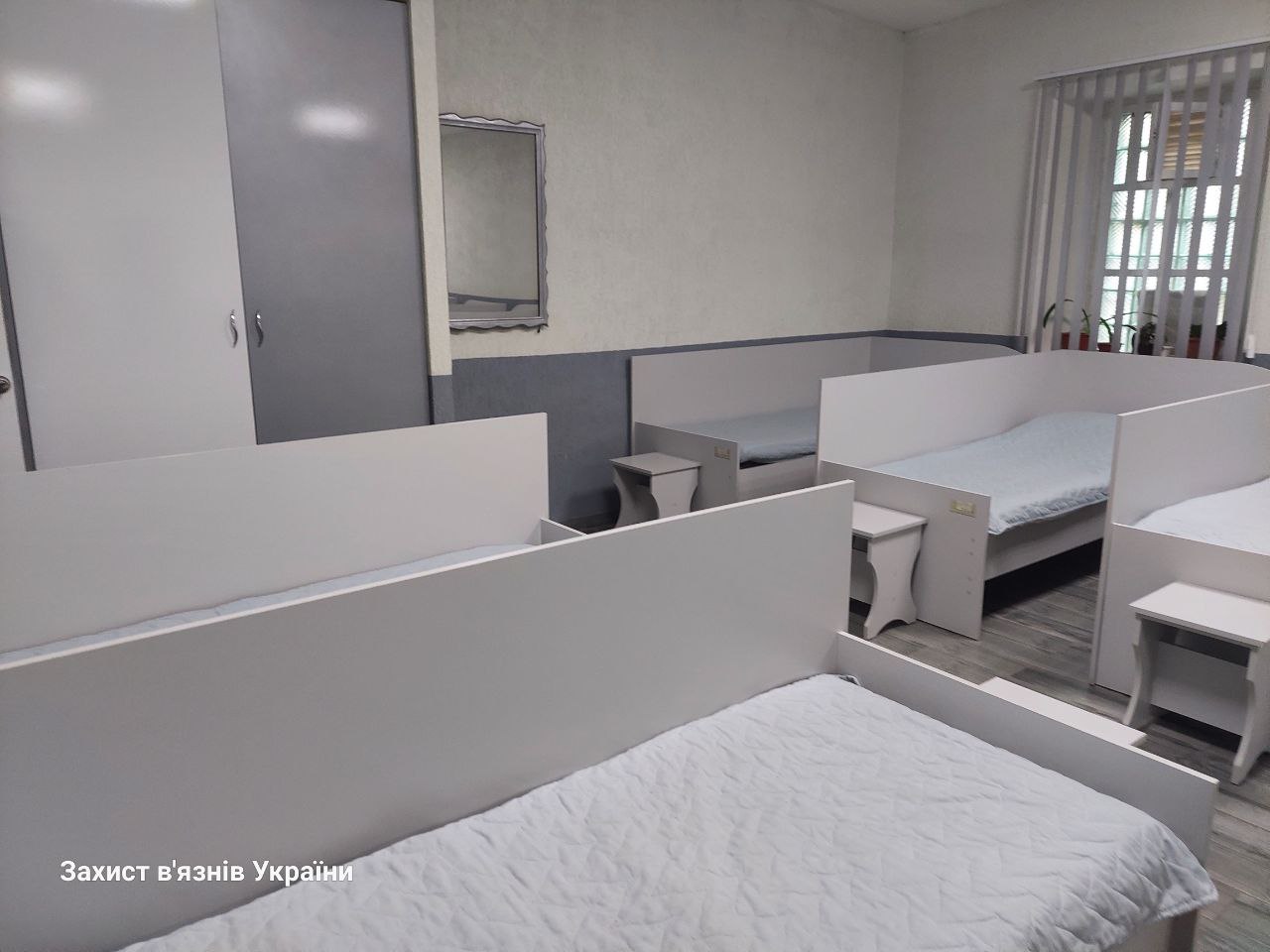
The convicts are intimidated; they refused to communicate confidentially. The sleeping area is tidy, with conditions for individual space.
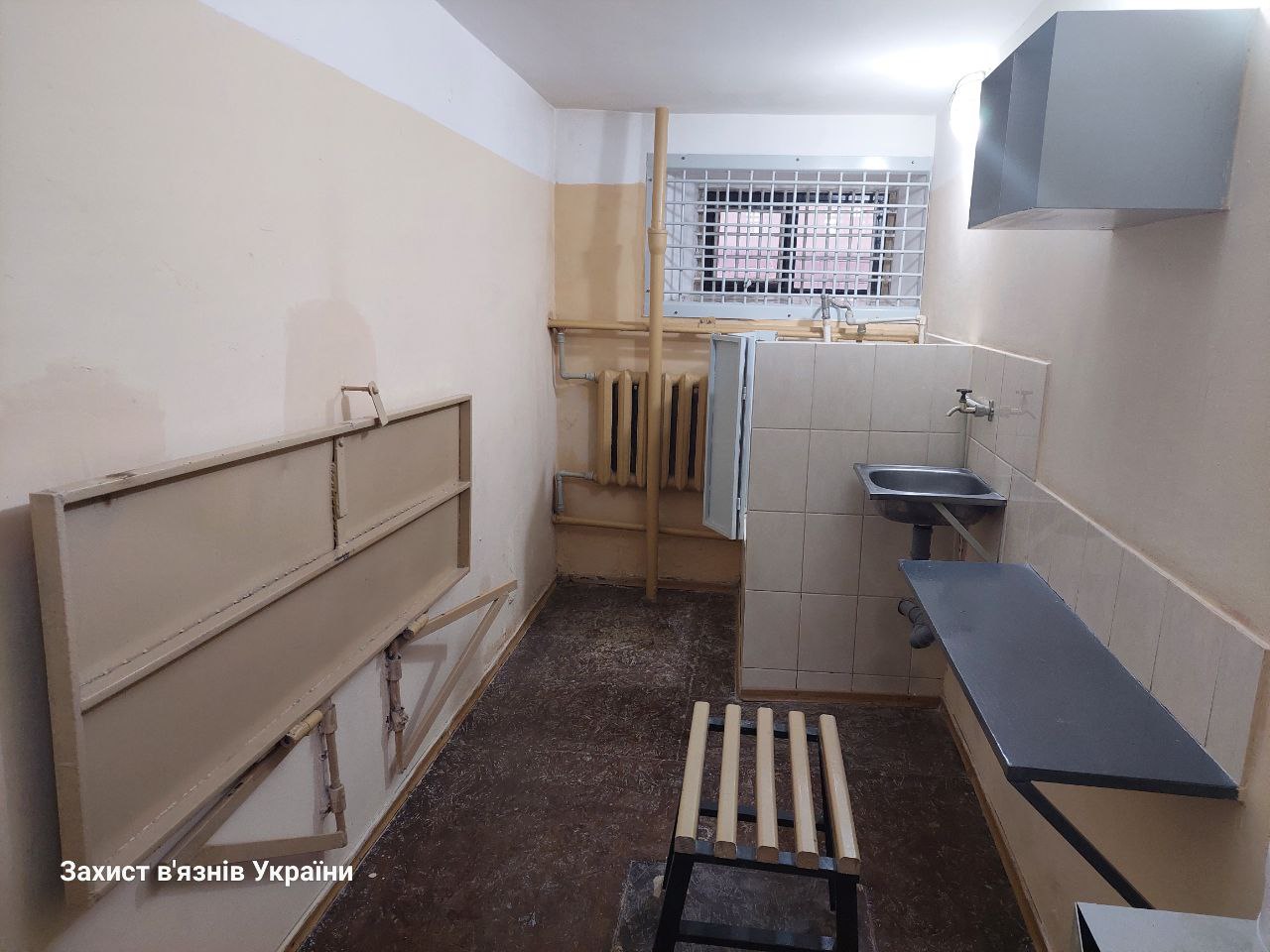
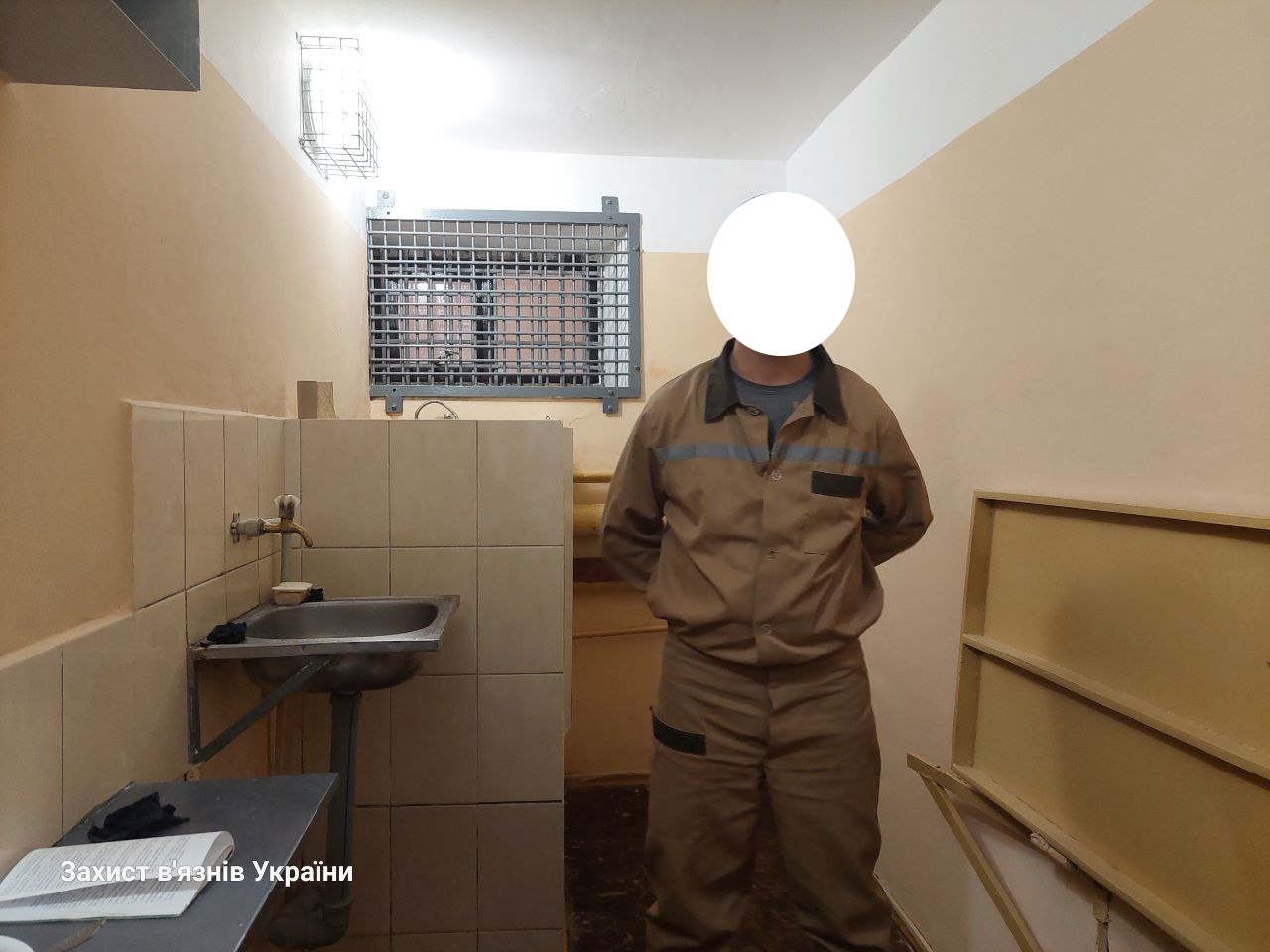
DIZO/PKT (Disciplinary Isolation Ward / Chamber-Type Room)
Two convicts were held in the chamber-type room (PKT). The detention was solitary. By court decision, convict I. was transferred from the DIZO cell to the PKT for one month for not making a report to the duty officer while in the DIZO during an inspection. Convict T. has a similar violation and was also transferred from the DIZO cell to the PKT for a period of one month.
We consider the punishment too severe and disproportionate to the gravity of the committed offence. Under current legislation, solitary confinement of convicts as a type of disciplinary penalty is not provided for in a medium-security institution. Such a form of punishment is punitive; it does not contribute to the resocialisation of convicts or law-abiding behaviour.
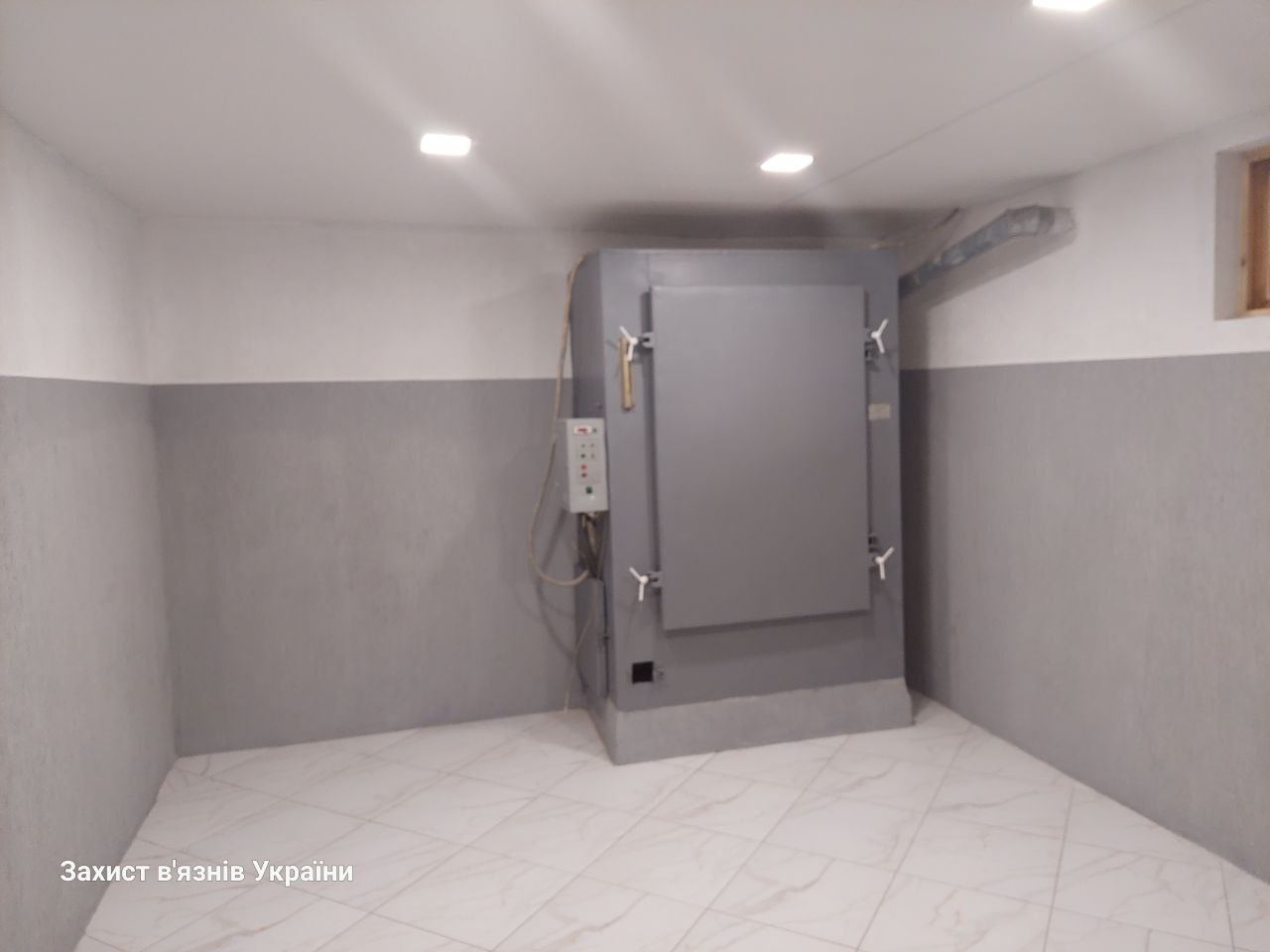
Bath and laundry complex
There is a disinfection chamber.
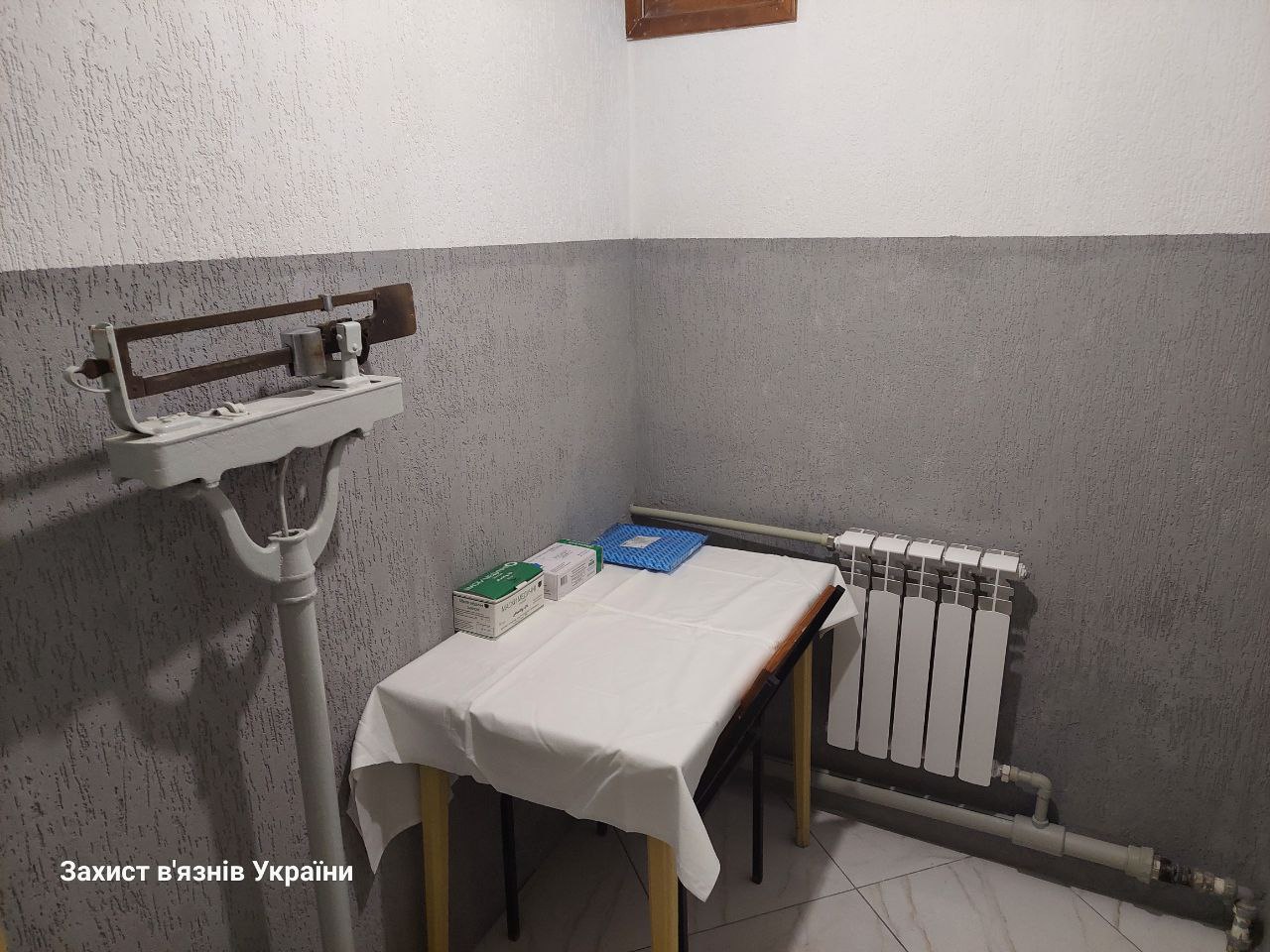
A paramedic’s corner in a separate room.
Washing machines.
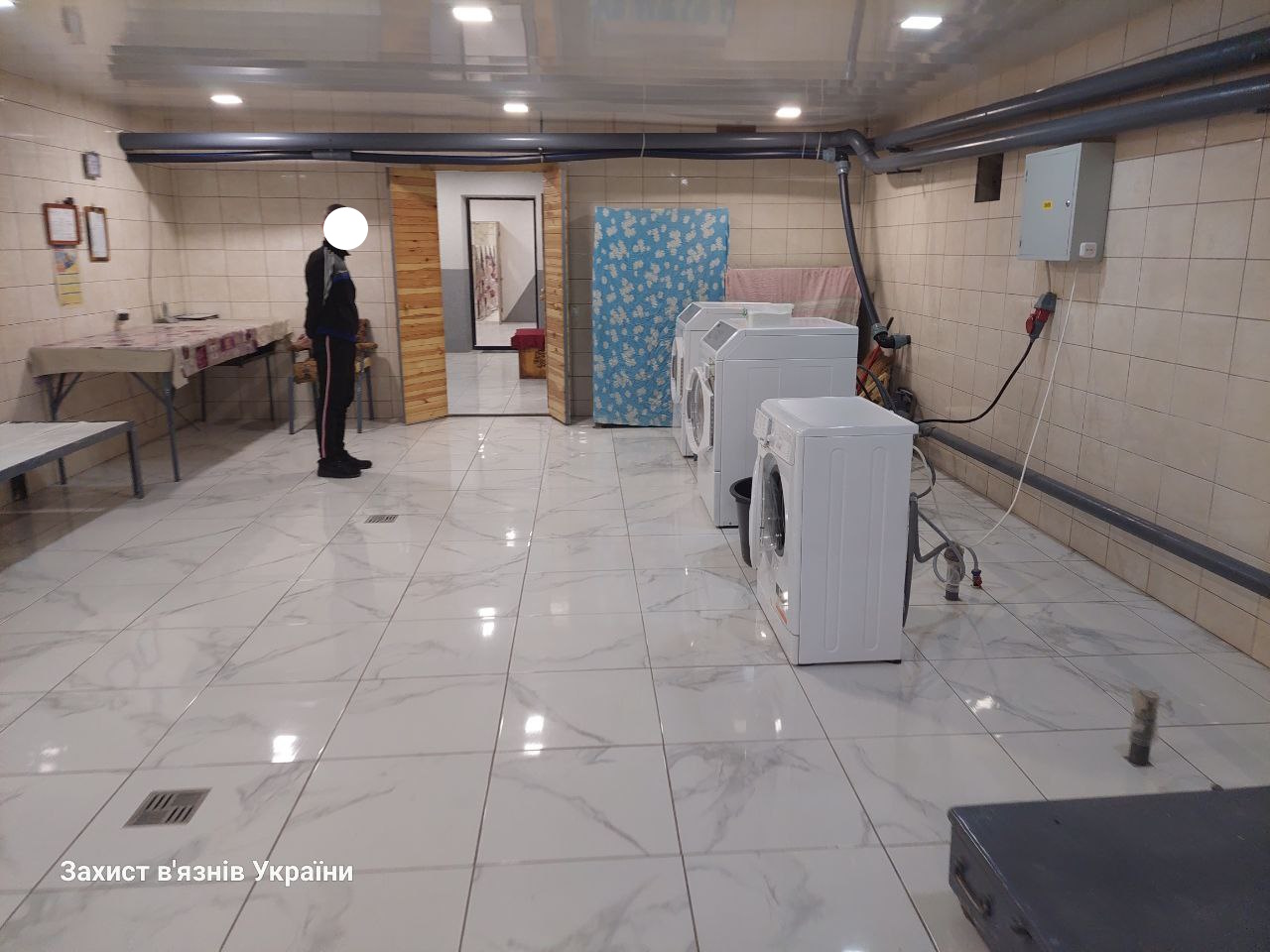
Drying room.
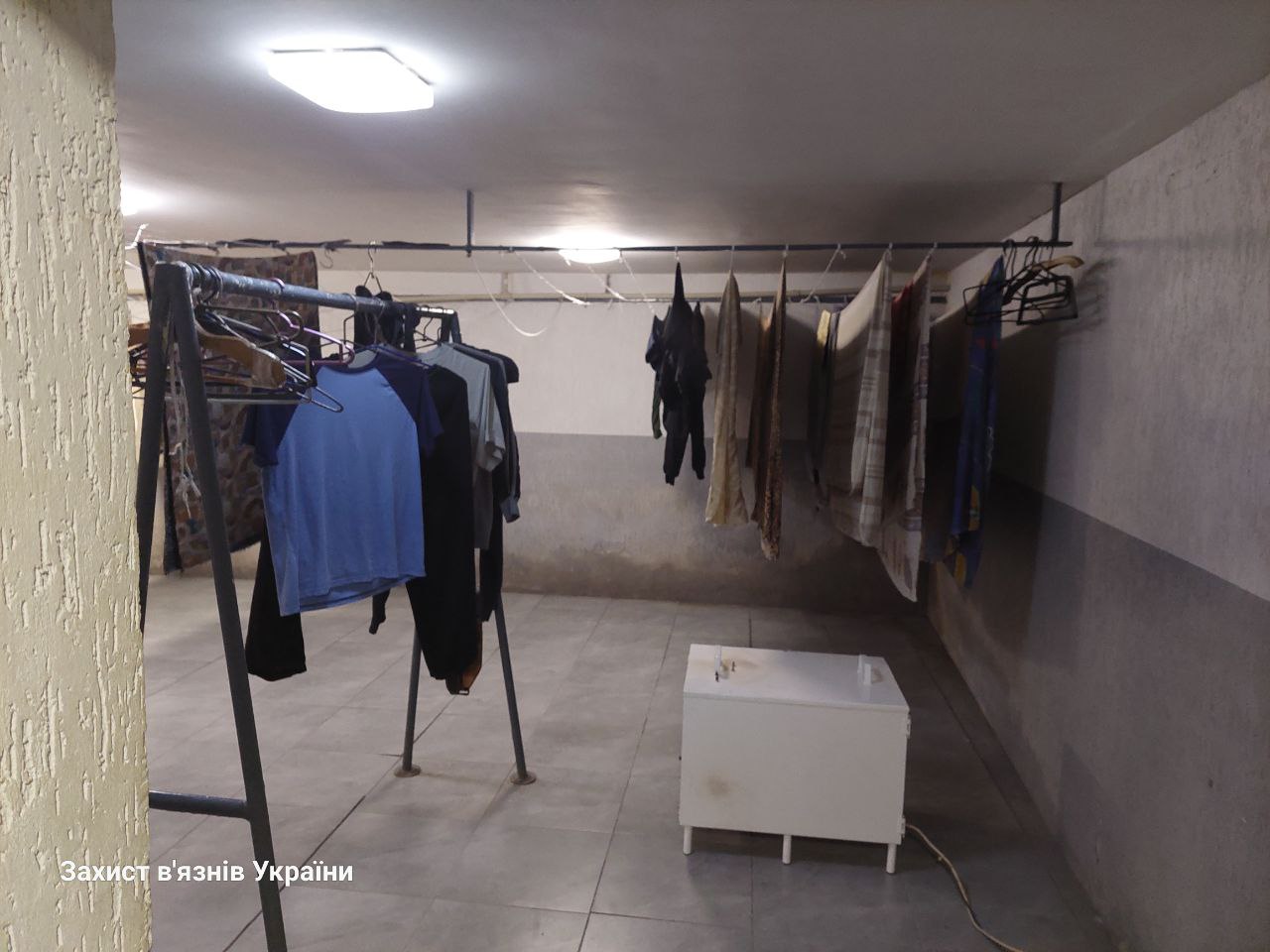
In the bathhouse, the stalls are partitioned, and there are no mats.
Communication with the outside world
In the internet classroom, there are four tablets with internet access. However, in the electronic correspondence review log for 2023, there are eight entries: convict R. has four entries, convict Sh. has two entries. Thus, the convicts barely use electronic correspondence.
In the IP telephony usage log for 2023, there are two entries concerning convict Sh.
In the log of video calls made by convicts via the internet for 2023, there are 225 entries. The vast majority of video calls were made by convicts R. and Sh. According to the log entries, only about ten convicts use the video calling service. There is a room for telephone conversations.
Remarks and recommendations:
1. Ensure control over the proper maintenance of medical documentation in accordance with the Procedure for organising the provision of medical care to persons sentenced to imprisonment, approved by the joint order of the Ministry of Justice of Ukraine and the Ministry of Health of Ukraine dated 15.08.2014 No. 1348/5/572 and other normative legal acts.
2. Ensure the possibility of receiving substitution maintenance therapy based on a diagnosis of mental and behavioural disorders due to opioid use.
3. Provide proper medical care to persons with viral hepatitis C.
4. Equip the fire protection system in accordance with established requirements.
5. Provide proper dental care.
6. Equip an isolation ward for persons with mental and behavioural disorders.
7. Ensure the provision of individual rehabilitation for persons who need it.
8. Stop the practice of doctors certifying the state of health of convicts and prisoners when placing them in a punishment cell.
9. Replace the pads for the external automatic defibrillator.
10. Ensure the right of convicts to have their own tablet with internet access.
11. Stop the practice of involving convicts in permanent work under the guise of two-hour tasks for the improvement of the institution without paying for their labour.
12. Stop the practice of solitary confinement in DIZO/PKT cells.
13. Promote the use of electronic correspondence by convicts.
14. Stop the practice of concluding employment contracts for an incomplete month.
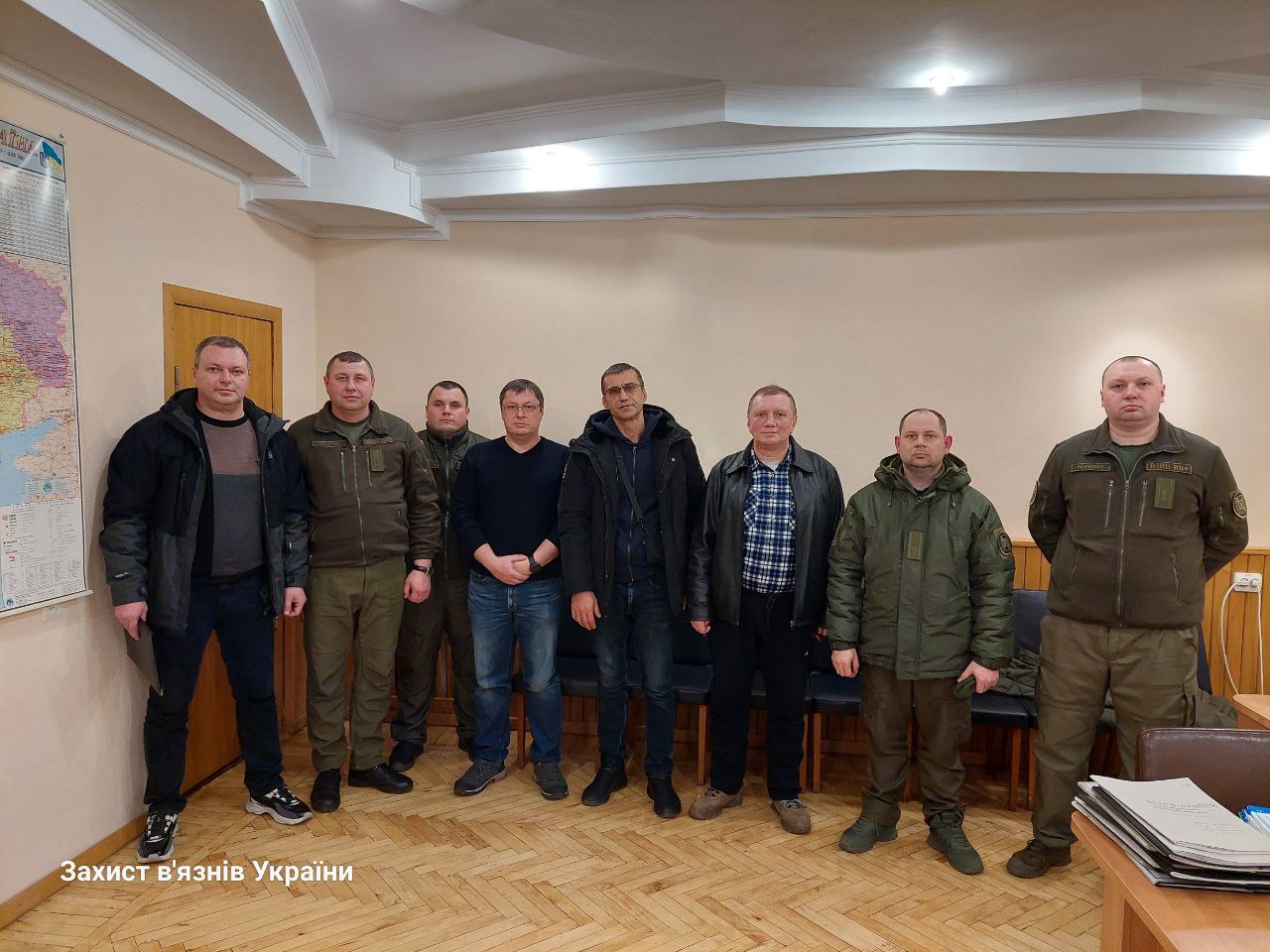
A preventive monitoring visit to the State Institution ‘Dykanivska Correctional Colony No. 12’ was carried out by representatives of the NGO ‘Kharkiv Human Rights Protection Group’ and the NGO ‘Prisoners’ Rights Ukraine’. The monitoring group consisted of an assistant to the People’s Deputy of Ukraine Yaroslav Yurchyshyn, HRPG programme coordinator Andriy Didenko, an assistant to the People’s Deputy of Ukraine Kostyantyn Kasai, a member of the Public Council under the Ministry of Justice of Ukraine Serhiy Zuikov, as well as a member of the Public Council under the Ministry of Justice Oleh Tsvilyi. The visit was carried out within the framework of the project ‘Reducing the suffering of prisoners in the context of the war in Ukraine’, funded by the government of Denmark in partnership with DIGNITY — the Danish Institute Against Torture. The purpose of the visit: analysis of the observance of human rights in places of deprivation of liberty during the war.
Date of visit: 21 December 2023