Report on the monitoring visit to the State Institution “Berdyansk Correctional Colony (No. 77)”
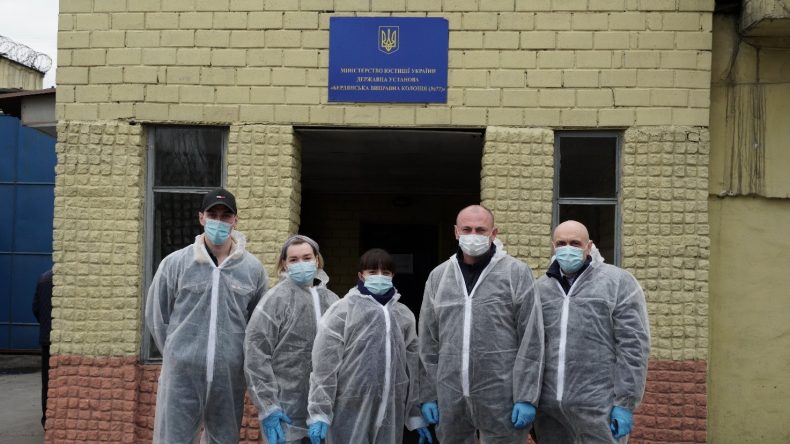
Report on the monitoring visit to the State Institution “Berdyansk Correctional Colony (No. 77)”, a minimum-security facility (for holding men sentenced to imprisonment for the first time for non-serious crimes), including the remand prison unit, conducted on 8 April 2021 by a group consisting of People’s Deputy of Ukraine Konstantin Kasai, Head of the Advisory Board under the President of Ukraine on Providing Rights and Freedoms of Defenders of Ukraine Alyona Verbytska, Executive Director of the UHRU Oleksandr Pavlichenko, and a representative of the Office of the Ukrainian Parliament Commissioner for Human Rights Valeriia Baturynska. The visit of three members of the Advisory Board on Providing Rights and Freedoms of Defenders of Ukraine (K. Kasai, A. Verbytska, O. Pavlichenko) aimed, among other things, to clarify the conditions of stay in the colony for individuals who participated in the defence of Ukraine, to examine their personal files, and to determine the possibility and necessity of mitigating or reducing their assigned punishment.
The State Institution “Berdyansk Correctional Colony (No. 77)” is a minimum-security institution for holding men who have been sentenced to imprisonment for the first time for non-serious crimes. On the day of the visit, 302 convicted persons were serving their sentences in the colony, and one person was in the remand prison unit. In the absence of the appointed head of the colony, the duties are being performed by Serhii Viktorovych Chuvakov, who accompanied the group along with other members of the colony’s administration.
Quarantine, diagnostics, and distribution unit, newly arrived transport group
The quarantine unit was visited, where convicts who were brought to the colony by transport on 5 April 2021 were being held. The new group arrived consisting of 24 convicts; in accordance with the requirements of the Internal Regulations, they were placed in the quarantine ward for 14 days.
There was an opportunity to speak with the convicts without the presence of representatives of the BVC-77 administration or voluntary assistants to the administration.
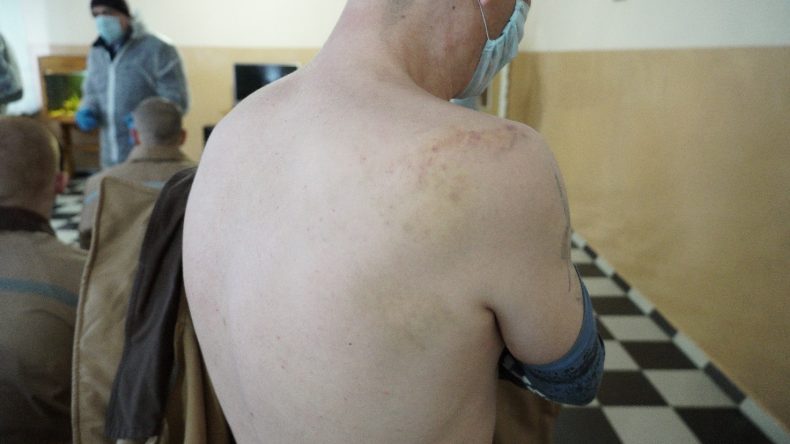
The new arrivals reported that upon arriving in Berdyansk in the railway carriage (“Stolypin” carriage) of this transport, during the exit from the carriage and the transition to the prisoner transport vehicle (a transition distance of no more than one metre), everyone passing through this corridor was beaten with truncheons by representatives of the National Guard. This occurred on the afternoon of 5 April, in the time interval between 12:00 and 15:00 (the convicts could not specify the exact time). Of the 24 people, 21 stated that they received blows from truncheons. Two people did not receive blows because they were returning from medical treatment, and one person, who was much older than the others (approximately 60–65 years old), was not hit. All others received one or several blows with truncheons; this procedure is called “registration”.
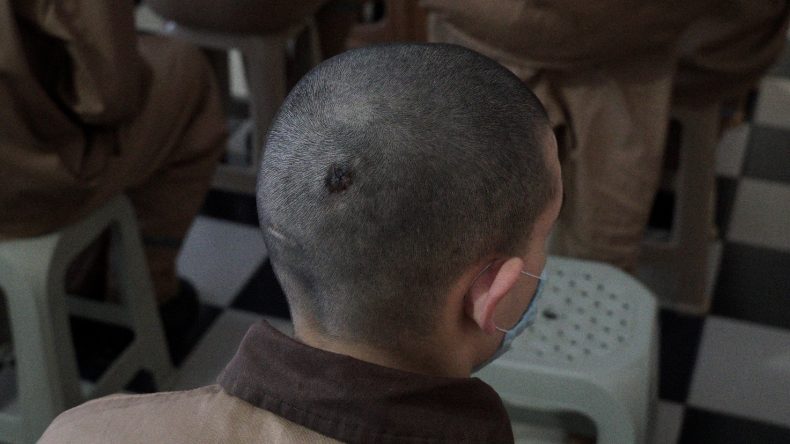
Two people pointed out physical injuries (see the photo with an injury from a blow to the head and the forearm area). These injuries were documented by us and are attached as photos to this appeal along with a certificate regarding the documentation of these injuries.
The administration of the institution documented the injuries; this is recorded in the appropriate logbook, the local prosecutor’s office was notified, and on 7 April, a prosecutor was at BVC-77 to study this issue.
During the communication with the new arrivals, information about the following was also obtained:
Throughout the day, the convicts are not allowed to sit; they remain on their feet the entire time. They expressed gratitude for the visit, as it was an opportunity to sit for a while and let their legs rest.
Separately, “physical training” was mentioned. This is effectively forced labour in the form of physical abuse. The convicts confirmed that they are forced to perform 1,000 or even 5,000 squats. When asked who was forced to perform 1,000 squats, several people raised their hands.
It is necessary to note the role of voluntary assistants to the administration. These are convicts themselves, but they have effectively been delegated administrative functions and have complete control over other convicts. These assistants are dressed in a different colour uniform (black), although this uniform is not of a standard design; some of these assistants were dressed in casual civilian clothing. It is precisely these assistants who ensure both discipline and control over the convicts, establishing their own means and system of influence over them, which consists of physical and psychological pressure, and intimidation. The results of this “drill” will be described further.
It is impossible to send letters of complaint from the colony; they do not reach the addressee. (This was stated by those convicts who had already served time in this colony and returned after leaving for medical institutions or in connection with the consideration of their case in court). A recommendation was given to send information to the address of the Ukrainian Parliament Commissioner for Human Rights, as this correspondence is not subject to control by the institution’s administration.
The convicts also claimed that they are unaware of the possibility of contacting the local Free Legal Aid centre and receiving consultations from a lawyer of such a centre. They were provided with information regarding the contacts of such a centre (the information is on a board and is accessible for the convicts to study). It is worthwhile to organise regular visits by lawyers from the Free Legal Aid system (periodically once or twice a month) for the purpose of providing consultations to convicts.
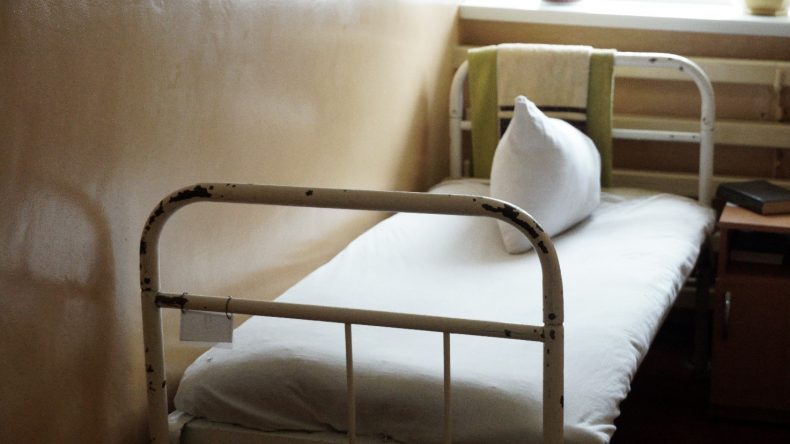
Empty bed
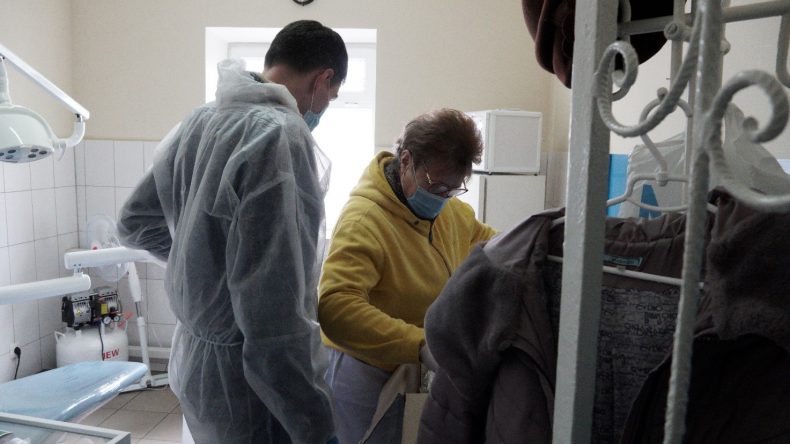
Dental office
Discipline in the colony and voluntary assistants to the administration
In the minimum-security colony, the convicts are subjected to severe drill; even during a short stay in the colony, it became obvious that the convicts are under rigid control and perform everything on command. The question is at what price this is achieved.
In the photos and videos, it can be seen that the convicts walk in formation, marching in step (understandably, not of their own will, but under duress). The drilling and control of the convicts’ movement are handled by voluntary assistants to the administration, to whom the powers of the institution’s administration have effectively been delegated. These assistants wear a different uniform (the question is on what grounds they differ in clothing from other convicts, and who established such rules?).
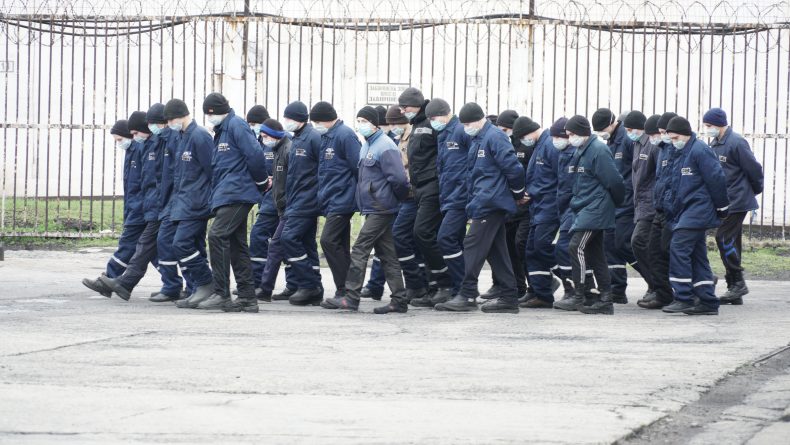
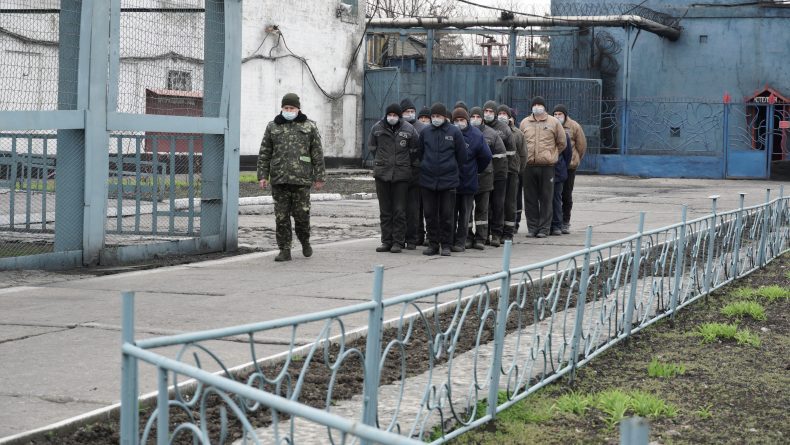
See the first video file via this link.
The categorical requirement is to remove these assistants entirely and destroy the “hazing” in the colony, which is supported by the administration.
DIZO-PKT (Disciplinary Isolation Cell / Cell-type Facility)
On the day of the visit, according to the head of the colony, there was not a single convict in the DIZO-PKT unit. The last placement in the DIZO unit, according to the administration, was approximately in 2019. That is, for at least the last year and a half, there has not been a single case of convicts staying in the DIZO or PKT unit. As the Committee for the Prevention of Torture noted in its report, in point 25, “Colony No. 77 used official disciplinary measures extremely rarely, in particular regarding the disciplinary isolation cell. This fact, in addition to previous observations, pointed to the existence of an unofficial disciplinary system used by staff and ‘orderlies’.”
Industrial production zone
In the colony, the convicts are engaged in work in several sections of the industrial zone. In particular, this is a garment production unit, where the manufacturing of nets from synthetic materials is carried out.
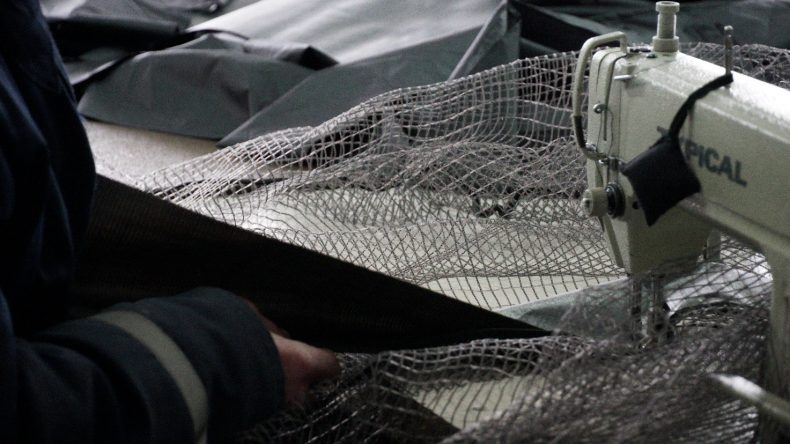
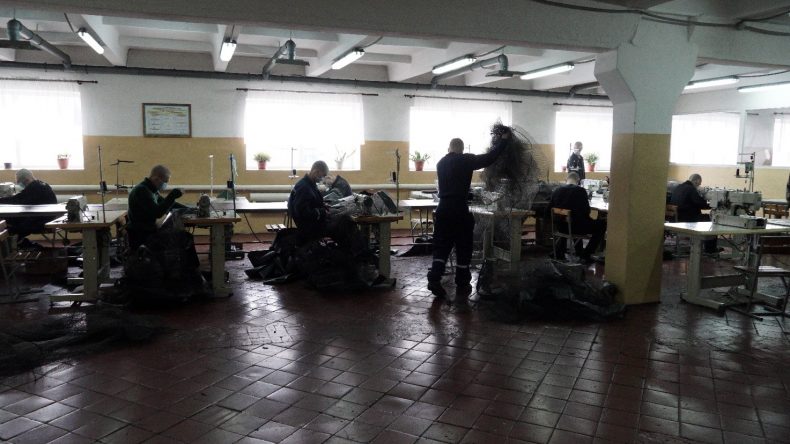
In the colony, there is a woodworking section where cable reels are manufactured.
Specific issues that require resolution:
Passports
17 people in the colony (among those who arrived recently) do not have passports. They do not pay the local fee by agreement with the local authorities (the local government body issues the certificate free of charge, preparing a copy of the birth certificate), but for the issuance of the blank form to the State Migration Service, 360 UAH must be paid for one passport, and not all convicts have such funds. Without documents, they cannot work in production and earn money. This problem is inherent to all colonies and requires regulation.
Implementation of Article 157 of the Criminal Executive Code
Article 157. Providing assistance to persons released from places of serving a sentence
1. Persons who are released from serving a sentence are provided with free travel to their place of residence or work within Ukraine.
There is no answer to the question of how to actually (at the expense of which payments) ensure free travel after release to the place of residence. The colony cannot purchase travel documents at its own expense.
This issue requires regulation.
Persons without education
On the day of the visit, there were three people in the colony who were illiterate and had no education. All three are of Roma ethnicity, and a problematic issue is how to improve their level of education, utilising the time of their stay in the colony.
Persons falling under the status of defenders of Ukraine who are serving sentences in the colony
The participants of this monitoring visit are members of the Advisory Board on Providing Rights and Freedoms of Defenders of Ukraine; therefore, a separate issue studied during the visit was the stay of persons sentenced to imprisonment in this colony.
It was established that one such person was in the colony, convict N. Members of the Advisory Board reviewed the materials of his personal file, taking into account the severity of the sentence, the proportionality of the assigned punishment relative to the severity and danger of the committed crime, and the possibility and necessity of applying amnesty or pardon to this convict.
NB. Part of the report is confidential and is not published due to the inclusion of personal data and other information that could harm individuals who are in a vulnerable position.
Konstantin Kasai, Deputy of the Verkhovna Rada of Ukraine, member of the Advisory Board under the President of Ukraine on Providing Rights and Freedoms of Defenders of Ukraine
Alyona Verbytska, Head of the Advisory Board under the President of Ukraine on Providing Rights and Freedoms of Defenders of Ukraine
Oleksandr Pavlichenko, Executive Director of the Ukrainian Helsinki Human Rights Union, member of the Advisory Board under the President of Ukraine on Providing Rights and Freedoms of Defenders of Ukraine
12.04.2021

The material was prepared with the support of the European Union and the International Renaissance Foundation within the framework of the grant component of the EU4USociety project. The material does not necessarily reflect the position of the International Renaissance Foundation and the European Union.