Monitoring visit to the State Institution “Pokrovska CC No. 17”
I. General information
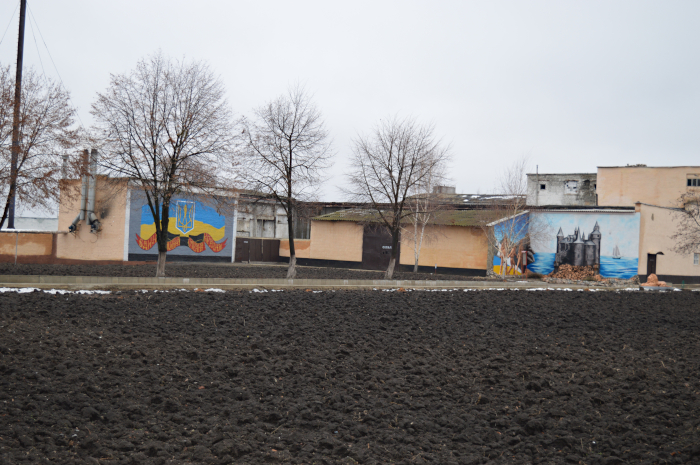
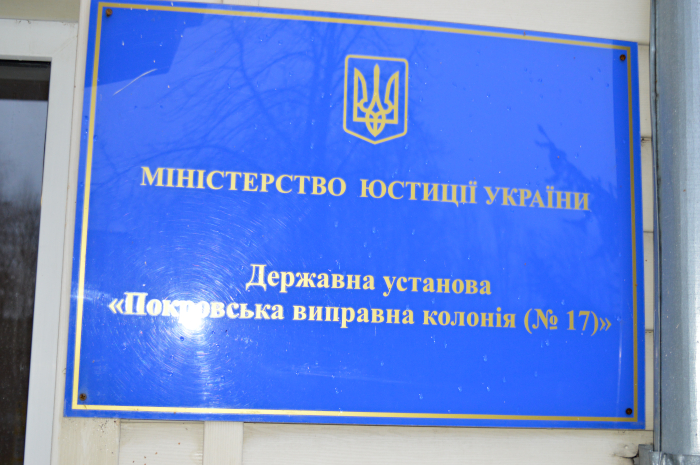
On 2 February 2021, a monitoring group of the Kharkiv Human Rights Group consisting of assistant to the People’s Deputy of Ukraine Maksym Revyakin and two journalists – Hanna Ovdiienko and Pavlo Shvab – visited the State Institution “Pokrovska Correctional Colony No. 17 – specialized tuberculosis hospital”.
The colony is located in the village of Pokrovske of the Donetsk community of the Izium district of the Kharkiv region. This colony is a medical facility and a medium-security penal institution for men sentenced to imprisonment for a fixed term who are suffering from tuberculosis. Also in the colony, there is a remand prison unit in which suspects who have been diagnosed with tuberculosis or who require treatment are kept. In addition, persons serving sentences are sent to the colony for treatment, not only from the Kharkiv region but from all over Ukraine. At the time of the visit, there were 261 people in the colony. The planned occupancy of the institution is 711 people. The colony has been functioning since 1961. In 1995, a tuberculosis department began to function in the institution.
Currently, the institution, like other penal institutions in Ukraine, faces major problems with funding. In 2020, out of the necessary 40 million UAH that were requested from the state budget, 8.5 million UAH were actually allocated to the institution. Thus, for items and materials used to improve the conditions of detention of convicts and for equipment for convicts, 2 million 363 thousand UAH were requested, and only 72 thousand were actually allocated. For food products, 29 million 229 thousand were requested, and 4 million 140 thousand UAH were actually allocated. The monitors positively note the efforts of the institution’s administration to improve the conditions of detention of convicts even in conditions of such catastrophic underfunding.
II. DIZO (Disciplinary isolation cell)
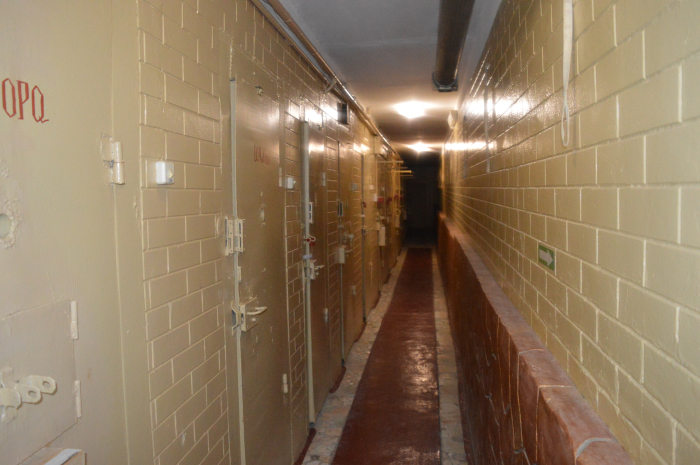
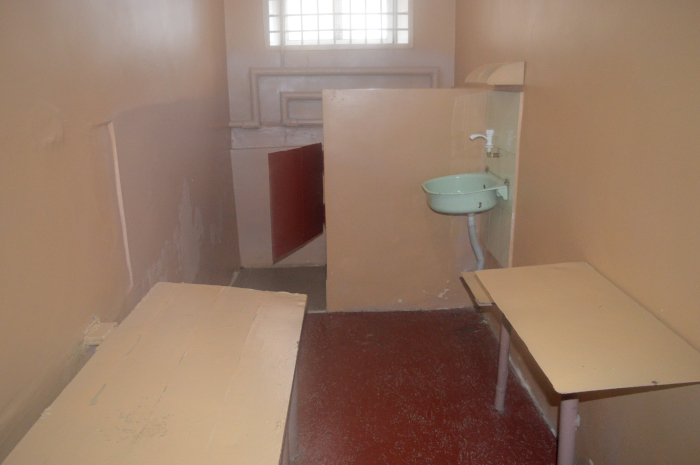
First, the monitors visited the disciplinary isolation cell, in which 2 people were kept. Since the beginning of the year, 5 people were held in the isolation cell. The disciplinary isolation cell is located in a separate single-storey building in a semi-basement room. The cells have undergone cosmetic repairs, the toilet is fenced off by a wall, and there is a door. There is also a washbasin, and in case of a violator being in the cell, a tank with boiled drinking water is installed for him. The windows are wooden. A person who is in the isolation cell has the opportunity to open the window for ventilation themselves. Sufficient daylight enters the cells. Video surveillance is installed in the cell.
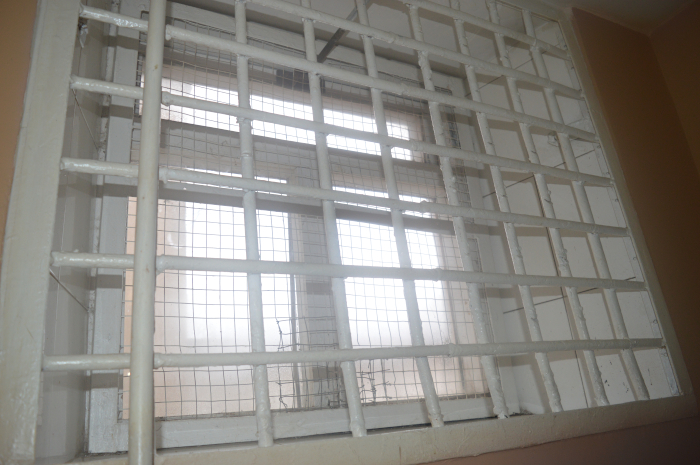
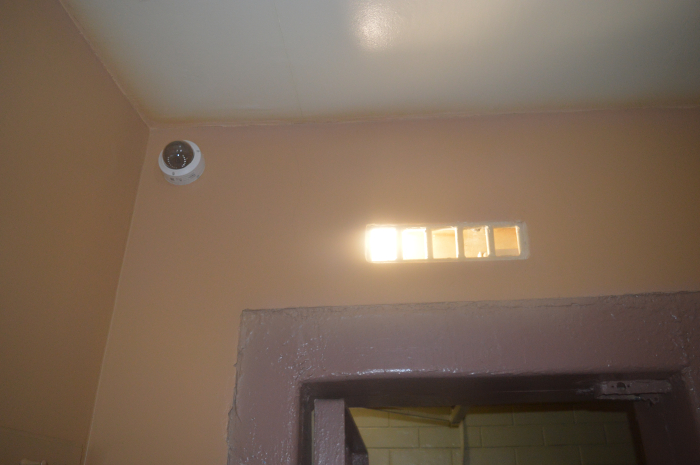
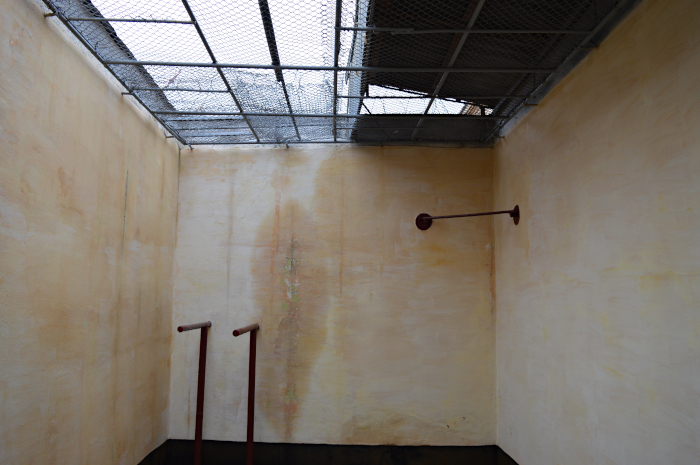
The monitors also spoke with persons who were in the disciplinary isolation cell – there were no complaints about the conditions of detention. Walking courtyards are of two types: large and small. They are equipped with sports equipment, and benches are installed in them. The courtyards are sufficiently protected from atmospheric precipitation.
III. Residential units
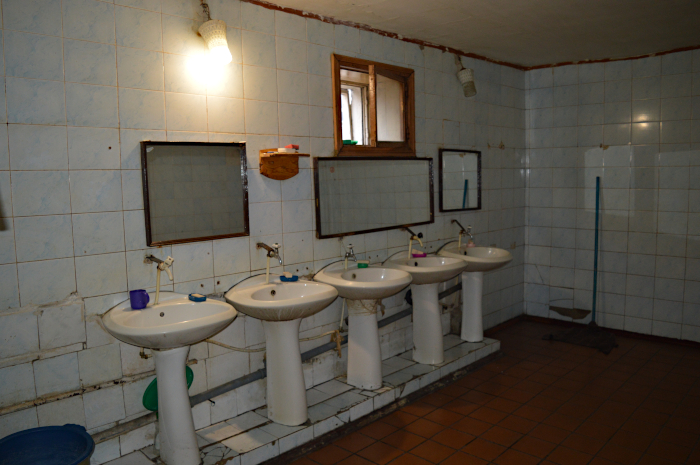
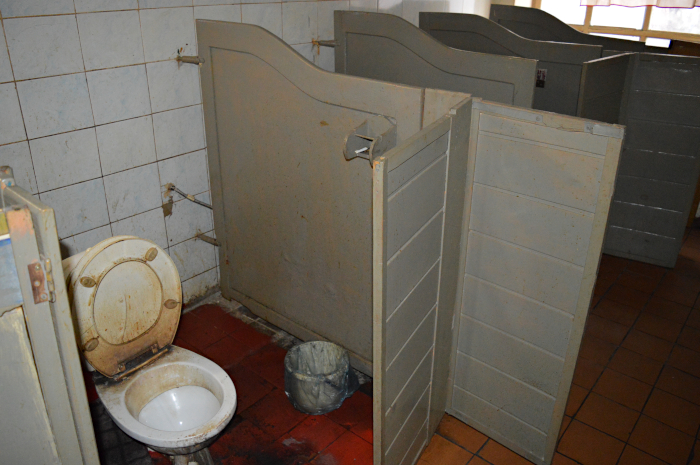
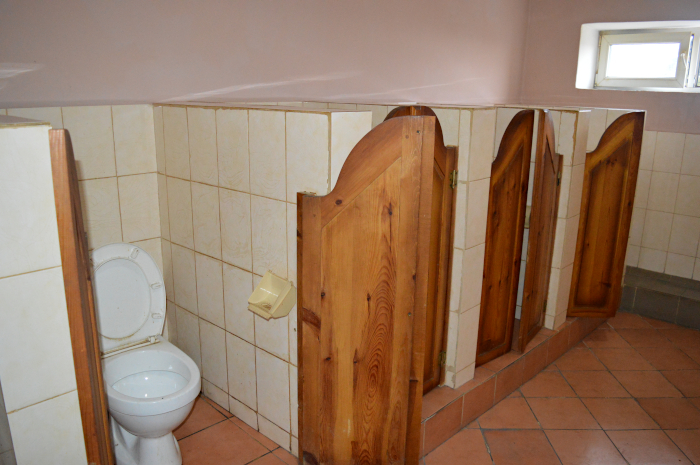
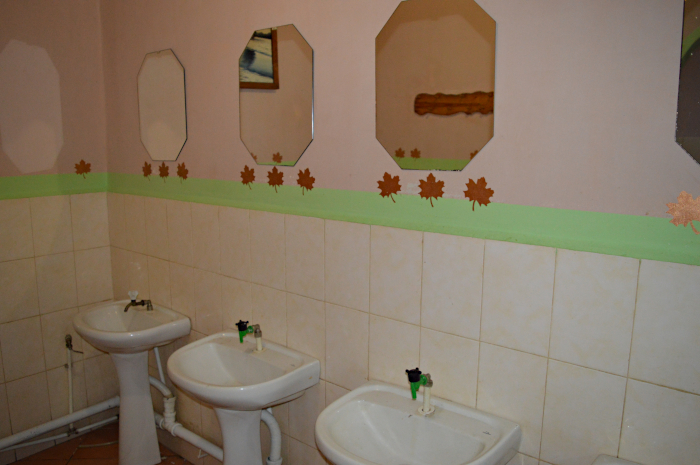
There are six residential units in the institution, all of them are also inpatient wards of the medical facility. All units are of the block type. All units have undergone cosmetic repairs. Approximately half of the units are equipped with metal-plastic windows. In some rooms, there is mould and fungus on the windowsill in places, and traces of earlier flooding are also visible. In the units, it is warm – the radiators are hot. Living space per one convict is more than sufficient. Living premises are bright, and sunlight enters in sufficient quantity. In each unit, there is a tank with drinking water. There are dining rooms. According to the doctors’ recommendations, meals take place directly in the residential units. In each unit, a mini-dining hall is equipped. In the sanitary facilities, there are washbasins and soap, however, the soap looks as if it were placed shortly before the visit of the monitors. Relatively new plumbing is installed in the toilets. The toilets are separated by small walls and have doors that do not provide a sufficient level of privacy for the convicts.
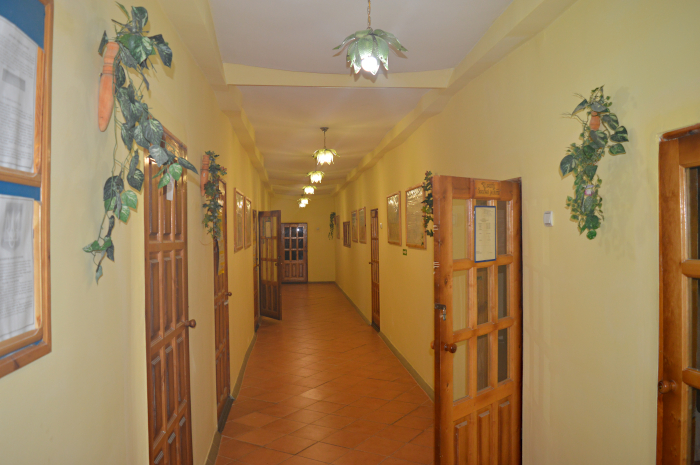
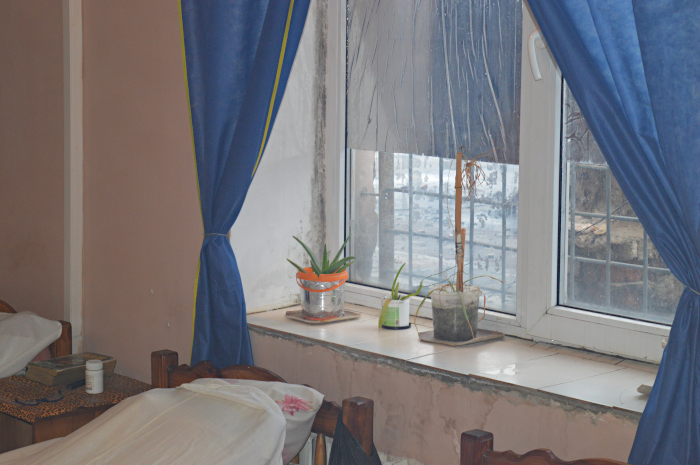
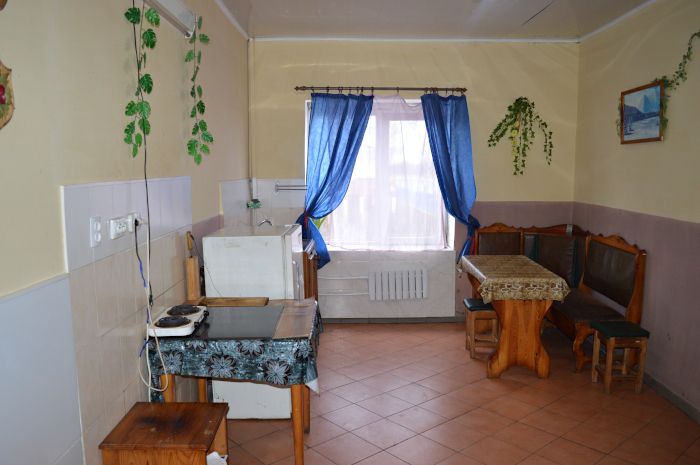
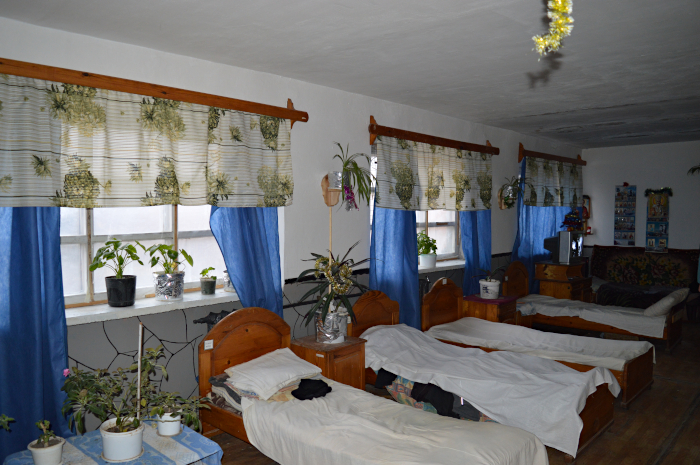
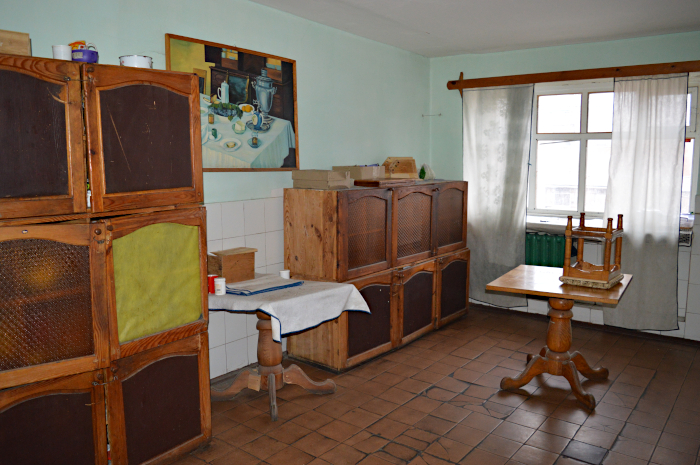
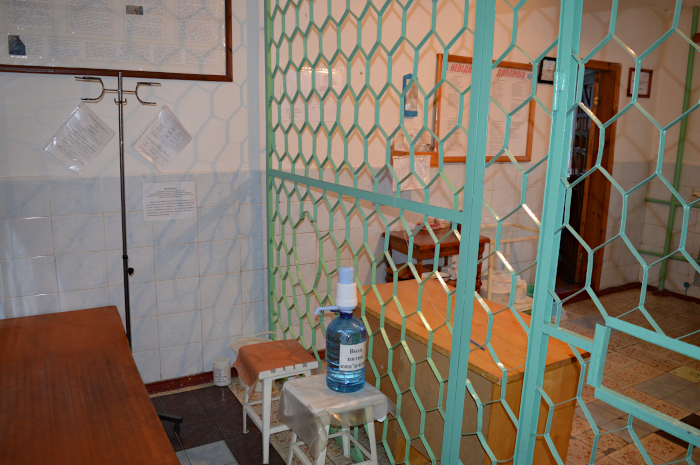
Also, medical assistance is provided directly in each unit. Medical drugs are issued in a specially equipped room. Medical staff perform procedures, as well as provide medical assistance through bars, which is not provided for by criminal-executive legislation. According to the colony representatives, these bars are necessary to protect the medical personnel, since they are mostly women. This is strange, considering that the personnel of the institution exceeds the number of persons serving sentences.
IV. Canteen
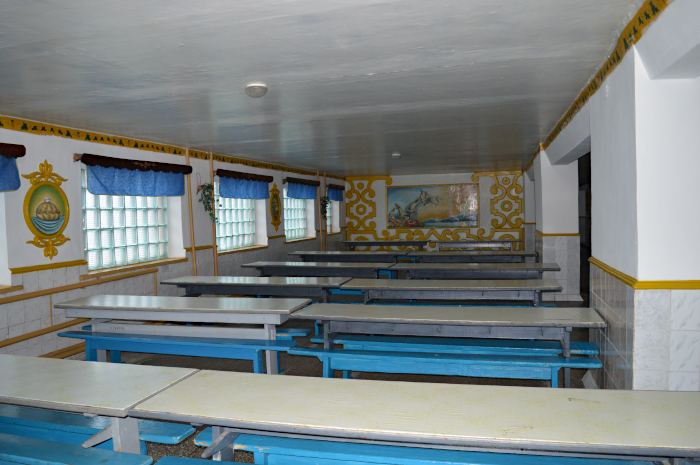
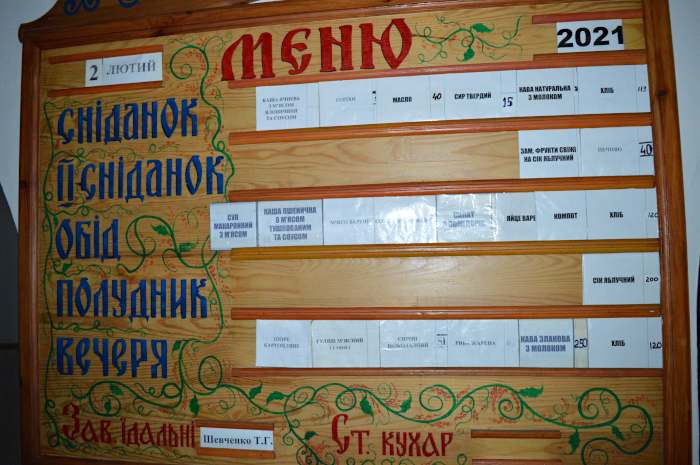
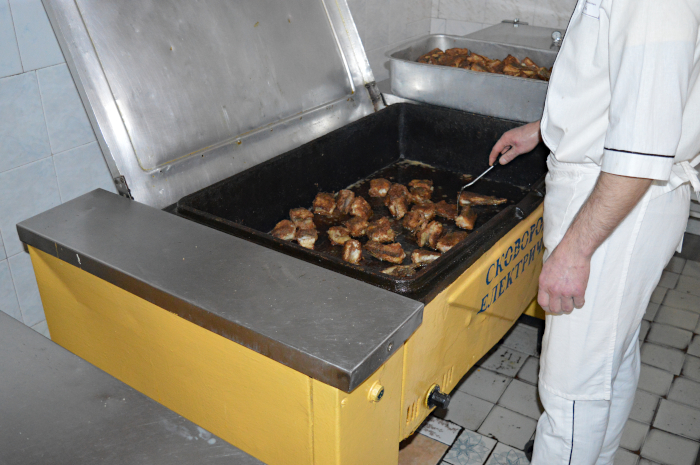
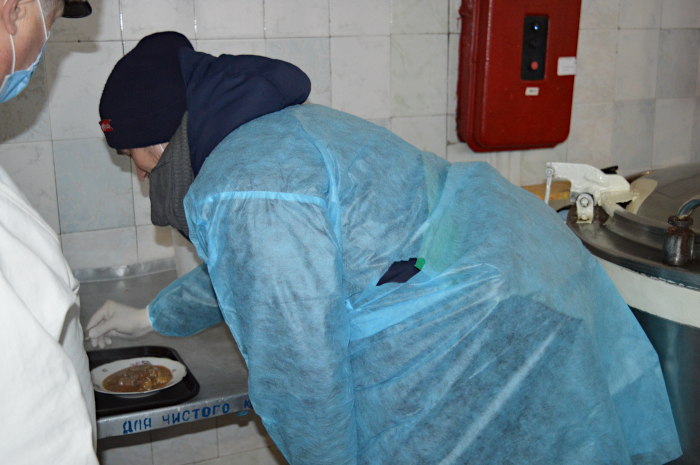
Then the monitoring group visited the kitchen and canteen. At the entrance to the canteen, there are washbasins with soap and towels. The dining hall is spacious and bright. There is an information menu with relevant information. Today, the kitchen is in a satisfactory condition. At the time of the visit, lunch in the colony had just ended and food was being prepared for the evening, namely fried fish, goulash, and more. The monitors tasted the food and can call the dishes delicious.
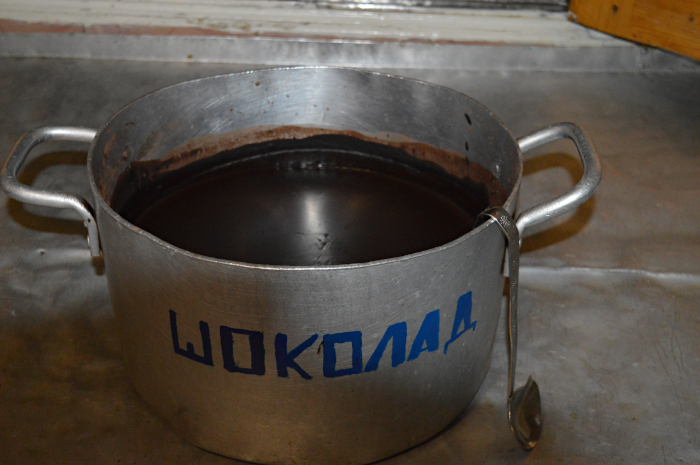
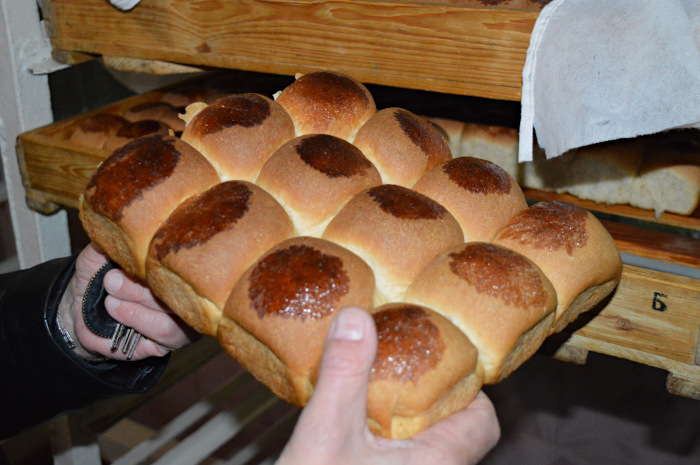
In addition, persons serving sentences are given chocolate and delicious doughnuts.
V. Bathhouse
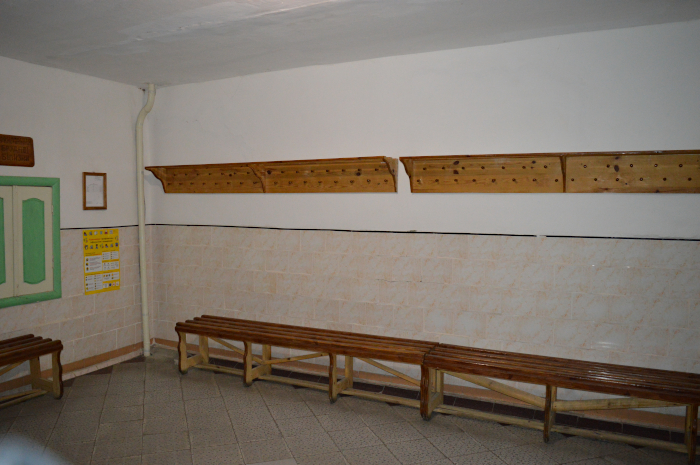
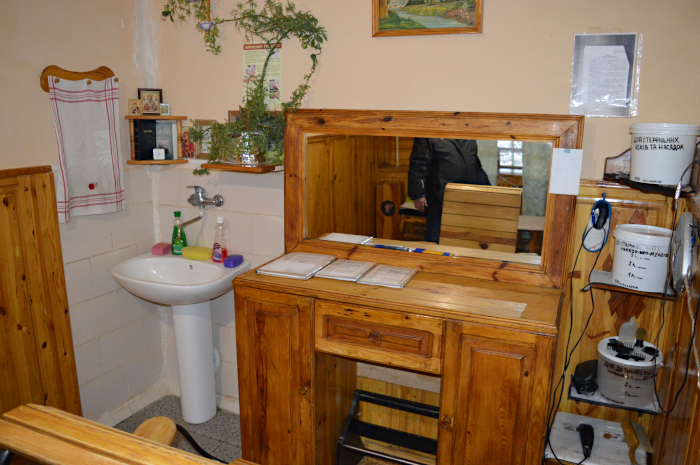
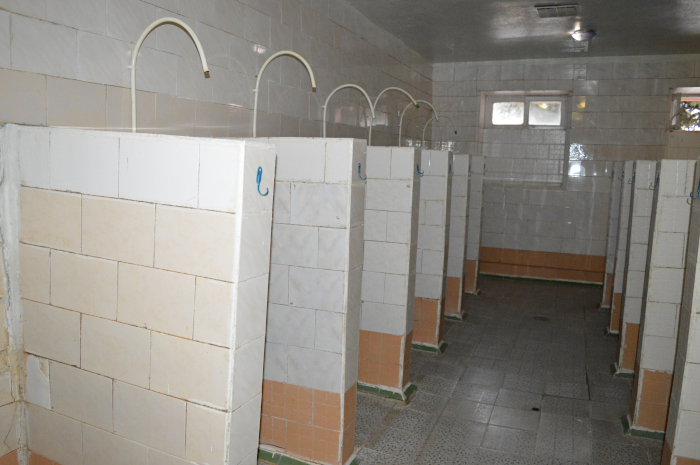
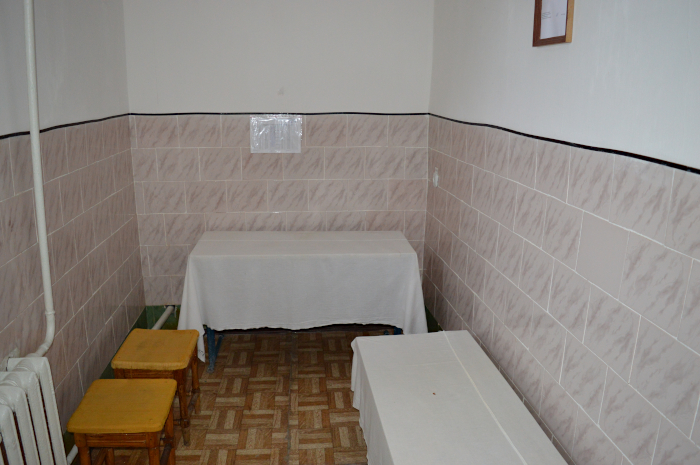
At the entrance to the bathhouse, there is a spacious dressing room. Also at the bathhouse, there is a hairdresser, where convicts can get a haircut for free. Shower cubicles have sufficiently high partitions. Mats, showerheads, and curtains were missing, but according to the colony representatives, all this equipment was undergoing disinfection. There is also a paramedic’s room for an examination regarding bodily injuries.
VI. Specialised tuberculosis hospital
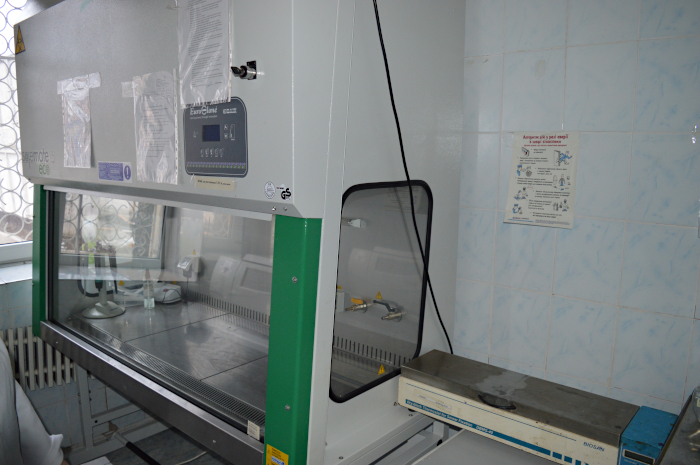
On the territory of the colony, there is a modern laboratory, which is equipped with the latest equipment, which allows for diagnosing tuberculosis in a short time and ensuring the most effective method of treatment, taking into account chronic diseases. Such equipment was purchased at the expense of international foundations. Last year, a new X-ray machine was purchased with state funds, and the state also fully provides all medical consumables. Over the past year, almost 1,000 studies were conducted in the laboratory. In addition, in the hospital, the viral load of HIV infection is determined.
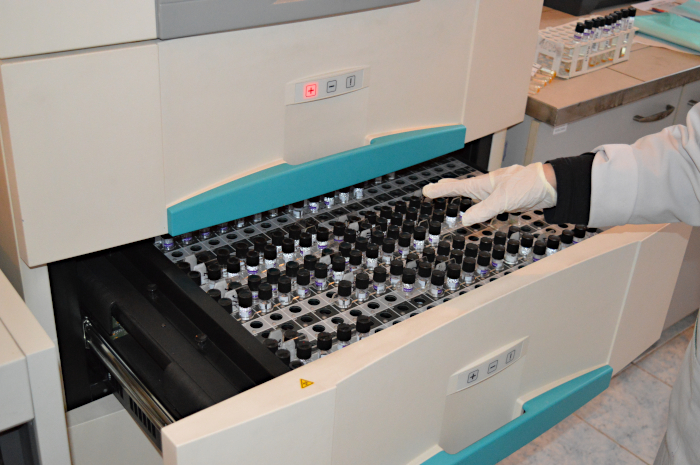
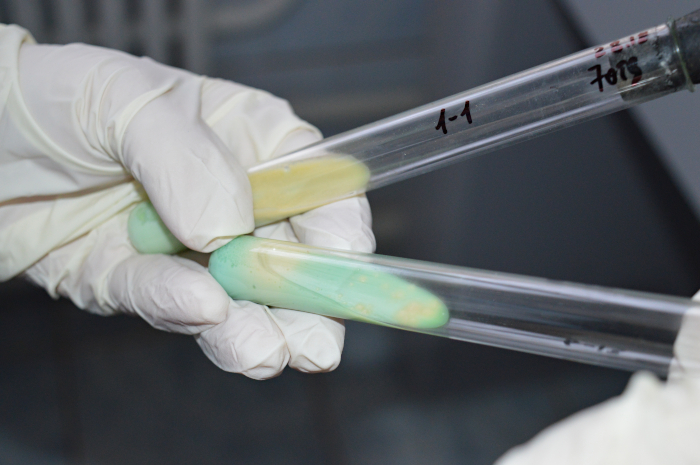
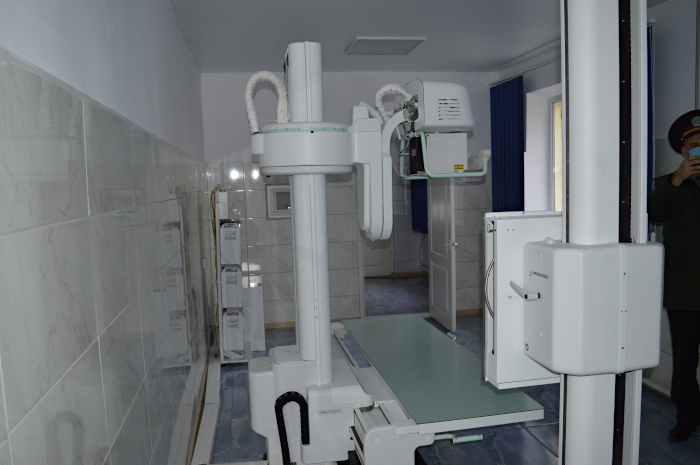
As of 1 February 2021, 10 positions remain vacant in the hospital.
According to the head of the medical unit, in 2019, 35 people were released from serving sentences due to health conditions, and in 2020 – 34 people. At this time, the court is considering 4 motions for release from further serving of the sentence.
For the year 2019, 4 deaths were recorded in the institution, and in 2020 – 2 cases.
Also, in the medical unit of the colony, there is a dental office, where treatment and filling are conducted.
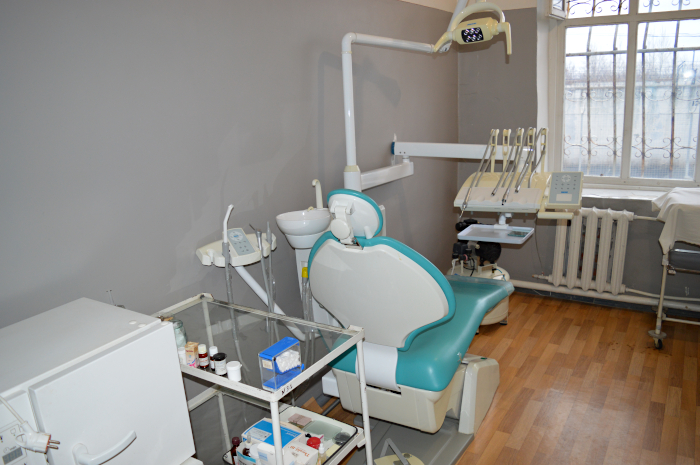
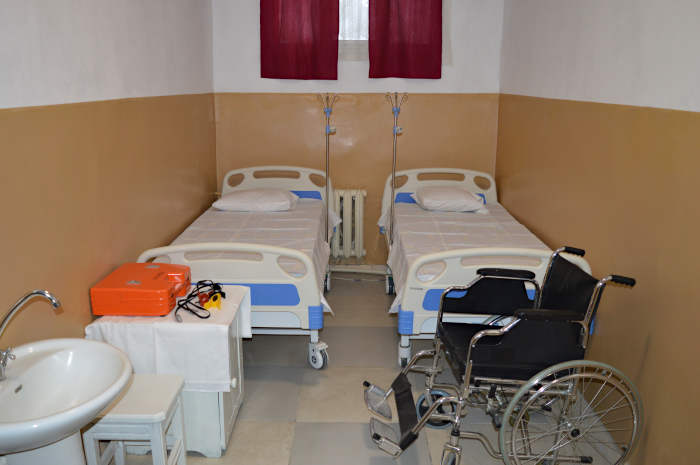
In addition, in the medical unit, there is an intensive care ward, where there is necessary medical equipment: a cardiograph, a ventilator, and more.
VII. Production
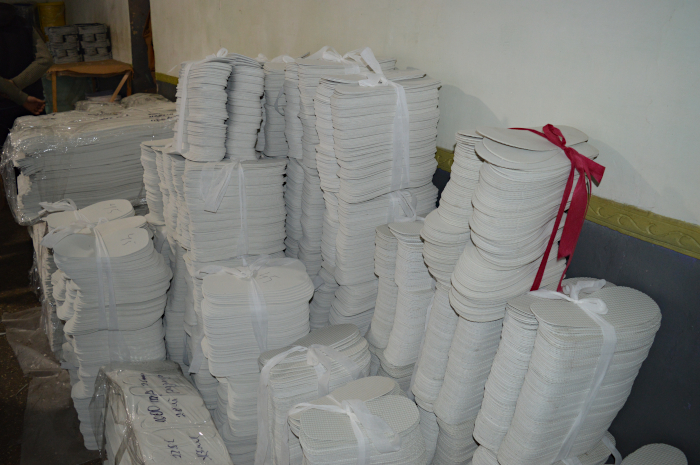
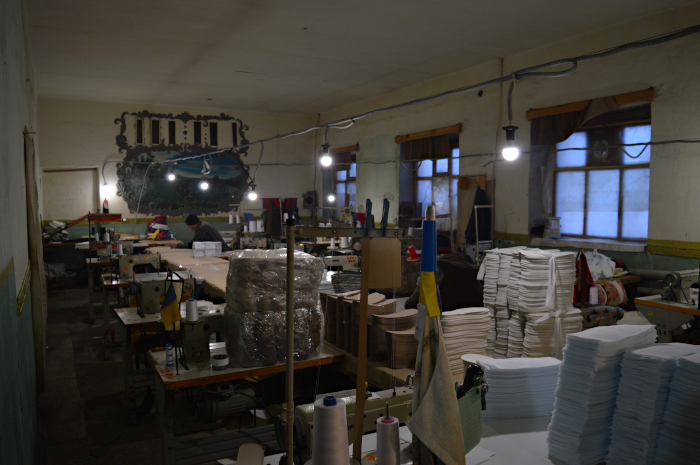
There is no large production in the colony; there is only a workshop where slippers for hotels are manufactured, and a small subsidiary farm. In the workshop premises, it is quite dark and noisy. The windows are sealed with film; therefore, in the opinion of the monitors, there are problems with heating this room. On the information boards, there is no information about the amount of salary or remuneration for manufactured products. 36 people work in the workshop. With everyone, fixed-term employment contracts have been concluded. The monitors very positively note this. But during communication with the persons working in the workshop, no one could name the amount of salary for the last month.
VIII. Leisure
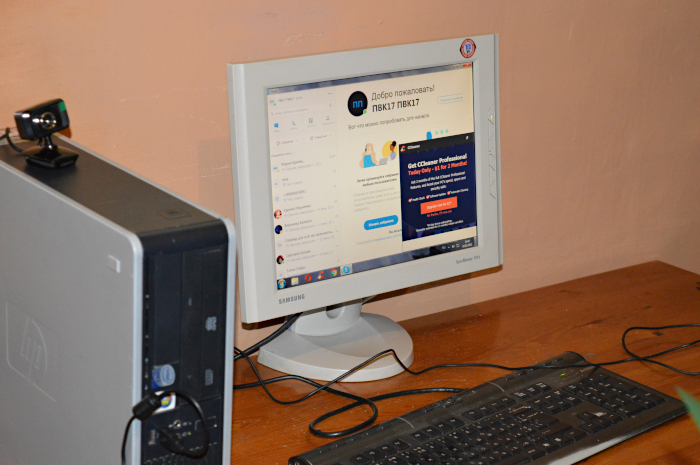
The monitors visited an internet classroom, where persons serving sentences have access to the World Wide Web, and persons under investigation can attend court hearings in the mode of video conferencing.

The material was prepared with the support of the European Union and the International Renaissance Foundation within the framework of the grant component of the EU4USociety project. The material does not necessarily reflect the position of the International Renaissance Foundation and the European Union.