Report on the results of the monitoring visit to Toretsk Correctional Colony No. 2
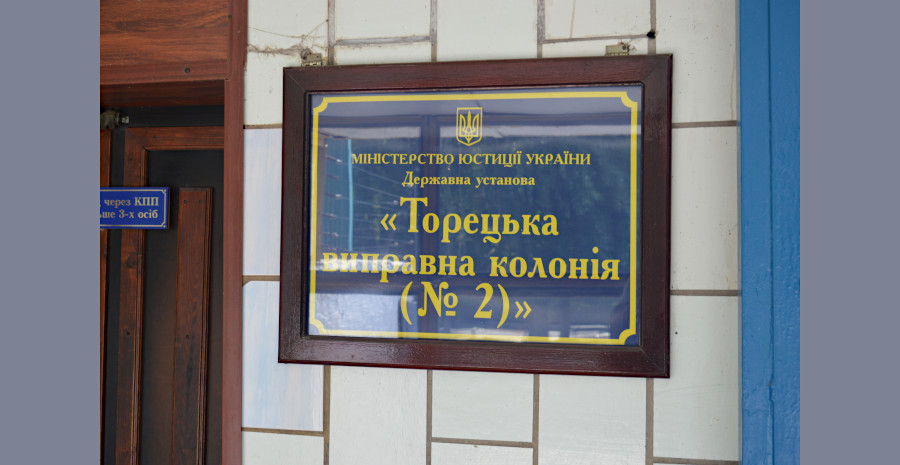
General information
On 7 August 2019, the KHRG monitoring group, consisting of Volodymyr Hlushchenko, Maksym Revyakin, and Hanna Ovdiienko, visited Toretsk Correctional Colony No. 2. This institution is located in the city of Toretsk (Donetsk region)—right on the demarcation line. The settlement has been repeatedly subjected to shelling by illegal armed groups. However, according to local residents, there has been relative silence in the last few weeks.
The first problem the monitors encountered when they arrived at the settlement was finding the colony. At the address indicated on the website of the State Penitentiary Service, there is a private house. So, to find the colony, the monitors had to drive around the city, asking local residents.
Toretsk Correctional Colony No. 2 is located on the outskirts of the city, near one of the waste heaps. The administration of the institution noted that just behind the waste heap are the military positions of the terrorists. Previously, a few years ago, the combat positions were just outside the colony gates. Therefore, during active hostilities, shells hit the territory of the institution (in particular, the buildings of the industrial zone suffered). Fortunately, the convicts and the staff of the institution did not suffer injuries during such shelling.
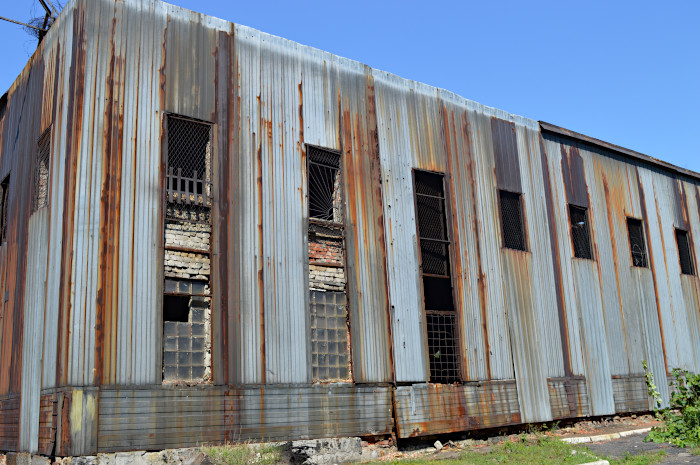
Today, 434 convicts are serving their sentences in the institution. A few years ago (before the adoption of the so-called ‘Savchenko Law’), there were twice as many convicts. Currently, some of the wards are empty. This is a medium-security institution for men sentenced to imprisonment for the first time.
The monitors were met at the institution by the acting head. The fact is that a few months ago, the previous head of the colony was detained on suspicion of committing a corruption crime. Today, he is under investigation.
Residential zone
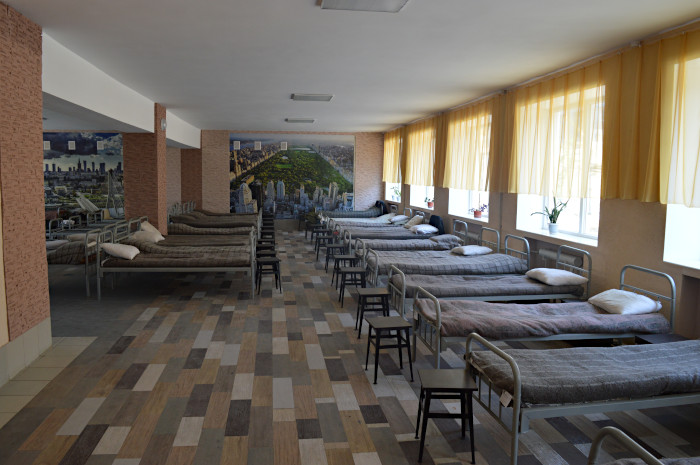
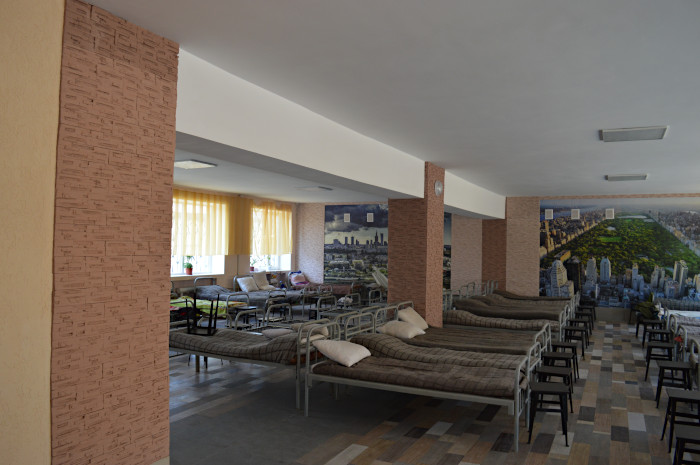
The residential zone of the institution is divided into ten wards for convicts. In terms of layout, all wards are approximately the same: there is one large room for 60–70 beds, a room for the convicts to relax, sanitary rooms, a room for cooking and eating, etc. The very layout of the premises, in the opinion of the monitors, is not very successful, since placing such a large number of convicts in one sleeping room can become a breeding ground for conflicts in the collective.
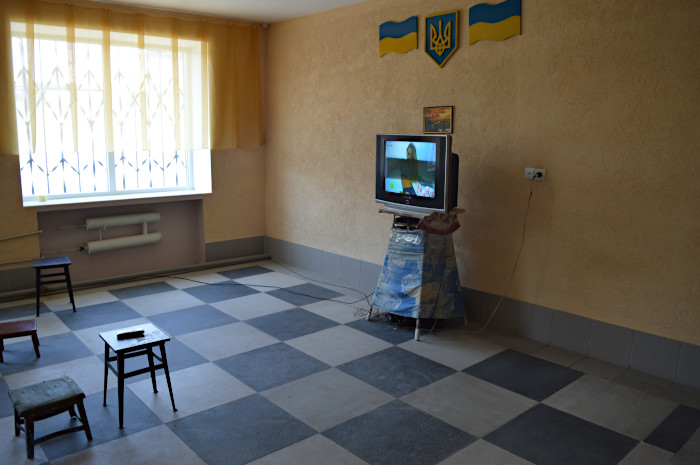
Repair work is gradually being carried out in the institution’s wards. Thus, the administration took the monitors to a ward where the renovation is to be completed at the end of September 2019. The monitors noted that the ward premises are clean and recently renovated. New PVC windows have been installed everywhere, and the walls are whitewashed and painted.
Repairs have also been carried out in the sanitary rooms: new plumbing has been installed, and the walls have been tiled. Toilet cubicles have partitions and doors.
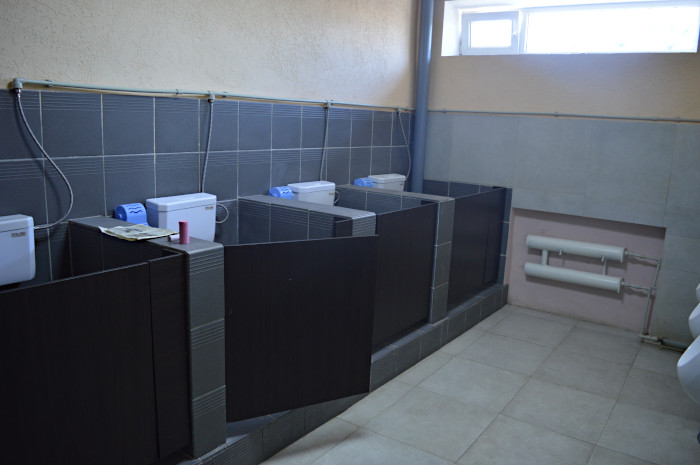
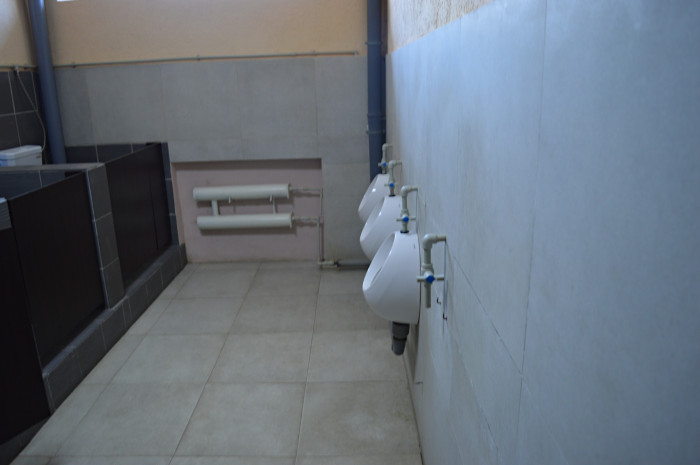
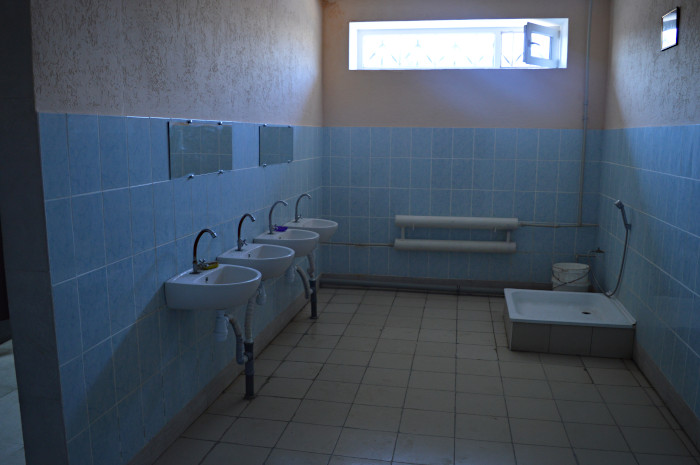
Another ward of the institution is also at the repair stage. However, due to a lack of funding, the repair there is not yet finished.
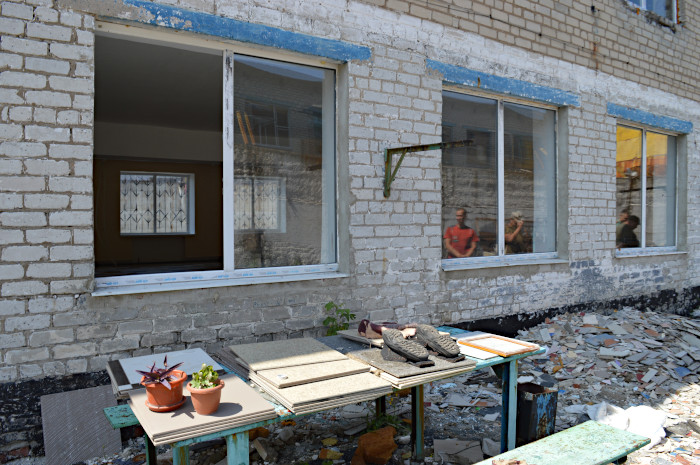
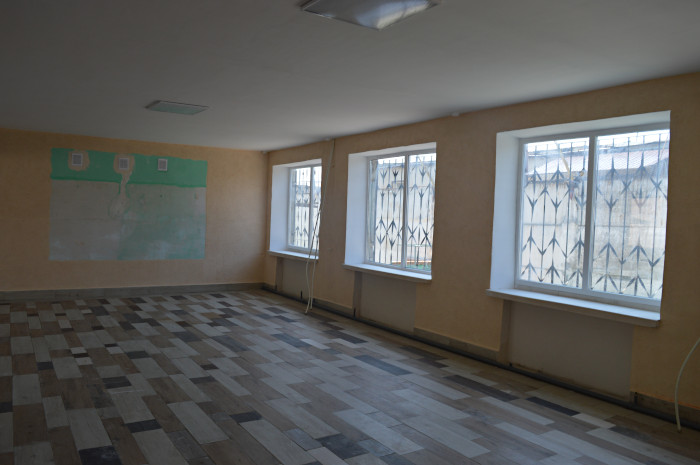
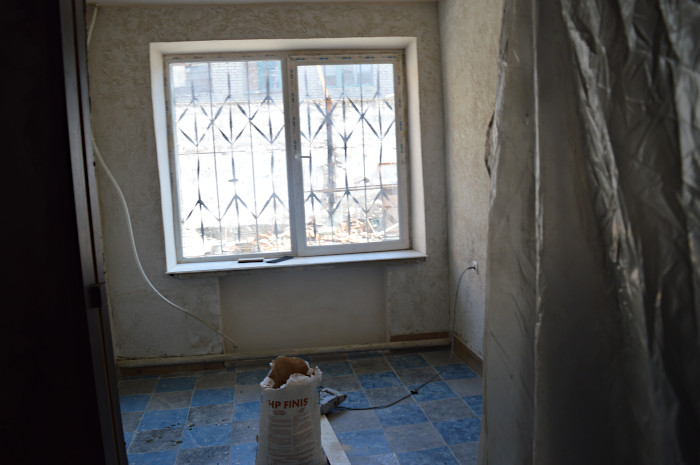
In other residential wards, on the whole, the premises are in a satisfactory condition, but some still drew comments from the monitors. Thus, the residential premises are equipped with old, Soviet-style furniture. In some local sectors, partial cosmetic repairs have been carried out (walls have been painted), while in others, on the contrary, there are traces of past flooding of the premises on the walls.
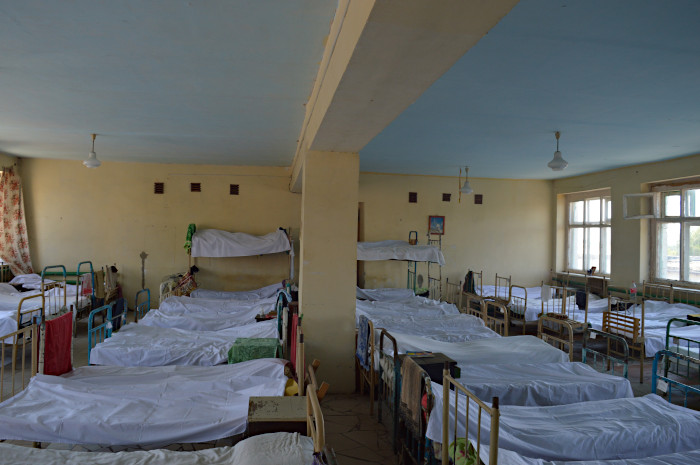
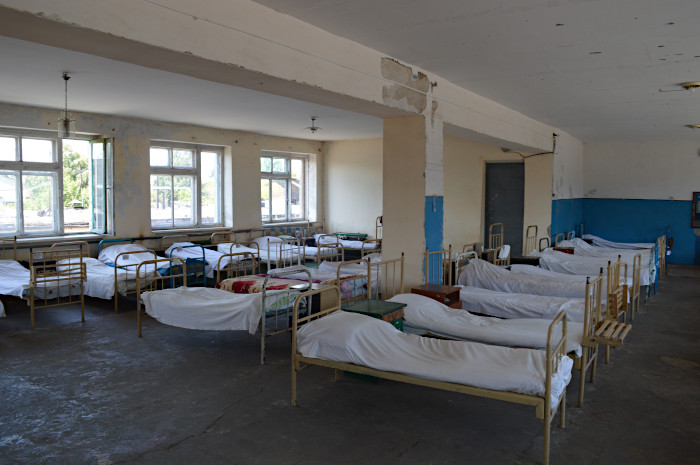
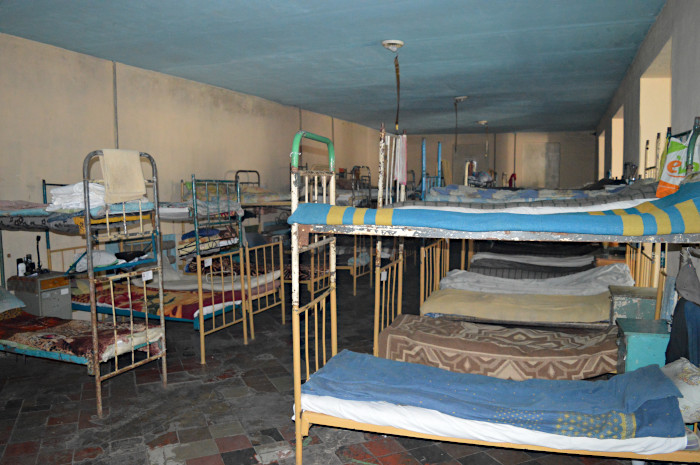
In particular, in one of the wards, the sewage from the second floor floods the first. Because of this, it is damp in the room, and there is a stench. In general, there is an unpleasant smell in all sanitary rooms. The plumbing is old but functional. The cubicles are equipped with doors.
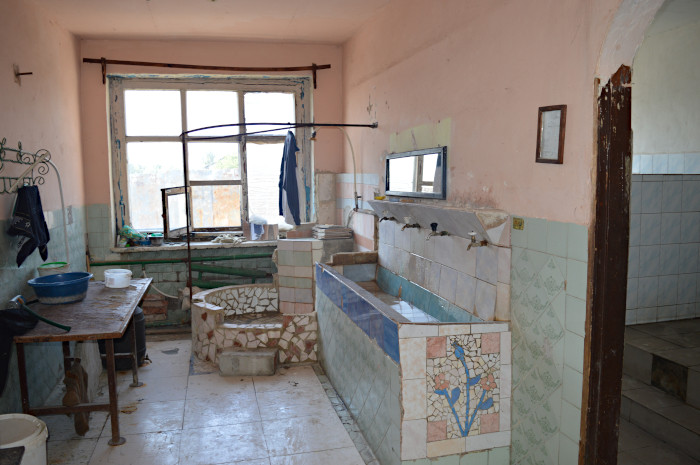
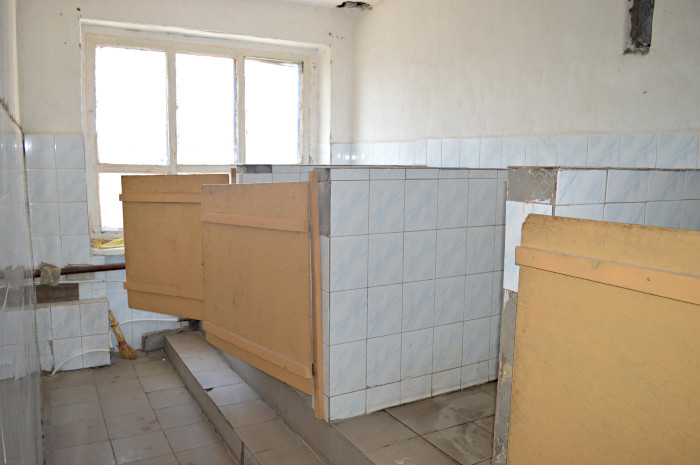
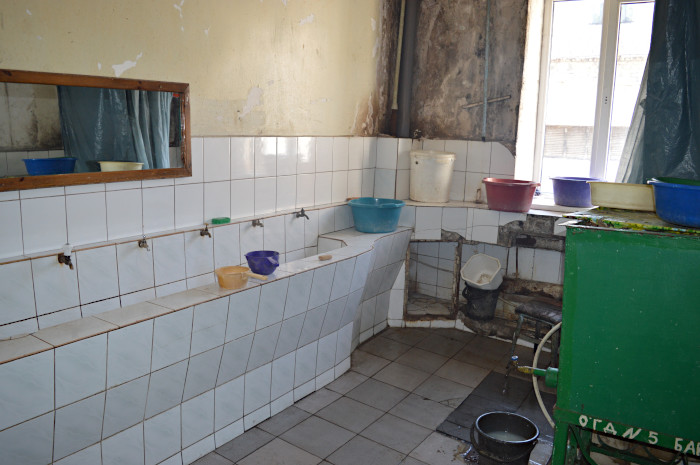
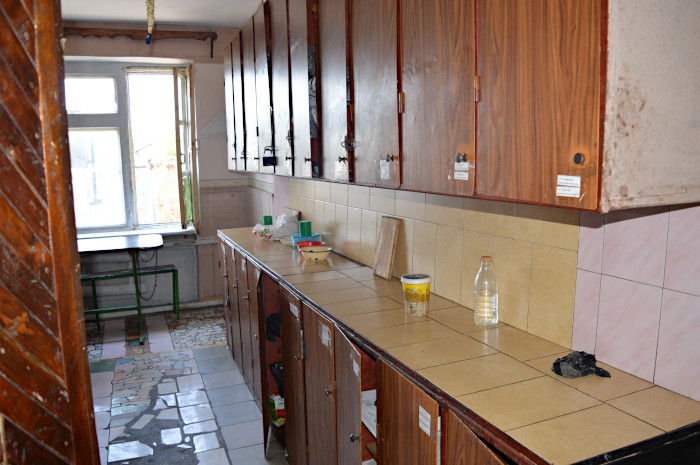
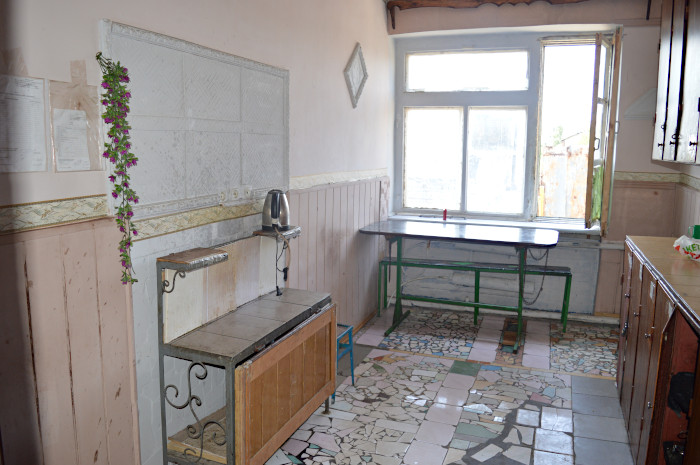
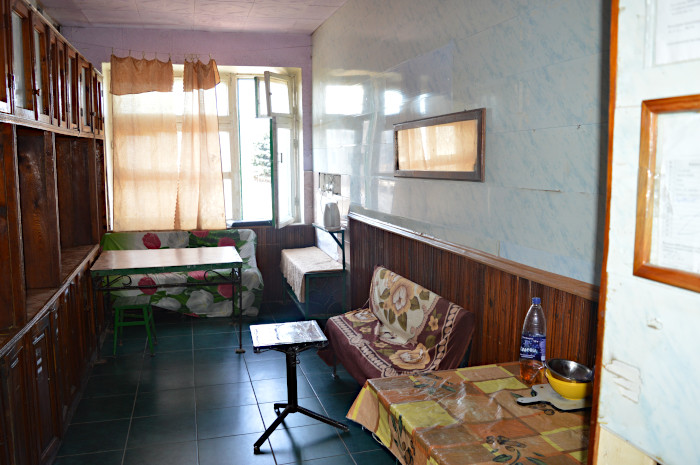
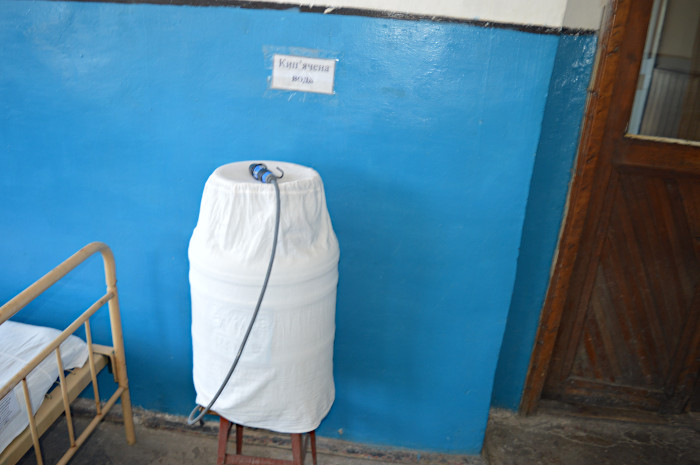
In the rooms for eating, there are tables, cupboards, and necessary utensils. Some, although not all, rooms are equipped with refrigerators and electric kettles. There were no microwave ovens in any of the sectors. There are tanks with drinking water available. Water taps in the rooms for eating and in the sanitary rooms are functional. However, the administration points out that from time to time in the city of Toretsk, there are interruptions in water supply due to hostilities. In particular, this was the case in the winter of 2019, when the city found itself on the verge of an environmental disaster.
The uneven occupancy of the institution’s wards draws attention. Thus, in some, almost all beds were occupied, while in others—only ten or twenty. The monitors noticed bunk beds in the bedrooms. However, the administration assured that the convicts were sleeping like this temporarily—until the moment the renovation in one of the local sectors is finished. Nevertheless, it remains unclear why the convicts were not settled evenly across the wards, but placed in such a way that the need to install bunk beds arose.
DIS-PKT
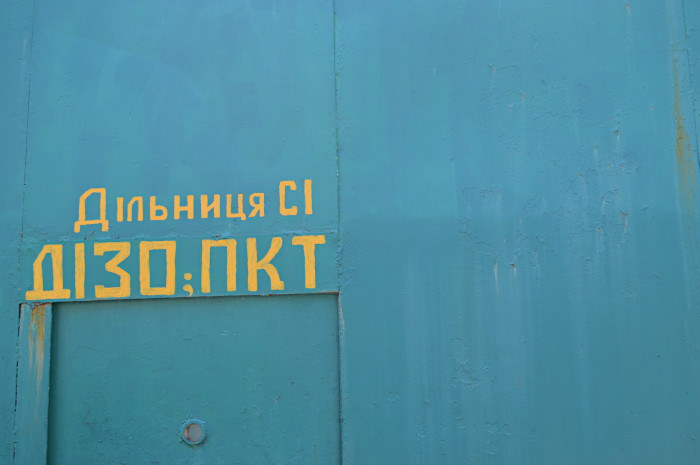
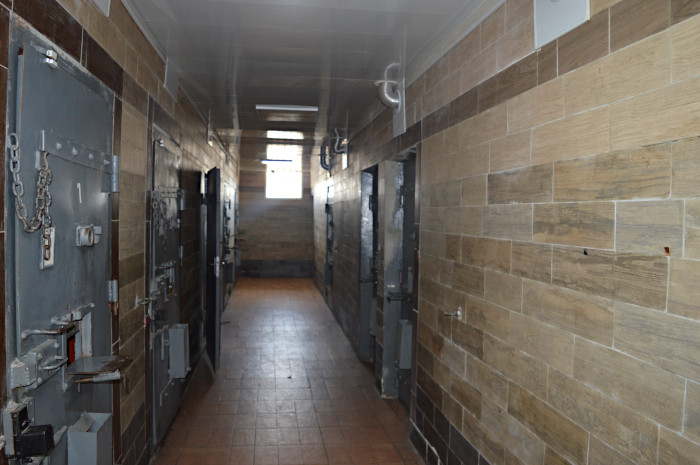
At the time of the visit to the institution, three convicts were held in the disciplinary isolation cell. None of them complained about the conditions of detention or the legality of their placement in the disciplinary isolation cell. In general, the institution has quite broad disciplinary practice—since the beginning of the year, 132 people have been placed in the DIS.
The DIS cells are in a satisfactory condition. The convicts have access to water and can open the window to breathe fresh air. There are exercise yards in the section, where the convicts are taken according to a schedule.
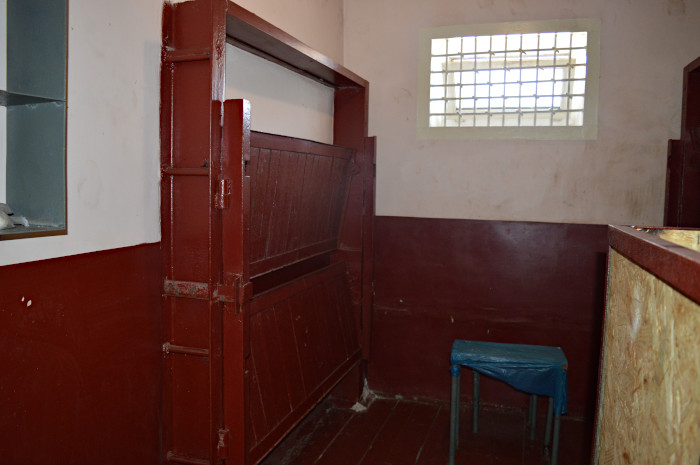
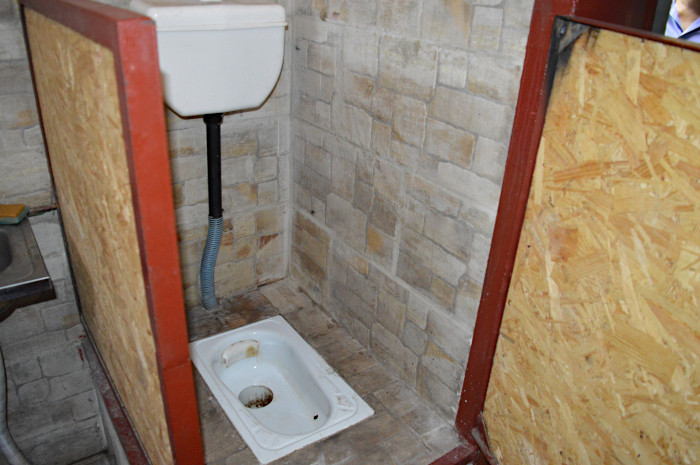
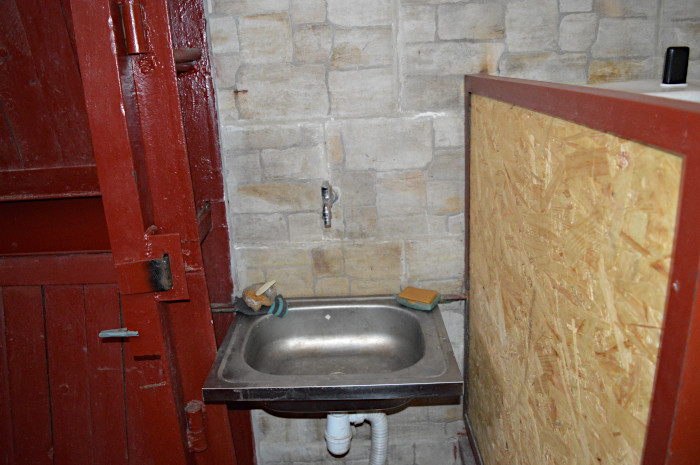
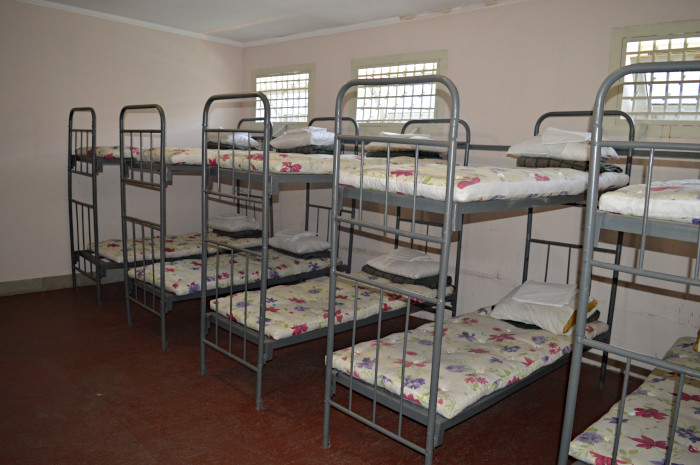
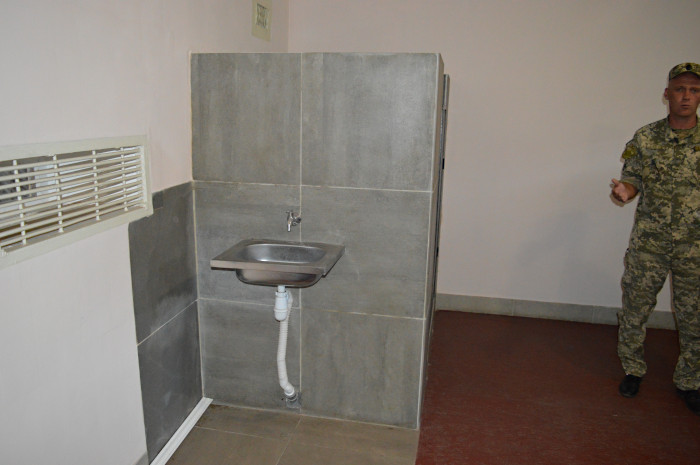
The monitors also inspected the investigative cells. They have been renovated, and new, but bunk, beds have been installed. A separate sanitary unit with a washbasin (there is water) and a toilet cubicle has been set aside. However, since the creation of the cell, not a single convict has been placed in it.
Canteen
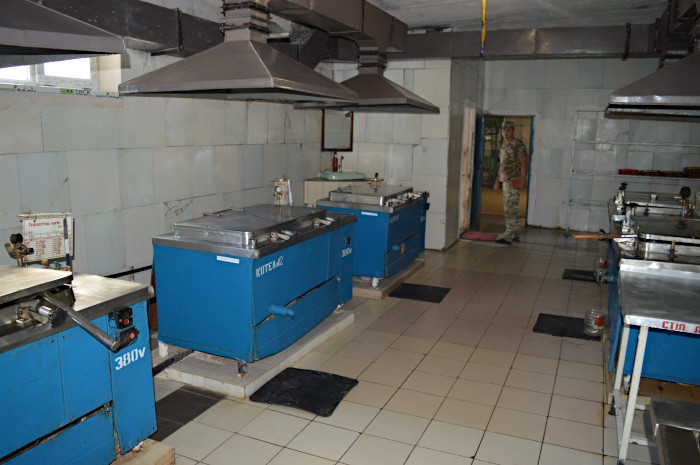
The monitors were able to be in the canteen immediately after lunch. They inspected the fish workshop, where there was fresh fish (it had a pleasant smell and a fresh look). After this, the monitors also visited the hot workshop. The convicts there were in white coats and headwear. Everyone had sanitary booklets (according to the administration, they were issued after the visit of other inspectors).
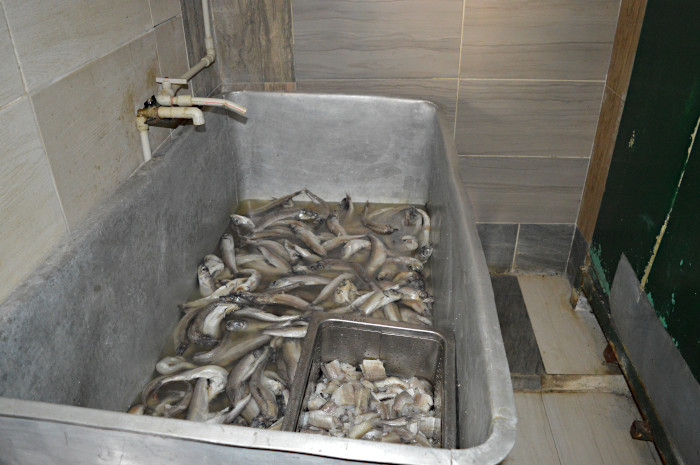
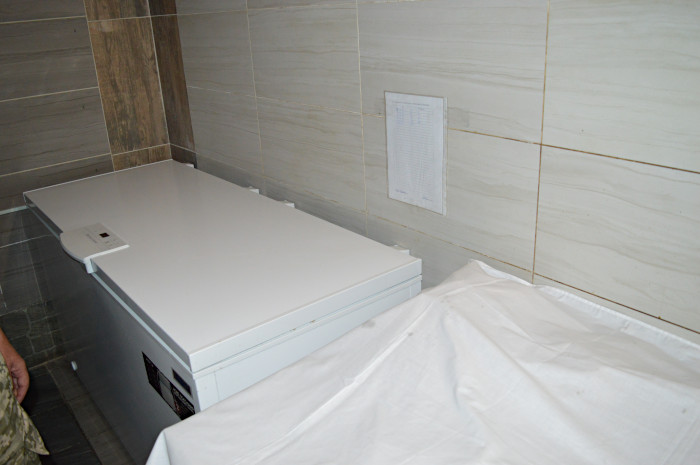
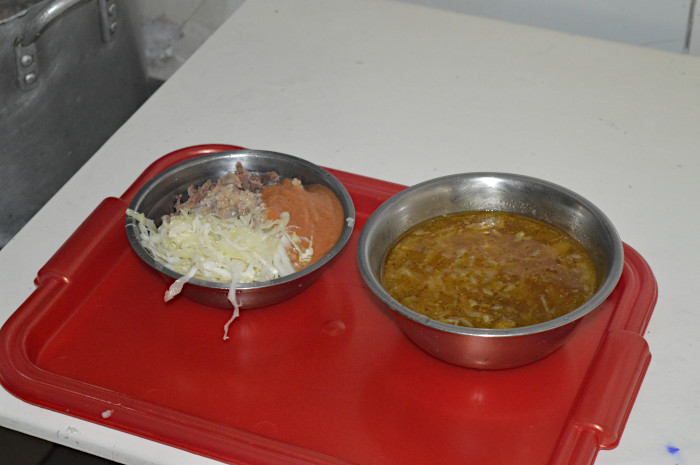
In the hot workshop, there was a pleasant smell of prepared food. For inspection, the monitors were provided with control portions, which looked sufficiently fresh. The institution has its own bakery, which provides the convicts with bread. According to the administration, dishes are prepared in the institution according to two dietary tables (8A and 8B), but they were unable to demonstrate the prepared dishes to the monitors, explaining that lunch had already passed.
After this, the monitors inspected the premises for eating directly. It is quite spacious but is in an unsatisfactory condition. On the walls, there are traces of past flooding—the building is quite old, the roof has not been repaired for a long time, so flooding here is not uncommon during rain. In addition, the monitors noted that there is no water in the hand-washing taps in the canteen. There is no soap or towels near the washbasins. This is a gross violation of sanitation and can lead to an outbreak of infectious diseases among the convicts.
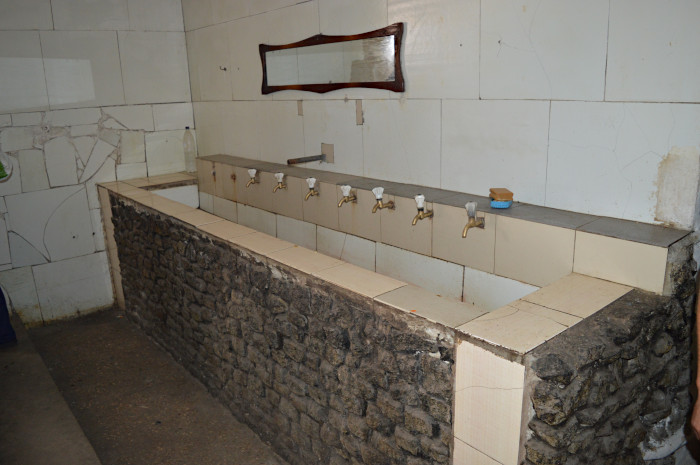
A group of convicts was still continuing their lunch at the time of the visit. They assured that they had no complaints about the quality of the food.
Medical unit
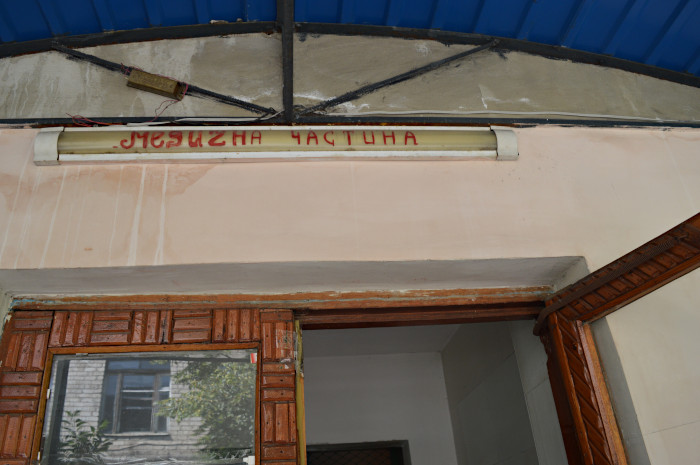
The medical unit of the institution is in good condition. The monitors managed to speak with its head, who reported that 5 out of 7 doctor positions are filled in the institution, and the junior medical staff is fully staffed. This is definitely a positive moment. After all, in general, throughout Ukraine, the medical units of institutions are insufficiently staffed with doctors (in some places there is only one doctor, and only on a half-time basis, or only one paramedic). According to the head of the medical unit, the institution is sufficiently provided with medicines.
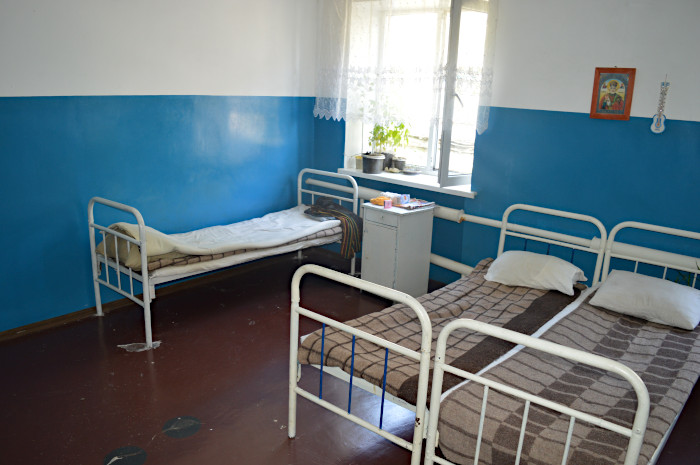
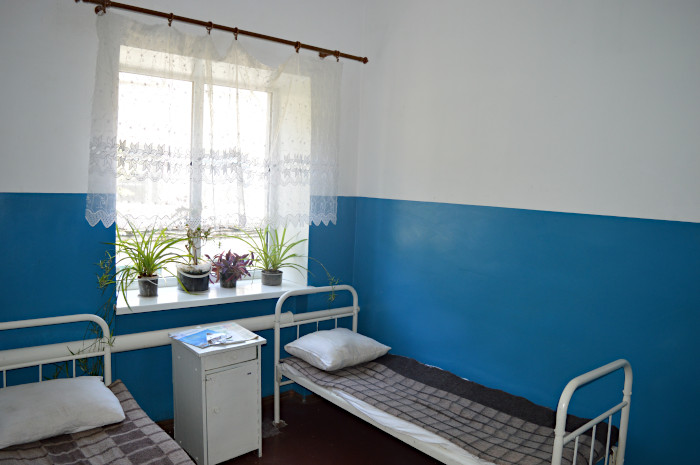
The wards of the medical unit are in good condition: the walls and floors are painted, and the windows are PVC. Everything is clean and tidy. The sick convicts indicated that medical assistance is provided to them in sufficient volume.
The head of the medical unit also noted that a few months ago the institution purchased a new dental chair. However, it has still not been installed because only a specialist from Kyiv has the right to do so, and he still has not arrived at the institution. She also noted that last time they waited for such a specialist for a year and a half. Therefore, for now, the chair is sitting in a box.
Bath and laundry complex
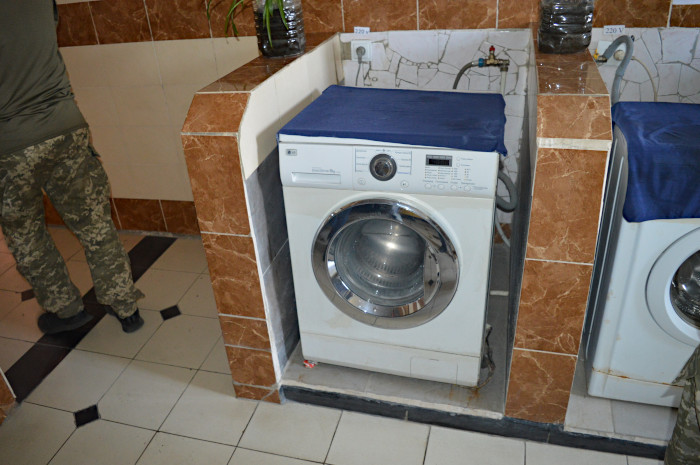
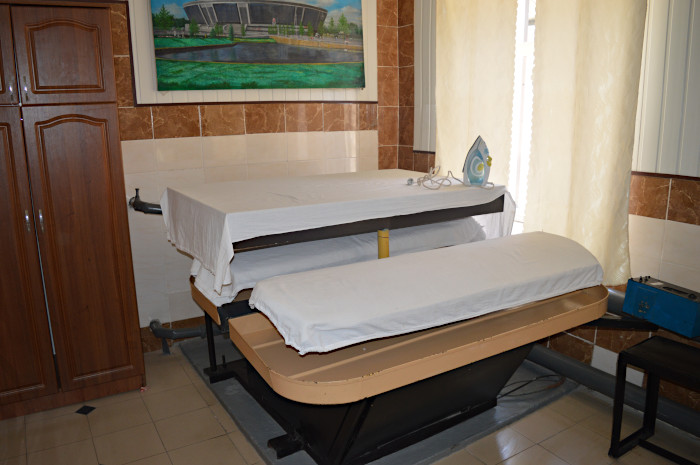
Washing machines are installed in the bath and laundry complex (not new, but in a satisfactory condition). There is also equipment for ironing and storing the convicts’ belongings.
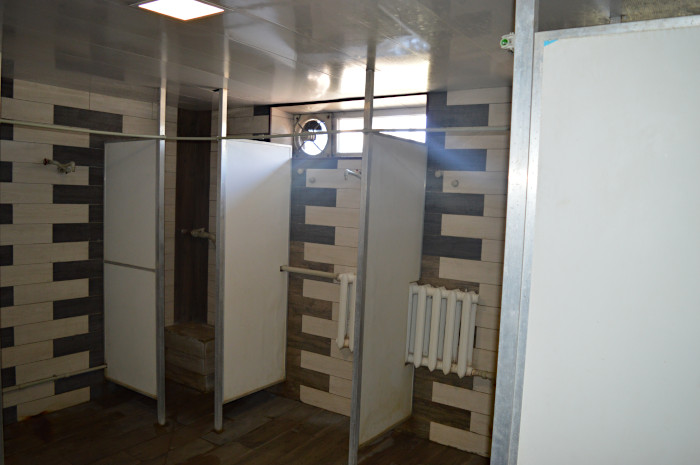
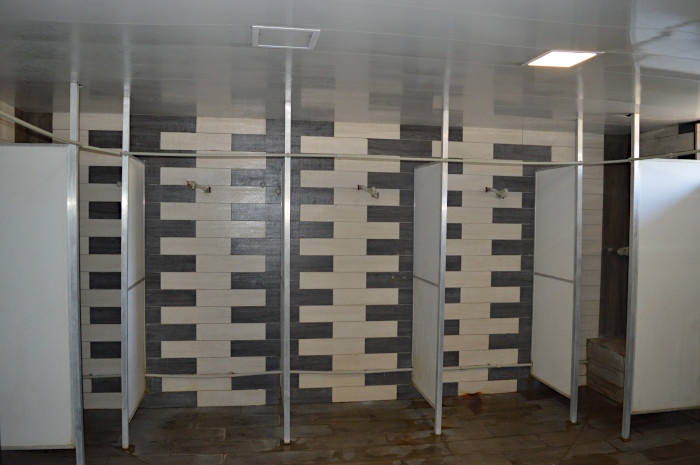
The shower room has been renovated. Partitions of human height are installed between the shower cubicles. At the time of the monitors’ visit, there were no mats or curtains in the shower, but according to the administration, they are being sanitised. And indeed: an employee of the institution demonstrated to the monitors the mats soaking in a soap solution.
Industrial zone
The convicts are not very willing to work, and the institution’s industrial zone is not working at full capacity. Today, only forty convicts are working. Another forty are occupied in the household maintenance of the institution.
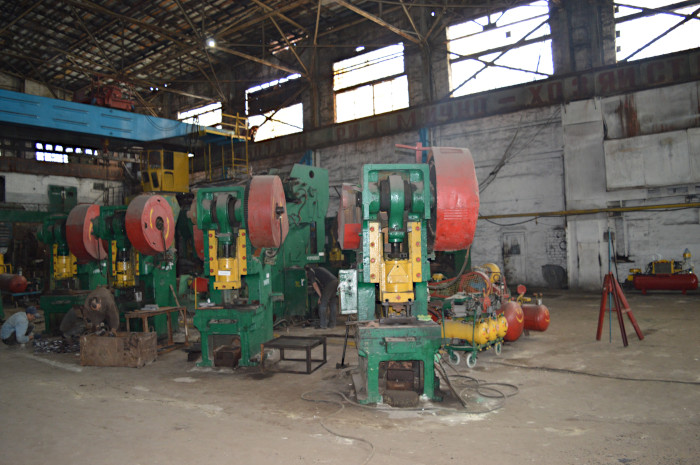
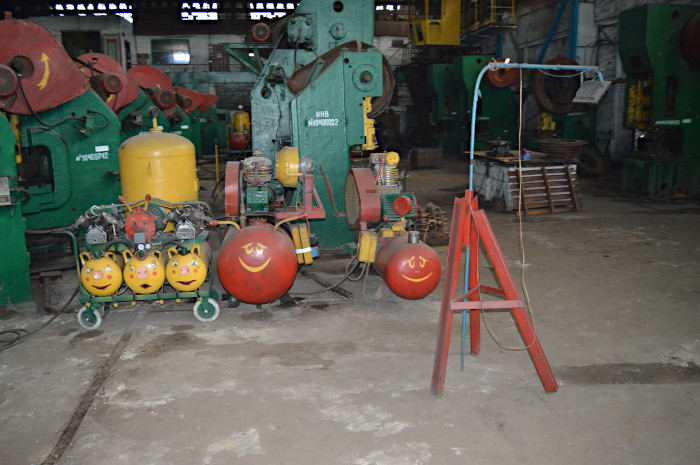
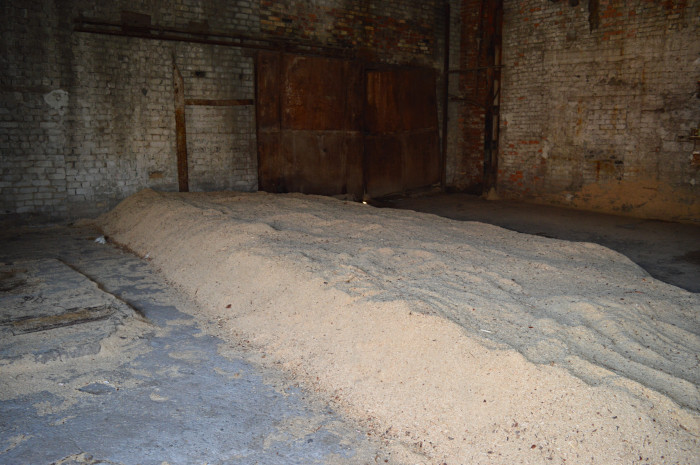
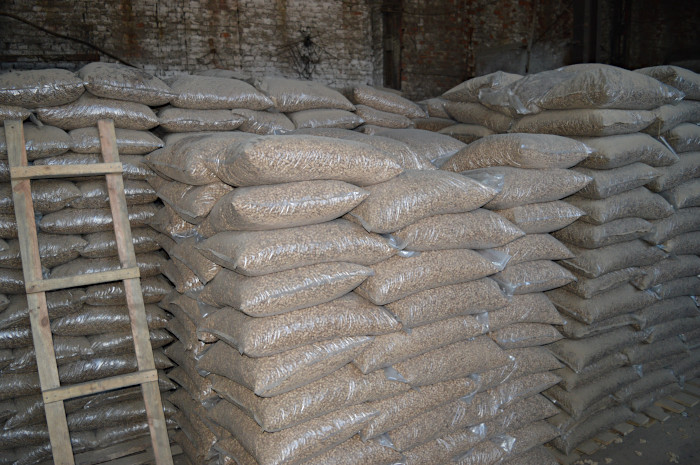
The institution produces ‘egoza’ wire, manhole covers, fuel pellets, locks, and racks. But most of the orders are for equipment for mines (one of which is located not far from the institution). The monitors also visited the workshop for the production of fuel pellets. Today (it is off-season), the workshop is idle. The convicts are only turning over the sawdust so that it does not cake. One of the convicts was smoking near the sawdust, but after a remark from an administration employee, he stopped. However, sawdust is very flammable, and a single spark is enough for a fire to break out.
A painting workshop also recently opened at the institution. The plan is, firstly, to paint and bring all the institution’s official vehicles into a satisfactory condition.
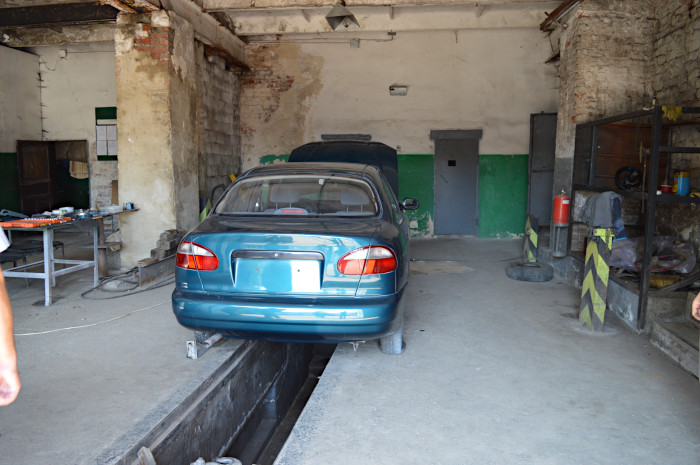
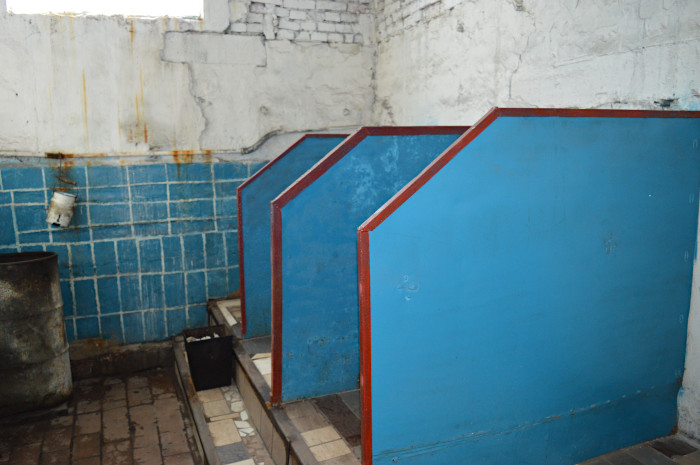
In addition, the monitors inspected the sanitary unit in the industrial zone. It is in a semi-dilapidated state. There is a stench in the room. The toilet cubicles are not equipped with doors. After work, the convicts cannot wash in the production area but have to go to the sanitary inspection room.
A school and a vocational and technical school operate on the institution’s territory, but according to the administration, the convicts study reluctantly, and those who truly wish to obtain a profession are few.
Leisure
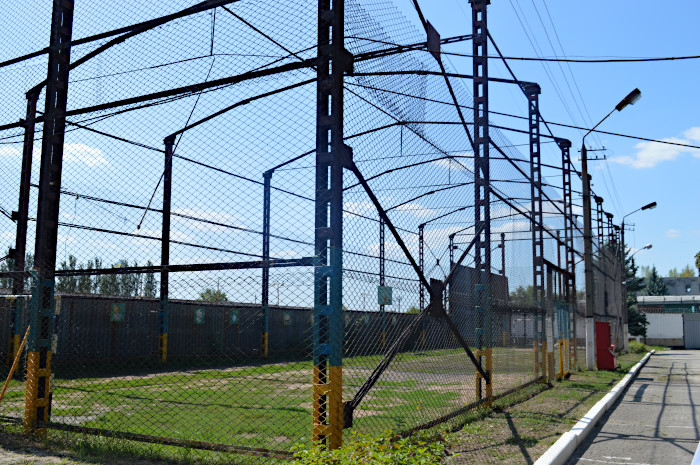
On the territory of the institution, a football pitch is equipped where the convicts can play team games. Also, on the territory of each ward, there is a sports corner. In the ward, the monitors saw a ping-pong table. According to the administration, representatives of religious denominations also regularly come to the convicts, talk to them, and provide humanitarian aid, etc.
Visits
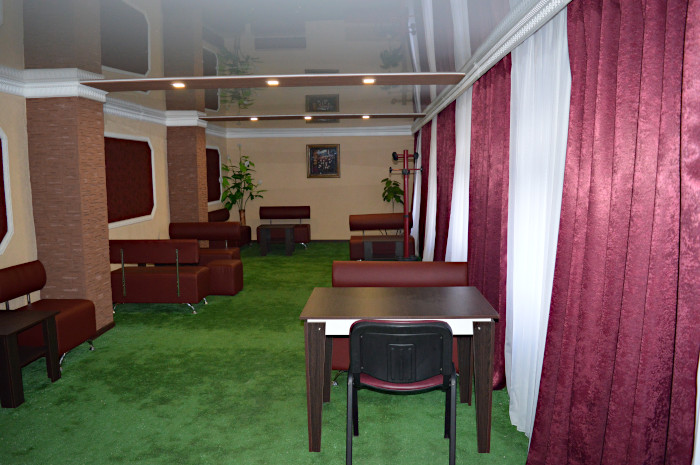
Implementing European norms, the institution re-equipped a special room for short-term visits. According to the newest standards, glass no longer separates relatives and convicts. The room is equipped with a video surveillance system. Comfortable furniture is installed here, and there is an opportunity to feel as if in a café outside the institution.
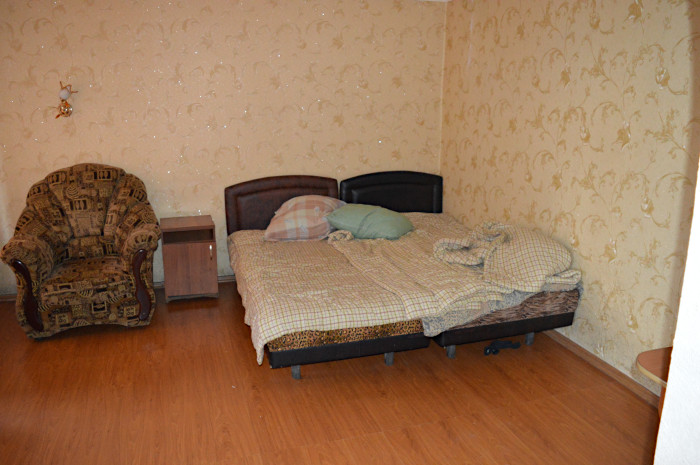
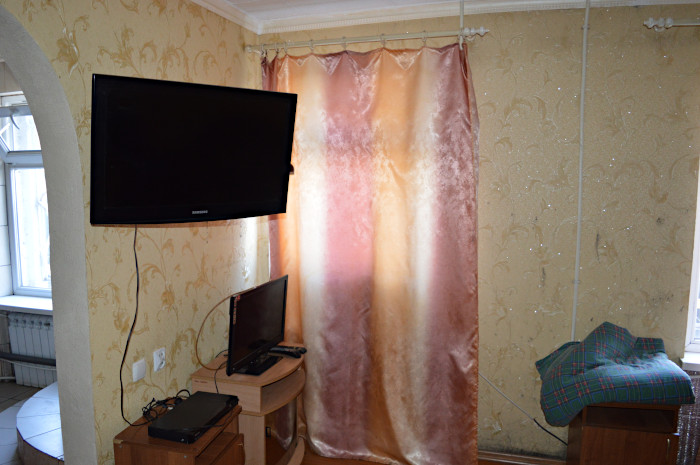
Renovation is also continuing in the rooms for long-term visits at the institution. The administration plans to make one room out of two—in the format of a ‘one-room apartment’. The suite will include a kitchen combined with a living room, a bathroom, and a bedroom. Today, relatives of convicts can stay in ‘junior suite’ and ‘standard’ rooms. The average price per room per day is 150 UAH.
EU project ‘Fight against torture, ill-treatment and impunity in Ukraine’