Monitoring Visit to Chornomorsk Penal Colony No. 74
Two representatives of the Kharkiv Human Rights Protection Group – Oleksandr Pavlichenko and Vasyl Melnychuk – paid an unannounced visit to Chornomorsk Penal Colony No. 74 (ChPC-74) on 30 January 2017.
The visit began with a conversation with the head of the colony, Tamara Mykolaivna Shuklyar. She reported the following:
Liquidation of the SPS of Ukraine
The impact of changes in the penitentiary system on ChPC-74. According to a resolution of the Cabinet of Ministers of Ukraine, the State Penitentiary Service (SPS) of Ukraine was liquidated, and the Ministry of Justice of Ukraine was designated as its successor, which is obliged to bring all regulatory legal acts into compliance within two months. However, these requirements have not been fulfilled to date, and as a result, there are real problems in the sphere of sentence execution. For instance, as of 30 January 2017, ChPC-74 lacked the funds to pay the colony staff; it was impossible to pay increased salaries due to the absence of a departmental order; there was a complete lack of funding for the institution's activities; and the colony had a debt to the dairy plant for milk products for children amounting to 40,000 UAH, a portion of which is being paid for using income from the production workshops. Currently, the colony does not have funds to pay for food (they are using food supplies for the canteen that were made in previous months, particularly in December).
They have begun entering into individual employment contracts. Out of 269 convicts currently serving sentences in the colony, almost everyone is working, and they plan to conclude 47 individual contracts starting from 1 February. They encountered a problem during this process: the absence of passports and individual tax codes. 47 women do not have passports at all, and almost a third keep their passports at home, so documents are currently being sent and brought to them.
House for Children
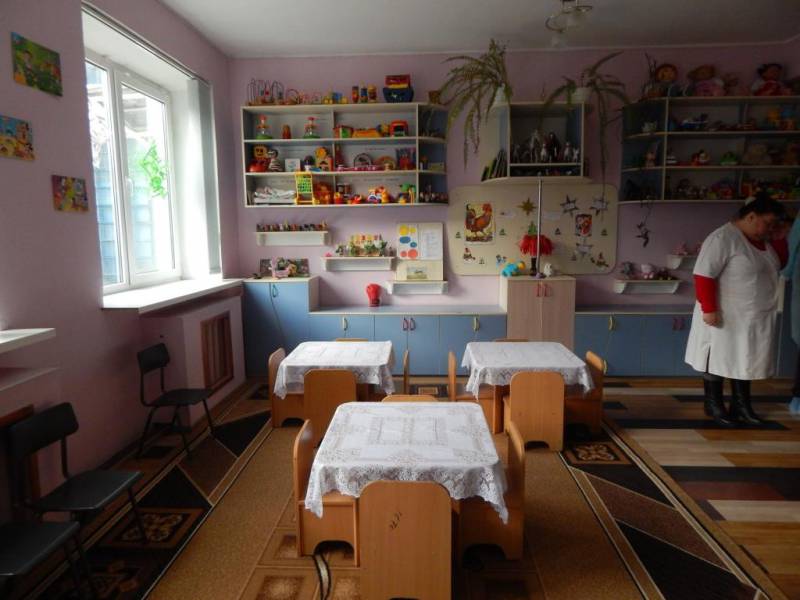
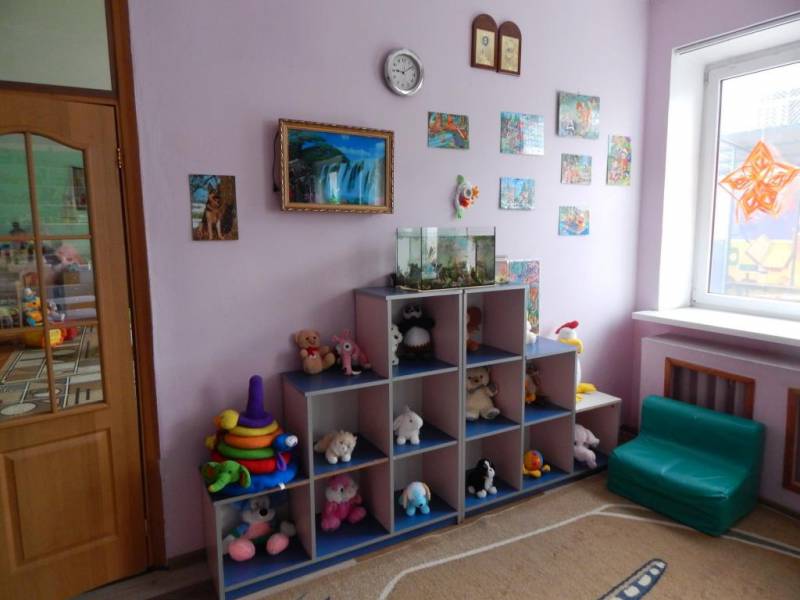
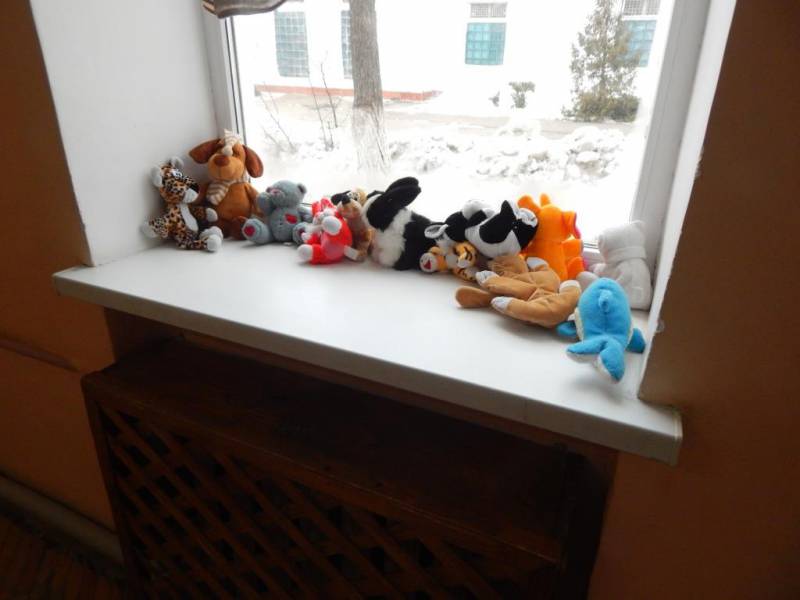
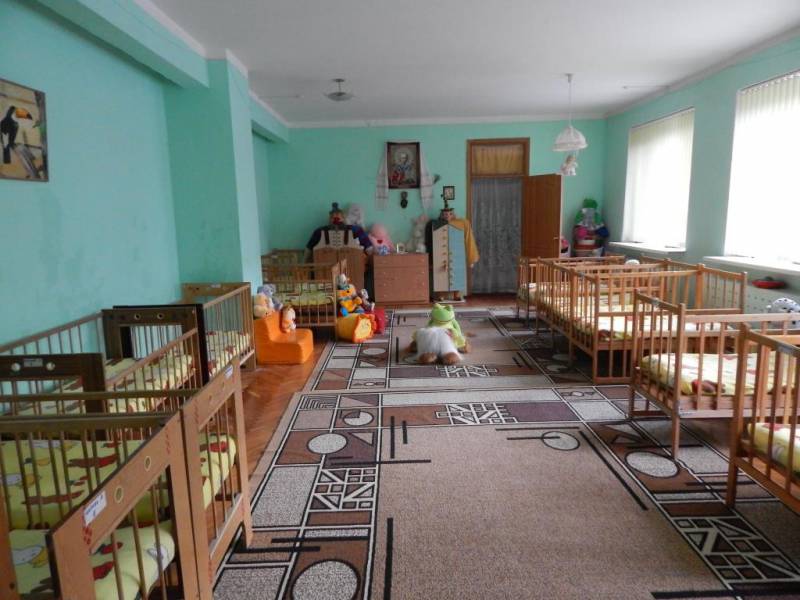
A distinctive feature of ChPC-74 is that it holds women who are first-time convicts, and it is the only colony in Ukraine where first-time convicted women who are expected to give birth or who have a child under the age of three are placed. According to the head of the colony, seven babies were born at ChPC-74 in the last month. The second colony in Ukraine where children under the age of three are kept together with their mother is the Chernihiv Penal Colony No. 44, which holds women who are not first-time convicts. Two separate premises have been built for children at ChPC-74, where caregivers work with them, and in addition to permanent staff, 9 people from among the convicts also work there ('maintenance staff'). Convicted mothers have the opportunity to visit their young children in the morning and evening for 2 hours, a total of four hours per day; those who breastfeed their children have the opportunity to be with the infants during their feeding times. There are newborns in the colony (the youngest child was two weeks old); in total, 32 children were in the House for Children on 30 January 2017. The children's food is sufficient and of good quality; there are proper dairy products, fruit (apples, mandarins), milk formula for infants (the main one is Bellakt, but they also use NAN), and frozen raspberries for stewed fruit.
In the House for Children, not a single infectious disease or case of poisoning has been recorded in the last 10 years – according to the inspector who has worked at this institution for over 16 years – there have been none.
Among the problematic issues is the time when mothers come to visit their children (it is insufficient). A separate problem is the separation from the mother when the child reaches three years of age. The child is sent to an orphanage if it is not possible to hand them over to the convict's relatives.
Nappies and household chemicals. There is no funding for these, and they are not permitted to be purchased with budget funds. They are obtained through charitable donations.
DIU-CTR Section
The Disciplinary Isolation Unit - Cell-Type Room (DIU-CTR) section contains about 6–8 cells with solid, lockable doors. The entire DIU-CTR premises require complete refurbishment and bringing up to a normal, civilised standard. This applies to both the plumbing and the general living conditions.
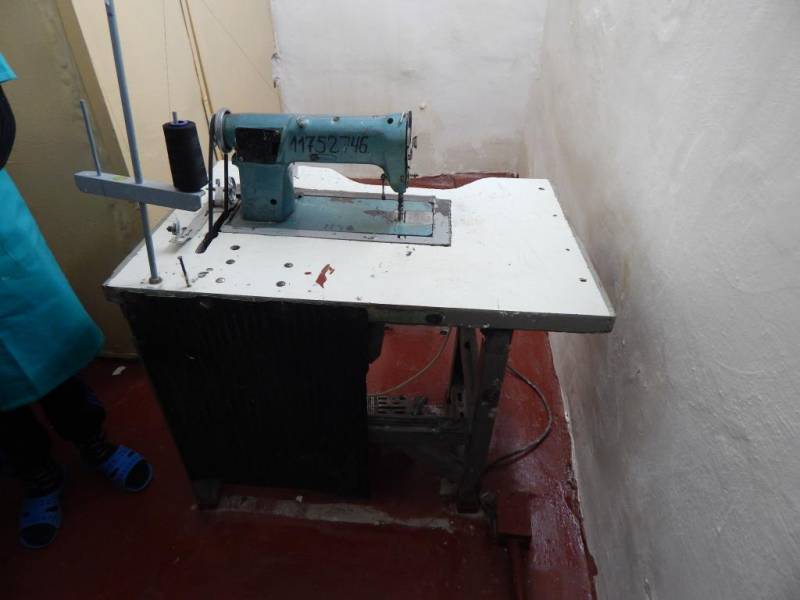
There were three convicted women in the DIU, each of whom had received a 10-day penalty. As of 30 January, they had served 5 days of their punishment. The head of the colony informed us that it had been previously planned to reduce the term of punishment in the DIU for all three women, and all three were to be released from the isolation ward that day. We met with all three convicts in the DIU, determined what they had been placed there for, what the placement procedure was, and whether they considered such a punishment fair. Even in the DIU, the women were working – one was sewing mittens, and two women in one cell were making artificial flowers from parts (see photo).
We drew attention to the fact that it was quite cool in the cell where the two convicts were working (it was about 3–4 degrees of frost outside, and it felt like 15–17 degrees in the cell). One of the women was wearing plastic beach sandals and said that she had been taken like that from the room where they talk on the phone to the commission and placed directly into the DIU for 5 days. She could not go and take any belongings with her (not even clothes). We did not receive a clear answer from the administration as to why the convict was in a cold cell wearing summer footwear.
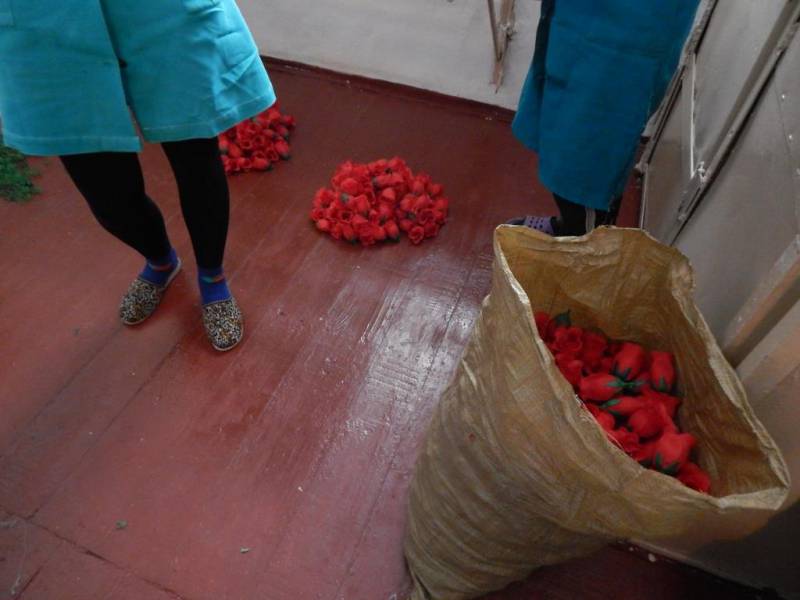
The reason for the 10-day placement for another convict, I., was that she did not show up for roll call (although, as a result of further communication with the convicts and the administration, we established that she had been seen during the roll call, but she was not in her place in the unit, which caused this punishment). Convict I., while talking about this punishment, was almost in tears, considering it offensive and unfair; she said she would challenge it and did not admit her guilt.
Convict K. ended up in the DIU for the following reason. She has a son who is in a family-type orphanage in the Ivano-Frankivsk region, and the woman, according to her, can call her son no more than once a month. At the same time, this family-type orphanage requests not to call after 21:00. Convict K., who had come to the payphone station, waited in line; then, it seemed, women from the kitchen came to call, and she did not manage to make her call before 9 pm, which caused her to argue with those who were calling before her. As a result of the dispute, as stated in the report, she insulted a representative of the administration (the inspector). The result was a 10-day penalty.
We asked to check how often the mother calls her son and whether she has the opportunity to call more often than once a month. At our request, an extract from the call log was made, and it turned out that she had 4 phone calls with her son in January. At the same time, this remains a major problematic issue – the bond between mother and child, which other women also spoke about.
One of the convicts – M. – admitted that she was placed in the DIU fairly and did not challenge the penalty imposed. The two other women consider the punishment imposed on them to be unfair. (In the end, two of the convicts were released from serving their punishment in the DIU, and K. remained in the DIU because she showed disobedience to the administration – she threw food into the toilet and spoke rudely to the inspectors.)
The general recommendation is that the practice of DIU punishment should be kept to a minimum, and punishment terms should be minimal (we met three persons placed in the DIU, and all of them had been assigned 10 days, which is the maximum punishment for women).
Sanitary conditions
One of the general problems of ChPC-74 is the lack of sufficient bathing facilities for women serving sentences in the colony. Convicted women have the opportunity to visit the bathhouse once a week according to a schedule established by the institution's management. The colony is divided into 4 units (approximately 70–80 women in each), and each unit has its own designated time once a week to visit the bathhouse. 15 women can wash at the same time, and they are given 15–20 minutes in the shower room to do so. This method is clearly unsatisfactory for meeting women's hygiene requirements. In this regard, convicts are forced to wash in the conditions of the unit where they are kept, which are not properly equipped with either hot water or specially designated places for washing. The convicts heat water with immersion heaters in a vessel no larger than a litre, hiding from the administration while doing so. There is no opportunity for women to wash in the morning due to the tight schedule – wake-up is at 6:00, at 6:05 everyone lines up outside for morning exercises, followed by time for roll call, breakfast, and being led to work.
In ChPC-85, it should be taken into account that the institution's contingent consists of women who require adherence to hygiene requirements, and this must be ensured by the administration.
During previous visits to this institution in July 2015 and January 2016, this problem was also noted, with convicts complaining that they were subject to disciplinary sanctions for washing in the units, in connection with which the institution's management was recommended to stop such a practice of applying disciplinary sanctions during previous visits. During this visit, the convicts did not report the application of disciplinary sanctions against them for washing in the units, which can be regarded as positive change.
The colony's management is also taking measures to eliminate this problem; for instance, a boiler was installed in Unit No. 1, which is undoubtedly a positive step. However, considering that only one out of the four units was equipped with a boiler over the year, the women's need for hot water in the winter season remains; therefore, one cannot speak of positive changes as a whole.
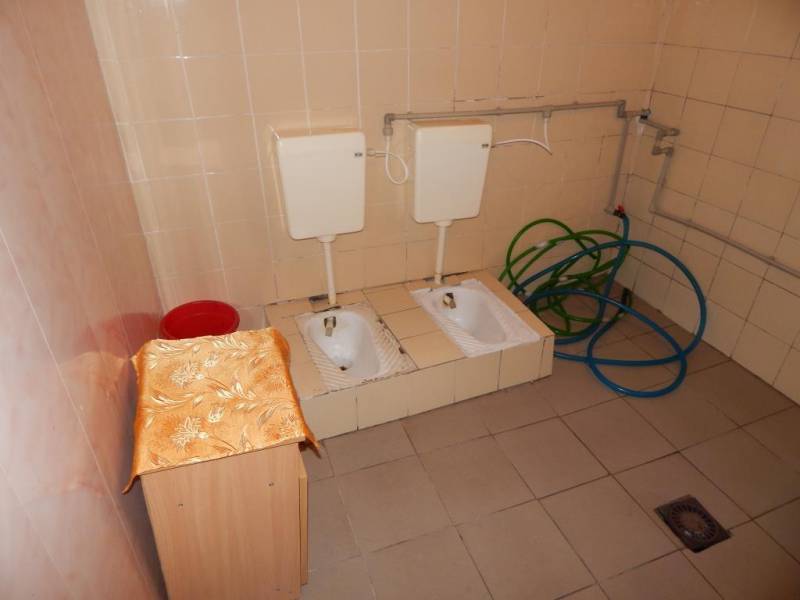
Separately, it should be noted that privacy must be ensured when using the toilet; toilets should not be located in pairs and left unpartitioned, as is the case in the photo taken in the room where the convicts shower.
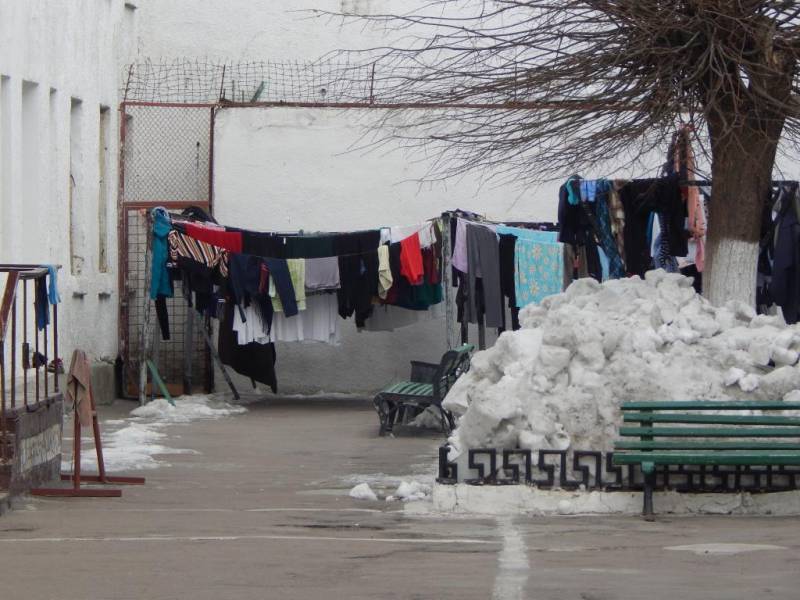
The convicts also expressed complaints about the lack of places for drying clothes and linen in the units, which is especially relevant in the winter season when clothes do not dry outside. (See photo where items are dried outside at a temperature of -3). The convicts claimed that in some cases they are subject to disciplinary sanctions for drying clothes on the radiator located next to their beds. This problem also existed during our previous visit in 2016, but the administration allocated and equipped a special room for drying clothes to eliminate this problem during the winter period. However, the convicts complain about the fact that their personal belongings disappear from this room and about the location of this room in a separate building, which is why they do not consider this method of drying convenient.
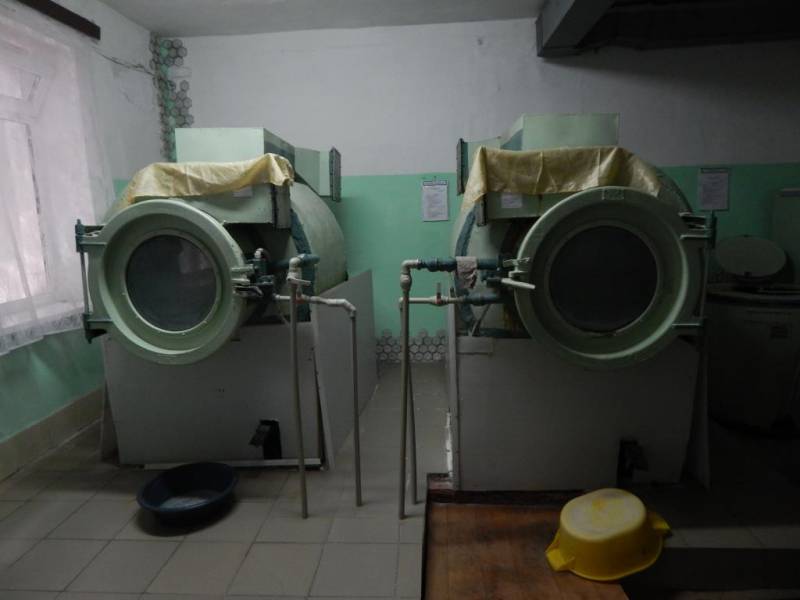
In the colony, there is a laundry facility that operates according to a schedule and is equipped with both washing and drying machines, where convicts have the opportunity to wash, including their bulky items, bedding, outerwear, etc.
Morning exercises
According to the colony's daily routine, wake-up is at 6 o'clock in the morning, and morning exercises are at 6:05 am, which, regardless of weather conditions, are held outside. The convicts claimed that 5 minutes is too little time for them to get dressed and immediately go outside, where frost awaits them.
Food
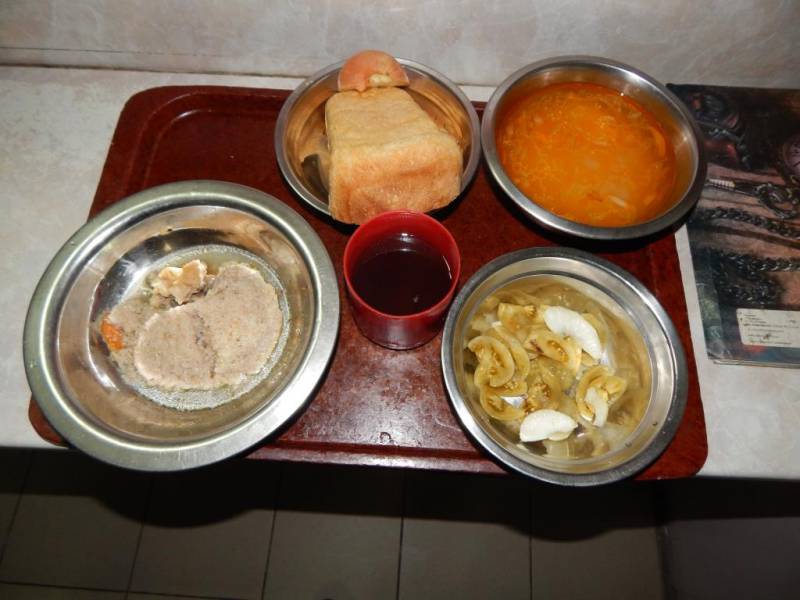
First of all, I would like to note the proper quality of the convicts' food, as there were no complaints about the quality of the food during conversations with the convicts.
However, at the entrance to the canteen where washbasins were installed, there was no water and soap, which was also recorded during the visit in 2016, despite the fact that the convicts come to lunch directly from work.
The convicts indicated that due to the queues for receiving food in the canteen and the short 15-minute interval, they do not always manage to eat properly due to a lack of time.
The convicts also pointed out the existence of a practice of hourly access to the rooms where their personal food products are stored ('kaptorka'), but the hours of such access do not correspond to the daily schedule, and in this regard, they requested to change the access hours to these rooms. The introduction of such a practice by the colony administration was prompted by complaints from the convicts themselves about their food products disappearing.
Working conditions
During previous visits to this institution by both our organisation's representatives and other non-governmental organisations, the issue of the extremely low level of monthly wages, which were at the level of 50–100 UAH after deductions for their maintenance, was raised repeatedly. During this visit, almost all convicts reported information about an increase in their wages to 200, 400, 600 UAH per month after maintenance deductions, but one cannot speak of this fact as a positive merit of the colony's management, as it is quite logical that such wage increases are related to amendments to Art. 120 of the Criminal Executive Code of Ukraine (CEC), which mandated that convicts be paid no less than 50% of their wages, whereas prior to the amendments, payments were to be no less than 15%.
It is of significant concern that all women work in the colony, except for one who categorically refuses to work, and women who are exempt from work due to having given birth to a child. In other words, we can state that everyone is forced to work, even those who do not have such a desire, and in case of refusal to work, the convicts stated that disciplinary measures are applied to them under trumped-up reasons, and they are placed in a disciplinary isolation unit (DIU). This picture contradicts the requirements of Art. 188 of the CEC, according to which work is a right of the convicts, not their duty. To avoid the emergence of claims or complaints, statements are taken from all convicts about their employment and their desire to work overtime. At the same time, according to work attendance logs, the convicts work over 40 hours per week, including on weekends and holidays, which is a violation of Art. 119 of the CEC and labour legislation. It remains a general practice that convicts start work at 8:00, work officially until 16:00, but the working day is extended – 'by application', which is written collectively by the entire brigade of female workers – until 20:00; they also work on Saturdays from 8:00 to 16:00, and there are records in the work attendance log about working on Sundays as well.
From conversations with numerous workers, it was possible to establish that they report only the official work schedule during inspections, i.e., they say they work from 8 to 16, but upon more detailed questioning, they agree that they work much longer. This means that the administration, knowing that there is a violation of working hours, instructs the convicts on how to answer during inspections.
In our opinion, the production quotas set for the convicts are excessive because, considering that the convicts work overtime every day, they are unable to fulfil the quotas set for them, and the best workers perform only 60% of the quota with such expenditure of time – which is why they receive such low wages. The production quotas set for the convicts require verification by the relevant authorities for their compliance with regulatory legal acts.
The problem of involving women in heavy labour remains open, including the unloading of food products and construction work. The head of the colony agreed that when trucks with food arrive, the women have to unload these products themselves; sometimes it involves bags weighing 20 and 50 kg. Involving convicted women in such labour violates labour legislation norms, which was observed and to which attention was drawn by the management during previous visits in 2016, but currently, no measures have been taken to eliminate these violations.
According to the amendments made to Art. 118 of the CEC, convicts work under an employment contract, which, according to legislative norms, is concluded in the presence of an identity document; however, many convicts serving sentences lack identity documents, which makes their employment impossible without restoring the lost (unreceived) passport. Moreover, some of the convicts who lack a passport resided in territories that are temporarily not under the control of the Ukrainian authorities or are occupied, which makes it impossible to verify their identity when considering an application for document restoration and, in general, ends in a refusal to provide such a document. However, the impossibility of restoring a passport affects not only the inability to work but also the inability to get to their place of residence due to the lack of a passport after being released from places of deprivation of liberty.
Medical provision
The medical unit is supplied with medicines; according to the colony management, there are no problems with medication. The medical unit staff is staffed as follows: psychiatrist (psychotherapist) – full-time position, general practitioner – 1/4 position, dentist – 1/4 position, infectious disease specialist – 1/4 position; the head of the medical unit has been seconded to the main directorate since mid-December 2016 due to the liquidation of the SPS of Ukraine. It should again be emphasised that there is no gynaecologist in the women's correctional facility. The convicts confirmed that they had not had a medical check-up for 4 years or more. The problem of the lack of proper specialists is primarily related to the low level of remuneration; therefore, doctors do not want to work for such pay in a colony setting. This issue must be studied and necessarily resolved positively.
The staffing level of the colony's medical personnel is a cause for concern, as there are HIV-positive and cancer-patient women serving sentences in the colony who require constant supervision and treatment, which, in our view, is difficult to ensure with such staffing of the institution's medical unit.
Convicted persons who resided in territories that are temporarily not under the control of Ukraine
During individual meetings, the convicts raised issues caused by military operations in eastern Ukraine and Crimea, and the resolution of these issues concerns not only those women who asked during the reception.
Convict K., prior to her conviction, resided in Donetsk (Donetsk region); currently, she has two children, one of whom, aged three, is in a temporary reception centre in Odesa, and the other, born in 2002, is in Orphanage No. 1 in Donetsk, in the non-controlled territory. The woman hopes to apply for conditional early release in three to four months and, possibly, be released. However, here she has neither a place of residence nor a job; at the same time, she strives to bring her children together (while emphasising that the father of the younger child has already died). She asked about the possibility of seeing her younger son, whether he could be brought to her for visits at the colony (prior to this, the child was with her for three years; after reaching the age of three, the child is transferred either to an orphanage or, if there is such an opportunity, handed over to relatives).