Open Sesame, or a Visit to Berdiansk Penal Colony VK-77
Representatives of the Kharkiv Human Rights Protection Group, Anna Lytvyn, assistant to People’s Deputy O. S. Masorina, and two correspondents of the ‘Human Rights’ publication, carried out an unannounced monitoring visit to Berdiansk Correctional Colony VK-77 to verify information regarding the beating of 13 convicts who had arrived at this colony to serve their sentences with the latest transfer.
The colony immediately struck us as unusual, immediately vying to break records in various categories among the penitentiary facilities visited by the monitors. The first category was ‘unhindered visits to institutions’, as provided for by Article 24 of the Penal Executive Code (PEC). Out of 13 visited institutions of the penitentiary system, VK-77 won first place: we had to wait at the entrance checkpoint for 53 minutes without any rational explanation. As an instant reward, VK-77 had a police patrol called on it for obstructing the monitors’ access.
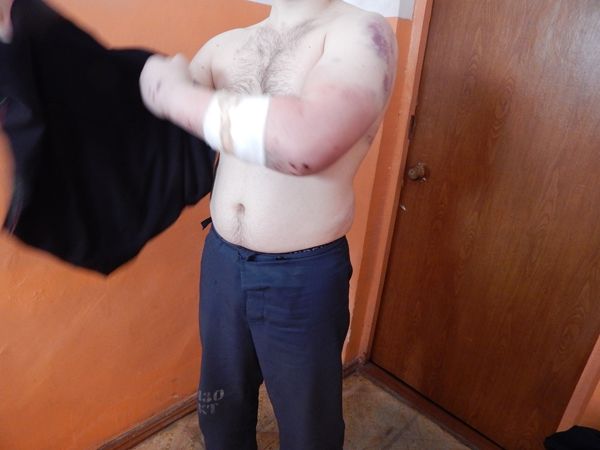
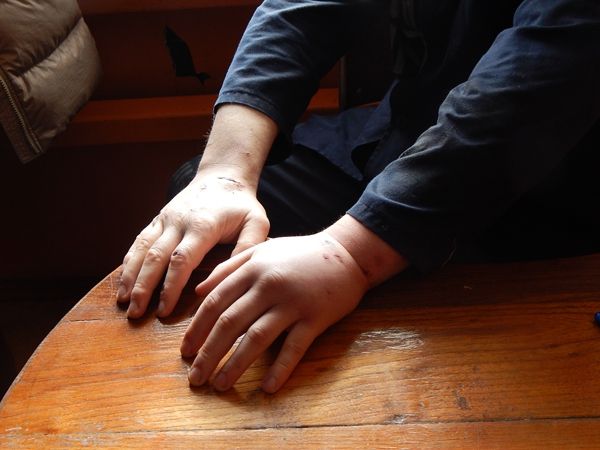
On the positive side, we had unhindered access to the DIZO/PKT section, which held only one convict. But here, the positives began to turn into negatives. Convict M., who had arrived with the transfer on 27 February and should have been in the quarantine unit like the other 12 convicts who had arrived with him, was instead put in the disciplinary isolation ward, serving a prior disciplinary sanction imposed back in the SIZO (remand prison). Undoubtedly, however, the convict will remember not this stay in the DIZO, but the ‘warm welcome’ upon arrival, the marks of which remained on his body and could be observed. Here, we pause and present a photo session, to which convict M. gave his consent.
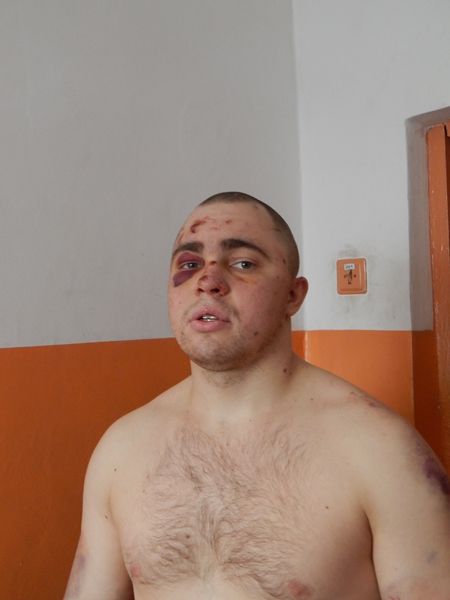
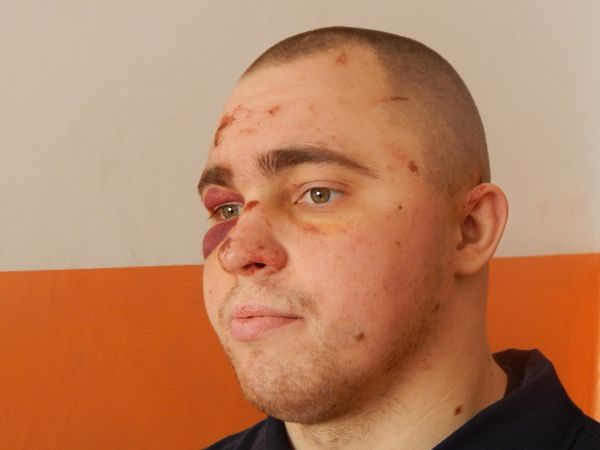
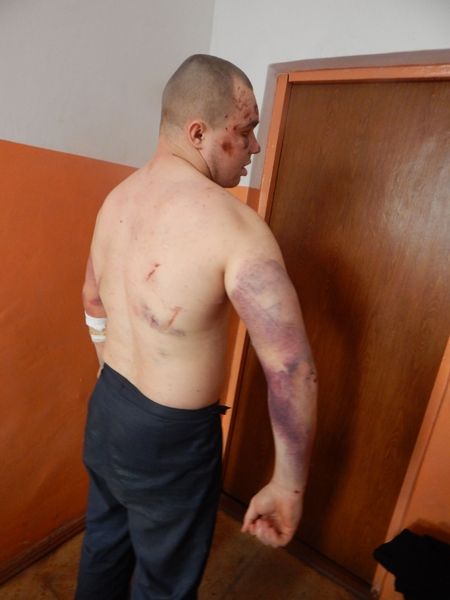
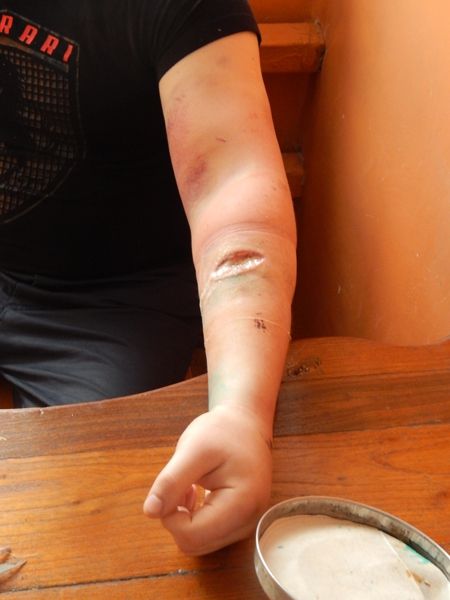
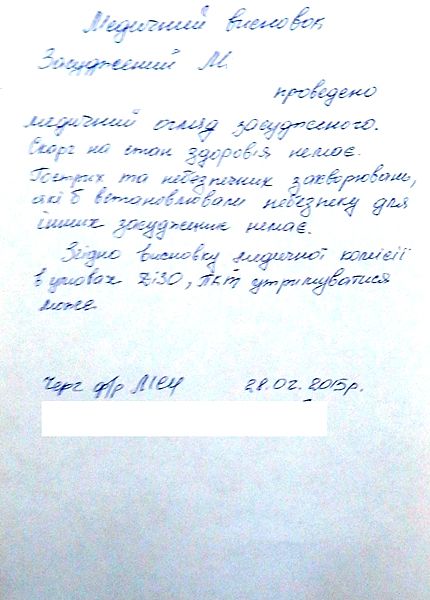
Interestingly, no records documenting these bodily injuries, nor any explanation of their origin, were found in any of the available documents — specifically, the personal file materials related to his placement in the DIZO/PKT (the medical certificate) or the register of recorded bodily injuries for persons arriving at Berdiansk Penal Colony No. 77. This means that once the marks of the beating have healed, it will be impossible to prove they ever existed. Yet, according to the medical certificate required for placement in the DIZO (see photo), convict M. has ‘no health complaints’ and is ‘fit to be held’ in DIZO/PKT conditions.
Since convict M. is in the DIZO, despite his physical condition, he must remain either sitting or standing because the bunk, after the 06:00 wake-up call, is folded away until lights out. Consequently, keeping a beaten convict in such conditions undoubtedly amounts to inhuman treatment under Article 3 of the ECHR.
The process of subduing the convicts who arrived with the transfer on 27 February, which was confirmed by an entry in the Register of the Use of Special Measures, involved the use of the ‘Teren-4’ tear gas spray, handcuffs (including on convict M.), and subduing them with PR-73 rubber batons. According to the convicts, they refused to get out of the prison van that brought them to the territory of VK-77, and consequently, their removal from the vehicle took place with the use of force and special measures. The injuries we managed to document on the seventh day after the incident indicate a disproportionate and unjustified use of force. One of the 13 convicts was found to have a head laceration and a haematoma near his ear, which suggests that blows were struck to the head area with special equipment during or immediately after their removal from the prison van, even though such use of special measures is strictly prohibited. We managed to speak with all the convicts who had arrived with this transfer and had already spent seven days in quarantine at VK-77. According to them, on 27 February everyone was beaten; some of them bore visible signs of physical abuse, including head injuries and trauma to other parts of their bodies, yet not one dared to make a statement to the monitors. Despite the obvious signs of a beating and the convicts’ own verbal confirmation of this fact, for reasons we can only speculate about, they refused to formally testify about the beating.
The next category in which VK-77 deserves a mention is the provision of medical care to convicts. Since the infliction of bodily injuries was not recorded in any documents, the medical care provided was of a matching standard. Bruises all over the body, including on the head, back, arms and legs, went completely untreated.
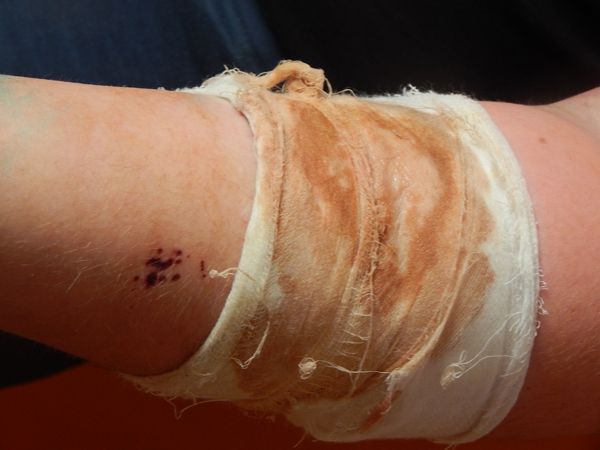
Had convict M. received such injuries while at liberty, he would undoubtedly have required a qualified medical examination by both a trauma specialist and a neurologist, using MRI and radiography to identify any internal injuries. The cut on his left arm clearly requires surgical intervention and stitches. The left arm shows distinct signs of an inflammatory process, namely severe swelling and discolouration (see photo). At the very least, his arm should have been stitched.
VK-77 can be described as an institution with strict discipline and apparent order. On the one hand, there are neat premises where the convicts are housed (see photo),
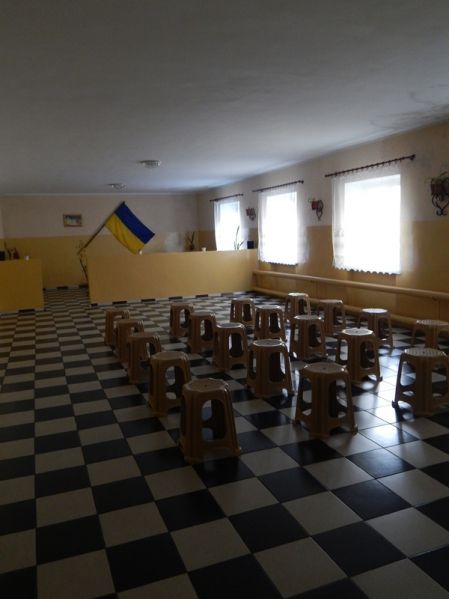
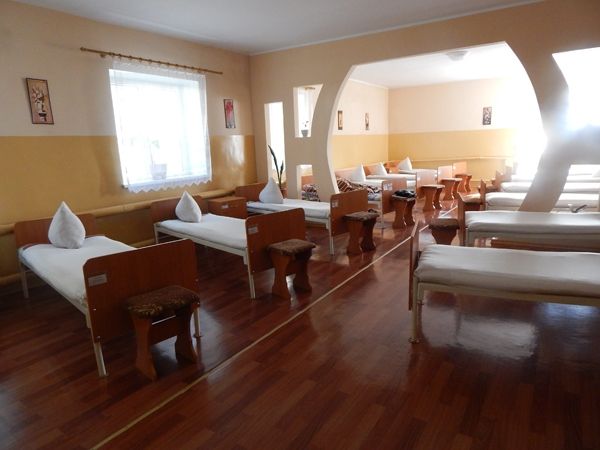
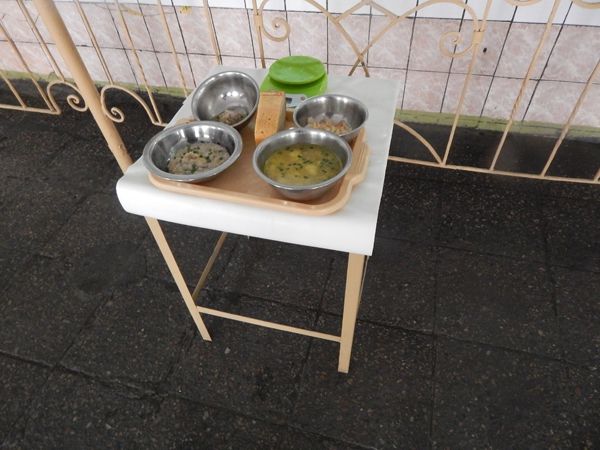
a tidy dining hall with a standard menu, and scales for check-weighing (see photo); however, in our presence, not a single convict weighed their portions, demonstrating complete trust in the food servers and compliance with nutritional standards in the colony.
The next category is ‘maintenance of discipline’, which we observed during our visit. In this colony, a system of ‘self-organisation’ has been established among the convicts: they are under the control of other convicts who have taken over the functions of the colony’s administration, meaning they issue commands, orders and instructions to the convicts, and manage their movement around the territory and compliance with discipline.
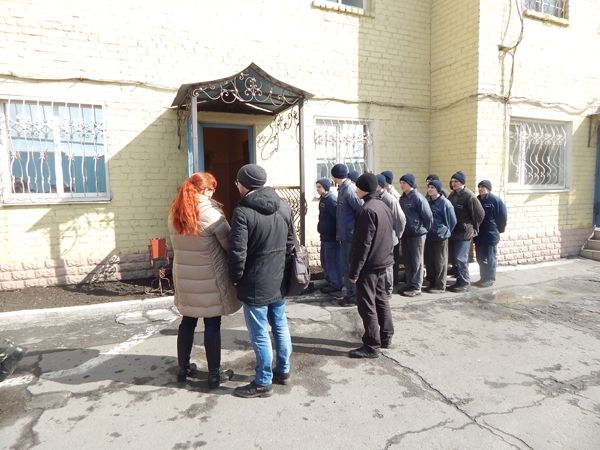
It was striking that almost all the newly arrived convicts were wearing large boots that were obviously too big for them (see photo). This is perhaps evidence of the difficult financial situation of BVK-77, further confirmed by the clacking of a mechanical typewriter in the operations department and a complaint from an administration representative about the lack of computer equipment.
During our visit, a prosecutor was questioning the newly arrived convicts, and the convicts pointed out to us that a representative of the colony’s administration was present in the office during the questioning, while a lawyer or other legal representative was absent. For us, having spoken with the convicts, a logical question arises: is such questioning legal and impartial? We hope that the higher prosecution authorities will provide an answer to this question.
And finally, regarding the reasons that prompted the visit to BVK-77: namely, a cry for help from the relatives and loved ones of the convicts, who were present near the colony on 27 February 2015 and heard the screams of the newly arrived convicts, which they believed were caused by the use of excessive force against them. This warning sign shows us that the prison system absolutely requires proper oversight of human rights compliance, particularly to prevent ill-treatment, disproportionate and unlawful use of force, and psychological pressure, which have likely occurred and continue to occur at BVK No. 77.
Tellingly, not a single representative of the administration even questioned the legitimacy of inflicting such bodily injuries on the convicts, nor did they see anything savage in the brutal beating of convict M.
This incident should serve as a test of the effectiveness of internal and external oversight systems for the protection of convicts’ rights at BVK-77, and will undoubtedly continue to be monitored by the Kharkiv Human Rights Protection Group.