Problems of those being released
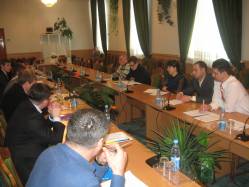
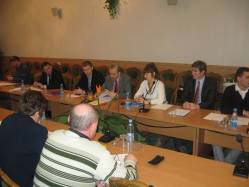
On 16 April 2013, within the framework of the project ‘Implementation of the programme of social adaptation and social support for persons being released from places of deprivation of liberty’, which is implemented with the assistance of the International Renaissance Foundation, a roundtable was held on the ‘Problems of social adaptation of persons who have served criminal sentences’.
The roundtable aimed to identify the urgent social and legal problems encountered by persons released from places of deprivation of liberty, and to develop a joint plan of systemic actions for non-governmental organisations (project participants) and authorities, aimed at providing such assistance to former prisoners that would contribute to their successful social adaptation to new conditions of life in society.
Among such urgent problems were the following:
- legal (the absence of basic personal documents for many released persons (passport, identification code, even birth certificate));
- professional (the lack of proper professional qualification, which complicates employment opportunities, difficulties in the competition of the profession obtained in the correctional institution with those offered on the labour market);
- medical (needs for the treatment of various somatic and infectious diseases acquired during the serving of the sentence – tuberculosis, HIV/AIDS, hepatitis, drug addiction, and others);
- social-psychological (loss of social ties with family and relatives, difficulties in communicating with other people, destructive changes in a person’s psyche, weakening of willpower, etc.).
In 2012, 39,000 people were released from places of deprivation of liberty; a significant portion of them did not have basic personal documents, which makes it impossible to register the person, to sign up at employment centres, or to access social protection and healthcare institutions. Of this number, 15,000 received financial assistance upon release in the amount of 30 hryvnias, which in fact does not even give them the opportunity to reach their place of residence. Practically a third of the total number of released persons lost social ties with relatives and loved ones. For former convicts, the issue of finding housing and work is constantly acute.
Participants of the roundtable, among whom were representatives of the Ministry of Social Policy of Ukraine, the State Penitentiary Service of Ukraine, employment centres, and a number of non-governmental organisations, stated that only joint efforts of the authorities and the public to provide social support to former convicts can help them adapt to society, try to realise themselves in employment, and thereby avoid re-offending (today, every third released person, having not received social assistance from society, commits another crime).
It was recognised that the most effective direction for assisting persons released from places of deprivation of liberty is supporting the activities of social adaptation centres. Within the framework of the project, which is being carried out with the assistance of the International Renaissance Foundation, the establishment of the operation of three such centres in the cities of Kyiv, Donetsk, and Chernihiv is planned, as well as ensuring their technical and methodological equipment, and involving social and medical workers, psychologists, and lawyers in providing the necessary assistance to released persons, which would help them adapt more quickly to life in freedom.
The project ‘Implementation of the programme of social adaptation and social support for persons being released from places of deprivation of liberty’ is being carried out by the non-governmental organisation ‘Centre for Social Rehabilitation “Alternative”’ (Kyiv), the Charitable Organization ‘Chernihiv Women’s Human Rights Centre’, and the Donetsk City Organization ‘Donetsk Memorial’.