Women in places of detention
This article was prepared as part of the project “Improving Compliance with the Rights of Convicted Women,” supported by the US Embassy in Ukraine.
In all penitentiary systems, women make up a small portion of prisoners.
Women sentenced to imprisonment in Ukraine are held in 12 penal institutions for adult women and in one educational colony for minors. There are Baby Homes in two colonies for adult convicted women – in Odesa and Chernihiv.
The total number of convicted women (excluding residents of pre-trial detention centers and the educational colony) in places of detention over 18 years fluctuated from 4,510 people in 1994 to 11,196 women as of 01.01.2000. After this, the number of convicted women gradually decreased – to 6,311 women as of 01.01.2010. In the last three years, their numbers have started to grow again – to 7,041 women as of 01.07.2012.
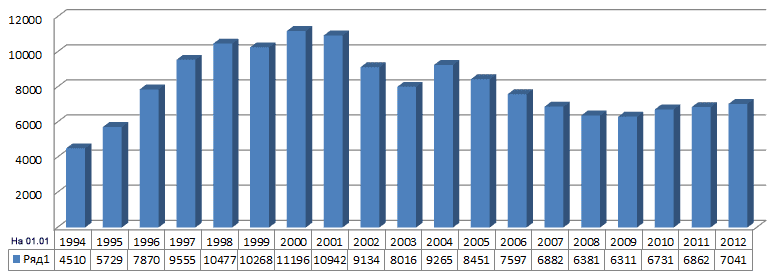
Overall, these fluctuations in the number of convicted women correlate with fluctuations in the total number of prisoners.
Table 1
|
Number of convicts, total |
Number of women in penal institutions |
Percentage of women in penal institutions |
Number of convicted women |
Number of women in pre-trial detention centers |
Percentage of women in pre-trial detention centers of their number in penal institutions |
|
|
1994 |
138,970 |
4,510 |
||||
|
2000 |
222,254 |
11,196 |
||||
|
2002 (1.1.2003) |
197,641 |
8,016 |
||||
|
2003 (1.1.2004) |
191,677 |
12,646 |
6.60% |
9,917 |
2,729 |
21.6% |
|
2004 (1.1.2005) |
188,465 |
11,924 |
6.33% |
9,265 |
2,659 |
22.3% |
|
2005 (1.1.2006) |
170,923 |
10,555 |
6.18% |
8,451 |
2,104 |
19.93 |
|
2006 (1.1.2007) |
160,725 |
9,577 |
5.96 |
7,597 |
1,980 |
20.67 |
|
2007 (1.1.2008) |
149,690 |
6,882 |
||||
|
2008 (1.1.2009) |
145,946 |
6,381 |
||||
|
2009 (1.1.2010 |
147,716 |
8,755 |
5.93% |
6,311 |
2,444 |
27.92% |
|
2010 (1.1.2011) |
154,027 |
9,694 |
6.30% |
6,731 |
2,708 |
27.93% |
|
1.7.2011 |
157,866 |
7,100 |
||||
|
2011 (1.1.2012) |
154,029 |
9,480 |
6.15% |
6,862 |
2,618 |
27.62% |
|
2012 (1.07.2012) |
152,076 |
9,315 |
6.11% |
7,041 |
2,274 |
24.4% |
The indicated trends in the number of convicted women reflect changes in the number of women convicted for committing all types of criminal offenses. While in 1998, 35,140 women were convicted (15.11% of the total number of convicted persons), and in 2000, 31,912 women were convicted (13.82% of the total number of convictions in the country), in 2002 it was 24,076 women (12.4%), and in 2006 it was 20,900, or 13% of the total number of convicted persons (7.9% less than in 2005).
In 2011, according to data from the Supreme Court of Ukraine, under sentences that entered into legal force, 19,500 women were convicted for committing all types of crimes, which is 11.5% less than in the previous year (in 2010 – 22,100), or 12.6% (13.1%) of the total number of all convicted persons. For committing grave and particularly grave crimes, 5,100 women were convicted, which is 13.0% less, or 26% (26.4%) of the number of all convicted women; for committing crimes of minor severity, 4,600 women were convicted, which is 14.0% less, or 23.5% (24.2%).
Overall, the number of places in women's colonies corresponds (is equal) to the number of convicted women. Thus, at the beginning of 2012, in colonies designed to hold 6,919 convicts, there were actually 6,949 women (100.4%). However, the growth in the number of convicted women in recent years has led to the fact that while the occupancy rate of five penal institutions is less than 100%, in seven others it ranges from 106% to 147%.
This number does not include convicted minors who are kept in the Melitopol educational colony. According to the law, upon reaching 18 years of age, minors may remain in educational colonies until reaching 22 years of age. Thus, together with the adult girls left in the educational colony, the number of pupils in the colony was approximately 180 in 2001, 163 in 2005, 103 in 2008, and as of 01.06.2012 – 93 pupils.
In the two institutions that have Baby Homes, there were 69 children under 3 years of age as of 01.01.2007.
In all colonies, women work, but the proportion of convicts engaged in work varies: from 30-40% (Halych Penal Colony No. 128, Ivano-Frankivsk Region; Chervonopartyzansk Penal Colony No. 68, Luhansk Region) to almost 100% in five colonies, including the educational colony for minors.
The average monthly salary of women, according to the SPSU, was 317.69 UAH in 2010, and 356.73 UAH in 2011.
The number of women sentenced to life imprisonment is steadily growing. If at the beginning of 2003 there were 7, then in 2005 there were 11, in 2011 – 20, and in 2012 there are 21. They are held in Kachanivska Penal Colony No. 54 (Kharkiv).
The presence of women sentenced to life imprisonment in the country does not reflect positively on the country.
The 2005 proposal of “Donetsk Memorial” to President Yushchenko to pardon all women by replacing their term of imprisonment with a sentence for a specific period, and thus ensuring there were no women sentenced to life imprisonment in the country, remained without a response.
The legislation existing at that time allowed the President to do this independently, but he ignored the appeal of “Donetsk Memorial”.
Keeping women in pre-trial detention centers
Data on the number of women in pre-trial detention centers is available starting from 2003. Over this period, the maximum number of women in pre-trial detention centers was 2,729 people as of 1.1.2004 and 2,708 people as of 1.1.2011, and the minimum was 1,980 people as of 1.1.2007.
While in 2003-2006, female occupants of pre-trial detention centers accounted for 20-22% of all women in places of detention, in 2009-2011 this proportion grew to 27-28%, only decreasing to 24.4% in 2012.
The total number of imprisoned women (convicts and occupants of pre-trial detention centers) is decreasing, and if as of 1.01.2004 there were 12,646 women, then in mid-2012 – likely 9,315 (which is only slightly higher than the 2009 minimum of 8,755 women, although the department presented this as the number of convicts only). The data is currently being refined. The share of imprisoned women among all people in penal institutions ranged from 6.6% as of 1.1.2004 to 5.93% as of 1.1.2010; in July 2012, this figure was 6.11%.
The information obtained on the website of the Penitentiary Service (www.kvs.gov.ua) makes it possible to assess the composition of convicted women according to various indicators and determine the dynamics of these indicators, both over 10 years and over 4.5 consecutive years. In our view, it is more correct to provide the breakdown in percentages, whereas absolute data can be found in the provided tables.
Table 2
|
2007 |
2008 |
2009 |
2010 |
1.07.2011 |
|||||
|
Number of penal institutions |
12 |
12 |
12 |
12 |
12 |
||||
|
Registered number of convicts as of 01.01 of the specified year |
7,597 |
6,890 |
6,381 |
6,311 |
6,731 |
||||
|
Total number of convicts received during the specified year |
4,778 |
4,269 |
4,590 |
5,141 |
2,762 |
||||
|
Including |
newly convicted |
2,768 |
2,388 |
2,576 |
3,023 |
1,611 |
|||
|
of whom previously served a sentence |
803 |
580 |
754 |
933 |
462 |
||||
|
other arrivals |
2,010 |
1,881 |
2,014 |
2,118 |
1,151 |
||||
|
Total number of convicts who left during the specified year |
5,493 |
5,778 |
4,660 |
4,721 |
2,393 |
||||
|
Including |
Released, total |
3,215 |
2,664 |
2,520 |
2,389 |
1,169 |
|||
|
Of which |
upon completion of the sentence term |
813 |
853 |
930 |
889 |
511 |
|||
|
paroled and sentence commutation |
1,394 |
1,564 |
1,161 |
1,352 |
585 |
||||
|
by pardon |
71 |
100 |
77 |
36 |
0 |
||||
|
persons suffering from a serious illness |
75 |
72 |
80 |
66 |
37 |
||||
|
by amnesty |
180 |
1 |
228 |
0 |
0 |
||||
|
on other grounds |
129 |
74 |
44 |
46 |
36 |
||||
|
Sent, total |
2,278 |
2,114 |
2,140 |
2,332 |
1,224 |
||||
|
Including |
transferred from maximum to medium security level |
2 |
0 |
0 |
0 |
0 |
|||
|
Deceased |
19 |
10 |
11 |
21 |
13 |
||||
|
Registered number as of the end of the specified year |
6,882 |
6,381 |
6,311 |
6,731 |
7,100 |
||||
|
Intentional homicide |
1,340 |
1,347 |
1,312 |
1,332 |
1,232 |
||||
|
intentional grievous bodily harm |
629 |
612 |
712 |
710 |
720 |
||||
|
Rape |
14 |
10 |
12 |
16 |
12 |
||||
|
Robbery |
356 |
366 |
413 |
410 |
403 |
||||
|
Larceny |
487 |
444 |
534 |
484 |
508 |
||||
|
theft |
1,363 |
936 |
1,112 |
1,407 |
1,588 |
||||
|
misappropriation, embezzlement of property, or possession thereof by abuse of office |
126 |
78 |
90 |
135 |
98 |
||||
|
Hooliganism |
66 |
42 |
41 |
46 |
31 |
||||
|
Served imprisonment |
For the first time |
4,396 |
4,135 |
4,230 |
4,525 |
4,838 |
|||
|
Repeatedly |
2,486 |
2,246 |
2,081 |
2,206 |
2,262 |
||||
|
By work capacity |
Able-bodied |
6,539 |
6,022 |
5,970 |
6,321 |
6,674 |
|||
|
disabled group 3 |
264 |
264 |
250 |
311 |
286 |
||||
|
disabled group 1 and 2 |
79 |
95 |
91 |
99 |
140 |
||||
|
By social groups |
Workers |
729 |
682 |
854 |
927 |
818 |
|||
|
Employees/White-collar workers |
229 |
203 |
156 |
194 |
181 |
||||
|
agricultural workers |
397 |
276 |
496 |
259 |
293 |
||||
|
Students |
239 |
257 |
93 |
163 |
133 |
||||
|
able-bodied persons not working and not studying |
3,676 |
3,932 |
3,598 |
4,173 |
4,523 |
||||
|
Other |
1,612 |
1,031 |
1,114 |
1,015 |
1,152 |
||||
|
Convicts whose death penalty was commuted to imprisonment by pardon |
6 |
1 |
0 |
0 |
6 |
||||
|
Convicts sentenced by court verdict to mandatory treatment (Art. 96 of the Criminal Code of Ukraine) |
134 |
65 |
55 |
18 |
12 |
||||
|
Including |
Alcoholics |
72 |
29 |
24 |
17 |
11 |
|||
|
Drug addicts |
62 |
36 |
31 |
1 |
1 |
||||
|
Foreign citizens |
115 |
114 |
114 |
113 |
123 |
||||
|
Including |
from far abroad |
1 |
0 |
1 |
1 |
2 |
|||
|
from the near abroad |
114 |
114 |
113 |
112 |
121 |
||||
|
Stateless persons |
90 |
68 |
50 |
44 |
42 |
||||
By crimes committed, convicted women accounted for the following shares as of 1.01.2001, 1.01.2007, and 1.01.2010 respectively:
In 12 correctional colonies, women convicted of the following were held:
|
2001 |
1.1.2007 |
1.1.2010 |
|
|
intentional homicide |
18.5% |
22% |
19.8% |
|
intentional infliction of grievous bodily harm |
7.4% |
6% |
10.5% |
|
robbery |
4.6% |
6% |
6.1% |
|
larceny |
6.8% |
5% |
7.2% |
|
theft |
24.5% |
35% |
20.9% |
|
misappropriation of state property by embezzlement, waste, abuse of office, or fraud |
1.3% |
2% |
2.0% |
|
hooliganism |
0.7% |
1% |
0.7% |
Obviously, the share of women convicted of intentional infliction of grievous bodily harm has increased, while the share of those convicted of theft has decreased. In 2008, their share was only 14.7% in total. The remaining positions – without noticeable changes.
If we look at the absolute figures of the composition of convicted women for 2007-2010, the trends over four years are as follows
By term of punishment, convicted women accounted for the following shares as of 1.01.2001, 1.01.2007, and 1.01.2010 respectively:
|
2001 |
1.1.2007 |
1.1.2010 |
|
|
up to 1 year inclusive |
1.4% |
3% |
1.8% |
|
from 1 year to 2 years inclusive |
7.1% |
10% |
8.9% |
|
from 2 to 3 years inclusive |
17.3% |
21% |
15.3% |
|
from 3 to 5 years inclusive |
34.2% |
31.7% |
31.4% |
|
from 5 to 8 years inclusive |
27.2% |
22% |
29.1% |
|
from 8 to 10 years inclusive |
6.9% |
7% |
6.7% |
|
from 10 to 15 years inclusive |
5.7% |
5% |
6.5% |
|
more than 15 years |
0.2% |
0.3% |
0.4% |
By age, convicted women are distributed as follows
|
2001 |
1.1.2007 |
1.1.2010 |
|
|
up to 20 years |
3.6% |
3% |
2% |
|
from 20 to 30 years |
35.0% |
35% |
31.9% |
|
from 30 to 40 years |
34.2% |
34% |
36.6% |
|
from 40 to 55 years |
23.4% |
23% |
25.0% |
|
from 55 to 60 years |
2.4% |
3% |
2.9% |
|
from 60 years |
1.4% |
2% |
1.5% |
Obviously, these indicators have not undergone noticeable changes over the decade.
According to data from the State Penitentiary Service, in 2007-2010, 800-900 people were released from places of detention annually upon completion of their sentence term, 1,161-1,564 women were paroled, and 66-80 suffered from incurable diseases.
Amnesty has not been carried out every year in Ukraine recently. The number of women released by amnesty in recent years is 5-10 times less than at the beginning of the decade: in 2000, 942 women were released by amnesty; in 2001, 2,038 women; whereas in 2007, 180 women were released; and in 2009, 228 women.
Every year, 36-100 people were released by pardon; however, in 2011, none were pardoned.
Between 10 and 21 convicted women died annually (there is no data for pre-trial detention centers).
The share of women convicted for the first time remains almost unchanged, staying at the level of about 2/3, although the absolute figures have noticeably decreased: in 2001 it was 66%, as of 1.01.2007 it was 64.4% (5,147 people), and in 2007-2011 it fluctuated within the range of 64-67%.
It is worth noting that this indicator for all convicted persons has been within the range of 47% in recent years.
The number of able-bodied people is constant and makes up 94-95%; as of 1.07.2011, there were 426 disabled women in the colonies.
In 2007, there were 146 people suffering from alcoholism in women's colonies and 116 people from drug addiction, but their number decreased quickly and regularly: the former to 11 people, and drug-addicted women to 1. The number of convicts ordered by a court to undergo mandatory treatment also decreased significantly – from 134 people at the end of 2007 to 12 in mid-2011.
Foreign citizens – 1.7%. The number of stateless persons decreased from 90 to 42 people (0.6%) in 2007-2011.
The largest social group of convicted women consists of able-bodied people who do not study or work anywhere – their share in 2008-2010 was 57-62%, workers – 13-14%, agricultural workers – 4-7%, students – 2-3%.
According to a study conducted in 2001, 15% of the total number of convicted women had lost social ties, 28% did not receive parcels, 56% did not have long-term visits with relatives, 10% had children under the age of 6, 25% did not have vocational qualifications, 6% did not have housing, and 3% were deprived of parental rights.
Women in prison are a vulnerable group. For the development of any proposals and recommendations for improving their conditions, it is very important to research various aspects of their stay behind bars. Unfortunately, this has not been carried out in Ukraine for a very long time, neither by the state nor by civic institutions.