Public control in Russia and Ukraine
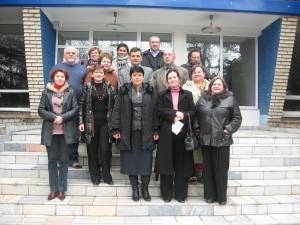
The international roundtable ‘Public control in places of forced detention: sharing experience’ was held in Svyatohirsk (Donetsk region) on 20–21 March. Participants from Russia included: Valentin Gefter, Director of the Institute for Human Rights, Moscow; Andrey Babushkin, member of the Public Monitoring Commission (hereinafter – PMC) of Moscow; Irina Paykacheva, member of the PMC of the Murmansk region; Larisa Fefilova, member of the PMC of Udmurtia; and Lyubov Elle, member of the PMC of the Kaluga region. Participants from Ukraine included two former assistants to the Minister of Internal Affairs for human rights: Alla Lepyokha (Chernihiv) and Natalya Kozarenko (Kherson); as well as members of mobile groups and supervisory commissions from various regions, including Alexander Bukalov (‘Donetsk Memorial’), Andrey Didenko (Kharkiv Human Rights Group), Irina Ukhvarina (Kherson), Aigul Mukanova and Irina Yakovets (Kharkiv); as well as representatives of the State Penitentiary Service of Ukraine and the Ministry of Justice of Ukraine.
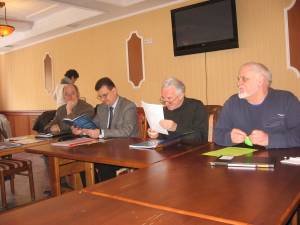
The meeting participants noted the positive and negative aspects of the public control schemes existing in Russia and Ukraine and shared their experience in the practical implementation of visits to places of forced detention.
At the meeting, a Memorandum on public control of the observance of human rights in places of forced detention was adopted, which contains the main results of the roundtable, its conclusions, and recommendations (attached).
The materials presented at the meeting will be released as a separate publication.
The roundtable was organised by the human rights organisation ‘Donetsk Memorial’ within the framework of the project ‘Increasing the level of protection of prisoners’ rights: paths and methods’, supported by the Embassy of the Kingdom of the Netherlands.
MEMORANDUM
on public control of the observance of human rights in places of forced detention
Svyatohirsk, 20–21 March 2011
In Svyatohirsk (Donetsk region, Ukraine) on 20–21 March 2011, a roundtable was held on the topic ‘Public control in places of forced detention: sharing experience’. Its participants—representatives of public human rights organisations of Ukraine and Russia, Ukrainian scientific institutions, and government authorities involved in the organisation and implementation of public control of places of forced detention for citizens in their respective countries—discussed the status of the problem, the achievements and difficulties accompanying this activity, and the prospects and priorities for the development of public control. It was noted that in both Russia and Ukraine, public organisations involved in the implementation of public control face similar problems. The meeting participants concluded that:
1. In Russia, a significant number of public associations, including the country’s authoritative human rights organisations, are involved in the work of implementing public control. In Ukraine, the number of public organisations currently or previously involved in the implementation of public control, including as part of supervisory commissions or mobile groups, is relatively small.
2. In Russia and Ukraine, the work of implementing public control is carried out on a voluntary basis, which severely limits activities for the protection of the rights of persons held in places of forced detention and reduces the effectiveness of public monitoring of human rights compliance.
3. In Russia, places of forced detention are visited without prior warning and permission on a notification basis. In Ukraine, mobile groups within the MIA system could previously visit district police departments without warning; the creation of structures performing public control in penitentiary system institutions, similar to mobile groups, is only being discussed by the State Penitentiary Service.
4. In Russia, the mechanisms and procedures for public control of places of forced detention, as well as the procedures for forming the bodies that perform it, are defined by relevant Law. The effect of this federal law covers the majority of places of forced detention in all regions of the country.
5. In Ukraine, from 2005 to 2010, public control was exercised only within the MIA system by mobile groups, which had almost ceased to operate by the middle of 2010, although the MIA order regulating their activities has not been cancelled. The reason for the termination of their work was the dependence of the groups’ activities on the position of the department’s leadership.
In the penitentiary system of Ukraine, public control is entrusted to supervisory commissions, which act according to the Regulations on Supervisory Commissions approved by the Cabinet of Ministers. However, in practice, the vast majority of these commissions do not fulfil the functions of public control.
6. The generalisation and analysis of the results of the activities of structures exercising public control are conducted at a fairly low level in both countries.
There is a lack of legally enshrined intentions from the authorities to take into account the results of visits to places of forced detention within the public control mechanisms. As a result, neither in Russia nor in Ukraine are there any criteria for evaluating the effectiveness of visits to places of forced detention by public structures. Often, state authorities are satisfied with the mere fact that certain norms exist in legislation or the purely formal existence of structures intended for exercising public control—regardless of the results and effectiveness of their activities.
7. A practice of accountability for government representatives who obstruct the work of public structures and their members, who exercise control over the observance of human rights in places of forced detention, has not taken hold in our countries.
8. Understanding of the goals and nature of public control, its purpose, and urgency has not yet been established in society and in many government bodies—including among representatives of civil society, even those who participate in its implementation.
Public control over the observance of human rights in places of forced detention requires special knowledge both on the part of public representatives exercising such control and on the part of the staff of the controlled departments. This requires constant training in the field of human rights, and preferably joint training—for representatives of public structures and law enforcement officers.
The roundtable participants consider it extremely important for the development of public control in Russia and Ukraine, and for increasing its efficiency and effectiveness, to implement the following:
1. In Ukraine: Legally enshrine the mechanisms and institutions of public control for places of forced detention, the procedure for forming the structures exercising it, and their powers and rights, along with the obligation of the administration of the institutions and bodies being inspected to facilitate the activities of public formations.
In Russia: Discuss and, if necessary, adopt amendments to current legislation, enshrining the possibility of inspecting places of forced detention, including court escort holding cells, psychiatric hospitals, and other places of forced detention and movement of persons in custody.
2. Regulate state support for the activities of public structures, including compensation for the expenses of their members, allowing for their participation on a voluntary basis only at the initial stage or at the discretion of the public inspectors themselves.
3. Provide for the right and procedures for visiting places of forced detention without warning.
4. Provide for mechanisms and forms of informing society about the results of public control (annual reports, press conferences, analysis and generalisation of the results of public control).
5. Ensure the maximum independence of the persons exercising public control from the bodies and institutions they monitor, by providing for appropriate procedures for their election (appointment) that are transparent to both society and the state.
6. Strive to constantly improve the level of professional training for members of structures exercising public control, as well as staff of the departments they inspect, by organising trainings and other forms of education and exchange of experience, including international exchange.
7. Avoid, as much as possible, both the simulation of public control and the tendency to seek out only shortcomings on the part of the subjects of public control.
8. Control over the activities of public control structures in both countries by the Prosecutor’s Office and other law enforcement agencies should not hinder or unlawfully restrict their activities, and even more so, should not in any way constitute interference in them. It should not go beyond the scope of verifying information about possible violations during visits to places of forced detention.
9. Legally enshrine the requirement to respond to the recommendations of the subjects of public control based on the results of their observations as one of the main criteria for departmental evaluation of the activities of the administration of places of forced detention.
10. Promote the conduct of joint seminars and trainings for structures exercising public control; facilitate the development of the exchange of experience, including between countries, in particular by practising joint visits to places of forced detention and analysing their results during exchange visits.
11. Provide for a special course on human rights in the training/retraining programmes for personnel carried out by departmental training centres, including the study of the regulatory framework for exercising public control in places of forced detention.