Tuberculosis as a punishment in the Donetsk Pre-trial Detention Centre
In our country, nobody particularly looks after the health of citizens. Although, no – they do look after it, but for money. On the “island of freedom”, an epidemic of tuberculosis was defeated several decades ago, and now the mortality rate from this disease in Cuba is zero. But in Ukraine, the statistics are disappointing.
One of the main places of the disease’s spread is the “zone” – or, in normal language – a prison, a temporary detention facility, a pre-trial detention centre, that is, all places of deprivation of liberty.
Recently, there was an opportunity to talk with two prisoners who finally saw liberty – they were held in the Donetsk Pre-trial Detention Centre No. 5. How is it there, behind bars? Is it really the same as they write in books? And is it true that there are separate premises where tuberculosis patients are held? A man and a woman of different age categories answered; their names are Hanna and Oleh.
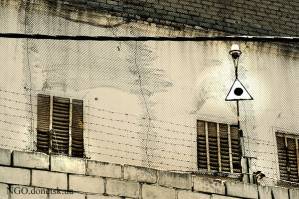
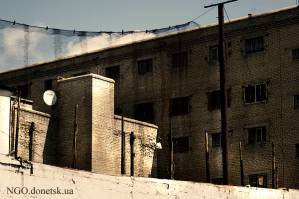
“The building of the pre-trial detention centre and the building of the temporary detention facility were built a little less than a century ago. The thickness of the walls is approximately 80 centimetres; they built well then. In the building of the temporary detention facility, the windows do not open. Humidity is constantly maintained. It is a wonderful place to get infected with tuberculosis,” says Hanna and adds, “people who are innocent and finally leave for liberty often already suffer from this disease. Although they ended up there healthy.”
Oleh emphasises that it is not the first time he has been in a pre-trial detention centre, and he knows everything about the “tub-units”, although he himself was not sick. He explains: “Tub-units are a special floor, in the Donetsk pre-trial detention centre – the fourth, where tuberculosis patients sit.” They are fed much better there because people are, after all, sick, but both the staff of the pre-trial detention centre and the healthy people who are held there are still not insured against contracting the disease (after all, tuberculosis is transmitted by airborne droplets).
By the way, it is the State Department for the Execution of Sentences, not the Ministry of Health, that is responsible for appointing doctors in the pre-trial detention centre and for the medical maintenance of detainees. Therefore, Volodymyr Shalashyn, head of the medical department of the Administration of the State Department for the Execution of Sentences in the Donetsk region, answered such accusations quite clearly: “We work with what we have. With what the state gives, and it gives not much.”
In reality, according to the law, tuberculosis patients who are just detainees, and not convicted, should not be in the pre-trial detention centre. They require special medical care. However, they also cannot be placed in Zhdanivka, where a special prison for the sick is located, because they are not yet convicted. A paradox emerges: the pre-trial detention centre does not have conditions to hold the sick, but the police still bring them here. Previously, the Department refused to take such people within its walls. But holding one sick person in a hospital and placing two policemen next to them is also not a small luxury for law enforcement officers.
“The problem is in the imperfection of the legislation; it has existed for a long time. Currently, we are trying to solve it at the regional level, to create a special floor in Zhdanivka for those not yet convicted. But this is a large amount of paperwork; it is necessary to make changes to legal documents, because by and large, this is the same prison,” explains Volodymyr Shalashyn.
The chief medic of the Donetsk department for the execution of sentences notes that currently, the situation in Pre-trial Detention Centre No. 5 with tuberculosis patients is difficult. “Yes, there is a separate floor for the sick here, but this absolutely does not solve the problem. It is the same as creating an infectious diseases hospital in a student dormitory and telling the residents: ‘Do not worry, the sick are on another floor.’ However, the danger of being infected always exists.”
As it turned out, currently, according to official statistics, 149 detained people in the Donetsk pre-trial detention centre are suffering from tuberculosis – they are indeed held on a separate floor. And for their care, there is only one phthisiatrician with a salary slightly higher than 1000 hryvnias, and one nurse who concurrently performs the duties of a registrar.
How is the public supposed to react to such conditions, and what can it do to improve the life of detained sick people? To clarify this, it is better to turn to the person who has been dealing with this problem for many years. This is Alexander Bukalov, head of the Donetsk city public organisation “Memorial”.
“Some people who were held in the pre-trial detention centre do indeed leave it with tuberculosis, but most often – they do not file a lawsuit. For example, for a long time our organisation has been dealing with the case of one boy who ended up in the Pre-trial Detention Centre No. 5 in 2000 healthy, and left it in 2002 with tuberculosis. The case is already in the court of appeal. The Voroshylovskyi District Court did not find the Department guilty of ruining the boy’s health. We have evidence, even a real medical certificate. But according to the documents of the pre-trial detention centre medics, everything was fine with this prisoner. It is interesting that in 2002, when he went to liberty, he needed to be treated, but his measure of punishment was changed. He was hiding from law enforcement officers and was being treated, but now he has been found, he is back in the pre-trial detention centre. What will happen next is a question.”
However, Mr Bukalov also mentioned the existence of many problems for the State Department for the Execution of Sentences: “A lack of funds, low salary, imperfection of legislation, and the specific public with whom one has to work – this is an incomplete list of difficulties that stand in the way of the Department.”
The public figure confirmed Shalashyn’s words – the imperfect legislation of Ukraine does not say what to do with detainees who are suffering from tuberculosis. “The police cannot hold a suspect for more than 10 days, and hospitals refuse to take tuberculosis patients because it is a big responsibility. And they also cannot do it, because then two policemen would have to be on duty there. But somewhere the sick must be held – that is why they are shoved into Pre-trial Detention Centre No. 5,” related Alexander Bukalov.
That the legislation in our country is imperfect is known for a long time. But this does not mean that one can ignore people’s destinies. It turns out that even convicted tuberculosis patients are treated better than detainees whose guilt has not yet been proven. Now it becomes clear how much the shortcomings of regulatory acts affect the lives of citizens.